Support Phone-Free SVVSD Schools -- But Allow Smartwatches in "School Mode" for PK-8
The Issue
To Superintendent Dr. Jackie Kapushion and the St. Vrain Valley Schools Board of Education:
We support St. Vrain Valley Schools’ (SVVSD) goal of focused, distraction-free learning. Cell phones should remain silenced, stored, and out of sight from bell to bell. Games, social media, browsing, recording, routine calls, and messaging do not belong in PK-8 classrooms.
Our growing parent group asks SVVSD to allow qualifying parent-managed smartwatches to remain on students’ wrists in School Mode, with ordinary use limited to checking the time. Parents would handle configuration and cooperate in addressing misuse; students who misuse a watch would lose the privilege, period. Emergency, health-related, and staff-authorized use would follow district procedures.
An earlier community petition asked SVVSD to prohibit cell phones during school hours. We agree with its central goal. The Board’s August 12, 2026 policy revision addresses that concern, but it also applies the same physical-storage requirement to all PK-8 personal devices, including smartwatches, requiring them to be powered off or silent and stored out of sight from the first bell through final dismissal. The implementing regulation states that devices should not be carried in pockets or worn.
That physical no-wearing rule wrongfully treats a watch operating in a genuine restricted mode the same as an unrestricted cell phone. The devices may share hardware capabilities, but they do not present the same school-day functionality when effective parental restrictions are active.
Why continuous wear matters
Continuous wear does not mean continuous use. We recognize and rely on SVVSD’s adult supervision, school communication systems, access procedures, and established safety and emergency protocols during the school day. We are not asking students to call or text parents during instruction, substitute a watch for those systems, or bypass district procedures.
The value of a wearable is its continuity across a child’s entire day. A child may walk or bike to school and cross busy intersections, arrive before school begins, ride a bus, participate in recess or a field trip, remain for an after-school activity, encounter a changed plan or missed or delayed pickup, or travel home or to another approved destination. During school, the watch remains restricted. Before and after school, it can provide timekeeping, location awareness, and an age-appropriate way to handle a changed plan or seek help.
When a watch must be removed and stored in a backpack, locker, cubby, or office, that continuity is broken. The watch may be forgotten, misplaced, or unavailable when plans change at dismissal. Keeping it securely on the wrist allows a scheduled School Mode to begin at the opening bell and end after dismissal without requiring the child to remove, store, retrieve, or reactivate the device.
The point is continuous wear, not continuous communication.
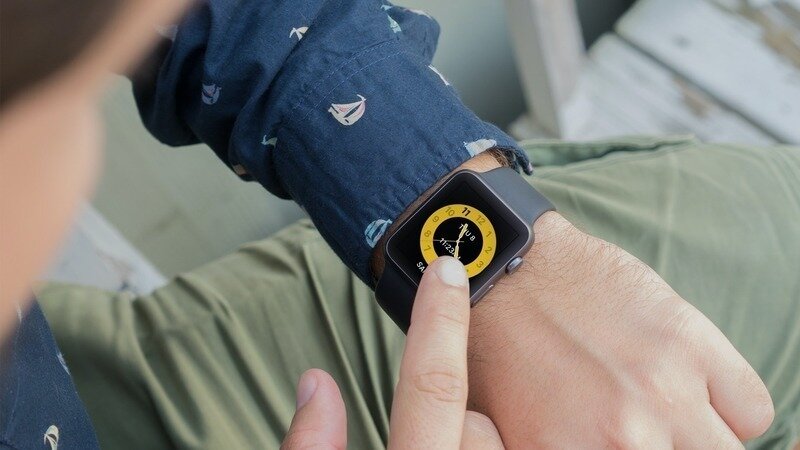
For example, Apple Schooltime can be scheduled and managed from a parent’s phone. While active, it blocks notifications, disables the use of applications, turns on Do Not Disturb, and displays a distinctive yellow restricted-mode watch face. If a child temporarily exits Schooltime, the parent receives a notification and can review when and for how long it was exited.
Schooltime is not tamper-proof, and we do not claim that it is. Its strength is accountability. An unauthorized exit can be detected, addressed by the parent, and followed by school consequences. Other manufacturers offer restricted or school modes with differing capabilities, so any district standard should be based on verified functionality rather than one brand.
AAP guidance recommends restricting smartwatch functions
Materials SVVSD provided in response to our Colorado Open Records Act (CORA) request include the American Academy of Pediatrics’ guidance on reducing smartwatch distractions in elementary schools. Updated August 29, 2024, this educator resource recommends that families use do-not-disturb settings, silence nonessential notifications, and restrict access to games and media during school hours. It specifically identifies Apple Schooltime as an example, provides setup instructions, and explains how parents can review temporary exits. This guidance clearly supports evaluating the restricted, accountable approach we are requesting.
As of September 11, 2026, we have not identified any data in the district records reviewed so far demonstrating material classroom disruption specifically from smartwatches operating in School Mode. We ask SVVSD to explain how it evaluated this alternative and provide any evidence supporting the requirement to remove these restricted watches.
This model has already worked within SVVSD on a limited basis. My twin sons, now fourth-graders within SVVSD, wore parent-managed watches for four school years without a single reported watch-related distraction or disciplinary issue. After I described their configuration in writing in March 2026, the school confirmed that they could continue wearing the watches simply as watches, with no calling, texting, or application use during school hours. We also accepted the sensible requirement that the watches be stored during CMAS testing.
Two students at one school are not districtwide proof. They are evidence that this narrow model deserves evaluation rather than automatic rejection.
An approach already reflected in other districts and earlier SVVSD guidance
Allowing smartwatches to remain worn with restricted functions already has local and national precedents. Nearby Weld RE-4 School District expressly allows smartwatches at all grade levels as silent timepieces, while prohibiting communication, gaming, notifications, internet browsing, and other non-watch functions during restricted times. Pocatello-Chubbuck School District 25 in Idaho permits elementary-school smartwatches when powered off or in school mode. School District 197 in Minnesota makes an explicit elementary-school smartwatch exception and directs families to use do-not-disturb settings, specifically linking to Apple Schooltime. These policies illustrate the distinction we are requesting: allowing a watch to remain worn while restricting its use.
There is also precedent within SVVSD before the August 12, 2026 policy change. In its September 2025 newsletter, Black Rock Elementary specifically asked families to place smartwatches in school mode. In its February 2026 newsletter, Centennial Elementary expressly allowed students to wear watches while prohibiting texting, calling, and games during school hours. Our request builds on approaches previously communicated by SVVSD schools and reflected in other districts’ published policies.
Colorado law required school districts to adopt policies concerning student communication-device possession and use, including applicable prohibitions and exceptions. It did not require SVVSD to impose a bell-to-bell no-wearing rule or treat restricted watches exactly like smartphones. The level of restriction remains a local policy decision.
We ask SVVSD to recognize a "restricted wearable" category with the following safeguards:
- A parent-controlled restricted mode, such as "School Mode," must be scheduled from the opening bell through dismissal.
- The watch must remain silent, with ordinary notifications and application access disabled. Any emergency functionality available in restricted mode would remain subject to district procedures.
- Ordinary school-day use must be limited to checking the time. Calling, messaging, gaming, browsing, photography, recording, social media, and other interaction would remain prohibited.
- A parent must certify the configuration annually and cooperate if a reported incident requires reviewing available exit or usage history. Teachers should not be required to configure devices, inspect them each morning, or access family accounts.
- Staff may direct a student to remove or store the watch during assessments or whenever an identified educational or safety circumstance requires it.
- Staff need only respond to observable student conduct, not inspect device settings. Observed misuse would receive ordinary school consequences. Repeated misuse or bypass would result in temporary or extended loss of the individual student’s worn-watch privilege.
- Existing IEP, Section 504, medical, emergency, and other legally required accommodations would remain unchanged.
All cell phones would remain fully subject to the bell-to-bell rule in PK-8.
If the district is not prepared to adopt this clarification immediately, we ask it to authorize a controlled pilot lasting 60-90 school days at one or more elementary schools. The pilot should measure watch-related incidents, reported restricted-mode exits where that information is available, instructional interruptions, staff time, teacher feedback, and the number of students who lose the privilege. That would allow SVVSD to answer the question using local evidence.
This proposal does not create a semantic loophole. It creates an explicit, enforceable distinction between an unrestricted personal device and a parent-managed wearable whose distracting functions have been restricted.
The Simple Solution: Please amend or clarify district regulation JS*-R so qualifying parent-managed smartwatches may remain worn during the PK-8 school day, with ordinary use limited to checking the time, or authorize a controlled pilot and publicly report the results.
Please sign and share this petition if you support both distraction-free SVVSD schools and this narrow, accountable solution: allowing qualifying parent-managed smartwatches to remain worn in genuine School Mode while limiting ordinary school-day use to checking the time. Families deserve this choice.
Take one more step and contact the decision-makers directly. Petition signatures demonstrate shared support, while brief, respectful messages help the Board and Superintendent understand the individual families and experiences behind those signatures. If this issue matters to you, please email the SVVSD Board of Education at boardofeducation@svvsd.org and Superintendent Dr. Jackie Kapushion at kapushion_jackie@svvsd.org. Please share your own perspective and ask the district to adopt this narrow clarification or authorize the controlled pilot described above. Individual Board member contact information is available here.
Speak directly to the Board. Community members may request up to three minutes of public comment at regular Board meetings. The next regular meeting is Wednesday, September 23, 2026, at 6:00 p.m. at 395 S. Pratt Parkway in Longmont. Advance sign-up is strongly encouraged, and speaking requests are handled under the district’s public-comment rules. View public-comment information and advance sign-up or see the complete 2026 Board meeting schedule.
ANSWERS TO FREQUENTLY ASKED QUESTIONS
Our request is straightforward: allow qualifying, parent-managed smartwatches to remain continuously on the wrist in Schooltime or an equivalent restricted mode, with ordinary school use limited to telling time.
WEARING ≠ USING.
Simply put, the watch may remain worn, but calls, messages, games, and other non-timekeeping activities remain prohibited during the school day. Continuous wear preserves a practical family routine: the watch goes on before leaving home and comes off for charging at bedtime. Mandatory removal introduces opportunities for it to be lost, forgotten, left behind, or overlooked when charging.
Misuse or disruption would result in removal or loss of the privilege, period. The response to an individual student’s misconduct should be an individual consequence. Students who follow the rules should retain the wearing privilege.
1. Would this create more work for teachers? Who checks the settings and handles misuse?
Parents would manage the technology. Staff would enforce the conduct rule.
Teachers would not be expected to configure watches, inspect settings, review Schooltime reports, or conduct daily device checks. Maintaining the required restrictions would be the family’s responsibility, confirmed through a parent agreement.
If a student misuses a watch or disrupts learning, staff could require its removal under the same approach used for misuse of a district iPad or another classroom item. Staff would not need to determine whether the problem arose from incorrect settings or a student bypassing them before addressing the behavior.
Required settings and clear consequences work together. Routine technical monitoring would not become a teacher’s daily responsibility.
2. What does the American Academy of Pediatrics recommend, and what evidence has the district provided?
The American Academy of Pediatrics recommends the same core measures our proposal uses to reduce distractions: do-not-disturb settings during school hours, muted nonessential notifications, and restricted access to games and media. Its August 2024 guidance specifically explains how families can use Apple Schooltime. Read the AAP guidance.
That resource appeared in the district records obtained through the Colorado Open Records Act (CORA). As of September 11, 2026, our review of the records received so far has not identified data specifically showing material classroom disruption from watches operating in Schooltime or an equivalent restricted mode.
We ask the district to identify any such evidence and explain its evaluation of the AAP-recommended measures as an alternative to mandatory removal. Reports about unrestricted devices or prohibited use do not, by themselves, establish that every compliant student’s restricted watch must come off the wrist.
3. Why not buy an ordinary watch or use a classroom clock?
Those options tell time. They do not provide the before-and-after-school communication that families chose an equipped smartwatch to provide.
The purpose is to keep the same device reliably with the child throughout the day. A simple routine -- watch on before leaving home, watch on the charger at bedtime -- avoids daily removal, storage, retrieval, and reattachment at school.
Buying another watch does not meet that need. It can add another device to carry or exchange. The central request is continuous wear so the communication device remains with the child when school ends.
4. Would children be allowed to text, call, play games, record others, or use apps during the day?
Hard no. Those activities would remain prohibited under the ordinary wearing privilege, including during lunch, recess, and passing periods.
Qualifying watches would require appropriate restrictions on apps and notifications. A child repeatedly interacting with a watch, showing content to classmates, or otherwise disrupting instruction would face removal or loss of the privilege. Having Schooltime enabled would not excuse misconduct.
We support distraction-free classrooms. Permission to wear a watch would not become permission to use its other features.
5. Can children exit Schooltime? What if parents do not maintain the restrictions?
Some devices allow temporary exits. Apple documents that capability, provides information parents can review about exits, and uses a distinctive yellow circle on the watch face to indicate that Schooltime is active. Using an exit to engage in prohibited activities would violate the proposed rule. See Apple’s Schooltime documentation.
Parents would be solely responsible for configuring and maintaining restrictions and reviewing available reports. Students would remain responsible for their conduct.
Families unable or unwilling to meet those conditions would lose the ordinary wearing privilege, period. The proposal depends on settings and accountability, without routine technical intervention or monitoring by teachers.
6. Children managed without smartwatches before. Why do they need them now? Should they simply learn responsibility?
What was available years ago does not determine what works for a family today. Families should be able to choose a limited communication option for walking or biking to school, a missed bus, a delayed pickup, an after-school activity, or a visit to a friend.
Children should learn routes, backup plans, and responsibility. Families can teach those skills while also providing a way to communicate when plans change.
Learning responsible technology use also means learning boundaries and consequences. A restricted watch gives families a limited way to introduce those expectations. A student who cannot follow them would lose the wearing privilege. However, families who follow the rules should retain the CHOICE.
7. Should schools remove iPads and laptops and return to books and pencils?
That question concerns instructional technology -- devices provided or required by the district -- and deserves a separate discussion.
This petition requests a specific clarification about continuously wearing a personal wristwatch. It does not determine whether teachers should use computers, tablets, books, or paper.
Families would be responsible for smartwatch settings, and staff would retain authority over student conduct. People with different views about classroom computers can all support allowing a restricted watch to remain worn.
8. Why not put the watch in a backpack, pocket, fanny pack, locker, or necklace pendant?
Storage breaks the continuous wrist-wearing routine. It creates another opportunity for a watch to be left in a cubby, forgotten in a bag, or missing from the evening charging routine.
A watch reporting a backpack’s location does not establish that the child still has that backpack. Removal also creates a retrieval task just as children are leaving school, boarding buses, or moving to activities.
Pendant or clip arrangements that require removing and reinstalling watch straps add further handling. Families should be able to choose continuous wrist wear for a device intended to remain with their child.
Families would still be responsible for charging and maintaining the watch. The request is to eliminate unnecessary school-day removal and retrieval steps while maintaining a consistent family routine.
9. Is this asking for special treatment or weakening the phone restrictions?
No. We are asking for one published standard available to every family whose optional watch meets the requirements.
That standard would prohibit texting, calling, gaming, and other non-timekeeping activities while allowing the watch to remain worn. Phones would remain subject to the existing storage and non-use requirements.
A common standard would also give families a clear alternative to seeking individual exceptions. Other districts already distinguish between permitted wearing and prohibited use; examples appear in question 21.
10. Why not use an AirTag or another tracker?
An AirTag is an item-finding device. It does not let a child call or message a parent about a missed bus, changed pickup, or another problem before or after school.
A tracker may meet a family’s location needs. It does not provide the same two-way communication capability as an appropriately equipped smartwatch. Families should be able to choose the device that meets both needs.
11. Why not call the school office?
Families should continue to use the school office for communication during the school day. The AAP guidance discourages nonurgent messages to children’s devices and says urgent messages should usually go through the front desk.
Our proposal would require parents to respect that boundary. Parents or students who circumvent the restrictions for prohibited communication would face loss of the ordinary wearing privilege.
The need behind this petition primarily concerns travel and transitions before and after school. Calling the office does not put a communication device with a child who has already left campus or is waiting at a bus stop. Continuous wear addresses that practical need.
12. If parents disagree, should they simply trust the school or choose another school?
Families can support the district, trust teachers, follow current rules, and ask for a reasonable policy clarification. Raising a specific concern is a constructive part of participating in a public school community.
This request preserves educators’ authority to address disruption and directs consequences toward students who misuse a device. It asks the district to allow compliant students to keep a restricted watch on the wrist while supporting family arrangements primarily outside school hours.
Families should be able to raise that question within their existing school community.
13. Does location sharing undermine children’s privacy or independence?
Location sharing would remain a family decision. Families providing and managing a device should set age-appropriate boundaries around location information and communication.
For some families, a limited contact option makes independent walking, biking, or attending activities more manageable. It can accompany increasing independence and the teaching of practical problem-solving skills.
This proposal would not require tracking or give schools routine access to family passwords, messages, health information, or location history. Permission to wear a watch would not require families to share those records with the school.
14. What about cost, fairness, and differences between watches?
Wearing a smartwatch would remain optional. No student would need one to participate in instruction or school activities.
Eligibility would depend on the device’s actual restrictions and the student’s compliance. Families would not have to purchase a particular brand, and some models might not qualify.
Families who choose an appropriately restricted smartwatch instead of a phone are choosing limited functions that meet their needs, including basic communication and location information. The proposal would allow that family choice without making a smartwatch a classroom requirement.
15. Is this proposal based on school shootings, lockdowns, or preventing abduction?
No. We are not presenting smartwatches as protection against those events. Students must follow the adult responsible for them and the school’s emergency procedures, which we fully support.
The central concern is everyday travel and transitions, including walking or biking to school, missing a bus, a delayed pickup, navigating a route with busy streets, an after-school activity, visiting a friend, or getting home.
A watch does not replace supervision, emergency planning, or school safety measures. Continuous wear helps keep a family’s chosen communication device with the child during those everyday transitions.
16. What about radiofrequency exposure from smartwatches?
The CDC explains that wearable devices generally use low-powered radiofrequency transmitters. Radiofrequency signals are non-ionizing radiation, and devices sold in the United States must meet FCC exposure limits. The CDC describes exposure from wearable devices as low relative to those limits. Read the CDC’s wearable-technology information.
Questions about exposure should be evaluated using relevant scientific evidence. They are separate from whether a student is using a watch or disrupting instruction.
17. What is the current SVVSD rule, and what about medical accommodations?
SVVSD’s August 12, 2026 regulation requires PK–8 personal devices, including smartwatches, to be silenced or powered off and stored out of sight throughout the school day. It expressly says devices should not be worn. It recognizes documented needs through an IEP, Section 504 plan, or health plan, along with emergency use approved by staff. Read the current regulation.
We are asking the district to authorize a narrow clarification allowing qualifying restricted watches to remain continuously worn, but not used (other than for telling time). Existing medical and educational accommodations would remain intact.
A published standard would give families a clear path for ordinary restricted wear without relying on individual medical exceptions. High-school rules are outside this petition’s scope.
18. Does Colorado law require every restricted smartwatch to be removed?
No. Colorado’s HB25-1135 establishes requirements for school communication-device policies. Its definition includes both phones and watches with calling, messaging, or internet capabilities, but it does not impose a statewide requirement that every restricted smartwatch be removed from a student’s wrist. Read the enacted law.
Including watches and phones within the law’s coverage does not require identical rules for restricted wrist wear and unrestricted phone use. Mandatory removal is a district policy choice that can be reevaluated. We are asking SVVSD to make that distinction.
19. What would make a smartwatch qualify?
Simply silencing a device would not be enough. A qualifying watch would need parent-managed restrictions covering the school day, generally through Schooltime or an equivalent restricted mode, with ordinary use limited to telling time.
Parents would agree to maintain those settings and accept consequences for prohibited use or disruption, including loss of the ordinary wearing privilege.
The district should publish clear functional requirements so families understand the conditions. A product’s “school mode” label alone would not establish eligibility. Actual restrictions and student conduct would determine whether a watch qualifies.
20. Would watches still have to be removed for testing?
Yes, when applicable testing rules require removal. The proposed wearing privilege would not override test-security requirements.
For example, CMAS directions require other electronic devices, including wearable technology, to be powered off and collected or stored according to the applicable procedures. Storage arrangements can include designated areas such as lockers or backpacks, depending on those procedures. See the CMAS Test Administrator Manual.
Qualifying watches could be worn again when the testing restrictions end.
21. Have other districts, or SVVSD schools, already allowed this approach?
Yes. Nearby Weld RE-4 School District expressly allows smartwatches at all grade levels as silent timepieces while prohibiting communication, gaming, notifications, browsing, and other non-watch functions during restricted times. Pocatello-Chubbuck School District 25 in Idaho permits elementary-school smartwatches when powered off or in school mode. School District 197 in Minnesota makes an explicit elementary-school smartwatch exception and directs families to use do-not-disturb settings, specifically linking to Apple Schooltime.
There is also precedent within SVVSD before the August 12, 2026 change. In its September 2025 newsletter, Black Rock Elementary specifically asked families to place smartwatches in school mode. In its February 2026 newsletter, Centennial Elementary expressly allowed students to wear watches while prohibiting texting, calling, and games during school hours.
Our request builds on approaches already communicated by SVVSD schools and reflected in other districts’ published policies: allow the watch to remain worn and enforce restrictions on its use.
22. Would you support a controlled pilot?
Yes, if the district wants additional evidence. We believe the district can adopt this narrow clarification now; a pilot should not be a prerequisite.
If the district prefers a pilot, we would support a formally authorized program with clear eligibility, parent responsibilities, consequences for misuse, and a defined review date. It should collect specific information about disruptions, compliance, staff workload, and practical family experiences.
That would produce relevant evidence about restricted continuous wear and help evaluate whether the approach meets its intended goals.
23. Were parents consulted before the policy changed?
As of September 11, 2026, we have not found documentation in the CORA records or public materials reviewed so far showing meaningful parent consultation on the specific decision to require removal of watches operating in restricted mode.
The district’s August 12 announcement says public and staff input informed the update. We ask the district to identify when families were invited to weigh in on this particular choice, what they were asked, and how their feedback affected the decision.
We also ask for its documented evaluation of restricted continuous wear compared with mandatory removal. General support for phone-free classrooms does not establish that families were consulted about requiring a restricted wristwatch to come off a child’s wrist.

125
The Issue
To Superintendent Dr. Jackie Kapushion and the St. Vrain Valley Schools Board of Education:
We support St. Vrain Valley Schools’ (SVVSD) goal of focused, distraction-free learning. Cell phones should remain silenced, stored, and out of sight from bell to bell. Games, social media, browsing, recording, routine calls, and messaging do not belong in PK-8 classrooms.
Our growing parent group asks SVVSD to allow qualifying parent-managed smartwatches to remain on students’ wrists in School Mode, with ordinary use limited to checking the time. Parents would handle configuration and cooperate in addressing misuse; students who misuse a watch would lose the privilege, period. Emergency, health-related, and staff-authorized use would follow district procedures.
An earlier community petition asked SVVSD to prohibit cell phones during school hours. We agree with its central goal. The Board’s August 12, 2026 policy revision addresses that concern, but it also applies the same physical-storage requirement to all PK-8 personal devices, including smartwatches, requiring them to be powered off or silent and stored out of sight from the first bell through final dismissal. The implementing regulation states that devices should not be carried in pockets or worn.
That physical no-wearing rule wrongfully treats a watch operating in a genuine restricted mode the same as an unrestricted cell phone. The devices may share hardware capabilities, but they do not present the same school-day functionality when effective parental restrictions are active.
Why continuous wear matters
Continuous wear does not mean continuous use. We recognize and rely on SVVSD’s adult supervision, school communication systems, access procedures, and established safety and emergency protocols during the school day. We are not asking students to call or text parents during instruction, substitute a watch for those systems, or bypass district procedures.
The value of a wearable is its continuity across a child’s entire day. A child may walk or bike to school and cross busy intersections, arrive before school begins, ride a bus, participate in recess or a field trip, remain for an after-school activity, encounter a changed plan or missed or delayed pickup, or travel home or to another approved destination. During school, the watch remains restricted. Before and after school, it can provide timekeeping, location awareness, and an age-appropriate way to handle a changed plan or seek help.
When a watch must be removed and stored in a backpack, locker, cubby, or office, that continuity is broken. The watch may be forgotten, misplaced, or unavailable when plans change at dismissal. Keeping it securely on the wrist allows a scheduled School Mode to begin at the opening bell and end after dismissal without requiring the child to remove, store, retrieve, or reactivate the device.
The point is continuous wear, not continuous communication.
For example, Apple Schooltime can be scheduled and managed from a parent’s phone. While active, it blocks notifications, disables the use of applications, turns on Do Not Disturb, and displays a distinctive yellow restricted-mode watch face. If a child temporarily exits Schooltime, the parent receives a notification and can review when and for how long it was exited.
Schooltime is not tamper-proof, and we do not claim that it is. Its strength is accountability. An unauthorized exit can be detected, addressed by the parent, and followed by school consequences. Other manufacturers offer restricted or school modes with differing capabilities, so any district standard should be based on verified functionality rather than one brand.
AAP guidance recommends restricting smartwatch functions
Materials SVVSD provided in response to our Colorado Open Records Act (CORA) request include the American Academy of Pediatrics’ guidance on reducing smartwatch distractions in elementary schools. Updated August 29, 2024, this educator resource recommends that families use do-not-disturb settings, silence nonessential notifications, and restrict access to games and media during school hours. It specifically identifies Apple Schooltime as an example, provides setup instructions, and explains how parents can review temporary exits. This guidance clearly supports evaluating the restricted, accountable approach we are requesting.
As of September 11, 2026, we have not identified any data in the district records reviewed so far demonstrating material classroom disruption specifically from smartwatches operating in School Mode. We ask SVVSD to explain how it evaluated this alternative and provide any evidence supporting the requirement to remove these restricted watches.
This model has already worked within SVVSD on a limited basis. My twin sons, now fourth-graders within SVVSD, wore parent-managed watches for four school years without a single reported watch-related distraction or disciplinary issue. After I described their configuration in writing in March 2026, the school confirmed that they could continue wearing the watches simply as watches, with no calling, texting, or application use during school hours. We also accepted the sensible requirement that the watches be stored during CMAS testing.
Two students at one school are not districtwide proof. They are evidence that this narrow model deserves evaluation rather than automatic rejection.
An approach already reflected in other districts and earlier SVVSD guidance
Allowing smartwatches to remain worn with restricted functions already has local and national precedents. Nearby Weld RE-4 School District expressly allows smartwatches at all grade levels as silent timepieces, while prohibiting communication, gaming, notifications, internet browsing, and other non-watch functions during restricted times. Pocatello-Chubbuck School District 25 in Idaho permits elementary-school smartwatches when powered off or in school mode. School District 197 in Minnesota makes an explicit elementary-school smartwatch exception and directs families to use do-not-disturb settings, specifically linking to Apple Schooltime. These policies illustrate the distinction we are requesting: allowing a watch to remain worn while restricting its use.
There is also precedent within SVVSD before the August 12, 2026 policy change. In its September 2025 newsletter, Black Rock Elementary specifically asked families to place smartwatches in school mode. In its February 2026 newsletter, Centennial Elementary expressly allowed students to wear watches while prohibiting texting, calling, and games during school hours. Our request builds on approaches previously communicated by SVVSD schools and reflected in other districts’ published policies.
Colorado law required school districts to adopt policies concerning student communication-device possession and use, including applicable prohibitions and exceptions. It did not require SVVSD to impose a bell-to-bell no-wearing rule or treat restricted watches exactly like smartphones. The level of restriction remains a local policy decision.
We ask SVVSD to recognize a "restricted wearable" category with the following safeguards:
- A parent-controlled restricted mode, such as "School Mode," must be scheduled from the opening bell through dismissal.
- The watch must remain silent, with ordinary notifications and application access disabled. Any emergency functionality available in restricted mode would remain subject to district procedures.
- Ordinary school-day use must be limited to checking the time. Calling, messaging, gaming, browsing, photography, recording, social media, and other interaction would remain prohibited.
- A parent must certify the configuration annually and cooperate if a reported incident requires reviewing available exit or usage history. Teachers should not be required to configure devices, inspect them each morning, or access family accounts.
- Staff may direct a student to remove or store the watch during assessments or whenever an identified educational or safety circumstance requires it.
- Staff need only respond to observable student conduct, not inspect device settings. Observed misuse would receive ordinary school consequences. Repeated misuse or bypass would result in temporary or extended loss of the individual student’s worn-watch privilege.
- Existing IEP, Section 504, medical, emergency, and other legally required accommodations would remain unchanged.
All cell phones would remain fully subject to the bell-to-bell rule in PK-8.
If the district is not prepared to adopt this clarification immediately, we ask it to authorize a controlled pilot lasting 60-90 school days at one or more elementary schools. The pilot should measure watch-related incidents, reported restricted-mode exits where that information is available, instructional interruptions, staff time, teacher feedback, and the number of students who lose the privilege. That would allow SVVSD to answer the question using local evidence.
This proposal does not create a semantic loophole. It creates an explicit, enforceable distinction between an unrestricted personal device and a parent-managed wearable whose distracting functions have been restricted.
The Simple Solution: Please amend or clarify district regulation JS*-R so qualifying parent-managed smartwatches may remain worn during the PK-8 school day, with ordinary use limited to checking the time, or authorize a controlled pilot and publicly report the results.
Please sign and share this petition if you support both distraction-free SVVSD schools and this narrow, accountable solution: allowing qualifying parent-managed smartwatches to remain worn in genuine School Mode while limiting ordinary school-day use to checking the time. Families deserve this choice.
Take one more step and contact the decision-makers directly. Petition signatures demonstrate shared support, while brief, respectful messages help the Board and Superintendent understand the individual families and experiences behind those signatures. If this issue matters to you, please email the SVVSD Board of Education at boardofeducation@svvsd.org and Superintendent Dr. Jackie Kapushion at kapushion_jackie@svvsd.org. Please share your own perspective and ask the district to adopt this narrow clarification or authorize the controlled pilot described above. Individual Board member contact information is available here.
Speak directly to the Board. Community members may request up to three minutes of public comment at regular Board meetings. The next regular meeting is Wednesday, September 23, 2026, at 6:00 p.m. at 395 S. Pratt Parkway in Longmont. Advance sign-up is strongly encouraged, and speaking requests are handled under the district’s public-comment rules. View public-comment information and advance sign-up or see the complete 2026 Board meeting schedule.
ANSWERS TO FREQUENTLY ASKED QUESTIONS
Our request is straightforward: allow qualifying, parent-managed smartwatches to remain continuously on the wrist in Schooltime or an equivalent restricted mode, with ordinary school use limited to telling time.
WEARING ≠ USING.
Simply put, the watch may remain worn, but calls, messages, games, and other non-timekeeping activities remain prohibited during the school day. Continuous wear preserves a practical family routine: the watch goes on before leaving home and comes off for charging at bedtime. Mandatory removal introduces opportunities for it to be lost, forgotten, left behind, or overlooked when charging.
Misuse or disruption would result in removal or loss of the privilege, period. The response to an individual student’s misconduct should be an individual consequence. Students who follow the rules should retain the wearing privilege.
1. Would this create more work for teachers? Who checks the settings and handles misuse?
Parents would manage the technology. Staff would enforce the conduct rule.
Teachers would not be expected to configure watches, inspect settings, review Schooltime reports, or conduct daily device checks. Maintaining the required restrictions would be the family’s responsibility, confirmed through a parent agreement.
If a student misuses a watch or disrupts learning, staff could require its removal under the same approach used for misuse of a district iPad or another classroom item. Staff would not need to determine whether the problem arose from incorrect settings or a student bypassing them before addressing the behavior.
Required settings and clear consequences work together. Routine technical monitoring would not become a teacher’s daily responsibility.
2. What does the American Academy of Pediatrics recommend, and what evidence has the district provided?
The American Academy of Pediatrics recommends the same core measures our proposal uses to reduce distractions: do-not-disturb settings during school hours, muted nonessential notifications, and restricted access to games and media. Its August 2024 guidance specifically explains how families can use Apple Schooltime. Read the AAP guidance.
That resource appeared in the district records obtained through the Colorado Open Records Act (CORA). As of September 11, 2026, our review of the records received so far has not identified data specifically showing material classroom disruption from watches operating in Schooltime or an equivalent restricted mode.
We ask the district to identify any such evidence and explain its evaluation of the AAP-recommended measures as an alternative to mandatory removal. Reports about unrestricted devices or prohibited use do not, by themselves, establish that every compliant student’s restricted watch must come off the wrist.
3. Why not buy an ordinary watch or use a classroom clock?
Those options tell time. They do not provide the before-and-after-school communication that families chose an equipped smartwatch to provide.
The purpose is to keep the same device reliably with the child throughout the day. A simple routine -- watch on before leaving home, watch on the charger at bedtime -- avoids daily removal, storage, retrieval, and reattachment at school.
Buying another watch does not meet that need. It can add another device to carry or exchange. The central request is continuous wear so the communication device remains with the child when school ends.
4. Would children be allowed to text, call, play games, record others, or use apps during the day?
Hard no. Those activities would remain prohibited under the ordinary wearing privilege, including during lunch, recess, and passing periods.
Qualifying watches would require appropriate restrictions on apps and notifications. A child repeatedly interacting with a watch, showing content to classmates, or otherwise disrupting instruction would face removal or loss of the privilege. Having Schooltime enabled would not excuse misconduct.
We support distraction-free classrooms. Permission to wear a watch would not become permission to use its other features.
5. Can children exit Schooltime? What if parents do not maintain the restrictions?
Some devices allow temporary exits. Apple documents that capability, provides information parents can review about exits, and uses a distinctive yellow circle on the watch face to indicate that Schooltime is active. Using an exit to engage in prohibited activities would violate the proposed rule. See Apple’s Schooltime documentation.
Parents would be solely responsible for configuring and maintaining restrictions and reviewing available reports. Students would remain responsible for their conduct.
Families unable or unwilling to meet those conditions would lose the ordinary wearing privilege, period. The proposal depends on settings and accountability, without routine technical intervention or monitoring by teachers.
6. Children managed without smartwatches before. Why do they need them now? Should they simply learn responsibility?
What was available years ago does not determine what works for a family today. Families should be able to choose a limited communication option for walking or biking to school, a missed bus, a delayed pickup, an after-school activity, or a visit to a friend.
Children should learn routes, backup plans, and responsibility. Families can teach those skills while also providing a way to communicate when plans change.
Learning responsible technology use also means learning boundaries and consequences. A restricted watch gives families a limited way to introduce those expectations. A student who cannot follow them would lose the wearing privilege. However, families who follow the rules should retain the CHOICE.
7. Should schools remove iPads and laptops and return to books and pencils?
That question concerns instructional technology -- devices provided or required by the district -- and deserves a separate discussion.
This petition requests a specific clarification about continuously wearing a personal wristwatch. It does not determine whether teachers should use computers, tablets, books, or paper.
Families would be responsible for smartwatch settings, and staff would retain authority over student conduct. People with different views about classroom computers can all support allowing a restricted watch to remain worn.
8. Why not put the watch in a backpack, pocket, fanny pack, locker, or necklace pendant?
Storage breaks the continuous wrist-wearing routine. It creates another opportunity for a watch to be left in a cubby, forgotten in a bag, or missing from the evening charging routine.
A watch reporting a backpack’s location does not establish that the child still has that backpack. Removal also creates a retrieval task just as children are leaving school, boarding buses, or moving to activities.
Pendant or clip arrangements that require removing and reinstalling watch straps add further handling. Families should be able to choose continuous wrist wear for a device intended to remain with their child.
Families would still be responsible for charging and maintaining the watch. The request is to eliminate unnecessary school-day removal and retrieval steps while maintaining a consistent family routine.
9. Is this asking for special treatment or weakening the phone restrictions?
No. We are asking for one published standard available to every family whose optional watch meets the requirements.
That standard would prohibit texting, calling, gaming, and other non-timekeeping activities while allowing the watch to remain worn. Phones would remain subject to the existing storage and non-use requirements.
A common standard would also give families a clear alternative to seeking individual exceptions. Other districts already distinguish between permitted wearing and prohibited use; examples appear in question 21.
10. Why not use an AirTag or another tracker?
An AirTag is an item-finding device. It does not let a child call or message a parent about a missed bus, changed pickup, or another problem before or after school.
A tracker may meet a family’s location needs. It does not provide the same two-way communication capability as an appropriately equipped smartwatch. Families should be able to choose the device that meets both needs.
11. Why not call the school office?
Families should continue to use the school office for communication during the school day. The AAP guidance discourages nonurgent messages to children’s devices and says urgent messages should usually go through the front desk.
Our proposal would require parents to respect that boundary. Parents or students who circumvent the restrictions for prohibited communication would face loss of the ordinary wearing privilege.
The need behind this petition primarily concerns travel and transitions before and after school. Calling the office does not put a communication device with a child who has already left campus or is waiting at a bus stop. Continuous wear addresses that practical need.
12. If parents disagree, should they simply trust the school or choose another school?
Families can support the district, trust teachers, follow current rules, and ask for a reasonable policy clarification. Raising a specific concern is a constructive part of participating in a public school community.
This request preserves educators’ authority to address disruption and directs consequences toward students who misuse a device. It asks the district to allow compliant students to keep a restricted watch on the wrist while supporting family arrangements primarily outside school hours.
Families should be able to raise that question within their existing school community.
13. Does location sharing undermine children’s privacy or independence?
Location sharing would remain a family decision. Families providing and managing a device should set age-appropriate boundaries around location information and communication.
For some families, a limited contact option makes independent walking, biking, or attending activities more manageable. It can accompany increasing independence and the teaching of practical problem-solving skills.
This proposal would not require tracking or give schools routine access to family passwords, messages, health information, or location history. Permission to wear a watch would not require families to share those records with the school.
14. What about cost, fairness, and differences between watches?
Wearing a smartwatch would remain optional. No student would need one to participate in instruction or school activities.
Eligibility would depend on the device’s actual restrictions and the student’s compliance. Families would not have to purchase a particular brand, and some models might not qualify.
Families who choose an appropriately restricted smartwatch instead of a phone are choosing limited functions that meet their needs, including basic communication and location information. The proposal would allow that family choice without making a smartwatch a classroom requirement.
15. Is this proposal based on school shootings, lockdowns, or preventing abduction?
No. We are not presenting smartwatches as protection against those events. Students must follow the adult responsible for them and the school’s emergency procedures, which we fully support.
The central concern is everyday travel and transitions, including walking or biking to school, missing a bus, a delayed pickup, navigating a route with busy streets, an after-school activity, visiting a friend, or getting home.
A watch does not replace supervision, emergency planning, or school safety measures. Continuous wear helps keep a family’s chosen communication device with the child during those everyday transitions.
16. What about radiofrequency exposure from smartwatches?
The CDC explains that wearable devices generally use low-powered radiofrequency transmitters. Radiofrequency signals are non-ionizing radiation, and devices sold in the United States must meet FCC exposure limits. The CDC describes exposure from wearable devices as low relative to those limits. Read the CDC’s wearable-technology information.
Questions about exposure should be evaluated using relevant scientific evidence. They are separate from whether a student is using a watch or disrupting instruction.
17. What is the current SVVSD rule, and what about medical accommodations?
SVVSD’s August 12, 2026 regulation requires PK–8 personal devices, including smartwatches, to be silenced or powered off and stored out of sight throughout the school day. It expressly says devices should not be worn. It recognizes documented needs through an IEP, Section 504 plan, or health plan, along with emergency use approved by staff. Read the current regulation.
We are asking the district to authorize a narrow clarification allowing qualifying restricted watches to remain continuously worn, but not used (other than for telling time). Existing medical and educational accommodations would remain intact.
A published standard would give families a clear path for ordinary restricted wear without relying on individual medical exceptions. High-school rules are outside this petition’s scope.
18. Does Colorado law require every restricted smartwatch to be removed?
No. Colorado’s HB25-1135 establishes requirements for school communication-device policies. Its definition includes both phones and watches with calling, messaging, or internet capabilities, but it does not impose a statewide requirement that every restricted smartwatch be removed from a student’s wrist. Read the enacted law.
Including watches and phones within the law’s coverage does not require identical rules for restricted wrist wear and unrestricted phone use. Mandatory removal is a district policy choice that can be reevaluated. We are asking SVVSD to make that distinction.
19. What would make a smartwatch qualify?
Simply silencing a device would not be enough. A qualifying watch would need parent-managed restrictions covering the school day, generally through Schooltime or an equivalent restricted mode, with ordinary use limited to telling time.
Parents would agree to maintain those settings and accept consequences for prohibited use or disruption, including loss of the ordinary wearing privilege.
The district should publish clear functional requirements so families understand the conditions. A product’s “school mode” label alone would not establish eligibility. Actual restrictions and student conduct would determine whether a watch qualifies.
20. Would watches still have to be removed for testing?
Yes, when applicable testing rules require removal. The proposed wearing privilege would not override test-security requirements.
For example, CMAS directions require other electronic devices, including wearable technology, to be powered off and collected or stored according to the applicable procedures. Storage arrangements can include designated areas such as lockers or backpacks, depending on those procedures. See the CMAS Test Administrator Manual.
Qualifying watches could be worn again when the testing restrictions end.
21. Have other districts, or SVVSD schools, already allowed this approach?
Yes. Nearby Weld RE-4 School District expressly allows smartwatches at all grade levels as silent timepieces while prohibiting communication, gaming, notifications, browsing, and other non-watch functions during restricted times. Pocatello-Chubbuck School District 25 in Idaho permits elementary-school smartwatches when powered off or in school mode. School District 197 in Minnesota makes an explicit elementary-school smartwatch exception and directs families to use do-not-disturb settings, specifically linking to Apple Schooltime.
There is also precedent within SVVSD before the August 12, 2026 change. In its September 2025 newsletter, Black Rock Elementary specifically asked families to place smartwatches in school mode. In its February 2026 newsletter, Centennial Elementary expressly allowed students to wear watches while prohibiting texting, calling, and games during school hours.
Our request builds on approaches already communicated by SVVSD schools and reflected in other districts’ published policies: allow the watch to remain worn and enforce restrictions on its use.
22. Would you support a controlled pilot?
Yes, if the district wants additional evidence. We believe the district can adopt this narrow clarification now; a pilot should not be a prerequisite.
If the district prefers a pilot, we would support a formally authorized program with clear eligibility, parent responsibilities, consequences for misuse, and a defined review date. It should collect specific information about disruptions, compliance, staff workload, and practical family experiences.
That would produce relevant evidence about restricted continuous wear and help evaluate whether the approach meets its intended goals.
23. Were parents consulted before the policy changed?
As of September 11, 2026, we have not found documentation in the CORA records or public materials reviewed so far showing meaningful parent consultation on the specific decision to require removal of watches operating in restricted mode.
The district’s August 12 announcement says public and staff input informed the update. We ask the district to identify when families were invited to weigh in on this particular choice, what they were asked, and how their feedback affected the decision.
We also ask for its documented evaluation of restricted continuous wear compared with mandatory removal. General support for phone-free classrooms does not establish that families were consulted about requiring a restricted wristwatch to come off a child’s wrist.
The Decision Makers


Supporter Voices
Petition Updates
Share this petition
Petition created on September 10, 2026