

Stop Violence Against Indigenous Jumma Peoples in the CHT, Bangladesh
The Issue
Petition Description:
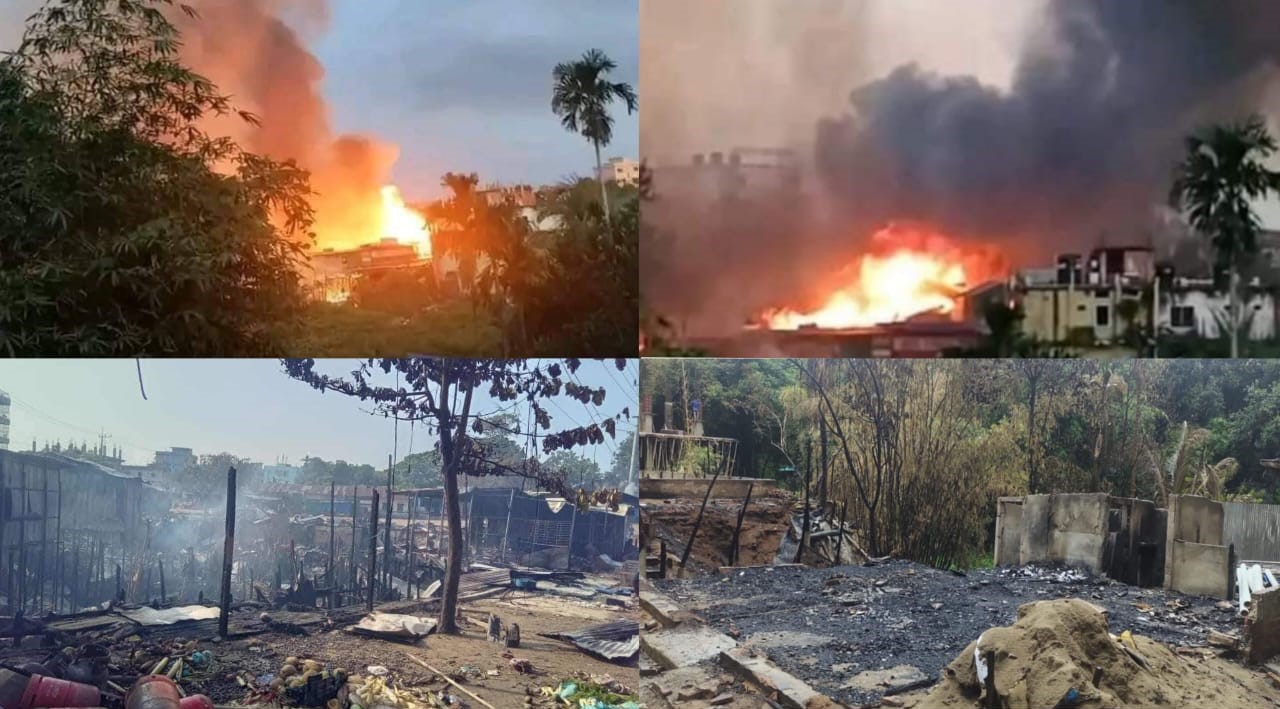
We urgently call for immediate action to address the violent assaults on the Jumma Indigenous Peoples in Dighinala Upazila, Khagrachhari Sadar Upazila, and Rangamati Sadar Upazila of the Chittagong Hill Tracts, Bangladesh. Between September 18 and 20, 2024, a series of brutal attacks resulted in at least four fatalities, nearly one hundred injuries, and the destruction of over a hundred indigenous peoples' residences, stores, and offices. Many indigenous Jumma women and children were forced to leave their homes in search of safety.
After the death of Mamun, a Bengali settler, on September 18, a series of attacks occurred. It is reported that Mamun was injured after being accused of stealing a motorcycle and then crashing into a utility pole while trying to escape from a mob. His death led to accusations against the local Indigenous Jumma community in Khagrachari, which sparked protests with communal slogans, ultimately escalating into violent retaliations.
Key Incidents Demanding Immediate Attention:
- On September 19, Bengali settlers, allegedly accompanied by military personnel, carried out coordinated attacks against Indigenous Peoples in Dighinala Upazila, Khagrachari district. Dhananjoy Chakma (50) from Udol Bagan village in Dighinala Upazila was fatally beaten during these assaults.
- Military forces reportedly opened fire on Indigenous protesters in Khagrachari Sadar, resulting in the deaths of two individuals: Junan Chakma (22), son of Ruapayn Chakma, from Dharmapur area of Perachara village in Khagrachari Sadar, and Rubel Tripura (24), son of Garjan Muni Tripura, from Paltan Joy Para in Perachara village, Khagrachari Sadar Upazila. Many others were also injured and required urgent medical attention.
- On September 20, violence persisted during a peaceful rally in Rangamati Sadar. Anik Kumar Chakma (22), a young Jumma student from Noadam, Dhanpata in Rangamati Sadar Upazila, Rangamati district, was reportedly killed, and at least fifty others were injured by Bengali settlers. The attackers vandalized homes and shops belonging to Indigenous Peoples and set fire to the offices of the Chittagong Hill Tracts Regional Council (CHTRC) and the Parbatya Chattagram Jana Samhati Samity (PCJSS), as well as a Buddhist temple, Moitri Vihar.
Local sources indicated that the attacks in Rangamati were incited by baseless rumours that Indigenous protesters had attacked a mosque, which was unsubstantiated. During these violent incidents, the local administration and law enforcement agencies' response was insufficient and largely reactive, with Section 144 only imposed after chaos ensued. Although Section 144 has recently been lifted, Indigenous peoples continue to live in fear and insecurity due to the lack of arrests of any perpetrators.
Why Immediate Action Matters:
The Chittagong Hill Tracts (CHT) in southeastern Bangladesh is a region rich in ethnic diversity and cultural heritage. It is primarily inhabited by various Indigenous communities, including the Chakma, Marma, and Tripura peoples. However, the area has endured significant political and social turmoil, especially following the partition of British India in 1947 and the establishment of Bangladesh in 1971. Historically, the CHT was recognized for its autonomy and distinct cultural identity. Nevertheless, post-independence state policies have increasingly marginalized the Indigenous Jumma communities, leading to land dispossession, deforestation, communal violence and an influx of Bengali settlers, which disrupted their traditional ways of life. These actions have often been accompanied by military rule and violence, fostering an environment of fear and oppression. This escalating situation prompted the formation of various political organizations of Indigenous Peoples, including Parbatya Chattagram Jana Samhati Samiti (PCJSS) advocating for autonomy and recognition of human rights.
The CHT Accord of 1997 was an agreement between Indigenous Peoples , led by PCJSS and the Government of Bangladesh aimed at resolving key issues in the CHT including the establishment of a special administrative system for the region. However, 27 years later, major issues from the Accord remain unresolved. These include the functional establishment of the CHT Land Commission, the devolution of power to local institutions, the preservation of the region's "tribal" characteristics, demilitarization, and the rehabilitation of internally displaced people so on. Therefore, Indigenous communities continue to face ongoing land disputes, resulting in displacement and the violation of their rights. Furthermore, these communities confront discrimination, cultural marginalization and persistent human rights abuses. The lack of accountability for such violations exacerbates the challenges faced by Indigenous peoples, leaving them vulnerable and marginalized.
The settlement of many Bengali families from the plains in the Chittagong Hill Tracts in the 1980s, supported by the government for political reasons, resulted in conflicts with the Indigenous Jumma peoples. While some Bengalis peacefully coexist with Indigenous communities as permanent residents, the Indigenous Jumma people continue to experience violence and discrimination. Despite the 1997 Chittagong Hill Tracts Accord aimed at safeguarding their rights, communal violence, often sparked by minor incidents or baseless allegations, persists. The lack of action by the military and police during these attacks worsens the situation, creating a sense of vulnerability among the Indigenous Jumma Peoples. Many violent incidents also stem from land disputes, with government policies favouring the interests of Bengali settlers over Indigenous peoples’ rights. This culture of impunity leaves many in the Jumma community traumatized, displaced, and without avenues for justice. Immediate action is necessary to address these issues and safeguard the rights, heritage, and lives of the Indigenous Jumma peoples.
Recent Government Response
On September 20, the Chief Adviser's office released a statement urging the residents of the Chittagong Hill Tracts to stay calm and assuring them that those responsible for the recent violence would be held accountable. Despite these assurances, no arrests of the perpetrators have been made. A government delegation led by Lieutenant General (Retired) Jahangir Alam Chowdhury visited Rangamati and Khagrachari on September 21 to discuss the situation with local leaders. They stressed the importance of maintaining harmony and called for law enforcement to show restraint. Nevertheless, the lack of concrete action against the perpetrators of the attacks has diminished the community's feeling of security. While there are commitments to establish a high-level investigative committee, the ongoing absence of arrests raises significant concerns about accountability and justice for the Indigenous Jumma Peoples.
Call to Action
In light of these urgent circumstances, we call for the following actions to protect the Indigenous Jumma communities and ensure justice for the victims:
- Conduct an Independent Investigation: Initiate a credible investigation into the recent violence, led by a respected international body such as the United Nations. This investigation must prioritize transparency and accountability by thoroughly examining the underlying causes of the violence.
- Fully Implement the CHT Accord of 1997: The government must commit to the full implementation of the Chittagong Hill Tracts Accord. This includes taking decisive steps to protect the land rights of Indigenous peoples and granting the Jumma communities the self-determination necessary for their political, cultural, and economic well-being.
- Prevent Future Violence: Urgent administrative and political measures should be put in place to preempt communal and violent attacks on Indigenous peoples. Policies and practices that prioritize stability and promote coexistence among diverse communities must be developed and enforced.
- Ensure Accountability for Perpetrators: All individuals involved in the violent attacks and killings of Indigenous peoples must be arrested and prosecuted swiftly.
- Investigate Military Personnel Involvement: Launch a thorough investigation into the involvement of military personnel and law enforcement agencies in violent acts against the Indigenous Jumma community. Those found complicit must be held accountable to prevent further abuses.
- Provide Medical and Financial Support: The government should establish a program to provide necessary medical care for those injured during violent incidents and extend financial assistance to Indigenous survivors. Ensure that victims and their families receive appropriate compensation for their injuries and losses, helping them to rebuild their lives effectively.
- End Military Rule: Take immediate steps to end military rule in the Chittagong Hill Tracts as mandated by the 1997 CHT Accord. This requires the repeal of Operation Uttoron and a transition from military oversight to civilian governance.
- Implement Effective Policing: Deploy mixed police forces that include both Indigenous and Bengali personnel in the Chittagong Hill Tracts, as per CHT Accord. This collaborative approach will build community trust and improve the effectiveness of law enforcement in dealing with communal attacks and ensuring public safety.
- Develop a Relocation Plan for Settlers: Create a compassionate and well-structured plan for the relocation of Bengali settlers encroaching on Indigenous peoples’ lands. This plan should facilitate a peaceful transition, promote coexistence, and respect the rights of Indigenous peoples, ensuring their access to their ancestral lands and resource.
Sign this petition to demand immediate action and justice for the Indigenous Jumma Peoples of the Chittagong Hill Tracts!

282
The Issue
Petition Description:
We urgently call for immediate action to address the violent assaults on the Jumma Indigenous Peoples in Dighinala Upazila, Khagrachhari Sadar Upazila, and Rangamati Sadar Upazila of the Chittagong Hill Tracts, Bangladesh. Between September 18 and 20, 2024, a series of brutal attacks resulted in at least four fatalities, nearly one hundred injuries, and the destruction of over a hundred indigenous peoples' residences, stores, and offices. Many indigenous Jumma women and children were forced to leave their homes in search of safety.
After the death of Mamun, a Bengali settler, on September 18, a series of attacks occurred. It is reported that Mamun was injured after being accused of stealing a motorcycle and then crashing into a utility pole while trying to escape from a mob. His death led to accusations against the local Indigenous Jumma community in Khagrachari, which sparked protests with communal slogans, ultimately escalating into violent retaliations.
Key Incidents Demanding Immediate Attention:
- On September 19, Bengali settlers, allegedly accompanied by military personnel, carried out coordinated attacks against Indigenous Peoples in Dighinala Upazila, Khagrachari district. Dhananjoy Chakma (50) from Udol Bagan village in Dighinala Upazila was fatally beaten during these assaults.
- Military forces reportedly opened fire on Indigenous protesters in Khagrachari Sadar, resulting in the deaths of two individuals: Junan Chakma (22), son of Ruapayn Chakma, from Dharmapur area of Perachara village in Khagrachari Sadar, and Rubel Tripura (24), son of Garjan Muni Tripura, from Paltan Joy Para in Perachara village, Khagrachari Sadar Upazila. Many others were also injured and required urgent medical attention.
- On September 20, violence persisted during a peaceful rally in Rangamati Sadar. Anik Kumar Chakma (22), a young Jumma student from Noadam, Dhanpata in Rangamati Sadar Upazila, Rangamati district, was reportedly killed, and at least fifty others were injured by Bengali settlers. The attackers vandalized homes and shops belonging to Indigenous Peoples and set fire to the offices of the Chittagong Hill Tracts Regional Council (CHTRC) and the Parbatya Chattagram Jana Samhati Samity (PCJSS), as well as a Buddhist temple, Moitri Vihar.
Local sources indicated that the attacks in Rangamati were incited by baseless rumours that Indigenous protesters had attacked a mosque, which was unsubstantiated. During these violent incidents, the local administration and law enforcement agencies' response was insufficient and largely reactive, with Section 144 only imposed after chaos ensued. Although Section 144 has recently been lifted, Indigenous peoples continue to live in fear and insecurity due to the lack of arrests of any perpetrators.
Why Immediate Action Matters:
The Chittagong Hill Tracts (CHT) in southeastern Bangladesh is a region rich in ethnic diversity and cultural heritage. It is primarily inhabited by various Indigenous communities, including the Chakma, Marma, and Tripura peoples. However, the area has endured significant political and social turmoil, especially following the partition of British India in 1947 and the establishment of Bangladesh in 1971. Historically, the CHT was recognized for its autonomy and distinct cultural identity. Nevertheless, post-independence state policies have increasingly marginalized the Indigenous Jumma communities, leading to land dispossession, deforestation, communal violence and an influx of Bengali settlers, which disrupted their traditional ways of life. These actions have often been accompanied by military rule and violence, fostering an environment of fear and oppression. This escalating situation prompted the formation of various political organizations of Indigenous Peoples, including Parbatya Chattagram Jana Samhati Samiti (PCJSS) advocating for autonomy and recognition of human rights.
The CHT Accord of 1997 was an agreement between Indigenous Peoples , led by PCJSS and the Government of Bangladesh aimed at resolving key issues in the CHT including the establishment of a special administrative system for the region. However, 27 years later, major issues from the Accord remain unresolved. These include the functional establishment of the CHT Land Commission, the devolution of power to local institutions, the preservation of the region's "tribal" characteristics, demilitarization, and the rehabilitation of internally displaced people so on. Therefore, Indigenous communities continue to face ongoing land disputes, resulting in displacement and the violation of their rights. Furthermore, these communities confront discrimination, cultural marginalization and persistent human rights abuses. The lack of accountability for such violations exacerbates the challenges faced by Indigenous peoples, leaving them vulnerable and marginalized.
The settlement of many Bengali families from the plains in the Chittagong Hill Tracts in the 1980s, supported by the government for political reasons, resulted in conflicts with the Indigenous Jumma peoples. While some Bengalis peacefully coexist with Indigenous communities as permanent residents, the Indigenous Jumma people continue to experience violence and discrimination. Despite the 1997 Chittagong Hill Tracts Accord aimed at safeguarding their rights, communal violence, often sparked by minor incidents or baseless allegations, persists. The lack of action by the military and police during these attacks worsens the situation, creating a sense of vulnerability among the Indigenous Jumma Peoples. Many violent incidents also stem from land disputes, with government policies favouring the interests of Bengali settlers over Indigenous peoples’ rights. This culture of impunity leaves many in the Jumma community traumatized, displaced, and without avenues for justice. Immediate action is necessary to address these issues and safeguard the rights, heritage, and lives of the Indigenous Jumma peoples.
Recent Government Response
On September 20, the Chief Adviser's office released a statement urging the residents of the Chittagong Hill Tracts to stay calm and assuring them that those responsible for the recent violence would be held accountable. Despite these assurances, no arrests of the perpetrators have been made. A government delegation led by Lieutenant General (Retired) Jahangir Alam Chowdhury visited Rangamati and Khagrachari on September 21 to discuss the situation with local leaders. They stressed the importance of maintaining harmony and called for law enforcement to show restraint. Nevertheless, the lack of concrete action against the perpetrators of the attacks has diminished the community's feeling of security. While there are commitments to establish a high-level investigative committee, the ongoing absence of arrests raises significant concerns about accountability and justice for the Indigenous Jumma Peoples.
Call to Action
In light of these urgent circumstances, we call for the following actions to protect the Indigenous Jumma communities and ensure justice for the victims:
- Conduct an Independent Investigation: Initiate a credible investigation into the recent violence, led by a respected international body such as the United Nations. This investigation must prioritize transparency and accountability by thoroughly examining the underlying causes of the violence.
- Fully Implement the CHT Accord of 1997: The government must commit to the full implementation of the Chittagong Hill Tracts Accord. This includes taking decisive steps to protect the land rights of Indigenous peoples and granting the Jumma communities the self-determination necessary for their political, cultural, and economic well-being.
- Prevent Future Violence: Urgent administrative and political measures should be put in place to preempt communal and violent attacks on Indigenous peoples. Policies and practices that prioritize stability and promote coexistence among diverse communities must be developed and enforced.
- Ensure Accountability for Perpetrators: All individuals involved in the violent attacks and killings of Indigenous peoples must be arrested and prosecuted swiftly.
- Investigate Military Personnel Involvement: Launch a thorough investigation into the involvement of military personnel and law enforcement agencies in violent acts against the Indigenous Jumma community. Those found complicit must be held accountable to prevent further abuses.
- Provide Medical and Financial Support: The government should establish a program to provide necessary medical care for those injured during violent incidents and extend financial assistance to Indigenous survivors. Ensure that victims and their families receive appropriate compensation for their injuries and losses, helping them to rebuild their lives effectively.
- End Military Rule: Take immediate steps to end military rule in the Chittagong Hill Tracts as mandated by the 1997 CHT Accord. This requires the repeal of Operation Uttoron and a transition from military oversight to civilian governance.
- Implement Effective Policing: Deploy mixed police forces that include both Indigenous and Bengali personnel in the Chittagong Hill Tracts, as per CHT Accord. This collaborative approach will build community trust and improve the effectiveness of law enforcement in dealing with communal attacks and ensuring public safety.
- Develop a Relocation Plan for Settlers: Create a compassionate and well-structured plan for the relocation of Bengali settlers encroaching on Indigenous peoples’ lands. This plan should facilitate a peaceful transition, promote coexistence, and respect the rights of Indigenous peoples, ensuring their access to their ancestral lands and resource.
Sign this petition to demand immediate action and justice for the Indigenous Jumma Peoples of the Chittagong Hill Tracts!
The Decision Makers
Petition Updates
Share this petition
Petition created on 23 September 2024