Stop the use of excess packaging material!

Stop the use of excess packaging material!
The Issue
Just like the average person, I often order things online for convenience. However, I’m often surprised at how much packaging is used for small things like a pair of shoes. Or how a package of pens that comes bundled in bubble wrap as if it was in an egg-drop competition.
Packaging, now more than ever, contributes to the filling of landfills and pollution. Specifically, due to the excess it is used in.
- Only some of this packaging is recycled, 5% of number 5 plastics are recycled, although 20% of facilities accept it.
- Only 50% of all plastic water bottles are reused, which is a problem when there are 20,000 plastic bottles being used every second, which translates to more than 1,000,000 plastic water bottles every minute going into landfills.
- All in all, 91% of recyclable plastic is not recycled.
Part of the problem is that we produce and use so much waste, specifically in packaging, when we don’t need to. Aforementioned was my own experience with an excess amount of packaging. But there’s more than that.
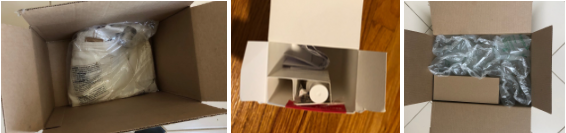
Some of the biggest problems in packaging come from the retail sector. For instance, why is it that cosmetics products that come in a slim tube, are packaged in a box that I could fit my whole hand in(Picture in the center, a show of my personal experience I mentioned)? And why do little tubs of cream come in glass containers that weigh as much as a cup of water when it’s only 3.7 ounces of actual product(Picture on the right, a personal example of excess packaging)?
None of it is necessary, it’s only to appeal to consumers to make customers think that their money is worth it(Picture on the left, my own experience with an article of clothing and too much packaging). Some of the products that we see have much more plastic in their containers than other brands. While packaging is required for transportation and to store products, many big companies use an excess of it as a marketing strategy to impress consumers. All this comes at the cost of our environment. This has a domino effect.
Another sector that contributes to waste from packaging is the food sector. Eggs, pre-cut greens, and many other fruits and vegetables are overpacked in styrofoam and plastic bags. It is not necessary for fruit to be individually packed, nor for eggs to be packed beyond a tray with a lid.
The excess packaging also causes pollution. More incineration of waste due to this packaging ending up in landfills releases gasses and vapors that contribute to air pollution. This includes vinyl chlorides, CFCs, hexane, and more. In addition, more than a million marine birds are killed each year by consuming the packaging that ends up in the ocean or getting tangled up in the packaging. In addition, this packaging also contributes to water pollution. Other marine life that consume packaging cause the pollution to be passed through the food chain. It takes hundreds of years for this packaging to degrade, and in the meantime, marine animals digest and get caught up in the packaging.
In summation, although we have been progressive with using recycled materials in our packaging, there is still a large gap between the capacity we have for materials to be recycled and the amount that is actually recycled. We need to move towards practices that:
- Use more bio-degradeable materials
- Are used in minimal quantities
This will ensure that we are not sacrificing our environment for minimal economic gains.
References:
Recycling plastic is practically impossible — and the problem is getting worse
Only about 5% of plastic waste gets recycled in US, new report says
Fifteen Plastic Packaging Statistics That Will Scare You | Ribble
basq by LARQ - How many plastic water bottles are used a minute?
Enough Is Enough: Overpackaging in the Food System » Renewable Matter
Seven Ways Wasteful Packaging Is Hurting Our Environment | Ribble

210
The Issue
Just like the average person, I often order things online for convenience. However, I’m often surprised at how much packaging is used for small things like a pair of shoes. Or how a package of pens that comes bundled in bubble wrap as if it was in an egg-drop competition.
Packaging, now more than ever, contributes to the filling of landfills and pollution. Specifically, due to the excess it is used in.
- Only some of this packaging is recycled, 5% of number 5 plastics are recycled, although 20% of facilities accept it.
- Only 50% of all plastic water bottles are reused, which is a problem when there are 20,000 plastic bottles being used every second, which translates to more than 1,000,000 plastic water bottles every minute going into landfills.
- All in all, 91% of recyclable plastic is not recycled.
Part of the problem is that we produce and use so much waste, specifically in packaging, when we don’t need to. Aforementioned was my own experience with an excess amount of packaging. But there’s more than that.
Some of the biggest problems in packaging come from the retail sector. For instance, why is it that cosmetics products that come in a slim tube, are packaged in a box that I could fit my whole hand in(Picture in the center, a show of my personal experience I mentioned)? And why do little tubs of cream come in glass containers that weigh as much as a cup of water when it’s only 3.7 ounces of actual product(Picture on the right, a personal example of excess packaging)?
None of it is necessary, it’s only to appeal to consumers to make customers think that their money is worth it(Picture on the left, my own experience with an article of clothing and too much packaging). Some of the products that we see have much more plastic in their containers than other brands. While packaging is required for transportation and to store products, many big companies use an excess of it as a marketing strategy to impress consumers. All this comes at the cost of our environment. This has a domino effect.
Another sector that contributes to waste from packaging is the food sector. Eggs, pre-cut greens, and many other fruits and vegetables are overpacked in styrofoam and plastic bags. It is not necessary for fruit to be individually packed, nor for eggs to be packed beyond a tray with a lid.
The excess packaging also causes pollution. More incineration of waste due to this packaging ending up in landfills releases gasses and vapors that contribute to air pollution. This includes vinyl chlorides, CFCs, hexane, and more. In addition, more than a million marine birds are killed each year by consuming the packaging that ends up in the ocean or getting tangled up in the packaging. In addition, this packaging also contributes to water pollution. Other marine life that consume packaging cause the pollution to be passed through the food chain. It takes hundreds of years for this packaging to degrade, and in the meantime, marine animals digest and get caught up in the packaging.
In summation, although we have been progressive with using recycled materials in our packaging, there is still a large gap between the capacity we have for materials to be recycled and the amount that is actually recycled. We need to move towards practices that:
- Use more bio-degradeable materials
- Are used in minimal quantities
This will ensure that we are not sacrificing our environment for minimal economic gains.
References:
Recycling plastic is practically impossible — and the problem is getting worse
Only about 5% of plastic waste gets recycled in US, new report says
Fifteen Plastic Packaging Statistics That Will Scare You | Ribble
basq by LARQ - How many plastic water bottles are used a minute?
Enough Is Enough: Overpackaging in the Food System » Renewable Matter
Seven Ways Wasteful Packaging Is Hurting Our Environment | Ribble
210
Petition Updates
Share this petition
Petition created on December 27, 2022