
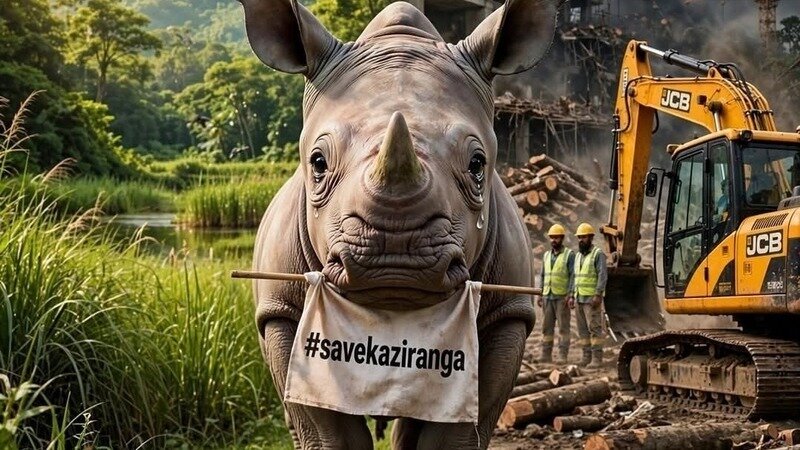
STOP the proposed Reduction of Kaziranga's Eco-Sensitive Zone from 10 km to 1 km
The Issue
Kaziranga National Park, a UNESCO World Heritage Site located in Assam, India, is renowned for its dense population of the critically endangered Great Indian one-horned rhinoceros. This iconic refuge spans the floodplains of the Brahmaputra River and is one of the last bastions for numerous threatened species including Royal Bengal tigers , Asian elephants and Asiatic Wild Water Buffalos. Its significance in biodiversity conservation and as a major tourist destination is unparalleled. The park’s balance within its vast, delicate ecosystem is a marvel that we must protect for future generations.
Unfortunately, Kaziranga’s spectacular biosphere is under threat. The Assam government has proposed a drastic reduction of the Eco-Sensitive Zone (ESZ) from 10 km to just 1 km around the park. This change poses a grave risk to the wildlife and fragile ecosystem by exposing it to unmitigated urbanization, pollution, and the adverse impacts of climate change. The 10 km buffer zone is crucial in mitigating these threats by regulating environmentally damaging activities in the vicinity of the park.
A reduced ESZ will open the gates to increased encroachments, illegal mining activities, and infrastructure development, endangering the wildlife habitats and leading to human-animal conflicts. These consequences can irreparably damage the ecosystems that support some of the world's rarest species. Already, the pressures from the surrounding human population and developmental activities are immense; a reduction in buffer zone will only worsen the situation and threaten Kaziranga's status as a UNESCO World Heritage Site.
The reduction of the ESZ boundary poses a severe risk to these ecological functions. Scientists and environmentalists alike have raised alarms, citing examples where wildlife corridors have been disrupted due to diminished buffer zones leading to increased human-wildlife conflict. According to the National Tiger Conservation Authority, preserving large buffer areas around protected zones is crucial for the movement and growth of wildlife populations.
Despite more than 70% of Kaziranga's terrain being flood-prone, the large buffer zone has been instrumental in allowing animals to move safely to and from high ground during the monsoon floods, which are an annual occurrence. Moreover, the introduction of invasive human activities so close to the park will hinder the wildlife's natural movement, affecting their survival patterns drastically.
What can we do? We can urge the Assam government to consider the long-term implications of their proposal and to uphold the original 10 km ESZ to ensure the continued protection of this unique and invaluable ecosystem.
Join me in acting to safeguard the future of Kaziranga National Park. Sign this petition to voice our solidarity for Kaziranga’s preservation, urging decision-makers to maintain a healthy and intact ESZ that so many species rely on for survival. Your signature can help highlight the global and local importance of Kaziranga's natural heritage, pressing the authorities to rethink their stance.

208
The Issue
Kaziranga National Park, a UNESCO World Heritage Site located in Assam, India, is renowned for its dense population of the critically endangered Great Indian one-horned rhinoceros. This iconic refuge spans the floodplains of the Brahmaputra River and is one of the last bastions for numerous threatened species including Royal Bengal tigers , Asian elephants and Asiatic Wild Water Buffalos. Its significance in biodiversity conservation and as a major tourist destination is unparalleled. The park’s balance within its vast, delicate ecosystem is a marvel that we must protect for future generations.
Unfortunately, Kaziranga’s spectacular biosphere is under threat. The Assam government has proposed a drastic reduction of the Eco-Sensitive Zone (ESZ) from 10 km to just 1 km around the park. This change poses a grave risk to the wildlife and fragile ecosystem by exposing it to unmitigated urbanization, pollution, and the adverse impacts of climate change. The 10 km buffer zone is crucial in mitigating these threats by regulating environmentally damaging activities in the vicinity of the park.
A reduced ESZ will open the gates to increased encroachments, illegal mining activities, and infrastructure development, endangering the wildlife habitats and leading to human-animal conflicts. These consequences can irreparably damage the ecosystems that support some of the world's rarest species. Already, the pressures from the surrounding human population and developmental activities are immense; a reduction in buffer zone will only worsen the situation and threaten Kaziranga's status as a UNESCO World Heritage Site.
The reduction of the ESZ boundary poses a severe risk to these ecological functions. Scientists and environmentalists alike have raised alarms, citing examples where wildlife corridors have been disrupted due to diminished buffer zones leading to increased human-wildlife conflict. According to the National Tiger Conservation Authority, preserving large buffer areas around protected zones is crucial for the movement and growth of wildlife populations.
Despite more than 70% of Kaziranga's terrain being flood-prone, the large buffer zone has been instrumental in allowing animals to move safely to and from high ground during the monsoon floods, which are an annual occurrence. Moreover, the introduction of invasive human activities so close to the park will hinder the wildlife's natural movement, affecting their survival patterns drastically.
What can we do? We can urge the Assam government to consider the long-term implications of their proposal and to uphold the original 10 km ESZ to ensure the continued protection of this unique and invaluable ecosystem.
Join me in acting to safeguard the future of Kaziranga National Park. Sign this petition to voice our solidarity for Kaziranga’s preservation, urging decision-makers to maintain a healthy and intact ESZ that so many species rely on for survival. Your signature can help highlight the global and local importance of Kaziranga's natural heritage, pressing the authorities to rethink their stance.
Supporter Voices
Petition Updates
Share this petition
Petition created on 13 August 2026