

Stop the Excessive Execution of Black Bears in North Vancouver!
The Issue
People of North Vancouver, our ecosystem is critically threatened!
A huge part of North Van culture is our love of the outdoors; our connection to nature. Nature is a delicate balance, wherein every living thing in a given ecosystem is highly dependent on every other thing working properly, but what if it doesn’t? What happens if the delicate balance of the natural world is disrupted? Simply put, it places every single living being, humans included, in dire straits. By removing keystone species, for example, highly important predators like the black bear, this balance is upset, causing problems such as overpopulation of prey animals, food shortages, increased aggression and territoriality of other predators, etc. We cannot allow for this to happen, or the natural world that means so much to us in North Van will pay the price. On that note, I propose that we more heavily restrict the execution, whether by euthanasia or on-site killing, of black bears to include only confirmed repeat captures (determined via tagging), individuals who are suffering and have with no hope of recovering, and those who have shown unprovoked aggression against humans or domestic animals, as well as invest further in non-lethal methods of deterring black bears from feeding in human-occupied areas.
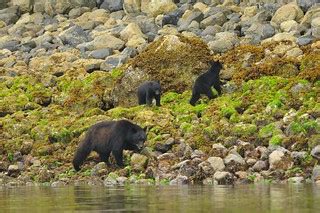
A black bear mother and her cubs roam the Tofino coastline (source).
According to the official website for the government of BC, just last April (as of July 17th, 2024), out of 84 calls attended by conservation officers, only 5 resulted in the bear being deterred using non-lethal means, just 1 bear was translocated, and 17 were destroyed. Additionally, of the cubs of those 17, not a single one was sent to rehab! Despite these horrifying statistics, this is just the tip of the iceberg. In September 2015, from the 522 calls attended, 59 were deterred using non-lethal means, Not a single one was translocated, 216 were destroyed, and only 8 cubs were sent to rehab! These numbers are unacceptable. The black bear is one of the only large predators still present in BC, as the area’s grey wolf and grizzly bear populations have been all but exterminated. To lose the black bear as well would cause irreparable damage to the local ecosystem. I firmly believe we must stop the problem from getting out of hand before it is too late. The wild lands of BC, whether forests, mountains, or coasts are a vital source of tourism-based income and community for BC residents; their survival is key to ours.
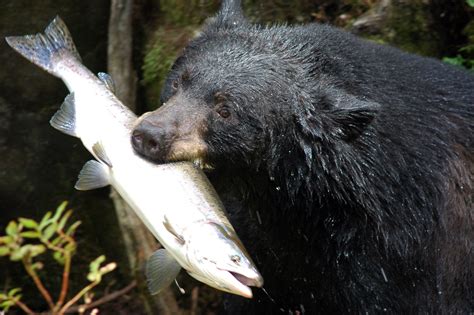
A black bear catches a salmon in its mouth (source).
On top of the severe consequences to both the local ecosystem and the BC identity that comes with it, there is also the animal rights side to consider. These creatures are beautiful, and they have a right to live their lives undisturbed by humanity to whatever extent is possible. When a bear perishes in the wild, for whatever reason, that is natural. When a bear is shot simply for being a bear that wandered out of its ever-shrinking habitat just to be able to eat, that is unjust and irresponsible. For us humans to truly enjoy the outside to its fullest, we have to respect nature. After all we’ve taken from it and its many creatures, is that not the least of what its owed?
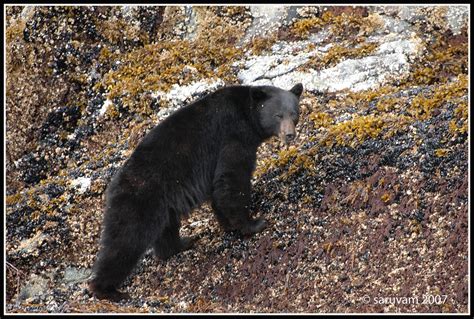
A black bear climbs up some rocky terrain (source)
All that being said, I urge Mrs. Susie Chant, MLA for the North Vancouver-Seymour British Columbia provincial electoral district, The honourable George Heyman, Minister of Environment and Climate Change Strategy for the province of British Columbia, and the honourable Bruce Ralston, Minister of Forests for the province of British Columbia to consider this petition, and in doing so, take the next step towards saving our natural world.
Works cited:
Ministry of Environment and Climate Change Strategy. (2024, May 29).
Predator statistics: Black bear - Province of British Columbia.
WildSafeBC. (2023, July 11). Black Bear – WildsafeBC. WildsafeBC.
https://wildsafebc.com/species/black-bear/
Ministry of Forests, Lands, Natural Resource Operations and Rural Development. (April 2020).
British Columbia Grizzly Bear Population Estimate for 2018.
https://www2.gov.bc.ca/assets/gov/environment/plants-animals-and-ecosystems/wildlife-wildlife-habitat/grizzly-bears/grizzly_bear_pop_est_report_2018_final.pdf
Wild, Pacific. “Wolves and the Food Web.” Pacific Wild, 6 Dec. 2023,

9,939
The Issue
People of North Vancouver, our ecosystem is critically threatened!
A huge part of North Van culture is our love of the outdoors; our connection to nature. Nature is a delicate balance, wherein every living thing in a given ecosystem is highly dependent on every other thing working properly, but what if it doesn’t? What happens if the delicate balance of the natural world is disrupted? Simply put, it places every single living being, humans included, in dire straits. By removing keystone species, for example, highly important predators like the black bear, this balance is upset, causing problems such as overpopulation of prey animals, food shortages, increased aggression and territoriality of other predators, etc. We cannot allow for this to happen, or the natural world that means so much to us in North Van will pay the price. On that note, I propose that we more heavily restrict the execution, whether by euthanasia or on-site killing, of black bears to include only confirmed repeat captures (determined via tagging), individuals who are suffering and have with no hope of recovering, and those who have shown unprovoked aggression against humans or domestic animals, as well as invest further in non-lethal methods of deterring black bears from feeding in human-occupied areas.
A black bear mother and her cubs roam the Tofino coastline (source).
According to the official website for the government of BC, just last April (as of July 17th, 2024), out of 84 calls attended by conservation officers, only 5 resulted in the bear being deterred using non-lethal means, just 1 bear was translocated, and 17 were destroyed. Additionally, of the cubs of those 17, not a single one was sent to rehab! Despite these horrifying statistics, this is just the tip of the iceberg. In September 2015, from the 522 calls attended, 59 were deterred using non-lethal means, Not a single one was translocated, 216 were destroyed, and only 8 cubs were sent to rehab! These numbers are unacceptable. The black bear is one of the only large predators still present in BC, as the area’s grey wolf and grizzly bear populations have been all but exterminated. To lose the black bear as well would cause irreparable damage to the local ecosystem. I firmly believe we must stop the problem from getting out of hand before it is too late. The wild lands of BC, whether forests, mountains, or coasts are a vital source of tourism-based income and community for BC residents; their survival is key to ours.
A black bear catches a salmon in its mouth (source).
On top of the severe consequences to both the local ecosystem and the BC identity that comes with it, there is also the animal rights side to consider. These creatures are beautiful, and they have a right to live their lives undisturbed by humanity to whatever extent is possible. When a bear perishes in the wild, for whatever reason, that is natural. When a bear is shot simply for being a bear that wandered out of its ever-shrinking habitat just to be able to eat, that is unjust and irresponsible. For us humans to truly enjoy the outside to its fullest, we have to respect nature. After all we’ve taken from it and its many creatures, is that not the least of what its owed?
A black bear climbs up some rocky terrain (source)
All that being said, I urge Mrs. Susie Chant, MLA for the North Vancouver-Seymour British Columbia provincial electoral district, The honourable George Heyman, Minister of Environment and Climate Change Strategy for the province of British Columbia, and the honourable Bruce Ralston, Minister of Forests for the province of British Columbia to consider this petition, and in doing so, take the next step towards saving our natural world.
Works cited:
Ministry of Environment and Climate Change Strategy. (2024, May 29).
Predator statistics: Black bear - Province of British Columbia.
WildSafeBC. (2023, July 11). Black Bear – WildsafeBC. WildsafeBC.
https://wildsafebc.com/species/black-bear/
Ministry of Forests, Lands, Natural Resource Operations and Rural Development. (April 2020).
British Columbia Grizzly Bear Population Estimate for 2018.
https://www2.gov.bc.ca/assets/gov/environment/plants-animals-and-ecosystems/wildlife-wildlife-habitat/grizzly-bears/grizzly_bear_pop_est_report_2018_final.pdf
Wild, Pacific. “Wolves and the Food Web.” Pacific Wild, 6 Dec. 2023,
The Decision Makers

Petition Updates
Share this petition
Petition created on July 17, 2024