

Stop Peabody demolishing the Lesnes Estate, Thamesmead London. Refurbish don't demolish!!!
The Issue
Peabody, the social housing provider turned developer, has submitted plans to demolish the Lesnes Estate and replace it with double density housing. The first residents moved here in the 60’s to escape the cramped and overcrowded slums of inner-city London, and over the years, they have been joined by an immigrant community fleeing their own countries, and also seeking solace. Together, we have made a life and supported each other, and though we lived on the margins of society, we raised our families, built a community, and became homeowners. Now once more we are at the mercy of those who wish to displace us. We are tired of running. Peabody’s plans will destroy our way of life by demolishing our homes and creating carbon emissions in the process. Help us defeat this ecocidal and egomaniac proposal by signing this petition.
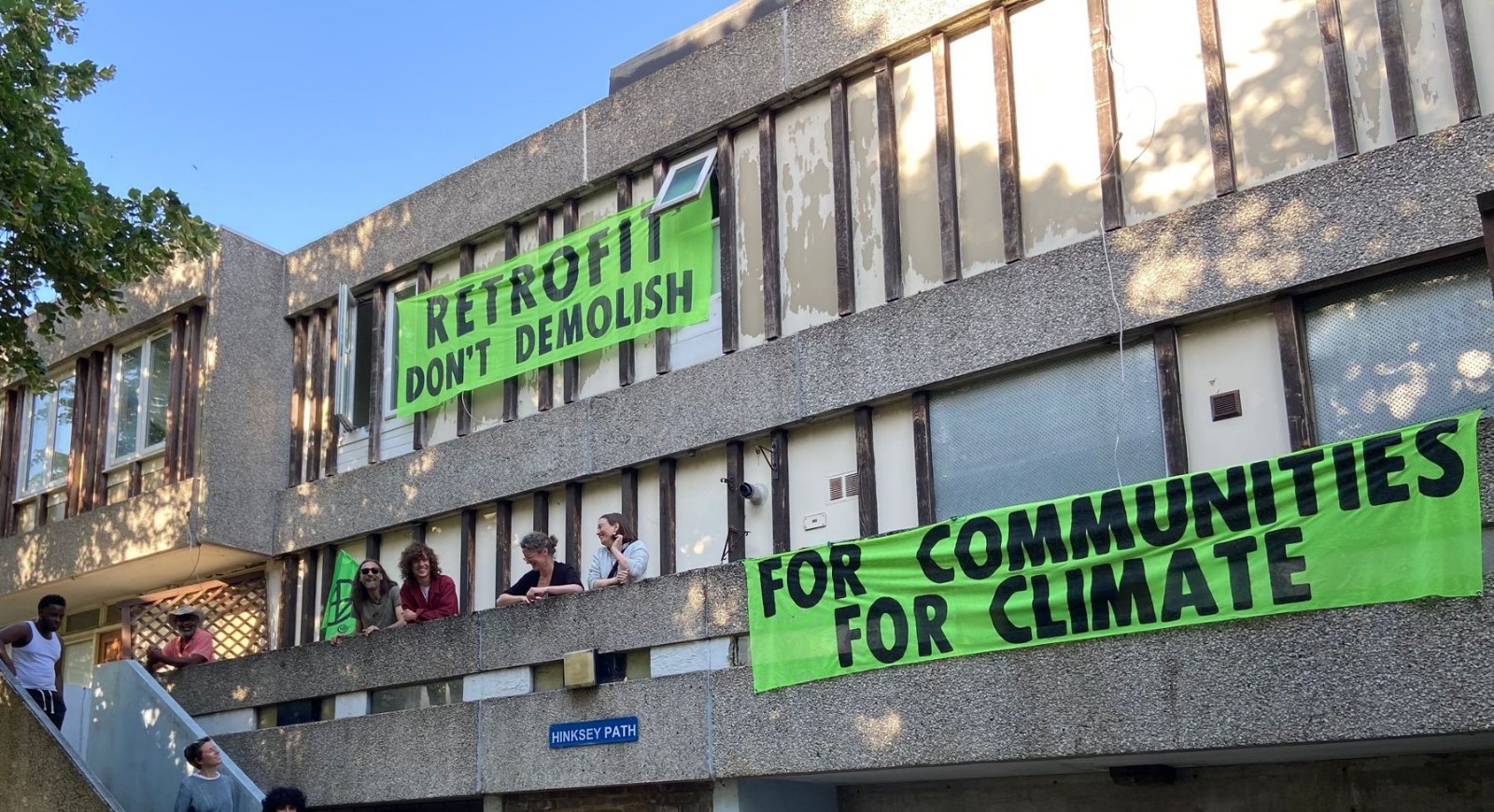
The Lenses estate comprises 562 units of housing made up of 288 flats and 274 town houses and nestles alongside the Lesnes Abbey Woods, in South East London. It was part of a grand vision by planners, who, in the aftermath of the WW2 sought to build a new city that would become a prototype for all other cities to follow. It was part of a futuristic attempt to improve the well-being of the populace by building mixed used spacious homes for 60,000 residents, surrounded by a network of parkland and waterways. Their vision was of an inclusive settlement designed for modern living. It was a radical shift away from all that had come before it and it was met with critical acclaim and prestigious prizes. It attracted visitors from far and wide, including Stanley Kubrick who immortalized it in his movie, A Clockwork Orange.
The vision did not fully materialise though, because the Greater London Council whose pet project it was, was abolished by the Tory government in the 80’s. The master-plan was torn up and, in its place, sprang up traditional red brick houses of the type favored by speculative developers. A proposed tube extension to Thamesmead also never materialized, meaning that the area became all but isolated at the furthest reaches of London. It quickly became a place suitable only for the very desperately needy, a sink estate.
Naturally, it attracted the attention of councils seeking to reduce their housing registers and the successive waves of immigrants for whom truly affordable housing was a priority. The influx of Nigerian and Ghanaian immigrants to the area rewrote the demography of the area. Together, they form the majority of the population of Thamesmead and this is reflected also on the Lesnes Estate. The purported difficulties of living in this forlorn corner of London were no match for a people used to hardships of a harsher kind and seeking a better life. So, they raised their families, built a community, thrived, and some of them became homeowners.
They lived largely undisturbed and un-regarded, even by Gallions Housing who, managed and held the estate in trust until 2014, when, it was acquired by Peabody and a stroke, what was public land passed over into a private developers' hands. Peabody duly consulted with the estate residents asking if they would prefer better living conditions, which they unsurprisingly agreed to, and then promptly turned around and produced plans to demolish the estate and replace it with a development that would double the density of the current housing provision. To the homeowners they offered derisory compensation based on the ‘market valuation’ of their homes. Quite how the market values homes under the threat of demolition is unclear.
Phase one of their plans for the area was a mixture of housing and a community Centre. It has since been completed and sits adjacent to the Lenses estate and has been described by the Guardians architecture critic in a piece titled "What happened to the cockney riviera? The botched regeneration of brutalist utopia Thamesmead ", as a "lumpen mess, surrounding a bleak expanse masquerading as a square, that looks as if it has been cobbled together from a pile of leftover bits of other housing projects". The children's play area sits smack in the middle of a car park. The 'development' sits on the site of the iconic Tavy Bridge, demolished to make way for it. Binsey Walk nearby, famously depicted as a futuristic location in Stanley Kubrick's A clockwork Orange, has similarly been demolished, and will be replaced by red brick mansion blocks. In contrast, the houses on the Lenses estate are thoughtfully laid out around shady courtyards where the children can play, in full view of their parents. The tower blocks border the estate enjoying views of the woods and along with the garage blocks, protect residents in the houses from traffic noise and pollution.
Peabody's justification for demolishing the estate are that: the dwellings have come to the end of their lives and to refurbish them would be “neither deliverable nor economically justifiable”; that they have to make way for much needed 'affordable' housing, and which, it intends to achieve by doubling the density of buildings on the estate; and that 70% of the residents had approved their plans. All of which are misleading claims.
Lesnes estate is one of 3 neighbouring estates, identical in every way and which were built at the same time. The other 2, Parkview and Southmere Estates will not be demolished. Lesnes Estate alone, is past its sell by date. According to Peabody's own data, their proposal will lead to the loss of 43 social rent homes. In its drive toward preparing the estate for demolition, much of the social tenants have been moved on and been replaced by private renters and guardians. Lately, it has resorted to boarding up homes that have been 'decanted' of their occupants. Yet, the local council, Bexley has over 7000 households on its housing register, and it only manages to house 10% of them annually, half of whom are placed out of the borough, because, in their words: “In common with local authorities across London, we face serious challenges around housing.” Nevertheless, they have granted Peabody planning application to reduce the social housing provision on the estate, even though they plan to double its density. Rough sleepers are now a common sight in the area. The under-croft of the Abbeywood flyover is currently a makeshift camp for the homeless and on the estate, occupants of the towers are arriving home to find rough sleepers in the stairwells. This is the true face of regeneration.
1582 of the 1950 homes Peabody plans to build on the estate will be for outright sale, it says, at affordable prices. Two-bedroom apartments at its not long completed Phase 1 were on the market £500,000. Affordable then only for the investors it has courted in Hong Kong via YouTube. Homeowners on our estate have been offered the apparent 'market value' of their homes but they were not offered to swap their old homes for the proposed new homes because Peabody has valued those at more than twice their offer price. Instead, if they want to stay on the rebuilt estate, they have been offered an interest free top up loan by Peabody to pay the difference. Residents at the end of their working lives who, having paid off their mortgages now get the bogus prize of having Peabody as their equity partner, and robbing their children of their inheritance.
Peabody's claims of planning to double the density on the estate refers only to the area that will taken up by the buildings. Their plan is to build 1950 homes on a site that currently serves 562 homes. Their proposed scheme will in fact mean increasing the property count by 247%. This will of course lead to crowded conditions on the estate. More people living in slum sized housing. The very thing Thamesmead and by extension the Lesnes Estate was built to overcome. Where one person stood, three and a half will then share. The Lesnes way of life will be well and truly over. Peabody's claim that 70% of the residents approved their plans hides an inconvenient truth: the overwhelming majority of the lease and freeholders on the estate, that is , those who have financially invested in the estate and for whom greater weight of opinion and consideration should be given, oppose their plans.
What about the elephant in the room? We have, as the UN Secretary General put it, now moved from Global Warming to Global Boiling. The construction industry accounts for 10% of the UK emissions contributing to this catastrophe. To their credit, Peabody are aware of the environmental argument against demolition and rebuilding. They just don't care. The Peabody Executive Director of Thamesmead, John Lewis is on record as saying that: “The carbon agenda has become so much more understood, even in the last few years....In future phases, there might be more elbow room to achieve a long-term improvement and enhancement plan, rather than regeneration through demolition.” He now plans to refurbish rather than demolish the neighbouring Parkview Estate, and the other, Southmere Estate, will be kept as a “heritage island”. It is hard to escape the conclusion that it is its proximity to the Elizabeth Line train station at Abbeywood that is responsible for Peabody's inconsistent and contradictory justifications for wanting to be allowed to pollute unnecessarily, just one more time!
George Peabody, an American philanthropist set up the Trust that bears his name in1862, to: ameliorate the condition of the poor and needy of London. His heirs are greedy, opportunistic chancers on the make. They intend to steal our land and our homes and take the environment for a ride. All at once. All for profit. Help us end this corruption. We have come too far to go back. We want our land back. We will hold it in a Community Land Trust which, we will manage ourselves. Your signatures will prove to Peabody that their plans are unpopular and out of sync with the times. It will help persuade the Mayor of London, whose office we have petitioned not to ratify Bexley’s planning permission, to order a public enquiry. Sign this petition. Thank you


1,655
The Issue
Peabody, the social housing provider turned developer, has submitted plans to demolish the Lesnes Estate and replace it with double density housing. The first residents moved here in the 60’s to escape the cramped and overcrowded slums of inner-city London, and over the years, they have been joined by an immigrant community fleeing their own countries, and also seeking solace. Together, we have made a life and supported each other, and though we lived on the margins of society, we raised our families, built a community, and became homeowners. Now once more we are at the mercy of those who wish to displace us. We are tired of running. Peabody’s plans will destroy our way of life by demolishing our homes and creating carbon emissions in the process. Help us defeat this ecocidal and egomaniac proposal by signing this petition.
The Lenses estate comprises 562 units of housing made up of 288 flats and 274 town houses and nestles alongside the Lesnes Abbey Woods, in South East London. It was part of a grand vision by planners, who, in the aftermath of the WW2 sought to build a new city that would become a prototype for all other cities to follow. It was part of a futuristic attempt to improve the well-being of the populace by building mixed used spacious homes for 60,000 residents, surrounded by a network of parkland and waterways. Their vision was of an inclusive settlement designed for modern living. It was a radical shift away from all that had come before it and it was met with critical acclaim and prestigious prizes. It attracted visitors from far and wide, including Stanley Kubrick who immortalized it in his movie, A Clockwork Orange.
The vision did not fully materialise though, because the Greater London Council whose pet project it was, was abolished by the Tory government in the 80’s. The master-plan was torn up and, in its place, sprang up traditional red brick houses of the type favored by speculative developers. A proposed tube extension to Thamesmead also never materialized, meaning that the area became all but isolated at the furthest reaches of London. It quickly became a place suitable only for the very desperately needy, a sink estate.
Naturally, it attracted the attention of councils seeking to reduce their housing registers and the successive waves of immigrants for whom truly affordable housing was a priority. The influx of Nigerian and Ghanaian immigrants to the area rewrote the demography of the area. Together, they form the majority of the population of Thamesmead and this is reflected also on the Lesnes Estate. The purported difficulties of living in this forlorn corner of London were no match for a people used to hardships of a harsher kind and seeking a better life. So, they raised their families, built a community, thrived, and some of them became homeowners.
They lived largely undisturbed and un-regarded, even by Gallions Housing who, managed and held the estate in trust until 2014, when, it was acquired by Peabody and a stroke, what was public land passed over into a private developers' hands. Peabody duly consulted with the estate residents asking if they would prefer better living conditions, which they unsurprisingly agreed to, and then promptly turned around and produced plans to demolish the estate and replace it with a development that would double the density of the current housing provision. To the homeowners they offered derisory compensation based on the ‘market valuation’ of their homes. Quite how the market values homes under the threat of demolition is unclear.
Phase one of their plans for the area was a mixture of housing and a community Centre. It has since been completed and sits adjacent to the Lenses estate and has been described by the Guardians architecture critic in a piece titled "What happened to the cockney riviera? The botched regeneration of brutalist utopia Thamesmead ", as a "lumpen mess, surrounding a bleak expanse masquerading as a square, that looks as if it has been cobbled together from a pile of leftover bits of other housing projects". The children's play area sits smack in the middle of a car park. The 'development' sits on the site of the iconic Tavy Bridge, demolished to make way for it. Binsey Walk nearby, famously depicted as a futuristic location in Stanley Kubrick's A clockwork Orange, has similarly been demolished, and will be replaced by red brick mansion blocks. In contrast, the houses on the Lenses estate are thoughtfully laid out around shady courtyards where the children can play, in full view of their parents. The tower blocks border the estate enjoying views of the woods and along with the garage blocks, protect residents in the houses from traffic noise and pollution.
Peabody's justification for demolishing the estate are that: the dwellings have come to the end of their lives and to refurbish them would be “neither deliverable nor economically justifiable”; that they have to make way for much needed 'affordable' housing, and which, it intends to achieve by doubling the density of buildings on the estate; and that 70% of the residents had approved their plans. All of which are misleading claims.
Lesnes estate is one of 3 neighbouring estates, identical in every way and which were built at the same time. The other 2, Parkview and Southmere Estates will not be demolished. Lesnes Estate alone, is past its sell by date. According to Peabody's own data, their proposal will lead to the loss of 43 social rent homes. In its drive toward preparing the estate for demolition, much of the social tenants have been moved on and been replaced by private renters and guardians. Lately, it has resorted to boarding up homes that have been 'decanted' of their occupants. Yet, the local council, Bexley has over 7000 households on its housing register, and it only manages to house 10% of them annually, half of whom are placed out of the borough, because, in their words: “In common with local authorities across London, we face serious challenges around housing.” Nevertheless, they have granted Peabody planning application to reduce the social housing provision on the estate, even though they plan to double its density. Rough sleepers are now a common sight in the area. The under-croft of the Abbeywood flyover is currently a makeshift camp for the homeless and on the estate, occupants of the towers are arriving home to find rough sleepers in the stairwells. This is the true face of regeneration.
1582 of the 1950 homes Peabody plans to build on the estate will be for outright sale, it says, at affordable prices. Two-bedroom apartments at its not long completed Phase 1 were on the market £500,000. Affordable then only for the investors it has courted in Hong Kong via YouTube. Homeowners on our estate have been offered the apparent 'market value' of their homes but they were not offered to swap their old homes for the proposed new homes because Peabody has valued those at more than twice their offer price. Instead, if they want to stay on the rebuilt estate, they have been offered an interest free top up loan by Peabody to pay the difference. Residents at the end of their working lives who, having paid off their mortgages now get the bogus prize of having Peabody as their equity partner, and robbing their children of their inheritance.
Peabody's claims of planning to double the density on the estate refers only to the area that will taken up by the buildings. Their plan is to build 1950 homes on a site that currently serves 562 homes. Their proposed scheme will in fact mean increasing the property count by 247%. This will of course lead to crowded conditions on the estate. More people living in slum sized housing. The very thing Thamesmead and by extension the Lesnes Estate was built to overcome. Where one person stood, three and a half will then share. The Lesnes way of life will be well and truly over. Peabody's claim that 70% of the residents approved their plans hides an inconvenient truth: the overwhelming majority of the lease and freeholders on the estate, that is , those who have financially invested in the estate and for whom greater weight of opinion and consideration should be given, oppose their plans.
What about the elephant in the room? We have, as the UN Secretary General put it, now moved from Global Warming to Global Boiling. The construction industry accounts for 10% of the UK emissions contributing to this catastrophe. To their credit, Peabody are aware of the environmental argument against demolition and rebuilding. They just don't care. The Peabody Executive Director of Thamesmead, John Lewis is on record as saying that: “The carbon agenda has become so much more understood, even in the last few years....In future phases, there might be more elbow room to achieve a long-term improvement and enhancement plan, rather than regeneration through demolition.” He now plans to refurbish rather than demolish the neighbouring Parkview Estate, and the other, Southmere Estate, will be kept as a “heritage island”. It is hard to escape the conclusion that it is its proximity to the Elizabeth Line train station at Abbeywood that is responsible for Peabody's inconsistent and contradictory justifications for wanting to be allowed to pollute unnecessarily, just one more time!
George Peabody, an American philanthropist set up the Trust that bears his name in1862, to: ameliorate the condition of the poor and needy of London. His heirs are greedy, opportunistic chancers on the make. They intend to steal our land and our homes and take the environment for a ride. All at once. All for profit. Help us end this corruption. We have come too far to go back. We want our land back. We will hold it in a Community Land Trust which, we will manage ourselves. Your signatures will prove to Peabody that their plans are unpopular and out of sync with the times. It will help persuade the Mayor of London, whose office we have petitioned not to ratify Bexley’s planning permission, to order a public enquiry. Sign this petition. Thank you
The Decision Makers


Supporter Voices
Petition Updates
Share this petition
Petition created on 19 September 2023