Important Trecelyn Wind Farm Second objection Deadline Approaching !

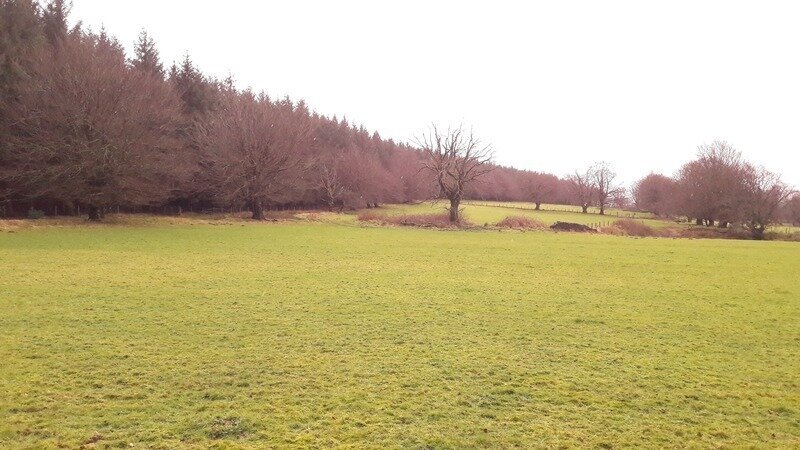
Important Trecelyn Wind Farm Second objection Deadline Approaching, copy and paste objection email below - scroll down !
Hi Everyone,
The deadline for the Second objection stage relating to Pennant Walters wind farm is next Monday 23rd June 2025... And Boy does this one take some digesting !....
This proposed development is for 4 x 145m High Turbines with one being sited near the mine on Mynydd Maen and the others along side Nant Gwyddon forest area. Aside from the stupidity of selecting an area that can only be accessed by very steep approach roads passing in close proximity to peoples homes, it gets better...
Having identified the area for being home to 9 Bat Species, ( 14 Species near the Solar Farm ), birds of Pray and Greater Crested Newts etc...Here's how they propose to combat this wildlife.
Greater Crested Newts
They propose the pond that is too close to turbine 3,( not turbine 3 is to close to the pond ), be moved by digging another pond and sending in grown Men And Women with 1,000,000 candle power torches, at dusk to midnight, to search on their hands and knees and catch the Newts. They are then going to release the Newts, that haven't been scared to death or blinded in the process, into the new pond. Then employ someone to pay regular visits to the pond over the following years to 'keep an eye on them'.
Bats and Birds
With Turbine 2,3 & 4 being located right along side the Nant Gwyddon Forest. The trees along side have clearly been identified, in study maps, as homes to many Species of Bat's and also Birds of Pray, here's what our friends at Natural Resources Wales ( NRW ) recommend... A 'Bat Buffer Zone'.
What this entails is cutting down over 1 solid Acre of Woodland and 56 individual Trees that home the Bats and birds. This is to create a 'clear zone' around the Turbines to minimise the impact deaths in the Turbine Blades. Then any Bats that didn't Die when their homes were cut down may still be flying around the area. So to check if any have hit the turbine blades they are going to send in people to check for dead bats at the bases of the turbines. But if they struggle they propose to send in sniffer dogs, to sniff out the dead Bat Carcasses. If found, the developer proposes to put the turbines in 'Curtailment' (Slow them down so they aren't producing electric). We pay the Curtailment money on our energy bills for this to compensate for the developers losses. If then they decide there are too many Bats getting Killed, they propose to put the Turbines into Curtailment throughout the Bat Roosting Season ( May – September -dusk till dawn). Meaning we again will be paying for all this?
I've got a better idea..what about no Turbines at all to save the lives of all this wildlife and save the trees!
I've added References so you can see for yourself:-
Ref 2025-04-30 - APP FI - Arboricultural Impact Assessment 2.13 'Proposed development will therefore likely result in the removal of 56 individual trees and 0.41 hectares in relation to tree groups'.
2025-04-30 - APP FI - Biodiversity Clarification Note ( High Risk To Bats ) 3.2 In respect of bat mitigation options, published guidance3 states that both the curtailment of turbines and/or the application of a 50m4 habitat buffer between the turbine blade tip and nearest bat habitat feature comprise effective mitigation measures for wind farm development, as stated within section 7.1.1 of the guidance: “The risk to bats may be lessened by adjusting the proposed layout of the turbines, in order to avoid parts of the development site that have been shown to have high bat activity and where turbines might pose a particular risk of bat collisions.
2025-04-30 - APP FI - Environmental Statement Addendum 5.2.4. The wider breeding bird assemblage, principally tree-nesting passerines, will be subject to additional breeding and foraging habitat loss as a result of the removal of 56 trees occurring within the calculated bat buffers of Turbines 2, 3 and 4 or where overlapping with the required access routes. Of these trees, 32 have bat roosting potential, which is also indicative of features that might be utilised by nesting birds, in addition to the tree canopies. The permanent loss of this nesting and foraging resource is considered adverse, certain, long-term, irreversible and significant at the Local level in the absence of mitigation.
2025-04-30 - APP FI - Biodiversity Clarification Note 3.18 To satisfy NRW therefore, all bat habitat features occurring within the calculated bat buffers for Turbines 2, 3 and 4 are now proposed be clear felled, their stumps to remain in situ where located beyond the footprint of the required infrastructure,
3.7 Post-construction monitoring to include both passive, acoustic monitoring of bat activity as well as active searching for bat carcasses beneath turbines, the latter involving a systematic search of the ground beneath the turbine blades for the presence of bat carcasses (by hand and/or employment of a trained sniffer dog). Should an increase in bat carcasses be recorded during the year, additional mitigation measures will be employed, such as further curtailment of the turbines during these months or during specific weather conditions.
3.15 Curtailment of Turbines 2, 3 and 4 when bats are active (i.e. between dusk and dawn during May-September inclusive, when temperatures rise above 7°C and when windspeeds drop below 6.5 m/s) as a standalone mitigation measure was therefore considered sufficient,
2025-04-30 - APP FI - Outline Landscape and Environmental Management Plan 4.43 subsequent temporary loss of aquatic habitat of value to great crested newt for breeding. A new pond will therefore be created to provide an alternative receptor site for the translocation of a great crested newt population from the construction footprint during the construction period. The location of the proposed compensatory pond is provided at Annex EDP 2.
6.4 Torching: This involves searching waterbodies using a 1,000,000 candle power torch between dusk and midnight to detect adult newts;
Egg Searching: A search of any suitable aquatic vegetation to check for great crested newt eggs; 6.3 Population monitoring of retained and newly created ponds, including those within 250m of the Application Site (where access is allowed), will be undertaken during the first and third year following completion of the trapping and translocation exercise
So,With all this in mind, and for your ease, I have prepared another copy and paste email to send to PEDW. It only takes a second to send, it's worth ( as many people as possible taking part ) to try stop this needless destruction!
( Remember to delete the last bit at the bottom and add your full name and address and contact details to make it valid ) You can request for your name and address to be hidden from the PEDW website, or just your address if you want to see if PEDW have actually added your objection to their casework website )
Send the objection email to:- PEDW.infrastructure@gov.wales
Email Subject:- FAO Inspector is Richard E Jenkins ref CAS-02114-J9X4S6 For Pennant Walters Trecelyn wind Farm
Many Thanks for your participation in this! Matt
Email template copy below:-
FORMAL OBJECTION TO PENNANT WALTERS ( TRECELYN ) WIND FARM
Inspector Richard E Jenkins referencing CAS-02114-J9X4S6 Pennant Walter Trecelyn Wind Farm
Dear sir,
I would like to object to the proposed Wind Farm at Trecelyn by developer Pennant Walters.
Haulage
The haulage route is clearly not suitable and requires far too much alteration and further intrusion on land,such as removal of walls and years of disruption to local people. With items such as 78.5 tonne base tower ( in the Highways and Transport note ) plus weight of the transporter travelling through a busy housing estate and steep gradients. The safety cannot be assured therefore should not go ahead.
Needless Tree Destruction
Overall the proposed development is too destructive with over an Acre of trees planned to be destroyed plus 56 individual trees. These trees are clearly shown to be used and provide homes for Bats and birds that live in the area. Any trees left will be under fire risk from close proximity Turbines burnout.
The Area Is Populated By Bats and Birds of Pray ( Bat Buffer Zone )
The NRW suggestion for reducing the Bat Risk is reducing their homes by cutting down all the trees they use? A so called 'Buffer Zone' is just playing a part in the destruction. Planting trees elsewhere is a cop-out and no good for the many Bats and Birds clearly known to be living in this particular area.
Homes Supplied &Turbine Energy Consumption
The developer has still not given a calculation, in these new documents, regarding how they have arrived at the homes supplied estimation figure of 13,135 for public information that's clear, straight forward and easy to understand.
The information regarding the turbines annual electricity consumption is also still missing?
Summary
With the amount of trees and wildlife present, on this proposed site, clearly the area is not suitable for this development and shouldn't of been 'pre-selected'. The measures the developer proposes to take are extreme and will cause irreversible destruction to the area. The measures include curtailment which will increase the energy bills and only benefit the developer themselves. There are no public or wildlife benefits to this destructive proposal. The Development should be rejected with no further extensions.
Thank you
sincerely,
[[ Delete and insert your full name, address and contact details and request for your name and address to be hidden from public view or just your address if you want to see that PEDW have actually added your objection to their casework website ]]