

Stop Encroaching Developers: Save Our Water Supply
The Issue
Stop Encroaching Developers: Save Our Water Supply
Fairfield county residents have celebrated Easton for its rich forests, small town feel, and vibrant farm culture. For years Easton has successfully resisted the over-development that has plagued the rest of Fairfield County. Easton has remained rural for a good reason: it is a critical watershed, whose reservoir system supplies drinking water to more than 600,000 individuals in Fairfield County. In fact, Easton has the distinction of being one of only 14 towns in Connecticut that consists of more than 70% classified AA public water supply watershed.
The quality of Easton’s water supply and its cherished rural character are now at risk, thanks to poor decision making and leadership at the town’s Planning & Zoning Commission. In 2019, unbeknownst to the public, Planning and Zoning pushed through a poorly researched “Conservation Development” regulation that fails to take into account the sensitivities of the AA Watershed. Conservation developments can be a powerful way to protect watersheds. As you will read below, however, Planning and Zoning hastily implemented a regulation that does not allow for true conservation cluster housing, nor take into account the lack of municipal waste and water systems. This negligent oversight will have a detrimental effect on Fairfield County’s water security.
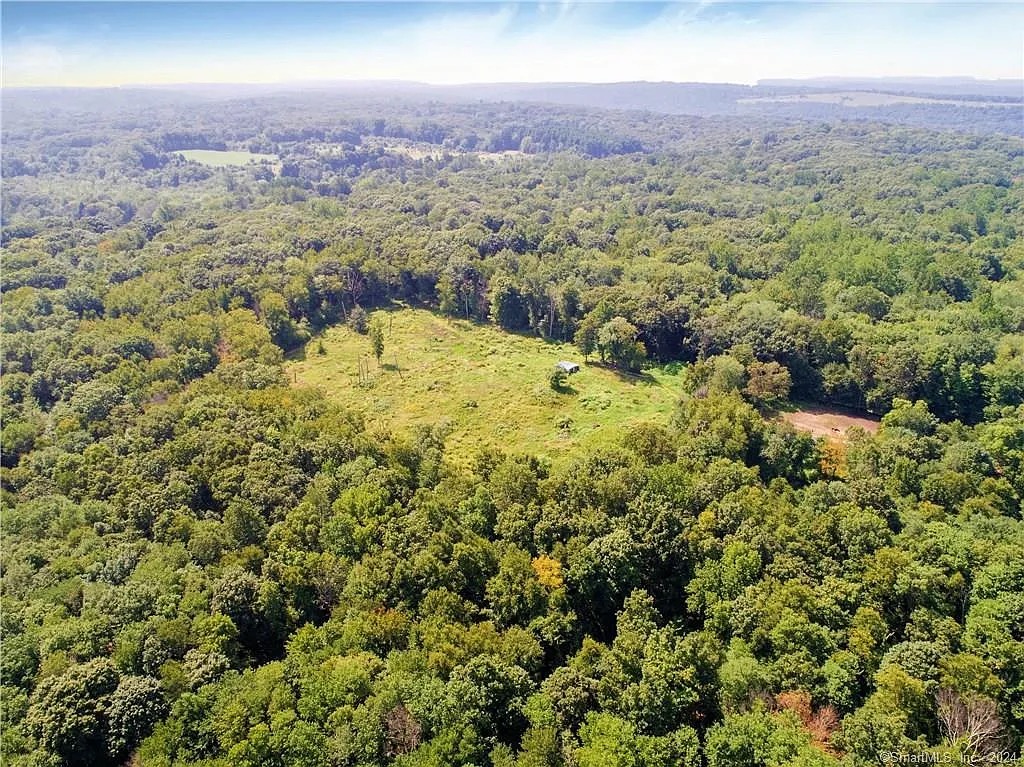
The Easton Planning and Zoning Commission is now on the verge of permitting their first “Conservation Development.” In November of 2024, Planning and Zoning staff gave pre-approval for developer EG Homes to build 26 luxury houses on 0.96-to-2.33 acre lots on Saddle Ridge, 897 Sport Hill Road. Planning and Zoning seems to have suggested to the developer that 5 or 6 more lots than should be legally permissible due to the well-established limitations of this property, which is located in Zone B of the town. In order to protect the water supply, three-acre zoning has been strictly enforced in Zone B. If EG Homes is permitted to implement its proposed plan, not only will the nearly 1,000 species of flora and fauna that flourish on the 110.5 acres of Saddle Ridge be uprooted, but there will be an irreversible impact on our water. Likewise, this will set a precedent for other developers to encroach on all parcels in Zone B, large and small. This will further threaten Fairfield County residents' right to uncontaminated water.
Update from 5/31/25: Abutting neighbors met with the developer on the evening of Thursday, 5/29. Matt Gilchrist, president EG Homes, shard his intentions of trying to work collaboratively with these neighbors and was open to hearing their abundant concerns regarding the development, many of which pertained to well water security, the consequence of blasting, traffic safety, disruption to the ecosystem, septic density, stormwater runoff, and protection of the AA watershed.
The developer has conducted soil testing for both 3-acre and "conservation development" zoning to try and prove that 26 lots is permissible. As confirmed by EG, this will only be possible if the significant rock formations at the southern edge of the property are blasted. The 2009 Planning and Zoning approval for 21 single-family homes on 3-acres prohibited any blasting or quarrying of this series of rocky knolls as they play a significant role in protecting stormwater runoff. Gilchrist stated that the homes will be 4 to 5 bedrooms with 2 to 3-car garages, and will be listed for approximately $1,200,000 to $1,400,000. The developer must still procure formal approval from Planning and Zoning, a CT DEEP Stormwater permit, as well as approval from Easton's Conservation and Inland Wetlands Conservation Commission. Additionally, it was noted that the property is still a pending transaction and a 3rd party can still purchase the land for preservation.
Update from 9/12/25: This petition has no political party affiliation.
For further details on how this new regulation will negatively impact our quality of life, please see the below petition to the Easton Planning and Zoning Commission. We request that Planning and Zoning repeal the Section 5900 “Conservation Development,” and therefore deny EG Homes the ability to use this problematic regulation.
Your signature can make an impact. Please consider signing.
To the Members of the Planning and Zoning Commission:
We, the Residents of Easton and beyond, urge you to reexamine and repeal the “Conservation Development” zoning regulation (Section 5900) that was added, with very little public input, to the Easton Zoning Regulations on July 27, 2019, and later updated on October 1, 2023. This regulation was first proposed in Easton’s Plan of Conservation Development (POCD) in late 2018.
We all agree that conservation is of utmost importance. This is especially true for Easton, which plays a vital role in protecting the drinking water of over 600,000 residents of 14 towns in Fairfield County. As is being demonstrated by the proposed development of 897 Sport Hill Road/ Saddle Ridge, the “Conservation Development” regulation provides too many loopholes and will fail to protect what is most important and irreplaceable: The water supply.
First we urge you to reexamine the following issues of Section 5900:
- Citing Inaccurate Science: The “research articles” cited in the Planning and Zoning public record do not apply to an area without municipal waste removal or city water. We urge you to reference science that is specific to the limitations of Zone B of Easton. Conservation developments are not a one-size-fits-all formula. Not taking this into consideration is irresponsible and will have an irreversible, harmful impact on the Easton AA watershed, as well as set up a dangerous precedent for future developments in Zone B of Easton. For your reference, the following articles were provided on July 22, 2019:
- Excerpt from is 2006 EPA study. ( https://www.epa.gov/sites/default/files/2014-03/documents/protect_water_higher_density1.pdf )
- 2-page resource from Highstead, a conservation organization in Redding. The ONLY conservation subdivision case study provided in this document is Casa Verde Villages in Millbury, MA. These houses were built on about 0.2 acres and have city water and municipal waste removal. The preserved open space is continuous, allowing for trails that can be enjoyed by the public. https://highstead.net/wp-content/uploads/2020/07/Conservation-for-Communities-A-Fiscal-Case-for-Municipal-Investment-in-Conservation.pdf - Failure to Account for Septic Limitations: To protect the watershed, Easton also has an ordinance against community septic systems, further prohibiting the construction of a true conservation subdivision with cluster housing. Adding a higher concentration of private wells and individualized septics will have a detrimental impact on the watershed and require addition deforestation.
- Inadequate protection of wetlands connected to drinking supply: There is no explanation as to how Section 5900 will be applied and/or modified to areas with wetlands that lead directly into the Easton and Aspetuck Reservoirs. All waterways in Zone B of Easton are classified as AA by the Department of Energy and Environmental Protection, meaning they are existing or proposed water supplies. This loophole may lead to more construction than should be permitted in a sensitive area like Saddle Ridge.
- Failure to protect larger bodies of water: Section 5900 fails to specify how larger bodies of water will be protected. A beneficial strategy would be to further protect them by increasing the non-wetland acreage required to be set aside for conservation in proportion to the size of the water source.
- Questionable Stormwater Management: Section 5900 does not delegate who will manage stormwater basins in any conservation development. This should be a priority, especially in areas with waterways that flow into reservoirs, like Saddle Ridge. Failure to maintain stormwater basins will result in toxic runoff into the wetlands and adjacent land.
- Management of Open Space: Section 5900 fails to delegate who will manage the set aside open space.
- Failure to Set Aside Continuous Open Space: The plan submitted by EG Homes to the Connecticut Court systems consists of roughly 30 acres of highly fragmented forest and 30 acres of sensitive wetlands. In addition to further threatening biodiversity, fragmented sections of land, especially those primarily consisting of wetlands, make recreational preservation projects less possible.
- There is no information on how wells on abutting properties will be protected with this new zoning regulation. This contradicts the town’s Plan of Conservation and Development’s commitment to safeguarding the water supply of Easton residents, the majority of whom in Zone B rely on private wells tapped into Connecticut’s fragile aquifers. The Saddle Ridge property was used for agriculture in the 1800s and 1900s and has since housed a horse farm. It is irresponsible of the town of Easton to allow for any development without first testing all farm soils for past pesticide use, including lead arsenate, which was a pesticide of choice for the early half of the 1900s. This may impact the wells the developer himself is trying to drill. Equestrian farms can also contribute to groundwater contamination. Who will be held accountable when the developer moves on and the aquifer is tainted?
- Beyond water security, there is no mention in Section 5900 about how more concentrated developments will impact traffic safety on Zone B’s narrow roads. Section 5900 fails to take into account whether or not existing infrastructure can support the additional traffic that will result from these developments. Increased stormwater runoff from vehicles further degrades the watershed as it is high in pollutants like oil, gasoline, and heavy metals.
Residents of Easton and beyond are hereby asking you, the Planning & Zoning Members, to hear our voices, and in the interest of health and safety to vote to repeal Section 5900 and restore Zone B’s 3-acre zoning.
Next, Reimagine:
As noted and as indicated the public outcry over the hushed inception of “Conservation Development”: Section 5900, the importance of conservation is something that unites Easton residents. We urge you, the Planning and Zoning Commission, to welcome the public into the conversations about how to protect our land and address housing needs. Use relevant science. Take advantage of the wealth of knowledge and resources in this town and beyond. Do not allow developers to use zoning loopholes and cause irreparable damage to the precious watershed.

987
The Issue
Stop Encroaching Developers: Save Our Water Supply
Fairfield county residents have celebrated Easton for its rich forests, small town feel, and vibrant farm culture. For years Easton has successfully resisted the over-development that has plagued the rest of Fairfield County. Easton has remained rural for a good reason: it is a critical watershed, whose reservoir system supplies drinking water to more than 600,000 individuals in Fairfield County. In fact, Easton has the distinction of being one of only 14 towns in Connecticut that consists of more than 70% classified AA public water supply watershed.
The quality of Easton’s water supply and its cherished rural character are now at risk, thanks to poor decision making and leadership at the town’s Planning & Zoning Commission. In 2019, unbeknownst to the public, Planning and Zoning pushed through a poorly researched “Conservation Development” regulation that fails to take into account the sensitivities of the AA Watershed. Conservation developments can be a powerful way to protect watersheds. As you will read below, however, Planning and Zoning hastily implemented a regulation that does not allow for true conservation cluster housing, nor take into account the lack of municipal waste and water systems. This negligent oversight will have a detrimental effect on Fairfield County’s water security.
The Easton Planning and Zoning Commission is now on the verge of permitting their first “Conservation Development.” In November of 2024, Planning and Zoning staff gave pre-approval for developer EG Homes to build 26 luxury houses on 0.96-to-2.33 acre lots on Saddle Ridge, 897 Sport Hill Road. Planning and Zoning seems to have suggested to the developer that 5 or 6 more lots than should be legally permissible due to the well-established limitations of this property, which is located in Zone B of the town. In order to protect the water supply, three-acre zoning has been strictly enforced in Zone B. If EG Homes is permitted to implement its proposed plan, not only will the nearly 1,000 species of flora and fauna that flourish on the 110.5 acres of Saddle Ridge be uprooted, but there will be an irreversible impact on our water. Likewise, this will set a precedent for other developers to encroach on all parcels in Zone B, large and small. This will further threaten Fairfield County residents' right to uncontaminated water.
Update from 5/31/25: Abutting neighbors met with the developer on the evening of Thursday, 5/29. Matt Gilchrist, president EG Homes, shard his intentions of trying to work collaboratively with these neighbors and was open to hearing their abundant concerns regarding the development, many of which pertained to well water security, the consequence of blasting, traffic safety, disruption to the ecosystem, septic density, stormwater runoff, and protection of the AA watershed.
The developer has conducted soil testing for both 3-acre and "conservation development" zoning to try and prove that 26 lots is permissible. As confirmed by EG, this will only be possible if the significant rock formations at the southern edge of the property are blasted. The 2009 Planning and Zoning approval for 21 single-family homes on 3-acres prohibited any blasting or quarrying of this series of rocky knolls as they play a significant role in protecting stormwater runoff. Gilchrist stated that the homes will be 4 to 5 bedrooms with 2 to 3-car garages, and will be listed for approximately $1,200,000 to $1,400,000. The developer must still procure formal approval from Planning and Zoning, a CT DEEP Stormwater permit, as well as approval from Easton's Conservation and Inland Wetlands Conservation Commission. Additionally, it was noted that the property is still a pending transaction and a 3rd party can still purchase the land for preservation.
Update from 9/12/25: This petition has no political party affiliation.
For further details on how this new regulation will negatively impact our quality of life, please see the below petition to the Easton Planning and Zoning Commission. We request that Planning and Zoning repeal the Section 5900 “Conservation Development,” and therefore deny EG Homes the ability to use this problematic regulation.
Your signature can make an impact. Please consider signing.
To the Members of the Planning and Zoning Commission:
We, the Residents of Easton and beyond, urge you to reexamine and repeal the “Conservation Development” zoning regulation (Section 5900) that was added, with very little public input, to the Easton Zoning Regulations on July 27, 2019, and later updated on October 1, 2023. This regulation was first proposed in Easton’s Plan of Conservation Development (POCD) in late 2018.
We all agree that conservation is of utmost importance. This is especially true for Easton, which plays a vital role in protecting the drinking water of over 600,000 residents of 14 towns in Fairfield County. As is being demonstrated by the proposed development of 897 Sport Hill Road/ Saddle Ridge, the “Conservation Development” regulation provides too many loopholes and will fail to protect what is most important and irreplaceable: The water supply.
First we urge you to reexamine the following issues of Section 5900:
- Citing Inaccurate Science: The “research articles” cited in the Planning and Zoning public record do not apply to an area without municipal waste removal or city water. We urge you to reference science that is specific to the limitations of Zone B of Easton. Conservation developments are not a one-size-fits-all formula. Not taking this into consideration is irresponsible and will have an irreversible, harmful impact on the Easton AA watershed, as well as set up a dangerous precedent for future developments in Zone B of Easton. For your reference, the following articles were provided on July 22, 2019:
- Excerpt from is 2006 EPA study. ( https://www.epa.gov/sites/default/files/2014-03/documents/protect_water_higher_density1.pdf )
- 2-page resource from Highstead, a conservation organization in Redding. The ONLY conservation subdivision case study provided in this document is Casa Verde Villages in Millbury, MA. These houses were built on about 0.2 acres and have city water and municipal waste removal. The preserved open space is continuous, allowing for trails that can be enjoyed by the public. https://highstead.net/wp-content/uploads/2020/07/Conservation-for-Communities-A-Fiscal-Case-for-Municipal-Investment-in-Conservation.pdf - Failure to Account for Septic Limitations: To protect the watershed, Easton also has an ordinance against community septic systems, further prohibiting the construction of a true conservation subdivision with cluster housing. Adding a higher concentration of private wells and individualized septics will have a detrimental impact on the watershed and require addition deforestation.
- Inadequate protection of wetlands connected to drinking supply: There is no explanation as to how Section 5900 will be applied and/or modified to areas with wetlands that lead directly into the Easton and Aspetuck Reservoirs. All waterways in Zone B of Easton are classified as AA by the Department of Energy and Environmental Protection, meaning they are existing or proposed water supplies. This loophole may lead to more construction than should be permitted in a sensitive area like Saddle Ridge.
- Failure to protect larger bodies of water: Section 5900 fails to specify how larger bodies of water will be protected. A beneficial strategy would be to further protect them by increasing the non-wetland acreage required to be set aside for conservation in proportion to the size of the water source.
- Questionable Stormwater Management: Section 5900 does not delegate who will manage stormwater basins in any conservation development. This should be a priority, especially in areas with waterways that flow into reservoirs, like Saddle Ridge. Failure to maintain stormwater basins will result in toxic runoff into the wetlands and adjacent land.
- Management of Open Space: Section 5900 fails to delegate who will manage the set aside open space.
- Failure to Set Aside Continuous Open Space: The plan submitted by EG Homes to the Connecticut Court systems consists of roughly 30 acres of highly fragmented forest and 30 acres of sensitive wetlands. In addition to further threatening biodiversity, fragmented sections of land, especially those primarily consisting of wetlands, make recreational preservation projects less possible.
- There is no information on how wells on abutting properties will be protected with this new zoning regulation. This contradicts the town’s Plan of Conservation and Development’s commitment to safeguarding the water supply of Easton residents, the majority of whom in Zone B rely on private wells tapped into Connecticut’s fragile aquifers. The Saddle Ridge property was used for agriculture in the 1800s and 1900s and has since housed a horse farm. It is irresponsible of the town of Easton to allow for any development without first testing all farm soils for past pesticide use, including lead arsenate, which was a pesticide of choice for the early half of the 1900s. This may impact the wells the developer himself is trying to drill. Equestrian farms can also contribute to groundwater contamination. Who will be held accountable when the developer moves on and the aquifer is tainted?
- Beyond water security, there is no mention in Section 5900 about how more concentrated developments will impact traffic safety on Zone B’s narrow roads. Section 5900 fails to take into account whether or not existing infrastructure can support the additional traffic that will result from these developments. Increased stormwater runoff from vehicles further degrades the watershed as it is high in pollutants like oil, gasoline, and heavy metals.
Residents of Easton and beyond are hereby asking you, the Planning & Zoning Members, to hear our voices, and in the interest of health and safety to vote to repeal Section 5900 and restore Zone B’s 3-acre zoning.
Next, Reimagine:
As noted and as indicated the public outcry over the hushed inception of “Conservation Development”: Section 5900, the importance of conservation is something that unites Easton residents. We urge you, the Planning and Zoning Commission, to welcome the public into the conversations about how to protect our land and address housing needs. Use relevant science. Take advantage of the wealth of knowledge and resources in this town and beyond. Do not allow developers to use zoning loopholes and cause irreparable damage to the precious watershed.
The Decision Makers
Supporter Voices
Petition Updates
Share this petition
Petition created on May 24, 2025