Tuesday at 8am is the deadline to email King County Land Use Committee to get laws in place

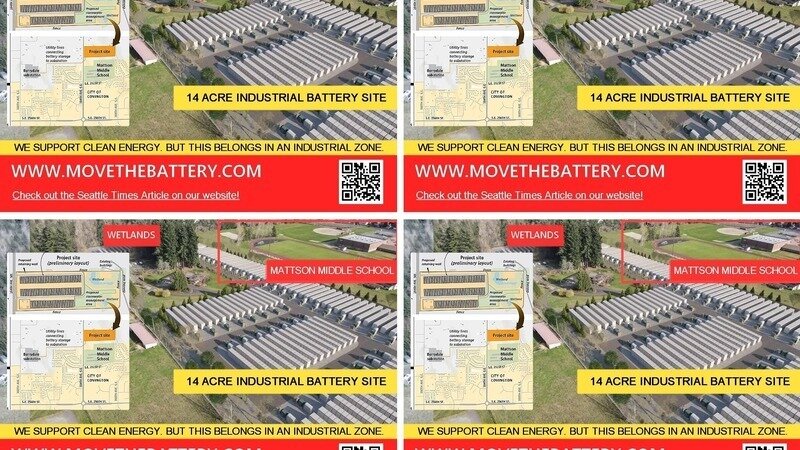
PLEASE EMAIL the following email addresses to help craft the siting/zoning laws/requirements for King County before 8am Tuesday morning:
This is the official email to get your comment in front of the King County Land Use Committee (the deadline is Tuesday 8am):
kcccomitt@kingcounty.gov
And here are other emails to send emails too:
King County Council:
reagan.dunn@kingcounty.gov
jeanne.kohl-welles@kingcounty.gov
pete.vonreichbauer@kingcounty.gov
sarah.perry@kingcounty.gov
rod.dembowski@kingcounty.gov
Dave.Upthegrove@kingcounty.gov
joe.mcdermott@kingcounty.gov
claudia.balducci@kingcounty.gov
girmay.zahilay@kingcounty.gov
kcexec@kingcounty.gov
City Councils:
ZZCNCMEMBERS@kingcounty.gov
citycouncil@covingtonwa.gov
citycouncil@kentwa.gov
council@rentonwa.gov
citycouncil@tukwilawa.gov
crakes@auburnwa.gov
kbaldwin@auburnwa.gov
jjeyaraj@auburnwa.gov
ytrout@auburnwa.gov
rmulenga@auburnwa.gov
lbrown@auburnwa.gov
rbaggett@auburnwa.gov
Sound Cities
david@soundcities.org
brian@soundcities.org
leah@soundcities.org
kazia@soundcities.org
hali@soundcities.org
jasleen@soundcities.org
State Representatives:
claudia.kauffman@leg.wa.gov
Debra.Entenman@leg.wa.gov
Chris.Stearns@leg.wa.gov
School Board:
kentboard@kent.k12.wa.us
Here are some ideas for zoning law suggestions- PLEASE feel free to add your thoughts on what zoning laws/requirements should be made for BESS for all of King County:
This is a King County Land Use Committee where their goal is to put in place a law/code/rules/ordinance for BESS- as currently there is NOTHING on the Law books controlling BESS...
You can say who you are- tell them roughly how close you live or where your kids go to school and that the ordinance/codes need to be VERY clear and BESS should only be allowed in heavy industrial zoned areas and far away from schools, places of gathering, and homes...
----------------
Here's a sample letter:
Greetings,
I am writing in public comment for the King County Council and Land Use Committee meeting on August 22:
I have read with great concern about the plans to build a lithium battery storage facility in the Covington area right next to a school, wetlands and a residential neighborhood. This seems entirely inappropriate, due to the noise levels and extreme risk of uncontrollable fires, which would impact the safety of nearby residents and wildlife, and cause environmental damage.
If these facilities must be built, it should be in heavy industrial areas and far away from schools and people's homes and other environments sensitive to noise, fire, explosions, and toxic gases and toxic runoff. Please enact strict regulations on BESS facilities and where they are allowed to be placed or reconsider their use altogether.
Thank you,
-----------
A couple points to consider when drafting the siting ordinance for BESS:
Typical BESS fire evacuation distances range between ¼ mile and 2 miles and typical shelter in place orders range from 1 mile to almost 4 miles (where roads and interstate highways have been shut down)
When BESS have a fire, deadly gases start being released before the fire starts and start spreading throughout the surrounding area before any fire alarms are triggered
BESS fires usually burn for 3 days to two weeks- releasing deadly toxins the whole time and then often smolder for several more days- and even reignite
If a BESS has an explosion, the explosion disperses most of the stored energy almost instantly- significantly reducing the burn time- after an explosion, BESS fires usually self-extinguish in less than 48 hours- but may still smolder for days- and even reignite
Lithium battery BESS can NOT be extinguished and are self-feeding: you can submerge a burning lithium battery in water, and it can still burn for days, or you can put a small burning lithium battery in an airtight container to starve it of oxygen and it can still burn for days.
There is NO way to prevent a lithium battery fire.
The larger the battery (BESS containers usually are 30ft-40ft long- like a shipping container- and contain thousands of batteries crammed into each container) the longer it will burn and the bigger the fire and the most likely it will overheat and cause nearby lithium batteries to spontaneously combust or explode.
Firefighters have been killed and injured from Lithium battery fires and have no way to fight the fire- so their only tactic is to spray water on nearby containers to try to prevent the batteries in the adjacent containers from overheating and spontaneously combusting and or exploding
BESS fires last for days and require 20 to 40 fire engines and hundreds of firefighters- taking those resources away for other needs- and have required over 6 million gallons of water for defensive spray
"Lithium- ion fires release an array of deadly toxins including Carbon Monoxide, Hydrogen Cyanide, Hydrogen Fluoride and Cobalt. These toxins are especially dangerous to firefighters because they are dermally absorbed through the skin and no personal protective clothing can protect you against it.” Greg McConville, United Firefighters Union (UFUA) National Secretary
Those deadly toxins are either spread across the surrounding area by the wind or get washed away with the defensive water spray- contaminating the land wherever it flows
One of the deadly toxins released when lithium batteries burn is Hydrofluoric gas- and when combined with water (defensive water spray), it changes to hydrofluoric acid which can burn through almost everything
NY's Fire Department deals with more Lithium battery fires than any Fire Department (16 deaths from lithium battery fires as of June 20th 2023) and in their research, they have found individual battery cells can be self-propelled when exploding up to 175 feet away- this rocketing battery cell can be hotter than 1200 degrees F (660C) and instantly ignite anything it touches (a BESS container can have 1000s of batteries with millions of battery cells in it)
Tenaska said they would install an 8ft-10ft tall and 12-inch thick reinforced concrete shrapnel barrier that also acts as a sound barrier- no school nor home should be located next to any industrial facility that requires a shrapnel/sound barrier
With less than 300 operational BESS in the world by June 2022, there were 50 BESS fires between May 2018 and June of 2022... That is more than a 16% chance of a BESS having a fire.
The Governor of NY is looking into Lithium BESS safety after 3 BESS fires in 31 days
The toxic gases can be blown any and every way the wind blows and can have negative impacts on people within the 5-mile plume radius- which includes Lake Youngs and 50+ schools and thousands of homes.
This BESS will be 40,000x larger than the "battery storage permits" King County Permitting used as a comparable- so not comparable at all.
Tenaska told the Covington City Council that even if our lights were dark and we needed the power, they would send the power where the "demand was highest" (aka profit), so this BESS won't even benefit us in a blackout unless we want to pay more than CA customers (which is about 4x our normal electricity cost.
Since Tenaska plans on exporting the power to CA and other states (to wherever the demand is highest), it should be required than any BESS built in King County should only be used to power/supplement King County's power grid- with the only exception being if a WA utility needs the power for WA residents... No exporting cheap hydro/solar/wind/power bought in bulk in Washington to other states... Only power generation facilities that produce their own power and have excess power should be allowed to export power out of state...
Alternatively, to an export ban, impose a 50% income tax on their exports- an Electricity Export Tax!
Due to the deadly impacts, in addition to having catastrophic levels of insurance, emergency planning zones (EPZs) plan should be required for a BESS- and support, man-power, equipment/supplies, and infrastructure for evacuating 800+ kids and staff and all the neighbors should be supplied to the 20-40 fire trucks/fire departments, and all schools and residences within a 5-mile plume area.
Please add to this post if you are willing to share your letter or have more ideas we should include in our written comment to the Land Use Committee and County Council members.