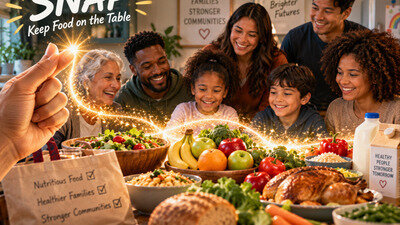

SNAP - Keep Food on the Table
The Issue
The Supplemental Nutrition Assistance Program (SNAP) helps people with low incomes purchase the food they need for good health. The program reaches people from many different walks of life, including families raising children, older adults living on fixed incomes, people with disabilities, veterans, and individuals who are working but still struggling to make ends meet. USDA data show that approximately one-third of SNAP households include children and another one-third include older adults, while nearly one in five include a nonelderly person with a disability. Most SNAP households live at or below the federal poverty level.
Food insecurity is about more than feeling hungry. When there is not enough money to cover everything a household needs, families may face difficult decisions about how to divide limited resources among groceries, housing, utilities, transportation, childcare, medications, and other necessities. Veterans are not immune from these challenges. The Department of Veterans Affairs reports that approximately one in nine working-age Veterans experiences food insecurity and recognizes food insecurity as an important social driver of health. USDA specifically identifies SNAP as one of the nutrition programs that may help eligible veterans and their families afford nutritious food when money is tight.
SNAP can therefore represent much more than assistance at the grocery store. For a parent, it can help make sure there is food available for their children. For an older adult or person with a disability living on a limited income, assistance with groceries can help stretch already limited household resources. For a veteran experiencing financial hardship, it can provide additional support in maintaining consistent access to nutritious food. For someone working a low-wage or part-time job, SNAP may help fill the gap when earnings are not enough to meet household food needs. USDA specifically recognizes low-wage workers, part-time workers, unemployed people, older adults, people with disabilities, and people experiencing homelessness among the populations who may qualify for SNAP, depending on eligibility requirements.
Recent federal changes have also altered important aspects of SNAP. The 2025 reconciliation law made changes involving eligibility, work requirements, benefits, and program administration, which USDA has been implementing through states. These changes make the future accessibility of SNAP especially important to the position advanced through this petition.
We are asking federal policymakers to protect broad SNAP eligibility, maintain adequate benefit levels, and reduce unnecessary administrative barriers that can prevent eligible households from receiving assistance. We also support stronger outreach and coordination between SNAP and other programs, including WIC, Medicaid, school meal programs, and employment services.
Food is a basic need, and no family, veteran, older adult, person with a disability, or working individual should have to face food insecurity alone. Help us keep food on the table. Sign the petition—it’s as easy as snapping your fingers.

9
The Issue
The Supplemental Nutrition Assistance Program (SNAP) helps people with low incomes purchase the food they need for good health. The program reaches people from many different walks of life, including families raising children, older adults living on fixed incomes, people with disabilities, veterans, and individuals who are working but still struggling to make ends meet. USDA data show that approximately one-third of SNAP households include children and another one-third include older adults, while nearly one in five include a nonelderly person with a disability. Most SNAP households live at or below the federal poverty level.
Food insecurity is about more than feeling hungry. When there is not enough money to cover everything a household needs, families may face difficult decisions about how to divide limited resources among groceries, housing, utilities, transportation, childcare, medications, and other necessities. Veterans are not immune from these challenges. The Department of Veterans Affairs reports that approximately one in nine working-age Veterans experiences food insecurity and recognizes food insecurity as an important social driver of health. USDA specifically identifies SNAP as one of the nutrition programs that may help eligible veterans and their families afford nutritious food when money is tight.
SNAP can therefore represent much more than assistance at the grocery store. For a parent, it can help make sure there is food available for their children. For an older adult or person with a disability living on a limited income, assistance with groceries can help stretch already limited household resources. For a veteran experiencing financial hardship, it can provide additional support in maintaining consistent access to nutritious food. For someone working a low-wage or part-time job, SNAP may help fill the gap when earnings are not enough to meet household food needs. USDA specifically recognizes low-wage workers, part-time workers, unemployed people, older adults, people with disabilities, and people experiencing homelessness among the populations who may qualify for SNAP, depending on eligibility requirements.
Recent federal changes have also altered important aspects of SNAP. The 2025 reconciliation law made changes involving eligibility, work requirements, benefits, and program administration, which USDA has been implementing through states. These changes make the future accessibility of SNAP especially important to the position advanced through this petition.
We are asking federal policymakers to protect broad SNAP eligibility, maintain adequate benefit levels, and reduce unnecessary administrative barriers that can prevent eligible households from receiving assistance. We also support stronger outreach and coordination between SNAP and other programs, including WIC, Medicaid, school meal programs, and employment services.
Food is a basic need, and no family, veteran, older adult, person with a disability, or working individual should have to face food insecurity alone. Help us keep food on the table. Sign the petition—it’s as easy as snapping your fingers.
The Decision Makers



Petition Updates
Share this petition
Petition created on September 23, 2026