
Say NO to NRH Data Centers Next to Our Homes
Say NO to NRH Data Centers Next to Our Homes
The Issue
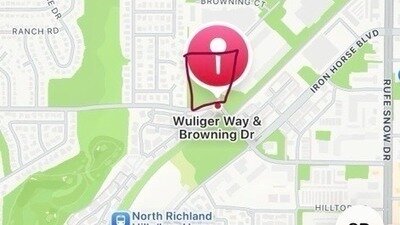
Did you even know? - Right now, a Data Center is being built on the corner of Wuliger Way and Browning Dr. in North Richland Hills (NRH) - with plans to open by the end of July... and at least 2 more larger sites are being planned for NRH.
Do you really want to stand idle and hand over our clean air, water, health, peace of mind, personal investments, and affordable living for corporate profit? Data Centers guzzle water and electricity resources, pollute water, create 24/7 noise, and impact your wallet and well-being - and if you're the residents of the Iron Horse community - the data center sits mere feet from your doorstep! See impacts detailed below.
Don't allow builders or investors to use YOU as guinea pigs for their financial gain. Do you think they'll live near a data center?? WHO WOULD?
- Make your voice clear- We, the residents of North Richland Hills:
- REFUSE to accept that the situation is "out of our hands" and that the outcome to build is inevitable - a comment many have heard from local NRH officials regarding the in-progress Iron Horse site.
- DO and WILL have a say in the decisions that directly and irreversibly affect our lives, our families, our health, our environment, our cost of living, our property value, and the pursuit and preservation of our right to Life, Liberty and the pursuit of Happiness.
The Bottom Line --- SIGN THIS PETITION.
Make the data centers move- at least 10 miles away from ANY residential zone or home - OR even better, OUT OF TEXAS ALTOGETHER given our already constrained water resources. >>> Who even thought this was a good idea for Texas in the first place???
Our community's future is at stake. Act quickly and protect YOUR interests.
---
Public opinion reflects these realities:
Recent surveys show far more Americans view data centers as harmful to the environment, energy costs, and local quality of life than beneficial. Communities across Virginia, Georgia, Louisiana, Arizona, Michigan, and elsewhere have already organized against them, with calls growing for a national moratorium.
---
Our Demands:
- An immediate moratorium in NRH of:
- a.) Any in-progress or planned data center construction; and
- b.) Approval of any new or expanded data center construction.
- That the moratorium remain in effect until independent, comprehensive, publicly-available environmental and community studies that assess the impact energy, water, air quality, noise, health, and grid effects of each affected residential community - including compounded impacts for areas potentially impacted by multiple data centers.
- e.g., There have been recent health claims among people living near data centers, including cancer, Alzheimer's, dementia, breathing and lung condition diagnoses.
- Prioritization of community justice: No siting in already-resource-burdened, already-resource-overburdened, or low-income communities.
- Enforced noise standards, and required setbacks and buffer zones from homes, schools, and community recreation areas.
- Strict limits on water withdrawal, requiring closed-loop or recycled systems and zero net impact on local supplies.
- Mandatory use of 100% renewable energy sources with no reliance on fossil-fuel backup generators beyond true emergencies.
- Full transparency:
- a.) Public disclosure of each planned data centers PRIOR to city approval.
- b.) Ongoing data (into perpetuity) of: Energy/Water usage, emissions, and emergency generator operations, for every data center.
- c.) How these data centers will impact our local and state taxes.
- d.) The impact of a lower percent of our tax dollars being distributed towards our community and improvements - e.g., schools, parks, civil servants.
- Community benefits agreements that guarantee real local job creation, infrastructure upgrades, and compensation for negative impacts—without shifting increased utility and other costs to residents.
---
Additional details:
The explosive growth of data centers—driven largely by artificial intelligence and cloud computing—poses an immediate and escalating threat to our health, environment, resources, quality of life, and economic well-being. These facilities are not benign “tech infrastructure.” They are industrial-scale operations that consume staggering amounts of public resources while delivering minimal lasting benefits to host communities.
The documented dangers include:
- Massive Energy Consumption and Rising Costs for Families: A single modern AI data center can consume as much electricity as 100,000 households. Larger ones under construction will use up to 20 times that amount. Nationally, data centers already account for roughly 4.4% of U.S. electricity use and are projected to reach 6.7–12% by 2028. This strains local power grids, risks blackouts, forces utilities to recommit to dirty fossil fuels, and drives up electricity bills for everyday residents and small businesses. Studies show clear negative effects on home energy costs, with many communities reporting sharp rate increases passed directly to ratepayers.
- Catastrophic Water Depletion: Large data centers require up to 5 million gallons of water per day for cooling—equivalent to the daily usage of a town of 10,000–50,000 people. Across the U.S., they are projected to consume billions more gallons annually by 2030. In drought-prone or growing regions, this directly competes with drinking water, agriculture, and household needs. Residents near existing facilities have reported wells running dry and local water authorities prioritizing corporate users over families.
- Air Pollution and Serious Health Risks: Thousands of on-site diesel backup generators (each the size of a rail car) run for testing and “demand response,” emitting dangerous levels of nitrogen oxides (N2O), fine particulate matter, and other pollutants—up to 200–600 times more N2O than natural gas plants in some cases. These emissions are linked to higher rates of asthma, respiratory illness, heart disease, and premature deaths. Independent modeling projects that unchecked data center growth could cause approximately 600,000 additional asthma symptom cases and over 1,300 premature deaths by 2030, with public health damages exceeding $20 billion. Vulnerable populations—children, the elderly, and low-income or communities of color already burdened by environmental injustice—suffer the most.
- Noise Pollution Destroying Quality of Life: Constant 24/7 humming from cooling systems and generators often exceeds 85–90 decibels, causing chronic sleep disruption, stress, anxiety, hypertension, and other health problems for nearby residents. Construction adds further disturbance, and many communities report the noise carrying for miles.
- Impact to Property Value: Long-term, they can depress property values in residential areas due to noise, pollution, and industrial appearance, while contributing to broader climate impacts through massive greenhouse gas emissions.
- Limited Economic Benefit and Hidden Costs: Data centers promise jobs and tax revenue, but they primarily create low-wage construction and maintenance positions—not high-paying tech jobs. They often receive massive tax breaks and subsidies while increasing strain on roads, schools, and public services.

619
The Issue
Did you even know? - Right now, a Data Center is being built on the corner of Wuliger Way and Browning Dr. in North Richland Hills (NRH) - with plans to open by the end of July... and at least 2 more larger sites are being planned for NRH.
Do you really want to stand idle and hand over our clean air, water, health, peace of mind, personal investments, and affordable living for corporate profit? Data Centers guzzle water and electricity resources, pollute water, create 24/7 noise, and impact your wallet and well-being - and if you're the residents of the Iron Horse community - the data center sits mere feet from your doorstep! See impacts detailed below.
Don't allow builders or investors to use YOU as guinea pigs for their financial gain. Do you think they'll live near a data center?? WHO WOULD?
- Make your voice clear- We, the residents of North Richland Hills:
- REFUSE to accept that the situation is "out of our hands" and that the outcome to build is inevitable - a comment many have heard from local NRH officials regarding the in-progress Iron Horse site.
- DO and WILL have a say in the decisions that directly and irreversibly affect our lives, our families, our health, our environment, our cost of living, our property value, and the pursuit and preservation of our right to Life, Liberty and the pursuit of Happiness.
The Bottom Line --- SIGN THIS PETITION.
Make the data centers move- at least 10 miles away from ANY residential zone or home - OR even better, OUT OF TEXAS ALTOGETHER given our already constrained water resources. >>> Who even thought this was a good idea for Texas in the first place???
Our community's future is at stake. Act quickly and protect YOUR interests.
---
Public opinion reflects these realities:
Recent surveys show far more Americans view data centers as harmful to the environment, energy costs, and local quality of life than beneficial. Communities across Virginia, Georgia, Louisiana, Arizona, Michigan, and elsewhere have already organized against them, with calls growing for a national moratorium.
---
Our Demands:
- An immediate moratorium in NRH of:
- a.) Any in-progress or planned data center construction; and
- b.) Approval of any new or expanded data center construction.
- That the moratorium remain in effect until independent, comprehensive, publicly-available environmental and community studies that assess the impact energy, water, air quality, noise, health, and grid effects of each affected residential community - including compounded impacts for areas potentially impacted by multiple data centers.
- e.g., There have been recent health claims among people living near data centers, including cancer, Alzheimer's, dementia, breathing and lung condition diagnoses.
- Prioritization of community justice: No siting in already-resource-burdened, already-resource-overburdened, or low-income communities.
- Enforced noise standards, and required setbacks and buffer zones from homes, schools, and community recreation areas.
- Strict limits on water withdrawal, requiring closed-loop or recycled systems and zero net impact on local supplies.
- Mandatory use of 100% renewable energy sources with no reliance on fossil-fuel backup generators beyond true emergencies.
- Full transparency:
- a.) Public disclosure of each planned data centers PRIOR to city approval.
- b.) Ongoing data (into perpetuity) of: Energy/Water usage, emissions, and emergency generator operations, for every data center.
- c.) How these data centers will impact our local and state taxes.
- d.) The impact of a lower percent of our tax dollars being distributed towards our community and improvements - e.g., schools, parks, civil servants.
- Community benefits agreements that guarantee real local job creation, infrastructure upgrades, and compensation for negative impacts—without shifting increased utility and other costs to residents.
---
Additional details:
The explosive growth of data centers—driven largely by artificial intelligence and cloud computing—poses an immediate and escalating threat to our health, environment, resources, quality of life, and economic well-being. These facilities are not benign “tech infrastructure.” They are industrial-scale operations that consume staggering amounts of public resources while delivering minimal lasting benefits to host communities.
The documented dangers include:
- Massive Energy Consumption and Rising Costs for Families: A single modern AI data center can consume as much electricity as 100,000 households. Larger ones under construction will use up to 20 times that amount. Nationally, data centers already account for roughly 4.4% of U.S. electricity use and are projected to reach 6.7–12% by 2028. This strains local power grids, risks blackouts, forces utilities to recommit to dirty fossil fuels, and drives up electricity bills for everyday residents and small businesses. Studies show clear negative effects on home energy costs, with many communities reporting sharp rate increases passed directly to ratepayers.
- Catastrophic Water Depletion: Large data centers require up to 5 million gallons of water per day for cooling—equivalent to the daily usage of a town of 10,000–50,000 people. Across the U.S., they are projected to consume billions more gallons annually by 2030. In drought-prone or growing regions, this directly competes with drinking water, agriculture, and household needs. Residents near existing facilities have reported wells running dry and local water authorities prioritizing corporate users over families.
- Air Pollution and Serious Health Risks: Thousands of on-site diesel backup generators (each the size of a rail car) run for testing and “demand response,” emitting dangerous levels of nitrogen oxides (N2O), fine particulate matter, and other pollutants—up to 200–600 times more N2O than natural gas plants in some cases. These emissions are linked to higher rates of asthma, respiratory illness, heart disease, and premature deaths. Independent modeling projects that unchecked data center growth could cause approximately 600,000 additional asthma symptom cases and over 1,300 premature deaths by 2030, with public health damages exceeding $20 billion. Vulnerable populations—children, the elderly, and low-income or communities of color already burdened by environmental injustice—suffer the most.
- Noise Pollution Destroying Quality of Life: Constant 24/7 humming from cooling systems and generators often exceeds 85–90 decibels, causing chronic sleep disruption, stress, anxiety, hypertension, and other health problems for nearby residents. Construction adds further disturbance, and many communities report the noise carrying for miles.
- Impact to Property Value: Long-term, they can depress property values in residential areas due to noise, pollution, and industrial appearance, while contributing to broader climate impacts through massive greenhouse gas emissions.
- Limited Economic Benefit and Hidden Costs: Data centers promise jobs and tax revenue, but they primarily create low-wage construction and maintenance positions—not high-paying tech jobs. They often receive massive tax breaks and subsidies while increasing strain on roads, schools, and public services.
619
The Decision Makers
Supporter Voices
Petition Updates
Share this petition
Petition created on June 15, 2026