DFO Agrees! Can't Have Too Much Research On Orcas!

DEC 5, 2019 —
DFO Agrees! Can’t Have Too Much Research On Orcas!
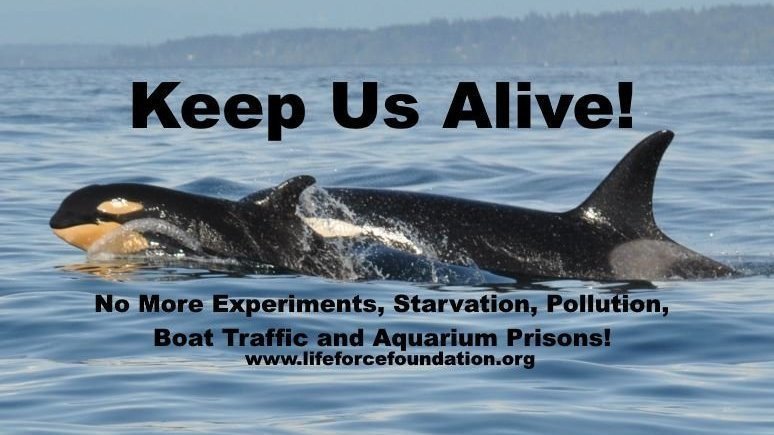
At the recent 27th Annual University of British Columbia Marine Mammal Symposium the Lifeforce question to the Canadian Department of Fisheries and Ocean (DFO) was “It is recognized that vessel traffic and noise is one of three major threats to the SRKWs. Will actions be taken to reduce the threats of research vessel traffic and their ongoing close approaches? He responded that even though research is important “we also recognize that you can’t have too much research”. DFO will “work through with researchers to evaluate if we’re duplicating research and if possible combine collaboration” and look at “kind of a licensing board approach” for the “huge amount of funding” that has resulted in “a lot more research on these animals” (Southern and Northern Resident Orcas).
“Guiding Principles, such as the Three Rs to Refine, Reduce and Replace Experiments, will be challenged by research businesses and other vested interests whose goals are to increase jobs and profits,” stated Peter Hamilton, Lifeforce Director, “We’ve seen this over the years when the experiments on animals in laboratories increased. Increasing Aquarium experiments on captives and “rescues” as “untapped resources” was promoted at a 2017 Conference at the Vancouver Aquarium (Marine Mammals in the Lab: Tools for Conservation and Science).
Hamilton added, “Many experimenters’ questions are already known from decades of identification and behaviour studies! This includes where orcas go, what they eat and habitat use. Any necessary updates can for example utilize the vast hydrophone network created by geologists, military and others (such as University of Victoria’s Ocean Networks Canada). Shooting orcas with tracking darts (that killed 1 SRKW in 2016), attaching large instrument packs and the numerous other close approaches must end. Over 15 years of experiments failed to save them!”
The SRKWs and others can be saved by combating the known threats, such as lack of food, boat traffic and pollution, by funding:
1. Increasing Education such as the Marine Mammal Regulations and Be Whale Wise.
2. Increasing DFO Enforcement Officers to combat the vessel noise and harassment from commercial, private and research vessels.
3. Increasing DFO enforcement of fishing regulations, fishing moratoriums and illegal practises (such as derelict fishing gear that can entrap and injure cetaceans) to help in the recovery of decimated salmon and the broken ocean web of life.
4. Eliminating ocean pollution with maximum levels of BC wide sewage treatment plant upgrades. Trying to save money with cheaper treatment levels would not clean up the present and future life threatening levels of pollution.