Save the Granite Island Little Penguins from Extinction — 1395 verified signatures

Save the Granite Island Little Penguins from Extinction — 1395 verified signatures
The issue
Signatures only please – no donations!
(Donations go to Change.org, not the penguins. We need politicians to fund real action — lobby your MP today!)
Urgent: Only 36 little penguins left on Granite Island.
The November 2025 Flinders University/DEW census confirms just 36 adults remain — a heartbreaking 98% decline from around 1,600 two decades ago. This iconic colony that once defined Victor Harbor is on the brink of local extinction within the next few years.
As a local who walks Granite Island almost every day, I’ve heard excited children ask their parents, “Can we see the penguins?” Soon the answer could be “no” forever — and with them, a vital part of our tourism economy and community pride would be lost.
While food availability is the biggest single driver of the decline, local evidence and multiple studies (PIRSA, Flinders University, Frontiers in Marine Science) show that New Zealand fur seal predation and food competition is a critical, addressable amplifier preventing this tiny population from recovering.
Important context on seal numbers:
In 1990, the total seal population in South Australia was only about 26,500–33,000. Thanks to full protection since the 1970s, it has grown dramatically to around 109,000 today. This recovery is a genuine conservation success story.
At the same time, little penguin numbers in Encounter Bay have collapsed. Granite Island once supported around 1,600 adults, West Island ~4,000 (1992), and Wright Island ~300 (1977). Today Granite Island has just 36 adults, West Island a tiny remnant of a few dozen at best, and Wright Island none. This leaves Granite Island as the last significant little penguin colony in the entire Encounter Bay area.
However, while the statewide seal population has rebounded strongly, the small local group of seals around Granite Island (and nearby West and Wright Islands) is now overlapping directly with the penguins. This makes seals a critical, addressable amplifier on our tiny population of just 36 adults.
That’s why our practical, non-lethal $3.26 million recovery plan — using proven Targeted Acoustic Startle Technology to reduce seal activity by 70–97% without harm — is so important. It focuses exactly where the problem exists while complementing DEW’s excellent work on broader marine issues.
I regularly see seals swimming under the screw pile jetty on Granite Island, near the Cafe, local jetty fisherman have said the seals sometimes hang around the jetty all day taking the bait off their hooks
Human disturbance (tourism, access, noise) is estimated at 3–8% on Granite Island due to high visitor numbers (~800,000/year), with Flinders research showing penguins here are bolder and more stressed. Nearby West Island (minimal access) and Wright Island (no access) have seen more severe declines, indicating food scarcity and marine factors as the primary long-term driver — human disturbance is thus a secondary, site-specific amplifier.
But there is real hope.
I’ve developed a practical, fully costed, non-lethal $3.26 million phased recovery plan over 3–5 years:
• Phase 1: Secure gates + signage/education (~$1,500)
• Phase 2: Targeted Acoustic Startle Technology (TAST) pilot — proven to reduce seal activity by 70–97% without affecting penguins or dolphins (~$260,000)
• Phase 3: Artificial burrows, prey advocacy, and full revival of the Penguin Interpretive Centre with head-starting program (in partnership with experts like Adelaide Zoo) (~$3 million)
The Phase 2: Frequency and Selectivity of Targeted Acoustic Startle Technology (TAST) using the recommended TAST systems (GenusWave and Ace Aquatec) operate in the 0.8–2 kHz frequency range (peak energy 0.95–1.25 kHz) using short, irregular pulses at a low duty cycle. This band is deliberately chosen because long-nosed fur seals are highly sensitive to it, while non-target species have much lower sensitivity. Little penguins (best hearing 200 Hz–6 kHz), dolphins and porpoises (best sensitivity above 5–10 kHz), and baleen whales show minimal to no behavioural response at operational levels. Independent trials confirm no significant adverse effects on penguins, dolphins, or whales. Site-specific acoustic monitoring can be included in the pilot to fully address DEW concerns.
Little penguins typically breed once per year (sometimes twice in good food years), laying two eggs per clutch with an incubation period of 35–37 days and chicks fledging after 7–9 weeks, but on Granite Island breeding success is currently limited to around 0.8–1.5 chicks per pair due to food scarcity — which is why the head-starting program in Phase 3 of our plan is so important.
Breeding success on Granite Island is currently the highest recorded among studied South Australian colonies (thanks to DEW’s rat control and other management). However, wild success is still limited to around 0.8–1.5 chicks per breeding pair due to food scarcity and local pressures. In contrast, well-run captive or head-starting programs (like those used successfully at Phillip Island’s 40,000 strong colony in Victoria and by Adelaide Zoo) routinely achieve 70–95% egg-to-fledgling success, often producing 1.8–2.2 chicks per pair.
Wild survival on Granite Island: Only ~2.3% of fledglings survive to breeding age (Flinders University data). This means that even if each of the 18 pairs of Adult birds currently on Granite Island sucessfully raised one fledgling a simple calculation shows 18 x 2.3% survival rate only ~0.41 birds expected to reach breeding age to help the colony recover.
In contrast, well-run head-starting programs (like those successfully used at Phillip Island and Adelaide Zoo) routinely achieve 70–95% survival.
Head-starting success: 70–95% of chicks survive to release and have much higher return/breeding rates (proven at Phillip Island in Victoria and SANCCOB in South Africa).
Real-world examples
Phillip Island (Victoria): Their head-starting trials helped stabilise and grow the colony to ~40,000 penguins.
Adelaide Zoo & SANCCOB-style programs: Successfully used for little penguins and African penguins, producing 1.8–2.2 chicks per pair vs 0.8–1.5 in the wild.
That’s why Phase 3 of our plan — reviving the historic Penguin Interpretive Centre with a head-starting program — is so important. It will give the last 36 adults the best possible chance to rebuild the colony while we address the other threats.
Genetic studies and reports from PIRSA indicate that some little penguins washing up dead in Encounter Bay originate from east coast colonies in Victoria and New South Wales. This shows that Granite Island can receive long-distance dispersers, yet the local population continues to struggle. Protecting this last significant colony with targeted non-lethal measures could help turn it into a viable stronghold that benefits the entire southern Australian penguin population.
Full details updated 29 March 2026 are here: https://thinlinx.com/the-elephant-in-the-room.pdf
DOING NOTHING = DISASTER
OUR PLAN = RECOVERY & GROWTH
Update on My Meeting with DEW Victor Harbor – 16 March 2026
I met for two hours with Seiji and Matt from the Department for Environment and Water (DEW) at their Victor Harbor office. I want to thank them sincerely for their time and for listening to our concerns. They are dedicated public servants doing important work across the state.
During the discussion, it became clear that DEW’s current position is that the Granite Island colony is very small with a slight uptick and that there are still healthy little penguin populations elsewhere in South Australia. From their statewide perspective, it appears that they do not see an urgent need for changes at Granite Island.
However, for our local community the situation is very different. With only ~36 adults left, Granite Island faces genuine local extinction risk within 2–10 years. This is not just about numbers elsewhere — it is about losing an iconic part of our own coastline and the economic benefits it brings.
The Opportunity We Have If we implement the full recovery plan (gate upgrades, TAST acoustic deterrents, centre revival with an Adelaide Zoo-style display, head-starting, and translocation support), the benefits for Victor Harbor would be substantial:
Penguin colony: Could grow to 750–1,300+ adults by 2031 (optimistic but achievable scenario).
Tourism uplift: 15–35% net increase in regional visitors (180,000–420,000 extra people per year).
Economic growth: Additional $20–60 million per year in direct and flow-on revenue.
Local jobs: Creation of 150–400 new positions in tourism, hospitality, guiding, and related services.
These gains would more than offset any small risk and help secure Victor Harbor’s future as a premier nature-based tourism destination.
I respect DEW’s broader responsibilities and appreciate their expertise. I simply ask that they consider the unique local situation at Granite Island and the clear economic and community benefits of supporting a small, targeted pilot program here.
We remain hopeful that DEW, the Victor Harbor Council, and the community can work together on this. The plan is non-lethal, evidence-based, and would benefit both the penguins and our local economy.
If you agree that Granite Island’s penguins and our local jobs matter, please sign and share this petition. Every signature helps show that our community cares and wants positive action.
We call on Premier Peter Malinauskas, Minister Lucy Hood, all SA MPs and councillors to commit funding now.
Please sign now, share widely with friends and family across South Australia, and email your local MP today — a simple template is in the Update at the top of this page
Download and print the one-page flyer https://thinlinx.com/flyer.pdf
Thank you for standing with the penguins — together we can bring them back before it’s too late! 🐧
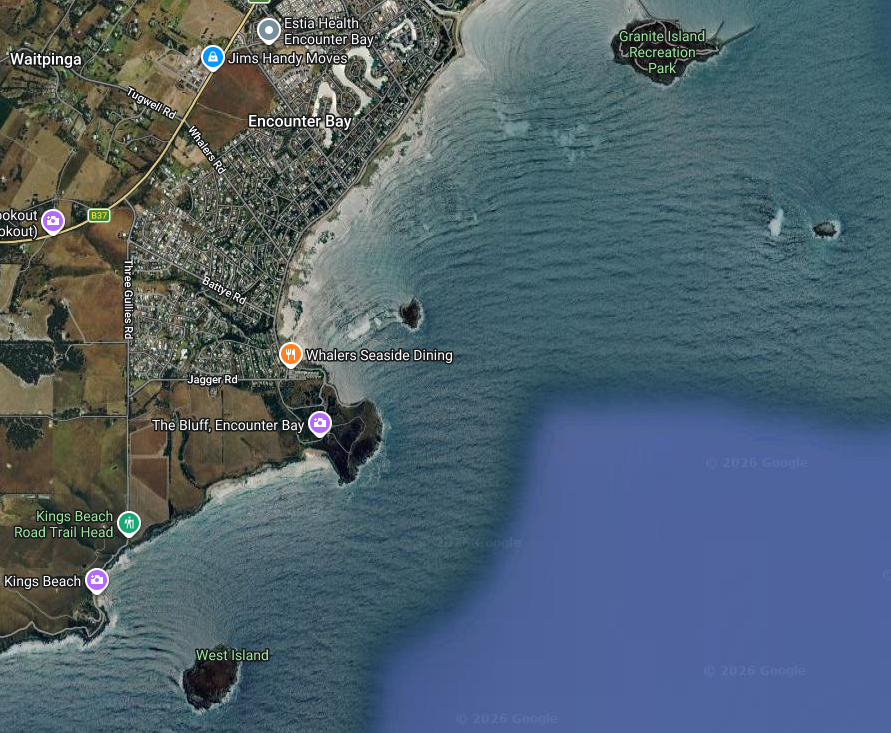
Artificial Intelligence generated concept images are below
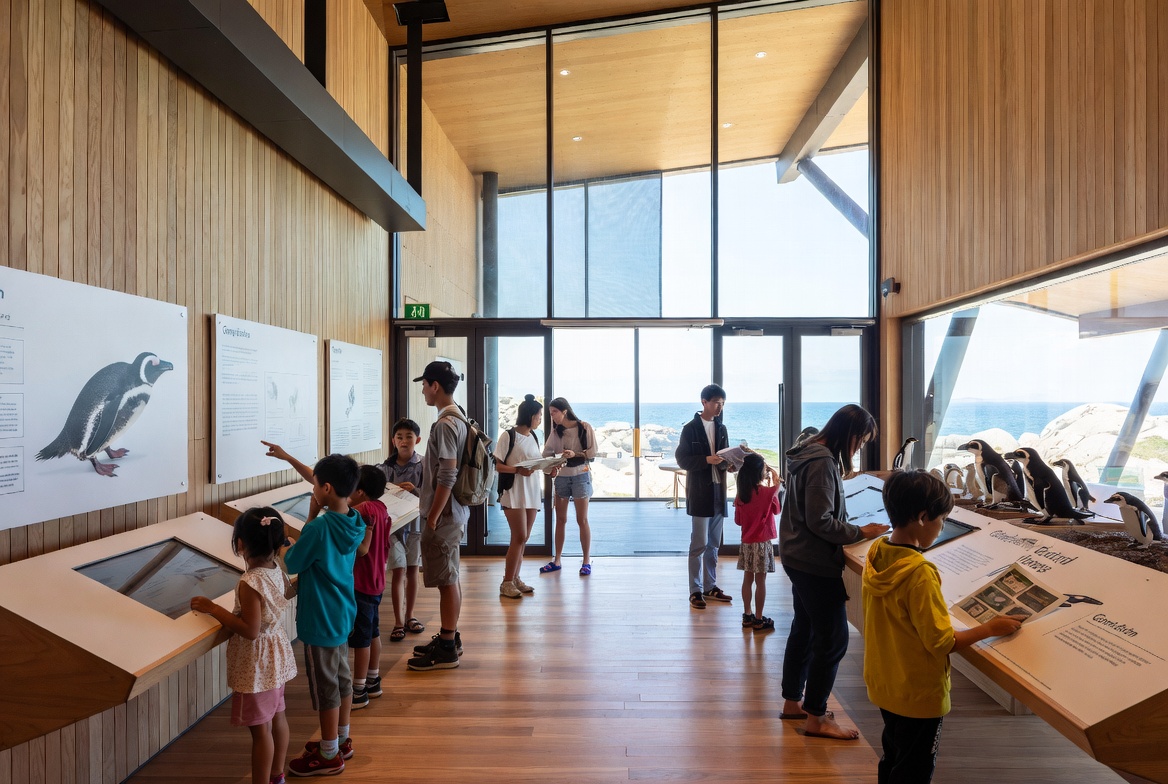
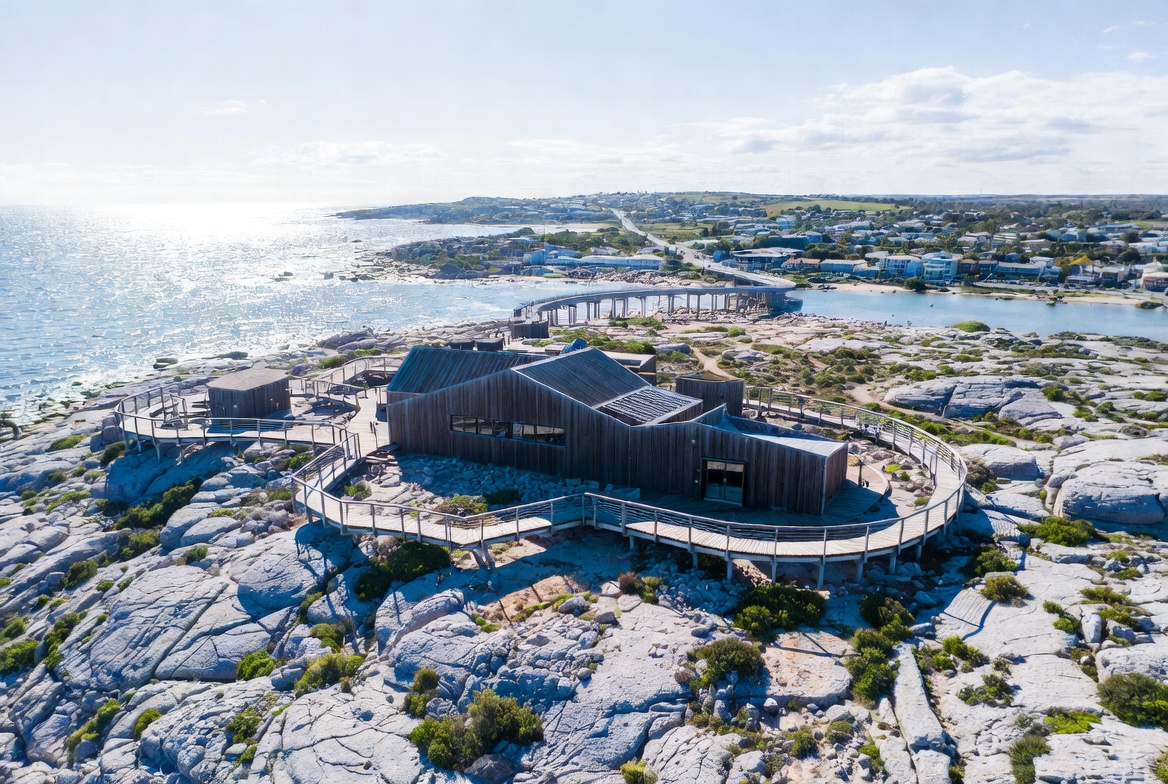
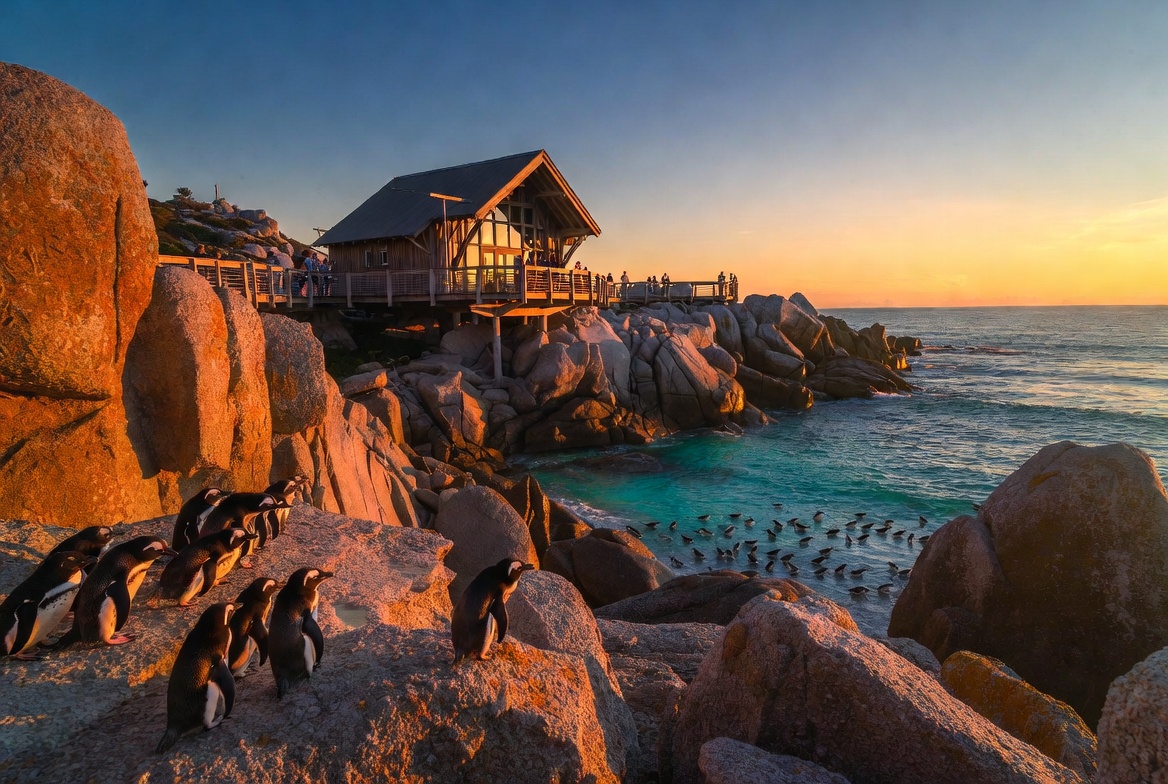

1,421
The issue
Signatures only please – no donations!
(Donations go to Change.org, not the penguins. We need politicians to fund real action — lobby your MP today!)
Urgent: Only 36 little penguins left on Granite Island.
The November 2025 Flinders University/DEW census confirms just 36 adults remain — a heartbreaking 98% decline from around 1,600 two decades ago. This iconic colony that once defined Victor Harbor is on the brink of local extinction within the next few years.
As a local who walks Granite Island almost every day, I’ve heard excited children ask their parents, “Can we see the penguins?” Soon the answer could be “no” forever — and with them, a vital part of our tourism economy and community pride would be lost.
While food availability is the biggest single driver of the decline, local evidence and multiple studies (PIRSA, Flinders University, Frontiers in Marine Science) show that New Zealand fur seal predation and food competition is a critical, addressable amplifier preventing this tiny population from recovering.
Important context on seal numbers:
In 1990, the total seal population in South Australia was only about 26,500–33,000. Thanks to full protection since the 1970s, it has grown dramatically to around 109,000 today. This recovery is a genuine conservation success story.
At the same time, little penguin numbers in Encounter Bay have collapsed. Granite Island once supported around 1,600 adults, West Island ~4,000 (1992), and Wright Island ~300 (1977). Today Granite Island has just 36 adults, West Island a tiny remnant of a few dozen at best, and Wright Island none. This leaves Granite Island as the last significant little penguin colony in the entire Encounter Bay area.
However, while the statewide seal population has rebounded strongly, the small local group of seals around Granite Island (and nearby West and Wright Islands) is now overlapping directly with the penguins. This makes seals a critical, addressable amplifier on our tiny population of just 36 adults.
That’s why our practical, non-lethal $3.26 million recovery plan — using proven Targeted Acoustic Startle Technology to reduce seal activity by 70–97% without harm — is so important. It focuses exactly where the problem exists while complementing DEW’s excellent work on broader marine issues.
I regularly see seals swimming under the screw pile jetty on Granite Island, near the Cafe, local jetty fisherman have said the seals sometimes hang around the jetty all day taking the bait off their hooks
Human disturbance (tourism, access, noise) is estimated at 3–8% on Granite Island due to high visitor numbers (~800,000/year), with Flinders research showing penguins here are bolder and more stressed. Nearby West Island (minimal access) and Wright Island (no access) have seen more severe declines, indicating food scarcity and marine factors as the primary long-term driver — human disturbance is thus a secondary, site-specific amplifier.
But there is real hope.
I’ve developed a practical, fully costed, non-lethal $3.26 million phased recovery plan over 3–5 years:
• Phase 1: Secure gates + signage/education (~$1,500)
• Phase 2: Targeted Acoustic Startle Technology (TAST) pilot — proven to reduce seal activity by 70–97% without affecting penguins or dolphins (~$260,000)
• Phase 3: Artificial burrows, prey advocacy, and full revival of the Penguin Interpretive Centre with head-starting program (in partnership with experts like Adelaide Zoo) (~$3 million)
The Phase 2: Frequency and Selectivity of Targeted Acoustic Startle Technology (TAST) using the recommended TAST systems (GenusWave and Ace Aquatec) operate in the 0.8–2 kHz frequency range (peak energy 0.95–1.25 kHz) using short, irregular pulses at a low duty cycle. This band is deliberately chosen because long-nosed fur seals are highly sensitive to it, while non-target species have much lower sensitivity. Little penguins (best hearing 200 Hz–6 kHz), dolphins and porpoises (best sensitivity above 5–10 kHz), and baleen whales show minimal to no behavioural response at operational levels. Independent trials confirm no significant adverse effects on penguins, dolphins, or whales. Site-specific acoustic monitoring can be included in the pilot to fully address DEW concerns.
Little penguins typically breed once per year (sometimes twice in good food years), laying two eggs per clutch with an incubation period of 35–37 days and chicks fledging after 7–9 weeks, but on Granite Island breeding success is currently limited to around 0.8–1.5 chicks per pair due to food scarcity — which is why the head-starting program in Phase 3 of our plan is so important.
Breeding success on Granite Island is currently the highest recorded among studied South Australian colonies (thanks to DEW’s rat control and other management). However, wild success is still limited to around 0.8–1.5 chicks per breeding pair due to food scarcity and local pressures. In contrast, well-run captive or head-starting programs (like those used successfully at Phillip Island’s 40,000 strong colony in Victoria and by Adelaide Zoo) routinely achieve 70–95% egg-to-fledgling success, often producing 1.8–2.2 chicks per pair.
Wild survival on Granite Island: Only ~2.3% of fledglings survive to breeding age (Flinders University data). This means that even if each of the 18 pairs of Adult birds currently on Granite Island sucessfully raised one fledgling a simple calculation shows 18 x 2.3% survival rate only ~0.41 birds expected to reach breeding age to help the colony recover.
In contrast, well-run head-starting programs (like those successfully used at Phillip Island and Adelaide Zoo) routinely achieve 70–95% survival.
Head-starting success: 70–95% of chicks survive to release and have much higher return/breeding rates (proven at Phillip Island in Victoria and SANCCOB in South Africa).
Real-world examples
Phillip Island (Victoria): Their head-starting trials helped stabilise and grow the colony to ~40,000 penguins.
Adelaide Zoo & SANCCOB-style programs: Successfully used for little penguins and African penguins, producing 1.8–2.2 chicks per pair vs 0.8–1.5 in the wild.
That’s why Phase 3 of our plan — reviving the historic Penguin Interpretive Centre with a head-starting program — is so important. It will give the last 36 adults the best possible chance to rebuild the colony while we address the other threats.
Genetic studies and reports from PIRSA indicate that some little penguins washing up dead in Encounter Bay originate from east coast colonies in Victoria and New South Wales. This shows that Granite Island can receive long-distance dispersers, yet the local population continues to struggle. Protecting this last significant colony with targeted non-lethal measures could help turn it into a viable stronghold that benefits the entire southern Australian penguin population.
Full details updated 29 March 2026 are here: https://thinlinx.com/the-elephant-in-the-room.pdf
DOING NOTHING = DISASTER
OUR PLAN = RECOVERY & GROWTH
Update on My Meeting with DEW Victor Harbor – 16 March 2026
I met for two hours with Seiji and Matt from the Department for Environment and Water (DEW) at their Victor Harbor office. I want to thank them sincerely for their time and for listening to our concerns. They are dedicated public servants doing important work across the state.
During the discussion, it became clear that DEW’s current position is that the Granite Island colony is very small with a slight uptick and that there are still healthy little penguin populations elsewhere in South Australia. From their statewide perspective, it appears that they do not see an urgent need for changes at Granite Island.
However, for our local community the situation is very different. With only ~36 adults left, Granite Island faces genuine local extinction risk within 2–10 years. This is not just about numbers elsewhere — it is about losing an iconic part of our own coastline and the economic benefits it brings.
The Opportunity We Have If we implement the full recovery plan (gate upgrades, TAST acoustic deterrents, centre revival with an Adelaide Zoo-style display, head-starting, and translocation support), the benefits for Victor Harbor would be substantial:
Penguin colony: Could grow to 750–1,300+ adults by 2031 (optimistic but achievable scenario).
Tourism uplift: 15–35% net increase in regional visitors (180,000–420,000 extra people per year).
Economic growth: Additional $20–60 million per year in direct and flow-on revenue.
Local jobs: Creation of 150–400 new positions in tourism, hospitality, guiding, and related services.
These gains would more than offset any small risk and help secure Victor Harbor’s future as a premier nature-based tourism destination.
I respect DEW’s broader responsibilities and appreciate their expertise. I simply ask that they consider the unique local situation at Granite Island and the clear economic and community benefits of supporting a small, targeted pilot program here.
We remain hopeful that DEW, the Victor Harbor Council, and the community can work together on this. The plan is non-lethal, evidence-based, and would benefit both the penguins and our local economy.
If you agree that Granite Island’s penguins and our local jobs matter, please sign and share this petition. Every signature helps show that our community cares and wants positive action.
We call on Premier Peter Malinauskas, Minister Lucy Hood, all SA MPs and councillors to commit funding now.
Please sign now, share widely with friends and family across South Australia, and email your local MP today — a simple template is in the Update at the top of this page
Download and print the one-page flyer https://thinlinx.com/flyer.pdf
Thank you for standing with the penguins — together we can bring them back before it’s too late! 🐧
Artificial Intelligence generated concept images are below
1,421
The Decision Makers
Supporter voices
Share this petition
Petition created on 11 February 2026