
SAVE THANDIANI — SAVE THE FORESTS, MOUNTAINS, WILDLIFE, HERITAGE AND FUTURE OF PAKISTAN
The Issue
SAVE THANDIANI — SAVE THE FORESTS, MOUNTAINS, WILDLIFE AND HERITAGE AND FUTURE OF GALYIAT
An Appeal to Protect Thandiani from Irreversible Commercialisation
To:
The Chief Minister of Khyber Pakhtunkhwa
The Governor of Khyber Pakhtunkhwa
The Prime Minister of Pakistan
The President of Pakistan
The Chief Justice of Pakistan and the Supreme Court of Pakistan
The Chief Justice of the Peshawar High Court
The Government of Khyber Pakhtunkhwa
The Khyber Pakhtunkhwa Forest Department
The Khyber Pakhtunkhwa Environmental Protection Agency
The National Assembly and Senate of Pakistan
The National Accountability Bureau (NAB)
Relevant national and international environmental and development organisations
THANDIANI IS NOT JUST A TOURIST DESTINATION
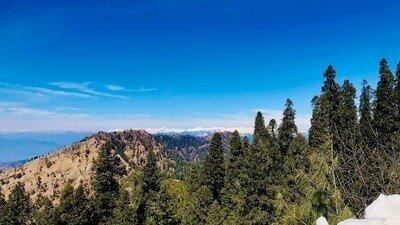
Thandiani is one of the most remarkable mountain landscapes of Hazara and the wider Galiyat region of Pakistan. It is a forest, a watershed, a wildlife habitat, a geological record, a historical landscape and a cultural heritage site all at the same time. For generations, its mountains and forests have protected water sources, supported biodiversity, moderated the local climate and provided livelihoods and cultural identity to surrounding communities.
Dr James Howard Thornton was appointed to Abbottabad in 1885 as the Deputy Surgeon-General of India, serving nearly 60,000 troops of the British Army stationed on the frontier. In his memoirs, he wrote a fascinating account of his journey to Thandiani. He hiked from Kala Pani to the summit, where he was astonished by the extraordinary panorama before him. From the heights of Thandiani, he could see snow-covered mountain ranges stretching across Kashmir, Kaghan and Swat, and extending towards Bajaur and Kafiristan in Afghanistan. What impressed him most was the sheer scale of the panorama. He noted that few places, if any, in the world could offer such an exceptional view of so many great mountain ranges from a single vantage point. Thandiani is not merely a tourist destination; it is a landscape of nature, healing, reflection, and spiritual heritage. More than 150 years ago, missionaries came here seeking peace and communion with nature, and in 1874 built St. Xavier in the Wilderness among the forests. Thandiani is also home to two historic Christian cemeteries.
Today, this precious natural and spiritual heritage faces the threat of mass tourism and unchecked construction. Can development that destroys the wilderness and its heritage truly be called progress?
Thandiani even has a place in the history of modern scientific observation. In August 1885, T. C. Lewis recorded an unusual atmospheric optical phenomenon from Thandiani Hill and reported it in the prestigious scientific journal Nature. His observation, published in 1885 as ‘A Tertiary Rainbow’, later led to further scientific analysis and correction identifying the phenomenon as a solar halo caused by ice crystals. Few mountain resorts can claim such a documented place in the history of scientific observation.
More than a century later, Thornton's account provides a remarkable historical testimony to the extraordinary natural beauty and global landscape significance of Thandiani.
The same Thandiani, once a place of natural observation, meditation, and spiritual healing, is now under threat of irreversible destruction in the name of tourism. A few years ago, a World Bank-funded project ID: P163562) initiated the construction of a massive road through Thandiani, unnecessarily cutting down more than 5,000 trees, some of which were over a century old. Under the pretext of this road, housing societies and large-scale developments began emerging on this fragile mountain ecosystem, putting its forests, water sources, biodiversity, and ecological balance at serious risk. Reportedly, the Galiyat Development Authority and the KP Government have SOLD 400 kanal of forest land in Thandiani to a private firm, with plans to transform it into a concrete sprawl of more than 200 hotels—on an area that simply cannot sustain such massive development. The fragile landscape faces a scale of development that could permanently transform its character. Once a mountain is cut, a forest is cleared and a watershed is damaged, no government can simply restore what has been lost. This will be the last blow on our deminishing forests.
THIS DEVELOPMENT COULD:
Alter water regulation in the region
Expose topsoil and trigger major landslides
Reduce the region’s carbon-storage capacity
Destroy wildlife, flora, and fauna
Destroy biodiversity
Dry up and contaminate vital spring-water resources
Disrupt snow and moisture regulation
Impact downstream irrigation systems
Cause flash flooding downstream, potentially displacing thousands of people
Sewage and solid-waste pollution
THANDIANI DOES NOT NEED TO BECOME ANOTHER CONCRETE SLUM:
Unfortunately, much of the Galiyat, from Changla Gali to Nathiagali, has already suffered irreversible environmental and cultural damage. Vast areas of forest have been encroached upon, local water resources contaminated, and infrastructure built far beyond the region’s ecological capacity. Historic buildings and heritage structures have been demolished, altered, or allowed to deteriorate. Nathiagali, once a beautiful hill station rich in natural and architectural heritage, has been transformed almost beyond recognition and it no longer feels like a hill station.
Now, Thandiani is in the sights of the same forces of greed and unchecked development. What happened to Nathiagali and much of the Galiyat must not be allowed to happen here. Thandiani is not an opportunity for exploitation—it is a natural, ecological, and cultural heritage that belongs to generations yet unborn.
Thandiani's greatest attraction is Thandiani itself.
Its forests.
Its silence.
Its wildlife.
Its streams.
Its mountains.
Its history.
Its people.
“There should be neither harming nor reciprocating harm.”
— Prophet Muhammad ﷺ
Development that destroys forests, water sources, biodiversity, and the lives and livelihoods of people downstream cannot be called responsible development. Tourism should protect nature, not destroy it. Development should serve the mountains—not sacrifice them.
✊ OUR MESSAGE
We call upon the Government of Khyber Pakhtunkhwa and every relevant constitutional institution and people of Pakistan who ever been on Thandiani,
Do not wait until the damage is irreversible.
Do not allow short-term commercial interests to destroy a landscape that took thousands—or millions—of years to form.
Do not turn a forest into a resort and then call it conservation.
Do not destroy the very thing tourists come to see.
SAVE THANDIANI.
🌲 Save the forests.
🏔️ Save the mountains.
💧 Save the water.
🦅 Save the wildlife.
🏛️ Save the heritage.
👨👩👧👦 Protect local communities.
🇵🇰 Protect Pakistan's natural heritage.
SIGN THIS PETITION. SHARE IT. MAKE YOUR VOICE HEARD.
Thandiani is not a commodity.
Thandiani is our history, heritage and future,
#SaveThandiani #SaveGaliyat #ProtectThandiani #SaveOurForests #ProtectOurMountains #EnvironmentalJustice #SustainableTourism #Hazara #KhyberPakhtunkhwa #Pakistan #NWFP

227
The Issue
SAVE THANDIANI — SAVE THE FORESTS, MOUNTAINS, WILDLIFE AND HERITAGE AND FUTURE OF GALYIAT
An Appeal to Protect Thandiani from Irreversible Commercialisation
To:
The Chief Minister of Khyber Pakhtunkhwa
The Governor of Khyber Pakhtunkhwa
The Prime Minister of Pakistan
The President of Pakistan
The Chief Justice of Pakistan and the Supreme Court of Pakistan
The Chief Justice of the Peshawar High Court
The Government of Khyber Pakhtunkhwa
The Khyber Pakhtunkhwa Forest Department
The Khyber Pakhtunkhwa Environmental Protection Agency
The National Assembly and Senate of Pakistan
The National Accountability Bureau (NAB)
Relevant national and international environmental and development organisations
THANDIANI IS NOT JUST A TOURIST DESTINATION
Thandiani is one of the most remarkable mountain landscapes of Hazara and the wider Galiyat region of Pakistan. It is a forest, a watershed, a wildlife habitat, a geological record, a historical landscape and a cultural heritage site all at the same time. For generations, its mountains and forests have protected water sources, supported biodiversity, moderated the local climate and provided livelihoods and cultural identity to surrounding communities.
Dr James Howard Thornton was appointed to Abbottabad in 1885 as the Deputy Surgeon-General of India, serving nearly 60,000 troops of the British Army stationed on the frontier. In his memoirs, he wrote a fascinating account of his journey to Thandiani. He hiked from Kala Pani to the summit, where he was astonished by the extraordinary panorama before him. From the heights of Thandiani, he could see snow-covered mountain ranges stretching across Kashmir, Kaghan and Swat, and extending towards Bajaur and Kafiristan in Afghanistan. What impressed him most was the sheer scale of the panorama. He noted that few places, if any, in the world could offer such an exceptional view of so many great mountain ranges from a single vantage point. Thandiani is not merely a tourist destination; it is a landscape of nature, healing, reflection, and spiritual heritage. More than 150 years ago, missionaries came here seeking peace and communion with nature, and in 1874 built St. Xavier in the Wilderness among the forests. Thandiani is also home to two historic Christian cemeteries.
Today, this precious natural and spiritual heritage faces the threat of mass tourism and unchecked construction. Can development that destroys the wilderness and its heritage truly be called progress?
Thandiani even has a place in the history of modern scientific observation. In August 1885, T. C. Lewis recorded an unusual atmospheric optical phenomenon from Thandiani Hill and reported it in the prestigious scientific journal Nature. His observation, published in 1885 as ‘A Tertiary Rainbow’, later led to further scientific analysis and correction identifying the phenomenon as a solar halo caused by ice crystals. Few mountain resorts can claim such a documented place in the history of scientific observation.
More than a century later, Thornton's account provides a remarkable historical testimony to the extraordinary natural beauty and global landscape significance of Thandiani.
The same Thandiani, once a place of natural observation, meditation, and spiritual healing, is now under threat of irreversible destruction in the name of tourism. A few years ago, a World Bank-funded project ID: P163562) initiated the construction of a massive road through Thandiani, unnecessarily cutting down more than 5,000 trees, some of which were over a century old. Under the pretext of this road, housing societies and large-scale developments began emerging on this fragile mountain ecosystem, putting its forests, water sources, biodiversity, and ecological balance at serious risk. Reportedly, the Galiyat Development Authority and the KP Government have SOLD 400 kanal of forest land in Thandiani to a private firm, with plans to transform it into a concrete sprawl of more than 200 hotels—on an area that simply cannot sustain such massive development. The fragile landscape faces a scale of development that could permanently transform its character. Once a mountain is cut, a forest is cleared and a watershed is damaged, no government can simply restore what has been lost. This will be the last blow on our deminishing forests.
THIS DEVELOPMENT COULD:
Alter water regulation in the region
Expose topsoil and trigger major landslides
Reduce the region’s carbon-storage capacity
Destroy wildlife, flora, and fauna
Destroy biodiversity
Dry up and contaminate vital spring-water resources
Disrupt snow and moisture regulation
Impact downstream irrigation systems
Cause flash flooding downstream, potentially displacing thousands of people
Sewage and solid-waste pollution
THANDIANI DOES NOT NEED TO BECOME ANOTHER CONCRETE SLUM:
Unfortunately, much of the Galiyat, from Changla Gali to Nathiagali, has already suffered irreversible environmental and cultural damage. Vast areas of forest have been encroached upon, local water resources contaminated, and infrastructure built far beyond the region’s ecological capacity. Historic buildings and heritage structures have been demolished, altered, or allowed to deteriorate. Nathiagali, once a beautiful hill station rich in natural and architectural heritage, has been transformed almost beyond recognition and it no longer feels like a hill station.
Now, Thandiani is in the sights of the same forces of greed and unchecked development. What happened to Nathiagali and much of the Galiyat must not be allowed to happen here. Thandiani is not an opportunity for exploitation—it is a natural, ecological, and cultural heritage that belongs to generations yet unborn.
Thandiani's greatest attraction is Thandiani itself.
Its forests.
Its silence.
Its wildlife.
Its streams.
Its mountains.
Its history.
Its people.
“There should be neither harming nor reciprocating harm.”
— Prophet Muhammad ﷺ
Development that destroys forests, water sources, biodiversity, and the lives and livelihoods of people downstream cannot be called responsible development. Tourism should protect nature, not destroy it. Development should serve the mountains—not sacrifice them.
✊ OUR MESSAGE
We call upon the Government of Khyber Pakhtunkhwa and every relevant constitutional institution and people of Pakistan who ever been on Thandiani,
Do not wait until the damage is irreversible.
Do not allow short-term commercial interests to destroy a landscape that took thousands—or millions—of years to form.
Do not turn a forest into a resort and then call it conservation.
Do not destroy the very thing tourists come to see.
SAVE THANDIANI.
🌲 Save the forests.
🏔️ Save the mountains.
💧 Save the water.
🦅 Save the wildlife.
🏛️ Save the heritage.
👨👩👧👦 Protect local communities.
🇵🇰 Protect Pakistan's natural heritage.
SIGN THIS PETITION. SHARE IT. MAKE YOUR VOICE HEARD.
Thandiani is not a commodity.
Thandiani is our history, heritage and future,
#SaveThandiani #SaveGaliyat #ProtectThandiani #SaveOurForests #ProtectOurMountains #EnvironmentalJustice #SustainableTourism #Hazara #KhyberPakhtunkhwa #Pakistan #NWFP


Petition Updates
Share this petition
Petition created on August 22, 2026