

Revise Current Regulations Regarding Harvesting Northern Pike on Eagle Nest Lake
The Issue
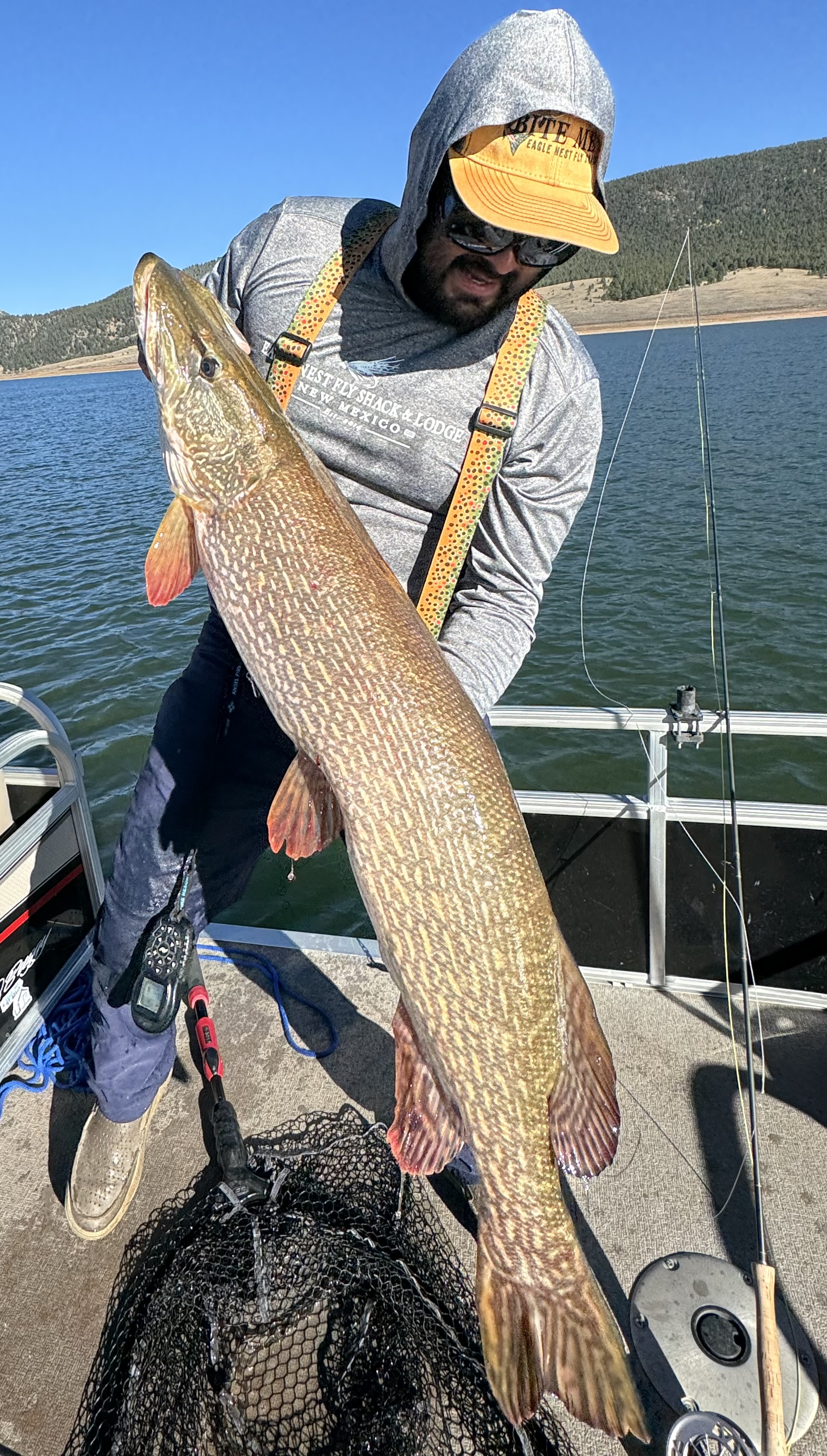
Eagle Nest Lake in New Mexico is a cherished natural resource for both residents and tourists alike, offering a truly unique angling experience. Anglers visiting Eagle Nest Lake are presented with the rare opportunity to catch a diverse array of species, including Northern Pike, Kokanee Salmon, Rainbow Trout, Yellow Perch, and Common Carp, all within the same body of water.
Timothy Urtiaga, a prominent business owner and guide in Eagle Nest for the past 12 years, passionately states: "As an angler who has spent countless hours on Eagle Nest Lake, the Northern Pike offers an unparalleled challenge and thrill – it's a truly magnificent game fish that sets our lake apart. But as a local business owner here in Eagle Nest, my passion runs deeper: I see firsthand how these powerful fish attract anglers from across the country, directly boosting our local economy and sustaining livelihoods in our community. We need regulations that embrace the pike's value, allowing for sustainable practices like selective harvesting that ensure not just the long term health of our unique fishery, but also the continued economic vitality and exceptional angling experiences that define our home."
The current "catch and kill" rule for Northern Pike, enacted in 2011 following their illegal introduction, has now been in effect for over a decade. However, this strict mandate is proving counterproductive, as highlighted by experienced professionals in the angling community. As Nick Streit, owner and guide at Taos Fly Shop, a business serving anglers for over 20 years, states: "After 10+ years of the mandatory kill rule for pike on Eagle Nest Lake, we can see that this regulation has not had the desired effect. In fact, there seems to be more Pike in the lake now than ever. Unfortunately, most of the pike we are catching are small and the large trophy pike that were attracting anglers to the fishery are now fewer and further between. Additionally, the trout fishing has not benefited by the rule. Eagle Nest Lake has the ability to be BOTH a trophy Trout and Pike fishery and it should be managed accordingly."
Scientific observation and management show that Northern Pike, Rainbow Trout, and Kokanee salmon can successfully coexist within the lake through "niche partitioning". While pike haunt the weedy, shallow edges of the lake, our triploid Rainbow Trout and Kokanee salmon occupy the deeper, cooler, open water zones. By recognizing these distinct biological "neighborhoods," we can see that pike are not inherently detrimental to these other species, provided the fishery is managed with a holistic perspective. This is further evidenced by Navajo Lake, where Northern Pike, trout, and Kokanee salmon have thrived together for years without the need for a mandatory harvest rule.
The Biological Case for Coexistence: Niche Partitioning
Scientific observation confirms that Northern Pike, Rainbow Trout, and Kokanee salmon can successfully coexist within the lake through "niche partitioning" a fundamental ecological principle where species reduce direct competition by utilizing different parts of the environment. In Eagle Nest Lake, Northern Pike are ambush predators that rely on structural complexity, favoring the shallow, vegetated edges of the lake. Conversely, our triploid Rainbow Trout and Kokanee salmon are pelagic, open-water fish that prefer deeper, cooler, and more oxygenated zones. Because these species naturally segregate by depth, temperature, and foraging behavior, they do not compete for the same ecological niche. The current "catch and kill" policy ignores this natural segregation, assuming a level of direct competition that simply does not exist. Our management strategy should respect these distinct biological "neighborhoods" rather than forcing an artificial and ineffective eradication program.
This blanket "kill all" approach runs directly counter to modern, sustainable fisheries management. It not only fosters unnecessary waste and negatively impacts the ecological health of Eagle Nest Lake, but also limits the dynamic and satisfying fishing experiences that selective harvesting provides, such as the thrill of catch and release and the opportunity for future encounters with larger, healthier fish.
Given that Northern Pike are now an established and thriving part of the Eagle Nest ecosystem, the focus must shift from an unachievable eradication to a pragmatic and beneficial management strategy. Legalizing the option to release Northern Pike would enable selective harvesting, a proven sustainable method that actively contributes to maintaining the pike population at a healthy, manageable level for the lake. Crucially, this strategy also promotes the health and increased size of other desirable sport fish species within the ecosystem, fostering a more balanced and productive fishery by allowing for natural predator-prey dynamics to evolve.
This progressive approach has also been successfully implemented in other prominent fisheries globally. For instance, in large, deep, and well-connected lakes in Ireland, Northern Pike and Brown Trout have been observed to coexist, with habitat diversity providing refuges for prey. Similarly, in Minnesota, "two-story lakes" successfully support both warm-water species and cold-water species like various trout, where nuanced management strategies balance these populations. These examples clearly demonstrate that through appropriate management, including selective harvesting and tailored regulations, it is entirely possible for desirable Northern Pike and trout populations to thrive simultaneously, ensuring ecological vitality while enhancing the overall angling experience.
Moreover, these current regulations inadvertently limit the potential revenue that can be generated for state parks and the local community. Anglers from around the country visit lakes like Eagle Nest for the chance to engage in catch-and-release fishing, a practice that has proven to significantly increase tourist engagement and revenue in other parts of the United States. By adopting more flexible regulations that allow the option to release Northern Pike back into the waters, the state could attract more visitors and repeat tourism, directly benefiting local businesses and the wider community.
Sign this petition to urge state legislators and local authorities to enact revised regulations that permit the selective harvesting and optional release of Northern Pike in Eagle Nest Lake. By doing so, we can safeguard the fishery's ecosystem, prevent unnecessary waste, promote sustainable management that benefits both pike and other species, and significantly support the economic vitality of Eagle Nest Village and New Mexico's state parks.

478
The Issue
Eagle Nest Lake in New Mexico is a cherished natural resource for both residents and tourists alike, offering a truly unique angling experience. Anglers visiting Eagle Nest Lake are presented with the rare opportunity to catch a diverse array of species, including Northern Pike, Kokanee Salmon, Rainbow Trout, Yellow Perch, and Common Carp, all within the same body of water.
Timothy Urtiaga, a prominent business owner and guide in Eagle Nest for the past 12 years, passionately states: "As an angler who has spent countless hours on Eagle Nest Lake, the Northern Pike offers an unparalleled challenge and thrill – it's a truly magnificent game fish that sets our lake apart. But as a local business owner here in Eagle Nest, my passion runs deeper: I see firsthand how these powerful fish attract anglers from across the country, directly boosting our local economy and sustaining livelihoods in our community. We need regulations that embrace the pike's value, allowing for sustainable practices like selective harvesting that ensure not just the long term health of our unique fishery, but also the continued economic vitality and exceptional angling experiences that define our home."
The current "catch and kill" rule for Northern Pike, enacted in 2011 following their illegal introduction, has now been in effect for over a decade. However, this strict mandate is proving counterproductive, as highlighted by experienced professionals in the angling community. As Nick Streit, owner and guide at Taos Fly Shop, a business serving anglers for over 20 years, states: "After 10+ years of the mandatory kill rule for pike on Eagle Nest Lake, we can see that this regulation has not had the desired effect. In fact, there seems to be more Pike in the lake now than ever. Unfortunately, most of the pike we are catching are small and the large trophy pike that were attracting anglers to the fishery are now fewer and further between. Additionally, the trout fishing has not benefited by the rule. Eagle Nest Lake has the ability to be BOTH a trophy Trout and Pike fishery and it should be managed accordingly."
Scientific observation and management show that Northern Pike, Rainbow Trout, and Kokanee salmon can successfully coexist within the lake through "niche partitioning". While pike haunt the weedy, shallow edges of the lake, our triploid Rainbow Trout and Kokanee salmon occupy the deeper, cooler, open water zones. By recognizing these distinct biological "neighborhoods," we can see that pike are not inherently detrimental to these other species, provided the fishery is managed with a holistic perspective. This is further evidenced by Navajo Lake, where Northern Pike, trout, and Kokanee salmon have thrived together for years without the need for a mandatory harvest rule.
The Biological Case for Coexistence: Niche Partitioning
Scientific observation confirms that Northern Pike, Rainbow Trout, and Kokanee salmon can successfully coexist within the lake through "niche partitioning" a fundamental ecological principle where species reduce direct competition by utilizing different parts of the environment. In Eagle Nest Lake, Northern Pike are ambush predators that rely on structural complexity, favoring the shallow, vegetated edges of the lake. Conversely, our triploid Rainbow Trout and Kokanee salmon are pelagic, open-water fish that prefer deeper, cooler, and more oxygenated zones. Because these species naturally segregate by depth, temperature, and foraging behavior, they do not compete for the same ecological niche. The current "catch and kill" policy ignores this natural segregation, assuming a level of direct competition that simply does not exist. Our management strategy should respect these distinct biological "neighborhoods" rather than forcing an artificial and ineffective eradication program.
This blanket "kill all" approach runs directly counter to modern, sustainable fisheries management. It not only fosters unnecessary waste and negatively impacts the ecological health of Eagle Nest Lake, but also limits the dynamic and satisfying fishing experiences that selective harvesting provides, such as the thrill of catch and release and the opportunity for future encounters with larger, healthier fish.
Given that Northern Pike are now an established and thriving part of the Eagle Nest ecosystem, the focus must shift from an unachievable eradication to a pragmatic and beneficial management strategy. Legalizing the option to release Northern Pike would enable selective harvesting, a proven sustainable method that actively contributes to maintaining the pike population at a healthy, manageable level for the lake. Crucially, this strategy also promotes the health and increased size of other desirable sport fish species within the ecosystem, fostering a more balanced and productive fishery by allowing for natural predator-prey dynamics to evolve.
This progressive approach has also been successfully implemented in other prominent fisheries globally. For instance, in large, deep, and well-connected lakes in Ireland, Northern Pike and Brown Trout have been observed to coexist, with habitat diversity providing refuges for prey. Similarly, in Minnesota, "two-story lakes" successfully support both warm-water species and cold-water species like various trout, where nuanced management strategies balance these populations. These examples clearly demonstrate that through appropriate management, including selective harvesting and tailored regulations, it is entirely possible for desirable Northern Pike and trout populations to thrive simultaneously, ensuring ecological vitality while enhancing the overall angling experience.
Moreover, these current regulations inadvertently limit the potential revenue that can be generated for state parks and the local community. Anglers from around the country visit lakes like Eagle Nest for the chance to engage in catch-and-release fishing, a practice that has proven to significantly increase tourist engagement and revenue in other parts of the United States. By adopting more flexible regulations that allow the option to release Northern Pike back into the waters, the state could attract more visitors and repeat tourism, directly benefiting local businesses and the wider community.
Sign this petition to urge state legislators and local authorities to enact revised regulations that permit the selective harvesting and optional release of Northern Pike in Eagle Nest Lake. By doing so, we can safeguard the fishery's ecosystem, prevent unnecessary waste, promote sustainable management that benefits both pike and other species, and significantly support the economic vitality of Eagle Nest Village and New Mexico's state parks.


Supporter Voices
Petition Updates
Share this petition
Petition created on June 11, 2025