

Return the Sacred White Buffalo Woman’s Pipe Tipi to the Lakota/Dakota People!
The Issue
Please sign this petition, and share it wherever you can with people all over the world, and help us return the Sacred Tipi to its rightful owners! The Lakota/Dakota People of the Oceti Sakowin.
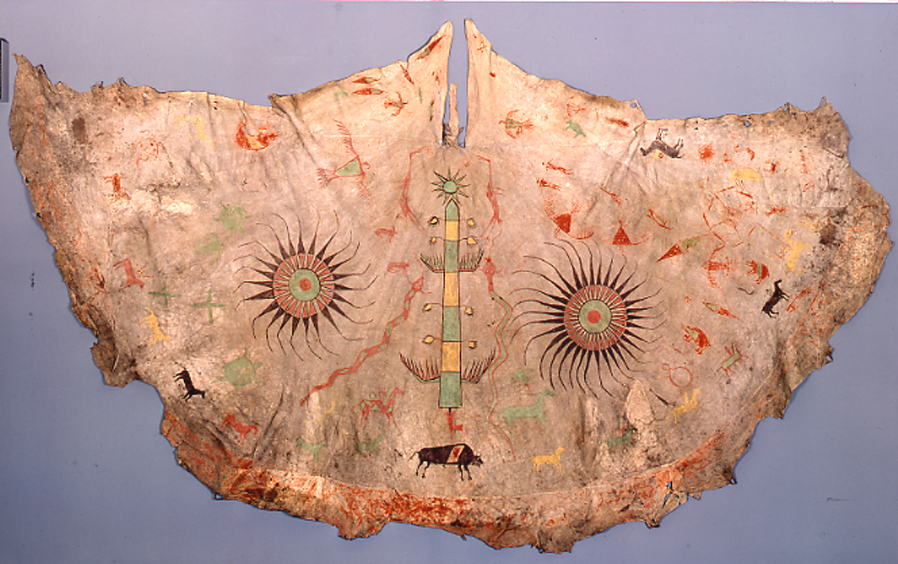
The Sacred White Buffalo Woman Pipe Tipi that belongs to the people of Turtle Island currently is in the Staatliche Museum in Berlin.
We want to thank our German relatives for taking such great care of this sacred Tipi during the time of the great genocide, of the indigenous people. Thank you so much for taking care of it, and now we, the ones who walk the Red Road are respectfully asking for it back.
Together, we can return it to the People of Turtle Island, and bring the balance so desperately needed on Turtle Island.
If you are a pipe carrier, get together with your community, light your pipe and call back the sacred tipi to Turtle Island, if you are an ally, sign the petition share it anywhere you can. I truly believe we can make this happen. Our first step is getting the petition signed, and there are more steps to follow.
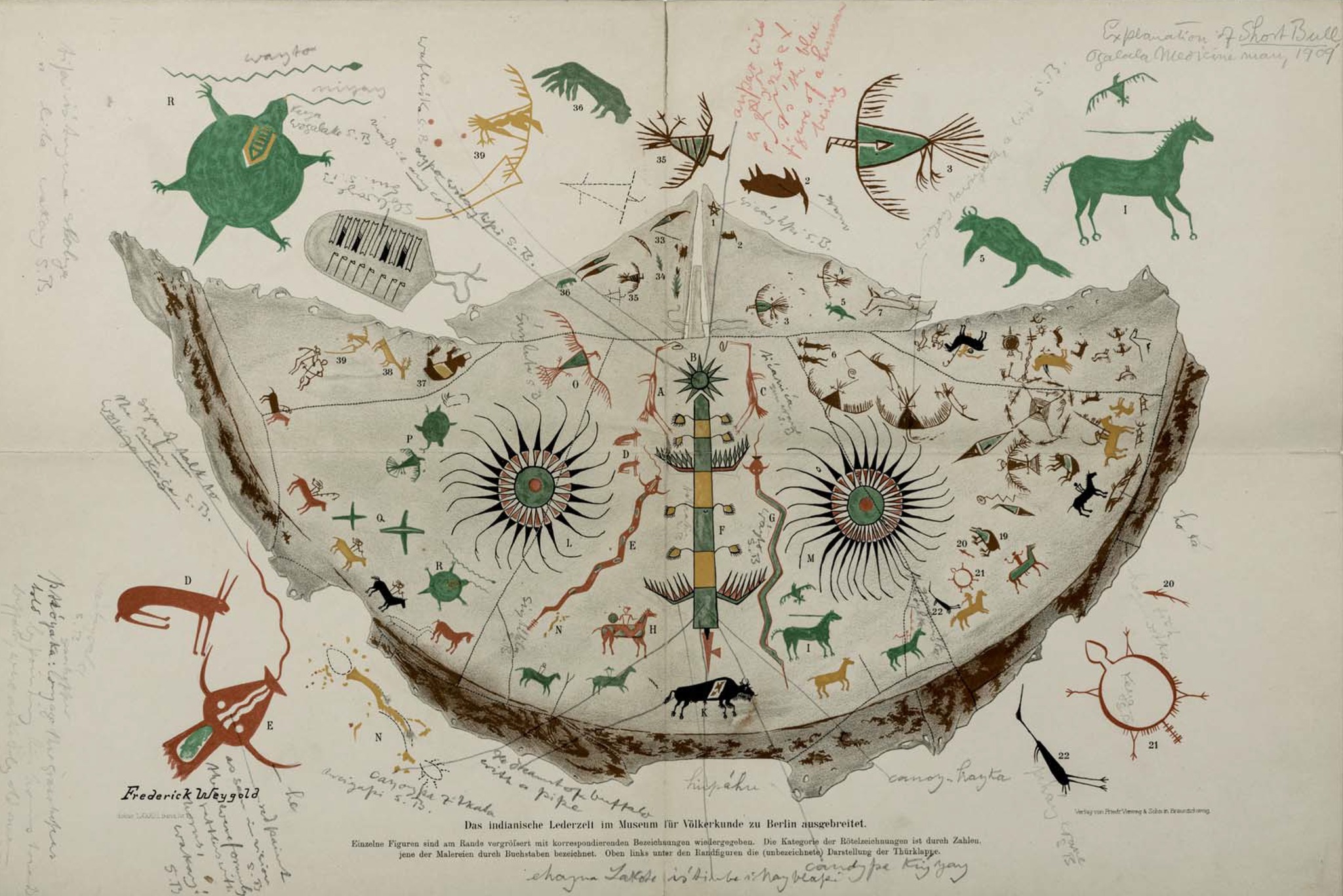
The Story of the symbols is as follows: The sacred pipe or Tunkan was placed opposite the entrance, so that it was immediately visible upon entering the tipi. Its stem was decorated with four wings and two sets of down feathers of four each. The number four was considered sacred with respect to the cross of the four winds or the four points of the compass, referred to as the "four quarters of the earth" by missionaries. This also represents the four-in-one relationship of everything that is wakan ("holy"). The seven green and yellow painted fields on the stem represent the seven original Sioux tribes (oceti sakowin-^'councu fire-seven"). The pipe head is representative of a Catlinite head, taken from the holy pipe quarries in the land of the Dakotas. This is a conventionahzed pipe with symbolic wings and plumes and triangular pipe head. Buffalo Hump stated that there actually was a pipe with wings among the Sioux Indians around 1880 on the Cheyenne River Reservation.
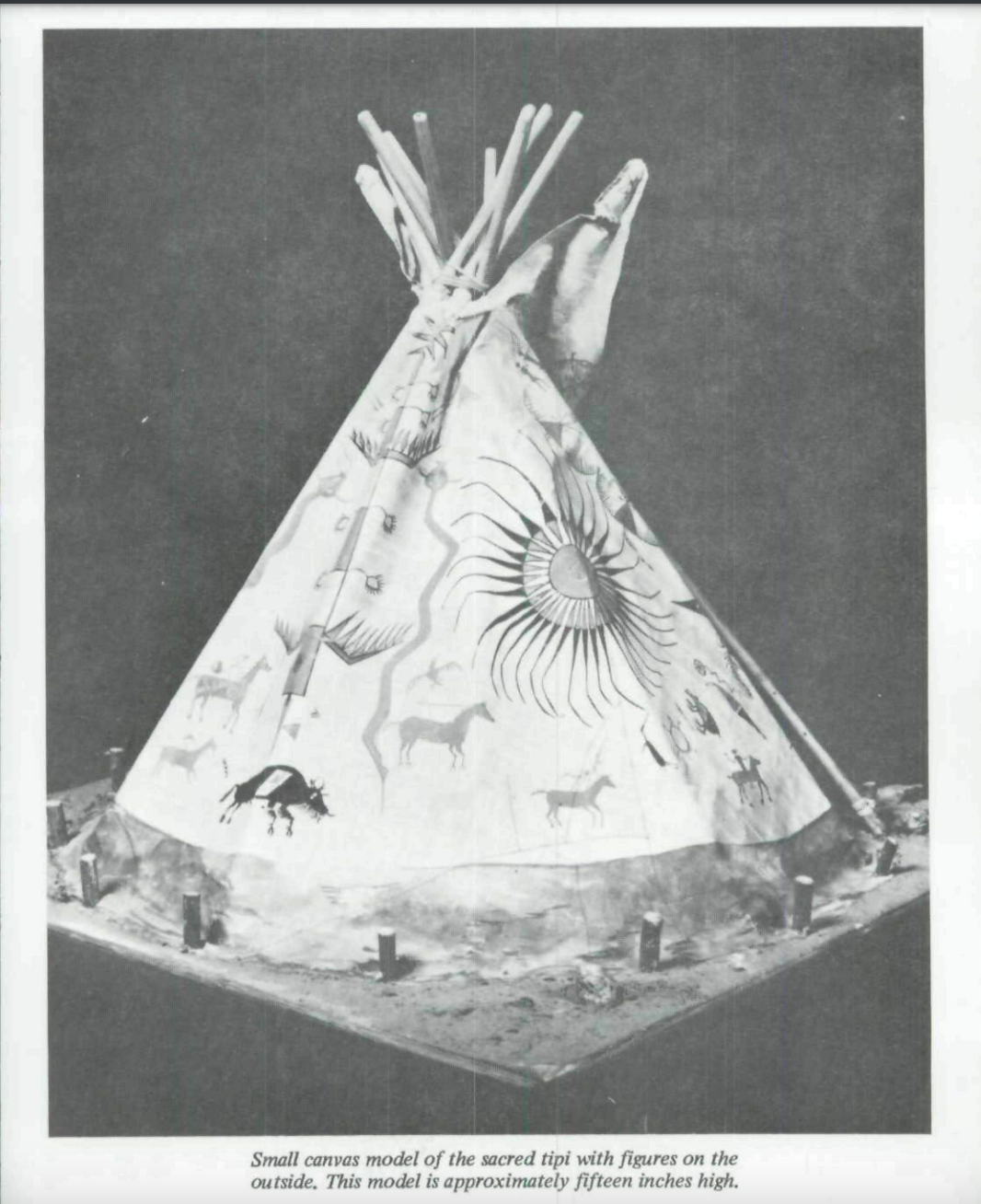
It is especially interesting that he regarded this pipe to be winged. This may be based on the fact that the bowl of the sacred pipe has wings as shown by Thomas and that it is supposedly capable of flying or moving and whirling in the air. The small green sun above the pipe represents the sun that would shine on the pipe in the morning and suggests the practice of blowing the first puffs of the pipe toward the four compass points and the zenith.'' To offer the pipe itself to the sun before prayer was customary among the Sioux and the offering of a ritual smoke preceded every religious rite.^ At the base of the pipe a bull buffalo (tatanka) is shown. This symbol had a mystical meaning in the secret language of the medicine men. The buffalo was a symbol for earth and in turn represented man (wicasa). According to Weygold,^ a faint red trace of color in this region on the original cover suggests a wounded buffalo with blood streaming from the mouth. The red on the lighter shoulder of the animal suggests blood from an arrow wound, which of course implies a buffalo hunt. Weygold had a theory that the death of the buffalo represented an ecological cycle. By dying, it shed its blood into the earth, which in turn renewed the earth and therefore man. The horsemen on each side of the base of the tent probably have nothing to do with this hunt since none of them have hunting weapons, but represent the seven divisions of Teton Sioux. Two large serpents shown on the right and left of the pipe are mytliical or wakan, and are so designated by the wavy line that protrudes from their mouths.
Other tribes made use of similar wavy hnes, especially the Aztec, to indicate spoken words or messages. It could be possible, although unknown to the Teton, that these represent a proliferation of QuetzalcoatI, the plumed serpent prominent in the Aztec religion. According to Weygold the horns on the serpents are the symbol for special powers and superiority, and the full shaped extension of the mouth symbolizes the broad tongue of the animal. Among the prairie tribes these serpents enjoyed divine respect as symbols oí fertility and wisdom. Their placement on each side of the pipe serve to frame it with these qualities. Recent research into these figures suggests that they represent the great underwater monsters. If this is correct, why were they placed next to the pipe? Consultation with specialists in pictography and Sioux mythology has failed to explain why the figures are so placed. Next to the tail of the left serpent are very vague tooled contours of a smaller horned snake with rattles and feet or fins. This is apparently an incomplete drawing of the great underwater monster that, according to the legend of the Lakotas, appeared in the form of a giant yellow horned rattlesnake with feet and inhabited the lakes and rivers of the home of the tribes.'** The mere appearance of this snake was thought to produce numbness and death. At the upper sides of the pipe are two cranes and to the left are two hares. The cranes are, of course, aboveground creatures and are shown here eating the underwater monster. Thus, the universal theme of the struggle between underwater beings and aboveground beings, which parallels good versus bad, light versus dark, is portrayed. Various specialists in pictography and Sioux mythology again have not discovered any specific symbolism for the hares other than mere messengers, nor was Weygold able to give any specific interpretation. To the riglit of the pipe is a lone horse with reins in the air and a green thunderbird (wakinyan) overhead. These represent the legend of the coming of the pipe and tobacco to the Sioux; it is told according to Mooney" and modified by Weygold in regard to the information from Buffalo Hump as follows. On one occasion, two young men were out hunting when they saw a young woman approaching them with folded arms. Seeing that she was not one of their own tribe, one proposed to the other that they kill her. The other refused and urged that they wait until they learned what she wanted. According to Buffalo Hump as recorded by Weygold and reported to Maurer, the young man had evil thoughts about the maiden and said to his partner, "Let us take her for our wife," meaning of course to assault her. The first man, however, was prepared to kill her as she drew near but at that moment, snakes emerged from the bones and body of the woman and swarmed over her head, whereupon the malintended hunter was taken away by the' thunderbird to the accompaniment of thunder and lightening, thus explaining the riderless horse with reins in the air. At this point, she turned to the other hunter and asked to be taken to his people. Upon arriving, she presented them with a buckskin bundle containing the pipe and some tobacco as a token of peace. Then she said, "When you smoke it, your thoughts will be of peace and no murderers must be allowed to smoke it." Her mission now ended, she disappeared as mysteriously und suddenly as she had come. According to Buffalo Hump the maiden who served as the vehicle to deliver the pipe was too -wakan to be depicted on the cover.

1,082
The Issue
Please sign this petition, and share it wherever you can with people all over the world, and help us return the Sacred Tipi to its rightful owners! The Lakota/Dakota People of the Oceti Sakowin.
The Sacred White Buffalo Woman Pipe Tipi that belongs to the people of Turtle Island currently is in the Staatliche Museum in Berlin.
We want to thank our German relatives for taking such great care of this sacred Tipi during the time of the great genocide, of the indigenous people. Thank you so much for taking care of it, and now we, the ones who walk the Red Road are respectfully asking for it back.
Together, we can return it to the People of Turtle Island, and bring the balance so desperately needed on Turtle Island.
If you are a pipe carrier, get together with your community, light your pipe and call back the sacred tipi to Turtle Island, if you are an ally, sign the petition share it anywhere you can. I truly believe we can make this happen. Our first step is getting the petition signed, and there are more steps to follow.
The Story of the symbols is as follows: The sacred pipe or Tunkan was placed opposite the entrance, so that it was immediately visible upon entering the tipi. Its stem was decorated with four wings and two sets of down feathers of four each. The number four was considered sacred with respect to the cross of the four winds or the four points of the compass, referred to as the "four quarters of the earth" by missionaries. This also represents the four-in-one relationship of everything that is wakan ("holy"). The seven green and yellow painted fields on the stem represent the seven original Sioux tribes (oceti sakowin-^'councu fire-seven"). The pipe head is representative of a Catlinite head, taken from the holy pipe quarries in the land of the Dakotas. This is a conventionahzed pipe with symbolic wings and plumes and triangular pipe head. Buffalo Hump stated that there actually was a pipe with wings among the Sioux Indians around 1880 on the Cheyenne River Reservation.
It is especially interesting that he regarded this pipe to be winged. This may be based on the fact that the bowl of the sacred pipe has wings as shown by Thomas and that it is supposedly capable of flying or moving and whirling in the air. The small green sun above the pipe represents the sun that would shine on the pipe in the morning and suggests the practice of blowing the first puffs of the pipe toward the four compass points and the zenith.'' To offer the pipe itself to the sun before prayer was customary among the Sioux and the offering of a ritual smoke preceded every religious rite.^ At the base of the pipe a bull buffalo (tatanka) is shown. This symbol had a mystical meaning in the secret language of the medicine men. The buffalo was a symbol for earth and in turn represented man (wicasa). According to Weygold,^ a faint red trace of color in this region on the original cover suggests a wounded buffalo with blood streaming from the mouth. The red on the lighter shoulder of the animal suggests blood from an arrow wound, which of course implies a buffalo hunt. Weygold had a theory that the death of the buffalo represented an ecological cycle. By dying, it shed its blood into the earth, which in turn renewed the earth and therefore man. The horsemen on each side of the base of the tent probably have nothing to do with this hunt since none of them have hunting weapons, but represent the seven divisions of Teton Sioux. Two large serpents shown on the right and left of the pipe are mytliical or wakan, and are so designated by the wavy line that protrudes from their mouths.
Other tribes made use of similar wavy hnes, especially the Aztec, to indicate spoken words or messages. It could be possible, although unknown to the Teton, that these represent a proliferation of QuetzalcoatI, the plumed serpent prominent in the Aztec religion. According to Weygold the horns on the serpents are the symbol for special powers and superiority, and the full shaped extension of the mouth symbolizes the broad tongue of the animal. Among the prairie tribes these serpents enjoyed divine respect as symbols oí fertility and wisdom. Their placement on each side of the pipe serve to frame it with these qualities. Recent research into these figures suggests that they represent the great underwater monsters. If this is correct, why were they placed next to the pipe? Consultation with specialists in pictography and Sioux mythology has failed to explain why the figures are so placed. Next to the tail of the left serpent are very vague tooled contours of a smaller horned snake with rattles and feet or fins. This is apparently an incomplete drawing of the great underwater monster that, according to the legend of the Lakotas, appeared in the form of a giant yellow horned rattlesnake with feet and inhabited the lakes and rivers of the home of the tribes.'** The mere appearance of this snake was thought to produce numbness and death. At the upper sides of the pipe are two cranes and to the left are two hares. The cranes are, of course, aboveground creatures and are shown here eating the underwater monster. Thus, the universal theme of the struggle between underwater beings and aboveground beings, which parallels good versus bad, light versus dark, is portrayed. Various specialists in pictography and Sioux mythology again have not discovered any specific symbolism for the hares other than mere messengers, nor was Weygold able to give any specific interpretation. To the riglit of the pipe is a lone horse with reins in the air and a green thunderbird (wakinyan) overhead. These represent the legend of the coming of the pipe and tobacco to the Sioux; it is told according to Mooney" and modified by Weygold in regard to the information from Buffalo Hump as follows. On one occasion, two young men were out hunting when they saw a young woman approaching them with folded arms. Seeing that she was not one of their own tribe, one proposed to the other that they kill her. The other refused and urged that they wait until they learned what she wanted. According to Buffalo Hump as recorded by Weygold and reported to Maurer, the young man had evil thoughts about the maiden and said to his partner, "Let us take her for our wife," meaning of course to assault her. The first man, however, was prepared to kill her as she drew near but at that moment, snakes emerged from the bones and body of the woman and swarmed over her head, whereupon the malintended hunter was taken away by the' thunderbird to the accompaniment of thunder and lightening, thus explaining the riderless horse with reins in the air. At this point, she turned to the other hunter and asked to be taken to his people. Upon arriving, she presented them with a buckskin bundle containing the pipe and some tobacco as a token of peace. Then she said, "When you smoke it, your thoughts will be of peace and no murderers must be allowed to smoke it." Her mission now ended, she disappeared as mysteriously und suddenly as she had come. According to Buffalo Hump the maiden who served as the vehicle to deliver the pipe was too -wakan to be depicted on the cover.
The Decision Makers
Supporter Voices
Petition Updates
Share this petition
Petition created on February 28, 2024