

Resurrect the Wales Autism Bill 2019!
The Issue
My Personal Story
In 2018, I was diagnosed with autism, a revelation that came after enduring disciplinary meetings at my Civil Service job. This diagnosis opened my eyes to the significant challenges I have faced with social welfare, employment, and mental well-being. I strongly believe countless others in Wales remain undiagnosed and struggle with similar hardships. The Welsh Government must support the Wales Autism Bill 2019 to uphold the right to a good life as promised under the Human Rights Act 1998, align with the Wellbeing & Future Generations Act 2015, and contribute to the UN Sustainable Development Goals 2015.
The Senedd Vote: A Rejection of Legislation
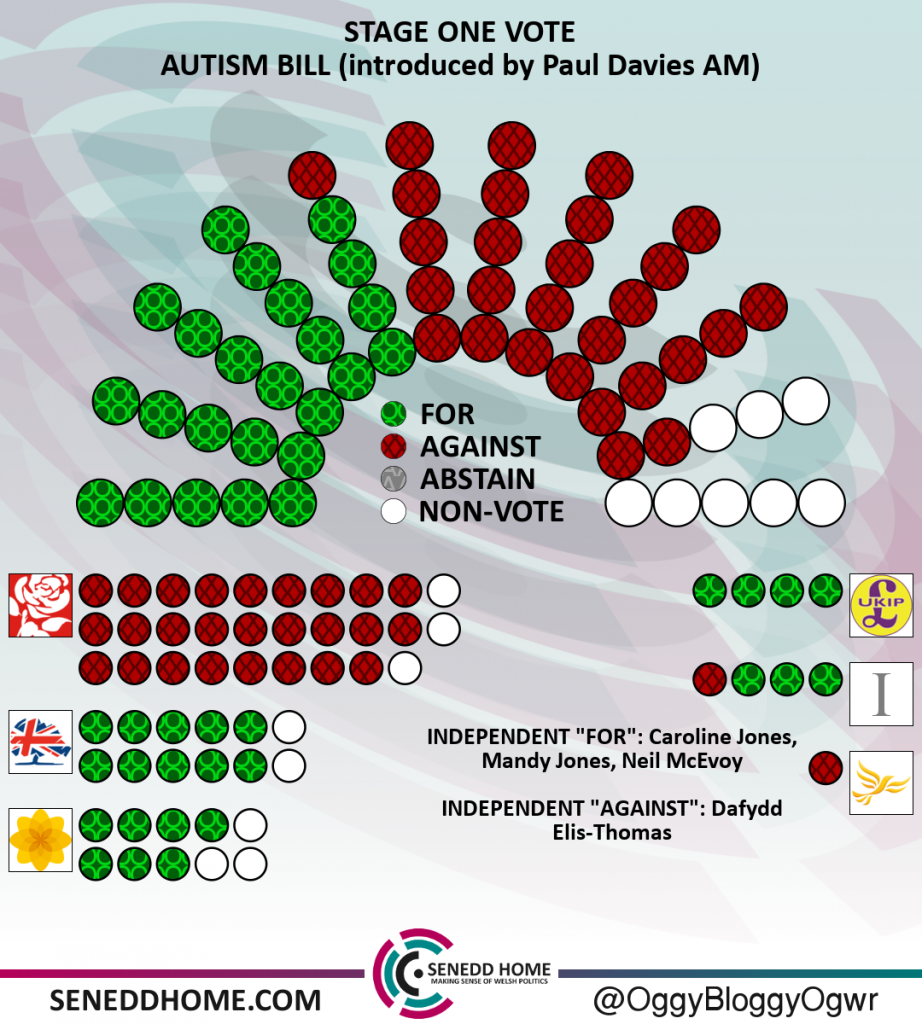
The Autism Bill, initially tabled by Welsh Conservative MSs Paul Davies and Mark Isherwood, was unfortunately rejected by the Senedd in its first major vote in January 2019. The vote was overwhelmingly along party lines. While the bill was supported by opposition parties, including the Conservatives and Plaid Cymru, it was blocked from proceeding because it did not receive support from Welsh Government ministers.
Paul Davies MS, who introduced the bill, expressed his disappointment that the Welsh Government would not support it, believing it would build on existing measures. The Chair of the Senedd's Finance Committee, Llyr Gruffydd MS, described the Welsh Government's lack of engagement on cost estimates as a "worrying precedent that should not be repeated". In his defense, the Health Minister at the time, Vaughan Gething, said the Welsh Government was committed to improving provision and would be willing to revisit legislation "if what we're doing does not work".
Below is an image that visualises the voting breakdown for the Wales Autism Bill 2019.
The Government's Position vs. The Reality on the Ground
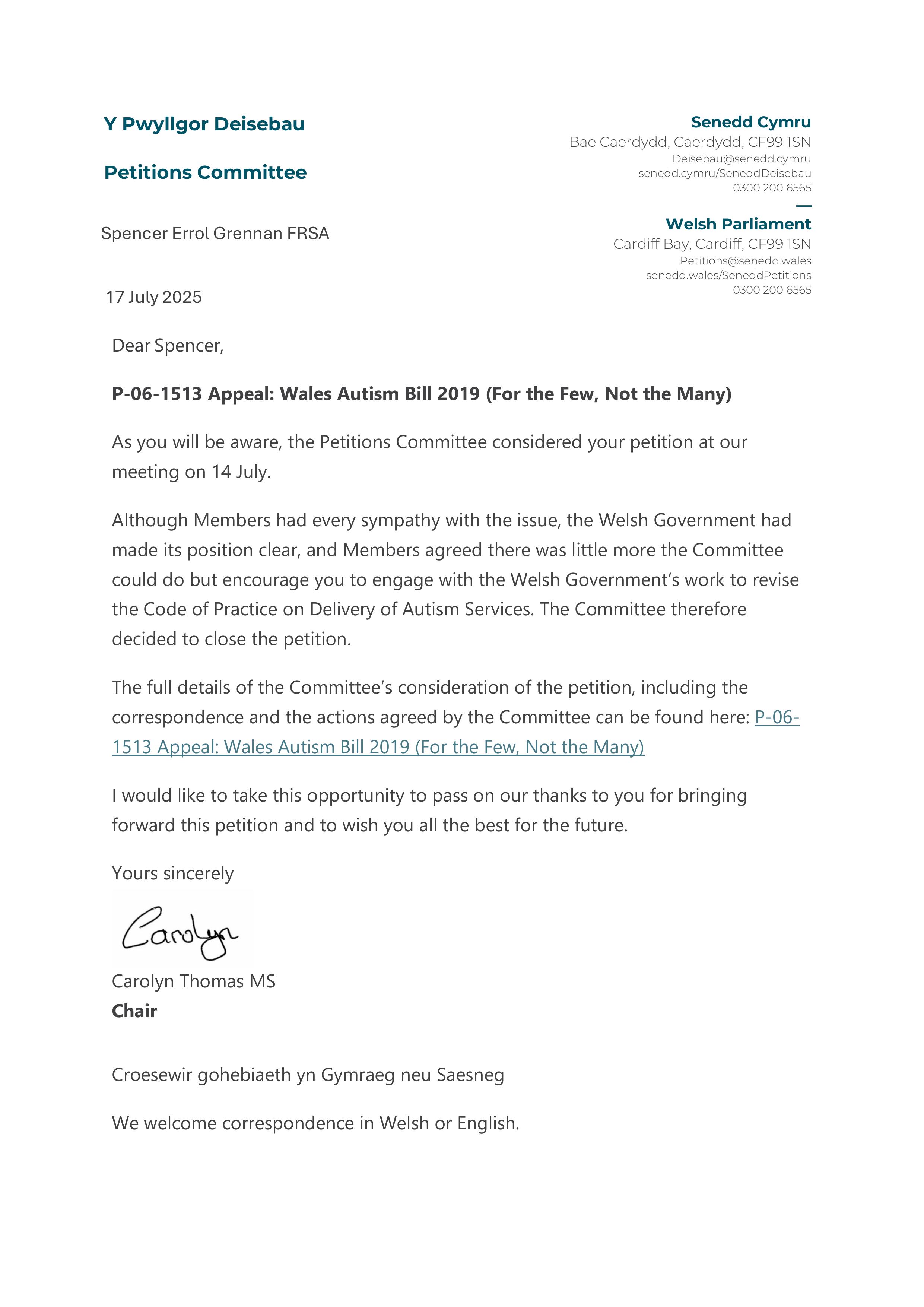
My recent Senedd petition (https://petitions.senedd.wales/petitions/246466 to resurrect the Autism Bill was closed by the Petitions Committee, despite garnering over 597 signatures and receiving support from Welsh Conservative MSs. The committee noted that while they had "every sympathy with the issue," they felt there was "little more" they could do, as the Welsh Government had made its position clear. The government maintains that it does not support autism-specific legislation, arguing it already has the "legislative levers to deliver improvements" through a Statutory Code of Practice.
However, the government’s own correspondence to the Senedd admits that "referral demand is not reducing, and services still do not have capacity to meet this ever-increasing demand". This is especially a "critical situation for children's neurodevelopmental services". This inability to cope is reflected in shocking waiting times for a formal diagnosis: 26 months in Cardiff & Vale, and up to 46 months in rural areas of Wales. This crisis of access is a direct consequence of a non-statutory approach. As Mark Isherwood MS, who first tabled an Autism Bill in 2016, has said, "the Code of Practice is ignored or deliberately misinterpreted by too many in positions of power, and that without legislation, this will be the same for the revised Code." He warns that without legislation, "Too many Autistic people are still being blamed and bullied by public officials who refuse to establish and meet their individual communication, sensory and processing needs."
The Human Cost of Inaction
The devastating human cost of this legislative failure cannot be overstated. A reader of the Nation.Cymru news article on my petition asked a powerful question that speaks to the heart of this issue: "Hi, surely this is good reason – added to numbers of Autistic-people who have committed-suicide – to put a series on the BBC about the talent that has been lost by lack of help for Autistic-people to succeed?" This tragic sentiment highlights the serious mental health crisis and loss of human potential linked to a lack of proper support.
A binding, statutory solution is the only way forward. The rejected Autism Bill was designed to place services on a "statutory footing" and aimed to address "unacceptably long waiting times". While the bill was estimated to cost just over £7 million over five years, its supporters believed it would lead to significant long-term savings by ensuring early intervention.
The Hypocrisy of "Using the Same Services"
The tribalism that prevents legislative breakthroughs in the Welsh Parliament is a barrier to adhering to the Well-being & Future Generations Act 2015. While the Welsh Government advises autistic people to use the same services as everyone else, it is peculiar that many of our political representatives refuse to do so. This was highlighted by Minister for Mental Health and Wellbeing, Sarah Murphy MS, who used the private healthcare sector for her own medical attention for an eating disorder. This hypocrisy underlines the urgent need for a robust and equitable public service framework that a binding Autism Bill would help establish. The public is aware of this campaign, as it has been featured in news outlets like Nation.Cymru.
Letter from the Minister of Mental Health & Wellbeing, Sarah Murphy MS
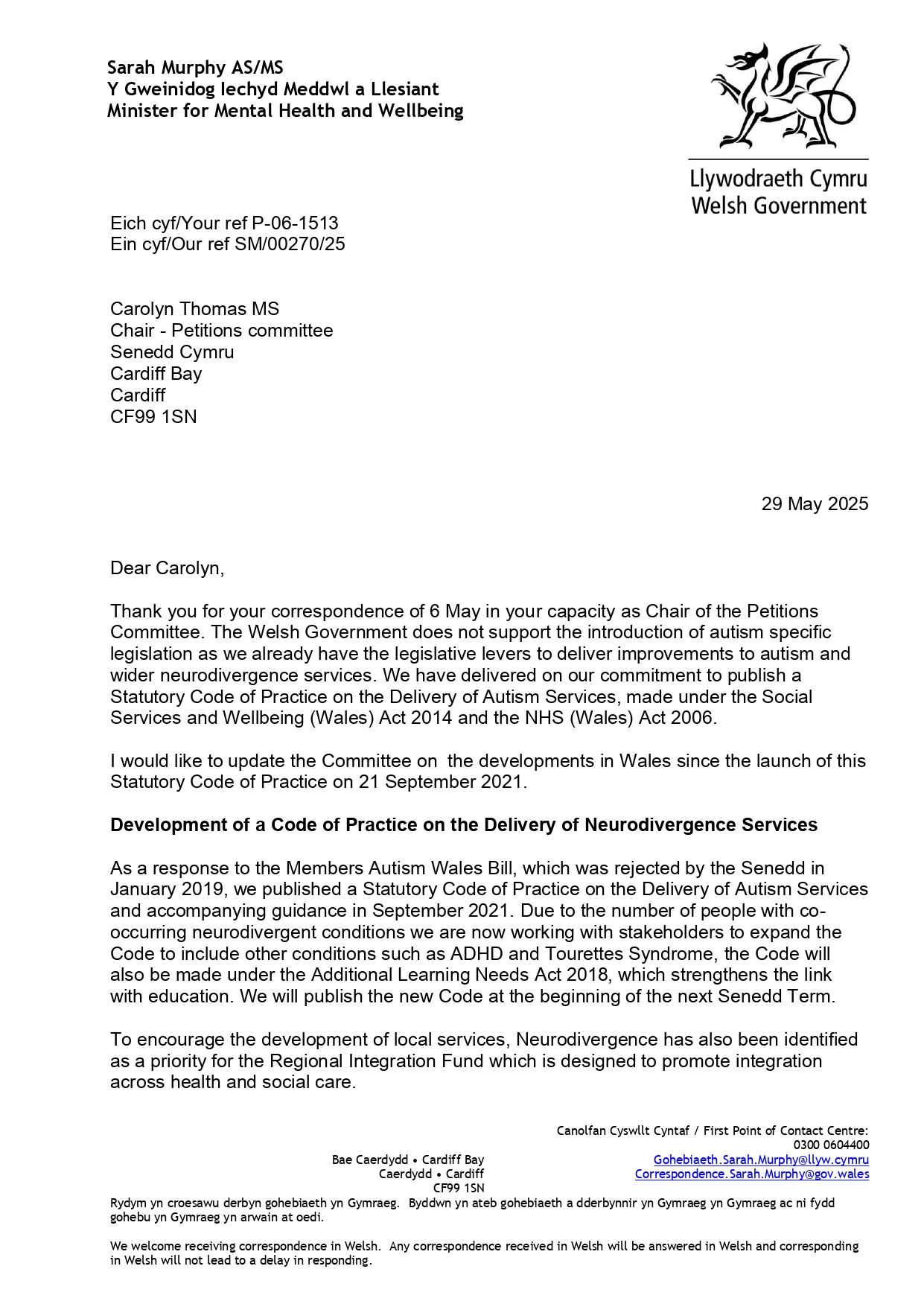
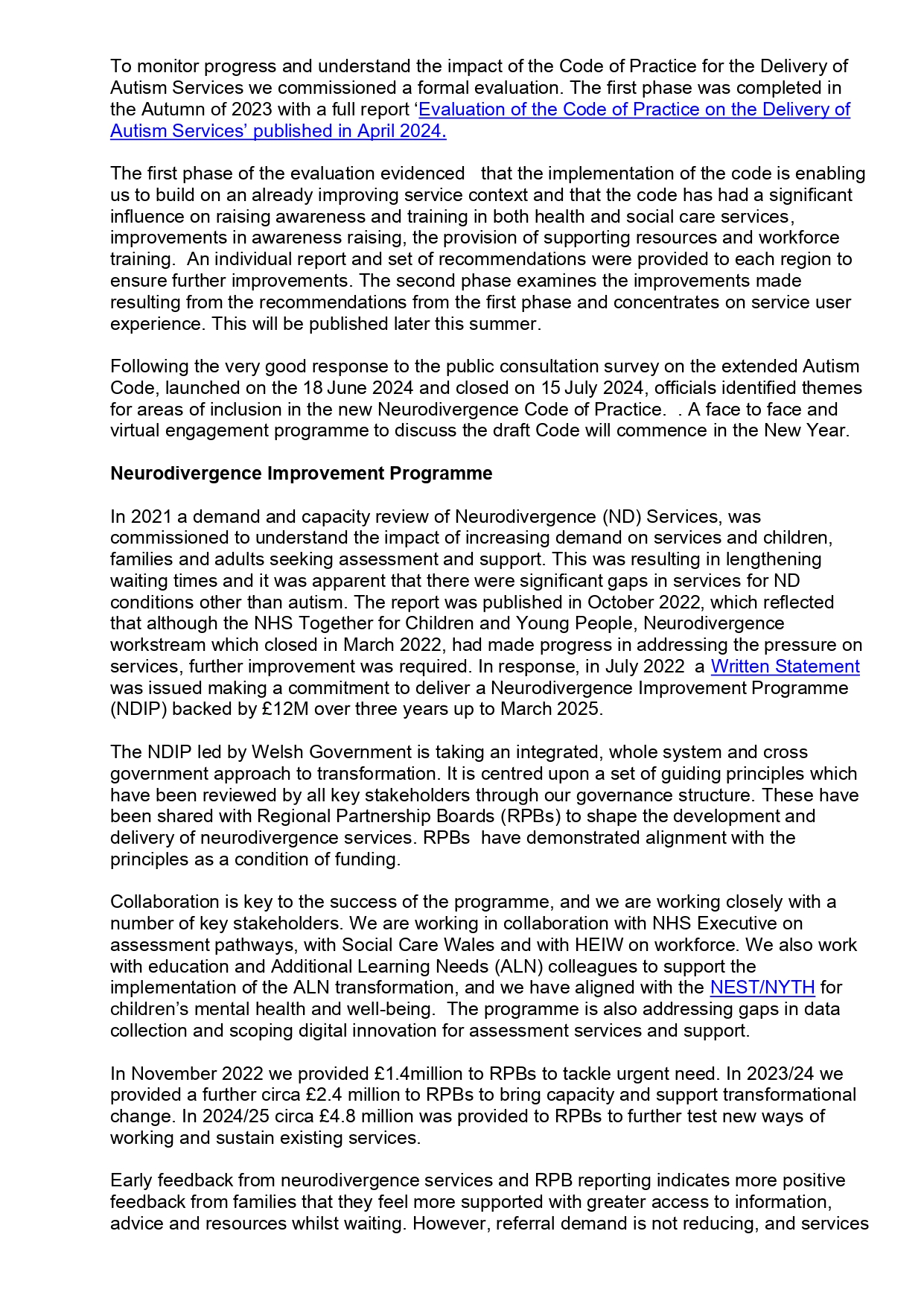
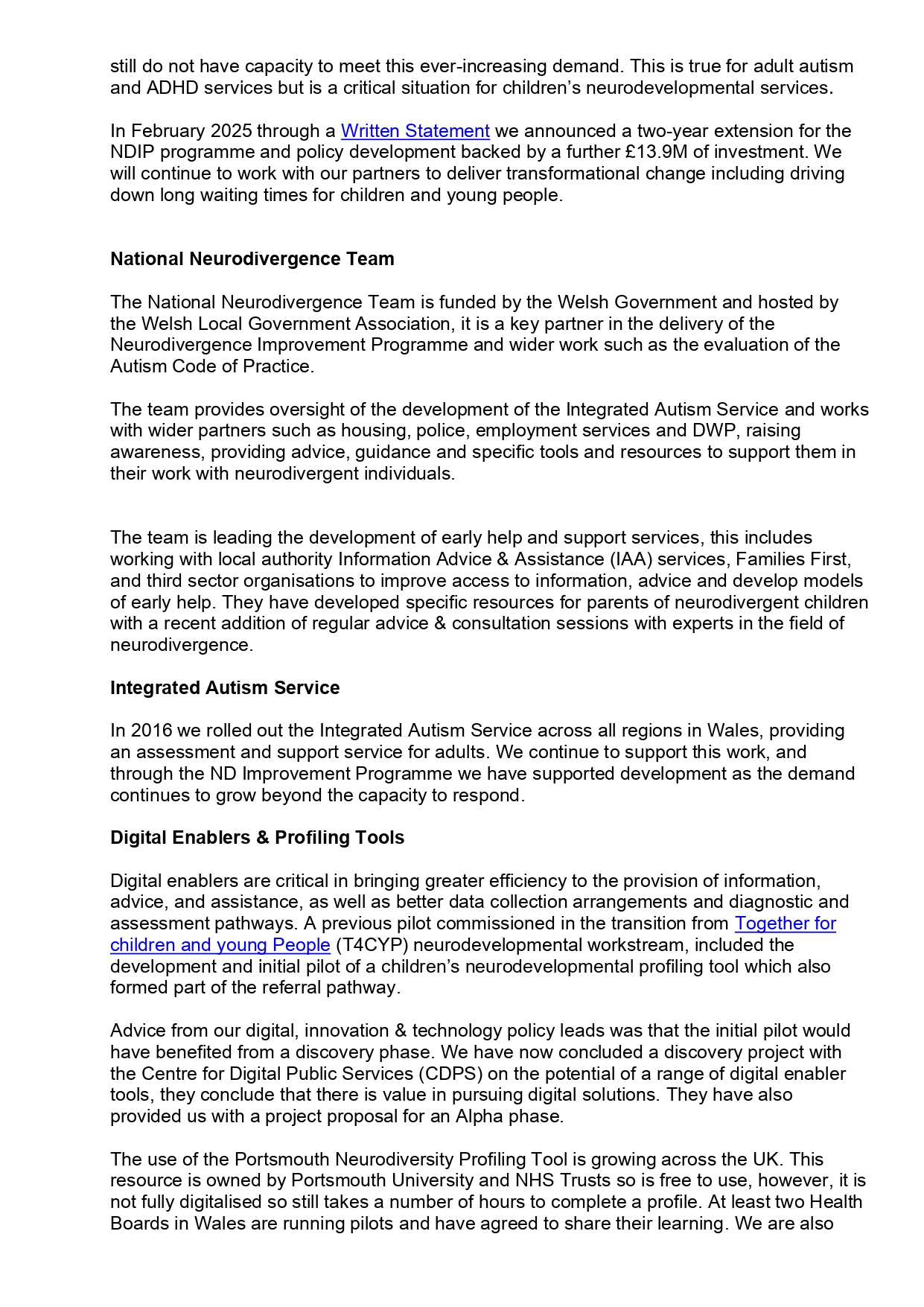
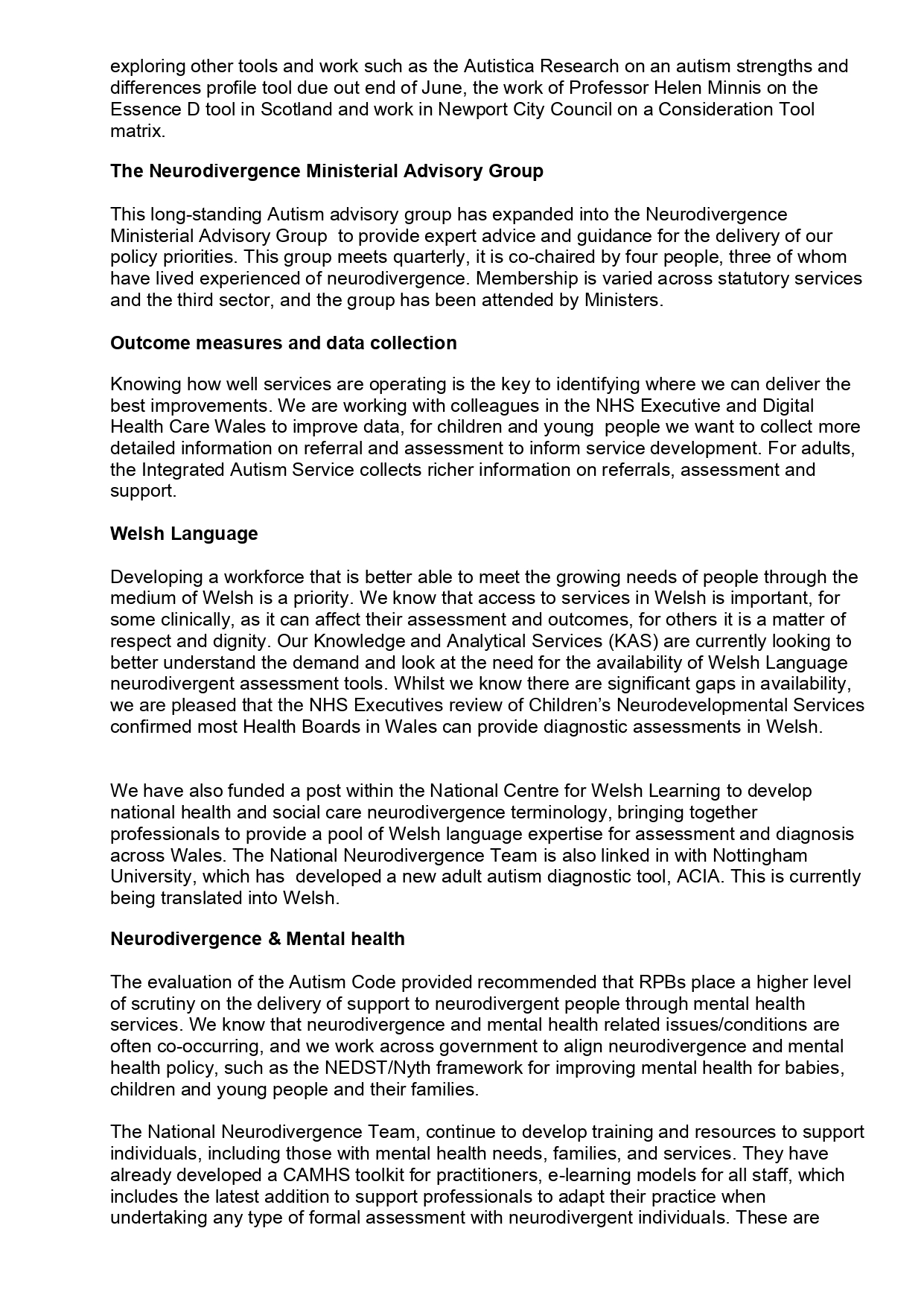
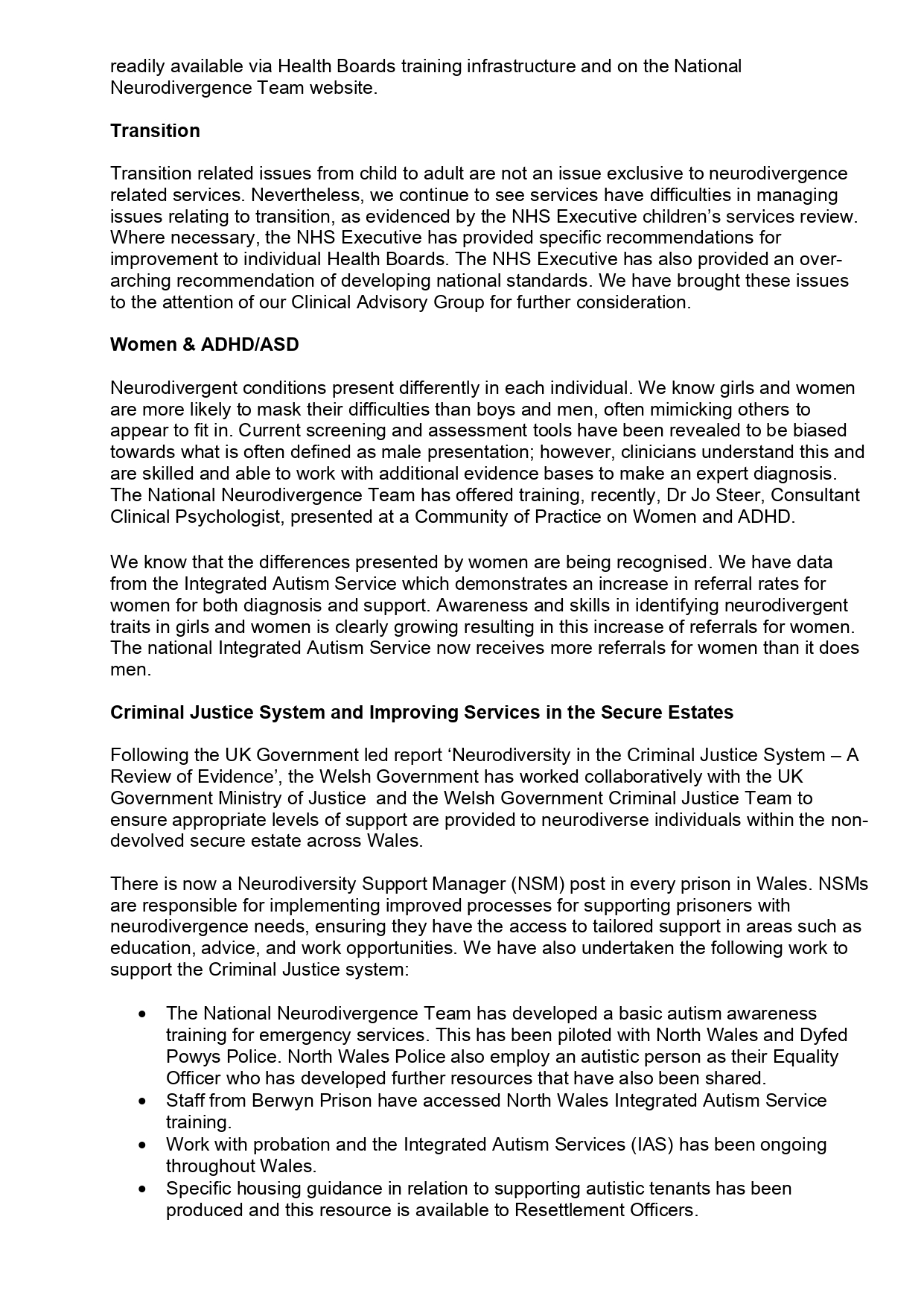
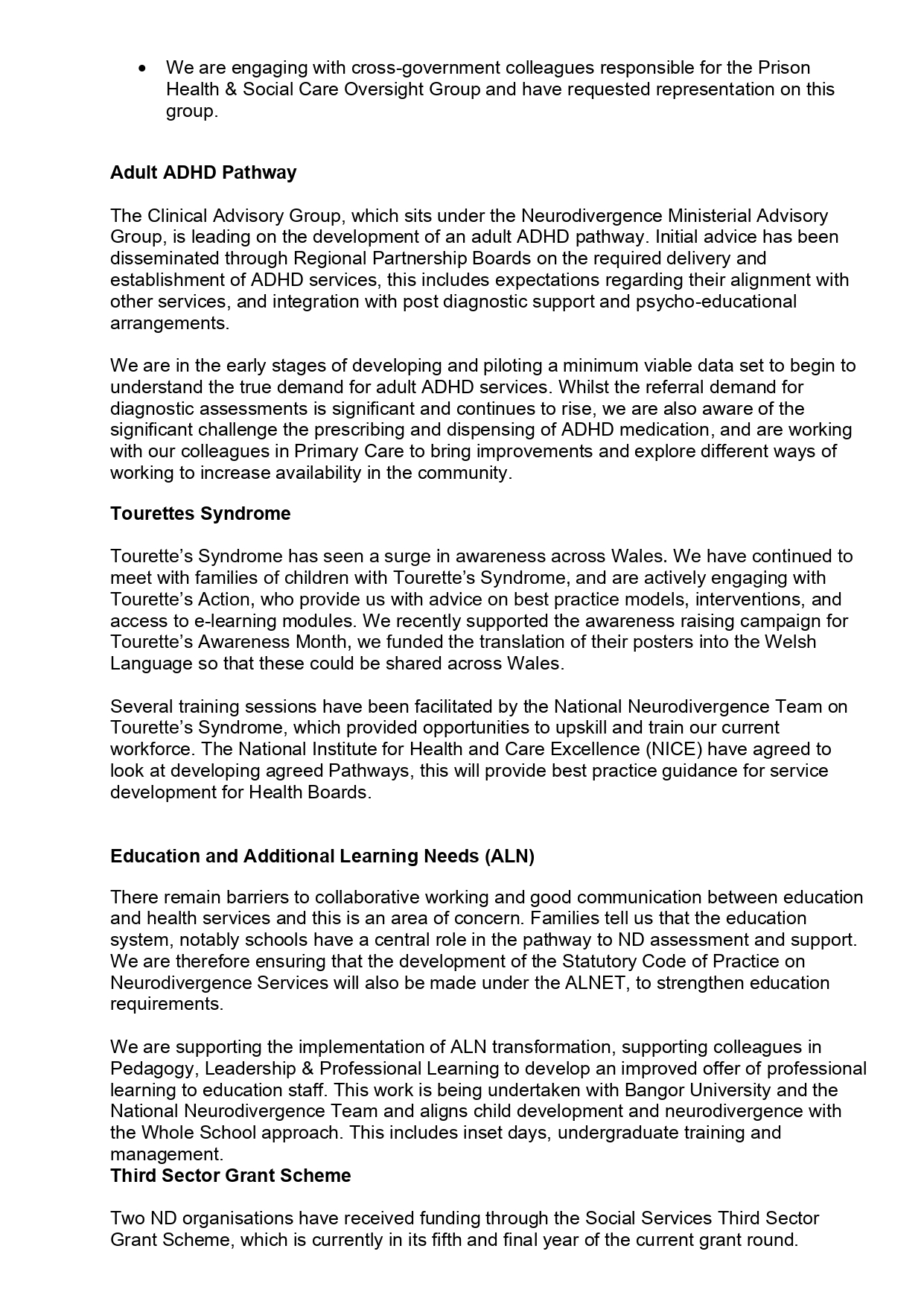
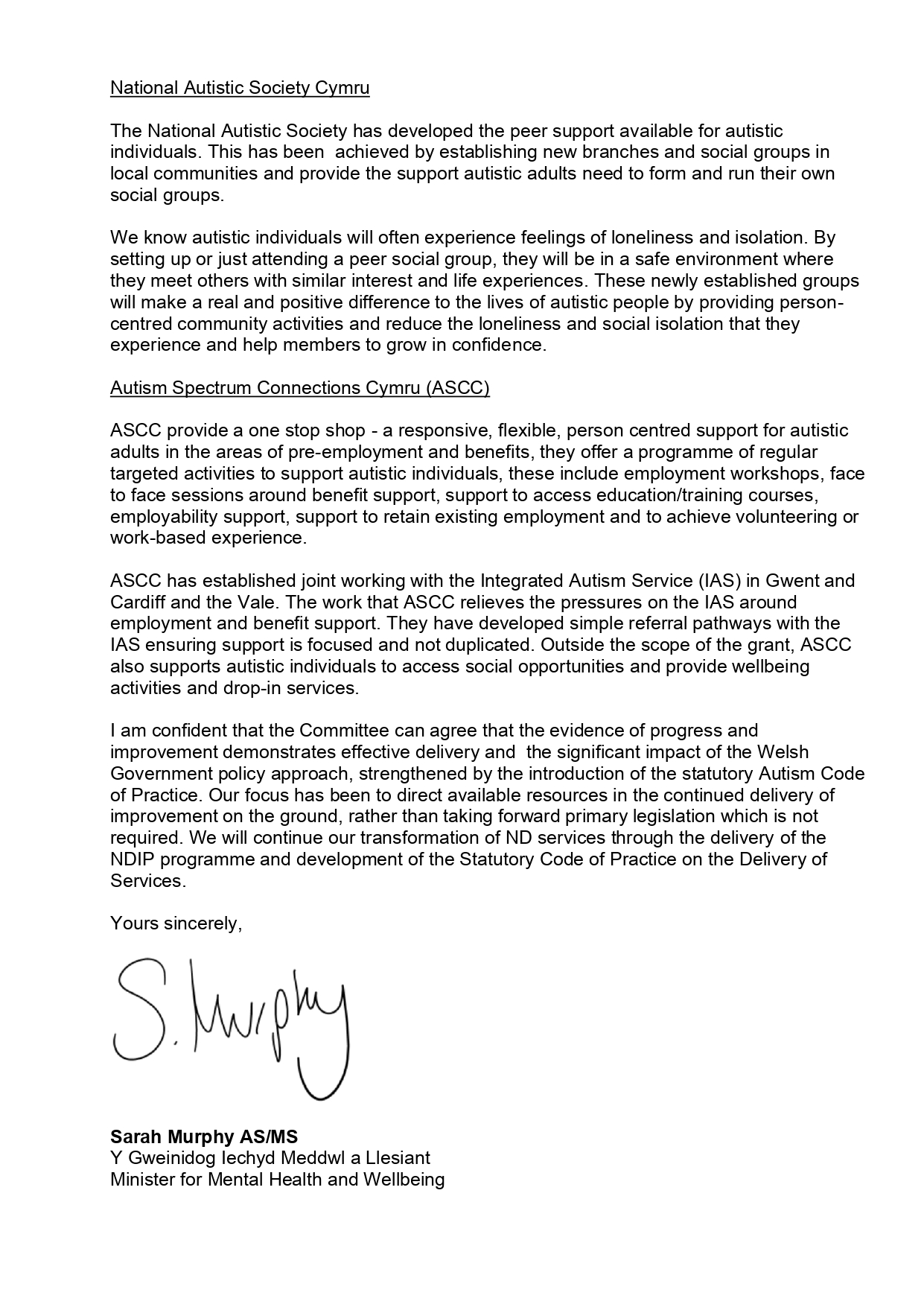
In a letter to the Senedd Petitions Committee, the Welsh Government, through Minister for Mental Health and Wellbeing Sarah Murphy MS, has made it clear they do not support autism-specific legislation. Instead, they argue that existing frameworks, such as the Statutory Code of Practice published in 2021, are sufficient to deliver improvements to services. The letter notes that a review of the code found it has had a "significant influence on raising awareness and training" in health and social care services. The government also highlights a £12 million investment in a Neurodivergence Improvement Programme (NDIP) to address increasing demand and lengthening waiting times. Despite this, the Minister admits that "referral demand is not reducing, and services still do not have the capacity to meet this ever-increasing demand".
The Well-being of Future Generations Act Explained
For those outside of Wales, the Well-being of Future Generations (Wales) Act 2015 is a groundbreaking law that requires public bodies to think about the long-term impact of their decisions. The Act is a world-first, making it a legal requirement for public bodies to work together and take a proactive, preventative approach to policy-making. Instead of reacting to problems after they have happened, the Act encourages a forward-thinking approach to ensure the well-being of future generations. It provides a shared vision for a prosperous, resilient, and more equal Wales, while also promoting a globally responsible nation.
The video below offers a brief overview of the Act:
A Pathway to a Better Future
A binding legal framework, not a non-enforceable Code of Practice, is the only way to rectify these gaps in service. Please sign this petition to demand the reinstatement of the Wales Autism Bill 2019 and create a lasting, positive impact on countless lives across our nation.
Disclaimer
While I am a former member of the Labour Party, I am inspired by the leadership of Paul Davies MS and Mark Isherwood MS of the Welsh Conservative Party on this issue. Their work highlights the critical need for all political parties in the Senedd to work together on matters to adhere to the Well-being & Future Generations Act 2015, and to put the needs of the autistic community above party politics.
References:
https://nation.cymru/news/senedd-petition-launched-to-resurrect-rejected-autism-legislation/
https://pembrokeshire-herald.com/105852/paul-davies-backs-new-autism-bill-petition/
https://www.bbc.com/news/uk-wales-politics-47007486
https://seneddhome.com/2019/01/autism-bill-rejected-though-the-doors-left-open-to-a-future-law/
https://business.senedd.wales/mgIssueHistoryHome.aspx?IId=46181
https://www.bbc.co.uk/news/uk-wales-49523283
https://www.walesonline.co.uk/news/politics/reality-families-living-autism--15653527
https://committees.parliament.uk/committee/770/autism-act-2009-committee/
https://seneddhome.com/2019/01/autism-bill-rejected-though-the-doors-left-open-to-a-future-law/
https://www.gov.wales/well-being-of-future-generations-wales

1,332
The Issue
My Personal Story
In 2018, I was diagnosed with autism, a revelation that came after enduring disciplinary meetings at my Civil Service job. This diagnosis opened my eyes to the significant challenges I have faced with social welfare, employment, and mental well-being. I strongly believe countless others in Wales remain undiagnosed and struggle with similar hardships. The Welsh Government must support the Wales Autism Bill 2019 to uphold the right to a good life as promised under the Human Rights Act 1998, align with the Wellbeing & Future Generations Act 2015, and contribute to the UN Sustainable Development Goals 2015.
The Senedd Vote: A Rejection of Legislation
The Autism Bill, initially tabled by Welsh Conservative MSs Paul Davies and Mark Isherwood, was unfortunately rejected by the Senedd in its first major vote in January 2019. The vote was overwhelmingly along party lines. While the bill was supported by opposition parties, including the Conservatives and Plaid Cymru, it was blocked from proceeding because it did not receive support from Welsh Government ministers.
Paul Davies MS, who introduced the bill, expressed his disappointment that the Welsh Government would not support it, believing it would build on existing measures. The Chair of the Senedd's Finance Committee, Llyr Gruffydd MS, described the Welsh Government's lack of engagement on cost estimates as a "worrying precedent that should not be repeated". In his defense, the Health Minister at the time, Vaughan Gething, said the Welsh Government was committed to improving provision and would be willing to revisit legislation "if what we're doing does not work".
Below is an image that visualises the voting breakdown for the Wales Autism Bill 2019.
The Government's Position vs. The Reality on the Ground
My recent Senedd petition (https://petitions.senedd.wales/petitions/246466 to resurrect the Autism Bill was closed by the Petitions Committee, despite garnering over 597 signatures and receiving support from Welsh Conservative MSs. The committee noted that while they had "every sympathy with the issue," they felt there was "little more" they could do, as the Welsh Government had made its position clear. The government maintains that it does not support autism-specific legislation, arguing it already has the "legislative levers to deliver improvements" through a Statutory Code of Practice.
However, the government’s own correspondence to the Senedd admits that "referral demand is not reducing, and services still do not have capacity to meet this ever-increasing demand". This is especially a "critical situation for children's neurodevelopmental services". This inability to cope is reflected in shocking waiting times for a formal diagnosis: 26 months in Cardiff & Vale, and up to 46 months in rural areas of Wales. This crisis of access is a direct consequence of a non-statutory approach. As Mark Isherwood MS, who first tabled an Autism Bill in 2016, has said, "the Code of Practice is ignored or deliberately misinterpreted by too many in positions of power, and that without legislation, this will be the same for the revised Code." He warns that without legislation, "Too many Autistic people are still being blamed and bullied by public officials who refuse to establish and meet their individual communication, sensory and processing needs."
The Human Cost of Inaction
The devastating human cost of this legislative failure cannot be overstated. A reader of the Nation.Cymru news article on my petition asked a powerful question that speaks to the heart of this issue: "Hi, surely this is good reason – added to numbers of Autistic-people who have committed-suicide – to put a series on the BBC about the talent that has been lost by lack of help for Autistic-people to succeed?" This tragic sentiment highlights the serious mental health crisis and loss of human potential linked to a lack of proper support.
A binding, statutory solution is the only way forward. The rejected Autism Bill was designed to place services on a "statutory footing" and aimed to address "unacceptably long waiting times". While the bill was estimated to cost just over £7 million over five years, its supporters believed it would lead to significant long-term savings by ensuring early intervention.
The Hypocrisy of "Using the Same Services"
The tribalism that prevents legislative breakthroughs in the Welsh Parliament is a barrier to adhering to the Well-being & Future Generations Act 2015. While the Welsh Government advises autistic people to use the same services as everyone else, it is peculiar that many of our political representatives refuse to do so. This was highlighted by Minister for Mental Health and Wellbeing, Sarah Murphy MS, who used the private healthcare sector for her own medical attention for an eating disorder. This hypocrisy underlines the urgent need for a robust and equitable public service framework that a binding Autism Bill would help establish. The public is aware of this campaign, as it has been featured in news outlets like Nation.Cymru.
Letter from the Minister of Mental Health & Wellbeing, Sarah Murphy MS
In a letter to the Senedd Petitions Committee, the Welsh Government, through Minister for Mental Health and Wellbeing Sarah Murphy MS, has made it clear they do not support autism-specific legislation. Instead, they argue that existing frameworks, such as the Statutory Code of Practice published in 2021, are sufficient to deliver improvements to services. The letter notes that a review of the code found it has had a "significant influence on raising awareness and training" in health and social care services. The government also highlights a £12 million investment in a Neurodivergence Improvement Programme (NDIP) to address increasing demand and lengthening waiting times. Despite this, the Minister admits that "referral demand is not reducing, and services still do not have the capacity to meet this ever-increasing demand".
The Well-being of Future Generations Act Explained
For those outside of Wales, the Well-being of Future Generations (Wales) Act 2015 is a groundbreaking law that requires public bodies to think about the long-term impact of their decisions. The Act is a world-first, making it a legal requirement for public bodies to work together and take a proactive, preventative approach to policy-making. Instead of reacting to problems after they have happened, the Act encourages a forward-thinking approach to ensure the well-being of future generations. It provides a shared vision for a prosperous, resilient, and more equal Wales, while also promoting a globally responsible nation.
The video below offers a brief overview of the Act:
A Pathway to a Better Future
A binding legal framework, not a non-enforceable Code of Practice, is the only way to rectify these gaps in service. Please sign this petition to demand the reinstatement of the Wales Autism Bill 2019 and create a lasting, positive impact on countless lives across our nation.
Disclaimer
While I am a former member of the Labour Party, I am inspired by the leadership of Paul Davies MS and Mark Isherwood MS of the Welsh Conservative Party on this issue. Their work highlights the critical need for all political parties in the Senedd to work together on matters to adhere to the Well-being & Future Generations Act 2015, and to put the needs of the autistic community above party politics.
References:
https://nation.cymru/news/senedd-petition-launched-to-resurrect-rejected-autism-legislation/
https://pembrokeshire-herald.com/105852/paul-davies-backs-new-autism-bill-petition/
https://www.bbc.com/news/uk-wales-politics-47007486
https://seneddhome.com/2019/01/autism-bill-rejected-though-the-doors-left-open-to-a-future-law/
https://business.senedd.wales/mgIssueHistoryHome.aspx?IId=46181
https://www.bbc.co.uk/news/uk-wales-49523283
https://www.walesonline.co.uk/news/politics/reality-families-living-autism--15653527
https://committees.parliament.uk/committee/770/autism-act-2009-committee/
https://seneddhome.com/2019/01/autism-bill-rejected-though-the-doors-left-open-to-a-future-law/
https://www.gov.wales/well-being-of-future-generations-wales
The Decision Makers

Petition Updates
Share this petition
Petition created on 6 August 2025