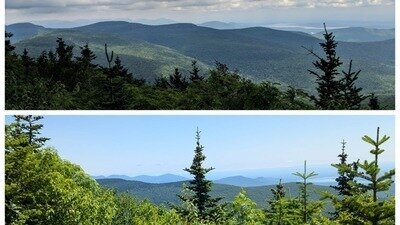

Restore the views: Maintain the Catskills’ historic scenic vistas
The Issue
A Petition to the New York State Department of Environmental Conservation
The Catskill Mountains have long been known for their forests, wilderness, trails—and their incredible scenic views.
For generations, hikers and visitors have enjoyed viewpoints throughout the Catskill Park that allow us to experience the surrounding mountains, valleys, lakes and landscapes. Many of these scenic vistas are not new or unauthorized clearings. They are historic viewpoints that have been specifically identified in New York State Department of Environmental Conservation (DEC) Unit Management Plans.
Today, many of these viewpoints have become increasingly obscured by natural forest growth.
We believe it is time for DEC to take a comprehensive look at these existing, recognized scenic vistas and determine which can and should be appropriately maintained.
The Catskill Park's own management plans recognize scenic vistas
The Catskill Park State Land Master Plan recognizes the importance of existing wilderness vistas and allows for their maintenance when only an immaterial amount of tree cutting is necessary. The plan identifies side-trimming and limbing lower branches as the preferred methods of maintaining existing vistas.
The Master Plan also states that vistas intended to be maintained should be identified in individual Unit Management Plans.
DEC's own Unit Management Plans contain numerous examples of scenic vistas that have been specifically identified for maintenance.
The Indian Head–Plateau Mountain Wilderness Unit Management Plan identifies 11 scenic vistas and historically included funding for their maintenance.
The Dry Brook Ridge Wild Forest Unit Management Plan specifically calls for trimming, brushing and maintaining two scenic vistas along the Dry Brook Ridge Trail and included funding for this work.
The Big Indian–Beaverkill Range Wilderness Unit Management Plan identifies four scenic vistas and states that they should be maintained in the least obtrusive manner.
The Overlook Mountain Wild Forest Unit Management Plan identifies four scenic vistas that should be maintained, including historically significant viewpoints that have been enjoyed by visitors for generations.
The Kaaterskill Wild Forest Unit Management Plan identifies numerous scenic viewpoints, including Inspiration Point, Sunset Rock, Boulder Rock, Palenville Overlook and Huckleberry Point.
Other Catskill management plans, including those covering Hunter Mountain, Windham High Peak and Slide Mountain, also recognize and address the importance and management of scenic vistas.
These examples demonstrate that scenic vistas are not an afterthought. They have long been recognized as a legitimate component of Catskill Forest Preserve management and the recreational experience.
We recognize the importance of Forever Wild
We support the constitutional protections afforded to New York's Forest Preserve.
We are not asking DEC to clear-cut mountain summits, create new viewpoints in wilderness, or conduct unnecessary tree removal.
We recognize that some viewpoints may require more cutting than is appropriate under current Forest Preserve standards. We also recognize that some vistas may no longer be suitable for maintenance because of changes in vegetation, environmental conditions or other legitimate management concerns.
Our request is much simpler:
Please look at the existing vistas that have already been identified and determine which can be appropriately maintained.
Where practical, we support the use of the least intrusive methods possible—including brushing, limbing and side-trimming—consistent with the Catskill Park State Land Master Plan, applicable Unit Management Plans, Article XIV of the New York State Constitution and current DEC policies.
A changing management landscape
Forest Preserve management has evolved over the decades.
Earlier Catskill management plans openly identified scenic vistas and, in some cases, allocated funding for their maintenance.
Later management policies established greater limitations on the amount of tree cutting that could occur in wilderness, emphasizing minimal and immaterial cutting.
More recently, following litigation concerning Forest Preserve tree cutting, DEC adopted Commissioner's Policy 78 (CP-78), establishing a more formal process for evaluating certain Forest Preserve work.
We recognize the importance of this oversight.
However, CP-78 did not eliminate the Catskill Park State Land Master Plan's recognition of existing scenic vistas or erase the scenic-vista provisions contained in adopted Unit Management Plans.
We therefore believe there is an important question that deserves a clear answer:
If an existing scenic vista is specifically identified in an adopted Unit Management Plan, and that vista can be maintained through limited, appropriate work consistent with the Master Plan and current Forest Preserve protections, why should that vista be allowed to disappear without first being evaluated for maintenance?
We are asking DEC to take action
We respectfully ask the New York State Department of Environmental Conservation to:
1. Conduct a comprehensive inventory of existing scenic vistas identified in Catskill Park Unit Management Plans.
Determine which identified vistas remain open, which have become substantially obscured, and which have been completely lost to natural forest growth.
2. Evaluate the feasibility of restoring and maintaining each identified vista.
For each vista, determine whether appropriate maintenance can be accomplished through brushing, limbing, side-trimming or other minimal-impact techniques.
3. Prioritize vistas that are already specifically identified for maintenance in adopted Unit Management Plans.
Particular consideration should be given to vistas where the existing UMP explicitly calls for maintenance or where historical maintenance funding was identified.
4. Clearly explain why a vista cannot be maintained when DEC determines that maintenance is inappropriate.
If a vista requires cutting beyond what is considered appropriate, we ask that DEC provide a transparent explanation of the environmental, legal or management reasons preventing restoration.
5. Develop a reasonable maintenance schedule for eligible scenic vistas.
Where maintenance is determined to be appropriate, we ask DEC to establish a recurring schedule rather than allowing these viewpoints to disappear through years of unchecked vegetation growth.
6. Provide public information regarding the status of these vistas.
We ask DEC to make information available regarding which recognized vistas are maintained, which are not, and the reasons for those decisions.
Preserve the forest. Preserve the views.
The Catskills do not have to choose between protecting the Forest Preserve and maintaining its historic scenic character.
We believe there is room for both.
The Catskill Park's management plans have already demonstrated that scenic vistas can be part of a responsible Forest Preserve management strategy.
We are simply asking DEC to revisit these existing commitments and determine where appropriate maintenance can once again occur.
A scenic vista doesn't have to mean a massive clearing.
Sometimes it means trimming a few branches.
Sometimes it means maintaining a small opening that has existed for generations.
And sometimes the right answer may be to leave the forest alone.
But we believe those decisions should be made deliberately—not simply because a historic viewpoint has slowly disappeared beneath the trees.
The Catskills have inspired generations of hikers, artists, conservationists and visitors.
Let's make sure future generations have the opportunity to experience the views that helped make these mountains special in the first place.
We respectfully ask the New York State Department of Environmental Conservation to review, evaluate and appropriately maintain the Catskills' existing, recognized scenic vistas.
Restore the views. Protect the forest. Preserve the Catskills.

40
The Issue
A Petition to the New York State Department of Environmental Conservation
The Catskill Mountains have long been known for their forests, wilderness, trails—and their incredible scenic views.
For generations, hikers and visitors have enjoyed viewpoints throughout the Catskill Park that allow us to experience the surrounding mountains, valleys, lakes and landscapes. Many of these scenic vistas are not new or unauthorized clearings. They are historic viewpoints that have been specifically identified in New York State Department of Environmental Conservation (DEC) Unit Management Plans.
Today, many of these viewpoints have become increasingly obscured by natural forest growth.
We believe it is time for DEC to take a comprehensive look at these existing, recognized scenic vistas and determine which can and should be appropriately maintained.
The Catskill Park's own management plans recognize scenic vistas
The Catskill Park State Land Master Plan recognizes the importance of existing wilderness vistas and allows for their maintenance when only an immaterial amount of tree cutting is necessary. The plan identifies side-trimming and limbing lower branches as the preferred methods of maintaining existing vistas.
The Master Plan also states that vistas intended to be maintained should be identified in individual Unit Management Plans.
DEC's own Unit Management Plans contain numerous examples of scenic vistas that have been specifically identified for maintenance.
The Indian Head–Plateau Mountain Wilderness Unit Management Plan identifies 11 scenic vistas and historically included funding for their maintenance.
The Dry Brook Ridge Wild Forest Unit Management Plan specifically calls for trimming, brushing and maintaining two scenic vistas along the Dry Brook Ridge Trail and included funding for this work.
The Big Indian–Beaverkill Range Wilderness Unit Management Plan identifies four scenic vistas and states that they should be maintained in the least obtrusive manner.
The Overlook Mountain Wild Forest Unit Management Plan identifies four scenic vistas that should be maintained, including historically significant viewpoints that have been enjoyed by visitors for generations.
The Kaaterskill Wild Forest Unit Management Plan identifies numerous scenic viewpoints, including Inspiration Point, Sunset Rock, Boulder Rock, Palenville Overlook and Huckleberry Point.
Other Catskill management plans, including those covering Hunter Mountain, Windham High Peak and Slide Mountain, also recognize and address the importance and management of scenic vistas.
These examples demonstrate that scenic vistas are not an afterthought. They have long been recognized as a legitimate component of Catskill Forest Preserve management and the recreational experience.
We recognize the importance of Forever Wild
We support the constitutional protections afforded to New York's Forest Preserve.
We are not asking DEC to clear-cut mountain summits, create new viewpoints in wilderness, or conduct unnecessary tree removal.
We recognize that some viewpoints may require more cutting than is appropriate under current Forest Preserve standards. We also recognize that some vistas may no longer be suitable for maintenance because of changes in vegetation, environmental conditions or other legitimate management concerns.
Our request is much simpler:
Please look at the existing vistas that have already been identified and determine which can be appropriately maintained.
Where practical, we support the use of the least intrusive methods possible—including brushing, limbing and side-trimming—consistent with the Catskill Park State Land Master Plan, applicable Unit Management Plans, Article XIV of the New York State Constitution and current DEC policies.
A changing management landscape
Forest Preserve management has evolved over the decades.
Earlier Catskill management plans openly identified scenic vistas and, in some cases, allocated funding for their maintenance.
Later management policies established greater limitations on the amount of tree cutting that could occur in wilderness, emphasizing minimal and immaterial cutting.
More recently, following litigation concerning Forest Preserve tree cutting, DEC adopted Commissioner's Policy 78 (CP-78), establishing a more formal process for evaluating certain Forest Preserve work.
We recognize the importance of this oversight.
However, CP-78 did not eliminate the Catskill Park State Land Master Plan's recognition of existing scenic vistas or erase the scenic-vista provisions contained in adopted Unit Management Plans.
We therefore believe there is an important question that deserves a clear answer:
If an existing scenic vista is specifically identified in an adopted Unit Management Plan, and that vista can be maintained through limited, appropriate work consistent with the Master Plan and current Forest Preserve protections, why should that vista be allowed to disappear without first being evaluated for maintenance?
We are asking DEC to take action
We respectfully ask the New York State Department of Environmental Conservation to:
1. Conduct a comprehensive inventory of existing scenic vistas identified in Catskill Park Unit Management Plans.
Determine which identified vistas remain open, which have become substantially obscured, and which have been completely lost to natural forest growth.
2. Evaluate the feasibility of restoring and maintaining each identified vista.
For each vista, determine whether appropriate maintenance can be accomplished through brushing, limbing, side-trimming or other minimal-impact techniques.
3. Prioritize vistas that are already specifically identified for maintenance in adopted Unit Management Plans.
Particular consideration should be given to vistas where the existing UMP explicitly calls for maintenance or where historical maintenance funding was identified.
4. Clearly explain why a vista cannot be maintained when DEC determines that maintenance is inappropriate.
If a vista requires cutting beyond what is considered appropriate, we ask that DEC provide a transparent explanation of the environmental, legal or management reasons preventing restoration.
5. Develop a reasonable maintenance schedule for eligible scenic vistas.
Where maintenance is determined to be appropriate, we ask DEC to establish a recurring schedule rather than allowing these viewpoints to disappear through years of unchecked vegetation growth.
6. Provide public information regarding the status of these vistas.
We ask DEC to make information available regarding which recognized vistas are maintained, which are not, and the reasons for those decisions.
Preserve the forest. Preserve the views.
The Catskills do not have to choose between protecting the Forest Preserve and maintaining its historic scenic character.
We believe there is room for both.
The Catskill Park's management plans have already demonstrated that scenic vistas can be part of a responsible Forest Preserve management strategy.
We are simply asking DEC to revisit these existing commitments and determine where appropriate maintenance can once again occur.
A scenic vista doesn't have to mean a massive clearing.
Sometimes it means trimming a few branches.
Sometimes it means maintaining a small opening that has existed for generations.
And sometimes the right answer may be to leave the forest alone.
But we believe those decisions should be made deliberately—not simply because a historic viewpoint has slowly disappeared beneath the trees.
The Catskills have inspired generations of hikers, artists, conservationists and visitors.
Let's make sure future generations have the opportunity to experience the views that helped make these mountains special in the first place.
We respectfully ask the New York State Department of Environmental Conservation to review, evaluate and appropriately maintain the Catskills' existing, recognized scenic vistas.
Restore the views. Protect the forest. Preserve the Catskills.
The Decision Makers

Petition Updates
Share this petition
Petition created on August 12, 2026