

RESTORE NATURAL GRASS AT LORETTO COLLEGE—Protect Student Health and Our Environment
The Issue
Artificial turf has been installed at Loretto College in place of natural grass—with the school losing its reputation for contributing as a net carbon sink (since they opened in Corso Italia).
A fossil fuel product, paired with the most toxic choice for infill: crumb rubber (manufactured from recycled, used vehicle tyres) endangers student health, threatens our environment, and betrays the school’s commitment to stewardship
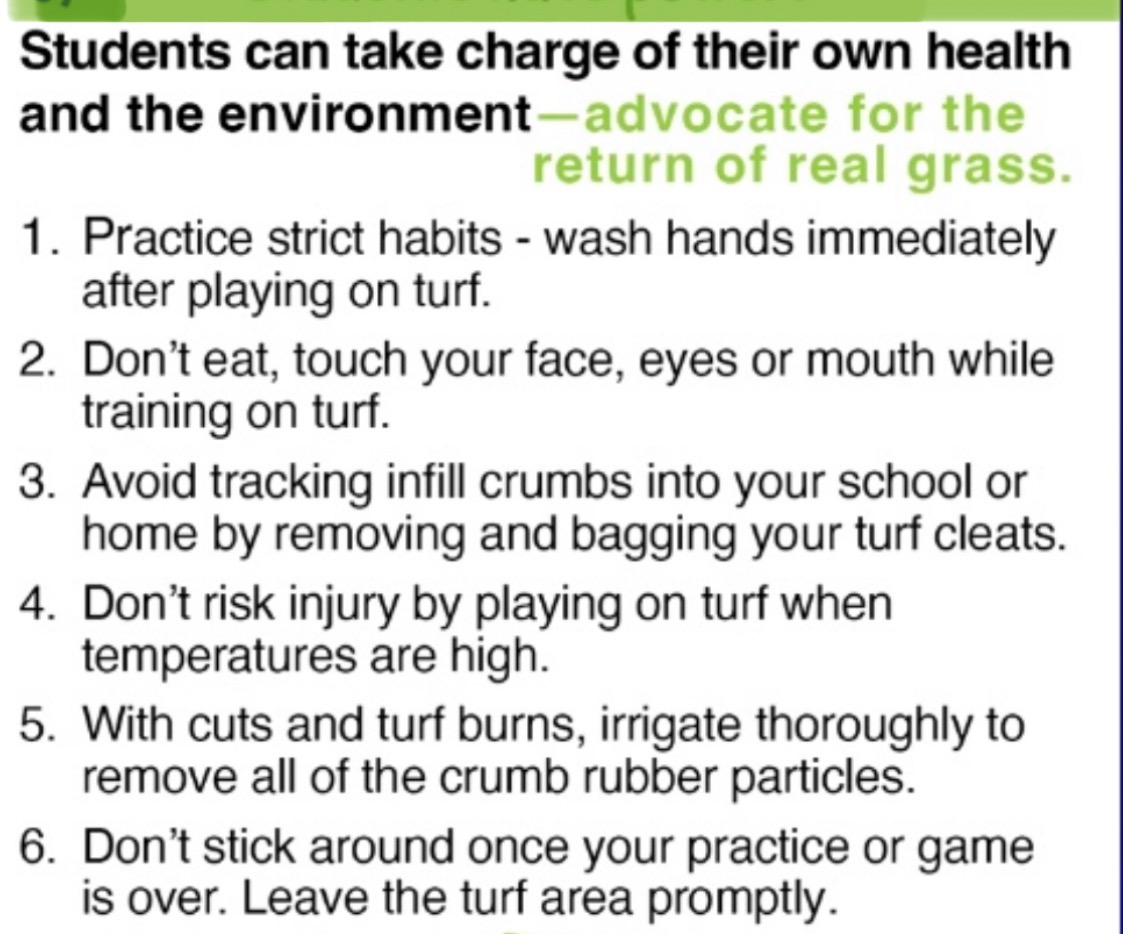
Students face exposure to harmful chemicals (some of which are carcinogens, neurotoxins and/or endocrine disruptors which can lead to infertility) as well as increased injury risk, including “turf toe”, lower limb injuries and concussion. Recovery time is longer and injuries can prevent athletes from advancing to “next level”.
STUDENTS NEED THEIR QUESTIONS ANSWERED AS THEY ARE THE ONES MOST AT RISK FROM THESE DECISIONS. We demand the immediate removal of artificial turf before students are hurt, and the restoration of safe, natural grass. We call for full transparency, genuine community consultation, and environmental responsibility in the decision-making process—for the benefit of students, the community, and the environment.
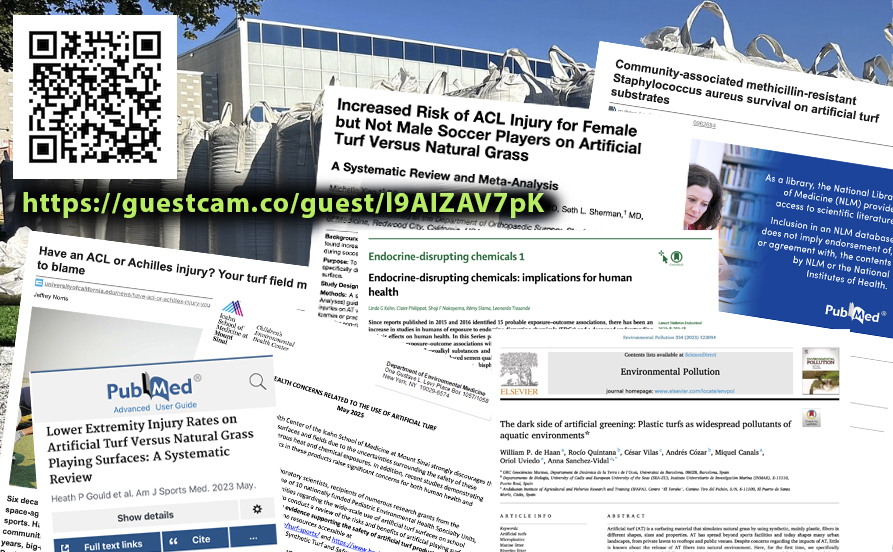
Published Studies and Research are available for further review, as well as findings from Toronto Public Health’s HIA "Health Impact Assessment of the use of Artificial Turf in Toronto”.
Epidemiological studies show that athletes on synthetic turf experience a 16-27% higher rate of lower extremity injuries compared to natural grass, with knee injuries up to 46% higher and ankle/foot injuries up to 68% higher. Injuries requiring extended recovery time are significantly more common on artificial turf.
Female athletes are at a higher risk for acute knee injuries, particularly anterior cruciate ligament (ACL) injuries, due to a combination of anatomical, hormonal, and biomechanical factors.
Sign and Share to Protect Student’s Health & athletic futures, preserve our environment, and uphold the school’s legacy of sustainability.
It is not too late for the young women of Loretto College to have the safe, sustainable, and “Level" sports field they deserve.—Loretto students are a powerful force when they unite with a common goal. THEY HAVE A VOICE! —Decision makers need to listen!
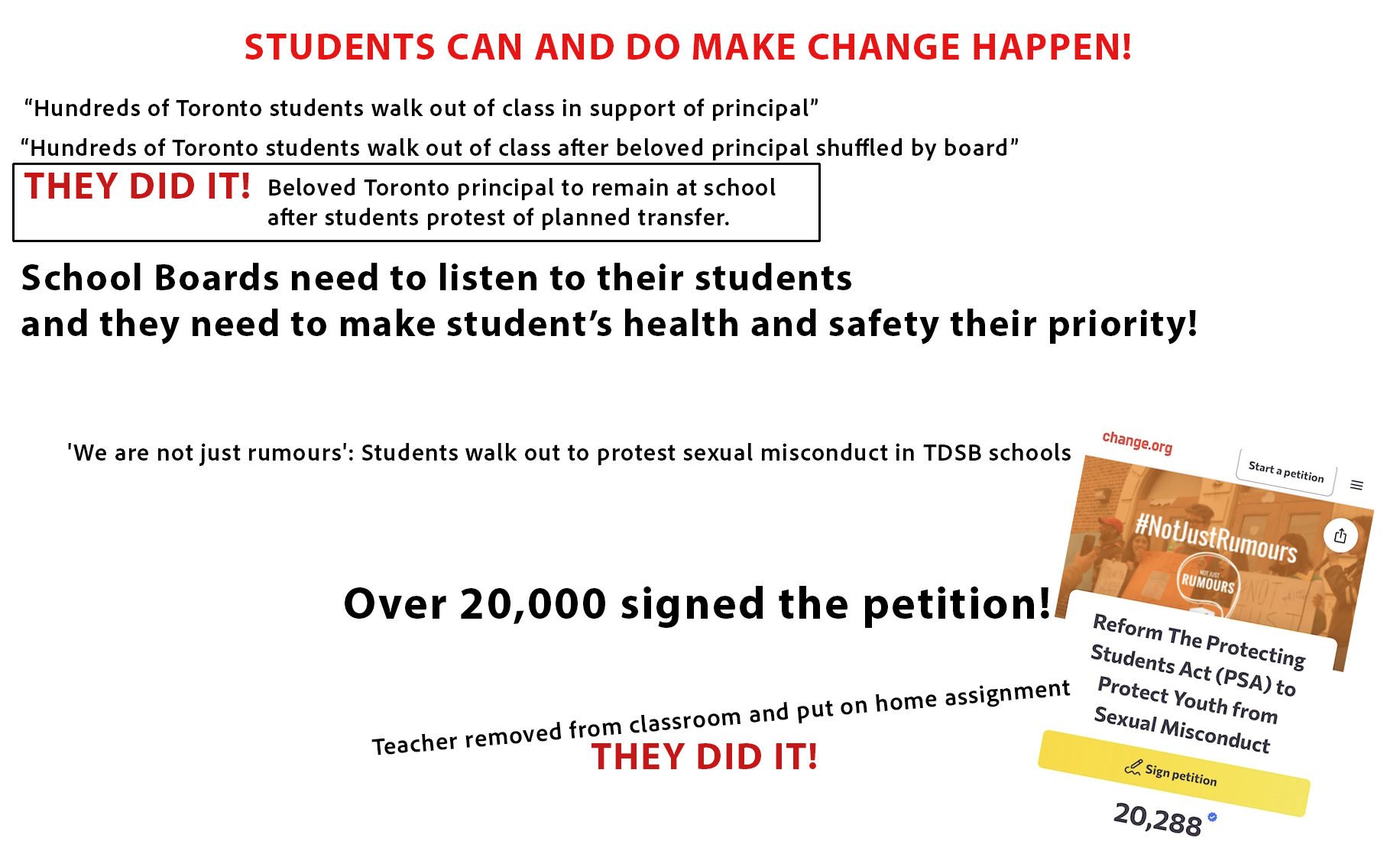
STUDENTS CAN AND DO MAKE CHANGE HAPPEN!
Hundreds of Toronto students walk out of class after beloved principal shuffled by board https://globalnews.ca/news/11238383/
Toronto students walk out of class in support of principal https://toronto.citynews.ca/2025/06/13
THEY DID IT! —Beloved Toronto principal to remain at school after students protest planned transfer https://globalnews.ca/news/11320267
•••••••
'We are not just rumours': Students walk out to protest sexual misconduct in TDSB schools cbc.ca-1.4660214
Over 20,000 signed the student’s petition! https://chng.it/8pZTrRR8Vf
THEY DID IT! —Teacher removed from classroom and put on home assignment Thestar.com/toronto-high-school-failed-to-take-
“As a Gold and Platinum certified Ontario and Canada EcoSchool, Loretto College School is committed to environmental stewardship. Students are inspired to live responsibly and care for our common home.” https://www.tcdsb.org/o/lorettocollege/page/about-us
For over 17 years, Loretto College’s natural grass field contributed positively as a net carbon sink, Yet, the Toronto Catholic District School Board made plans to replace this thriving natural outdoor space with artificial turf, ignoring serious health, safety, and environmental risks, and jeopardizing the school’s award-winning EcoSchools legacy.
Loretto’s natural grass field thrived with no investment beyond mowing. It never required re-sodding nor reseeding—proving that natural grass can survive and be maintained at this school site. This makes the installation of artificial turf unnecessary, unsafe, and environmentally harmful. Artificial turf poses higher risk for injury, is not conducive to student health, and contributes to urban heat islands and landfill waste.
Deception to Divide:
"Students are currently being misled that the Corso Italia Community, which they are part of, does not want them having improved sports and leisure facilities.
The South Corso Italia residents not only want improved outdoor facilities for the students, they actively tried to work with the school and school board as far back as 2011 to spearhead improvements, and did community social fundraising specifically for this cause. A binder filled with multi-use equipment options and amenities were presented to the school board, but they showed no genuine interest in working on improvements for the students with the community, not even lunchtime seating and shade trees. The residents wanted to develop plans that would benefit not only the students, including those in the special program, (at the time, some were in wheelchairs, so that played into the plans), but also the broader Corso Italia community—young children, families, and the elderly alike. The school Trustee was well aware of our plans and was also fully in support of our efforts. You only have to compare the green-space in 2011 with the green-space in 2024 to see that we didn’t even manage to get the school board to allow the community to plant daffodil bulbs behind the baseball diamond (we tried), and the school has made no outdoor improvements for the students. The only change in those 13 years was less shade for the students as trees have been removed."
Despite warnings from Toronto Public Health’s HIA) the TCDSB’s short-sighted and flawed plans went ahead. Parents and staff were shown limited options for field improvements and given little information about risks for students or the ecosystem.
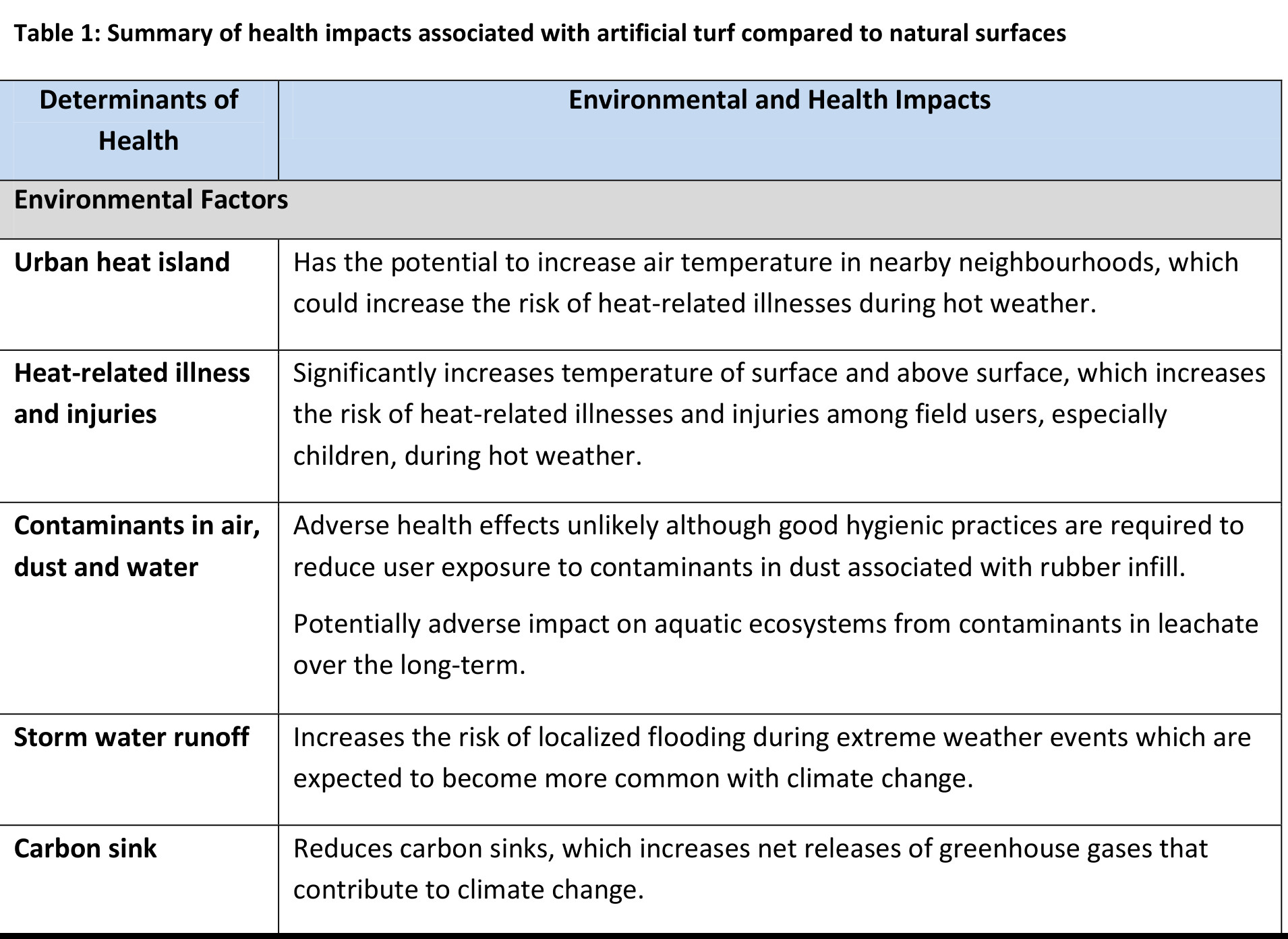
We demand the immediate removal of artificial turf before students are hurt, and restoration of safe, natural grass. We call for full transparency, genuine community consultation, and environmental responsibility in the decision-making process—for the benefit of students, the community, and the environment.
PLAYER SAFETY AND PERFORMANCE:
FIFA and related research indicate that natural grass is generally safer and more forgiving on players’ bodies, reducing the risk of certain injuries, especially those related to ligaments and joints. Artificial turf has been associated with higher rates of some lower-body injuries compared to natural grass.
- FIFA requires that all official World Cup matches be played on natural grass surfaces.
- Stadiums with artificial turf must install natural grass for the duration of the tournament.
- For the 2026 World Cup in the US, Canada, and Mexico, several stadiums currently with turf are installing temporary natural grass fields to comply with FIFA rules.
- FIFA’s policies strongly favor natural grass over artificial turf for official matches, especially in major tournaments such as the FIFA World Cup.
Toxic artificial grass isn’t safe enough for FIFA. Is it good enough for your family? Your neighbourhood? The environment?
IS IT GOOD ENOUGH FOR THE LORETTO STUDENT ATHLETES?
How it all Started
In 2019, Renewal Funding was allocated to Loretto College to develop a site master plan study aimed at providing a holistic fitness experience rather than a traditional full-sized sports field.
Gender Equity in Sports report was as follows:
- Loretto College is one of the six single-gender secondary schools for girls within the TCDSB that has sports facility limitations due to existing site constraints.
- The school site is not large enough to accommodate a full-sized playing field, which limits outdoor sports facility development.
- The current natural turf field at Loretto College measures 45 by 56 meters, but it has issues such as ruts and low areas that hold water, with worn goal mouths affecting usability.
FIELD STUDY UPDATE was Presented to The Board of Trustees June 8th, 2023 TCDSB - to provide the Board of Trustees a summary of the findings from the TCDSB Field Study report.
- Loretto College is one of the six single-gender secondary schools for girls within the TCDSB that has sports facility limitations due to existing site
- The specification and guidelines for design, construction, maintenance , and use shall provide the framework for developing existing sites in a manner that will keep them in a better state of repair and make them more sustainable.
- Consultation with the Loretto College school community was revisited in Fall 2023 to review the master plan in the context of providing more sports facilities or a sports field.
- There is currently $1.5 million in renewal funding approved to begin construction based on the master plan during the 2023-2024 Renewal Plan cycle.
- Despite site constraints, the focus is on improving safety and usability by flattening available fields and enhancing indoor and outdoor spaces with additional equipment where possible.
- Improvements are limited to what can physically fit on site. The board aims to work with the school community to explore alternative solutions such as secure community sites off-campus to supplement sports space for sports activities.
“The pressure on green space is made worse by trends at the institutional level, including the conversion of school fields from natural grass to artificial turf.”
Deception in the Decision Process:
Parents and Loretto staff were presented with “improvement options” for the green space, yet the options never included an upgraded levelled field using natural grass. Clear information about the serious injury and health risks of artificial turf was also missing. This process did not allow for informed consent, leaving families misled putting students at risk.
At the virtual “Pep-Rally”, participants were made to feel the only upgrades and improvements available to them required the adoption and installation of artificial grass with infill. The replacement of “nature” with “artificial” from a company travelling all the way out from Quebec, intensified these concerns about the process, transparency, sustainability and outcome.
This sequence of events demonstrates how a narrow presentation of options and lack of transparent risk information can undermine the community’s trust and leave students’ welfare in question.
Has Loretto College School become a soccer school?
What about the other athletics? Baseball? Short-put? Long jump? Borden ball? Field Hockey, Cheerleading? Ultimate Frisby?
Why Natural Grass Must Return
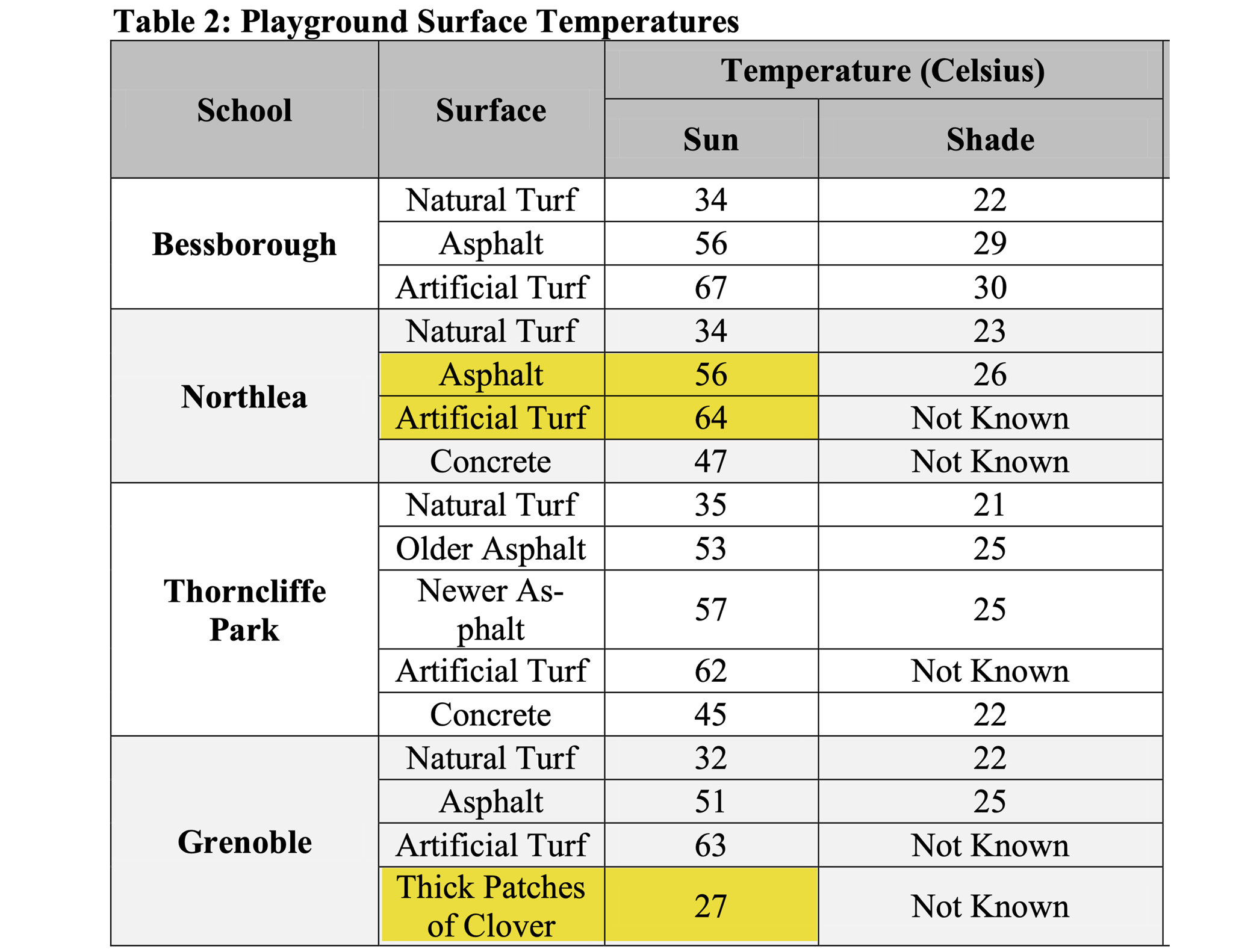
- Student Safety: Injury risks from artificial turf include turf toe, ACL and knee injuries, concussions, MRSA-linked turf burns, and extreme heat exposure—temperatures as high as 67°C, compared to 32–35°C for natural grass.
- Health Risks: Students should not be exposed to toxic materials—linked to long-term risks such as hormone disruption, infertility, neurological issues, and cancers.
- Environmental Stewardship: Loretto College has proudly achieved Gold and Platinum EcoSchools Canada status. Installing toxic turf undermines that achievement. Natural grass contributes to net carbon sequestration and supports pollinators, tree health, and biodiversity. Artificial turf adds a carbon footprint of approximately 55 tons of CO₂, contributes to urban heat islands, leaches chemicals, and becomes landfill waste in 8–14 years.
- Equity of Use: All students—not just those in competitive sports—deserve an accessible, safe, natural environment for physical education, recreation, study, and community. At this state-of-the-art facility, students excel in Arts and Culture, STEAM, Health & Wellness SHSM programs, Youth in Medicine. Regardless of their academic path, ALL students, deserve to be considered in the plans to spend public funds for improvements at the school, and should benefit equally from those improvements.
The Board is well aware—through Toronto Public Health’s Health Impact Assessment (HIA), its own scoping discussions, and staff reviews—of the following:
- Land use changes: Turf installation inherently replaces a natural environment with a built, synthetic one, with permanent ecological loss.
- Environmental burden: Artificial turf consumes raw materials and energy, creates emissions throughout its lifecycle, and has a significantly larger carbon footprint than natural grass.
- Lifecycle problem: In 12–14 years, the turf must be replaced, and without recycling, it will add massively to landfill.
- Heat island contributions: Unlike natural grass with evapotranspiration cooling, turf absorbs radiant heat, raising temperatures and worsening climate-related impacts.
- Water uncertainty: Cooling requires watering, but adherence to specifications is inconsistent, and the surface quickly reheats under direct sun.
- Tree health risks: Nearby trees can be starved of water due to altered drainage systems, while exposed to toxic runoff and root zone disturbance.
- Vegetation loss: Installing turf prevents natural vegetation from re-establishing, threatening urban shade and tree canopy.
- Water contamination: Heavy metals and organic contaminants may leach into water systems, threatening biodiversity and ecotoxic balance.
- Drainage failures: Redirecting rainwater into catch basins can deprive local vegetation of much-needed natural irrigation while sending pollutants downstream.
The Board therefore cannot claim ignorance of the risks. Moving forward with artificial turf demonstrates negligent disregard for students, the broader neighbourhood, and the ecosystem.
TDSB’s "Terms of Reference Governing Future Installations of Artificial Turf Sports Fields" (OFMC:044A) found that artificial turf on school grounds generates much higher surface temperatures than natural turf. On a typical hot summer day at the Board, artificial turf reaches temperatures between 62° C and 67° C compared to 32° C to 35° C for natural turf. Heat Island Effect hurts the ecosystem and contributes to heat related injuries; heat stroke, dehydration and friction burns.
Ignored Expert Warnings: TPH’s HHIA and Toronto school board’s own reviews warn of the risks: toxic run-off, tree and biodiversity loss, higher carbon emissions, and diminished equity in green space access. Yet these warnings are being ignored.
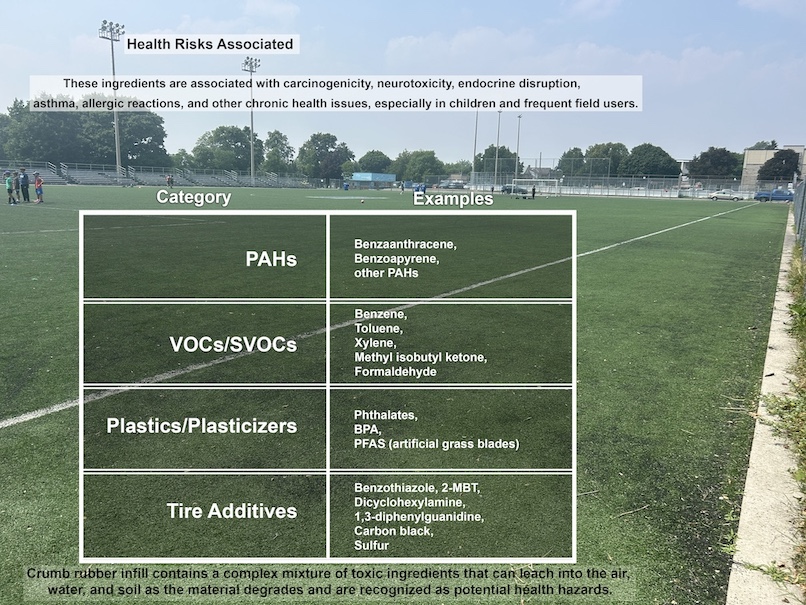
Most Toxic Infill Chosen: Not only did The Board choose astroturf over grass, they selected the most hazardous option for the infill— despite knowing it contains dozens of toxic chemicals. This choice maximizes exposure to carcinogens, endocrine disruptors, heavy metals (like lead and arsenic), and microplastics.
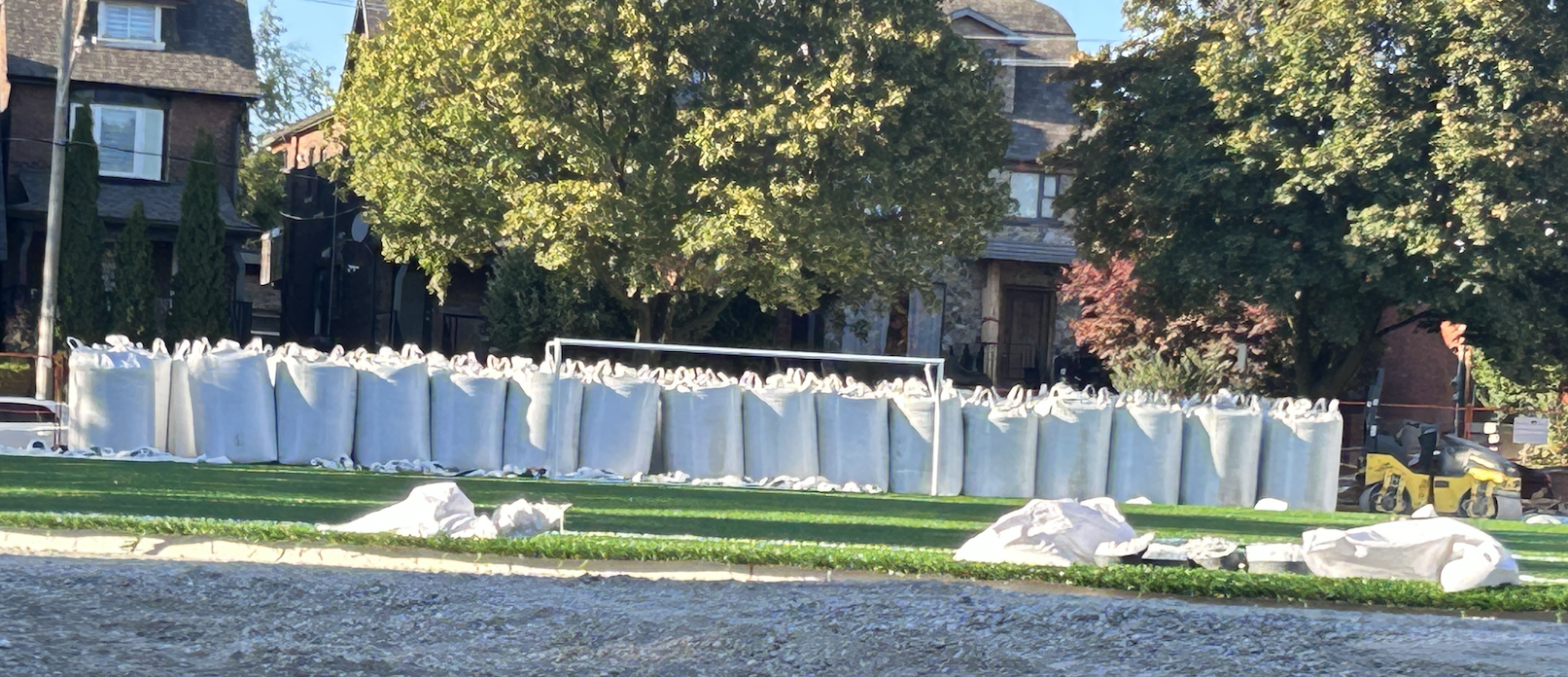
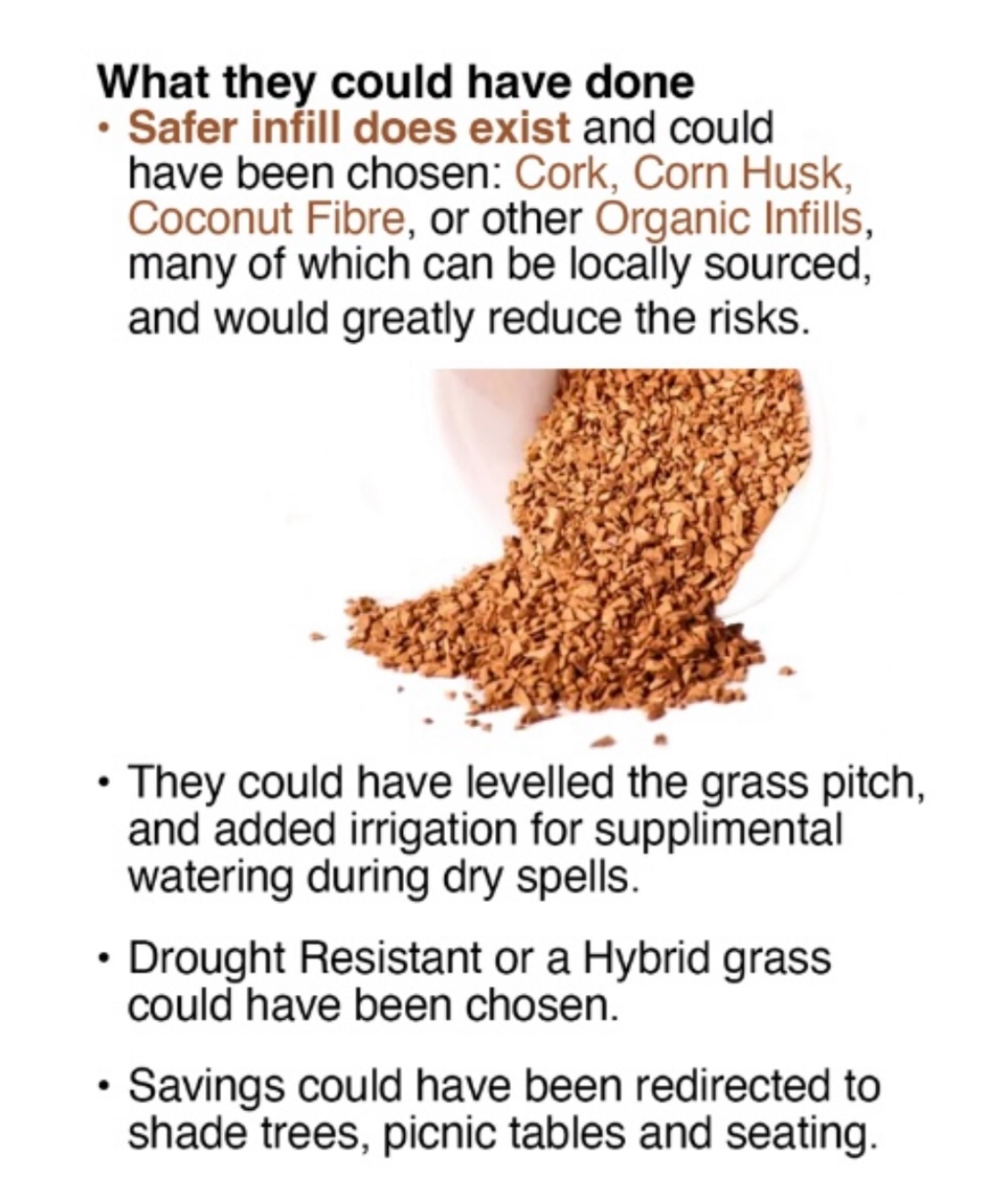
Safer alternatives do exist: CORK, CORN HUSK, COCONUT FIBRE, or other ORGANIC INFILLS, many of which can be locally sourced, and would greatly reduce these risks. Yet, these options were ignored.
What We Demand
- Immediate removal of the artificial turf and restoration of a natural grass playing surface.
- A renewed commitment to student health, safety, and equity over cost-saving shortcuts.
- Environmental responsibility consistent with Toronto Public Health findings and EcoSchools Canada’s mission.
- Protection of local ecosystems, including wildlife corridors and pollinator habitat.
- Genuine equity in school facility use, so all students—not only athletes—benefit from outdoor space.
- Environmental stewardship reputation restored: Loretto has achieved Platinum EcoSchools status for environmental leadership.
- The installation of turf contradicts this, undermining student achievements and community values.
It is not too late to make things right.
Restore natural grass. Restore student safety. Restore environmental integrity, and demand that TCDSB put their responsibility to youth and the planet first.
Call to Action
Loretto College students deserve safety, health, equity, and environmental integrity in their school facilities. The South Corso Italia community deserves responsible stewardship. Our city deserves resilience against climate crises, not short-sighted infrastructure causing environmental degradation.
It is not too late to make things right.
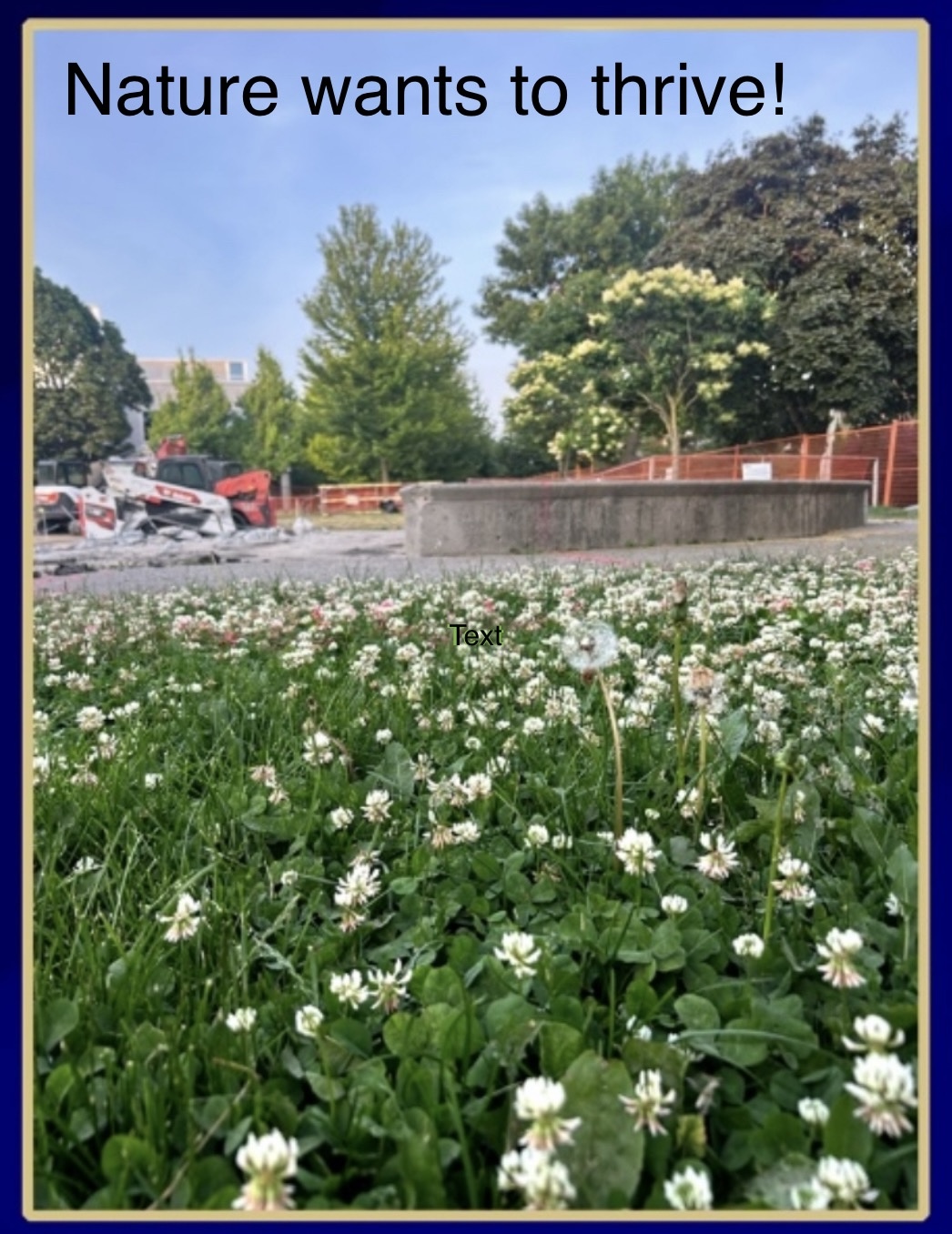
Let the voices of students, families, neighbours, and advocates be heard. Restore natural grass, restore pride in EcoSchools achievement, and restore responsible care for our young people and community.
MUCH RESEARCH HAS ALREADY BEEN DONE - Some linked here:
https://guestcam.co/guest/l9AIZAV7pK
Published studies and other research:
Health Impacts of Artificial Turf: Toxicity Studies, Challenges, and Future Directions
https://pmc.ncbi.nlm.nih.gov/articles/PMC10262297/ Maire Murphy 1, Genoa R Warner 1,*
PMCID: PMC10262297 NIHMSID: NIHMS1903943 PMID: 35948114Murphy M, Warner GR. Health impacts of artificial turf: Toxicity studies, challenges, and future directions. Environ Pollut. 2022 Oct 1;310:119841. doi: 10.1016/j.envpol.2022.119841. Epub 2022 Aug 7. PMID: 35948114; PMCID: PMC10262297.
“Crumb rubber is considered to be one of the riskiest components of artificial turf as it is known to contain high levels of PAHs and metals. However, artificial turf contains many additional components that may leach harmful chemicals. Of note, artificial glass fibers have been shown to leach multiple phthalates, which are known reproductive toxicants, and various PFAS have been identified in artificial turf samples (Glüge et al. 2020; Naim 2020; Gomes et al. 2021). Additional studies that incorporate all components of artificial turf are strongly needed.”
Evaluation of potential carcinogenicity of organic chemicals in synthetic turf crumb —“The crumb rubber infill of artificial turf fields contains or emits chemicals that can affect human physiology. Of the 306 chemicals associated with crumb rubber infill from publications, application of an in silico computational program predicted 197 carcinogens.”
Rubber Crumb Infill in Synthetic Turf and Health Outcomes: A Review of the Literature on Polycyclic Aromatic Hydrocarbons & Metalloids. —“it is important to interpret these findings cautiously due to the scarcity of epidemiological studies. Notably, nine out of the eighteen laboratory studies we reviewed reported a total PAHs concentration exceeding the recommended European guideline values, which emphasised the need for more stringent government regulation of rubber crumb infill in synthetic turf.”
Health Risk Assessment of Lead Ingestion Exposure by Particle Sizes in Crumb Rubber on Artificial Turf Considering Bioavailability. —“lead concentration inside of EPDM rubber powder was 3.0 mg/kg, the acid extraction method result was 6.5 times higher than content concentration, and digestive extraction was 10.3 times higher. The acid extraction result and digestive extraction result showed similar aspects“
Increased Risk of ACL Injury for Female but Not Male Soccer Players on Artificial Turf Versus Natural Grass: A Systematic Review and Meta-Analysis.—“This investigation found that female soccer players had a significantly higher risk of ACL injury when playing games on AT versus NG. Because ACL injury risk is multifactorial, future studies on the sex-specific differences in playing surface on injury risk are warranted.”
AND MANY MORE...
https://guestcam.co/guest/l9AIZAV7pK

555
The Issue
Artificial turf has been installed at Loretto College in place of natural grass—with the school losing its reputation for contributing as a net carbon sink (since they opened in Corso Italia).
A fossil fuel product, paired with the most toxic choice for infill: crumb rubber (manufactured from recycled, used vehicle tyres) endangers student health, threatens our environment, and betrays the school’s commitment to stewardship
Students face exposure to harmful chemicals (some of which are carcinogens, neurotoxins and/or endocrine disruptors which can lead to infertility) as well as increased injury risk, including “turf toe”, lower limb injuries and concussion. Recovery time is longer and injuries can prevent athletes from advancing to “next level”.
STUDENTS NEED THEIR QUESTIONS ANSWERED AS THEY ARE THE ONES MOST AT RISK FROM THESE DECISIONS. We demand the immediate removal of artificial turf before students are hurt, and the restoration of safe, natural grass. We call for full transparency, genuine community consultation, and environmental responsibility in the decision-making process—for the benefit of students, the community, and the environment.
Published Studies and Research are available for further review, as well as findings from Toronto Public Health’s HIA "Health Impact Assessment of the use of Artificial Turf in Toronto”.
Epidemiological studies show that athletes on synthetic turf experience a 16-27% higher rate of lower extremity injuries compared to natural grass, with knee injuries up to 46% higher and ankle/foot injuries up to 68% higher. Injuries requiring extended recovery time are significantly more common on artificial turf.
Female athletes are at a higher risk for acute knee injuries, particularly anterior cruciate ligament (ACL) injuries, due to a combination of anatomical, hormonal, and biomechanical factors.
Sign and Share to Protect Student’s Health & athletic futures, preserve our environment, and uphold the school’s legacy of sustainability.
It is not too late for the young women of Loretto College to have the safe, sustainable, and “Level" sports field they deserve.—Loretto students are a powerful force when they unite with a common goal. THEY HAVE A VOICE! —Decision makers need to listen!
STUDENTS CAN AND DO MAKE CHANGE HAPPEN!
Hundreds of Toronto students walk out of class after beloved principal shuffled by board https://globalnews.ca/news/11238383/
Toronto students walk out of class in support of principal https://toronto.citynews.ca/2025/06/13
THEY DID IT! —Beloved Toronto principal to remain at school after students protest planned transfer https://globalnews.ca/news/11320267
•••••••
'We are not just rumours': Students walk out to protest sexual misconduct in TDSB schools cbc.ca-1.4660214
Over 20,000 signed the student’s petition! https://chng.it/8pZTrRR8Vf
THEY DID IT! —Teacher removed from classroom and put on home assignment Thestar.com/toronto-high-school-failed-to-take-
“As a Gold and Platinum certified Ontario and Canada EcoSchool, Loretto College School is committed to environmental stewardship. Students are inspired to live responsibly and care for our common home.” https://www.tcdsb.org/o/lorettocollege/page/about-us
For over 17 years, Loretto College’s natural grass field contributed positively as a net carbon sink, Yet, the Toronto Catholic District School Board made plans to replace this thriving natural outdoor space with artificial turf, ignoring serious health, safety, and environmental risks, and jeopardizing the school’s award-winning EcoSchools legacy.
Loretto’s natural grass field thrived with no investment beyond mowing. It never required re-sodding nor reseeding—proving that natural grass can survive and be maintained at this school site. This makes the installation of artificial turf unnecessary, unsafe, and environmentally harmful. Artificial turf poses higher risk for injury, is not conducive to student health, and contributes to urban heat islands and landfill waste.
Deception to Divide:
"Students are currently being misled that the Corso Italia Community, which they are part of, does not want them having improved sports and leisure facilities.
The South Corso Italia residents not only want improved outdoor facilities for the students, they actively tried to work with the school and school board as far back as 2011 to spearhead improvements, and did community social fundraising specifically for this cause. A binder filled with multi-use equipment options and amenities were presented to the school board, but they showed no genuine interest in working on improvements for the students with the community, not even lunchtime seating and shade trees. The residents wanted to develop plans that would benefit not only the students, including those in the special program, (at the time, some were in wheelchairs, so that played into the plans), but also the broader Corso Italia community—young children, families, and the elderly alike. The school Trustee was well aware of our plans and was also fully in support of our efforts. You only have to compare the green-space in 2011 with the green-space in 2024 to see that we didn’t even manage to get the school board to allow the community to plant daffodil bulbs behind the baseball diamond (we tried), and the school has made no outdoor improvements for the students. The only change in those 13 years was less shade for the students as trees have been removed."
Despite warnings from Toronto Public Health’s HIA) the TCDSB’s short-sighted and flawed plans went ahead. Parents and staff were shown limited options for field improvements and given little information about risks for students or the ecosystem.
We demand the immediate removal of artificial turf before students are hurt, and restoration of safe, natural grass. We call for full transparency, genuine community consultation, and environmental responsibility in the decision-making process—for the benefit of students, the community, and the environment.
PLAYER SAFETY AND PERFORMANCE:
FIFA and related research indicate that natural grass is generally safer and more forgiving on players’ bodies, reducing the risk of certain injuries, especially those related to ligaments and joints. Artificial turf has been associated with higher rates of some lower-body injuries compared to natural grass.
- FIFA requires that all official World Cup matches be played on natural grass surfaces.
- Stadiums with artificial turf must install natural grass for the duration of the tournament.
- For the 2026 World Cup in the US, Canada, and Mexico, several stadiums currently with turf are installing temporary natural grass fields to comply with FIFA rules.
- FIFA’s policies strongly favor natural grass over artificial turf for official matches, especially in major tournaments such as the FIFA World Cup.
Toxic artificial grass isn’t safe enough for FIFA. Is it good enough for your family? Your neighbourhood? The environment?
IS IT GOOD ENOUGH FOR THE LORETTO STUDENT ATHLETES?
How it all Started
In 2019, Renewal Funding was allocated to Loretto College to develop a site master plan study aimed at providing a holistic fitness experience rather than a traditional full-sized sports field.
Gender Equity in Sports report was as follows:
- Loretto College is one of the six single-gender secondary schools for girls within the TCDSB that has sports facility limitations due to existing site constraints.
- The school site is not large enough to accommodate a full-sized playing field, which limits outdoor sports facility development.
- The current natural turf field at Loretto College measures 45 by 56 meters, but it has issues such as ruts and low areas that hold water, with worn goal mouths affecting usability.
FIELD STUDY UPDATE was Presented to The Board of Trustees June 8th, 2023 TCDSB - to provide the Board of Trustees a summary of the findings from the TCDSB Field Study report.
- Loretto College is one of the six single-gender secondary schools for girls within the TCDSB that has sports facility limitations due to existing site
- The specification and guidelines for design, construction, maintenance , and use shall provide the framework for developing existing sites in a manner that will keep them in a better state of repair and make them more sustainable.
- Consultation with the Loretto College school community was revisited in Fall 2023 to review the master plan in the context of providing more sports facilities or a sports field.
- There is currently $1.5 million in renewal funding approved to begin construction based on the master plan during the 2023-2024 Renewal Plan cycle.
- Despite site constraints, the focus is on improving safety and usability by flattening available fields and enhancing indoor and outdoor spaces with additional equipment where possible.
- Improvements are limited to what can physically fit on site. The board aims to work with the school community to explore alternative solutions such as secure community sites off-campus to supplement sports space for sports activities.
“The pressure on green space is made worse by trends at the institutional level, including the conversion of school fields from natural grass to artificial turf.”
Deception in the Decision Process:
Parents and Loretto staff were presented with “improvement options” for the green space, yet the options never included an upgraded levelled field using natural grass. Clear information about the serious injury and health risks of artificial turf was also missing. This process did not allow for informed consent, leaving families misled putting students at risk.
At the virtual “Pep-Rally”, participants were made to feel the only upgrades and improvements available to them required the adoption and installation of artificial grass with infill. The replacement of “nature” with “artificial” from a company travelling all the way out from Quebec, intensified these concerns about the process, transparency, sustainability and outcome.
This sequence of events demonstrates how a narrow presentation of options and lack of transparent risk information can undermine the community’s trust and leave students’ welfare in question.
Has Loretto College School become a soccer school?
What about the other athletics? Baseball? Short-put? Long jump? Borden ball? Field Hockey, Cheerleading? Ultimate Frisby?
Why Natural Grass Must Return
- Student Safety: Injury risks from artificial turf include turf toe, ACL and knee injuries, concussions, MRSA-linked turf burns, and extreme heat exposure—temperatures as high as 67°C, compared to 32–35°C for natural grass.
- Health Risks: Students should not be exposed to toxic materials—linked to long-term risks such as hormone disruption, infertility, neurological issues, and cancers.
- Environmental Stewardship: Loretto College has proudly achieved Gold and Platinum EcoSchools Canada status. Installing toxic turf undermines that achievement. Natural grass contributes to net carbon sequestration and supports pollinators, tree health, and biodiversity. Artificial turf adds a carbon footprint of approximately 55 tons of CO₂, contributes to urban heat islands, leaches chemicals, and becomes landfill waste in 8–14 years.
- Equity of Use: All students—not just those in competitive sports—deserve an accessible, safe, natural environment for physical education, recreation, study, and community. At this state-of-the-art facility, students excel in Arts and Culture, STEAM, Health & Wellness SHSM programs, Youth in Medicine. Regardless of their academic path, ALL students, deserve to be considered in the plans to spend public funds for improvements at the school, and should benefit equally from those improvements.
The Board is well aware—through Toronto Public Health’s Health Impact Assessment (HIA), its own scoping discussions, and staff reviews—of the following:
- Land use changes: Turf installation inherently replaces a natural environment with a built, synthetic one, with permanent ecological loss.
- Environmental burden: Artificial turf consumes raw materials and energy, creates emissions throughout its lifecycle, and has a significantly larger carbon footprint than natural grass.
- Lifecycle problem: In 12–14 years, the turf must be replaced, and without recycling, it will add massively to landfill.
- Heat island contributions: Unlike natural grass with evapotranspiration cooling, turf absorbs radiant heat, raising temperatures and worsening climate-related impacts.
- Water uncertainty: Cooling requires watering, but adherence to specifications is inconsistent, and the surface quickly reheats under direct sun.
- Tree health risks: Nearby trees can be starved of water due to altered drainage systems, while exposed to toxic runoff and root zone disturbance.
- Vegetation loss: Installing turf prevents natural vegetation from re-establishing, threatening urban shade and tree canopy.
- Water contamination: Heavy metals and organic contaminants may leach into water systems, threatening biodiversity and ecotoxic balance.
- Drainage failures: Redirecting rainwater into catch basins can deprive local vegetation of much-needed natural irrigation while sending pollutants downstream.
The Board therefore cannot claim ignorance of the risks. Moving forward with artificial turf demonstrates negligent disregard for students, the broader neighbourhood, and the ecosystem.
TDSB’s "Terms of Reference Governing Future Installations of Artificial Turf Sports Fields" (OFMC:044A) found that artificial turf on school grounds generates much higher surface temperatures than natural turf. On a typical hot summer day at the Board, artificial turf reaches temperatures between 62° C and 67° C compared to 32° C to 35° C for natural turf. Heat Island Effect hurts the ecosystem and contributes to heat related injuries; heat stroke, dehydration and friction burns.
Ignored Expert Warnings: TPH’s HHIA and Toronto school board’s own reviews warn of the risks: toxic run-off, tree and biodiversity loss, higher carbon emissions, and diminished equity in green space access. Yet these warnings are being ignored.
Most Toxic Infill Chosen: Not only did The Board choose astroturf over grass, they selected the most hazardous option for the infill— despite knowing it contains dozens of toxic chemicals. This choice maximizes exposure to carcinogens, endocrine disruptors, heavy metals (like lead and arsenic), and microplastics.
Safer alternatives do exist: CORK, CORN HUSK, COCONUT FIBRE, or other ORGANIC INFILLS, many of which can be locally sourced, and would greatly reduce these risks. Yet, these options were ignored.
What We Demand
- Immediate removal of the artificial turf and restoration of a natural grass playing surface.
- A renewed commitment to student health, safety, and equity over cost-saving shortcuts.
- Environmental responsibility consistent with Toronto Public Health findings and EcoSchools Canada’s mission.
- Protection of local ecosystems, including wildlife corridors and pollinator habitat.
- Genuine equity in school facility use, so all students—not only athletes—benefit from outdoor space.
- Environmental stewardship reputation restored: Loretto has achieved Platinum EcoSchools status for environmental leadership.
- The installation of turf contradicts this, undermining student achievements and community values.
It is not too late to make things right.
Restore natural grass. Restore student safety. Restore environmental integrity, and demand that TCDSB put their responsibility to youth and the planet first.
Call to Action
Loretto College students deserve safety, health, equity, and environmental integrity in their school facilities. The South Corso Italia community deserves responsible stewardship. Our city deserves resilience against climate crises, not short-sighted infrastructure causing environmental degradation.
It is not too late to make things right.
Let the voices of students, families, neighbours, and advocates be heard. Restore natural grass, restore pride in EcoSchools achievement, and restore responsible care for our young people and community.
MUCH RESEARCH HAS ALREADY BEEN DONE - Some linked here:
https://guestcam.co/guest/l9AIZAV7pK
Published studies and other research:
Health Impacts of Artificial Turf: Toxicity Studies, Challenges, and Future Directions
https://pmc.ncbi.nlm.nih.gov/articles/PMC10262297/ Maire Murphy 1, Genoa R Warner 1,*
PMCID: PMC10262297 NIHMSID: NIHMS1903943 PMID: 35948114Murphy M, Warner GR. Health impacts of artificial turf: Toxicity studies, challenges, and future directions. Environ Pollut. 2022 Oct 1;310:119841. doi: 10.1016/j.envpol.2022.119841. Epub 2022 Aug 7. PMID: 35948114; PMCID: PMC10262297.
“Crumb rubber is considered to be one of the riskiest components of artificial turf as it is known to contain high levels of PAHs and metals. However, artificial turf contains many additional components that may leach harmful chemicals. Of note, artificial glass fibers have been shown to leach multiple phthalates, which are known reproductive toxicants, and various PFAS have been identified in artificial turf samples (Glüge et al. 2020; Naim 2020; Gomes et al. 2021). Additional studies that incorporate all components of artificial turf are strongly needed.”
Evaluation of potential carcinogenicity of organic chemicals in synthetic turf crumb —“The crumb rubber infill of artificial turf fields contains or emits chemicals that can affect human physiology. Of the 306 chemicals associated with crumb rubber infill from publications, application of an in silico computational program predicted 197 carcinogens.”
Rubber Crumb Infill in Synthetic Turf and Health Outcomes: A Review of the Literature on Polycyclic Aromatic Hydrocarbons & Metalloids. —“it is important to interpret these findings cautiously due to the scarcity of epidemiological studies. Notably, nine out of the eighteen laboratory studies we reviewed reported a total PAHs concentration exceeding the recommended European guideline values, which emphasised the need for more stringent government regulation of rubber crumb infill in synthetic turf.”
Health Risk Assessment of Lead Ingestion Exposure by Particle Sizes in Crumb Rubber on Artificial Turf Considering Bioavailability. —“lead concentration inside of EPDM rubber powder was 3.0 mg/kg, the acid extraction method result was 6.5 times higher than content concentration, and digestive extraction was 10.3 times higher. The acid extraction result and digestive extraction result showed similar aspects“
Increased Risk of ACL Injury for Female but Not Male Soccer Players on Artificial Turf Versus Natural Grass: A Systematic Review and Meta-Analysis.—“This investigation found that female soccer players had a significantly higher risk of ACL injury when playing games on AT versus NG. Because ACL injury risk is multifactorial, future studies on the sex-specific differences in playing surface on injury risk are warranted.”
AND MANY MORE...
https://guestcam.co/guest/l9AIZAV7pK
The Decision Makers
Supporter Voices
Petition Updates
Share this petition
Petition created on October 4, 2025