

Restore and Conserve Rush Lake for SAFE Public Use!
The Issue
Why You Should Care
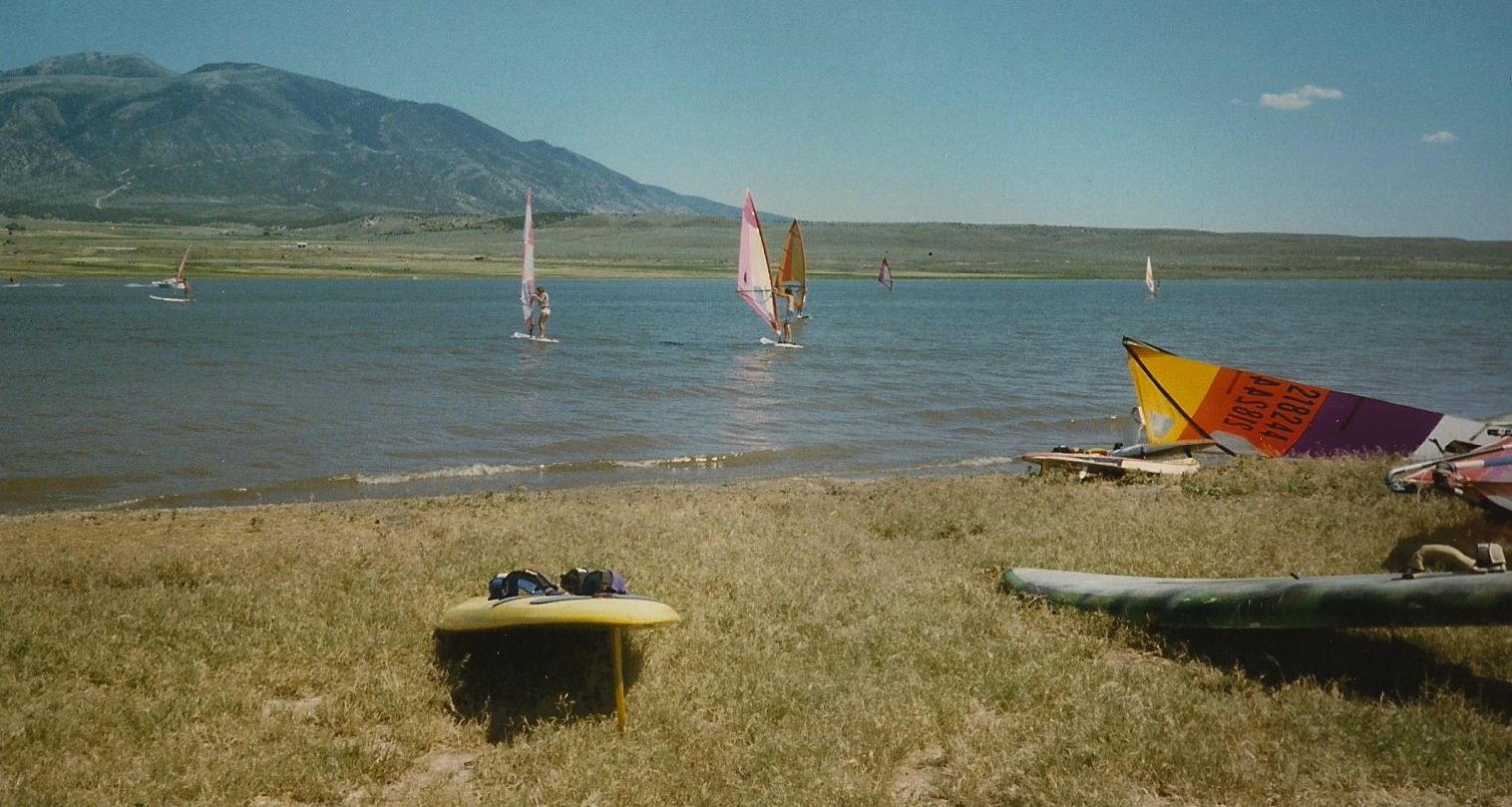
A boater and windsurfers recreating on Rush Lake, circa 1980’s.
Were it not for a relentless drought recently plaguing the whole of the Western United States, Rush Lake would continue to be the thriving year-round public body of water it once was not so long ago, enjoyed by many.
However, according to the USDA Drought Monitor, as of April 4, 2023, drought conditions have improved across much of the Western U.S. compared to 2021 and 2022, with the Utah Division of Water Resources reporting a record-setting 2023 water year reaching 216% of normal snow water equivalent (SWE) and 2024’s SWE value already above normal, with projected precipitation increases still yet to come.
Rush Lake will periodically return in the spring as it has for the last two consecutive years, sometimes lasting well into the summer, or even year-round, depending on the amount of winter precipitation received in the region.
This is a welcome sight to local residents and nonresidents alike who utilize Rush Lake for a wide variety of activities whenever it returns.
The scope of this petition is not to address the ongoing threat of drought, though its adverse impact on Rush Lake, like many other water resources in the Western U.S., is here acknowledged.
Rather, this petition is primarily concerned with a secondary ongoing threat considerably threatening the general public’s access to safe, lawful use of Rush Lake in normal, non-drought conditions.
In recent dry years, barbed-wire fencing spanning multiple directions across Rush Lake’s wetland basin have been privately erected, posing an unreasonably dangerous hazard to Rush Lake users in violation of (at least) Utah’s Public Waters Access Act and Utah State Law.
Rush Lake History (The Precedent)
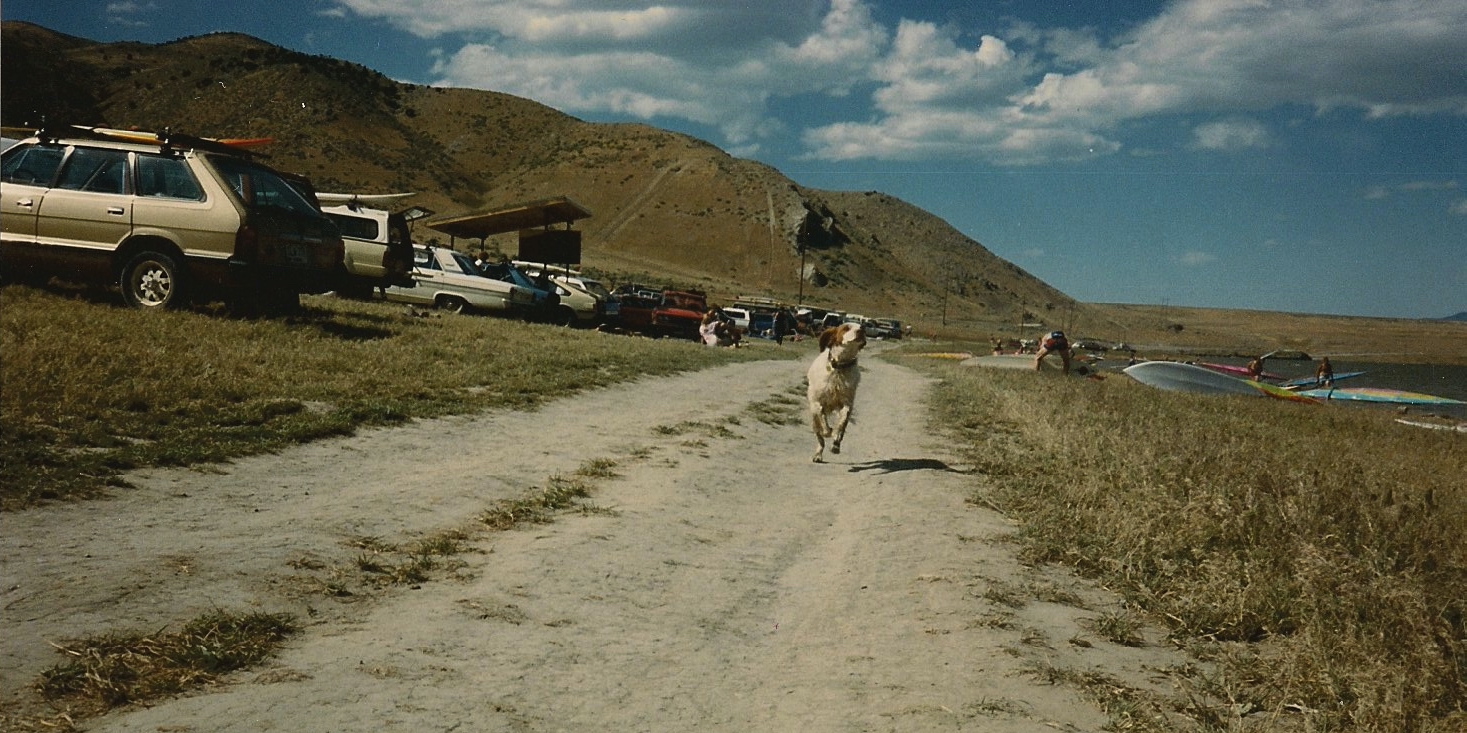
A large crowd gathers to enjoy a sunny day at Rush Lake, circa 1986.
Rush Lake is a shallow, naturally occurring brackish lake in Tooele County, Utah, USA. It is a remnant of Lake Bonneville, an ancient postglacial inland sea that covered much of the Western U.S. during the ice ages.
In more recent history, The Utah Division of Water Resources reported natural rivers and bodies of water such as Rush Lake are scarce water assets in Utah’s West Desert Basin. Consequently, it is in the best interest of the general public to restore and conserve Rush Lake’s natural beauty and the safe, lawful use of its unique resources.
In accordance with Utah Code §73-29-203 regarding the “establishment of public recreational access”, Rush Lake has demonstrated a rich heritage of public recreational usage over many years.
Rush Lake was historically enjoyed by the general public for a wide variety of recreational activities, including boating, swimming, fishing, wind sports, paddle boarding, kayaking, and more — many of which are still enjoyed today. Some Rush Lake usages, such as for wind sports, have been continuously engaged in for substantially longer than 10 consecutive years, and long before the unlawful fencing was ever erected.
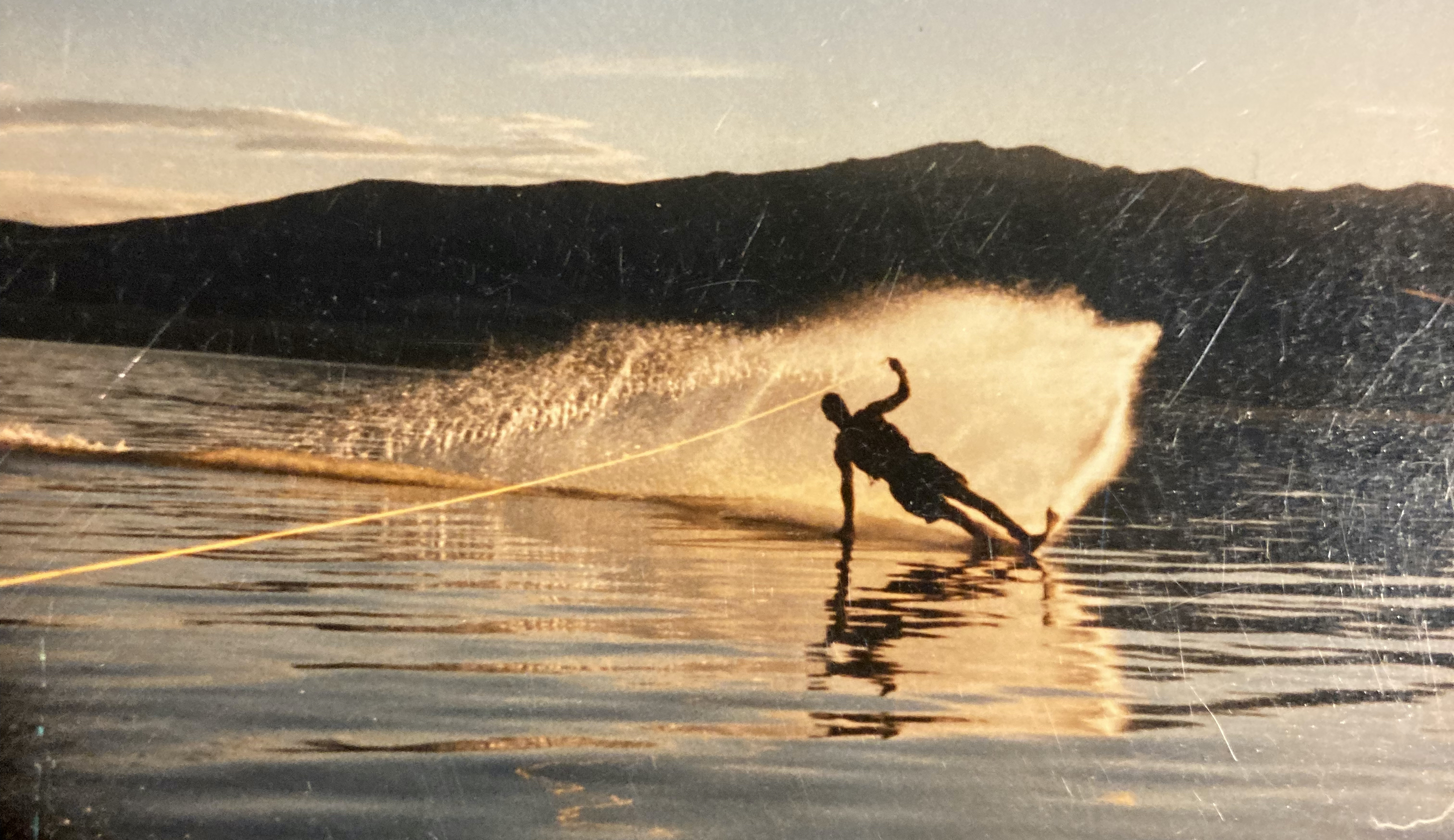
A slalom water skier makes a sunset turn on Rush Lake, circa 1985.
Rush Lake Today (The Problem)
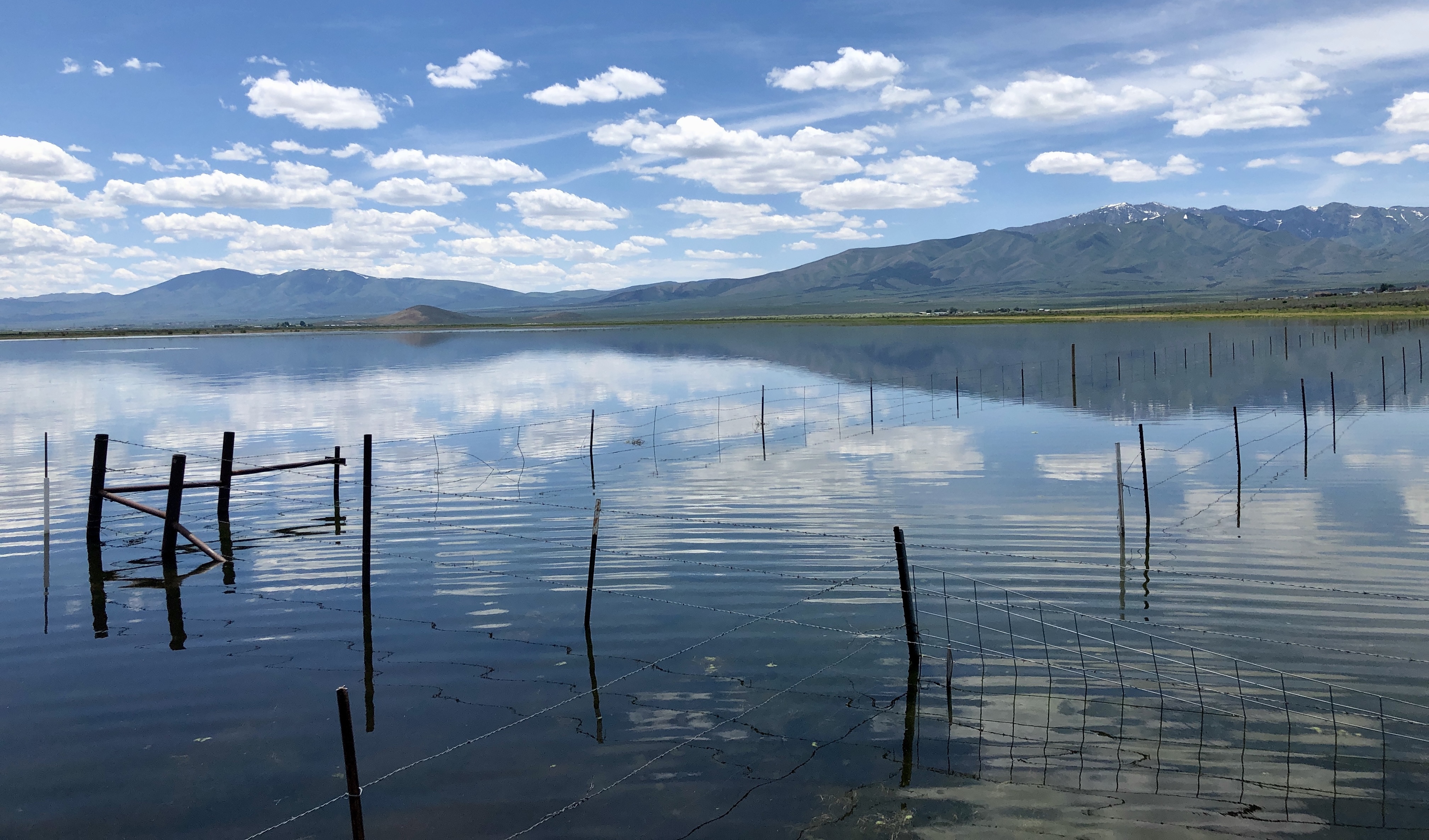
Privately erected barbed-wire fencing partially submerged in Rush Lake, 2024.
The Rush Lake wetland basin remains, as it has for millenniums, a natural watershed and spring-water runoff reserve. Today, Rush Lake is located primarily on, and publicly accessible by, public lands managed by the Bureau of Land Management (BLM). The Rush Lake basin is designated as a wetland area by the Utah Geological Survey (UGS), and the water thereon meets the statutory definition of “waters declared property of the public” or public water, as defined in Utah Code §73-1-1 and §73-29-102(8)(a). The public water of Rush Lake is under the jurisdiction and stewardship of the Utah Division of Natural Resources (DNR).
The ongoing drought affecting the Western U.S. has significantly contributed to the decline of water in Rush Lake. However, the playa is frequently refilled by snowmelt runoff from surrounding mountain ranges and normal, non-drought water tables — especially during high-yield precipitation years, such as 2023 and 2024 for example, which has demonstrated Rush Lake’s propensity to naturally exist despite recent drought conditions.
Unfortunately, during recent dry years, private landowners adjacent to the public BLM land and within the public waterway of Rush Lake have created an articulable public safety liability by erecting multiple barbed-wire fences across the entirety of the Rush Lake wetland basin in violation of (at least) Utah State Law §73-29-207(2)(b), which states "fences across public water shall be constructed in a manner that does not create an unreasonably dangerous condition to the public lawfully using the public water”. Per the Utah Supreme Court, this applies “irrespective of the ownership of the bed”, or in other words, even if the fences are constructed along private property lines.
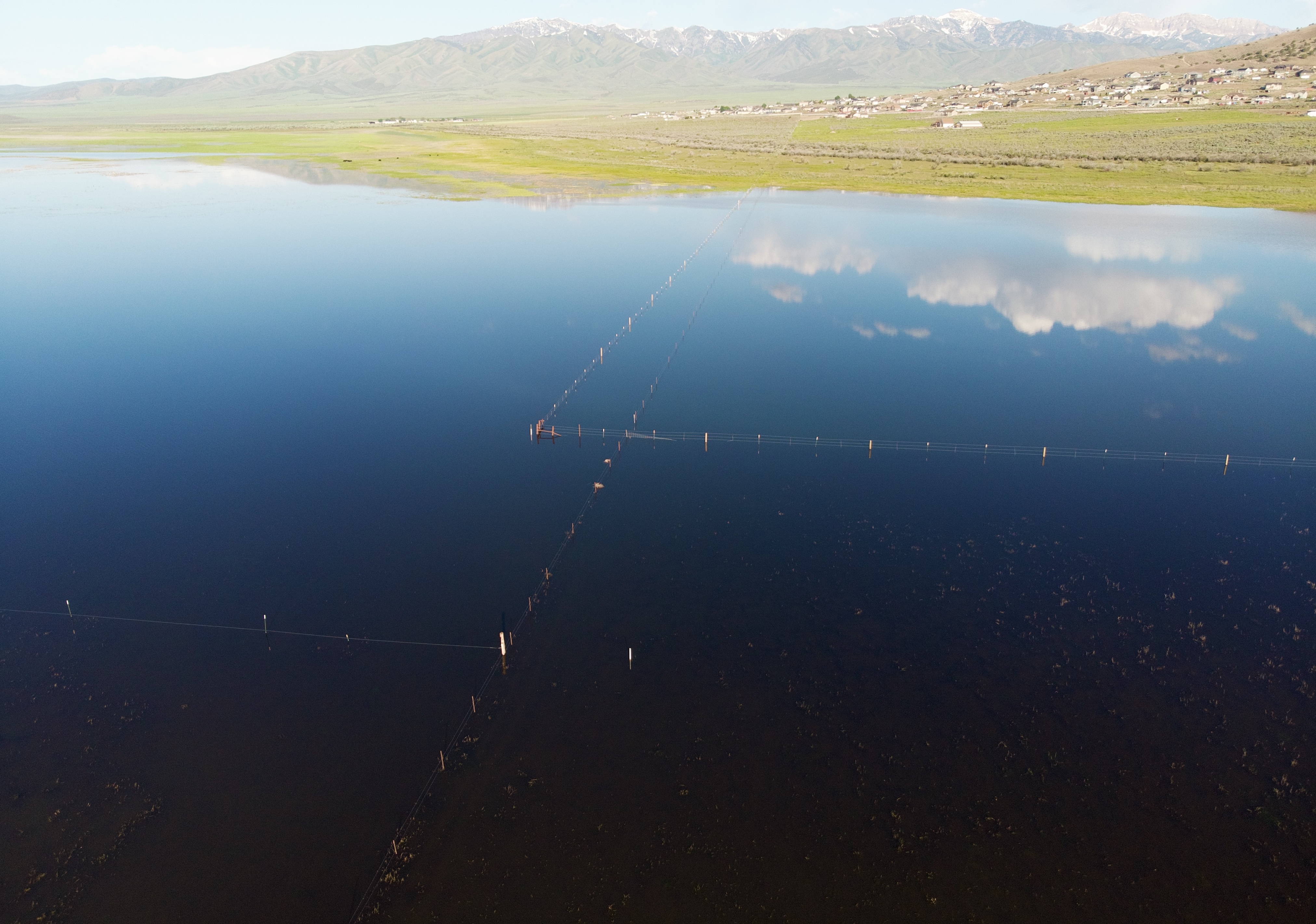
Privately erected barbed-wire fencing spanning multiple directions across Rush Lake, 2024.
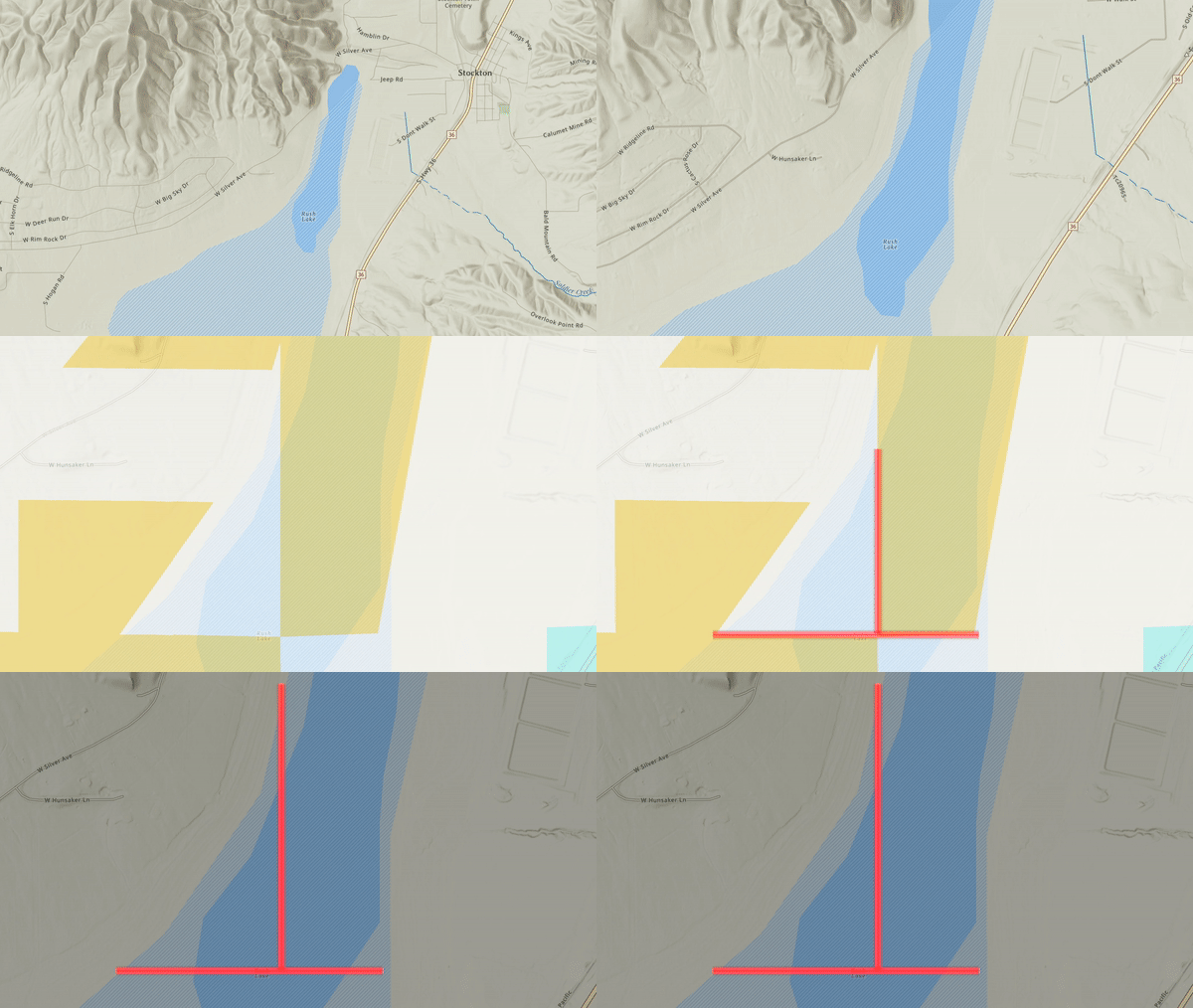
Rush Lake is shown in blue, BLM land is highlighted in yellow, and privately erected barbed-wire fencing spanning the entire lake is drawn in red.
The specific interests and rights of any involved private landowners are here acknowledged and even supported, to the extent they do not illegally interfere with the general public’s statutory water access rights and broad historic usage of Rush Lake, which was well-established in accordance with Utah Code §73-29-203 regarding the “establishment of public recreational access”, long before residential development and unlawful fencing installation in the area.
On May 18, 2023, the Utah Supreme Court upheld Utah's Public Waters Access Act. In its full-text opinion, the Court recognized an “easement over the water” giving the public the “right to float leisure craft, hunt, fish, and participate in any lawful activity when utilizing” a lawfully accessible body of public water. Again, the court held that this right exists “irrespective of the ownership of the bed and navigability of the water.”
The signers of this petition and the Utah Windrider’s Association assert that, as prohibited by at least Utah State Law §73-29-207(2)(b), these privately erected barbed-wire fences were unlawfully erected and pose an articulable, unreasonably dangerous hazard of serious bodily injury, or even death, to the general public lawfully using the legally accessible public water of Rush Lake, in which the barbed-wire fences are partially submerged, and could become fully submerged should drought conditions continue trending to subside in this and coming years.
Furthermore, in violation of subsection 73-29-207(3)(a)(b) and the recent Utah Supreme Court decision, these privately erected fences entirely obstruct the public’s safe portage and access to navigate “the easement over the water”, or the whole of Rush Lake’s public water.
Because the public water of Rush Lake is legally accessible entirety via public lands, no request is being made to cross or utilize any surrounding private property or private beds beneath Rush Lake to access its public water, except as is provided by Utah Law 73-29-202(2)(a) for the public to “inccidently touch private property as required for safe passage and continued movement” across the otherwise legally accessed public water.
Rush Lake Tomorrow (The Solution)
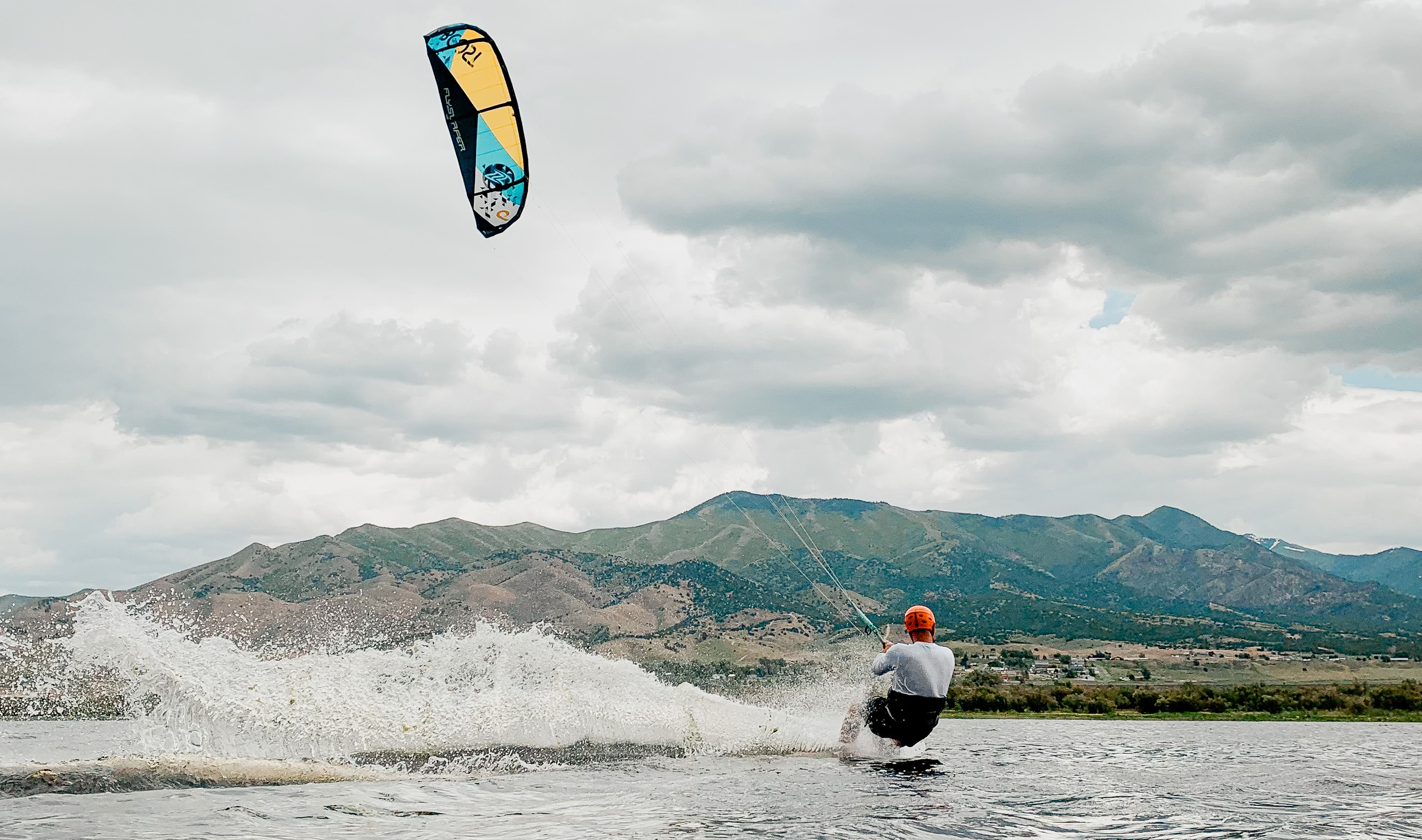
A kiteboarder navigating significantly limited portions of Rush Lake’s public water, 2023.
natural watershed and spring-water runoff reserve
The Rush Lake region is a naturally occurring, prehistoric basin for watershed and spring-water collection that, even today, still yields enough water to sufficiently fill the Rush Lake basin for public use, including swimming, wind sports, paddle boarding, kayaking, and more.
The signers of this petition and the Utah Windrider’s Association respectfully urge the BLM, DNR, and other state/federal governmental agencies having jurisdiction and stewardship over Rush Lake, to restore and conserve the natural Rush Lake Basin (in accordance with applicable state/federal laws) by enforcing the removal of unlawful, dangerous barbed-wire fencing privately erected entirely across Rush Lake’s legally accessible public water body — at least during normal, non-drought precipitation years, such as now, when the public's statutory right to safe use, portage and access thereon is being dangerously and unlawfully impeded.
Thank you for taking a moment to sign this petition to restore and conserve Rush Lake for SAFE public use!
If you have any additional information regarding the historical recreational use of Rush Lake, or you would like to become more involved in this initiative, please complete this short survey.

402
The Issue
Why You Should Care
A boater and windsurfers recreating on Rush Lake, circa 1980’s.
Were it not for a relentless drought recently plaguing the whole of the Western United States, Rush Lake would continue to be the thriving year-round public body of water it once was not so long ago, enjoyed by many.
However, according to the USDA Drought Monitor, as of April 4, 2023, drought conditions have improved across much of the Western U.S. compared to 2021 and 2022, with the Utah Division of Water Resources reporting a record-setting 2023 water year reaching 216% of normal snow water equivalent (SWE) and 2024’s SWE value already above normal, with projected precipitation increases still yet to come.
Rush Lake will periodically return in the spring as it has for the last two consecutive years, sometimes lasting well into the summer, or even year-round, depending on the amount of winter precipitation received in the region.
This is a welcome sight to local residents and nonresidents alike who utilize Rush Lake for a wide variety of activities whenever it returns.
The scope of this petition is not to address the ongoing threat of drought, though its adverse impact on Rush Lake, like many other water resources in the Western U.S., is here acknowledged.
Rather, this petition is primarily concerned with a secondary ongoing threat considerably threatening the general public’s access to safe, lawful use of Rush Lake in normal, non-drought conditions.
In recent dry years, barbed-wire fencing spanning multiple directions across Rush Lake’s wetland basin have been privately erected, posing an unreasonably dangerous hazard to Rush Lake users in violation of (at least) Utah’s Public Waters Access Act and Utah State Law.
Rush Lake History (The Precedent)
A large crowd gathers to enjoy a sunny day at Rush Lake, circa 1986.
Rush Lake is a shallow, naturally occurring brackish lake in Tooele County, Utah, USA. It is a remnant of Lake Bonneville, an ancient postglacial inland sea that covered much of the Western U.S. during the ice ages.
In more recent history, The Utah Division of Water Resources reported natural rivers and bodies of water such as Rush Lake are scarce water assets in Utah’s West Desert Basin. Consequently, it is in the best interest of the general public to restore and conserve Rush Lake’s natural beauty and the safe, lawful use of its unique resources.
In accordance with Utah Code §73-29-203 regarding the “establishment of public recreational access”, Rush Lake has demonstrated a rich heritage of public recreational usage over many years.
Rush Lake was historically enjoyed by the general public for a wide variety of recreational activities, including boating, swimming, fishing, wind sports, paddle boarding, kayaking, and more — many of which are still enjoyed today. Some Rush Lake usages, such as for wind sports, have been continuously engaged in for substantially longer than 10 consecutive years, and long before the unlawful fencing was ever erected.
A slalom water skier makes a sunset turn on Rush Lake, circa 1985.
Rush Lake Today (The Problem)
Privately erected barbed-wire fencing partially submerged in Rush Lake, 2024.
The Rush Lake wetland basin remains, as it has for millenniums, a natural watershed and spring-water runoff reserve. Today, Rush Lake is located primarily on, and publicly accessible by, public lands managed by the Bureau of Land Management (BLM). The Rush Lake basin is designated as a wetland area by the Utah Geological Survey (UGS), and the water thereon meets the statutory definition of “waters declared property of the public” or public water, as defined in Utah Code §73-1-1 and §73-29-102(8)(a). The public water of Rush Lake is under the jurisdiction and stewardship of the Utah Division of Natural Resources (DNR).
The ongoing drought affecting the Western U.S. has significantly contributed to the decline of water in Rush Lake. However, the playa is frequently refilled by snowmelt runoff from surrounding mountain ranges and normal, non-drought water tables — especially during high-yield precipitation years, such as 2023 and 2024 for example, which has demonstrated Rush Lake’s propensity to naturally exist despite recent drought conditions.
Unfortunately, during recent dry years, private landowners adjacent to the public BLM land and within the public waterway of Rush Lake have created an articulable public safety liability by erecting multiple barbed-wire fences across the entirety of the Rush Lake wetland basin in violation of (at least) Utah State Law §73-29-207(2)(b), which states "fences across public water shall be constructed in a manner that does not create an unreasonably dangerous condition to the public lawfully using the public water”. Per the Utah Supreme Court, this applies “irrespective of the ownership of the bed”, or in other words, even if the fences are constructed along private property lines.
Privately erected barbed-wire fencing spanning multiple directions across Rush Lake, 2024.
Rush Lake is shown in blue, BLM land is highlighted in yellow, and privately erected barbed-wire fencing spanning the entire lake is drawn in red.
The specific interests and rights of any involved private landowners are here acknowledged and even supported, to the extent they do not illegally interfere with the general public’s statutory water access rights and broad historic usage of Rush Lake, which was well-established in accordance with Utah Code §73-29-203 regarding the “establishment of public recreational access”, long before residential development and unlawful fencing installation in the area.
On May 18, 2023, the Utah Supreme Court upheld Utah's Public Waters Access Act. In its full-text opinion, the Court recognized an “easement over the water” giving the public the “right to float leisure craft, hunt, fish, and participate in any lawful activity when utilizing” a lawfully accessible body of public water. Again, the court held that this right exists “irrespective of the ownership of the bed and navigability of the water.”
The signers of this petition and the Utah Windrider’s Association assert that, as prohibited by at least Utah State Law §73-29-207(2)(b), these privately erected barbed-wire fences were unlawfully erected and pose an articulable, unreasonably dangerous hazard of serious bodily injury, or even death, to the general public lawfully using the legally accessible public water of Rush Lake, in which the barbed-wire fences are partially submerged, and could become fully submerged should drought conditions continue trending to subside in this and coming years.
Furthermore, in violation of subsection 73-29-207(3)(a)(b) and the recent Utah Supreme Court decision, these privately erected fences entirely obstruct the public’s safe portage and access to navigate “the easement over the water”, or the whole of Rush Lake’s public water.
Because the public water of Rush Lake is legally accessible entirety via public lands, no request is being made to cross or utilize any surrounding private property or private beds beneath Rush Lake to access its public water, except as is provided by Utah Law 73-29-202(2)(a) for the public to “inccidently touch private property as required for safe passage and continued movement” across the otherwise legally accessed public water.
Rush Lake Tomorrow (The Solution)
A kiteboarder navigating significantly limited portions of Rush Lake’s public water, 2023.
natural watershed and spring-water runoff reserve
The Rush Lake region is a naturally occurring, prehistoric basin for watershed and spring-water collection that, even today, still yields enough water to sufficiently fill the Rush Lake basin for public use, including swimming, wind sports, paddle boarding, kayaking, and more.
The signers of this petition and the Utah Windrider’s Association respectfully urge the BLM, DNR, and other state/federal governmental agencies having jurisdiction and stewardship over Rush Lake, to restore and conserve the natural Rush Lake Basin (in accordance with applicable state/federal laws) by enforcing the removal of unlawful, dangerous barbed-wire fencing privately erected entirely across Rush Lake’s legally accessible public water body — at least during normal, non-drought precipitation years, such as now, when the public's statutory right to safe use, portage and access thereon is being dangerously and unlawfully impeded.
Thank you for taking a moment to sign this petition to restore and conserve Rush Lake for SAFE public use!
If you have any additional information regarding the historical recreational use of Rush Lake, or you would like to become more involved in this initiative, please complete this short survey.
The Decision Makers
Supporter Voices
Petition Updates
Share this petition
Petition created on March 14, 2024