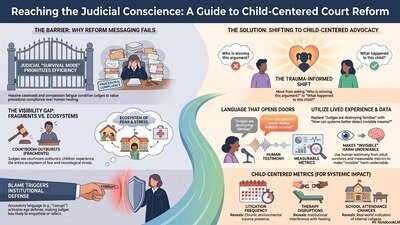

Require Family Courts to Standardize Documentation and Prioritize Children's Needs
The Issue
I've spent nine years inside a system that was "supposed" to protect my son.
In that time, our cases have been reassigned to over twenty different judges.
I've documented dozens of procedural irregularities.
I've spent thousands of dollars, not on lawyers arguing for my child's safety, but simply trying to keep an accurate record of what the court itself was doing.
After all of that, my son is not safer.
The record is not clearer.
And no one in the system was ever required to explain why.
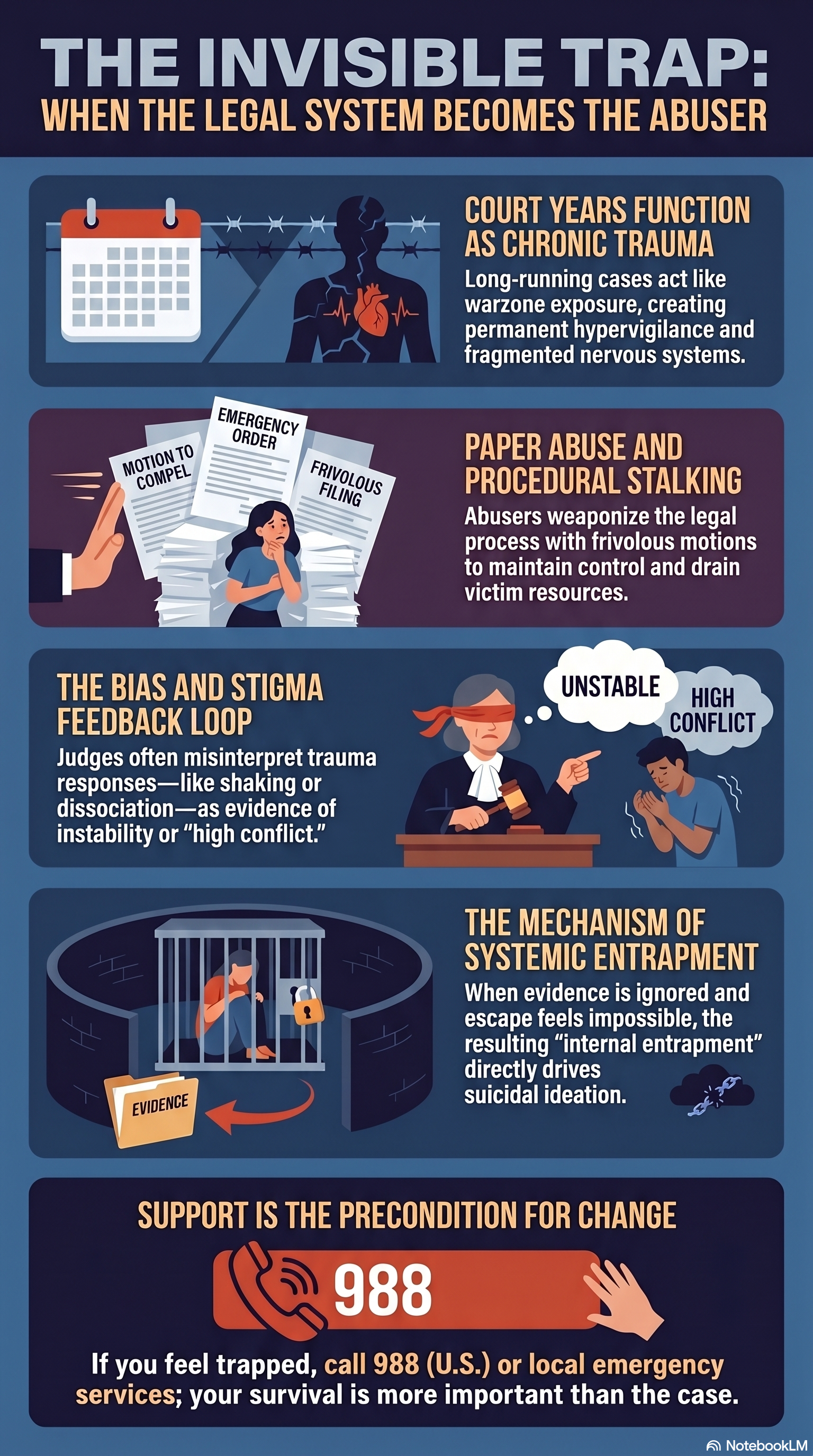
I am not the only parent with this story.
Across Missouri and across the country, families enter family court expecting a system built around their children.
What they find is a system with no standardized documentation requirements, no obligation to explain procedural decisions, and no way to measure whether a single child is better off after court involvement.
Judges change without explanation.
Records contradict each other.
Parents, attorneys, therapists, and advocates are all working from different versions of the facts.
And the person with the most at stake — the child — has no voice and no metric that tracks whether the system is actually working for them.
This is not a partisan issue.
It is a structural one.
We are asking policymakers and court administrators to require three things:
1. Standardized documentation.
Every family court proceeding should follow uniform documentation standards: incident logs, evidence indexes, and timelines that every professional in a case can access and verify.
Right now, a parent's record, an attorney's record, and a judge's record of the same hearing can tell three different stories.
When records are inconsistent, children fall through the cracks.
2. Procedural transparency.
When a judge is reassigned, a case is transferred, or a hearing is continued, families deserve a documented explanation.
Not a form letter.
A reason!
Twenty judge changes in one family's case should never happen in silence.
The people inside the system: attorneys, guardians ad litem, mediators, therapists know this problem exists.
Many of them are frustrated by it, too.
Transparency doesn't threaten good judges. It protects them.
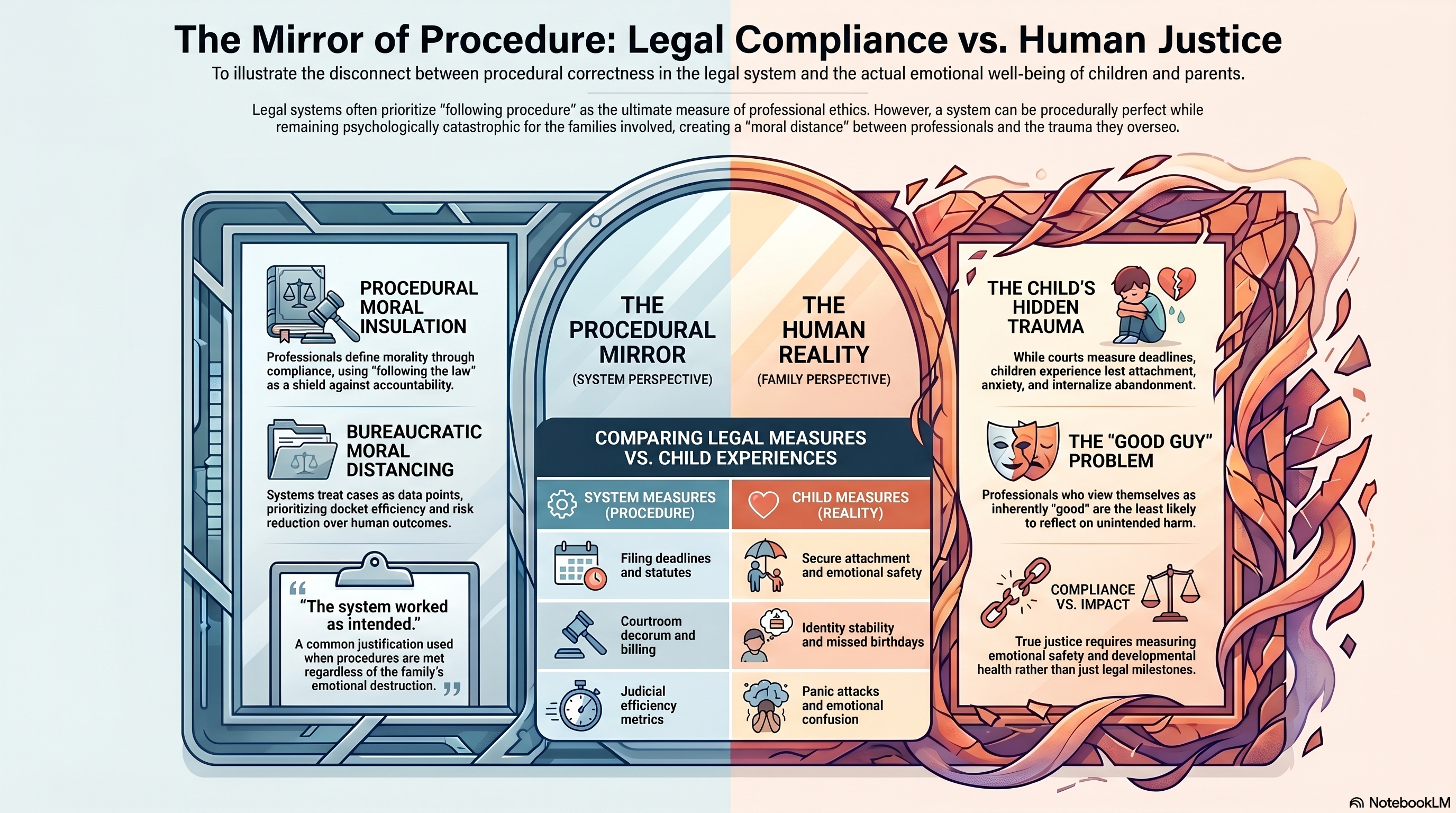
In this deeply emotional and thought-provoking episode, we explore one of the most disturbing contradictions inside modern family court systems:
How can attorneys and judges separate children from loving, fit parents for years… while still believing they are the “good guys” simply because they followed procedure?
This episode examines the dangerous gap between procedural compliance and true child-centered justice.
https://open.spotify.com/episode/39R5GVER9QPKTXs8kVGNSz?si=Xe94TGaHRXCMJbKMpar6GA
3. Child-centered accountability metrics.
Courts should be required to track and report outcomes that actually matter: stability of placement, compliance with parenting plans, timeliness of proceedings, and recurrence of safety concerns.
We measure outcomes in hospitals.
We measure outcomes in schools.
Family courts, the institutions trusted with deciding where children sleep at night, measure almost nothing.
If we don't measure it, we can't fix it.
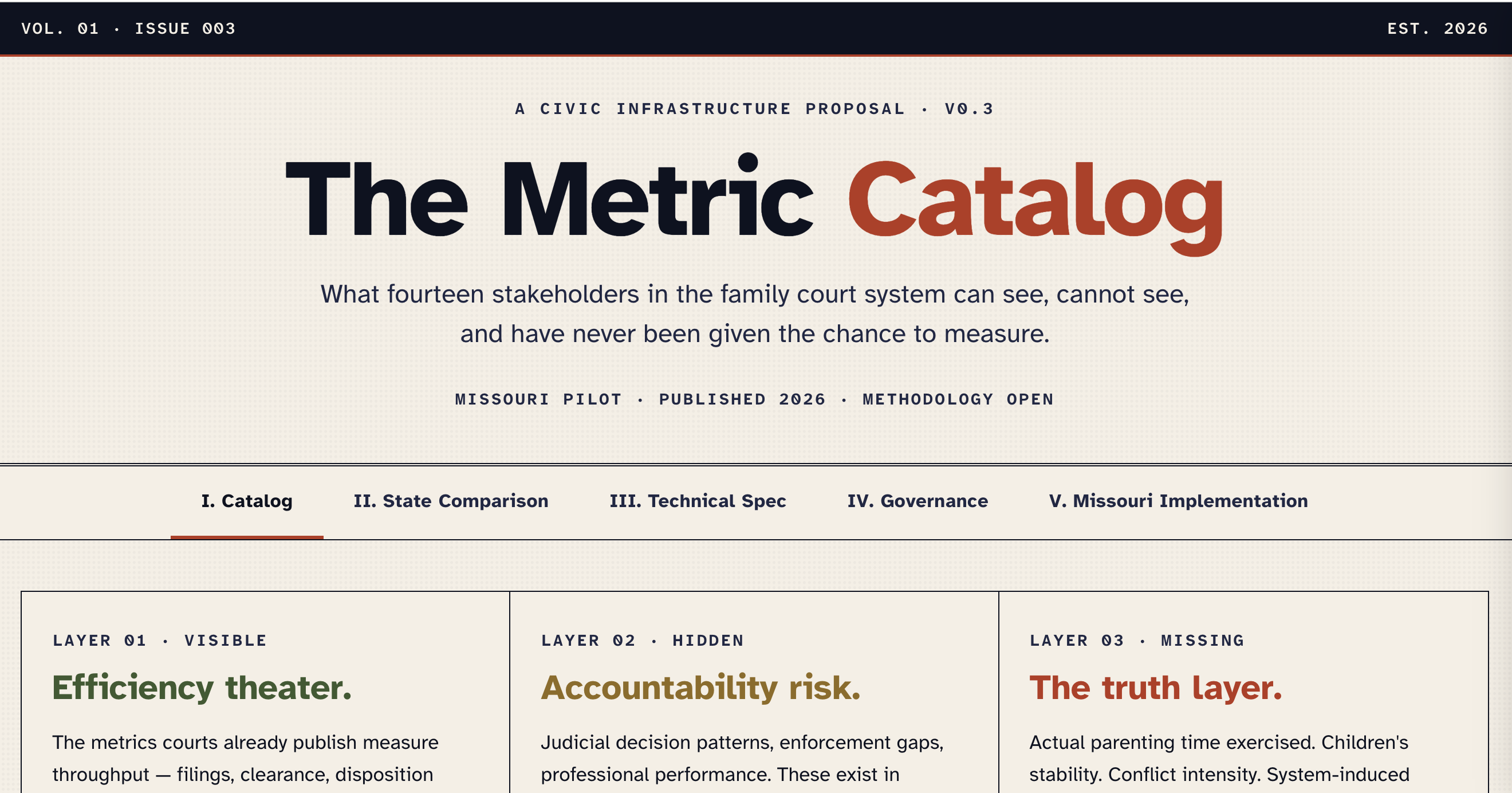
The Metric Catalog has the metrics that matter to children, so you know where to start.
These are not radical demands.
They are the same standards of documentation, transparency, and accountability we expect from every other institution trusted with children's lives.
Family courts should be held to the same bar.
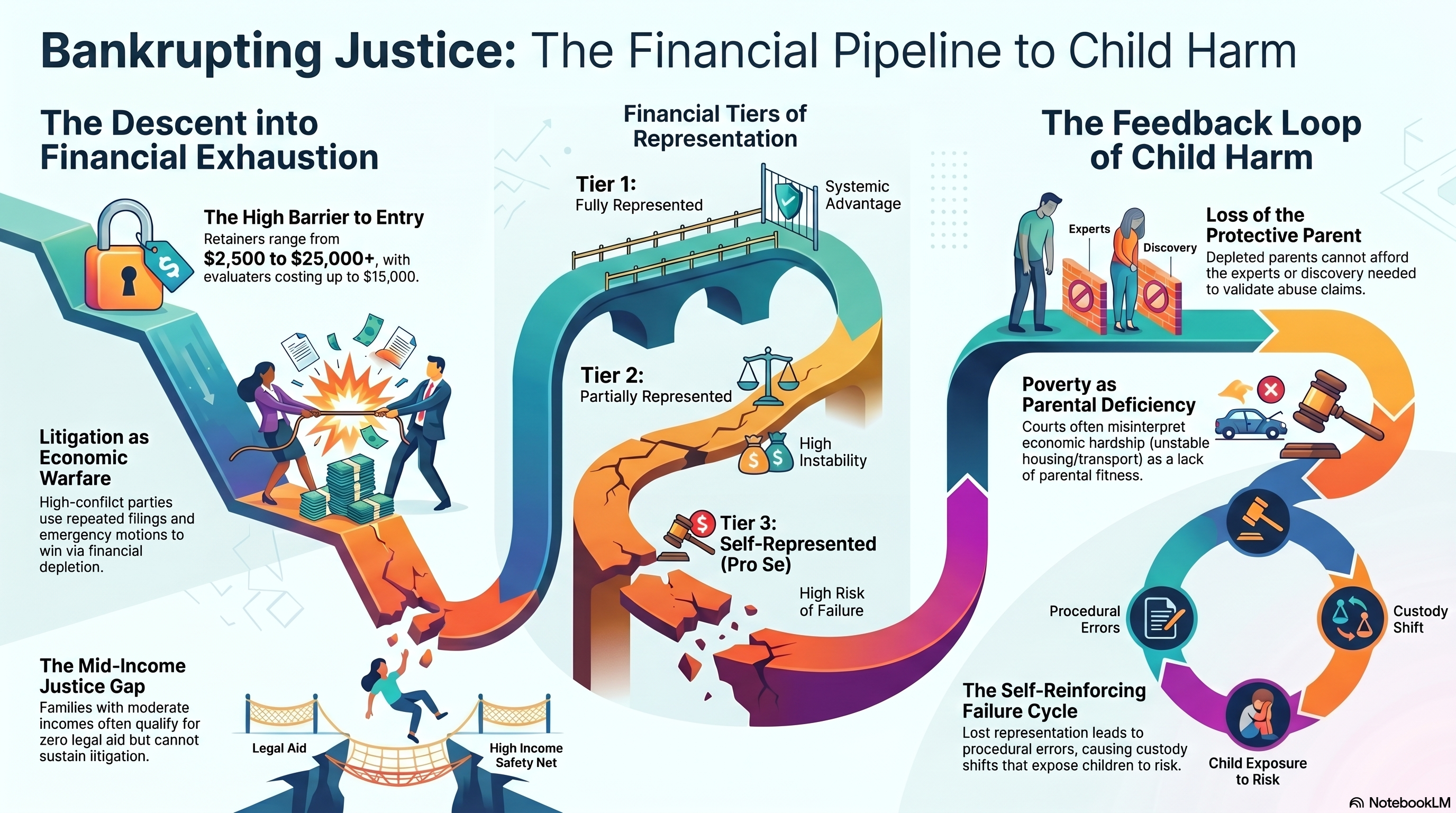
Every signature on this petition sends a message: the people who depend on family courts.
These parents, children, and the professionals who serve them are paying attention, and they expect better.
Sign if you believe children deserve a system that works as hard for them as their families do.

2
The Issue
I've spent nine years inside a system that was "supposed" to protect my son.
In that time, our cases have been reassigned to over twenty different judges.
I've documented dozens of procedural irregularities.
I've spent thousands of dollars, not on lawyers arguing for my child's safety, but simply trying to keep an accurate record of what the court itself was doing.
After all of that, my son is not safer.
The record is not clearer.
And no one in the system was ever required to explain why.
I am not the only parent with this story.
Across Missouri and across the country, families enter family court expecting a system built around their children.
What they find is a system with no standardized documentation requirements, no obligation to explain procedural decisions, and no way to measure whether a single child is better off after court involvement.
Judges change without explanation.
Records contradict each other.
Parents, attorneys, therapists, and advocates are all working from different versions of the facts.
And the person with the most at stake — the child — has no voice and no metric that tracks whether the system is actually working for them.
This is not a partisan issue.
It is a structural one.
We are asking policymakers and court administrators to require three things:
1. Standardized documentation.
Every family court proceeding should follow uniform documentation standards: incident logs, evidence indexes, and timelines that every professional in a case can access and verify.
Right now, a parent's record, an attorney's record, and a judge's record of the same hearing can tell three different stories.
When records are inconsistent, children fall through the cracks.
2. Procedural transparency.
When a judge is reassigned, a case is transferred, or a hearing is continued, families deserve a documented explanation.
Not a form letter.
A reason!
Twenty judge changes in one family's case should never happen in silence.
The people inside the system: attorneys, guardians ad litem, mediators, therapists know this problem exists.
Many of them are frustrated by it, too.
Transparency doesn't threaten good judges. It protects them.
In this deeply emotional and thought-provoking episode, we explore one of the most disturbing contradictions inside modern family court systems:
How can attorneys and judges separate children from loving, fit parents for years… while still believing they are the “good guys” simply because they followed procedure?
This episode examines the dangerous gap between procedural compliance and true child-centered justice.
https://open.spotify.com/episode/39R5GVER9QPKTXs8kVGNSz?si=Xe94TGaHRXCMJbKMpar6GA
3. Child-centered accountability metrics.
Courts should be required to track and report outcomes that actually matter: stability of placement, compliance with parenting plans, timeliness of proceedings, and recurrence of safety concerns.
We measure outcomes in hospitals.
We measure outcomes in schools.
Family courts, the institutions trusted with deciding where children sleep at night, measure almost nothing.
If we don't measure it, we can't fix it.
The Metric Catalog has the metrics that matter to children, so you know where to start.
These are not radical demands.
They are the same standards of documentation, transparency, and accountability we expect from every other institution trusted with children's lives.
Family courts should be held to the same bar.
Every signature on this petition sends a message: the people who depend on family courts.
These parents, children, and the professionals who serve them are paying attention, and they expect better.
Sign if you believe children deserve a system that works as hard for them as their families do.
The Decision Makers


Supporter Voices
Petition Updates
Share this petition
Petition created on May 19, 2026