
Require a Warrant Before Texas Police Search Flock Camera Data
The Issue
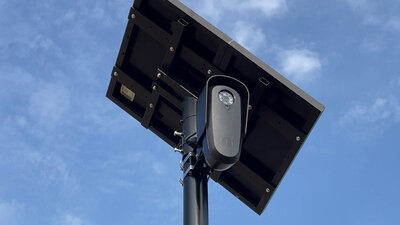
Every time a car passes one of the estimated 13,000 Flock cameras across Texas, its license plate gets logged. Police can then search that database, including records collected by other departments, and map where a vehicle has gone. Right now, officers don’t need a warrant from a judge to do it.
That gap is now before a federal appeals court. In a Dallas-Fort Worth case, police used Flock records to piece together a man’s travels across several suburbs. His lawyers told the 5th U.S. Circuit Court of Appeals that searches like this should require a warrant. During arguments, Chief Judge Jennifer Walker Elrod asked how many cameras it takes before scattered snapshots turn into constant surveillance. The Justice Department said that question belongs to lawmakers.
Texas lawmakers can answer it. State Sen. Lois Kolkhorst has promised a bill in the 2027 session based on the Fourth Amendment, which protects people from unreasonable searches. And in Oklahoma, a federal judge ruled on Oct. 1 that a Flock search broke that protection.
For most Texans, driving isn’t optional. It’s how people get to work, school, church, and the doctor. A trip to the grocery store shouldn’t add to a searchable record of someone’s daily life.
A warrant requirement doesn’t take this tool away from police. Officers could still use plate readers to solve serious crimes, with a judge signing off first, just as courts already require for searching a home or, as the U.S. Supreme Court has affirmed, tracking cell phone location.
The Texas Legislature should pass a law in 2027 that requires a warrant before anyone searches Flock or other license plate reader data, and sets clear limits on how long that data is kept and who can share it.
Sign the petition to tell the Texas Legislature to protect Texans’ Fourth Amendment rights before these cameras are on every corner.

164
The Issue
Every time a car passes one of the estimated 13,000 Flock cameras across Texas, its license plate gets logged. Police can then search that database, including records collected by other departments, and map where a vehicle has gone. Right now, officers don’t need a warrant from a judge to do it.
That gap is now before a federal appeals court. In a Dallas-Fort Worth case, police used Flock records to piece together a man’s travels across several suburbs. His lawyers told the 5th U.S. Circuit Court of Appeals that searches like this should require a warrant. During arguments, Chief Judge Jennifer Walker Elrod asked how many cameras it takes before scattered snapshots turn into constant surveillance. The Justice Department said that question belongs to lawmakers.
Texas lawmakers can answer it. State Sen. Lois Kolkhorst has promised a bill in the 2027 session based on the Fourth Amendment, which protects people from unreasonable searches. And in Oklahoma, a federal judge ruled on Oct. 1 that a Flock search broke that protection.
For most Texans, driving isn’t optional. It’s how people get to work, school, church, and the doctor. A trip to the grocery store shouldn’t add to a searchable record of someone’s daily life.
A warrant requirement doesn’t take this tool away from police. Officers could still use plate readers to solve serious crimes, with a judge signing off first, just as courts already require for searching a home or, as the U.S. Supreme Court has affirmed, tracking cell phone location.
The Texas Legislature should pass a law in 2027 that requires a warrant before anyone searches Flock or other license plate reader data, and sets clear limits on how long that data is kept and who can share it.
Sign the petition to tell the Texas Legislature to protect Texans’ Fourth Amendment rights before these cameras are on every corner.
The Decision Makers

Petition Updates
Share this petition
Petition created on October 19, 2026