

Regulate Event Ticket Resales In Canada
The Issue
Ticket reselling is broken in Canada, and it is long past time for regulation.
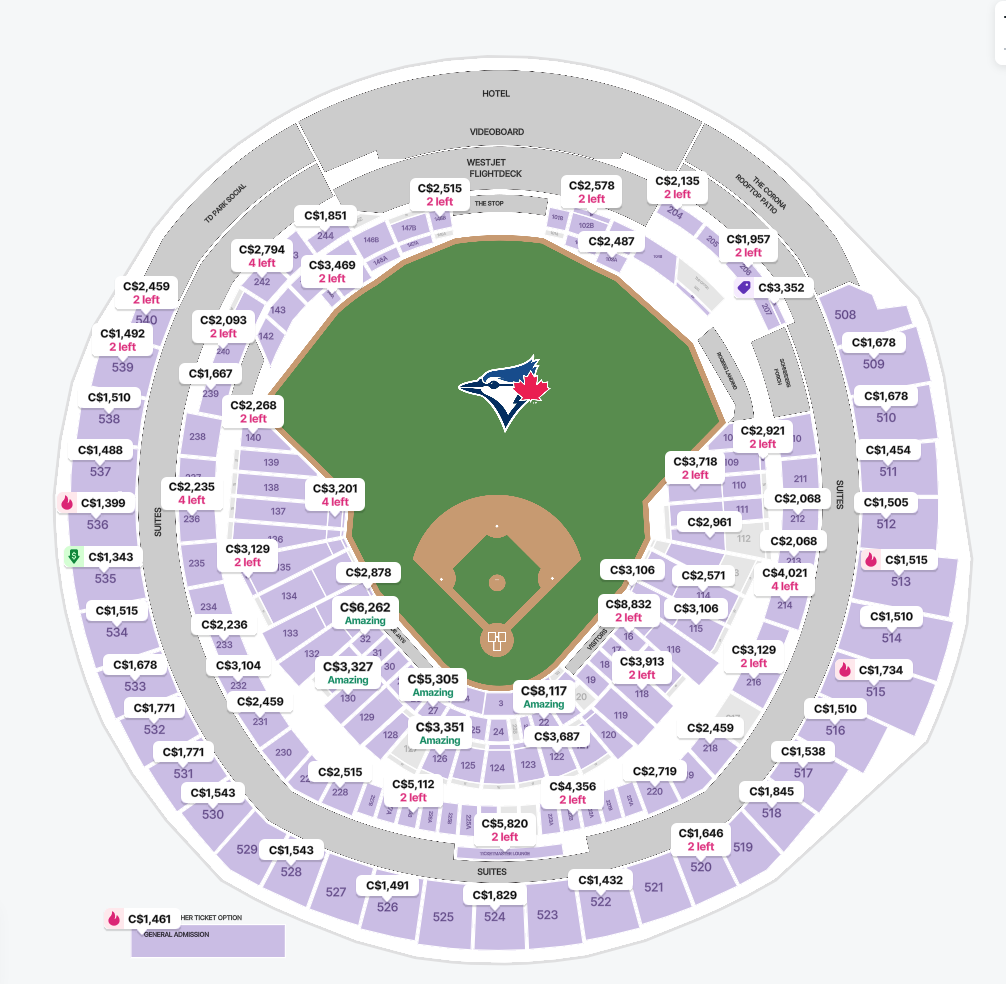
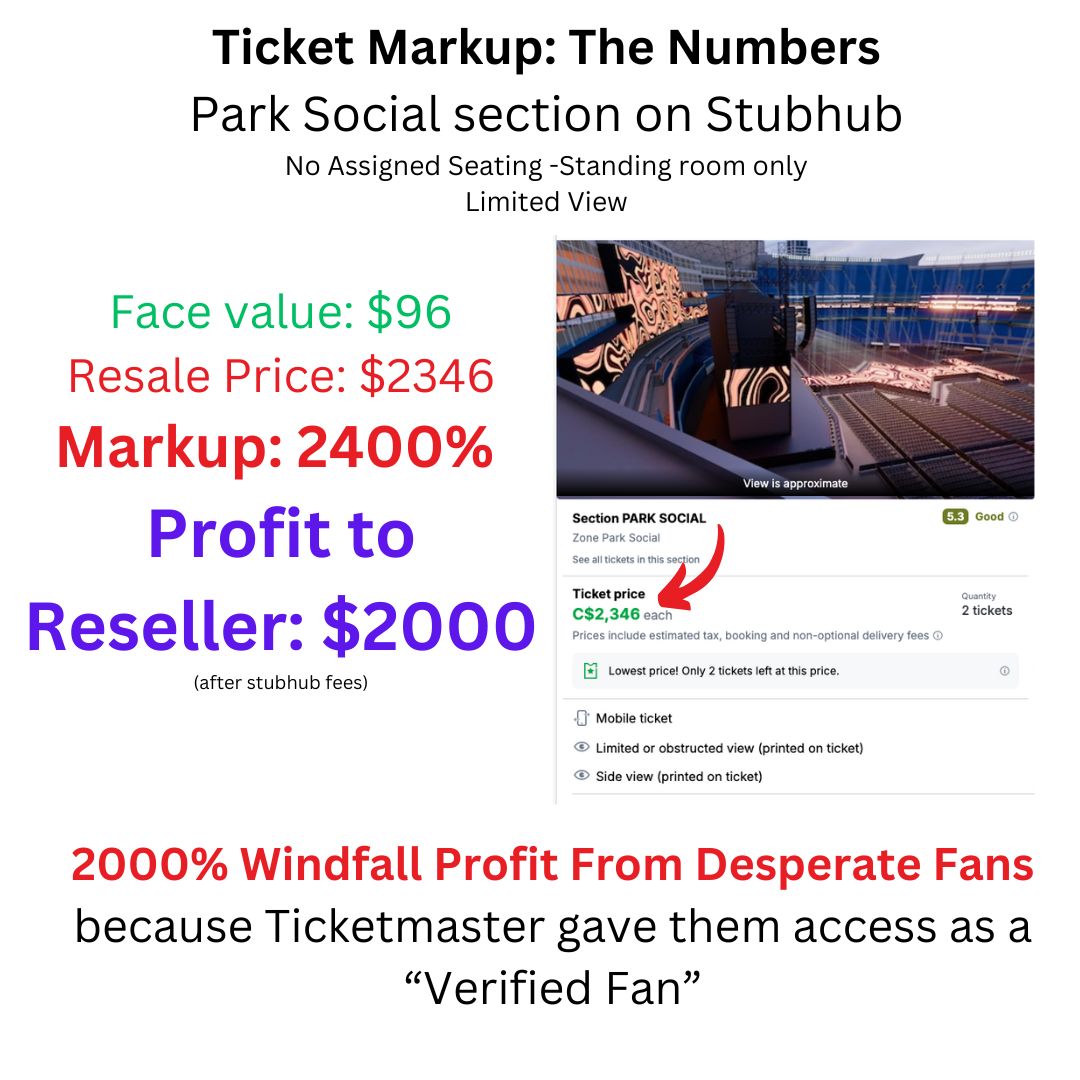
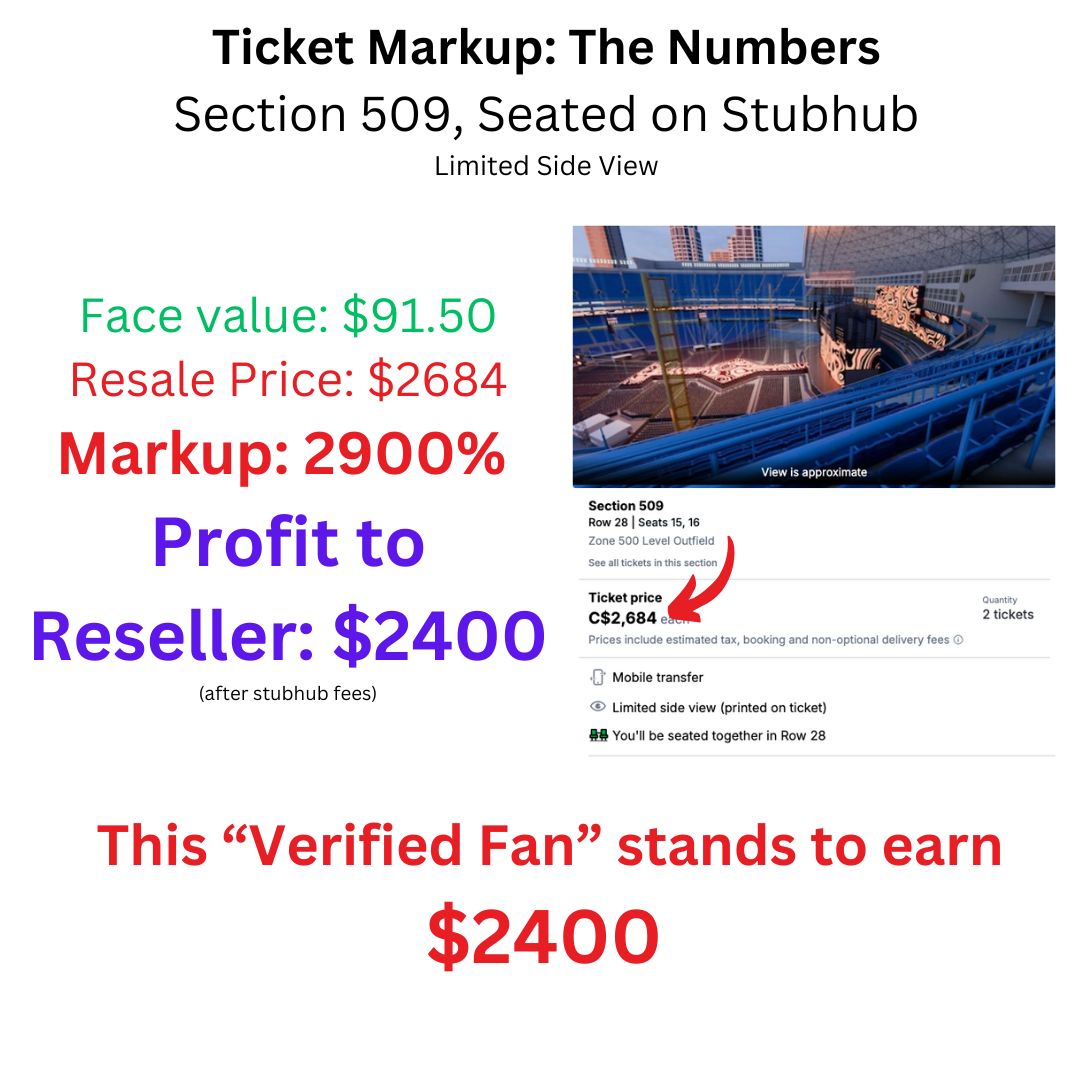
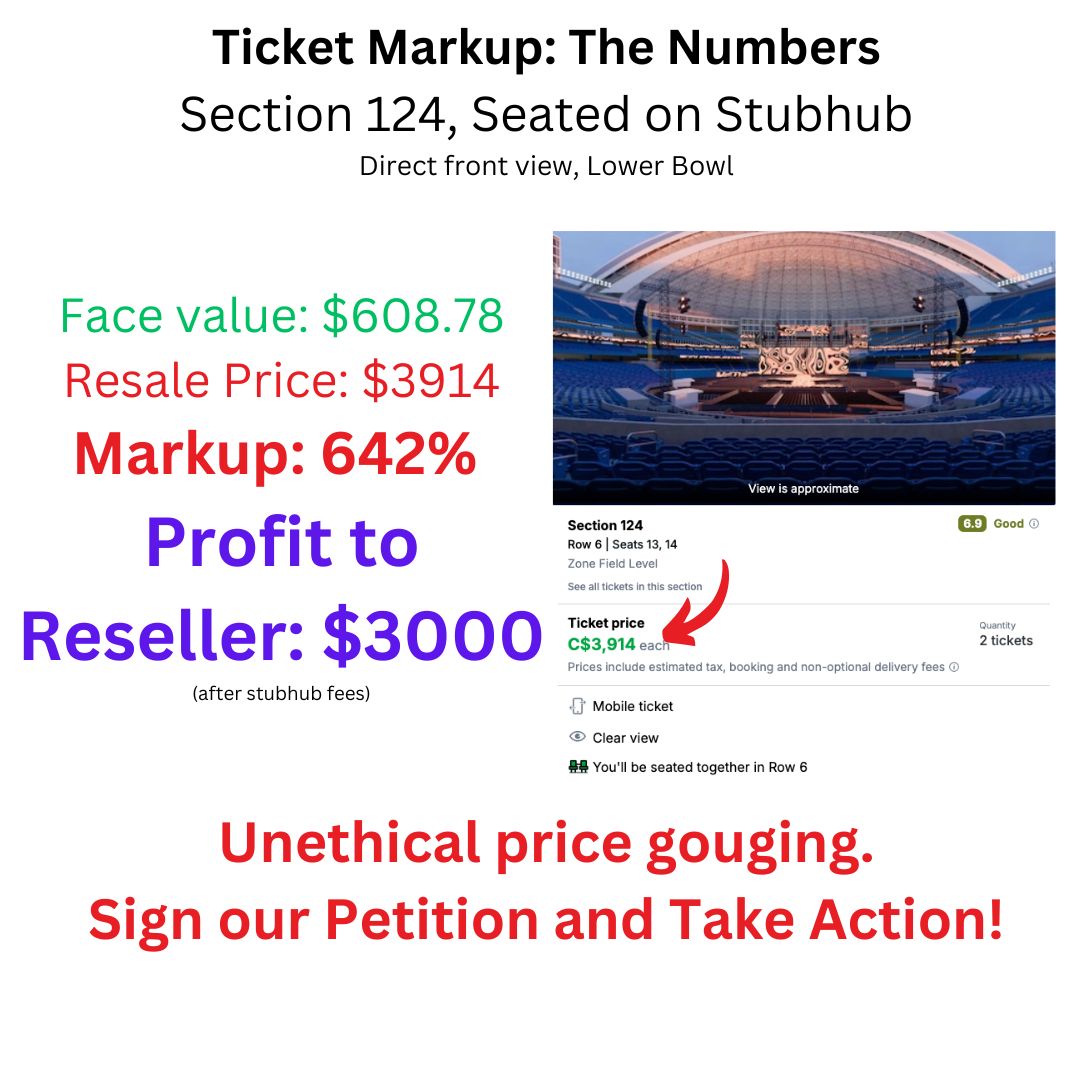
The Taylor Swift eras tour was a global phenomenon, with millions of fans attending 152 dates in stadiums across 5 continents. However, for most Canadians, tickets were inaccessible - largely due to the unregulated and shady resale market.
Now, as the Toronto Blue Jays head to the World Series, it's happening again. Those lucky enough to grab tickets for the home games before they sold out in under 30 minutes are now listing them for resale at 5x face value. But were they lucky, or were they ticket bot purchasers encouraged and permitted by Ticketmaster?
Ticketmaster and other ticket sellers allow and encourage resellers to snap up tickets and re-list them, because they make double their fees on the sale - not only on the price set by the original promoter, but on the inflated price set by the reseller.
In any other context, this is price gouging, and it is illegal in many situations.
This reprehensible and unethical practice not only deprives regular individual access to events. Resellers targeting specific events directly creates scarcity, which in turn manipulates market prices.
Reselling also leads to significant fraud, as vulnerable people desperate to find affordable resale tickets are frequently taken in by scams.
The World Series is not the only major event targeted by resellers. Recent Toronto sales for both Oasis and Coldplay have also had demand inflated by resellers, with regular fans unable to access face value tickets.
But did you know that ticket resales were regulated in Ontario under the previous government? Resales were limited to 50% over the face value.
It was one of the first laws Doug Ford cancelled when he became Premier of Ontario in 2018.
It is time to regulate ticket reselling so that tickets cannot be resold for amounts over the face value. Such a move will help prevent inflated prices that obstruct regular consumers from participating in entertainment events.
We urge the Canadian Federal and Provincial governments to intervene and legislate restrictions on ticket reselling. Restrictions should include:
- Outlawing ticket resale for over face value of tickets, with the provision for a small service fee to cover card fees or exchange rates;
- Demanding transparency from ticket vendors to clarify who can access tickets on their platform;
- Demanding ticket vendors such as LiveNation, whose market cap currently stands at $30 Billion, invest directly in anti-fraud and anti-bot measures to ensure tickets end up in the hands of fans, not on dark-market resale sites.
Protection laws will eliminate artificial demand, ensure fairer distribution and pricing of tickets, protect consumers from fraud, and benefit regular people who simply wish to see their favourite artists perform.
Let's put an end to this systematic exploitation. Sign this petition and join us in standing against overpriced ticket reselling.
Taylor Swift Markup:

19,804
The Issue
Ticket reselling is broken in Canada, and it is long past time for regulation.
The Taylor Swift eras tour was a global phenomenon, with millions of fans attending 152 dates in stadiums across 5 continents. However, for most Canadians, tickets were inaccessible - largely due to the unregulated and shady resale market.
Now, as the Toronto Blue Jays head to the World Series, it's happening again. Those lucky enough to grab tickets for the home games before they sold out in under 30 minutes are now listing them for resale at 5x face value. But were they lucky, or were they ticket bot purchasers encouraged and permitted by Ticketmaster?
Ticketmaster and other ticket sellers allow and encourage resellers to snap up tickets and re-list them, because they make double their fees on the sale - not only on the price set by the original promoter, but on the inflated price set by the reseller.
In any other context, this is price gouging, and it is illegal in many situations.
This reprehensible and unethical practice not only deprives regular individual access to events. Resellers targeting specific events directly creates scarcity, which in turn manipulates market prices.
Reselling also leads to significant fraud, as vulnerable people desperate to find affordable resale tickets are frequently taken in by scams.
The World Series is not the only major event targeted by resellers. Recent Toronto sales for both Oasis and Coldplay have also had demand inflated by resellers, with regular fans unable to access face value tickets.
But did you know that ticket resales were regulated in Ontario under the previous government? Resales were limited to 50% over the face value.
It was one of the first laws Doug Ford cancelled when he became Premier of Ontario in 2018.
It is time to regulate ticket reselling so that tickets cannot be resold for amounts over the face value. Such a move will help prevent inflated prices that obstruct regular consumers from participating in entertainment events.
We urge the Canadian Federal and Provincial governments to intervene and legislate restrictions on ticket reselling. Restrictions should include:
- Outlawing ticket resale for over face value of tickets, with the provision for a small service fee to cover card fees or exchange rates;
- Demanding transparency from ticket vendors to clarify who can access tickets on their platform;
- Demanding ticket vendors such as LiveNation, whose market cap currently stands at $30 Billion, invest directly in anti-fraud and anti-bot measures to ensure tickets end up in the hands of fans, not on dark-market resale sites.
Protection laws will eliminate artificial demand, ensure fairer distribution and pricing of tickets, protect consumers from fraud, and benefit regular people who simply wish to see their favourite artists perform.
Let's put an end to this systematic exploitation. Sign this petition and join us in standing against overpriced ticket reselling.
Taylor Swift Markup:
The Decision Makers
Supporter Voices
Petition Updates
Share this petition
Petition created on November 19, 2024