

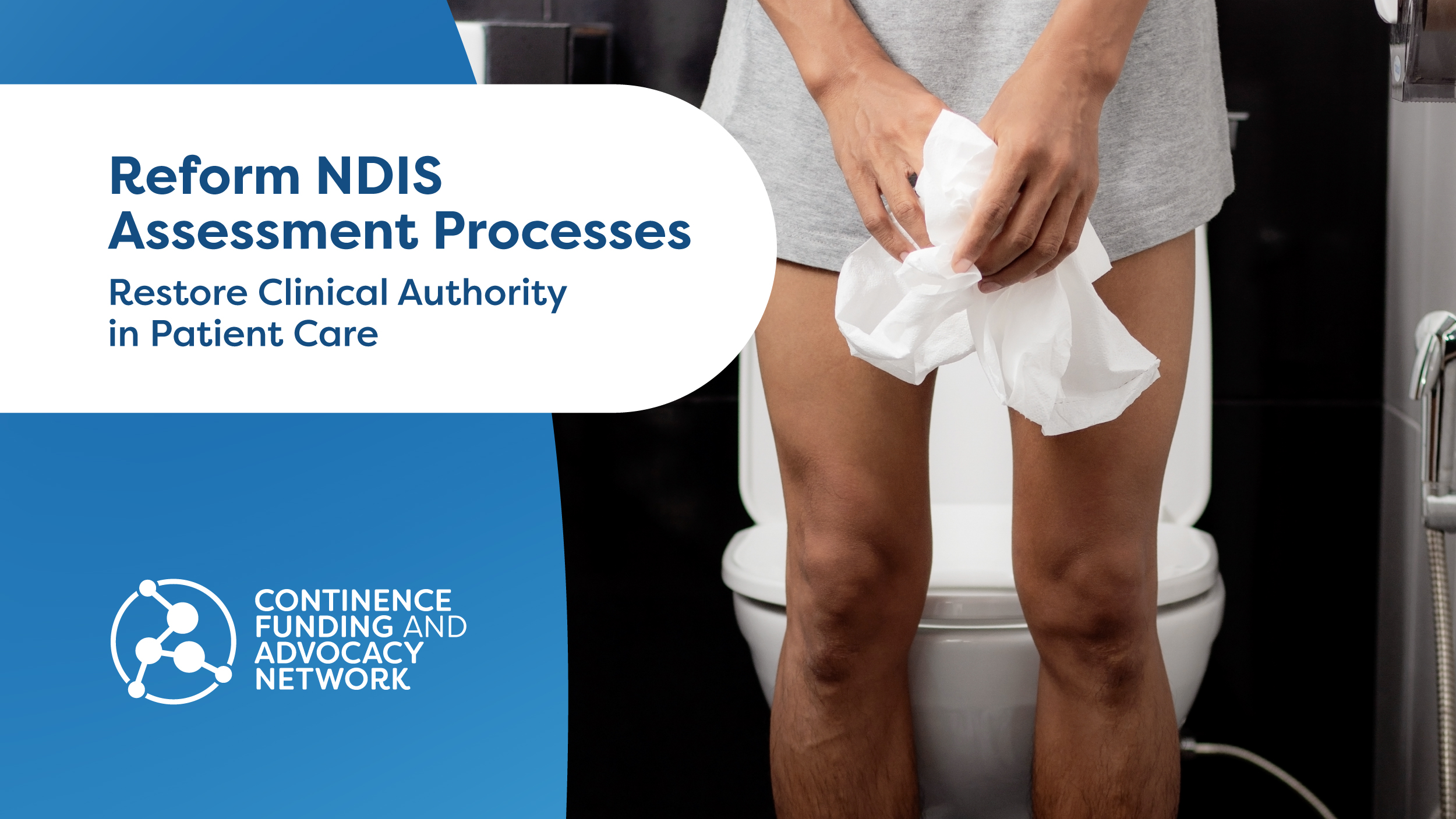
Reform NDIS Assessment Processes - Restore Clinical Authority in Patient Care
The issue
We are calling for urgent reform of NDIS assessment and decision-making processes so that qualified continence clinicians, not non-clinical NDIS assessors make decisions about clinically prescribed product solutions for participants. These include, but are not limited to, intermittent catheters, transanal irrigation systems, aperients, barrier creams, and other clinically prescribed treatments.
“As someone with a neurogenic bladder, catheterisation is not optional; it is a medically necessary part of managing my condition. Being funded for only four catheters per day, after previously being funded for seven per day based on clinical recommendations, meant I was expected to catheterise less frequently than was considered necessary for my health and safety.
This reduction created significant health risks. Less frequent catheterisation increased the likelihood of bladder overfilling, leakage, and wetting episodes, which in turn increased my risk of infection and other complications.”- NDIS participant (2013-current)
Background
The National Disability Insurance Scheme (NDIS) was established to provide appropriate, person-centred support for individuals living with disability. The NDIS supports innovation to improve participant outcomes, promote independence, and ensure sustainability. However, increasing reliance on non-clinical NDIS assessors to review, override, or deny clinically prescribed product solutions is undermining the safe and effective adoption of innovative continence product solutions.
This practice is creating significant barriers to access, delaying essential services, and compromising the quality and safety of participant care, while also driving up avoidable costs across the NDIS.
An initial continence assessment can take up to 10 hours or more of specialised clinical continence expertise. It includes evaluating theparticipant’s medical condition and disability, bladder and bowel history, continence challenges, impact on daily life, current continence products and recommending appropriate clinically prescribed products or equipment.
When these expert decisions are overridden or rejected, that time is not just wasted, it is compounded. Clinicians are then forced to spend additional hours writing justification letters to defend their own expertise.
This is more than inefficiency, it is a system failure – it diverts scarce clinical resources away from patients, delays care and undermines the very outcomes the NDIS is designed to deliver.
Key Concerns
- Clinical override by non-experts
Decisions made by trained healthcare professionals are being questioned or overturned by NDIS assessors without equivalent clinical expertise. - Risk to participant outcomes
Inappropriate changes to care plans can lead to deterioration in health, delayed recovery, and reduced independence. - Risk of harm and even death
The importance of appropriately recognising and elevating the clinical risks associated with changes to critical products, such as catheters, which are invasive and inserted into the body. - Inefficiency and increased costs
Inappropriate decisions can result in appeals, reassessments, and escalation of participant needs, ultimately driving up avoidable costs within the NDIS. - Erosion of trust
Participants, families, and healthcare professionals are losing confidence in the fairness and integrity of the system.
What We Are Asking For
We urge the NDIA and relevant authorities to:
- Ensure clinical authority: Guarantee that decisions regarding participant care and supports are determined or led by appropriately qualified continence clinicians.
- Limit non-clinical override powers: Restrict the ability of non-clinical NDIS assessors to alter or reject clinical recommendations without formal clinical review.
- Implement transparent review processes: Establish clear, fair, and clinically informed pathways for resolving disagreements.
- Improve decision accountability: Introduce oversight mechanisms to ensure decisions are evidence-based and aligned with best-practice care standards.
Supporting Rationale
Empowering clinicians to guide care decisions will:
- Improve participant outcomes and quality of life
- Reduce risk of harm for the use of wrong clinical products
- Reduce costly rework, such as justification letters, appeals, and system inefficiencies
- Increase productivity in the healthcare system
- Strengthen evidence-based practice across the NDIS
- Restore confidence in the system among participants, carers, and providers
“The decision also affected my confidence and peace of mind. Instead of feeling secure that I had the products I needed to manage my condition appropriately, I was constantly worried about leakage, and dealing with the potential consequences of not having access to the number of catheters that had previously been assessed as necessary.
For me, continence consumables are not simply products. They are essential supports that protect my health, dignity, independence, and ability to participate in everyday life.” – NDIS Participant
Closing Statement
We believe the NDIS must remain a system grounded in clinical expertise, participant wellbeing, and responsible use of public resources. Restoring appropriate clinical authority is essential to achieving these goals.
We call on decision-makers to act urgently to implement these reforms and protect the integrity of the NDIS.

1,301
The issue
We are calling for urgent reform of NDIS assessment and decision-making processes so that qualified continence clinicians, not non-clinical NDIS assessors make decisions about clinically prescribed product solutions for participants. These include, but are not limited to, intermittent catheters, transanal irrigation systems, aperients, barrier creams, and other clinically prescribed treatments.
“As someone with a neurogenic bladder, catheterisation is not optional; it is a medically necessary part of managing my condition. Being funded for only four catheters per day, after previously being funded for seven per day based on clinical recommendations, meant I was expected to catheterise less frequently than was considered necessary for my health and safety.
This reduction created significant health risks. Less frequent catheterisation increased the likelihood of bladder overfilling, leakage, and wetting episodes, which in turn increased my risk of infection and other complications.”- NDIS participant (2013-current)
Background
The National Disability Insurance Scheme (NDIS) was established to provide appropriate, person-centred support for individuals living with disability. The NDIS supports innovation to improve participant outcomes, promote independence, and ensure sustainability. However, increasing reliance on non-clinical NDIS assessors to review, override, or deny clinically prescribed product solutions is undermining the safe and effective adoption of innovative continence product solutions.
This practice is creating significant barriers to access, delaying essential services, and compromising the quality and safety of participant care, while also driving up avoidable costs across the NDIS.
An initial continence assessment can take up to 10 hours or more of specialised clinical continence expertise. It includes evaluating theparticipant’s medical condition and disability, bladder and bowel history, continence challenges, impact on daily life, current continence products and recommending appropriate clinically prescribed products or equipment.
When these expert decisions are overridden or rejected, that time is not just wasted, it is compounded. Clinicians are then forced to spend additional hours writing justification letters to defend their own expertise.
This is more than inefficiency, it is a system failure – it diverts scarce clinical resources away from patients, delays care and undermines the very outcomes the NDIS is designed to deliver.
Key Concerns
- Clinical override by non-experts
Decisions made by trained healthcare professionals are being questioned or overturned by NDIS assessors without equivalent clinical expertise. - Risk to participant outcomes
Inappropriate changes to care plans can lead to deterioration in health, delayed recovery, and reduced independence. - Risk of harm and even death
The importance of appropriately recognising and elevating the clinical risks associated with changes to critical products, such as catheters, which are invasive and inserted into the body. - Inefficiency and increased costs
Inappropriate decisions can result in appeals, reassessments, and escalation of participant needs, ultimately driving up avoidable costs within the NDIS. - Erosion of trust
Participants, families, and healthcare professionals are losing confidence in the fairness and integrity of the system.
What We Are Asking For
We urge the NDIA and relevant authorities to:
- Ensure clinical authority: Guarantee that decisions regarding participant care and supports are determined or led by appropriately qualified continence clinicians.
- Limit non-clinical override powers: Restrict the ability of non-clinical NDIS assessors to alter or reject clinical recommendations without formal clinical review.
- Implement transparent review processes: Establish clear, fair, and clinically informed pathways for resolving disagreements.
- Improve decision accountability: Introduce oversight mechanisms to ensure decisions are evidence-based and aligned with best-practice care standards.
Supporting Rationale
Empowering clinicians to guide care decisions will:
- Improve participant outcomes and quality of life
- Reduce risk of harm for the use of wrong clinical products
- Reduce costly rework, such as justification letters, appeals, and system inefficiencies
- Increase productivity in the healthcare system
- Strengthen evidence-based practice across the NDIS
- Restore confidence in the system among participants, carers, and providers
“The decision also affected my confidence and peace of mind. Instead of feeling secure that I had the products I needed to manage my condition appropriately, I was constantly worried about leakage, and dealing with the potential consequences of not having access to the number of catheters that had previously been assessed as necessary.
For me, continence consumables are not simply products. They are essential supports that protect my health, dignity, independence, and ability to participate in everyday life.” – NDIS Participant
Closing Statement
We believe the NDIS must remain a system grounded in clinical expertise, participant wellbeing, and responsible use of public resources. Restoring appropriate clinical authority is essential to achieving these goals.
We call on decision-makers to act urgently to implement these reforms and protect the integrity of the NDIS.
The Decision Makers


Supporter voices
Petition Updates
Share this petition
Petition created on 5 June 2026