

Recognise Racial Trauma and Establish Procedural Safeguards
The Issue
Short Petition Summary
Racial trauma is not yet properly recognised within UK systems despite increasing evidence that racism, racial stereotyping, institutional mistrust, and race-based harm may cause serious psychological and functional effects. We call for formal recognition, research, NHS guidance, procedural safeguards, justice-system protections, and safeguards against unsafe racialised reasoning in institutional decision-making systems.
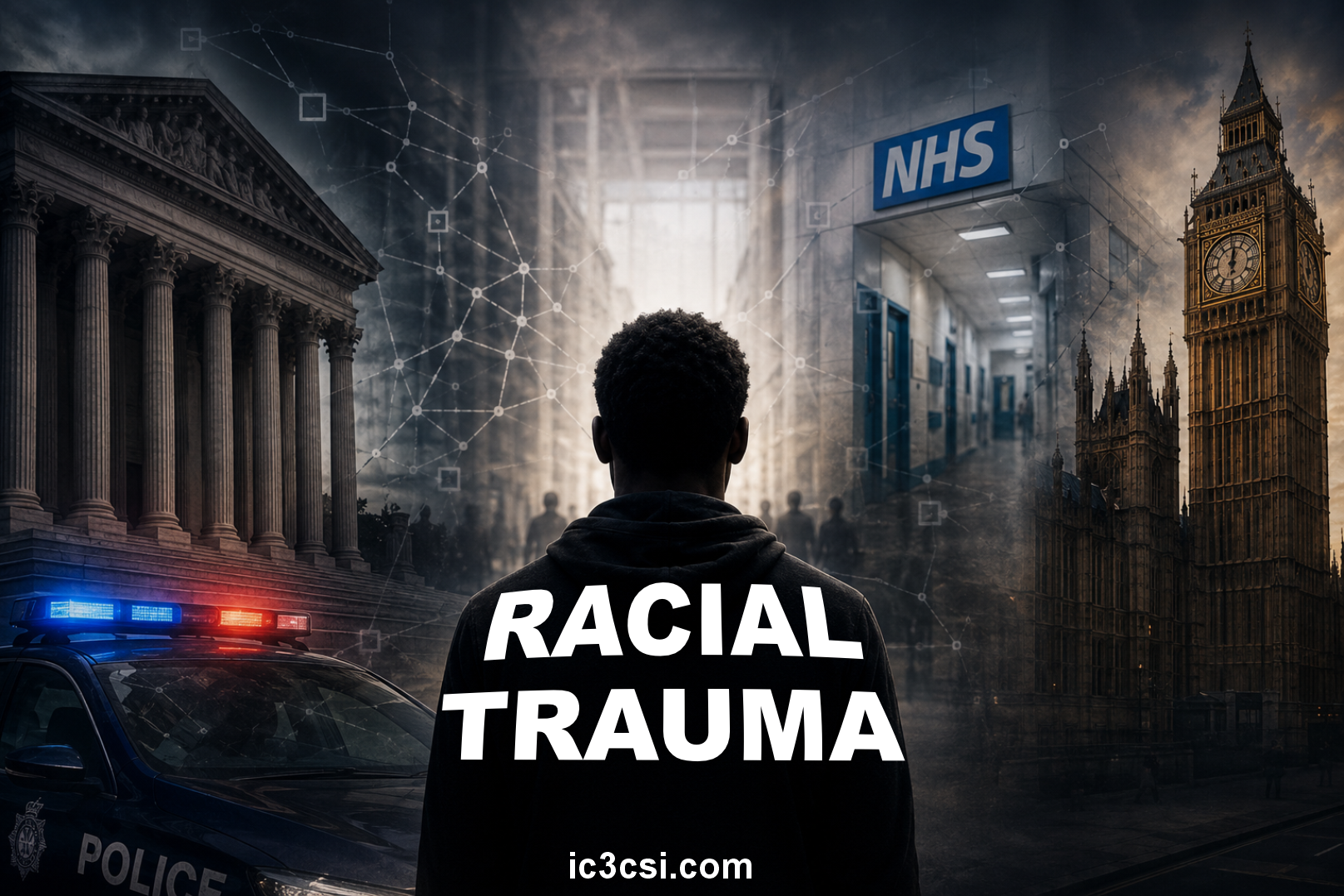
Recognise Racial Trauma-Related Harm and Establish Procedural, Clinical, Equality, and Decision-Making Safeguards Across UK Institutions
Petition Text
We call upon the UK Government, the Department of Health and Social Care, NHS England, the Ministry of Justice, HM Courts and Tribunals Service, the Equalities and Human Rights Commission, the Crown Prosecution Service, policing bodies, professional clinical regulators, educational institutions, public authorities, and all relevant oversight bodies to formally recognise, research, assess, and develop safeguards relating to racial trauma-related harm and racial trauma-related participation difficulties.
This petition further calls for the creation of lawful, evidence-led procedural safeguards designed to reduce the creation, invitation, reinforcement, validation, or operational reliance upon racially aggravated assumptions, racialised inference, stereotype-based reasoning, assumption-based reasoning, or unsupported attribution of racial hostility within institutional decision-making systems.
At present, “racial trauma” is not generally recognised within UK systems as a standalone formal diagnosis in the same manner as PTSD or Complex PTSD under established diagnostic frameworks. However, increasing research, professional discussion, and lived-experience evidence suggest that racism, racial humiliation, repeated discrimination, institutional mistrust, race-based threat perception, racial stereotyping, and repeated exposure to perceived or actual racial hostility may produce serious psychological, emotional, cognitive, behavioural, and functional effects.
Research literature increasingly refers to concepts such as:
racial trauma,
race-based traumatic stress,
racism-related stress injury,
institutional mistrust injury,
cumulative racism exposure,
racial hypervigilance,
and race-related participation impairment.
These issues are increasingly discussed within psychology, psychiatry, counselling, equality research, sociology, legal studies, and public-health literature.
This petition does not ask institutions to automatically accept every allegation of racism as fact, nor to automatically classify every complaint involving race as evidence of trauma.
For the avoidance of doubt, this petition makes:
no allegations,
no accusations,
no assertions,
and no assumptions
against any named individual, organisation, institution, public authority, professional body, or decision-maker.
This petition instead seeks the creation of fair, evidence-led, proportionate, transparent, reviewable, and procedurally safe systems capable of identifying, assessing, and managing racial trauma-related participation difficulties and racialised decision-making risk.
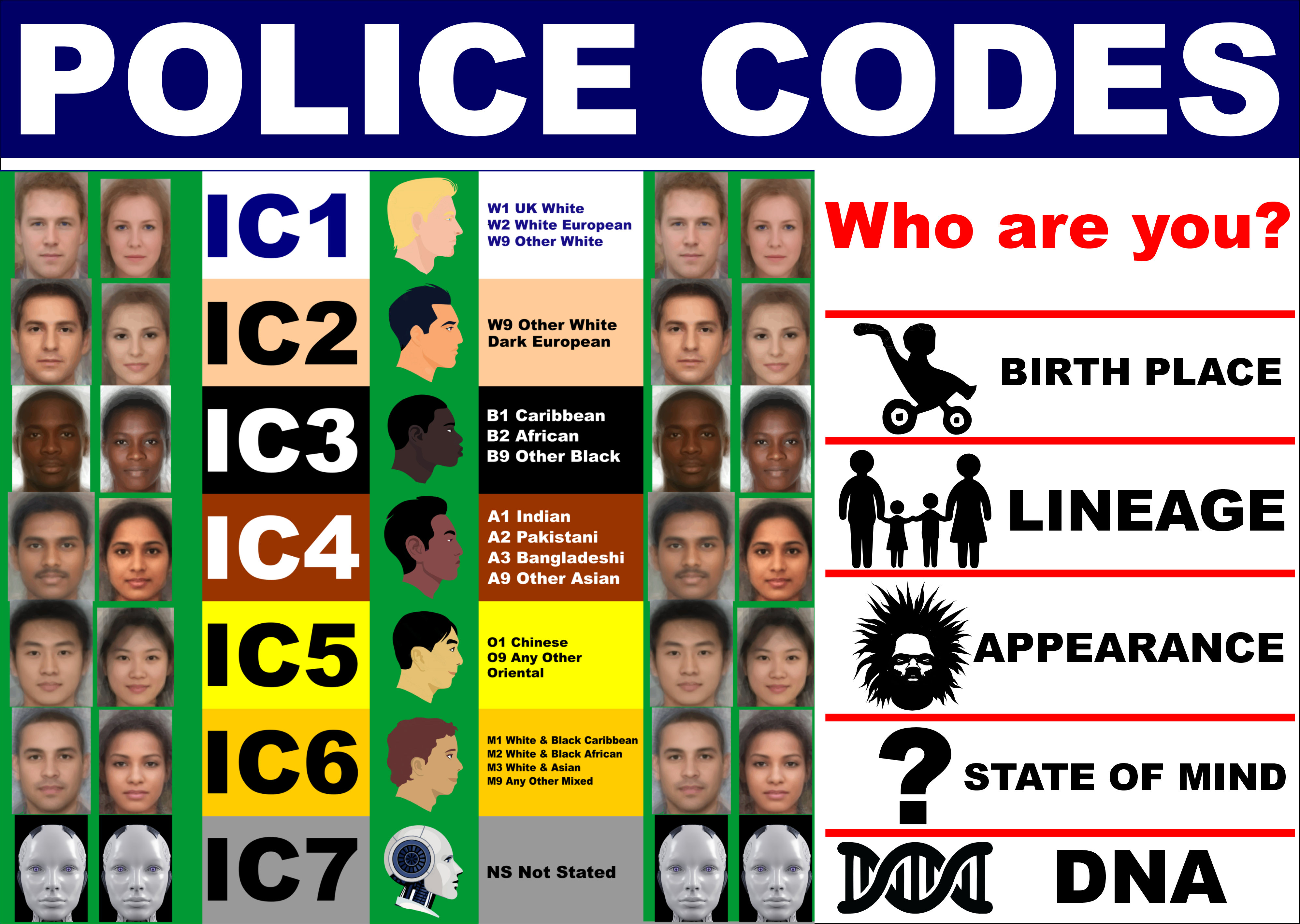
The concern addressed by this petition is not merely political or ideological.
It is also:
a mental health concern,
a procedural fairness concern,
an equality concern,
a public confidence concern,
a participation concern,
a safeguarding concern,
and a rule-of-law concern.
Background and Problem
Many individuals from Black and minority ethnic communities report experiencing long-term psychological and functional effects associated with repeated exposure to racism, racial hostility, stereotyping, discrimination, humiliation, exclusion, disbelief, institutional failure, racial profiling, unequal treatment, or perceived race-based threat.
These effects may arise from:
direct personal experiences,
repeated community experiences,
historical and intergenerational exposure,
institutional experiences,
policing experiences,
educational experiences,
employment experiences,
healthcare experiences,
housing experiences,
media exposure,
or repeated observation of race-related mistreatment.
Such effects may include:
hypervigilance,
distrust of institutions,
anxiety,
fear,
emotional dysregulation,
cognitive overload,
intrusive memories,
avoidance,
dissociation,
defensive communication,
heightened threat perception,
participation impairment,
difficulty concentrating,
difficulty safely engaging with authority figures,
difficulty safely entering legal proceedings,
difficulty safely answering allegations,
and difficulty safely participating in unclear or procedurally ambiguous decision-making systems.
In some circumstances, affected individuals may reasonably fear that:
ambiguity may be interpreted against them,
silence may be interpreted against them,
emotion may be interpreted against them,
caution may be interpreted against them,
defensiveness may be interpreted against them,
distrust may be interpreted against them,
attempts at self-protection may be interpreted against them,
or racial stereotypes may consciously or unconsciously influence interpretation.
This may create substantial participation difficulties in legal, administrative, educational, employment, medical, policing, disciplinary, safeguarding, housing, immigration, welfare, regulatory, or public-body processes.
Decision-Making Risk and Racialised Inference Concerns
This petition further raises concern regarding the potential creation, invitation, validation, reinforcement, operational use, or procedural normalisation of racially aggravated reasoning within institutional decision-making systems.
This includes concern regarding:
unsupported racialised inference,
stereotype-based interpretation,
assumption-based reasoning,
perceived racial hostility attribution,
racialised behavioural interpretation,
disproportionate suspicion,
credibility distortion,
emotional misinterpretation,
race-linked threat perception,
group attribution reasoning,
collective suspicion reasoning,
and unsafe evidential interpretation.
Particular concern arises where decision-making systems lack clear safeguards capable of identifying or preventing:
racially aggravated assumptions,
racially aggravated inference,
racially aggravated interpretation,
or racially aggravated evidential reasoning.
This concern may become especially serious where legal, disciplinary, safeguarding, policing, prosecutorial, regulatory, or institutional decisions rely upon:
interpretation of intent,
interpretation of emotional state,
interpretation of demeanour,
interpretation of tone,
interpretation of hostility,
interpretation of association,
interpretation of social grouping,
interpretation of motive,
or interpretation of perceived threat.
The petition therefore calls for safeguards against the creation of racially aggravated risk within institutional reasoning processes.
Common Purpose and Joint Enterprise Concerns
This petition further calls for careful review of how racialised reasoning may intersect with concepts such as:
common purpose,
joint enterprise,
collective intent,
group attribution,
conspiracy inference,
gang association inference,
hostile motivation attribution,
and inferred shared intent.
The concern is not that such legal doctrines are inherently unlawful.
The concern is whether sufficient safeguards exist to ensure that racial stereotypes, racialised assumptions, perceived group identity, or unsupported inference do not improperly influence:
suspicion,
charging decisions,
prosecutorial interpretation,
evidential framing,
credibility assessment,
judicial interpretation,
or jury perception.
This petition therefore calls for evidence-led review of whether existing procedural safeguards are sufficient to prevent racially aggravated reasoning from influencing institutional outcomes.
Procedural Fairness and Participation Concerns
In legal proceedings particularly, racial trauma-related participation difficulties may materially affect a person’s ability to:
safely enter a plea,
understand proceedings,
communicate effectively,
give evidence,
assess legal risk,
trust institutional actors,
participate without fear,
make informed decisions,
respond coherently under stress,
distinguish real risk from perceived risk,
or safely engage where procedural safeguards are unclear.
A person experiencing racial trauma-related participation difficulties may fear that:
they will not be believed,
racial context will be minimised,
emotional responses will be pathologised,
distrust will be mischaracterised,
defensiveness will be interpreted as aggression,
caution will be interpreted as evasiveness,
or procedural ambiguity will expose them to unmanaged risk.
This petition therefore calls for safeguards capable of ensuring effective participation, procedural fairness, equality of treatment, and protection against unsafe interpretative reasoning.
Requested Actions
We therefore call for:
1. Formal Public Recognition
Formal public recognition that racism, institutional racism, racial hostility, racial stereotyping, race-based humiliation, and repeated exposure to racial discrimination may cause trauma-related psychological and functional harm.
2. Clinical Guidance
NHS and professional clinical guidance concerning:
identification,
assessment,
recording,
treatment,
safeguarding,
referral pathways,
and support frameworks
for racial trauma-related presentations and participation difficulties.
3. Research Funding
Dedicated research funding into:
racial trauma,
race-based traumatic stress,
institutional mistrust,
racial hypervigilance,
participation impairment,
racialised threat perception,
cumulative racism exposure,
and long-term mental health impacts associated with racism.
4. Justice-System Safeguards
Development of safeguards within courts, tribunals, policing systems, prosecutorial systems, prisons, probation services, and regulatory bodies where racial trauma-related participation difficulties may materially affect:
plea decisions,
evidential participation,
comprehension,
communication,
emotional regulation,
or procedural safety.
5. Equality and Reasonable-Adjustment Guidance
Clear guidance for:
courts,
employers,
schools,
universities,
housing providers,
police bodies,
healthcare providers,
regulators,
and public authorities
regarding reasonable adjustments and procedural safeguards for individuals experiencing racial trauma-related participation difficulties.
6. Safeguards Against Racialised Decision-Making
Independent review of whether public institutions can demonstrate safeguards against:
racial bias,
stereotype-based reasoning,
assumption-based reasoning,
unsupported racialised inference,
racially aggravated reasoning,
collective attribution reasoning,
and unequal treatment.
7. Decision-Making Transparency
Requirements for meaningful procedural transparency including:
written reasoning,
audit trails,
disclosure of interpretative assumptions,
equality impact consideration,
reviewability,
and routes to challenge unsafe reasoning.
8. Training
Mandatory professional training for relevant sectors including:
GPs,
psychologists,
psychiatrists,
therapists,
police,
lawyers,
judges,
magistrates,
prosecutors,
probation staff,
educators,
social workers,
safeguarding personnel,
and public-body decision-makers.
9. Distinction Between Allegation and Functional Impact
Clear recognition that a person should not be required to prove deliberate racism by a named individual before racial trauma-related participation difficulties can be assessed seriously and fairly.
10. Protection Against Misuse
Development of safeguards ensuring that racial trauma is not treated as:
an automatic presumption,
a blanket excuse,
or an unchallengeable claim,
but instead assessed carefully, proportionately, evidence-led, and fairly.
11. National Consultation
A formal national consultation involving:
Black communities,
minority ethnic communities,
clinicians,
psychologists,
psychiatrists,
legal professionals,
academics,
equality bodies,
trauma specialists,
community organisations,
and individuals with lived experience.
Why This Matters
Without recognition and safeguards, individuals affected by racial trauma-related harm may be mischaracterised as:
hostile,
paranoid,
irrational,
aggressive,
obstructive,
evasive,
non-compliant,
difficult,
distrustful,
emotionally unstable,
or unwilling to cooperate.
Such mischaracterisation may deepen harm and increase institutional distrust.
Recognition does not require automatic acceptance of every allegation.
Recognition instead means creating lawful, evidence-led systems capable of:
identifying genuine participation difficulties,
protecting procedural fairness,
reducing unsafe reasoning,
improving public confidence,
strengthening equality protections,
and improving institutional safety and legitimacy.
Requested Outcome
We request that the UK Government and relevant public authorities begin a formal process toward:
recognising racial trauma-related harm,
researching its effects,
developing evidence-led safeguards,
reviewing institutional decision-making systems,
strengthening equality protections,
improving procedural fairness,
and establishing safe participation pathways across public institutions.
We further request publication of a national action plan addressing:
clinical guidance,
research priorities,
procedural safeguards,
public-body duties,
decision-making transparency,
equality protections,
and institutional accountability mechanisms.
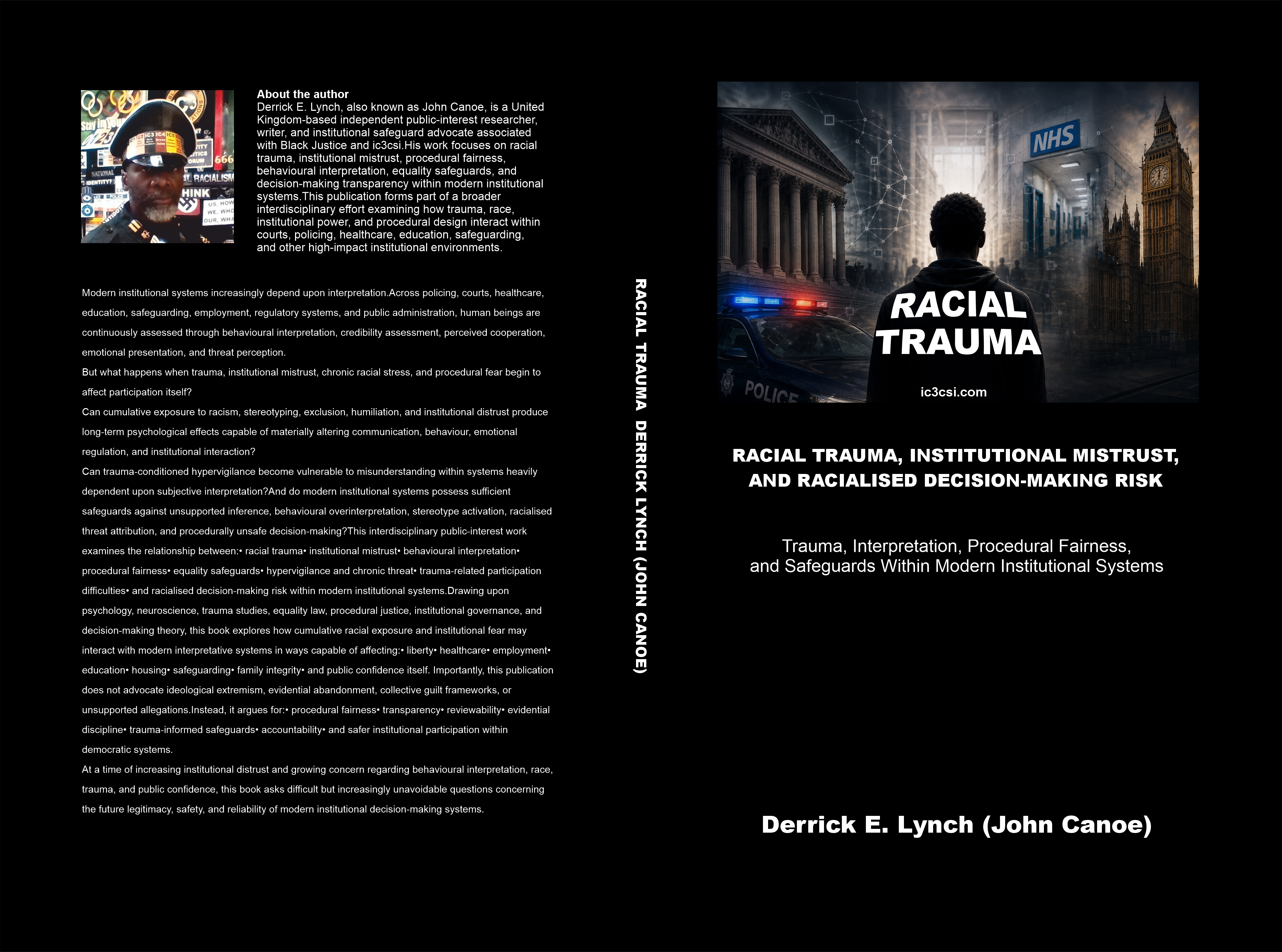
Buy the book: https://www.amazon.co.uk/dp/B0H31LCCSJ
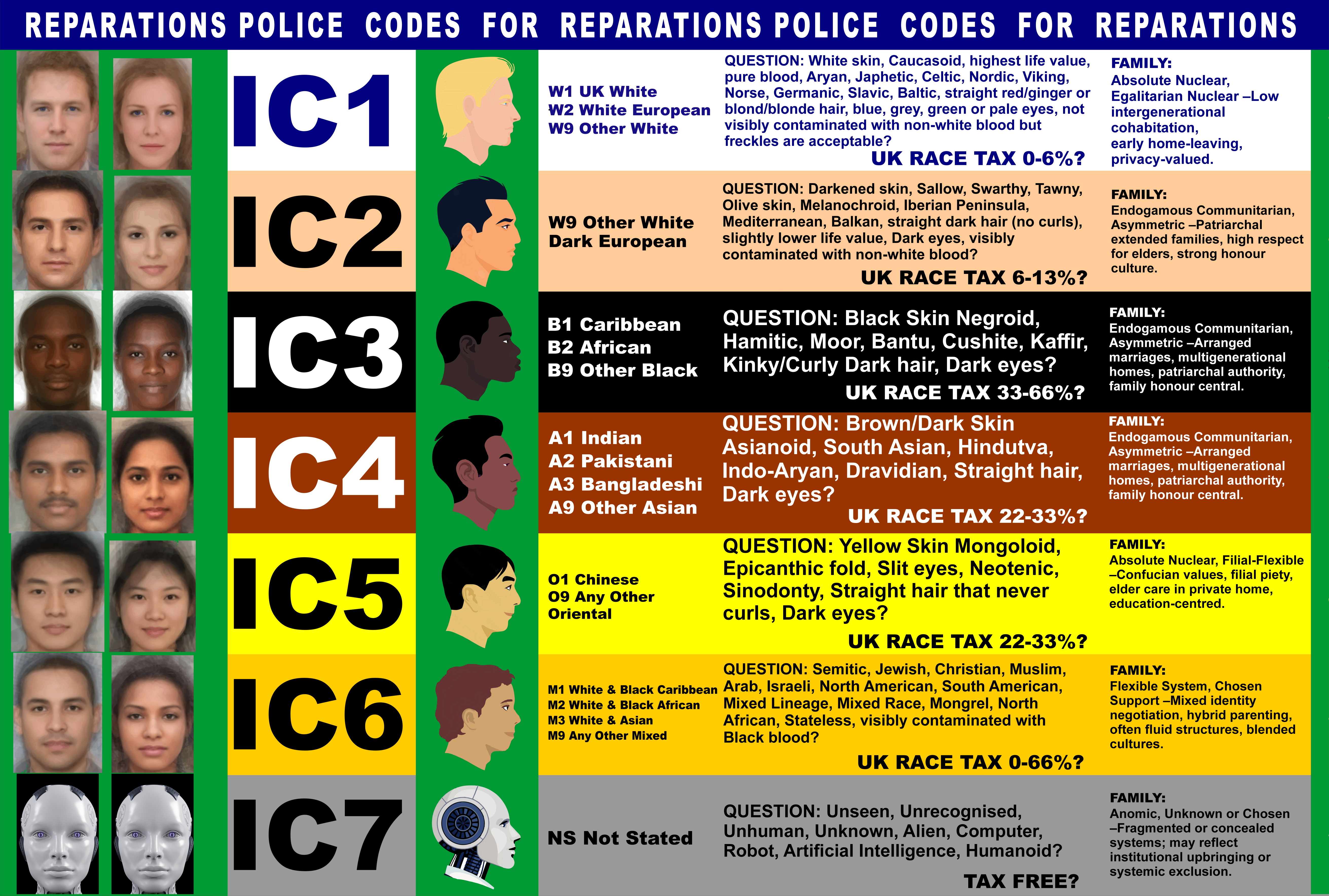
WEBSITE LINK
#RacialTrauma #Trauma #Safeguards #NHS #Police #Courts #RacialProfiling #RaceActionPlan #BlackJustice #ic3csi #RaciallyAggravated
https://ic3csi.com/black-justice-v2/racial-trauma.html
BERNIE GRANT ARTS CENTRE PETITION

25
The Issue
Short Petition Summary
Racial trauma is not yet properly recognised within UK systems despite increasing evidence that racism, racial stereotyping, institutional mistrust, and race-based harm may cause serious psychological and functional effects. We call for formal recognition, research, NHS guidance, procedural safeguards, justice-system protections, and safeguards against unsafe racialised reasoning in institutional decision-making systems.
Recognise Racial Trauma-Related Harm and Establish Procedural, Clinical, Equality, and Decision-Making Safeguards Across UK Institutions
Petition Text
We call upon the UK Government, the Department of Health and Social Care, NHS England, the Ministry of Justice, HM Courts and Tribunals Service, the Equalities and Human Rights Commission, the Crown Prosecution Service, policing bodies, professional clinical regulators, educational institutions, public authorities, and all relevant oversight bodies to formally recognise, research, assess, and develop safeguards relating to racial trauma-related harm and racial trauma-related participation difficulties.
This petition further calls for the creation of lawful, evidence-led procedural safeguards designed to reduce the creation, invitation, reinforcement, validation, or operational reliance upon racially aggravated assumptions, racialised inference, stereotype-based reasoning, assumption-based reasoning, or unsupported attribution of racial hostility within institutional decision-making systems.
At present, “racial trauma” is not generally recognised within UK systems as a standalone formal diagnosis in the same manner as PTSD or Complex PTSD under established diagnostic frameworks. However, increasing research, professional discussion, and lived-experience evidence suggest that racism, racial humiliation, repeated discrimination, institutional mistrust, race-based threat perception, racial stereotyping, and repeated exposure to perceived or actual racial hostility may produce serious psychological, emotional, cognitive, behavioural, and functional effects.
Research literature increasingly refers to concepts such as:
racial trauma,
race-based traumatic stress,
racism-related stress injury,
institutional mistrust injury,
cumulative racism exposure,
racial hypervigilance,
and race-related participation impairment.
These issues are increasingly discussed within psychology, psychiatry, counselling, equality research, sociology, legal studies, and public-health literature.
This petition does not ask institutions to automatically accept every allegation of racism as fact, nor to automatically classify every complaint involving race as evidence of trauma.
For the avoidance of doubt, this petition makes:
no allegations,
no accusations,
no assertions,
and no assumptions
against any named individual, organisation, institution, public authority, professional body, or decision-maker.
This petition instead seeks the creation of fair, evidence-led, proportionate, transparent, reviewable, and procedurally safe systems capable of identifying, assessing, and managing racial trauma-related participation difficulties and racialised decision-making risk.
The concern addressed by this petition is not merely political or ideological.
It is also:
a mental health concern,
a procedural fairness concern,
an equality concern,
a public confidence concern,
a participation concern,
a safeguarding concern,
and a rule-of-law concern.
Background and Problem
Many individuals from Black and minority ethnic communities report experiencing long-term psychological and functional effects associated with repeated exposure to racism, racial hostility, stereotyping, discrimination, humiliation, exclusion, disbelief, institutional failure, racial profiling, unequal treatment, or perceived race-based threat.
These effects may arise from:
direct personal experiences,
repeated community experiences,
historical and intergenerational exposure,
institutional experiences,
policing experiences,
educational experiences,
employment experiences,
healthcare experiences,
housing experiences,
media exposure,
or repeated observation of race-related mistreatment.
Such effects may include:
hypervigilance,
distrust of institutions,
anxiety,
fear,
emotional dysregulation,
cognitive overload,
intrusive memories,
avoidance,
dissociation,
defensive communication,
heightened threat perception,
participation impairment,
difficulty concentrating,
difficulty safely engaging with authority figures,
difficulty safely entering legal proceedings,
difficulty safely answering allegations,
and difficulty safely participating in unclear or procedurally ambiguous decision-making systems.
In some circumstances, affected individuals may reasonably fear that:
ambiguity may be interpreted against them,
silence may be interpreted against them,
emotion may be interpreted against them,
caution may be interpreted against them,
defensiveness may be interpreted against them,
distrust may be interpreted against them,
attempts at self-protection may be interpreted against them,
or racial stereotypes may consciously or unconsciously influence interpretation.
This may create substantial participation difficulties in legal, administrative, educational, employment, medical, policing, disciplinary, safeguarding, housing, immigration, welfare, regulatory, or public-body processes.
Decision-Making Risk and Racialised Inference Concerns
This petition further raises concern regarding the potential creation, invitation, validation, reinforcement, operational use, or procedural normalisation of racially aggravated reasoning within institutional decision-making systems.
This includes concern regarding:
unsupported racialised inference,
stereotype-based interpretation,
assumption-based reasoning,
perceived racial hostility attribution,
racialised behavioural interpretation,
disproportionate suspicion,
credibility distortion,
emotional misinterpretation,
race-linked threat perception,
group attribution reasoning,
collective suspicion reasoning,
and unsafe evidential interpretation.
Particular concern arises where decision-making systems lack clear safeguards capable of identifying or preventing:
racially aggravated assumptions,
racially aggravated inference,
racially aggravated interpretation,
or racially aggravated evidential reasoning.
This concern may become especially serious where legal, disciplinary, safeguarding, policing, prosecutorial, regulatory, or institutional decisions rely upon:
interpretation of intent,
interpretation of emotional state,
interpretation of demeanour,
interpretation of tone,
interpretation of hostility,
interpretation of association,
interpretation of social grouping,
interpretation of motive,
or interpretation of perceived threat.
The petition therefore calls for safeguards against the creation of racially aggravated risk within institutional reasoning processes.
Common Purpose and Joint Enterprise Concerns
This petition further calls for careful review of how racialised reasoning may intersect with concepts such as:
common purpose,
joint enterprise,
collective intent,
group attribution,
conspiracy inference,
gang association inference,
hostile motivation attribution,
and inferred shared intent.
The concern is not that such legal doctrines are inherently unlawful.
The concern is whether sufficient safeguards exist to ensure that racial stereotypes, racialised assumptions, perceived group identity, or unsupported inference do not improperly influence:
suspicion,
charging decisions,
prosecutorial interpretation,
evidential framing,
credibility assessment,
judicial interpretation,
or jury perception.
This petition therefore calls for evidence-led review of whether existing procedural safeguards are sufficient to prevent racially aggravated reasoning from influencing institutional outcomes.
Procedural Fairness and Participation Concerns
In legal proceedings particularly, racial trauma-related participation difficulties may materially affect a person’s ability to:
safely enter a plea,
understand proceedings,
communicate effectively,
give evidence,
assess legal risk,
trust institutional actors,
participate without fear,
make informed decisions,
respond coherently under stress,
distinguish real risk from perceived risk,
or safely engage where procedural safeguards are unclear.
A person experiencing racial trauma-related participation difficulties may fear that:
they will not be believed,
racial context will be minimised,
emotional responses will be pathologised,
distrust will be mischaracterised,
defensiveness will be interpreted as aggression,
caution will be interpreted as evasiveness,
or procedural ambiguity will expose them to unmanaged risk.
This petition therefore calls for safeguards capable of ensuring effective participation, procedural fairness, equality of treatment, and protection against unsafe interpretative reasoning.
Requested Actions
We therefore call for:
1. Formal Public Recognition
Formal public recognition that racism, institutional racism, racial hostility, racial stereotyping, race-based humiliation, and repeated exposure to racial discrimination may cause trauma-related psychological and functional harm.
2. Clinical Guidance
NHS and professional clinical guidance concerning:
identification,
assessment,
recording,
treatment,
safeguarding,
referral pathways,
and support frameworks
for racial trauma-related presentations and participation difficulties.
3. Research Funding
Dedicated research funding into:
racial trauma,
race-based traumatic stress,
institutional mistrust,
racial hypervigilance,
participation impairment,
racialised threat perception,
cumulative racism exposure,
and long-term mental health impacts associated with racism.
4. Justice-System Safeguards
Development of safeguards within courts, tribunals, policing systems, prosecutorial systems, prisons, probation services, and regulatory bodies where racial trauma-related participation difficulties may materially affect:
plea decisions,
evidential participation,
comprehension,
communication,
emotional regulation,
or procedural safety.
5. Equality and Reasonable-Adjustment Guidance
Clear guidance for:
courts,
employers,
schools,
universities,
housing providers,
police bodies,
healthcare providers,
regulators,
and public authorities
regarding reasonable adjustments and procedural safeguards for individuals experiencing racial trauma-related participation difficulties.
6. Safeguards Against Racialised Decision-Making
Independent review of whether public institutions can demonstrate safeguards against:
racial bias,
stereotype-based reasoning,
assumption-based reasoning,
unsupported racialised inference,
racially aggravated reasoning,
collective attribution reasoning,
and unequal treatment.
7. Decision-Making Transparency
Requirements for meaningful procedural transparency including:
written reasoning,
audit trails,
disclosure of interpretative assumptions,
equality impact consideration,
reviewability,
and routes to challenge unsafe reasoning.
8. Training
Mandatory professional training for relevant sectors including:
GPs,
psychologists,
psychiatrists,
therapists,
police,
lawyers,
judges,
magistrates,
prosecutors,
probation staff,
educators,
social workers,
safeguarding personnel,
and public-body decision-makers.
9. Distinction Between Allegation and Functional Impact
Clear recognition that a person should not be required to prove deliberate racism by a named individual before racial trauma-related participation difficulties can be assessed seriously and fairly.
10. Protection Against Misuse
Development of safeguards ensuring that racial trauma is not treated as:
an automatic presumption,
a blanket excuse,
or an unchallengeable claim,
but instead assessed carefully, proportionately, evidence-led, and fairly.
11. National Consultation
A formal national consultation involving:
Black communities,
minority ethnic communities,
clinicians,
psychologists,
psychiatrists,
legal professionals,
academics,
equality bodies,
trauma specialists,
community organisations,
and individuals with lived experience.
Why This Matters
Without recognition and safeguards, individuals affected by racial trauma-related harm may be mischaracterised as:
hostile,
paranoid,
irrational,
aggressive,
obstructive,
evasive,
non-compliant,
difficult,
distrustful,
emotionally unstable,
or unwilling to cooperate.
Such mischaracterisation may deepen harm and increase institutional distrust.
Recognition does not require automatic acceptance of every allegation.
Recognition instead means creating lawful, evidence-led systems capable of:
identifying genuine participation difficulties,
protecting procedural fairness,
reducing unsafe reasoning,
improving public confidence,
strengthening equality protections,
and improving institutional safety and legitimacy.
Requested Outcome
We request that the UK Government and relevant public authorities begin a formal process toward:
recognising racial trauma-related harm,
researching its effects,
developing evidence-led safeguards,
reviewing institutional decision-making systems,
strengthening equality protections,
improving procedural fairness,
and establishing safe participation pathways across public institutions.
We further request publication of a national action plan addressing:
clinical guidance,
research priorities,
procedural safeguards,
public-body duties,
decision-making transparency,
equality protections,
and institutional accountability mechanisms.
Buy the book: https://www.amazon.co.uk/dp/B0H31LCCSJ
WEBSITE LINK
#RacialTrauma #Trauma #Safeguards #NHS #Police #Courts #RacialProfiling #RaceActionPlan #BlackJustice #ic3csi #RaciallyAggravated
https://ic3csi.com/black-justice-v2/racial-trauma.html
BERNIE GRANT ARTS CENTRE PETITION


Petition Updates
Share this petition
Petition created on 26 May 2026