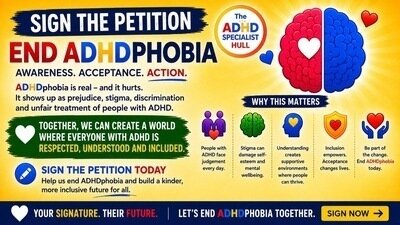

Recognise 'ADHD-phobia' and 'ADHD-phobic' As Valid Terms to STOP The Stigma With ADHD!
Recognise 'ADHD-phobia' and 'ADHD-phobic' As Valid Terms to STOP The Stigma With ADHD!
The Issue
Recognise 'ADHD-phobia' and 'ADHD-phobic' As Valid Terms to STOP The Stigma With ADHD!
Living with ADHD, I have personally experienced the pervasive stigma and damaging stereotypes surrounding this condition. It is not just about being a bit more distracted or disorganised; untreated ADHD can have devastating effects on the lives of those affected and their families. Recognising the attitudes and biases that exacerbate these challenges is critical to creating a more inclusive and understanding society.
Unfortunately, too many children, young people, and adults who have ADHD face judgment and are subjected to harmful stereotypes. Additionally, they are often met with dismissive attitudes from peers, educators, employers, and even some healthcare providers. The social stigma can be overwhelming, leading to various forms of discrimination in everyday life.
This is why we need terms like “ADHDphobia” and “ADHDphobic” to become recognised in conversations about ADHD. These terms will help pinpoint the discrimination and stigmatising behaviors that individuals with ADHD face, much like how terms such as “homophobia” and “transphobia” have expansively contributed to awareness and progress in those areas.
ADHD is estimated to affect around 3–4% of adults and approximately 5% of children in the UK. Despite how common ADHD is, stigma and misconceptions still lead to many people being misunderstood, underdiagnosed or unable to access the support they need.
Without the right understanding and support, ADHD can have a significant impact on education, employment, mental health and daily life. 🧠💙By formalising “ADHDphobia” and “ADHDphobic” as terms, we can initiate a larger conversation around recognising and combating the prejudice that affects so many individuals. Schools, workplaces, and communities need to acknowledge these biases to foster environments where individuals with ADHD can thrive without fear of judgment or misunderstanding.
Implementing these terms officially would challenge the stigma head-on and demand that society recognise ADHD for what it truly is: a complex neurodevelopmental disorder deserving of understanding and compassion.
Join me in advocating for the acceptance and usage of these terms in public discourse, media, policies, and educational forums.
Please Sign this petition to support this much-needed change and help create an environment where everyone with ADHD can reach their full potential without prejudice.
Thank you so much for supporting me by signing this petition. Your support truly means so much to me and helps move this campaign forward towards greater ADHD awareness, understanding and acceptance.
Laura 💕
47
The Issue
Recognise 'ADHD-phobia' and 'ADHD-phobic' As Valid Terms to STOP The Stigma With ADHD!
Living with ADHD, I have personally experienced the pervasive stigma and damaging stereotypes surrounding this condition. It is not just about being a bit more distracted or disorganised; untreated ADHD can have devastating effects on the lives of those affected and their families. Recognising the attitudes and biases that exacerbate these challenges is critical to creating a more inclusive and understanding society.
Unfortunately, too many children, young people, and adults who have ADHD face judgment and are subjected to harmful stereotypes. Additionally, they are often met with dismissive attitudes from peers, educators, employers, and even some healthcare providers. The social stigma can be overwhelming, leading to various forms of discrimination in everyday life.
This is why we need terms like “ADHDphobia” and “ADHDphobic” to become recognised in conversations about ADHD. These terms will help pinpoint the discrimination and stigmatising behaviors that individuals with ADHD face, much like how terms such as “homophobia” and “transphobia” have expansively contributed to awareness and progress in those areas.
ADHD is estimated to affect around 3–4% of adults and approximately 5% of children in the UK. Despite how common ADHD is, stigma and misconceptions still lead to many people being misunderstood, underdiagnosed or unable to access the support they need.
Without the right understanding and support, ADHD can have a significant impact on education, employment, mental health and daily life. 🧠💙By formalising “ADHDphobia” and “ADHDphobic” as terms, we can initiate a larger conversation around recognising and combating the prejudice that affects so many individuals. Schools, workplaces, and communities need to acknowledge these biases to foster environments where individuals with ADHD can thrive without fear of judgment or misunderstanding.
Implementing these terms officially would challenge the stigma head-on and demand that society recognise ADHD for what it truly is: a complex neurodevelopmental disorder deserving of understanding and compassion.
Join me in advocating for the acceptance and usage of these terms in public discourse, media, policies, and educational forums.
Please Sign this petition to support this much-needed change and help create an environment where everyone with ADHD can reach their full potential without prejudice.
Thank you so much for supporting me by signing this petition. Your support truly means so much to me and helps move this campaign forward towards greater ADHD awareness, understanding and acceptance.
Laura 💕
47


Petition Updates
Share this petition
Petition created on 26 May 2026