

Ram Price Increases Due to AI
The Issue
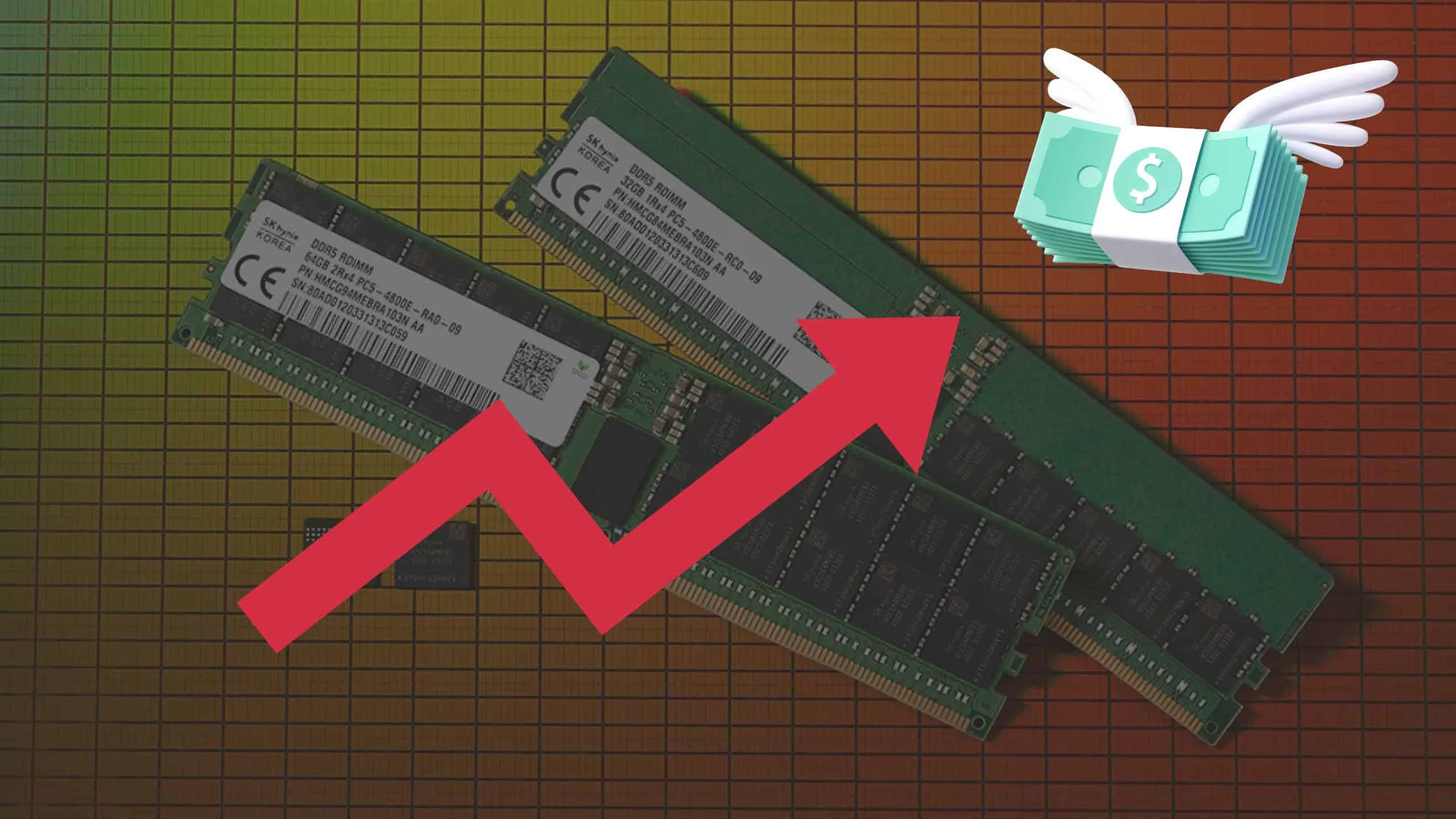
RAM prices have surged due to skyrocketing demand from AI data centers, limited production capacity, and manufacturers prioritizing high-margin AI memory over consumer modules.
Key Factors Driving RAM Price Increases
AI Demand Explosion: The primary driver of the RAM price surge is the massive demand from artificial intelligence infrastructure. Companies like Microsoft, Google, Meta, Amazon, and OpenAI are rapidly expanding AI data centers, which require enormous amounts of memory to train models and handle billions of daily inference requests. AI applications are projected to consume up to 70% of global memory production in 2026, leaving less supply for consumer PCs and laptops.
directmacro.com+2
High Bandwidth Memory (HBM) Production: HBM, used in AI accelerators and GPUs, consumes about three times more wafer capacity per gigabyte than standard DRAM. Memory manufacturers such as Samsung, SK Hynix, and Micron have shifted production from consumer DDR5 and DDR4 modules to HBM for AI, reducing the availability of RAM for everyday users. This reallocation has caused consumer RAM prices to quadruple in some cases, with 16GB DDR5 modules rising from $6.84 to over $27 per chip in a few months.
directmacro.com+2
Supply Constraints and Market Control: The global DRAM market is dominated by a few key players—Samsung, SK Hynix, and Micron—who control around 95% of production. With limited production capacity and high demand from AI clients willing to pay premium prices, manufacturers have prioritized high-margin AI memory over consumer RAM, further driving up prices.
Tom's Guide+1
Impact on Consumers: Consumer RAM prices have increased dramatically. For example, a 32GB DDR5 kit that cost $90 in mid-2025 now costs $300–450, and DDR4 kits have also seen significant hikes. This affects not only PC builders and gamers but also laptops, tablets, and other devices that rely on DRAM.
iqondigital.com+3
Future Outlook: Analysts predict that RAM prices may remain elevated until at least late 2027 or even 2028, as AI demand continues to dominate production and supply remains constrained. Consumers are advised to optimize existing memory rather than buying at peak prices, and to consider DDR4 platforms if building new systems.
iqondigital.com+1
In summary, the combination of AI-driven demand, HBM production prioritization, and limited global supply controlled by a few manufacturers has created a perfect storm, causing RAM prices to reach unprecedented levels in 2026.
directmacro.com+2

61,525
The Issue
RAM prices have surged due to skyrocketing demand from AI data centers, limited production capacity, and manufacturers prioritizing high-margin AI memory over consumer modules.
Key Factors Driving RAM Price Increases
AI Demand Explosion: The primary driver of the RAM price surge is the massive demand from artificial intelligence infrastructure. Companies like Microsoft, Google, Meta, Amazon, and OpenAI are rapidly expanding AI data centers, which require enormous amounts of memory to train models and handle billions of daily inference requests. AI applications are projected to consume up to 70% of global memory production in 2026, leaving less supply for consumer PCs and laptops.
directmacro.com+2
High Bandwidth Memory (HBM) Production: HBM, used in AI accelerators and GPUs, consumes about three times more wafer capacity per gigabyte than standard DRAM. Memory manufacturers such as Samsung, SK Hynix, and Micron have shifted production from consumer DDR5 and DDR4 modules to HBM for AI, reducing the availability of RAM for everyday users. This reallocation has caused consumer RAM prices to quadruple in some cases, with 16GB DDR5 modules rising from $6.84 to over $27 per chip in a few months.
directmacro.com+2
Supply Constraints and Market Control: The global DRAM market is dominated by a few key players—Samsung, SK Hynix, and Micron—who control around 95% of production. With limited production capacity and high demand from AI clients willing to pay premium prices, manufacturers have prioritized high-margin AI memory over consumer RAM, further driving up prices.
Tom's Guide+1
Impact on Consumers: Consumer RAM prices have increased dramatically. For example, a 32GB DDR5 kit that cost $90 in mid-2025 now costs $300–450, and DDR4 kits have also seen significant hikes. This affects not only PC builders and gamers but also laptops, tablets, and other devices that rely on DRAM.
iqondigital.com+3
Future Outlook: Analysts predict that RAM prices may remain elevated until at least late 2027 or even 2028, as AI demand continues to dominate production and supply remains constrained. Consumers are advised to optimize existing memory rather than buying at peak prices, and to consider DDR4 platforms if building new systems.
iqondigital.com+1
In summary, the combination of AI-driven demand, HBM production prioritization, and limited global supply controlled by a few manufacturers has created a perfect storm, causing RAM prices to reach unprecedented levels in 2026.
directmacro.com+2
Supporter Voices
Petition Updates
Share this petition
Petition created on February 26, 2026