
Protect the Reforms Strengthening Ukraine’s Defence
The Issue
Over the past six months, Ukraine had begun to regain momentum and demonstrate visible results in several areas of its defence effort. Technology, drones, battlefield data and more accountable procurement were becoming increasingly central to this progress. Following the dismissal of Mykhailo Fedorov as Minister of Defence, the future of Ukraine’s defence-modernisation, transparent-procurement and anti-corruption reforms has become uncertain.
Why people are concerned
During Fedorov’s tenure, Ukraine accelerated reforms involving drone production, military digitalisation, battlefield data, procurement and cooperation with domestic defence-technology companies.
These reforms were intended to reduce outdated bureaucracy, limit subjective procurement decisions and corruption risks, and direct more resources towards technologies that had demonstrated results on the battlefield. They were also closely connected to Ukraine’s cooperation with European partners.
EU Commissioner for Defence and Space Andrius Kubilius described Fedorov’s departure as a major surprise and stressed the importance of preserving cooperation on European defence financing and drone production. EU Ambassador to Ukraine Katarína Mathernová also highlighted the effectiveness of her cooperation with Fedorov on Ukraine’s digital and defence agenda.
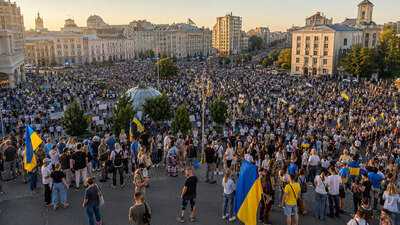
Thousands of Ukrainians have taken to the streets in Kyiv and other cities, despite the conditions of wartime, to express their concern. Demonstrations have continued for several consecutive days, with support from Ukrainian communities abroad. An official petition to the Verkhovna Rada has also gathered nearly 17,000 signatures at the time of writing.
This public response is not simply about personal support for one official. Veterans, service members, relatives of military personnel, volunteers and ordinary citizens are expressing a broader fear that reforms which strengthened Ukraine’s military effectiveness, improved the delivery of technology to the armed forces and reduced opportunities for opaque decision-making could now be slowed, weakened or quietly reversed.
Concern has been intensified by the absence of a detailed public explanation for the decision. The initially reported justification centred on an irreparable conflict between Fedorov and then Commander-in-Chief Oleksandr Syrskyi. Syrskyi has since been replaced, yet the demonstrations have continued and no convincing explanation has been provided as to why Fedorov cannot return or why the reforms cannot continue under leadership with comparable authority and public confidence.
For many Ukrainians who experience the consequences of defence decisions directly, stopping this progress could mean losing battlefield initiative, valuable time and human lives.
Why attention matters
The European Union is not an outside observer. European institutions help finance Ukraine’s defence production, military technology and wider transformation. European officials have built working relationships around specific programmes, delivery schedules and funding arrangements.
A sudden change in leadership therefore raises legitimate questions:
- Will existing defence-reform programmes continue without interruption?
- Will transparent and data-driven procurement remain protected?
- Will cooperation with Ukrainian drone and defence-technology manufacturers continue?
- Will European financing remain connected to measurable results and accountable use of resources?
- Will the officials and specialists who built these systems retain enough authority to protect and develop them?
These questions deserve careful examination by the European Commission, the European External Action Service and the European Parliament.
A possible way forward
We ask European institutions to examine the transition closely and seek credible assurances that Ukraine’s defence-modernisation and anti-corruption reforms will continue with real authority, transparency and measurable results. One possible solution would be a formal reform-continuity or supervisory mechanism connected to European-supported defence programmes. European institutions could help define such a mechanism and invite experienced members of the team that created these systems to participate.
It could:
- monitor the continuation of key reforms and international agreements;
- identify attempts to obstruct or quietly reverse successful systems;
- preserve cooperation with the specialists and teams that developed them;
- provide European partners with reliable information about implementation and results.
The mechanism could include Mykhailo Fedorov or experienced members of his former reform team, should they be willing to participate. Their role should not be limited to a prestigious but largely advisory title. It should provide formal decision-making authority, access to relevant procurement and implementation information, responsibility for measurable outcomes, and the ability to intervene or raise concerns when reforms and agreed programmes are being obstructed or undermined. The European Union has the experience and institutional tools to determine the most appropriate format.
The essential goal is simple:
Do not allow a sudden personnel decision to reverse reforms that were beginning to strengthen Ukraine’s defence, reduce corruption risks and deliver measurable results.
Please sign this petition to bring the issue to the attention of European decision-makers.
Supporters are strongly encouraged to send a short, respectful and personalised message to the relevant European institutions. Please send each message separately, address the relevant office or secretariat, and adapt the sample text in your own words. Individual correspondence can help demonstrate the depth of public concern and ensure that the issue receives serious attention.
Contacts:
Commissioner Kubilius’s Cabinet: cab-kubilius-contact@ec.europa.eu
EU Delegation to Ukraine: delegation-ukraine@eeas.europa.eu
European Parliament Committee on Foreign Affairs: afet-secretariat@europarl.europa.eu
European Parliament Committee on Security and Defence: sede-secretariat@europarl.europa.eu
Subject: Please safeguard the continuity of Ukraine’s defence reforms
Dear [Office or Secretariat],
I am writing to ask you to examine closely the risks facing Ukraine’s defence-modernisation, transparent-procurement and anti-corruption reforms following the dismissal of Mykhailo Fedorov.
During his six months as Minister of Defence, reforms involving drone supplies, defence technology, battlefield data, military recruitment and procurement had begun to produce visible results and strengthen Ukraine’s military effectiveness.
The seriousness of public concern is reflected in consecutive days of wartime demonstrations in Kyiv and other cities, as well as in about 17,000 signatures gathered by an official petition on the website of the Verkhovna Rada of Ukraine: https://itd.rada.gov.ua/petitions/Petition/Index/13812 at the time of writing. For Ukrainians, this is not about support for one official. It is about protecting systems that improved military delivery, strengthened accountability and reduced opportunities for opaque decision-making.
The reported offer of another senior government position does not resolve these concerns. The central question is whether any alternative role would provide the formal decision-making authority, access to procurement and implementation information, and responsibility for outcomes needed to protect and complete these reforms.
Please seek credible and verifiable assurances that existing programmes, international agreements, transparent procurement procedures and anti-corruption safeguards will continue without interruption, and consider supporting a formal continuity or supervisory mechanism connected to European-supported defence programmes. Such a mechanism could involve experienced members of the reform team, ensure that the officials and specialists who developed these systems retain sufficient authority and access, and provide European partners with reliable information about implementation, funding, measurable results and any serious attempts to obstruct or reverse successful reforms.
Given the European Union’s direct role in supporting Ukraine’s defence production and military technology, European scrutiny may be decisive in protecting both battlefield effectiveness and the accountable use of resources.
Thank you for your continued solidarity with Ukraine and for your attention to this urgent concern.
Sincerely, [Your name]
For citizens of Ukraine
Ukrainian citizens can also support the relevant official petition on the website of the Verkhovna Rada.
Background and further reading
- The Kyiv Independent — What Fedorov achieved and what his dismissal risks reversing
- The Kyiv Independent — Ukrainians protest Fedorov’s dismissal
- The Kyiv Independent - Ukraine protests to continue despite Syrskyi's firing as organizers demand Fedorov's return
- YouTube: Protests continue in Kyiv for a second consecutive day
- YouTube: Why Ukrainians are protesting Zelensky for a second day

112
The Issue
Over the past six months, Ukraine had begun to regain momentum and demonstrate visible results in several areas of its defence effort. Technology, drones, battlefield data and more accountable procurement were becoming increasingly central to this progress. Following the dismissal of Mykhailo Fedorov as Minister of Defence, the future of Ukraine’s defence-modernisation, transparent-procurement and anti-corruption reforms has become uncertain.
Why people are concerned
During Fedorov’s tenure, Ukraine accelerated reforms involving drone production, military digitalisation, battlefield data, procurement and cooperation with domestic defence-technology companies.
These reforms were intended to reduce outdated bureaucracy, limit subjective procurement decisions and corruption risks, and direct more resources towards technologies that had demonstrated results on the battlefield. They were also closely connected to Ukraine’s cooperation with European partners.
EU Commissioner for Defence and Space Andrius Kubilius described Fedorov’s departure as a major surprise and stressed the importance of preserving cooperation on European defence financing and drone production. EU Ambassador to Ukraine Katarína Mathernová also highlighted the effectiveness of her cooperation with Fedorov on Ukraine’s digital and defence agenda.
Thousands of Ukrainians have taken to the streets in Kyiv and other cities, despite the conditions of wartime, to express their concern. Demonstrations have continued for several consecutive days, with support from Ukrainian communities abroad. An official petition to the Verkhovna Rada has also gathered nearly 17,000 signatures at the time of writing.
This public response is not simply about personal support for one official. Veterans, service members, relatives of military personnel, volunteers and ordinary citizens are expressing a broader fear that reforms which strengthened Ukraine’s military effectiveness, improved the delivery of technology to the armed forces and reduced opportunities for opaque decision-making could now be slowed, weakened or quietly reversed.
Concern has been intensified by the absence of a detailed public explanation for the decision. The initially reported justification centred on an irreparable conflict between Fedorov and then Commander-in-Chief Oleksandr Syrskyi. Syrskyi has since been replaced, yet the demonstrations have continued and no convincing explanation has been provided as to why Fedorov cannot return or why the reforms cannot continue under leadership with comparable authority and public confidence.
For many Ukrainians who experience the consequences of defence decisions directly, stopping this progress could mean losing battlefield initiative, valuable time and human lives.
Why attention matters
The European Union is not an outside observer. European institutions help finance Ukraine’s defence production, military technology and wider transformation. European officials have built working relationships around specific programmes, delivery schedules and funding arrangements.
A sudden change in leadership therefore raises legitimate questions:
- Will existing defence-reform programmes continue without interruption?
- Will transparent and data-driven procurement remain protected?
- Will cooperation with Ukrainian drone and defence-technology manufacturers continue?
- Will European financing remain connected to measurable results and accountable use of resources?
- Will the officials and specialists who built these systems retain enough authority to protect and develop them?
These questions deserve careful examination by the European Commission, the European External Action Service and the European Parliament.
A possible way forward
We ask European institutions to examine the transition closely and seek credible assurances that Ukraine’s defence-modernisation and anti-corruption reforms will continue with real authority, transparency and measurable results. One possible solution would be a formal reform-continuity or supervisory mechanism connected to European-supported defence programmes. European institutions could help define such a mechanism and invite experienced members of the team that created these systems to participate.
It could:
- monitor the continuation of key reforms and international agreements;
- identify attempts to obstruct or quietly reverse successful systems;
- preserve cooperation with the specialists and teams that developed them;
- provide European partners with reliable information about implementation and results.
The mechanism could include Mykhailo Fedorov or experienced members of his former reform team, should they be willing to participate. Their role should not be limited to a prestigious but largely advisory title. It should provide formal decision-making authority, access to relevant procurement and implementation information, responsibility for measurable outcomes, and the ability to intervene or raise concerns when reforms and agreed programmes are being obstructed or undermined. The European Union has the experience and institutional tools to determine the most appropriate format.
The essential goal is simple:
Do not allow a sudden personnel decision to reverse reforms that were beginning to strengthen Ukraine’s defence, reduce corruption risks and deliver measurable results.
Please sign this petition to bring the issue to the attention of European decision-makers.
Supporters are strongly encouraged to send a short, respectful and personalised message to the relevant European institutions. Please send each message separately, address the relevant office or secretariat, and adapt the sample text in your own words. Individual correspondence can help demonstrate the depth of public concern and ensure that the issue receives serious attention.
Contacts:
Commissioner Kubilius’s Cabinet: cab-kubilius-contact@ec.europa.eu
EU Delegation to Ukraine: delegation-ukraine@eeas.europa.eu
European Parliament Committee on Foreign Affairs: afet-secretariat@europarl.europa.eu
European Parliament Committee on Security and Defence: sede-secretariat@europarl.europa.eu
Subject: Please safeguard the continuity of Ukraine’s defence reforms
Dear [Office or Secretariat],
I am writing to ask you to examine closely the risks facing Ukraine’s defence-modernisation, transparent-procurement and anti-corruption reforms following the dismissal of Mykhailo Fedorov.
During his six months as Minister of Defence, reforms involving drone supplies, defence technology, battlefield data, military recruitment and procurement had begun to produce visible results and strengthen Ukraine’s military effectiveness.
The seriousness of public concern is reflected in consecutive days of wartime demonstrations in Kyiv and other cities, as well as in about 17,000 signatures gathered by an official petition on the website of the Verkhovna Rada of Ukraine: https://itd.rada.gov.ua/petitions/Petition/Index/13812 at the time of writing. For Ukrainians, this is not about support for one official. It is about protecting systems that improved military delivery, strengthened accountability and reduced opportunities for opaque decision-making.
The reported offer of another senior government position does not resolve these concerns. The central question is whether any alternative role would provide the formal decision-making authority, access to procurement and implementation information, and responsibility for outcomes needed to protect and complete these reforms.
Please seek credible and verifiable assurances that existing programmes, international agreements, transparent procurement procedures and anti-corruption safeguards will continue without interruption, and consider supporting a formal continuity or supervisory mechanism connected to European-supported defence programmes. Such a mechanism could involve experienced members of the reform team, ensure that the officials and specialists who developed these systems retain sufficient authority and access, and provide European partners with reliable information about implementation, funding, measurable results and any serious attempts to obstruct or reverse successful reforms.
Given the European Union’s direct role in supporting Ukraine’s defence production and military technology, European scrutiny may be decisive in protecting both battlefield effectiveness and the accountable use of resources.
Thank you for your continued solidarity with Ukraine and for your attention to this urgent concern.
Sincerely, [Your name]
For citizens of Ukraine
Ukrainian citizens can also support the relevant official petition on the website of the Verkhovna Rada.
Background and further reading
- The Kyiv Independent — What Fedorov achieved and what his dismissal risks reversing
- The Kyiv Independent — Ukrainians protest Fedorov’s dismissal
- The Kyiv Independent - Ukraine protests to continue despite Syrskyi's firing as organizers demand Fedorov's return
- YouTube: Protests continue in Kyiv for a second consecutive day
- YouTube: Why Ukrainians are protesting Zelensky for a second day


Petition Updates
Share this petition
Petition created on July 18, 2026