
Protect Stokes County! Reject Project Delta!
The Issue
We, the undersigned, ask the Stokes County Board of Commissioners and the Stokes County Planning Board to reject any renewed rezoning application for Project Delta, a proposed data center campus covering approximately 1,800 acres near Walnut Cove and the Dan River.
The January 2026 zoning approvals were declared void because required public-notice procedures were not properly followed. Any new application should receive a transparent, independent review before rural and agricultural land is converted to heavy industrial use (Stokes County Board of Commissioners, 2026).
ELS projects more than $40 million in annual tax revenue and 250 to 500 permanent jobs at full buildout (Engineered Land Solutions [ELS], 2026). These are projections, not guarantees. No final operator, construction schedule, incentive package, infrastructure cost, or independently verified jobs analysis has been publicly established.
Data centers can generate tax revenue, but they generally create fewer permanent jobs than many traditional industrial projects of comparable scale. Research suggests the strongest employment gains occur where several facilities cluster, while many construction jobs are temporary (Bahar & Wright, 2026).
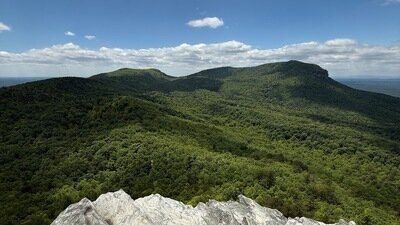
Several hundred projected jobs are not worth permanently sacrificing nearly 1,800 acres of rural land, forests, waterways, historic resources, and community character.
The site lies within a Dan River landscape connected to the Indigenous Saura people, Sauratown Plantation, enslaved people, and generations of Black farming families, including Hairston and Bailey descendants. Archaeological work followed the discovery of a grave in the nearby floodplain, and additional burial or cultural sites may remain undocumented (Laissle, 2026; Southern Coalition for Social Justice, 2026).
Once burial grounds and archaeological sites are disturbed by grading, roads, substations, and industrial construction, they cannot be recreated. ELS’s promise to consider known resources is not enough when undiscovered graves may remain.
ELS says Project Delta would use closed-loop or water-efficient cooling (ELS, 2026). Closed-loop systems may still need water for filling, maintenance, cleaning, humidification, and emergencies. Data centers also consume water indirectly through electricity generation (Siddik et al., 2021).
In rural Morgan County, Georgia, residents near a Meta data center reported that their well water became muddy, discolored, and sometimes unusable after nearby construction began. Federal and state officials gathered information about the complaints, while Meta disputed that its construction or operations caused the problems (Bynum, 2026; Elliot, 2026).
The cause remains unresolved, but the situation shows why Stokes County must independently document wells and groundwater before construction, not after residents report harm.
Data centers operate continuously and use enormous amounts of electricity. Lawrence Berkeley National Laboratory found that they consumed about 4.4% of all U.S. electricity in 2023 and could consume between 6.7% and 12% by 2028 (Lawrence Berkeley National Laboratory, 2025). Duke Energy expects data centers to grow from less than 1% of its peak electricity demand in the Carolinas to approximately 10% of its electricity sales by 2030 (McLaughlin, 2026).
ELS says Project Delta would pay for its energy upgrades and electricity costs (ELS, 2026). That promise must be placed in a binding, public agreement. New power plants, substations, transmission lines, and fuel expenses can raise system costs, which may reach households and small businesses when protections are inadequate.
North Carolina regulators are already examining how to serve large data centers without shifting their infrastructure costs to ordinary customers (Guajardo, 2025). Project Delta, not local families, must pay every project-related electricity and grid cost.
Northern Virginia’s data center expansion has brought complaints about low-frequency noise, diesel generators, industrial lighting, power infrastructure, water demand, and changing rural landscapes. Researchers have identified potential health and environmental risks while noting that more long-term study is needed (Gour et al., 2026).
Stokes County should learn from these communities before approval, not afterward.
We ask Stokes County to reject Project Delta and adopt a temporary moratorium on hyperscale data centers until comprehensive regulations are established at the state and/or federal level.
Before any similar project is considered, the county should require independent studies, not at the direction or recommendation of any prospective developer, of water, wells, stormwater, air pollution, noise, electricity demand, electric-bill impacts, historical resources, infrastructure costs, jobs, tax revenue, and decommissioning.
Stokes County’s history, water, rural communities, and natural environment are resources worth protecting. The people of Stokes County have had enough with the an advantageous economic development agenda from Danbury that continuously disenfranchises many of Stokes County’s most underserved residents. Enough is enough.
Reject Project Delta. Protect the Dan River. Preserve our history. Defend the future of Stokes County. Sign the petition, today!
References (APA)
Bahar, D., & Wright, G. (2026, May 4). New evidence on data center employment effects. Brookings Institution. https://www.brookings.edu/articles/new-evidence-on-data-center-employment-effects/
Bynum, Z. (2026, May 28). AOC presses EPA over Morgan County drinking water concerns as Meta defends Georgia data center operations. CBS News Atlanta. https://www.cbsnews.com/atlanta/news/aoc-presses-epa-over-morgan-county-drinking-water-concerns-tied-to-georgia-data-center-development/
Elliot, R. (2026, May 27). North Georgia neighbors say data center responsible for dirty well water. WSB-TV. https://www.wsbtv.com/news/local/north-georgia-neighbors-say-data-center-responsible-dirty-well-water/YERXGUYXHVAGPIAPQJ6ILVC4BQ/
Engineered Land Solutions. (2026, May 27). Project Delta. https://www.projectdeltanc.com/
Gour, N., Ortiz, L. E., & Maibach, E. (2026). Health implications of the rapid rise of data centers in Virginia: An exploratory assessment. Frontiers in Climate, 8, Article 1648912. https://doi.org/10.3389/fclim.2026.1648912
Guajardo, C. (2025, October 17). State utility regulators grappling with data center energy demand, ratepayer protections. WUNC News. https://www.wunc.org/environment/2025-10-17/data-centers-nc-utilities-commission-duke-energy-ratepayers
Laissle, A. (2026, January 12). Historic land at crux of Stokes County data center controversy. 88.5 WFDD. https://www.wfdd.org/environment/2026-01-12/historic-land-at-crux-of-stokes-county-data-center-controversy
Lawrence Berkeley National Laboratory. (2025, January 15). Berkeley Lab report evaluates increase in electricity demand from data centers. https://newscenter.lbl.gov/2025/01/15/berkeley-lab-report-evaluates-increase-in-electricity-demand-from-data-centers/
McLaughlin, L. (2026, March 13). As data centers drive a power boom, North Carolina faces a costly question: Who pays? WRAL News. https://www.wral.com/news/local/north-carolina-data-centers-ai-power-grid-costs-who-pays-march-2026/
Siddik, M. A. B., Shehabi, A., & Marston, L. T. (2021). The environmental footprint of data centers in the United States. Environmental Research Letters, 16(6), Article 064017. https://doi.org/10.1088/1748-9326/abfba1
Southern Coalition for Social Justice. (2026, May 11). The Hairston Clan, et al. v. Stokes County. https://southerncoalition.org/case/the-hairston-clan-stokes-county/
Stokes County Board of Commissioners. (2026). Statement from the Stokes County Board of Commissioners: Project Delta/data center rezoning. https://www.co.stokes.nc.us/news_detail_T1_R140.php

519
The Issue
We, the undersigned, ask the Stokes County Board of Commissioners and the Stokes County Planning Board to reject any renewed rezoning application for Project Delta, a proposed data center campus covering approximately 1,800 acres near Walnut Cove and the Dan River.
The January 2026 zoning approvals were declared void because required public-notice procedures were not properly followed. Any new application should receive a transparent, independent review before rural and agricultural land is converted to heavy industrial use (Stokes County Board of Commissioners, 2026).
ELS projects more than $40 million in annual tax revenue and 250 to 500 permanent jobs at full buildout (Engineered Land Solutions [ELS], 2026). These are projections, not guarantees. No final operator, construction schedule, incentive package, infrastructure cost, or independently verified jobs analysis has been publicly established.
Data centers can generate tax revenue, but they generally create fewer permanent jobs than many traditional industrial projects of comparable scale. Research suggests the strongest employment gains occur where several facilities cluster, while many construction jobs are temporary (Bahar & Wright, 2026).
Several hundred projected jobs are not worth permanently sacrificing nearly 1,800 acres of rural land, forests, waterways, historic resources, and community character.
The site lies within a Dan River landscape connected to the Indigenous Saura people, Sauratown Plantation, enslaved people, and generations of Black farming families, including Hairston and Bailey descendants. Archaeological work followed the discovery of a grave in the nearby floodplain, and additional burial or cultural sites may remain undocumented (Laissle, 2026; Southern Coalition for Social Justice, 2026).
Once burial grounds and archaeological sites are disturbed by grading, roads, substations, and industrial construction, they cannot be recreated. ELS’s promise to consider known resources is not enough when undiscovered graves may remain.
ELS says Project Delta would use closed-loop or water-efficient cooling (ELS, 2026). Closed-loop systems may still need water for filling, maintenance, cleaning, humidification, and emergencies. Data centers also consume water indirectly through electricity generation (Siddik et al., 2021).
In rural Morgan County, Georgia, residents near a Meta data center reported that their well water became muddy, discolored, and sometimes unusable after nearby construction began. Federal and state officials gathered information about the complaints, while Meta disputed that its construction or operations caused the problems (Bynum, 2026; Elliot, 2026).
The cause remains unresolved, but the situation shows why Stokes County must independently document wells and groundwater before construction, not after residents report harm.
Data centers operate continuously and use enormous amounts of electricity. Lawrence Berkeley National Laboratory found that they consumed about 4.4% of all U.S. electricity in 2023 and could consume between 6.7% and 12% by 2028 (Lawrence Berkeley National Laboratory, 2025). Duke Energy expects data centers to grow from less than 1% of its peak electricity demand in the Carolinas to approximately 10% of its electricity sales by 2030 (McLaughlin, 2026).
ELS says Project Delta would pay for its energy upgrades and electricity costs (ELS, 2026). That promise must be placed in a binding, public agreement. New power plants, substations, transmission lines, and fuel expenses can raise system costs, which may reach households and small businesses when protections are inadequate.
North Carolina regulators are already examining how to serve large data centers without shifting their infrastructure costs to ordinary customers (Guajardo, 2025). Project Delta, not local families, must pay every project-related electricity and grid cost.
Northern Virginia’s data center expansion has brought complaints about low-frequency noise, diesel generators, industrial lighting, power infrastructure, water demand, and changing rural landscapes. Researchers have identified potential health and environmental risks while noting that more long-term study is needed (Gour et al., 2026).
Stokes County should learn from these communities before approval, not afterward.
We ask Stokes County to reject Project Delta and adopt a temporary moratorium on hyperscale data centers until comprehensive regulations are established at the state and/or federal level.
Before any similar project is considered, the county should require independent studies, not at the direction or recommendation of any prospective developer, of water, wells, stormwater, air pollution, noise, electricity demand, electric-bill impacts, historical resources, infrastructure costs, jobs, tax revenue, and decommissioning.
Stokes County’s history, water, rural communities, and natural environment are resources worth protecting. The people of Stokes County have had enough with the an advantageous economic development agenda from Danbury that continuously disenfranchises many of Stokes County’s most underserved residents. Enough is enough.
Reject Project Delta. Protect the Dan River. Preserve our history. Defend the future of Stokes County. Sign the petition, today!
References (APA)
Bahar, D., & Wright, G. (2026, May 4). New evidence on data center employment effects. Brookings Institution. https://www.brookings.edu/articles/new-evidence-on-data-center-employment-effects/
Bynum, Z. (2026, May 28). AOC presses EPA over Morgan County drinking water concerns as Meta defends Georgia data center operations. CBS News Atlanta. https://www.cbsnews.com/atlanta/news/aoc-presses-epa-over-morgan-county-drinking-water-concerns-tied-to-georgia-data-center-development/
Elliot, R. (2026, May 27). North Georgia neighbors say data center responsible for dirty well water. WSB-TV. https://www.wsbtv.com/news/local/north-georgia-neighbors-say-data-center-responsible-dirty-well-water/YERXGUYXHVAGPIAPQJ6ILVC4BQ/
Engineered Land Solutions. (2026, May 27). Project Delta. https://www.projectdeltanc.com/
Gour, N., Ortiz, L. E., & Maibach, E. (2026). Health implications of the rapid rise of data centers in Virginia: An exploratory assessment. Frontiers in Climate, 8, Article 1648912. https://doi.org/10.3389/fclim.2026.1648912
Guajardo, C. (2025, October 17). State utility regulators grappling with data center energy demand, ratepayer protections. WUNC News. https://www.wunc.org/environment/2025-10-17/data-centers-nc-utilities-commission-duke-energy-ratepayers
Laissle, A. (2026, January 12). Historic land at crux of Stokes County data center controversy. 88.5 WFDD. https://www.wfdd.org/environment/2026-01-12/historic-land-at-crux-of-stokes-county-data-center-controversy
Lawrence Berkeley National Laboratory. (2025, January 15). Berkeley Lab report evaluates increase in electricity demand from data centers. https://newscenter.lbl.gov/2025/01/15/berkeley-lab-report-evaluates-increase-in-electricity-demand-from-data-centers/
McLaughlin, L. (2026, March 13). As data centers drive a power boom, North Carolina faces a costly question: Who pays? WRAL News. https://www.wral.com/news/local/north-carolina-data-centers-ai-power-grid-costs-who-pays-march-2026/
Siddik, M. A. B., Shehabi, A., & Marston, L. T. (2021). The environmental footprint of data centers in the United States. Environmental Research Letters, 16(6), Article 064017. https://doi.org/10.1088/1748-9326/abfba1
Southern Coalition for Social Justice. (2026, May 11). The Hairston Clan, et al. v. Stokes County. https://southerncoalition.org/case/the-hairston-clan-stokes-county/
Stokes County Board of Commissioners. (2026). Statement from the Stokes County Board of Commissioners: Project Delta/data center rezoning. https://www.co.stokes.nc.us/news_detail_T1_R140.php
The Decision Makers


Supporter Voices
Petition Updates
Share this petition
Petition created on July 7, 2026