

Protect Aotearoa's Rare Fungi, Frogs and Forest at Wharekirauponga from Destructive Mining
The issue
Wharekirauponga Forest in the spectacular Coromandel Peninsula of Aotearoa, New Zealand, along with the environments' rare endangered frogs and magical fungi, are under threat from destructive mining. Have your say and protect the whenua today! Read on to learn more...
"Humanity must shift from living "on" the Earth, to living with her: one is domination, the other is relational." - Tiokasin Ghosthorse
"We live in a world that is full of problems and we are the solutions to those problems." - Julia Butterfly Hill
"The most radical thing any of us can do at this time is to be fully present to what is happening in our world." - Joanna Macy
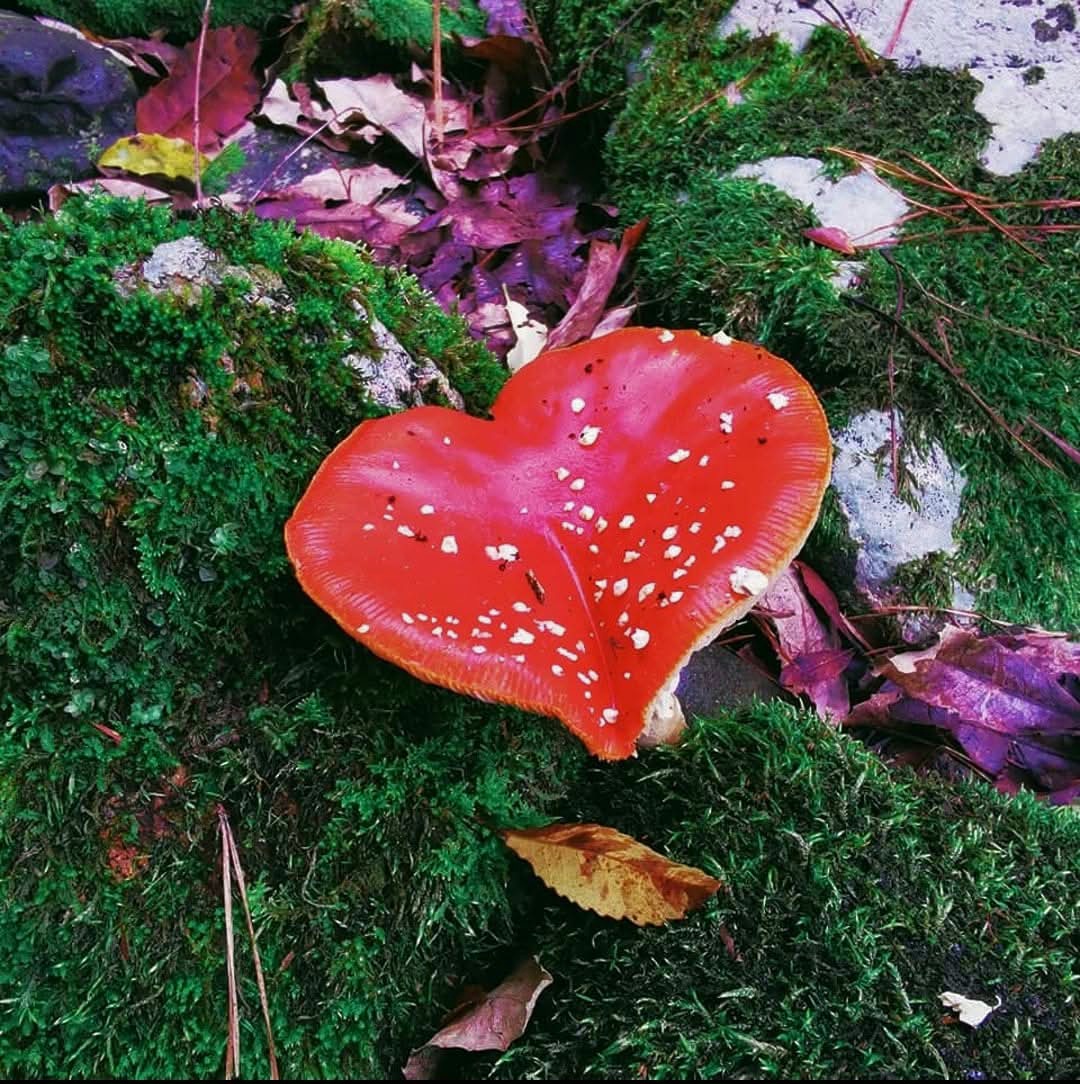
Have you ever loved the land so much that you knew deep within your bones, in your breath, and your being, that she, the land, loved you back? When you know the land well, she knows you well in return. This is the relationship that is enheartened by reciprocity that my literary and botany hero Robin Wall Kimmerer speaks on in her animist affirming, book of Earth ecology and Anishinaabe spiritual insight, Braiding Sweetgrass. We share so much with the Earth, our first and our last breaths, our lives and our deaths. And so it is our responsibility and gift as humans to protect this sacred love we have for the land that sustains us and that we can sustain.
We have that reciprocal relation of respect that we can recieve and gift between us and the Earth. We can tap into at all times, as a kind of living love that we can awaken through our hands and feet as we walk and grab things in our sapien ways. I have known that love with many lands I have come to meet through walking around Aotearoa, the whenua in which the life of my blood flows like the river of Waipā beneath Maunga Kakepuku where my iwi, Ngāti Maniapoto are from. I have come to understand that the whenua and our umbilical bond to her is a birthright but also responsibility of care, for whenua is the Māori word for both "placenta" and "land". Its why the placenta of a newborn is often buried and returned to the land in many cultures, including in Te Ao Māori cultural traditions. My placenta was buried in a pot of rich soil and helped grow a tree from that pot. For that is where we all return to, the land. This is what makes our role as Earthlings so sacred. The Earth and her beings are our home kin. We live with them.
I have walked and learned many parts of the native ngahere, in the bush of Aotearoa. From the Kaimais to the Te Ureweras and beyond and I will continue to do so for the rest of my life. But one place always comes back to me fondly, one that I yearn to return to, where my body-mind finds rest and recompense. That place is Wharekirauponga, a whenua with a tapu of wairua (spirit), almost in a way where the land feels energetically strong with spiritual energy, the Genius loci , the spirit of the place. It is lush with life out there, and I feel that I need to share my love for Wharekirauponga. I feel so much mutual aroha with Wharekirauponga to the depths of my own veins. If you're by chance wondering how to say Wharekirauponga, I'll break it down, Wha-re-ki-rau-po-nga. Ka pai! It took me a little while to learn how to say the whenua's name off by heart. The main thing you need to know is that the Wharekirauponga region is an ecological taonga stewardship whenua. Its rich biodiversity and reclaimed landscapes represent not only national heritage but also most importantly, holds significant ecological value that benefits the entire country and planet. Many rare and endangered species, including some frog species unique to New Zealand and vulnerable fungal varieties, call this place home. The biodiversity of the Wharekirauponga Forest is absolutely worth protecting and cherishing.
Wharekirauponga Forest is an ecological reserve or stewardship land looked after by DOC (The Department of Conservation). Wharekirauponga is located in the Parakiwai Valley of the Coromandel Forest Park, just below Whangamata and above Waihi in the North Island of New Zealand. It is where a massive proposed mining project, the Waihi North Project, is being carried out by OceanaGold. They at this very moment, are developing their industrial deep underground mine beneath the Wharekirauponga Forest area to plunder gold and silver from the bowels of the earth. On the Waihi North Project website, OceanaGold says that "This project displays OceanaGold’s ability to continue to support economic growth, create high-paying jobs, generate royalties, support communities, and boost exports at the same time as making a positive contribution to the environment." I find this to be ludicrous when liason with iwi and the wider communities of Aotearoa, has not happened to a sufficient extent, unless of course they're hiring you. This is a project for profit, not people and planet.
But here's some good news, this is the awesome part in recent times. Just as of the 22nd of April, 2026, the Coromandel Green Party of Aotearoa, New Zealand and the environmental activism org Ours Not Mines, celebrated a massive win in the Court of Appeal. They got approved a consent for protections for parts of Wharekirauponga, by voiding the unlawful license granted by the Hauraki District Council to OceanaGold. Ours Not Mines has spent the past three long arduous years fighting to stop OceanaGold's licence for a paper road needed for their proposed underground mine at Wharekirauponga. This is undoubtedly a huge, moving win for noble conservation efforts from Coromandel and Waihi locals and ecohearted people beyond throughout the motu. OceanaGold plans to tunnel 7km beneath Wharekirauponga Forest. Their projected intentions for this mine, apparently requires four large ventilation and escape shafts above ground for safety reasons. But this also, could leave the whenua even more vulnerable, as it means that pollution from the mines can get out. It has likely happened before from past mining expeditions in Wharekirauponga. Ours Not Mines co-founder, Morgan Donoghue, said this about the mine plan...
"The reality is, it's underground, but you're still going to have to pull all of the tailings out of the ground. It's going to be a huge mess. And if something happens, a major once-in-a-100-year weather event, which seems to be happening more than once a year now, then that could wash all of that toxic tailings into the rivers."
- Morgan Donoghue, Ours Not Mines Co-Founder and big name in the NZ music industry
But also, you see, I was out at Wharekirauponga back in 2021, and deep in the bush, past the mine entrance by the suspended bridge and pristine waterfalls, beyond that and into the foothills, I saw helicopter landing pads in the shrubland. I was perplexed. There were long blue hydraulic pipes stretching for miles down dirt tracks with young Kauri being baked by the sun beside all sorts of strange, spongy Reindeer moss and lichens that were out of this world yet of this world. Even back then, the forest was spectacular and sacred yet wounded by the past, the present and the future. Either DOC was already out there doing conservation work, I mean DOC use helicopters and there was a boot cleaning station for Kauri Dieback prevention out there too. Orrrr, hmmm maybe OceanaGold was already setting up their operations back then. And as it turns out, in that same year of 2021, that was when the Hauraki District Council gave / sold OceanaGold a 40-year long lasting license over a paper road the council owned, allowing the gold mining company to install those 10 m² vents above ground for the tunnel below ground.
If you're wondering, "what's a paper road?". Well in basic terms, it's an unformed legal road. They, in legality, exist on paper and won't show up on usual road maps. Paper roads exist all over Aotearoa, they are public land with public access, typically 20m wide. Road rules apply although driving is often difficult. Sometimes paper roads are a farm track, sometimes it's a cliff, sometimes it's bush, sometimes it's the Te Araroa Trail. The paper road at Wharekirauponga that OceanaGold bought is legally designated as a public road, but it is indistinguishable from the surrounding forest and not easily accessible, even on foot. So in a place like Wharekirauponga, the vents would need to be dropped in by helicopters. OceanaGold would have paid just $1 a year to use it. OceanaGold, a multi-million dollar company that already owns the gargauntuan spiral of gold sickness that is Martha Mine in Waihi, only paying $1 a year is criminal. And guess how much they paid the Hauraki District Council for the sale of the paper road??? . . . $40 measly dollars for a 40 year long license. I have two words. Complicit. Theft. The people on the council that you can't eat your greed, it's poisonous.
"Only when the last tree has been cut down, the last fish been caught, and the last stream poisoned, will we realize we cannot eat money."
- Alanis Obomsawin
But ka pai to the local and national bodies and hearts that have helped in this fight and surely will continue in this defense of Papatūānuku. Unfortunately OceanaGold senior vice president for Legal and Public Affairs, Alison Paul said in a statement to RNZ, that the mine, including an option for alternative vent locations, had already been approved. In her statement, she said...
"While we are surprised by this decision, it is important to understand that it in no way affects the fast-track approval of the Waihi North Project, which we received in December 2025 or the Company's plans. Our timeline for project development and eventual ore production from Wharekirauponga remains unchanged."
- Alison Paul, OceanaGold Senior Vice President for Legal and Public Affairs
Just when you think that things could get better they get worse, what a gutpunch. But honestly, this is a fight worth living for! OceanaGold are not as powerful as the voices as the people when we stand together for the wellbeing of the whenua. I feel that more activism needs to be done to stop OceanaGold from conducting this mad mining enterprise in the crystalline coasts and fabled forests of the Coromandel.
The experts know that the Waihi North Project threatens to disrupt the natural habitats of Wharekirauponga through underground mining activity. Even OceanaGold knows it, they know the ecology is there, they don't forget it. They and the mining industry just forget to care about the whenua enough to leave her to breathe. They don't forget about how to line the pockets of the economical wealthy people of the powers that be. But what they can learn, and what we can heed, is a call to awareness, to know this has the great and dire risk to lead to habitat destruction, pollution, and potentially irreversible ecological change. We can know and that means we can do something about it. We can know and we can care.
Wharekirauponga may have been mined in the past but it waned out, those days are done, let the land live. And past experiences from similar mining projects in biological hotspots have shown that with stringent and respectful cultural and environmental protections, mining operations can cause detrimental impacts on local wildlife. This happens through soil and rock erosion, pollution and vegetation loss, leading to the decline of biodiversity. This proposed mining project is also a blatant disrespect of Te Tiriti o Waitangi, Tangata Whenua and Papatūānuku above all. Have Kiwis across New Zealand been adequately asked if they would support something like this? I don't think so, not with transparency and a balance of decision making rights. It's not democratic. It's the Fast Track subsidized sale of capital. But we don't need to meet the mining industry on their terms alone. We should speak up together, even when they plan to steam ahead. We can't let them silence us in the name of progress. Mining is a destructive detriment to our morals and wellbeing as New Zealanders. We cannot let something like this to continue if we want to embody the ethical country we can be for all our inhabitants.
Our home, Aotearoa, New Zealand is also home to a remarkable diversity of native and introduced flora and fauna, many of which are found nowhere else in the world. In my short time on this Earth, of only 26 years, I have grown in my immense gratitude for these species, whether they be a Kererū, a Kauri tree, a Pekepeke-kiore fungus, or a Mouku fern. However, this unique biodiversity of Aotearoa, is under increasing threat and harm from human activities, especially industrial and historic mining. It has to stop if we are going to look after our lands and people with love. Aroha ki te whenua, aroha ki te tangata.
Most would say or rather "think" with their heads, that the environmental crisis is a crisis of the mind, a "mental" one. After all, it's in the name environ-"mental". But how often do we struggle to process the environmental crisis with our minds alone. We usually try and fail that first. That's human, and a primal response to grief. From the most "expert" and "experienced" environmentalists, to your average deeply concerned human being, we all may really struggle to use our minds to try and process the doom we feel around climate change, the increase in once-in-100 year storms or the plastic pollution issue or even mining. But I don't think, rather I feel that maybe we've got it a little wrong when we try to "fix" or "fast" to nature with our minds. The environmental crisis is rather, a crisis of the heart. Our minds are so often misaligned with our hearts. We need to let our hearts break AND beat for the Earth to understand her first before standing over her pondering "what can I take from you" or "how can I leave you" (looking at you Elon Musk). Rather than merely ponder with your mind alone, wonder with your heart too. It is from the Earth that all our hearts gather the elements to simply exist. The iron in our blood that is pumped around our body to survive, comes first from the ground, from the soil and the silt. And then it is gifted to plants and from plants to animals as each feeds on one another. This is the Lakota Give-Away ceremony in natural action; one life sharing life with another. It's the passing on of a possession of importance to you and the reciever, knowing that the circle will complete with the gift returning to you, yet changed by the hands that have held and loved the gift in the braid of connection.
But mining doesn't operate on gift giving, it takes something that was gifted to stone. It goes to the heart and bones of the earth and rips out the blood and marrow of the land: the coal, the silver, the gold, the crystals and all and "refines" or "redefines" it all into "resources". A miner forgets that the very same minerals he harvests from the stone, the elements of the Earth, are already in his bloodstream. We don't need to go hew rock and explode mountain gullies or drill deep pressure into the underbelly of the Earth to appreciate it for already being there. We, you and I and the miners are human but we are also nature. All these mining machinations are the manifestation of greed for what politicians in power call "Mother Nature's legacy". But they didn't get gifted that legacy, no, they are trying to buy and sell that legacy to the highest bidder. It's not done in a respectful kaupapa.
Mining is and has been a huge industry here in New Zealand, for generations in fact. But unfortunately the wounds continue to be wrought. And we are running out of places to consider sacred and special for us Kiwis of all cultures. Here in New Zealand, the mining industry mainly mines for coal for fossil fuels, and gold and silver for technology. These minerals are sold on the international scale with world economics having a growing vested interest in New Zealand's "precious rare minerals". The fact that we even call them that, should be a testament to why they should be left alone. If they are precious, protect the land those minerals belong to, don't treat them as products for power and product. One of the biggest looming shadows in this rigged game of revenue with mining operations in Aotearoa, is the USA and Trump's corrupt Machiavellian administration, who on a world stage, seek to buy out the land and its exports through New Zealand's profit hungry politicians like our Prime Minister Christopher Luxon, morally bankrupt lobbyists and their patriachal policies of dominating the Earth rather than trying to relate to her. This egregious disregard for the Earth continues to let the land slide into destruction, all to keep the economy going at the expense of so many ecosystems, like that of Wharekirauponga. You and I can do something by learning to love the land, like I have with her, with Wharekirauponga.
I used to visit Wharekirauponga Forest back in 2020 and 2021 a lot, right around the pandemic when everything was chaotic and confounding with covid. I was living in Whangamata at the time and I would ride my mountain bike out there. It was there in Wharekirauponga, in the rugged gullies and alluvial riverside forest paths paved with either soft or muddy soil, where I spent most of my days in my free time. It was a sanctuary I grew to respect by breathing with the bush of the Parakiwai Valley. This was deeply soothing and nourishing for my hollistic health. I would walk peacefully and slowly through te taiao as my meditation practice, something I still do to this day just being a wild natural being in the forests of New Zealand, my home, my haven.
I would be out there at Wharekirauponga, mostly observing, photographing and documenting rare species of native and introduced fungi species and immersing myself in that mycological environment for hours and hours. Back in 2020, I found so many species out there. There was Armillaria novae-zelandiae, Mycena ura, Hericium novae-zelandiae, Oudemansiella mucida, Tremella fuciformis, Cruentomycena viscidocruenta, Ileodictyon cibarium, Podoscypha petalodes, Galerina patagonica, Schizophyllum commune, Amanita muscaria, and so many more species. I posted some of my own photos of these fungi and mushrooms that I have found in the WharekiraupongaI Forest below, which I hope you will all appreciate as a reminder of what we want to protect. I have also labeled each photo with what species the fungi are.
I also learnt about Kauri trees for the first time on my walks at Wharekirauponga, and formed a relational respect for the "rickers", the young Kauri trees which grow high and tall towards the sun to be in the emergent canopy, the overstory of the ngahere. Kauri trees share a history with whales in Te Ao Māori. Once, long ago the ancestor spirit of Southern right whales, Tohorā, and the ancestor spirit of Kauri trees both lived on land. They were siblings, brothers to one another. One day, Tohorā looked out from the forests to the ocean, and he yearned to see what is out there in the blue beyond. Tohorā asked his brother the Kauri Tree to come with him go live in the ocean, but the Kauri couldn't bear to leave his home in the realms of Tāne, in the ngahere and puihi, the forest and bush. And so the brothers were at an impasse. To ammend this, Tohorā and Kauri exchanged the gift of each other's skins for protection in their new lives. Tohorā gave Kauri his flesh in the form of resins and bumpy but smooth bark to stop epiphytes from growing on him. And Kauri gave Tohorā his blubber from the Kauri trees tannins and oils to keep him warm under the water. And so Kauri remained rooted to the foothills of the coast, watching out as his brother Tohorā swam in the ocean. They continue to do this today. Both Kauri and whales have suffered immensely from exploitation and death at the hands of harmful humans with speargun or saw. Whales are continued to be affected by things like international boat travel, pollution, krill fishing, bottom trawlling and even illegal whaling in some places of the world.
Later, I would learn that Wharekirauponga also has rare and very small Archey's Frogs hiding in the bush. You should always leave Archey's Frogs alone to exist away from humans. Archey's Frogs, are considered "living fossils" as their species, Leiopelma archeyi, have changed little over the past 150 - 200 million years! These are primordial and very unique frogs. Especially considering that they don't have a tadpole stage like most frog species. The father frog's foster, protect and carry the eggs that the mother lays, then the eggs hatch with tiny Archey's Frogs that go on to live around rivers and in the native bush of remote parts of the country. This extant species of frog is also categorised as Nationally Vulnerable under the New Zealand Threat Classification System and as Critically Endangered on the IUCN Red List. It is estimated that today there is only between 5,000 and 20,000 frogs that could exist in the wild. Keeping these frogs safe from human activity and staving off invasive predators is crucial.
Deep underground mining seriously puts these beloved and significant native species of flora, fauna and funga, at risk. For fungi, the process of mining alters soil pH, reduces organic matter, and introduces heavy metal pollution, which shifts microbial communities from complex natural ecosystems to simplified systems dominated by stress-tolerant fungi. This would lead to a great loss in fungi diversity, as remember, mushrooms are only the above-ground reproductive aspect of the organism that is fungi. Most of the organism is below the ground with the miles of hyphae stretching out in mats of mycelium. This mycelium and mycological communities are extremely sensitive to any environmental change, whether big or small, it all touches something somewhere. Like a web of life, when one strand hyphae in the mycelium is affected, the rest of the organism responds in suit and so their growth is stunted by mining. Before humans looked to the veins of mountains for profit and products as the pickaxe of capitalism was hewn into stone, fungi were already mining naturally, being the first miners in fact. Fungi break down bedrock and stone through the secretion of digestive enzymes or their incredibly resilient hyphal threads that make up mycelium, dissolving their food and the barriers of the Earth. They can push and break through stone through the pressure that these hyphae can exude in strength too. They do all of this to make soil from lignin and stone.
Lichens still do this, through a symbiosis of cyanobacteria (algae) and fungi. And lichens are bountiful in the area because while Wharekirauponga has been mined in the past, she has reserved her right to be rejuvinated and to breathe clean air for these wonderful species to grow slow. Lichens are a tohu, a sign of health in a forest ecosystem. They too, would be acutely affected by this proposed profit project of mad man made mining that will pollute the air, the soil and the water that would otherwise help them grow. I think back to that strange and spongy Reindeer moss lichen I came to breath with in the foothills of Wharekirauponga and my soul aches to think of them dying at the expense of an underground mine.
For Kauri trees, deep underground mining affects them by introducing problems like ground subsidence and acidification, which degrades the soil. When the soil is degraded, it is hard for Kauri trees to set down strong roots which leads in turn to death and decay of Kauri stands. Also, mining boots and equipment can contribute to the spread of the soil-borne pathogen Phytophtora agathicida, which causes the devastating Kauri Dieback Disease which at the moment is decimating Kauri populations, in large part due to human industry and activity. If Kauri Dieback spreads further, we may lose our taonga species of Agathis australis, which have endured so much hardship and trauma with the likes of kauri gum mining, logging and disease.
And for our direly endangered friend, the Archey's Frog, well their skin is extremely porous; they essentially breath through their skin. Because they breathe through their skin, it also grants them the gift and the curse to be able to breathe in their environment, by absorbing water and chemicals from the Earth around them. When mining comes into play in precious forests, frogs are often on the front lines being hurt first as they absorb the pollutants that mining leaches out into the environment. So Archey's Frogs would only be put under more ecological strain and pressure as a result of the Waihi North Project at Wharekirauponga. This scares me for the wellbeing of these spectacular frogs!
All of these reasons are a call to action. A call to say something, to do something in the face of this deeply concerning time and space we are in for our planet and people. If we don't stand up for something, stand up for the Earth, we won't have much else to stand upon. I will be writing a letter of support for this petition. This letter of support will have each of your signatures on it as people who have put down signatures of support for protecting Wharekirauponga. I will be emailing this letter of support to the Prime Minister (whoever he or she or they may be after November 7th and onward) as well as the mayor of the Hauraki District Council, Toby Adams, along with his fellow councilors once enough signatures are reached.
As for those working for OceanaGold, I urge those of you with a voice in your "Company" that care, say something, do something. This is about your future too. I also urge any other relevant authorities, political parties or conservation organizations to carefully consider their kaupapa, their approach to the Waihi North Project. My hope is that with a new party government to fund it, having a third party or DOC first conducting as many thorough environmental impact assessments as possible. OceanaGold should also be adhering to international conservation standards, and engaging with the local community, liasing with iwi and listening to ecological experts that know far more than I do. Significant steps must be taken to ensure that any economic benefits of mining do not come at the expense of the irreplacable Aotearoa we and our more-than-human-kin call home.
As for all of us, remember this, the origin of the words economy and ecology, stem from the same root, the Greek oikos which means "home". The economy should be in service to our home, to the whole ecology and ecosystem, not the other way around where the ecosystem is in service to the economy. To remind us of this deeply, I have featured a poem below as well that I wrote, it's a further, more fixated glimpse into my true feelings around mining, war, genocide, the environment, the anthropocene, and our collective humanity in poetic verse. The poem is near and dear to my heart.
So please, help me in calling for the mining company OceanaGold to be held accountable to their environmental responsibilities as humans behind the mining industry here in Aotearoa. By signing this petition, you will help to ensure that the stewardship whenua of Wharekirauponga remains a sanctuary for its diverse and irreplaceable wildlife, safeguarding it for future generations of us and our more-than-human kin. Your voice is vital in protecting Aotearoa’s unique natural legacy. Say NO to mining! Say YES to your fellow fungi, frogs and forests! Sign the petition today to make a difference!
Ko au te whenua, te whenua ko au – I am the land, and the land is me.
"One way to stop seeing trees, or rivers, or hills, only as 'natural resources' is to class them as fellow beings - kinfolk." - Ursula K. Le Guin
"I don't know what happened first: that we forgot the Earth loves us, or that we forgot we love it." - Willow Defebaugh
"Knowing that you love the earth changes you, activates you to defend and protect and celebrate. But when you feel that the earth loves you in return, that feeling transforms the relationship from a one-way street into a sacred bond." - Robin Wall Kimmerer
I've got to hand it to you
African terracotta
that has stored honey
for some 3000 years
breaks open like a heart.
A fascinated miner
unearths his body
in the fruits of labor.
He thinks with the rush,
"finally I've found it!"
in mountain veins and river arteries
as if iron, carbon, even gold
is somehow forgotten, forsaken, foreign
from his own form.
However, over many births
we all take ourselves earnestly
enough to repair, postmortem,
to dress up wounds
with aureate intentions.
But don't you know
in the waking of your life
that if we bleed dry
the land from our hands,
that there will be little room left
for us to be rooted in respect?
Honey, pick up the pieces,
the Earth has known you
peacefully, before and beyond
the wars we waged worldly in her name.
Her water you drink
amniotic and alive
has held you and been shed
in every tear cried
and poured out by children
carrying water home after school.
They who will be remembered
by painted hands in a classroom,
and not by the hands of genocide
that destroy it.
And honey, you know
the world is breaking open
with every heart,
each ache, a question
asking you quietly:
Will you take sweetness for yourself?
Or will you offer it back to her?
The choice is in our hands.
A poem by Hazel
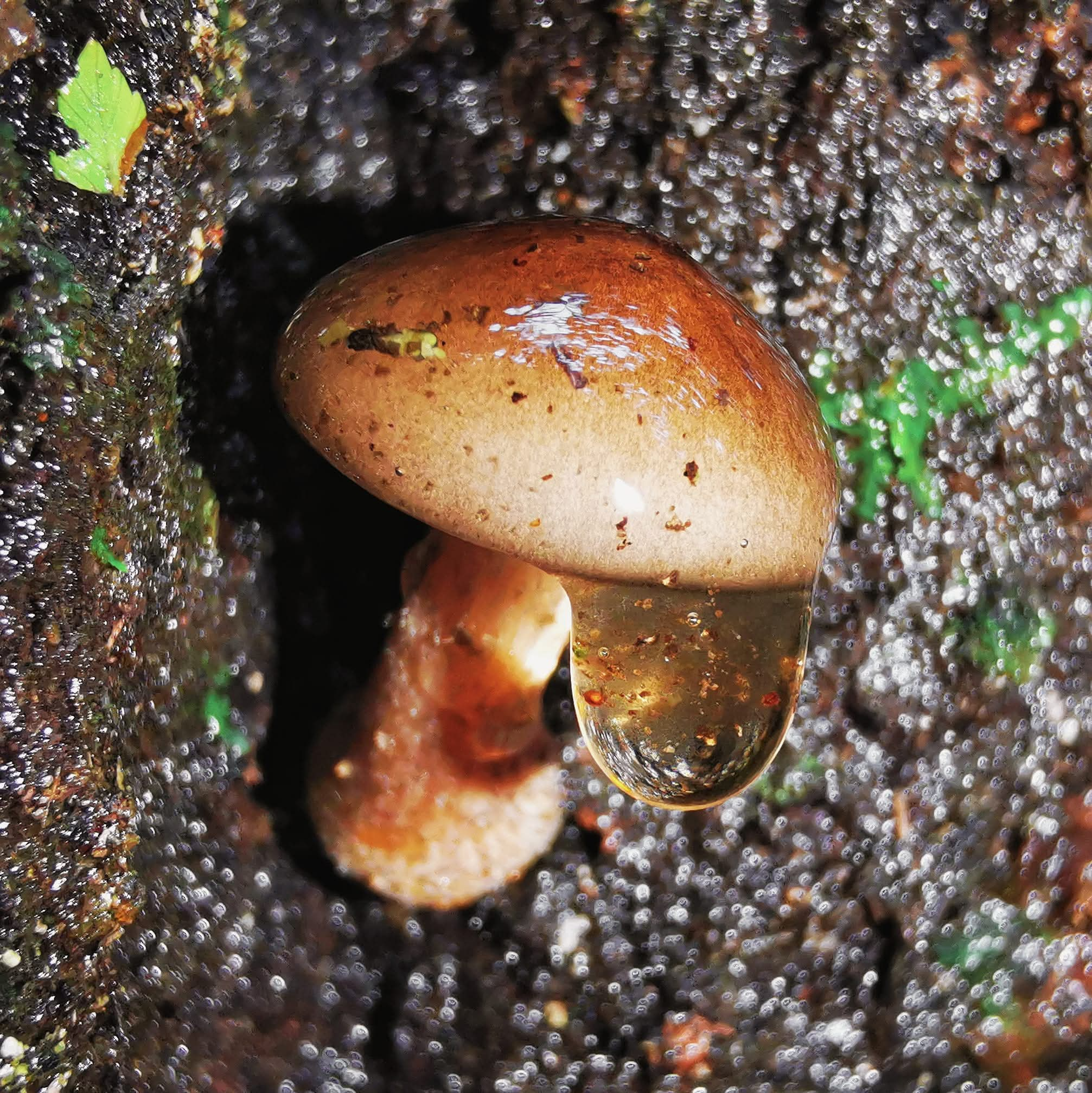
Harore / Armillaria novae-zelandiae / Honey Mushroom
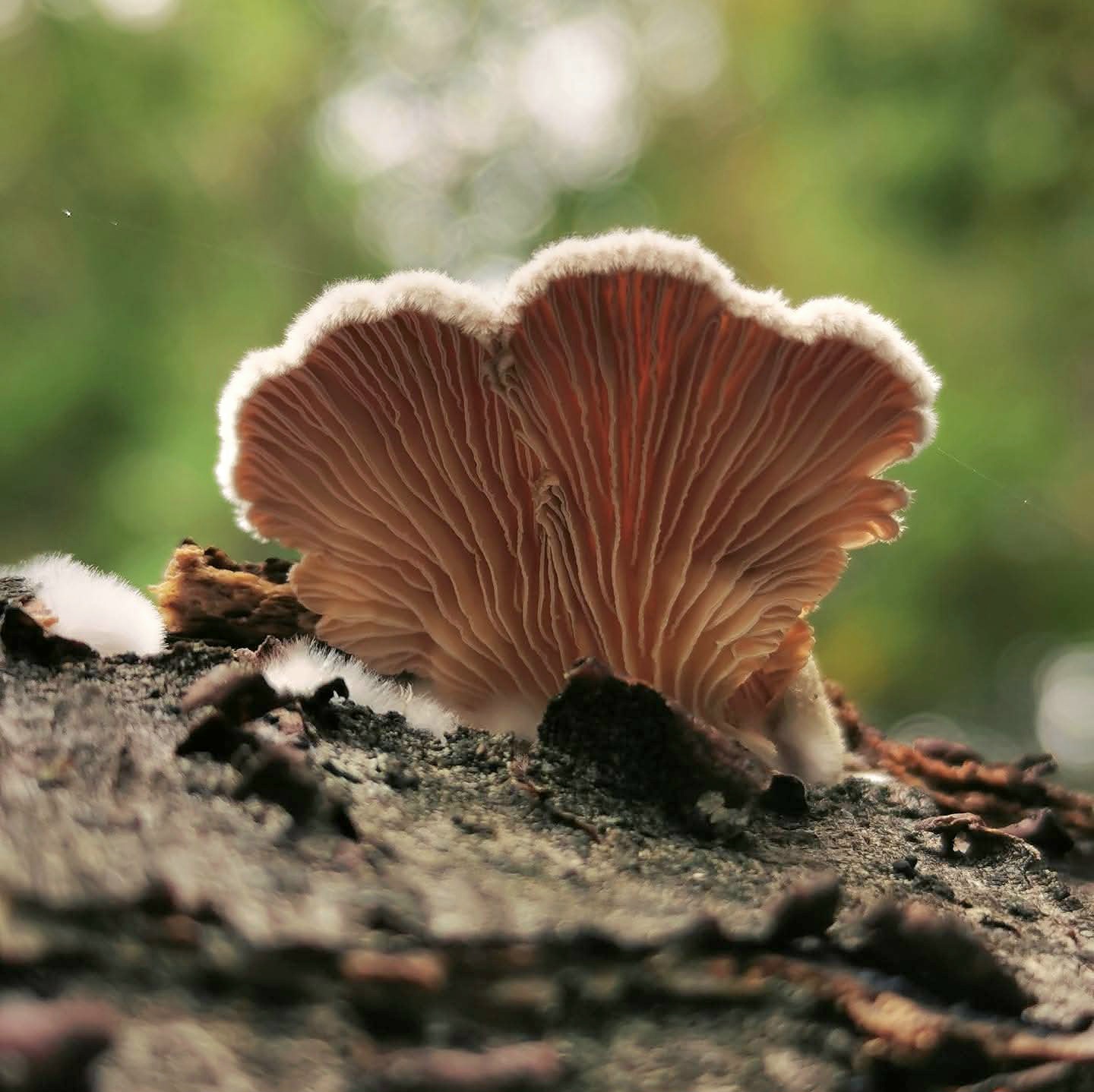
Schizophyllum commune / Split-Gill Fungus
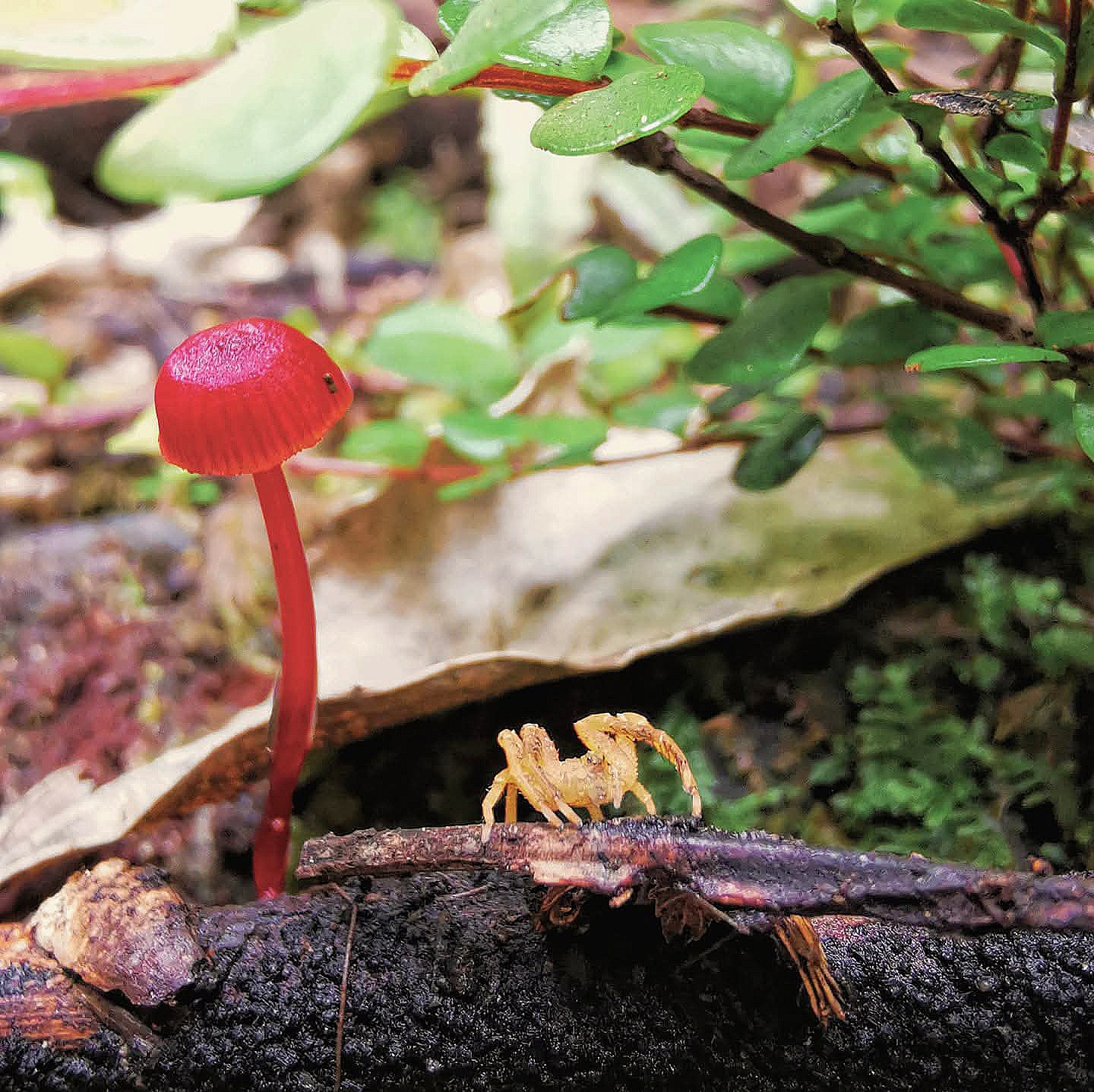
Cruentomycena viscidocruenta / Ruby Bonnet
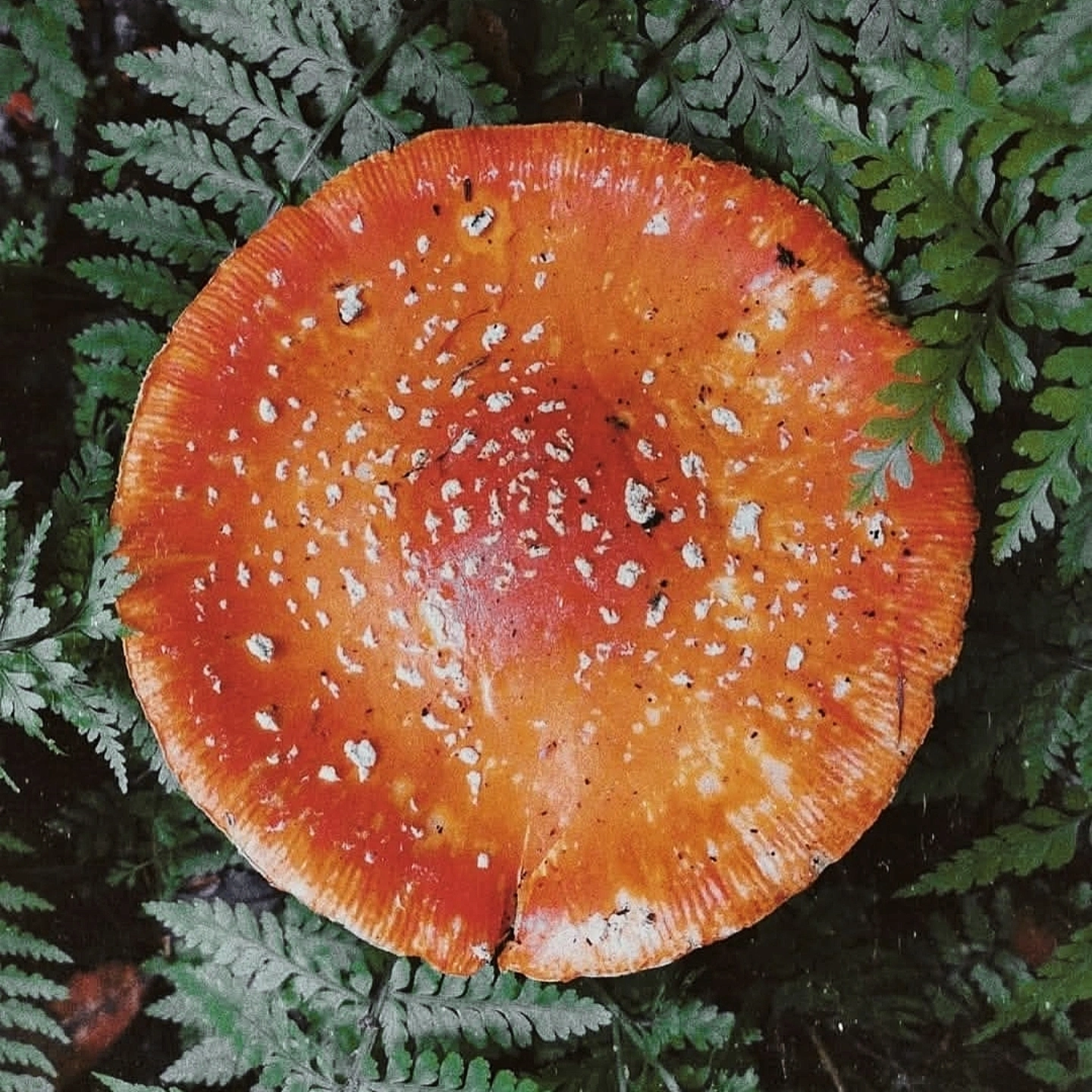
Amanita muscaria / Fly Agaric
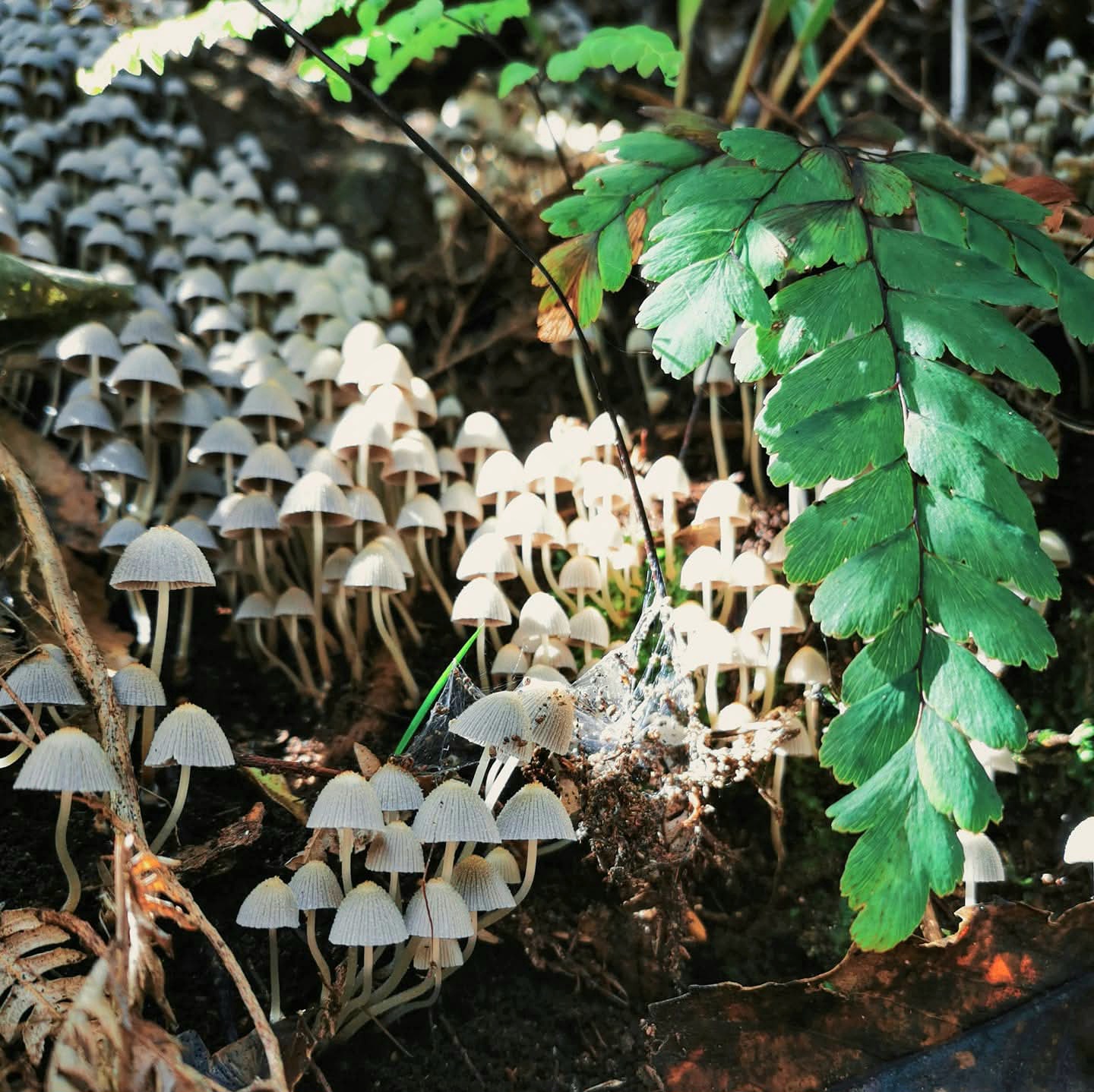
Coprinellus disseminatus / Fairy Inkcaps
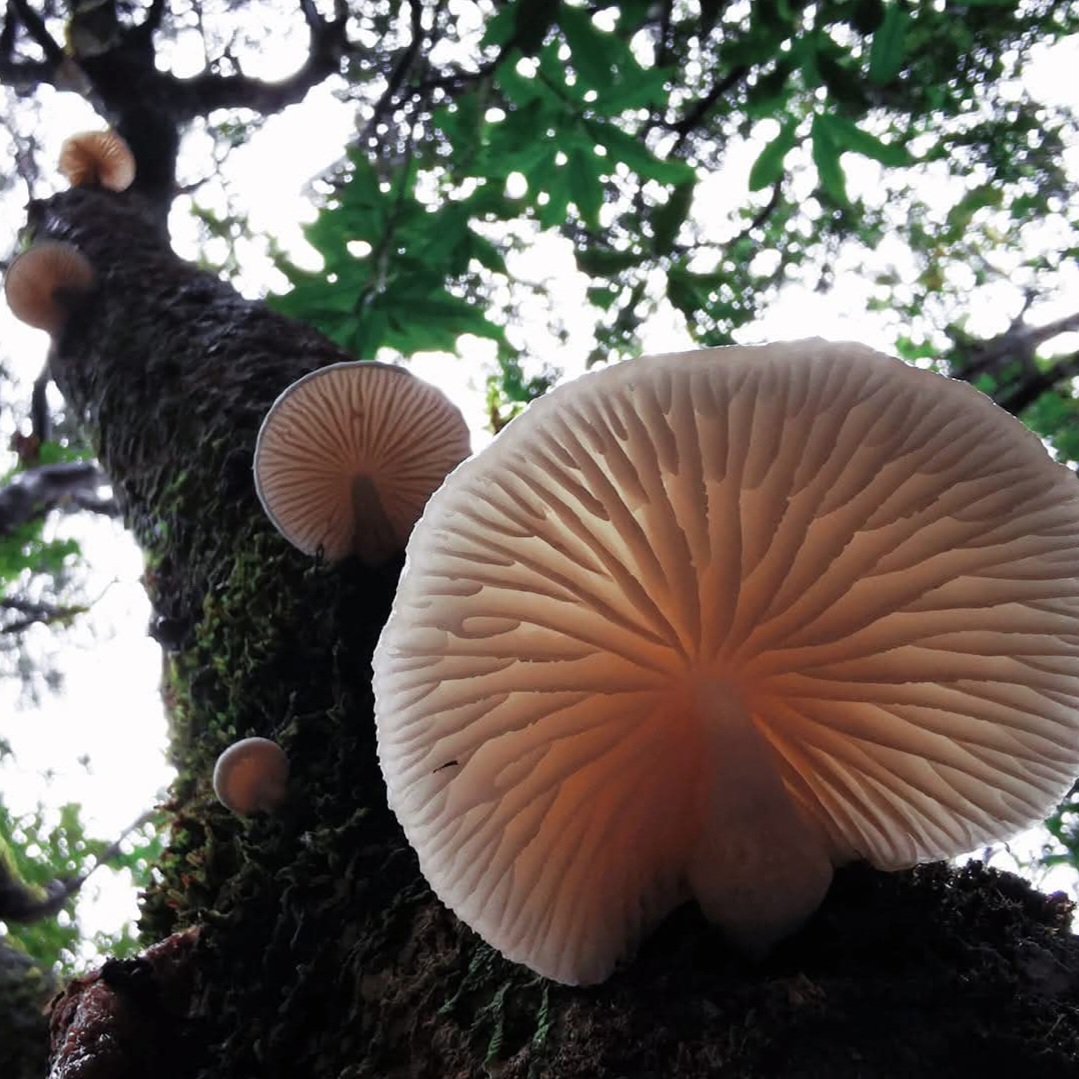
Oudemansiella mucida / Porcelain Slimecap
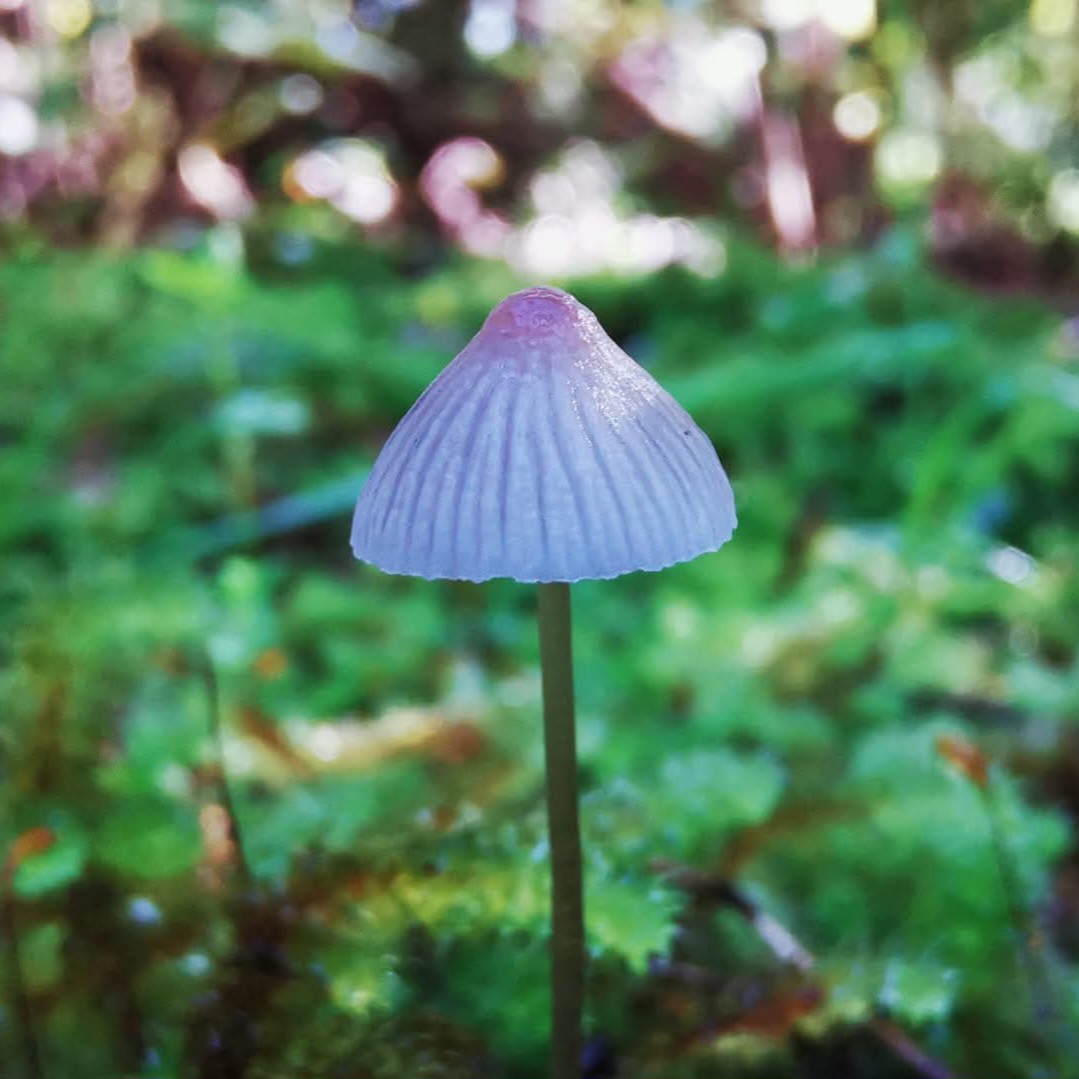
Mycena cystidiosa / Tall Mycena
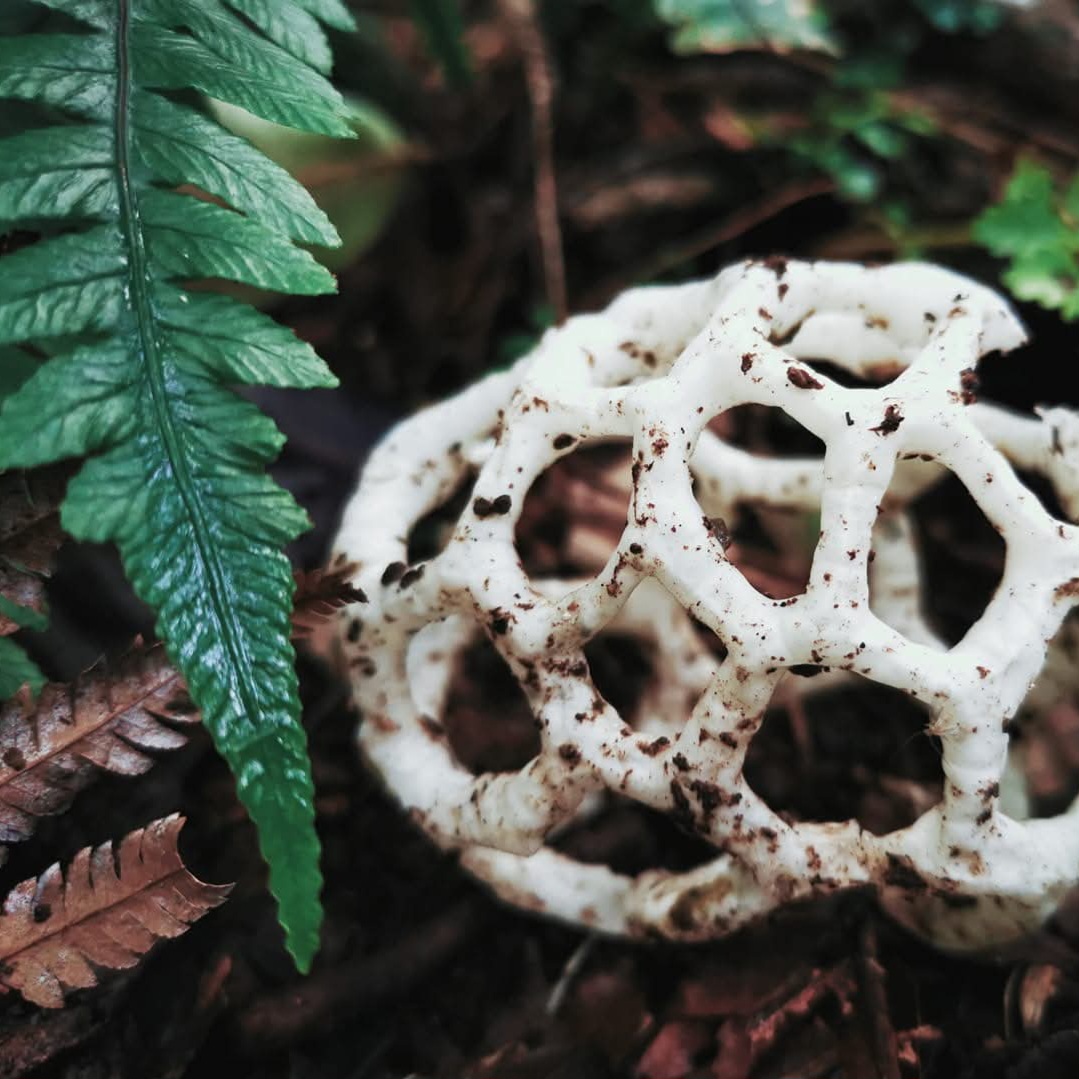
Tūtae-kēhua ("Ghost Droppings" or "Ghost Poo"), Whareatua ("House of the Devil/Spirit"), Tūtae-whetū ("Star Droppings" or "Star poo"), Pukurau, and Matakupenga / Ileodictyon cibarium / Basket Fungus
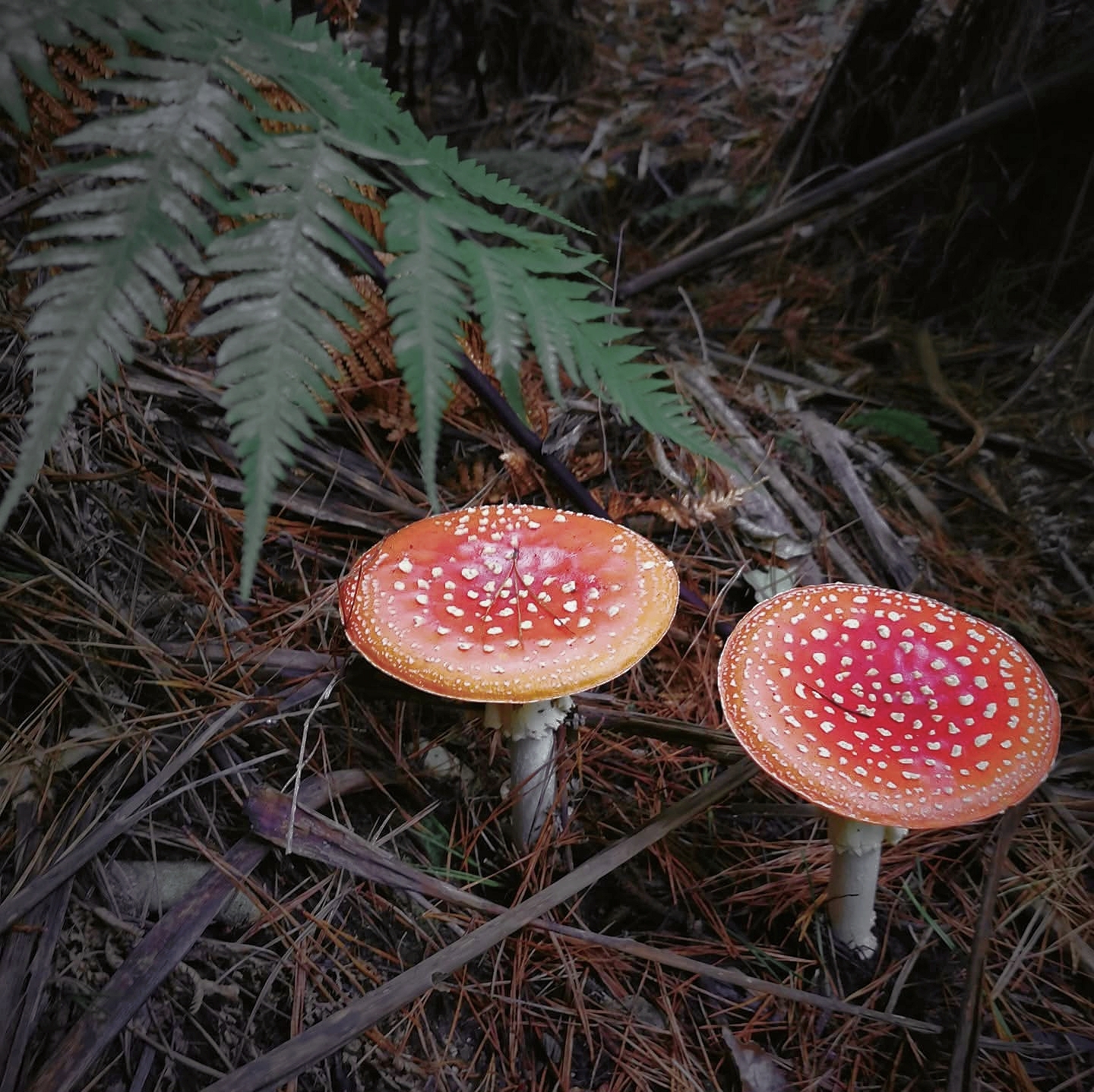
Amanita muscaria / Fly Agaric
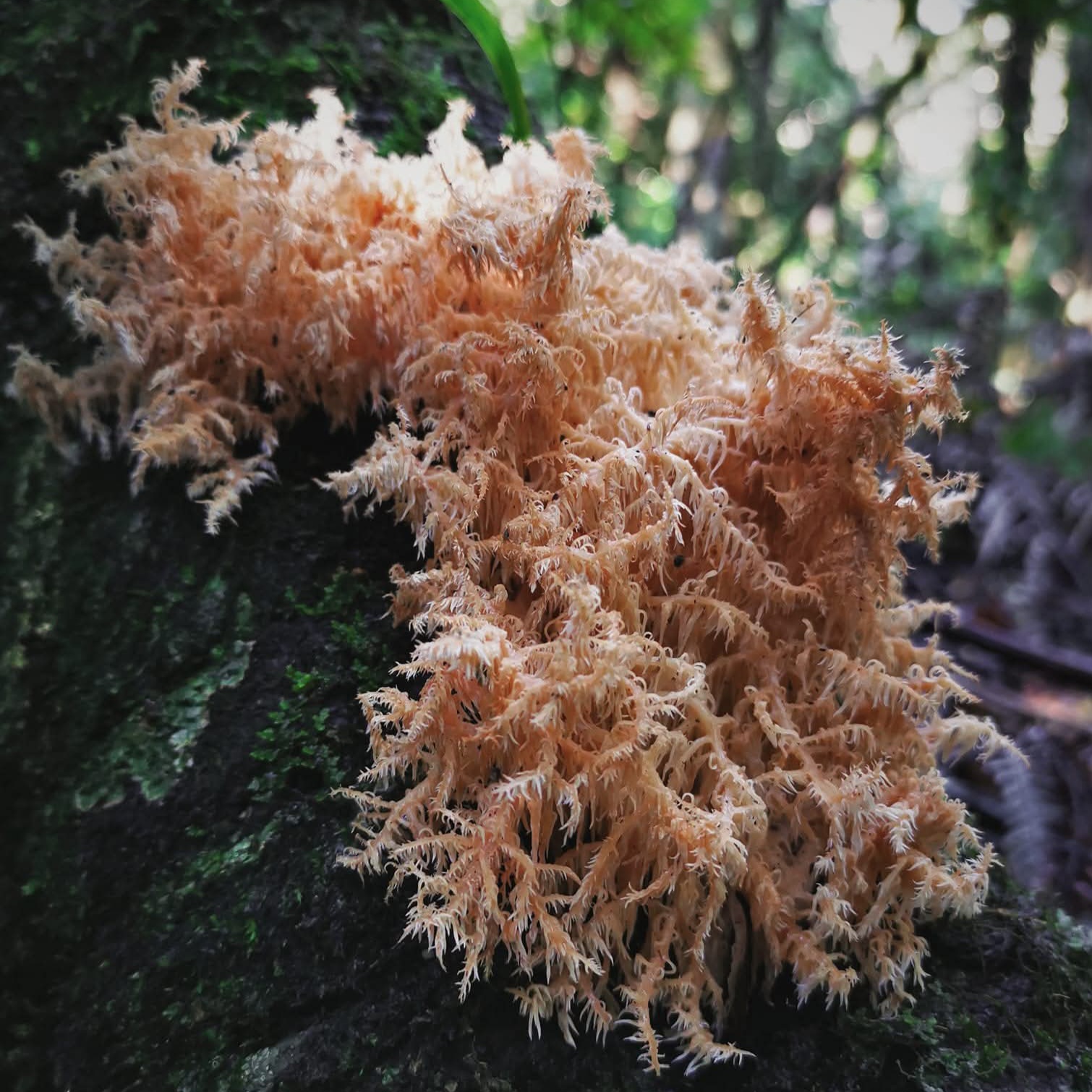
Pekepeke-kiore / Hericium novae-zelandiae / Coral Tooth Fungus
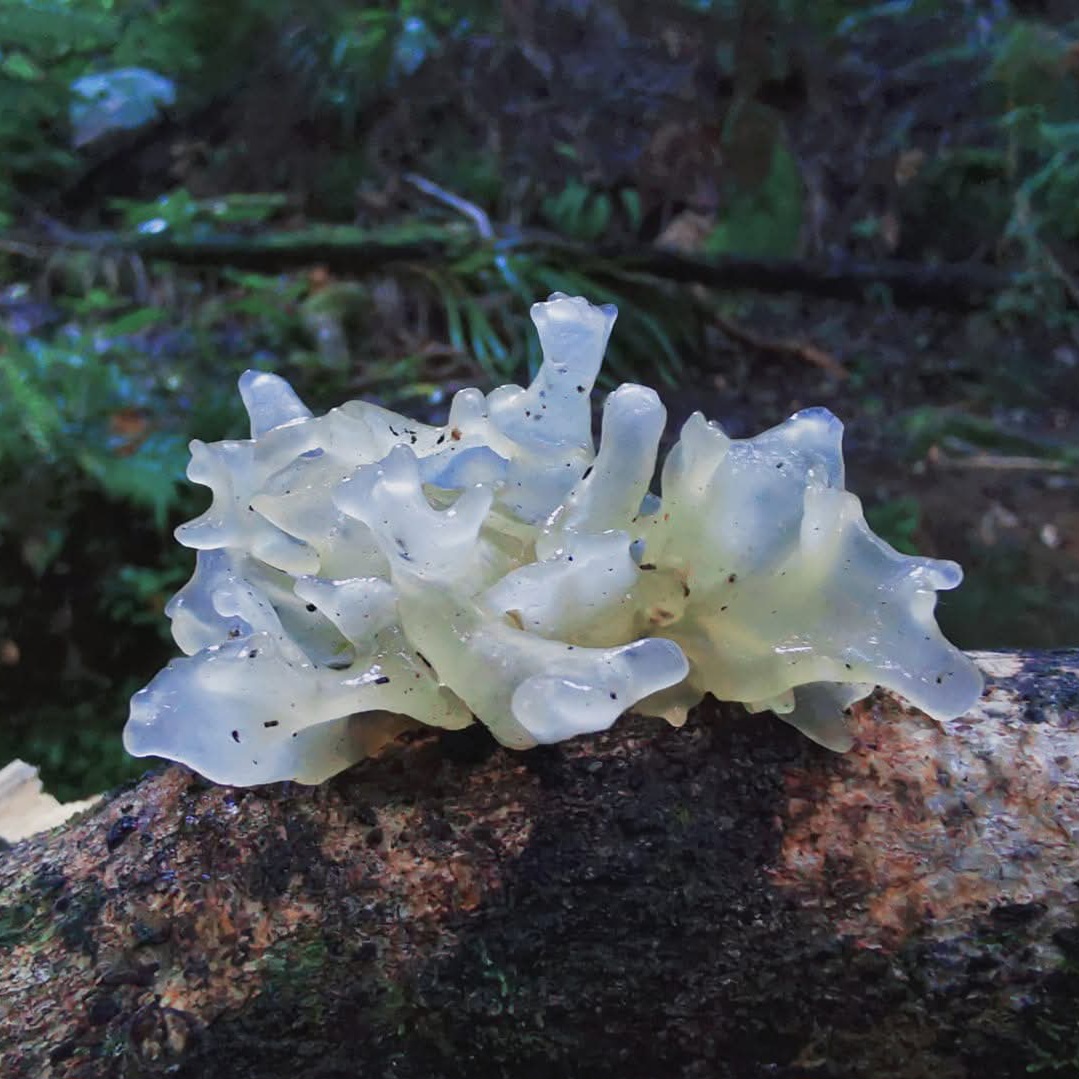
Tremella fuciformis / Snow Fungus
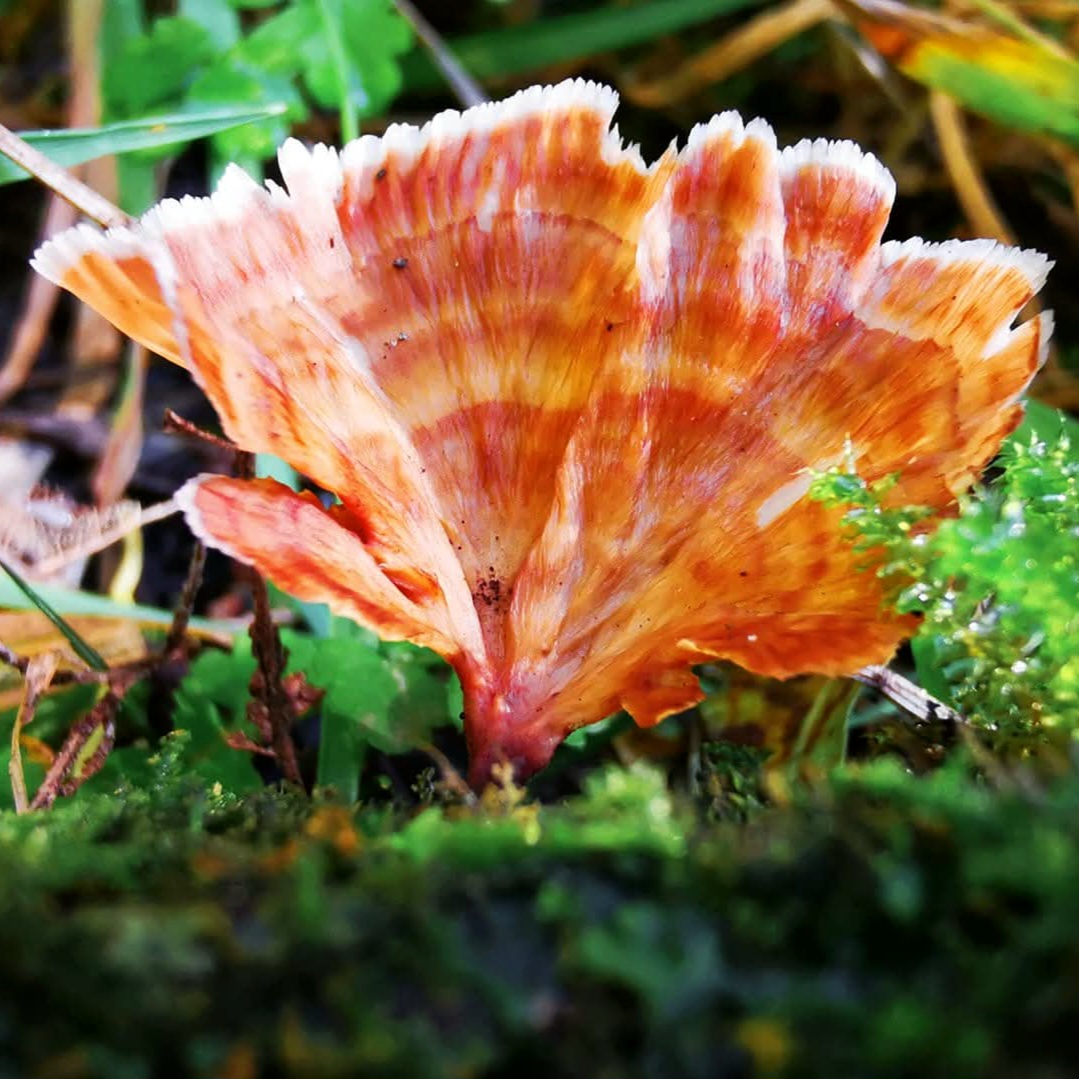
Podoscypha petalodes / Ruffled Paper Fungus
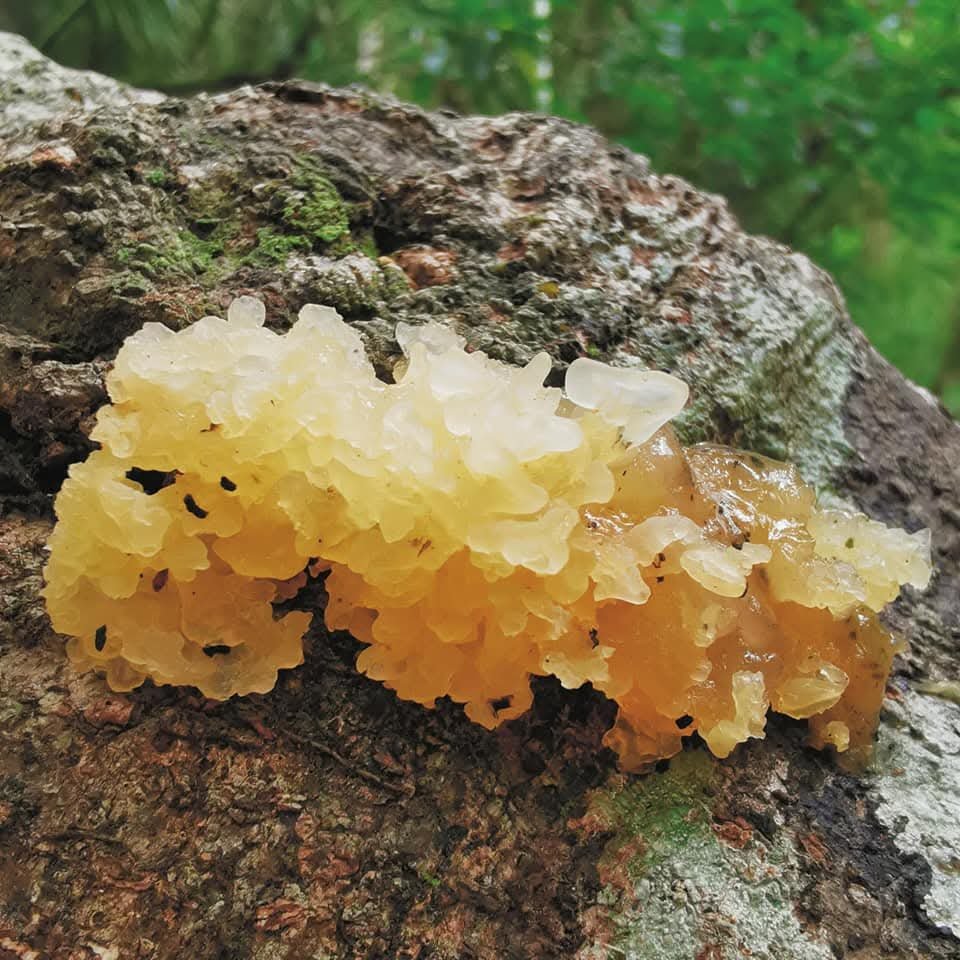
Tremella mesenterica / Witches' Butter
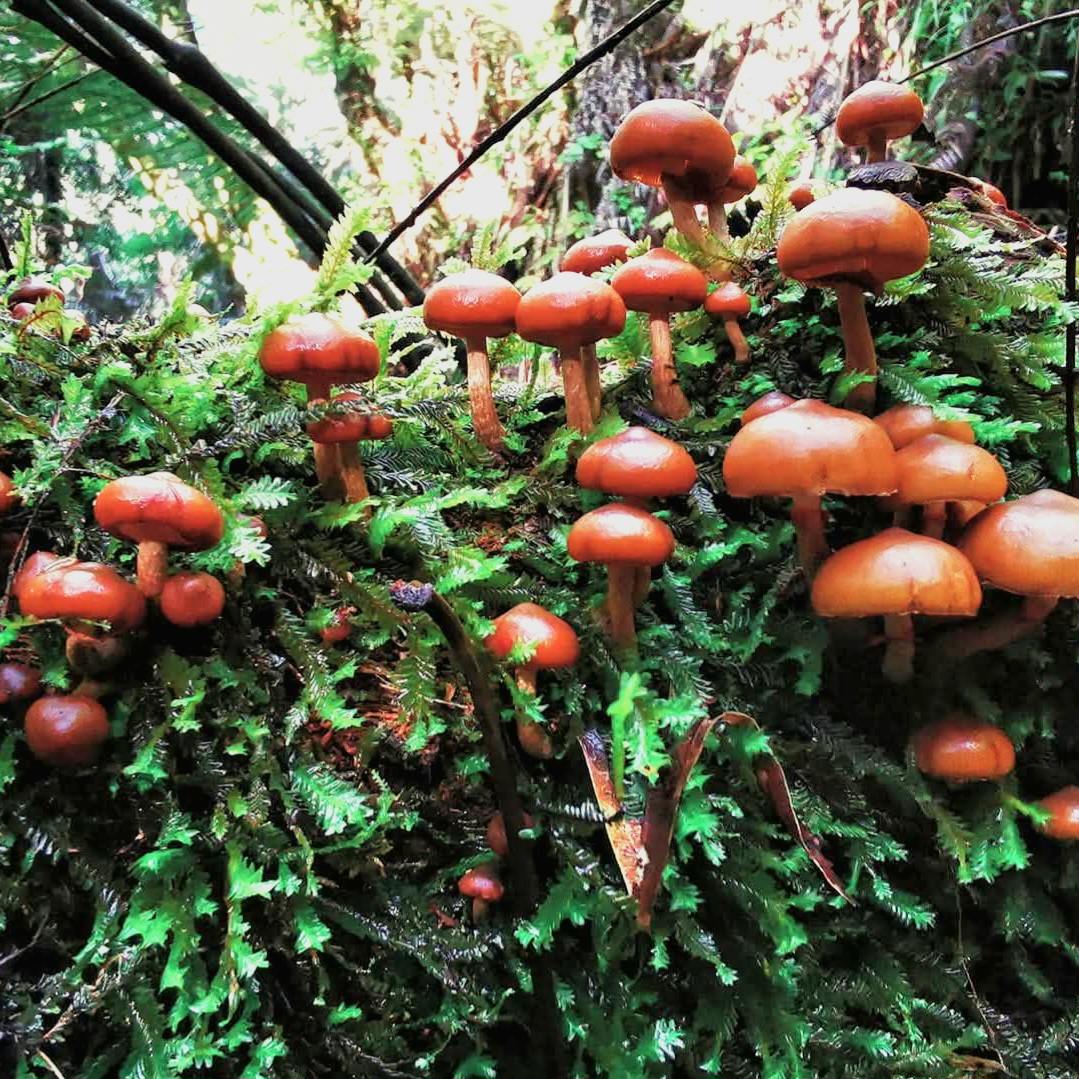
Galerina patagonica
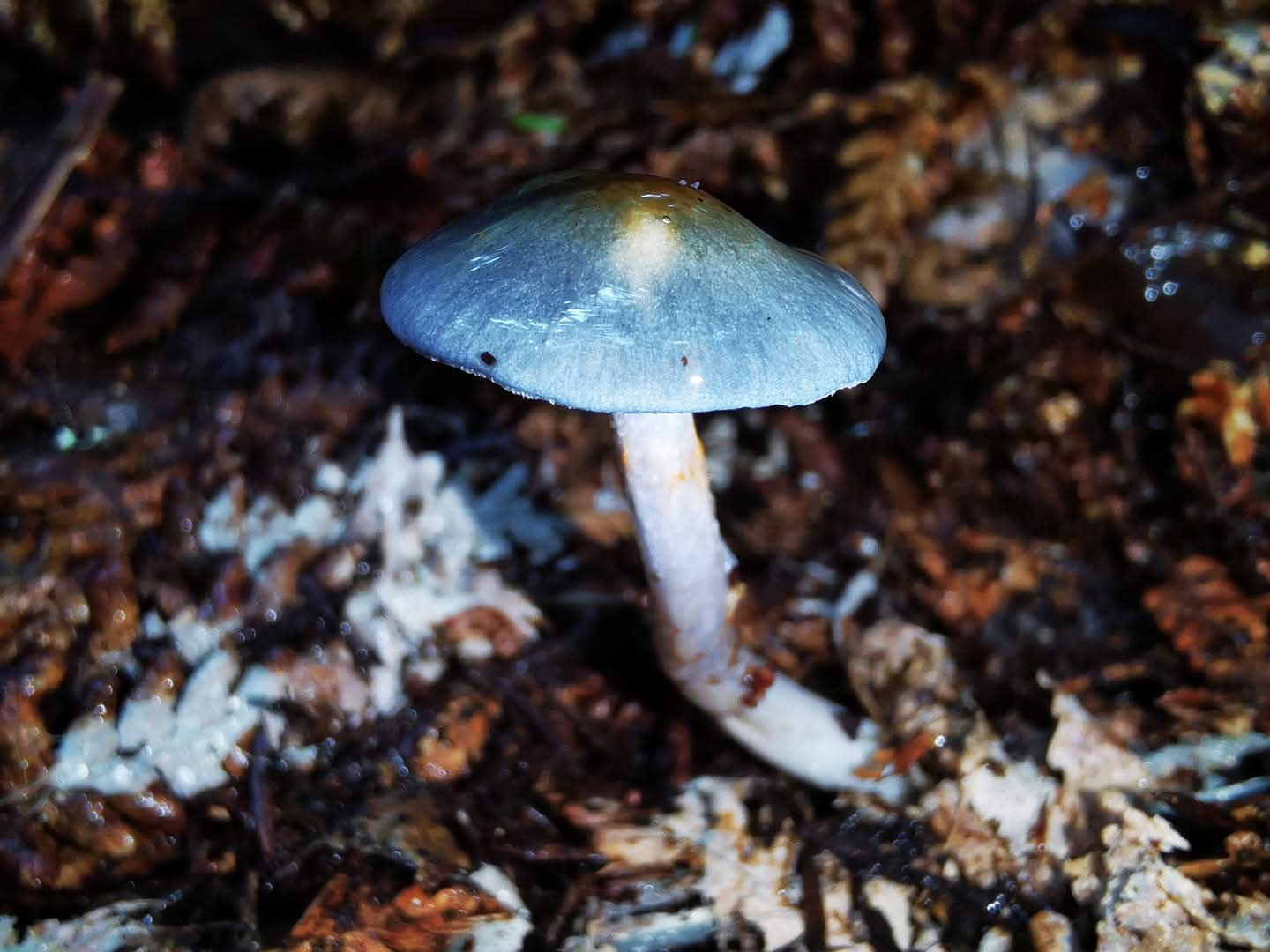
Cortinarius rotundisporus
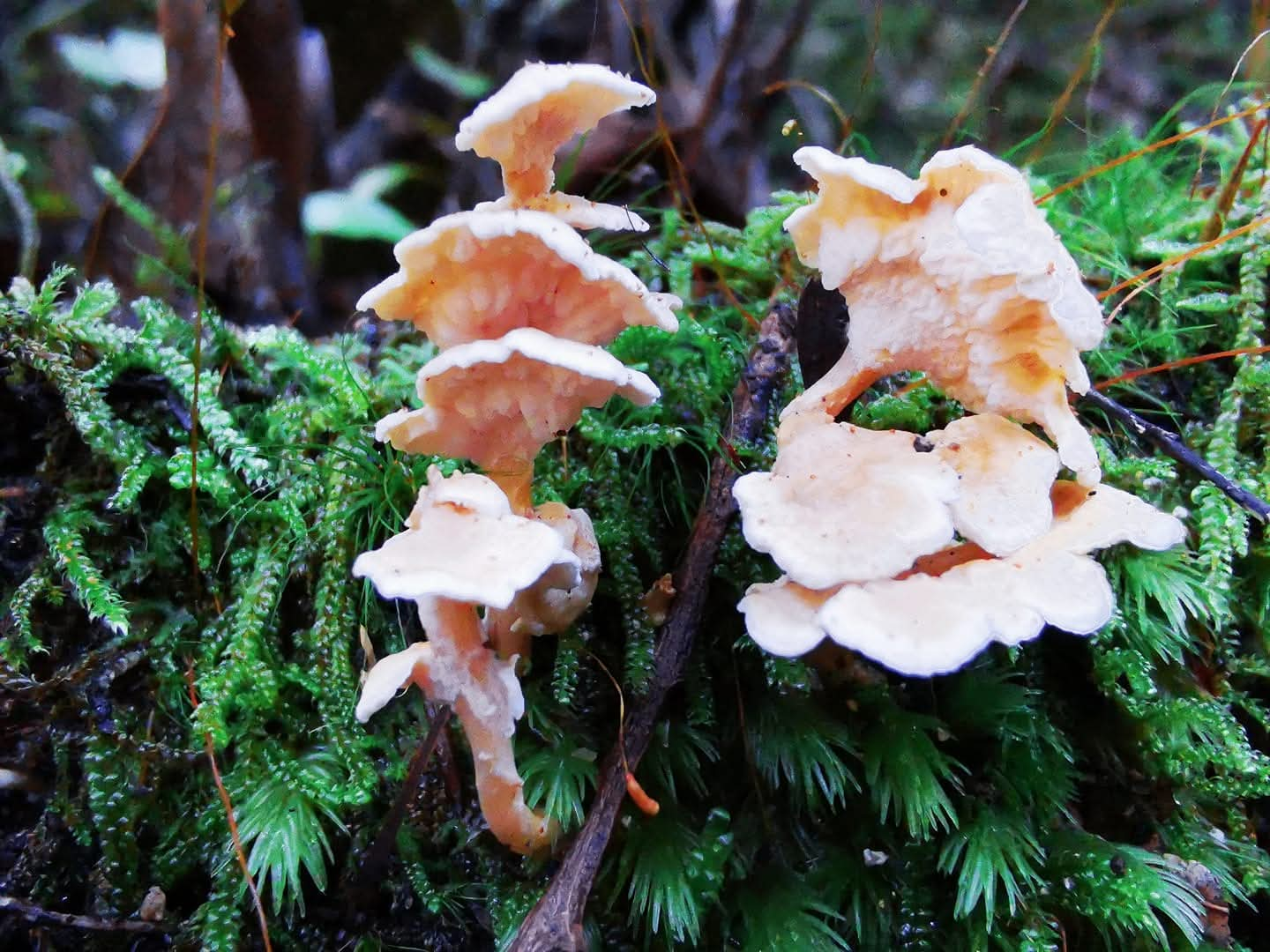
Podoserpula tristis / Pagoda Fungus
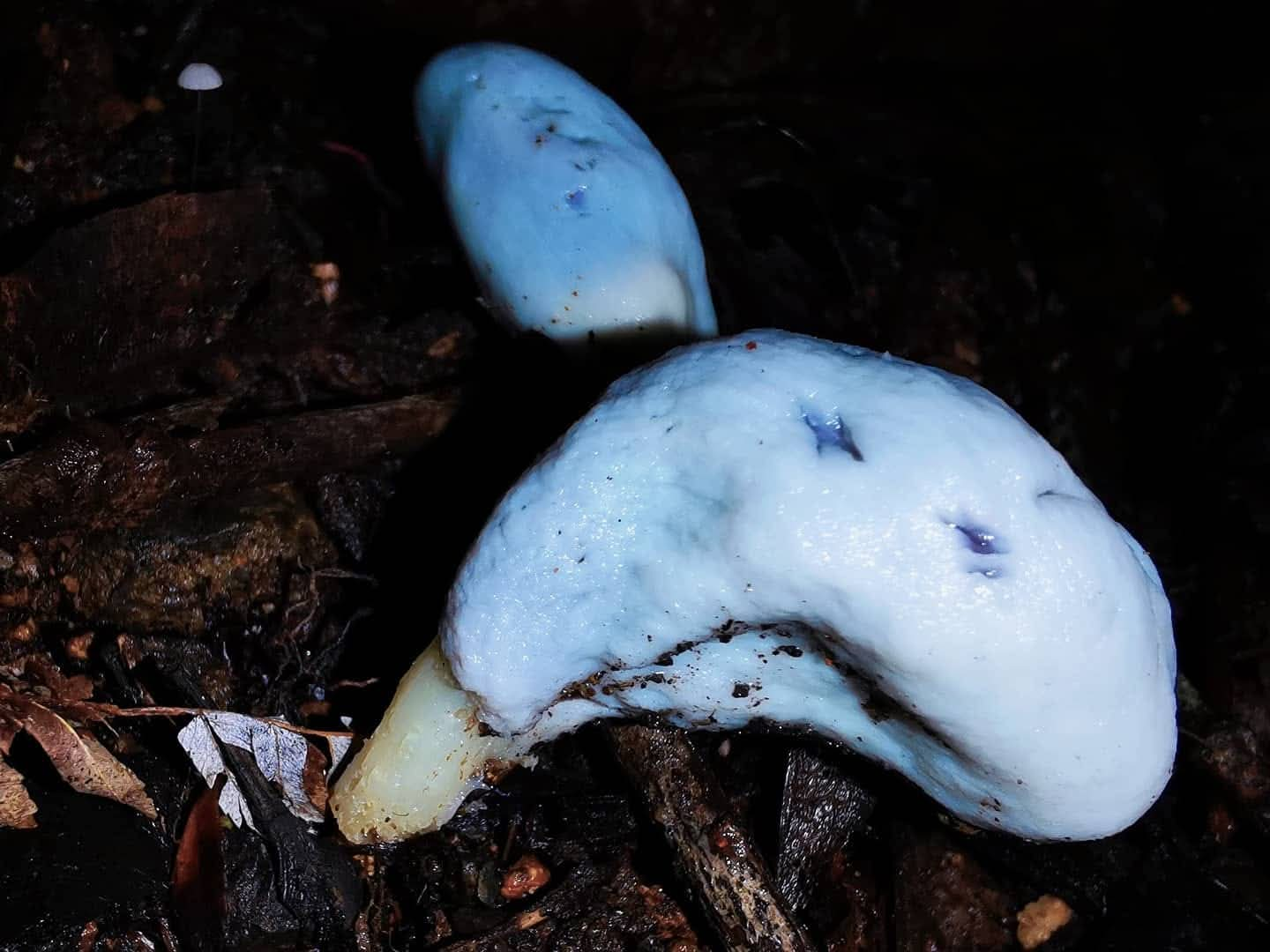
Clavogaster viriscens
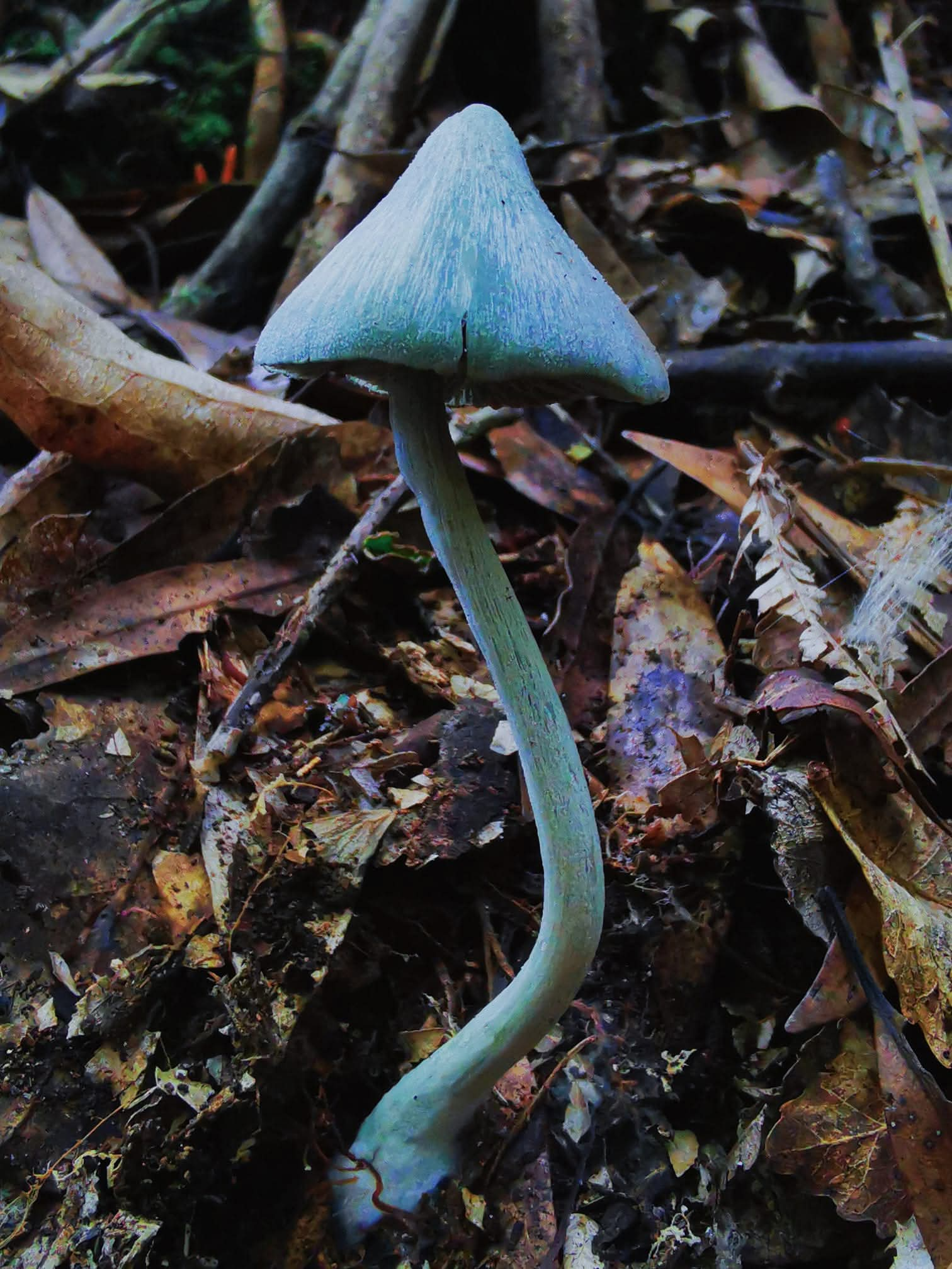
Werewere-kōkako / Entoloma hochstetteri / Sky Blue Pinkgill
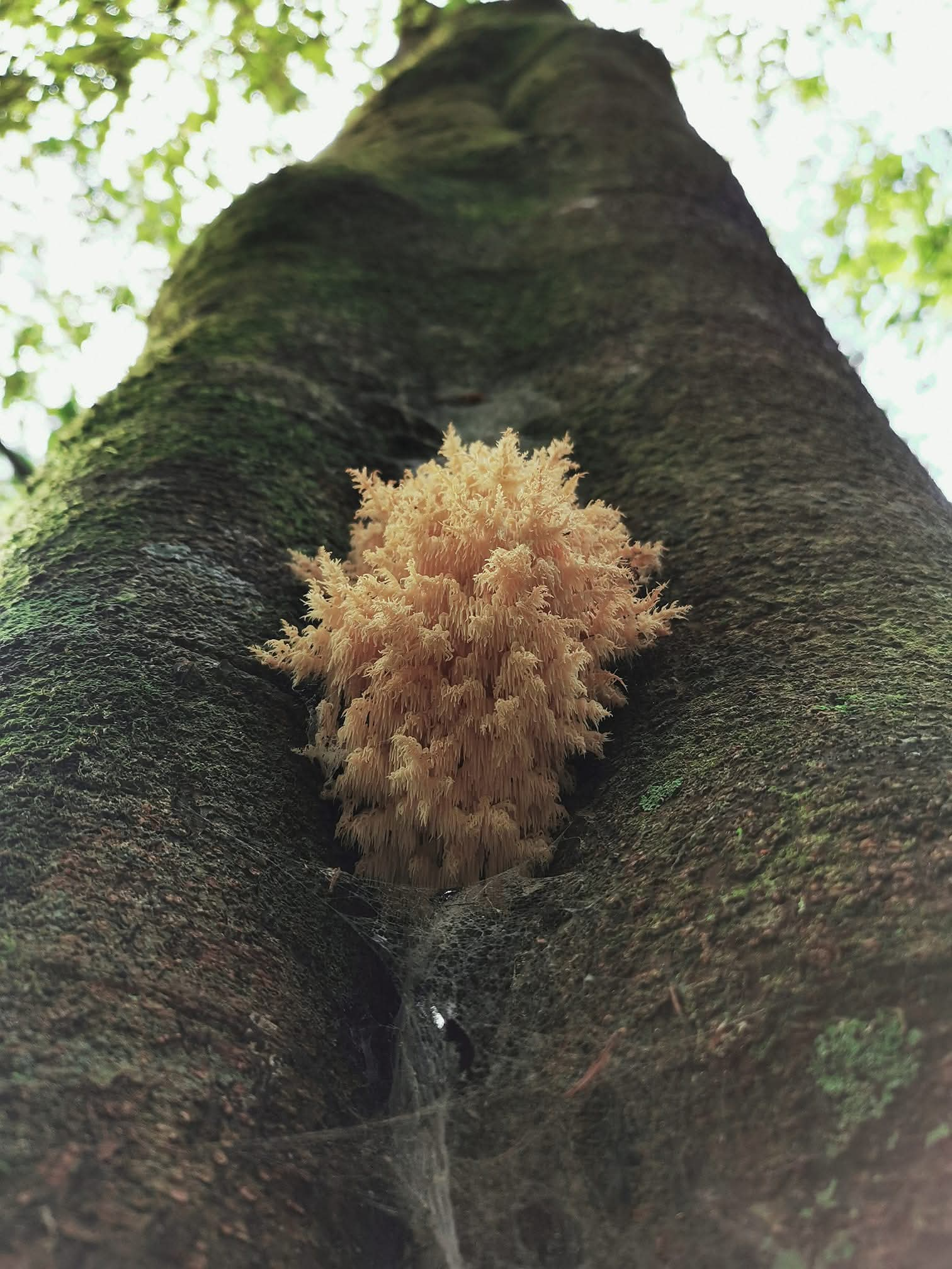
Pekepeke-kiore / Hericium novae-zelandiae / Coral Tooth Fungus

1,786
The issue
Wharekirauponga Forest in the spectacular Coromandel Peninsula of Aotearoa, New Zealand, along with the environments' rare endangered frogs and magical fungi, are under threat from destructive mining. Have your say and protect the whenua today! Read on to learn more...
"Humanity must shift from living "on" the Earth, to living with her: one is domination, the other is relational." - Tiokasin Ghosthorse
"We live in a world that is full of problems and we are the solutions to those problems." - Julia Butterfly Hill
"The most radical thing any of us can do at this time is to be fully present to what is happening in our world." - Joanna Macy
Have you ever loved the land so much that you knew deep within your bones, in your breath, and your being, that she, the land, loved you back? When you know the land well, she knows you well in return. This is the relationship that is enheartened by reciprocity that my literary and botany hero Robin Wall Kimmerer speaks on in her animist affirming, book of Earth ecology and Anishinaabe spiritual insight, Braiding Sweetgrass. We share so much with the Earth, our first and our last breaths, our lives and our deaths. And so it is our responsibility and gift as humans to protect this sacred love we have for the land that sustains us and that we can sustain.
We have that reciprocal relation of respect that we can recieve and gift between us and the Earth. We can tap into at all times, as a kind of living love that we can awaken through our hands and feet as we walk and grab things in our sapien ways. I have known that love with many lands I have come to meet through walking around Aotearoa, the whenua in which the life of my blood flows like the river of Waipā beneath Maunga Kakepuku where my iwi, Ngāti Maniapoto are from. I have come to understand that the whenua and our umbilical bond to her is a birthright but also responsibility of care, for whenua is the Māori word for both "placenta" and "land". Its why the placenta of a newborn is often buried and returned to the land in many cultures, including in Te Ao Māori cultural traditions. My placenta was buried in a pot of rich soil and helped grow a tree from that pot. For that is where we all return to, the land. This is what makes our role as Earthlings so sacred. The Earth and her beings are our home kin. We live with them.
I have walked and learned many parts of the native ngahere, in the bush of Aotearoa. From the Kaimais to the Te Ureweras and beyond and I will continue to do so for the rest of my life. But one place always comes back to me fondly, one that I yearn to return to, where my body-mind finds rest and recompense. That place is Wharekirauponga, a whenua with a tapu of wairua (spirit), almost in a way where the land feels energetically strong with spiritual energy, the Genius loci , the spirit of the place. It is lush with life out there, and I feel that I need to share my love for Wharekirauponga. I feel so much mutual aroha with Wharekirauponga to the depths of my own veins. If you're by chance wondering how to say Wharekirauponga, I'll break it down, Wha-re-ki-rau-po-nga. Ka pai! It took me a little while to learn how to say the whenua's name off by heart. The main thing you need to know is that the Wharekirauponga region is an ecological taonga stewardship whenua. Its rich biodiversity and reclaimed landscapes represent not only national heritage but also most importantly, holds significant ecological value that benefits the entire country and planet. Many rare and endangered species, including some frog species unique to New Zealand and vulnerable fungal varieties, call this place home. The biodiversity of the Wharekirauponga Forest is absolutely worth protecting and cherishing.
Wharekirauponga Forest is an ecological reserve or stewardship land looked after by DOC (The Department of Conservation). Wharekirauponga is located in the Parakiwai Valley of the Coromandel Forest Park, just below Whangamata and above Waihi in the North Island of New Zealand. It is where a massive proposed mining project, the Waihi North Project, is being carried out by OceanaGold. They at this very moment, are developing their industrial deep underground mine beneath the Wharekirauponga Forest area to plunder gold and silver from the bowels of the earth. On the Waihi North Project website, OceanaGold says that "This project displays OceanaGold’s ability to continue to support economic growth, create high-paying jobs, generate royalties, support communities, and boost exports at the same time as making a positive contribution to the environment." I find this to be ludicrous when liason with iwi and the wider communities of Aotearoa, has not happened to a sufficient extent, unless of course they're hiring you. This is a project for profit, not people and planet.
But here's some good news, this is the awesome part in recent times. Just as of the 22nd of April, 2026, the Coromandel Green Party of Aotearoa, New Zealand and the environmental activism org Ours Not Mines, celebrated a massive win in the Court of Appeal. They got approved a consent for protections for parts of Wharekirauponga, by voiding the unlawful license granted by the Hauraki District Council to OceanaGold. Ours Not Mines has spent the past three long arduous years fighting to stop OceanaGold's licence for a paper road needed for their proposed underground mine at Wharekirauponga. This is undoubtedly a huge, moving win for noble conservation efforts from Coromandel and Waihi locals and ecohearted people beyond throughout the motu. OceanaGold plans to tunnel 7km beneath Wharekirauponga Forest. Their projected intentions for this mine, apparently requires four large ventilation and escape shafts above ground for safety reasons. But this also, could leave the whenua even more vulnerable, as it means that pollution from the mines can get out. It has likely happened before from past mining expeditions in Wharekirauponga. Ours Not Mines co-founder, Morgan Donoghue, said this about the mine plan...
"The reality is, it's underground, but you're still going to have to pull all of the tailings out of the ground. It's going to be a huge mess. And if something happens, a major once-in-a-100-year weather event, which seems to be happening more than once a year now, then that could wash all of that toxic tailings into the rivers."
- Morgan Donoghue, Ours Not Mines Co-Founder and big name in the NZ music industry
But also, you see, I was out at Wharekirauponga back in 2021, and deep in the bush, past the mine entrance by the suspended bridge and pristine waterfalls, beyond that and into the foothills, I saw helicopter landing pads in the shrubland. I was perplexed. There were long blue hydraulic pipes stretching for miles down dirt tracks with young Kauri being baked by the sun beside all sorts of strange, spongy Reindeer moss and lichens that were out of this world yet of this world. Even back then, the forest was spectacular and sacred yet wounded by the past, the present and the future. Either DOC was already out there doing conservation work, I mean DOC use helicopters and there was a boot cleaning station for Kauri Dieback prevention out there too. Orrrr, hmmm maybe OceanaGold was already setting up their operations back then. And as it turns out, in that same year of 2021, that was when the Hauraki District Council gave / sold OceanaGold a 40-year long lasting license over a paper road the council owned, allowing the gold mining company to install those 10 m² vents above ground for the tunnel below ground.
If you're wondering, "what's a paper road?". Well in basic terms, it's an unformed legal road. They, in legality, exist on paper and won't show up on usual road maps. Paper roads exist all over Aotearoa, they are public land with public access, typically 20m wide. Road rules apply although driving is often difficult. Sometimes paper roads are a farm track, sometimes it's a cliff, sometimes it's bush, sometimes it's the Te Araroa Trail. The paper road at Wharekirauponga that OceanaGold bought is legally designated as a public road, but it is indistinguishable from the surrounding forest and not easily accessible, even on foot. So in a place like Wharekirauponga, the vents would need to be dropped in by helicopters. OceanaGold would have paid just $1 a year to use it. OceanaGold, a multi-million dollar company that already owns the gargauntuan spiral of gold sickness that is Martha Mine in Waihi, only paying $1 a year is criminal. And guess how much they paid the Hauraki District Council for the sale of the paper road??? . . . $40 measly dollars for a 40 year long license. I have two words. Complicit. Theft. The people on the council that you can't eat your greed, it's poisonous.
"Only when the last tree has been cut down, the last fish been caught, and the last stream poisoned, will we realize we cannot eat money."
- Alanis Obomsawin
But ka pai to the local and national bodies and hearts that have helped in this fight and surely will continue in this defense of Papatūānuku. Unfortunately OceanaGold senior vice president for Legal and Public Affairs, Alison Paul said in a statement to RNZ, that the mine, including an option for alternative vent locations, had already been approved. In her statement, she said...
"While we are surprised by this decision, it is important to understand that it in no way affects the fast-track approval of the Waihi North Project, which we received in December 2025 or the Company's plans. Our timeline for project development and eventual ore production from Wharekirauponga remains unchanged."
- Alison Paul, OceanaGold Senior Vice President for Legal and Public Affairs
Just when you think that things could get better they get worse, what a gutpunch. But honestly, this is a fight worth living for! OceanaGold are not as powerful as the voices as the people when we stand together for the wellbeing of the whenua. I feel that more activism needs to be done to stop OceanaGold from conducting this mad mining enterprise in the crystalline coasts and fabled forests of the Coromandel.
The experts know that the Waihi North Project threatens to disrupt the natural habitats of Wharekirauponga through underground mining activity. Even OceanaGold knows it, they know the ecology is there, they don't forget it. They and the mining industry just forget to care about the whenua enough to leave her to breathe. They don't forget about how to line the pockets of the economical wealthy people of the powers that be. But what they can learn, and what we can heed, is a call to awareness, to know this has the great and dire risk to lead to habitat destruction, pollution, and potentially irreversible ecological change. We can know and that means we can do something about it. We can know and we can care.
Wharekirauponga may have been mined in the past but it waned out, those days are done, let the land live. And past experiences from similar mining projects in biological hotspots have shown that with stringent and respectful cultural and environmental protections, mining operations can cause detrimental impacts on local wildlife. This happens through soil and rock erosion, pollution and vegetation loss, leading to the decline of biodiversity. This proposed mining project is also a blatant disrespect of Te Tiriti o Waitangi, Tangata Whenua and Papatūānuku above all. Have Kiwis across New Zealand been adequately asked if they would support something like this? I don't think so, not with transparency and a balance of decision making rights. It's not democratic. It's the Fast Track subsidized sale of capital. But we don't need to meet the mining industry on their terms alone. We should speak up together, even when they plan to steam ahead. We can't let them silence us in the name of progress. Mining is a destructive detriment to our morals and wellbeing as New Zealanders. We cannot let something like this to continue if we want to embody the ethical country we can be for all our inhabitants.
Our home, Aotearoa, New Zealand is also home to a remarkable diversity of native and introduced flora and fauna, many of which are found nowhere else in the world. In my short time on this Earth, of only 26 years, I have grown in my immense gratitude for these species, whether they be a Kererū, a Kauri tree, a Pekepeke-kiore fungus, or a Mouku fern. However, this unique biodiversity of Aotearoa, is under increasing threat and harm from human activities, especially industrial and historic mining. It has to stop if we are going to look after our lands and people with love. Aroha ki te whenua, aroha ki te tangata.
Most would say or rather "think" with their heads, that the environmental crisis is a crisis of the mind, a "mental" one. After all, it's in the name environ-"mental". But how often do we struggle to process the environmental crisis with our minds alone. We usually try and fail that first. That's human, and a primal response to grief. From the most "expert" and "experienced" environmentalists, to your average deeply concerned human being, we all may really struggle to use our minds to try and process the doom we feel around climate change, the increase in once-in-100 year storms or the plastic pollution issue or even mining. But I don't think, rather I feel that maybe we've got it a little wrong when we try to "fix" or "fast" to nature with our minds. The environmental crisis is rather, a crisis of the heart. Our minds are so often misaligned with our hearts. We need to let our hearts break AND beat for the Earth to understand her first before standing over her pondering "what can I take from you" or "how can I leave you" (looking at you Elon Musk). Rather than merely ponder with your mind alone, wonder with your heart too. It is from the Earth that all our hearts gather the elements to simply exist. The iron in our blood that is pumped around our body to survive, comes first from the ground, from the soil and the silt. And then it is gifted to plants and from plants to animals as each feeds on one another. This is the Lakota Give-Away ceremony in natural action; one life sharing life with another. It's the passing on of a possession of importance to you and the reciever, knowing that the circle will complete with the gift returning to you, yet changed by the hands that have held and loved the gift in the braid of connection.
But mining doesn't operate on gift giving, it takes something that was gifted to stone. It goes to the heart and bones of the earth and rips out the blood and marrow of the land: the coal, the silver, the gold, the crystals and all and "refines" or "redefines" it all into "resources". A miner forgets that the very same minerals he harvests from the stone, the elements of the Earth, are already in his bloodstream. We don't need to go hew rock and explode mountain gullies or drill deep pressure into the underbelly of the Earth to appreciate it for already being there. We, you and I and the miners are human but we are also nature. All these mining machinations are the manifestation of greed for what politicians in power call "Mother Nature's legacy". But they didn't get gifted that legacy, no, they are trying to buy and sell that legacy to the highest bidder. It's not done in a respectful kaupapa.
Mining is and has been a huge industry here in New Zealand, for generations in fact. But unfortunately the wounds continue to be wrought. And we are running out of places to consider sacred and special for us Kiwis of all cultures. Here in New Zealand, the mining industry mainly mines for coal for fossil fuels, and gold and silver for technology. These minerals are sold on the international scale with world economics having a growing vested interest in New Zealand's "precious rare minerals". The fact that we even call them that, should be a testament to why they should be left alone. If they are precious, protect the land those minerals belong to, don't treat them as products for power and product. One of the biggest looming shadows in this rigged game of revenue with mining operations in Aotearoa, is the USA and Trump's corrupt Machiavellian administration, who on a world stage, seek to buy out the land and its exports through New Zealand's profit hungry politicians like our Prime Minister Christopher Luxon, morally bankrupt lobbyists and their patriachal policies of dominating the Earth rather than trying to relate to her. This egregious disregard for the Earth continues to let the land slide into destruction, all to keep the economy going at the expense of so many ecosystems, like that of Wharekirauponga. You and I can do something by learning to love the land, like I have with her, with Wharekirauponga.
I used to visit Wharekirauponga Forest back in 2020 and 2021 a lot, right around the pandemic when everything was chaotic and confounding with covid. I was living in Whangamata at the time and I would ride my mountain bike out there. It was there in Wharekirauponga, in the rugged gullies and alluvial riverside forest paths paved with either soft or muddy soil, where I spent most of my days in my free time. It was a sanctuary I grew to respect by breathing with the bush of the Parakiwai Valley. This was deeply soothing and nourishing for my hollistic health. I would walk peacefully and slowly through te taiao as my meditation practice, something I still do to this day just being a wild natural being in the forests of New Zealand, my home, my haven.
I would be out there at Wharekirauponga, mostly observing, photographing and documenting rare species of native and introduced fungi species and immersing myself in that mycological environment for hours and hours. Back in 2020, I found so many species out there. There was Armillaria novae-zelandiae, Mycena ura, Hericium novae-zelandiae, Oudemansiella mucida, Tremella fuciformis, Cruentomycena viscidocruenta, Ileodictyon cibarium, Podoscypha petalodes, Galerina patagonica, Schizophyllum commune, Amanita muscaria, and so many more species. I posted some of my own photos of these fungi and mushrooms that I have found in the WharekiraupongaI Forest below, which I hope you will all appreciate as a reminder of what we want to protect. I have also labeled each photo with what species the fungi are.
I also learnt about Kauri trees for the first time on my walks at Wharekirauponga, and formed a relational respect for the "rickers", the young Kauri trees which grow high and tall towards the sun to be in the emergent canopy, the overstory of the ngahere. Kauri trees share a history with whales in Te Ao Māori. Once, long ago the ancestor spirit of Southern right whales, Tohorā, and the ancestor spirit of Kauri trees both lived on land. They were siblings, brothers to one another. One day, Tohorā looked out from the forests to the ocean, and he yearned to see what is out there in the blue beyond. Tohorā asked his brother the Kauri Tree to come with him go live in the ocean, but the Kauri couldn't bear to leave his home in the realms of Tāne, in the ngahere and puihi, the forest and bush. And so the brothers were at an impasse. To ammend this, Tohorā and Kauri exchanged the gift of each other's skins for protection in their new lives. Tohorā gave Kauri his flesh in the form of resins and bumpy but smooth bark to stop epiphytes from growing on him. And Kauri gave Tohorā his blubber from the Kauri trees tannins and oils to keep him warm under the water. And so Kauri remained rooted to the foothills of the coast, watching out as his brother Tohorā swam in the ocean. They continue to do this today. Both Kauri and whales have suffered immensely from exploitation and death at the hands of harmful humans with speargun or saw. Whales are continued to be affected by things like international boat travel, pollution, krill fishing, bottom trawlling and even illegal whaling in some places of the world.
Later, I would learn that Wharekirauponga also has rare and very small Archey's Frogs hiding in the bush. You should always leave Archey's Frogs alone to exist away from humans. Archey's Frogs, are considered "living fossils" as their species, Leiopelma archeyi, have changed little over the past 150 - 200 million years! These are primordial and very unique frogs. Especially considering that they don't have a tadpole stage like most frog species. The father frog's foster, protect and carry the eggs that the mother lays, then the eggs hatch with tiny Archey's Frogs that go on to live around rivers and in the native bush of remote parts of the country. This extant species of frog is also categorised as Nationally Vulnerable under the New Zealand Threat Classification System and as Critically Endangered on the IUCN Red List. It is estimated that today there is only between 5,000 and 20,000 frogs that could exist in the wild. Keeping these frogs safe from human activity and staving off invasive predators is crucial.
Deep underground mining seriously puts these beloved and significant native species of flora, fauna and funga, at risk. For fungi, the process of mining alters soil pH, reduces organic matter, and introduces heavy metal pollution, which shifts microbial communities from complex natural ecosystems to simplified systems dominated by stress-tolerant fungi. This would lead to a great loss in fungi diversity, as remember, mushrooms are only the above-ground reproductive aspect of the organism that is fungi. Most of the organism is below the ground with the miles of hyphae stretching out in mats of mycelium. This mycelium and mycological communities are extremely sensitive to any environmental change, whether big or small, it all touches something somewhere. Like a web of life, when one strand hyphae in the mycelium is affected, the rest of the organism responds in suit and so their growth is stunted by mining. Before humans looked to the veins of mountains for profit and products as the pickaxe of capitalism was hewn into stone, fungi were already mining naturally, being the first miners in fact. Fungi break down bedrock and stone through the secretion of digestive enzymes or their incredibly resilient hyphal threads that make up mycelium, dissolving their food and the barriers of the Earth. They can push and break through stone through the pressure that these hyphae can exude in strength too. They do all of this to make soil from lignin and stone.
Lichens still do this, through a symbiosis of cyanobacteria (algae) and fungi. And lichens are bountiful in the area because while Wharekirauponga has been mined in the past, she has reserved her right to be rejuvinated and to breathe clean air for these wonderful species to grow slow. Lichens are a tohu, a sign of health in a forest ecosystem. They too, would be acutely affected by this proposed profit project of mad man made mining that will pollute the air, the soil and the water that would otherwise help them grow. I think back to that strange and spongy Reindeer moss lichen I came to breath with in the foothills of Wharekirauponga and my soul aches to think of them dying at the expense of an underground mine.
For Kauri trees, deep underground mining affects them by introducing problems like ground subsidence and acidification, which degrades the soil. When the soil is degraded, it is hard for Kauri trees to set down strong roots which leads in turn to death and decay of Kauri stands. Also, mining boots and equipment can contribute to the spread of the soil-borne pathogen Phytophtora agathicida, which causes the devastating Kauri Dieback Disease which at the moment is decimating Kauri populations, in large part due to human industry and activity. If Kauri Dieback spreads further, we may lose our taonga species of Agathis australis, which have endured so much hardship and trauma with the likes of kauri gum mining, logging and disease.
And for our direly endangered friend, the Archey's Frog, well their skin is extremely porous; they essentially breath through their skin. Because they breathe through their skin, it also grants them the gift and the curse to be able to breathe in their environment, by absorbing water and chemicals from the Earth around them. When mining comes into play in precious forests, frogs are often on the front lines being hurt first as they absorb the pollutants that mining leaches out into the environment. So Archey's Frogs would only be put under more ecological strain and pressure as a result of the Waihi North Project at Wharekirauponga. This scares me for the wellbeing of these spectacular frogs!
All of these reasons are a call to action. A call to say something, to do something in the face of this deeply concerning time and space we are in for our planet and people. If we don't stand up for something, stand up for the Earth, we won't have much else to stand upon. I will be writing a letter of support for this petition. This letter of support will have each of your signatures on it as people who have put down signatures of support for protecting Wharekirauponga. I will be emailing this letter of support to the Prime Minister (whoever he or she or they may be after November 7th and onward) as well as the mayor of the Hauraki District Council, Toby Adams, along with his fellow councilors once enough signatures are reached.
As for those working for OceanaGold, I urge those of you with a voice in your "Company" that care, say something, do something. This is about your future too. I also urge any other relevant authorities, political parties or conservation organizations to carefully consider their kaupapa, their approach to the Waihi North Project. My hope is that with a new party government to fund it, having a third party or DOC first conducting as many thorough environmental impact assessments as possible. OceanaGold should also be adhering to international conservation standards, and engaging with the local community, liasing with iwi and listening to ecological experts that know far more than I do. Significant steps must be taken to ensure that any economic benefits of mining do not come at the expense of the irreplacable Aotearoa we and our more-than-human-kin call home.
As for all of us, remember this, the origin of the words economy and ecology, stem from the same root, the Greek oikos which means "home". The economy should be in service to our home, to the whole ecology and ecosystem, not the other way around where the ecosystem is in service to the economy. To remind us of this deeply, I have featured a poem below as well that I wrote, it's a further, more fixated glimpse into my true feelings around mining, war, genocide, the environment, the anthropocene, and our collective humanity in poetic verse. The poem is near and dear to my heart.
So please, help me in calling for the mining company OceanaGold to be held accountable to their environmental responsibilities as humans behind the mining industry here in Aotearoa. By signing this petition, you will help to ensure that the stewardship whenua of Wharekirauponga remains a sanctuary for its diverse and irreplaceable wildlife, safeguarding it for future generations of us and our more-than-human kin. Your voice is vital in protecting Aotearoa’s unique natural legacy. Say NO to mining! Say YES to your fellow fungi, frogs and forests! Sign the petition today to make a difference!
Ko au te whenua, te whenua ko au – I am the land, and the land is me.
"One way to stop seeing trees, or rivers, or hills, only as 'natural resources' is to class them as fellow beings - kinfolk." - Ursula K. Le Guin
"I don't know what happened first: that we forgot the Earth loves us, or that we forgot we love it." - Willow Defebaugh
"Knowing that you love the earth changes you, activates you to defend and protect and celebrate. But when you feel that the earth loves you in return, that feeling transforms the relationship from a one-way street into a sacred bond." - Robin Wall Kimmerer
I've got to hand it to you
African terracotta
that has stored honey
for some 3000 years
breaks open like a heart.
A fascinated miner
unearths his body
in the fruits of labor.
He thinks with the rush,
"finally I've found it!"
in mountain veins and river arteries
as if iron, carbon, even gold
is somehow forgotten, forsaken, foreign
from his own form.
However, over many births
we all take ourselves earnestly
enough to repair, postmortem,
to dress up wounds
with aureate intentions.
But don't you know
in the waking of your life
that if we bleed dry
the land from our hands,
that there will be little room left
for us to be rooted in respect?
Honey, pick up the pieces,
the Earth has known you
peacefully, before and beyond
the wars we waged worldly in her name.
Her water you drink
amniotic and alive
has held you and been shed
in every tear cried
and poured out by children
carrying water home after school.
They who will be remembered
by painted hands in a classroom,
and not by the hands of genocide
that destroy it.
And honey, you know
the world is breaking open
with every heart,
each ache, a question
asking you quietly:
Will you take sweetness for yourself?
Or will you offer it back to her?
The choice is in our hands.
A poem by Hazel
Harore / Armillaria novae-zelandiae / Honey Mushroom
Schizophyllum commune / Split-Gill Fungus
Cruentomycena viscidocruenta / Ruby Bonnet
Amanita muscaria / Fly Agaric
Coprinellus disseminatus / Fairy Inkcaps
Oudemansiella mucida / Porcelain Slimecap
Mycena cystidiosa / Tall Mycena
Tūtae-kēhua ("Ghost Droppings" or "Ghost Poo"), Whareatua ("House of the Devil/Spirit"), Tūtae-whetū ("Star Droppings" or "Star poo"), Pukurau, and Matakupenga / Ileodictyon cibarium / Basket Fungus
Amanita muscaria / Fly Agaric
Pekepeke-kiore / Hericium novae-zelandiae / Coral Tooth Fungus
Tremella fuciformis / Snow Fungus
Podoscypha petalodes / Ruffled Paper Fungus
Tremella mesenterica / Witches' Butter
Galerina patagonica
Cortinarius rotundisporus
Podoserpula tristis / Pagoda Fungus
Clavogaster viriscens
Werewere-kōkako / Entoloma hochstetteri / Sky Blue Pinkgill
Pekepeke-kiore / Hericium novae-zelandiae / Coral Tooth Fungus
Petition Updates
Share this petition
Petition created on 23 April 2026