
PREVENT AI DATA CENTERS IN BEAUTIFUL SUMMIT, NJ!
PREVENT AI DATA CENTERS IN BEAUTIFUL SUMMIT, NJ!
The Issue
Anyone who lives in or has visited Summit knows what a charming and special place it is. Constructing an AI data center in this great town will create permanent environmental damage, extreme overconsumption of water, and industrialization. We have to protect our town! Becoming an “AI HUB” does not benefit the average person that lives here. We need to protect our living conditions not only for us, but for generations to come. We should be able to have our children’s children raise their families here, and with these type of issues that will consistently happen without speaking out, that ability will be lost. If facilties that steal our energy, water, and land sound alarming to you as well, please sign.
UPDATE: The Council Passed a Limited Ban on June 16. Don't Back Off Now. Thank you to everyone who signed, and especially to the neighbors who showed up and spoke at the June 16 hearing. The room was full, and it made a difference. Here's where things stand, and why this isn't over.
WHAT THE COUNCIL PASSED
The Common Council passed an ordinance on AI data centers by a vote of 5 to 1. It's a real step, and it happened because residents spoke up. But it's a limited ban, not the complete, airtight ban most people think they voted for. Residents pointed out specific gaps in how it's written, and the Council signaled they'll work on a stronger version. That's the opening, and that's why we can't back off now. One moment summed up the confusion. Councilman Boyer moved to table the ordinance so the Council could come back with a more complete ban that closes the loopholes. He did this after the city's own land use expert stated that AI data centers are already prohibited in Summit because they aren't a permitted use. If that leaves you wondering why we needed this ordinance at all, or why it couldn't just be written airtight from the start, you're not alone. The motion to table got no second, and the ordinance passed 5 to 1.
WHO SHOWED UP AND WHAT THEY SAID
More than two dozen people spoke. They were young families and new parents with small children, seniors who have lived in Summit their entire lives, and many first-time attendees who had never spoken at a Council meeting before. Neighbors near the BMS/Celgene campus described noise that already disrupts their lives today: a low, constant hum from existing equipment that runs around the clock and never lets up. Some said plainly that if a data center is built, they would have to leave the homes and the town they love. The message was consistent: protect the town, and bring in real expertise before locking in the rules.
WHAT A DATA CENTER BUILDER TOLD THE COUNCIL The most useful testimony came from a resident who builds data centers for a living. He told the Council two things that matter: - There's now technology that lets these facilities run on essentially no water. That matters because the ordinance partly relies on water use as a trigger for the ban. If a facility uses little or no water, that trigger may not catch it. - Operators sometimes buy warehouses and quietly stack equipment inside them, building up capacity and counting on no one auditing what's actually there. In other words: the one person who actually builds these facilities confirmed the ban as written has gaps a developer could work around.
THIS IS REAL!
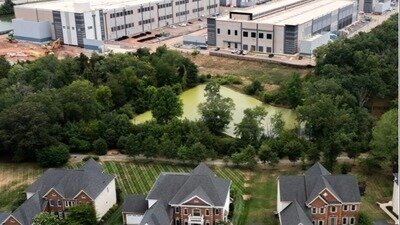
Summit has two large commercial campuses that are exactly the kind of sites these facilities target: the old Celgene/BMS campus on Morris Avenue, and the Summit East campus. These are real, marketable properties, not abstractions. Decisions made now can alter the character and feel of parts of our community forever. They carry real weight. That's why the ban needs to be complete, and why time still matters.
WHAT A COMPLETE BAN SHOULD DO
The strongest part of the ordinance is simple: a facility whose main purpose is being an AI data center is prohibited. That "main purpose" test is the heart of the ban, and a complete version should keep everything anchored to it and close the ways around it: 1. Remove the megawatt threshold. Right now a facility is automatically banned only above 20 megawatts of power, and removing that threshold was specifically asked for at the hearing. A developer can design one to come in just under the line. If the main purpose is an AI data center, size shouldn't matter, and the ordinance should say so. 2. Don't rely on the water trigger. As the builder explained, water use can be engineered down to almost nothing. The ban can't hinge on it. 3. Close the "stacking" loophole. Related or connected buildings on one site should count as a single facility, so no one can split a large operation into smaller pieces to slip under the rules. 4. Bring in real expertise. Residents asked the Council to consult people who know this industry. The Council should do that, and write the language to actually do what residents want.
FOCUS AREAS THAT NEED ATTENTION ALONGSIDE THE BAN
A ban on new data centers does not, by itself, fix the single most impactful issue residents raised: the constant noise that is already here and could get worse. That has to be addressed regardless. These focus areas should be strengthened in step with the ban, not instead of it: - Noise. Summit's overnight noise limit doesn't match the problem. The real nuisance from this kind of equipment is the low-frequency hum and constant drone, which a single volume number doesn't capture and which is difficult to enforce without proper monitoring. The rules should account for the type of sound and for how much a facility adds to the existing nighttime quiet, not just an overall decibel level. This protects neighbors who are already affected today. - Air quality and emissions. Industrial generators, exhaust, and cooling systems carry real air-quality and odor impacts for nearby homes. Sensible limits and modern equipment standards should be part of the picture. To be clear about all of this: none of it affects hospitals, schools, or normal office server rooms. Those are protected by a separate "Computer Center" definition, because they aren't AI data centers. A complete ban closes the loopholes without touching a single legitimate user in town.
DON'T BACK OFF UNTIL IT'S DONE!
Everyone says they want no data centers in Summit, including the Council. But the ordinance that passed doesn't read that way. There's a gap between what we've been told and what's in the text. The Council has signaled they'll work on a more complete ban. The thing that guarantees they follow through is residents staying on it. So please don't step away now. Don't wait for an answer to come to you. Reach out to the Council and the Mayor directly with your specific concerns, ask where things stand, and stay on top of it until you get a real response. Show up when this comes back, and bring a neighbor. Summit residents are smart, and we come together when the stakes are high. The turnout on June 16 is the reason this is moving. We have to keep advocating for each other and on behalf of the whole community, and we keep going until Summit has a complete ban that guarantees no AI data centers here.

1,282
The Issue
Anyone who lives in or has visited Summit knows what a charming and special place it is. Constructing an AI data center in this great town will create permanent environmental damage, extreme overconsumption of water, and industrialization. We have to protect our town! Becoming an “AI HUB” does not benefit the average person that lives here. We need to protect our living conditions not only for us, but for generations to come. We should be able to have our children’s children raise their families here, and with these type of issues that will consistently happen without speaking out, that ability will be lost. If facilties that steal our energy, water, and land sound alarming to you as well, please sign.
UPDATE: The Council Passed a Limited Ban on June 16. Don't Back Off Now. Thank you to everyone who signed, and especially to the neighbors who showed up and spoke at the June 16 hearing. The room was full, and it made a difference. Here's where things stand, and why this isn't over.
WHAT THE COUNCIL PASSED
The Common Council passed an ordinance on AI data centers by a vote of 5 to 1. It's a real step, and it happened because residents spoke up. But it's a limited ban, not the complete, airtight ban most people think they voted for. Residents pointed out specific gaps in how it's written, and the Council signaled they'll work on a stronger version. That's the opening, and that's why we can't back off now. One moment summed up the confusion. Councilman Boyer moved to table the ordinance so the Council could come back with a more complete ban that closes the loopholes. He did this after the city's own land use expert stated that AI data centers are already prohibited in Summit because they aren't a permitted use. If that leaves you wondering why we needed this ordinance at all, or why it couldn't just be written airtight from the start, you're not alone. The motion to table got no second, and the ordinance passed 5 to 1.
WHO SHOWED UP AND WHAT THEY SAID
More than two dozen people spoke. They were young families and new parents with small children, seniors who have lived in Summit their entire lives, and many first-time attendees who had never spoken at a Council meeting before. Neighbors near the BMS/Celgene campus described noise that already disrupts their lives today: a low, constant hum from existing equipment that runs around the clock and never lets up. Some said plainly that if a data center is built, they would have to leave the homes and the town they love. The message was consistent: protect the town, and bring in real expertise before locking in the rules.
WHAT A DATA CENTER BUILDER TOLD THE COUNCIL The most useful testimony came from a resident who builds data centers for a living. He told the Council two things that matter: - There's now technology that lets these facilities run on essentially no water. That matters because the ordinance partly relies on water use as a trigger for the ban. If a facility uses little or no water, that trigger may not catch it. - Operators sometimes buy warehouses and quietly stack equipment inside them, building up capacity and counting on no one auditing what's actually there. In other words: the one person who actually builds these facilities confirmed the ban as written has gaps a developer could work around.
THIS IS REAL!
Summit has two large commercial campuses that are exactly the kind of sites these facilities target: the old Celgene/BMS campus on Morris Avenue, and the Summit East campus. These are real, marketable properties, not abstractions. Decisions made now can alter the character and feel of parts of our community forever. They carry real weight. That's why the ban needs to be complete, and why time still matters.
WHAT A COMPLETE BAN SHOULD DO
The strongest part of the ordinance is simple: a facility whose main purpose is being an AI data center is prohibited. That "main purpose" test is the heart of the ban, and a complete version should keep everything anchored to it and close the ways around it: 1. Remove the megawatt threshold. Right now a facility is automatically banned only above 20 megawatts of power, and removing that threshold was specifically asked for at the hearing. A developer can design one to come in just under the line. If the main purpose is an AI data center, size shouldn't matter, and the ordinance should say so. 2. Don't rely on the water trigger. As the builder explained, water use can be engineered down to almost nothing. The ban can't hinge on it. 3. Close the "stacking" loophole. Related or connected buildings on one site should count as a single facility, so no one can split a large operation into smaller pieces to slip under the rules. 4. Bring in real expertise. Residents asked the Council to consult people who know this industry. The Council should do that, and write the language to actually do what residents want.
FOCUS AREAS THAT NEED ATTENTION ALONGSIDE THE BAN
A ban on new data centers does not, by itself, fix the single most impactful issue residents raised: the constant noise that is already here and could get worse. That has to be addressed regardless. These focus areas should be strengthened in step with the ban, not instead of it: - Noise. Summit's overnight noise limit doesn't match the problem. The real nuisance from this kind of equipment is the low-frequency hum and constant drone, which a single volume number doesn't capture and which is difficult to enforce without proper monitoring. The rules should account for the type of sound and for how much a facility adds to the existing nighttime quiet, not just an overall decibel level. This protects neighbors who are already affected today. - Air quality and emissions. Industrial generators, exhaust, and cooling systems carry real air-quality and odor impacts for nearby homes. Sensible limits and modern equipment standards should be part of the picture. To be clear about all of this: none of it affects hospitals, schools, or normal office server rooms. Those are protected by a separate "Computer Center" definition, because they aren't AI data centers. A complete ban closes the loopholes without touching a single legitimate user in town.
DON'T BACK OFF UNTIL IT'S DONE!
Everyone says they want no data centers in Summit, including the Council. But the ordinance that passed doesn't read that way. There's a gap between what we've been told and what's in the text. The Council has signaled they'll work on a more complete ban. The thing that guarantees they follow through is residents staying on it. So please don't step away now. Don't wait for an answer to come to you. Reach out to the Council and the Mayor directly with your specific concerns, ask where things stand, and stay on top of it until you get a real response. Show up when this comes back, and bring a neighbor. Summit residents are smart, and we come together when the stakes are high. The turnout on June 16 is the reason this is moving. We have to keep advocating for each other and on behalf of the whole community, and we keep going until Summit has a complete ban that guarantees no AI data centers here.
1,282
The Decision Makers


Supporter Voices
Petition Updates
Share this petition
Petition created on June 15, 2026