

Poverty in Brgy. San Roque, Bongabon, Nueva Ecija: A Call for Action
The Issue
Poverty is not a buzzword – it is a living reality for many families in Brgy. San Roque Bongabon, Nueva Ecija. Poverty, as a shadow hovering in front of Ate Edna’s eyes, is a constant for anyone trying to live by peddling lottery tickets, even under the blazing sun. With so little left after her earnings for a day of medical emergencies or school fee. Despite her hard work, Ate Edna often finds herself making heartbreaking choices: eating very little so her grandchildren can eat or putting off much needed medical care for lack of funds. Her story is the story of so many — in the barangay, where there is plenty of resilience, little abundance of resources.
Rice farmer Ate Joy has another battle but as daunting. She wakes up in the morning, and that day she prints in order to be deeply buried in debt and work under the sun, until this season’s harvest will be enough to cover her family’s needs and pay back her loans. But she sometimes has little to take home, especially since the escalating price of fertilizers, irrigation and other farming inputs. Once she sighed, she had said, 'Ang hirap magtanim, pero ang kita, parang tubig na dumadaan lang sa kamay'. Ate Joy is like many of the small scale farmers in the community, trapped in a cycle of debt and diminishing returns, and unable to break out regardless. Her story reminds us that poverty is much more than a lack of money; it's a system of systemic barriers that keep people from moving off this web.
Another one is Kuya Erwin who owns a small stall selling barbecued meat off the road. Every stick of barbecue that he sells is an outcome of a series of work, beginning from the marinated meat and ending at the placement of grill. On some nights, his stand gets customers who are looking for quick and cheap meals but during fights or rains he is left barely making up his losses. Regardless of his efforts, what they earn cannot be steady allowing him to make a deposit for his children’s education or further enhance the business. “Minsan iniisip ko, hanggang dito na lang ba ako” he uttered as he tiredly spoke but also a bit determined. His testimony is the same as many informal workers who fail to get recognition of their endeavors in Brgy. San Roque, yet refuse to succumb to their challenges.
Stories like Ate Edna's, Ate Joy's, and Kuya Erwin's make up the many kinds of poverty that exist in Brgy. San Roque, wherein every struggle lies behind a family trying to survive with few hopes, high living costs, and not knowing what tomorrow will bring. Poverty here is not just a matter of money; it's a question of giving up hope; reducing dreams; struggle day by day, every single day to get the most minimal necessities. But these tales are not sad; they are messages that call to act, and make us stand up to this vast problem with understanding, urgency, and new ideas to solve it.
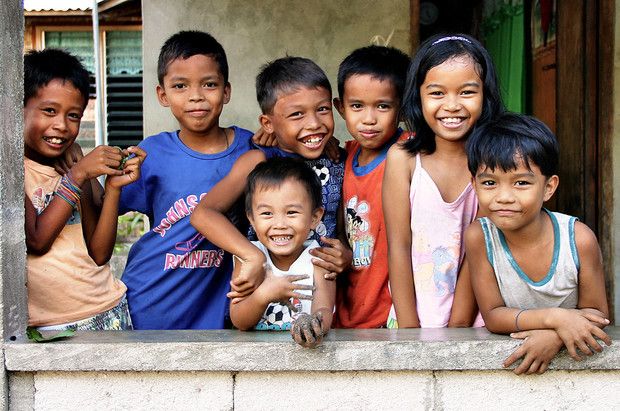
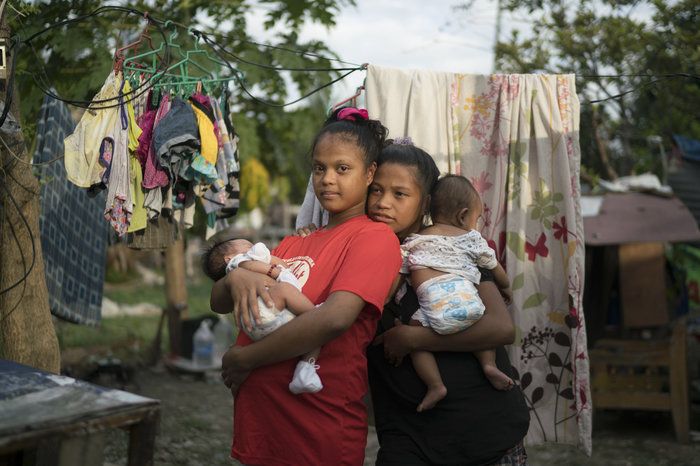
"These children’s smiles radiate hope and happiness. Behind their joy lies a quiet struggle they have yet to understand."
Poverty in our barangay has many faces. Ate Edna’s is one of them. She shared her struggles with the world during an interview, only this time with utmost honesty. To her, the voice shook, she clutched in her hand a few lottery tickets, 'Ang hirap ng buhay ngayon.' 'Tapos sa Hindi ko kaya matawagan ang kita para sa pagkain pa niya lalo na may apo pa akong kailangang alagaan.' Even her eldest daughter, older than a teenager, just had a baby. The young mom lives off Ate Edna meager income with no stable income.
Ate Joy, a rice farmer who has been really deeply mired in debt, has another story to tell. Every day at dawn she gets up to look after little bit of land that she owns, but her earnings cannot even meet her expenses. Fertilizers, irrigation fees, and machine rentals are driving the cost out of her already thin profits. She lamented a conversation that 'wala nang natitira para sa amin.' Sa bawat inaani namin binabayad sa utang. Paano pa kami mabubuhay?' Her family often goes days or weeks without eating anything or eats less just so they can stretch the little that they have. Ate Joy’s story points out that a lot of small farmers get trapped in a never ending circle of debt, with only loan sharks or middlemen at hand to deal with.
Then there’s Kuya Erwin whose small roadside ihaw ihaw stand his only thing. He begins his day by making charcoal and marinating meat in the hopes that he sells enough skewers so he can turn a profit. He makes just enough to provide for his family on the good days. He’s left with unpaid bills and unsold inventory when the weather is bad or fewer customers show up. 'Hirap kumita minsan iniisip ko' he shared with a weary smile. "Pero kailangan e para sa apat na anak ko" Despite all of that hard work, his kids often have to skip school supplies and extracurriculars.
These stories shows how poverty affect Brgy. San Roque and doesn’t discriminate. Whatever community you come from, it affects the farmers, small business owners, and informal workers. Human beings, it should sadden us to say, are deprived of their opportunities, dignity, hope because it’s a pervasive thing.
This isn’t a unique story. Many families in Brgy. San Roque live a hand to mouth existence, struggling with the absence of steady jobs, little access to education and especially poor healthcare. Parents can’t afford uniforms, books, uniforms or transportation so children drop out of school. They can’t afford medication so elderly residents endure their illnesses in silence. It is not a distant concept: poverty lives in the day to day lives of the people here, woven into lives every day.
It's as high as it gets. Unless something changes, generations will continue to be stuck in this cycle of wealth, or poverty. Those born into impoverished households are less likely to raise themselves from poverty. Education and decent jobs become dreams deferred or dreams abandoned. Ate Edna worries for her grandchild, saying, 'Paano kung ang anak ko walang trabaho? Ano na ang mangyayari sa apo ko?'. Kuya Erwin is afraid he’ll have to shutter his ihaw-ihaw stand, and Ate Joy fears she’ll be losing her land to mounting debts.
But change is possible. Residents of Brgy. San Roque can rewrite their stories. A child who does stay in school could become a nurse, a teacher or an entrepreneur. A stable job providing for a family, even saving for the future, is possible for a parent. From a barely getting by community to one where people will thrive, not just survive — the barangay evolves.
Time is of the essence. At the end of every day, every minute we delay action, an additional family goes to bed hungry, an additional child misses out on a better future, an additional resident like Ate Edna fights despair. But challenges are growing, and opportunities for countering them are growing too. Technology and ICT (Information and Communication Technology) allow for tools to rescue the barriers and solve problems that can be achieved.
Online education offered by ICT can make learning accessible to the poorest of the poor, who can not afford traditional education. Through digital platforms it can help connecting the job seekers to employers. Telemedicine allows healthcare to come to people who can’t travel to the clinics or hospital. Only with solutions that are based on the real needs of people like Ate Edna and her daughter and neighbors will these solutions work.
If nothing is done, the cycle of poverty will tighten its claws. Today’s school leavers will grow up as adults unable to perform the basic skills required for decent work. Living is going to continue to rest on informal, unstable livelihoods like the sale of lottery tickets or seasonal farm work for families. The potential of the community will be missed and the people who live there will be subject to further inequality.
Ate Joy fears she will lose her farmland altogether one day. Without it, her family would not have any source of income. At the same time, Kuya Erwin worries his kids would be raised in a false belief that struggle is all of life. But poverty for one generation is an unbroken chain of deprivation to pass on to the next.
Instead of the exception, Ate Edna’s story could be the new normal. Her daughter might not hold down stable work, and her grandchild might not live a different life than her did. An unbroken chain of hardship.
ICT is not a silver bullet, but if used well it is a powerful tool. Free online learning platforms can help children and young adults to learn skills in demand in the current economy for education. App and website job-matching apps and sites can be a way for residents to find employment, whether in barangays or not. Digital consultations can help solve illnesses that otherwise go untreated immediately for healthcare.
Technology isn’t enough, but it’s a good start. Training, support and community involvement has become part of the solution. That’s not about giving people gadgets or apps and hoping change happens—it’s about giving people the tools to improve their own lives with those gadgets or apps.
Ate Edna finished her story and her eyes welled up with tears but her voice had a surprisingly brave about it. "Ipinagkaloob na kahit mahirap, hindi kami basta basta susuko. Sana lang ay may gumabay sa amin para makabangon." This echoed the words of many in Brgy. San Roque: What they are saying is they're not asking for handouts, they're asking to be given a fair chance.
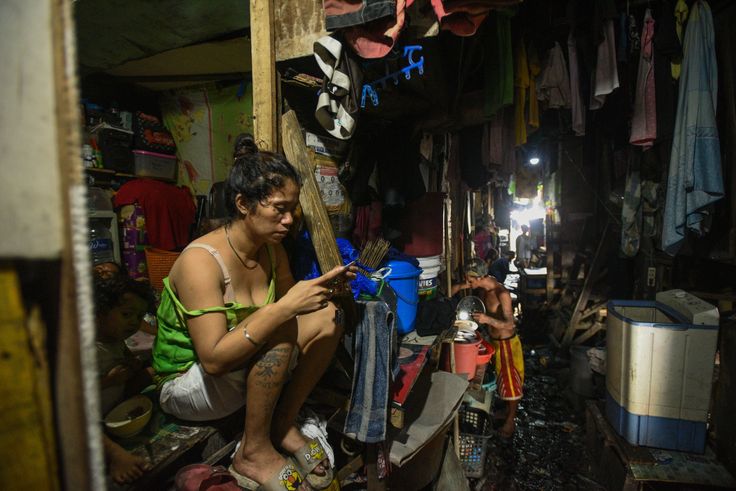
Her story literally translates to living "on a shoestring budget". It’s a life of drawing, of "robbing Peter to pay Paul", or "making do with what little you have". These aren’t isolated struggles; they are the day in, day out for so many.
However the solution to poverty in Brgy. San Roque lies in collective action resides. It is dependent on government support, participation of private sector and involvement of the community. Barangay challenges should inform the development of ICT initiatives, which, in turn, should be conducted in a manner that is responsive to the specific Barangay needs and which result in tangible outcomes as opposed to flashy, but ineffectual, programs. For instance, Education, by handing over computers with internet connectivity to barangay learning centers, we can ensure that everyone in our own community can participate in online learning and teach themselves. You can offer free online courses on how to make designs, code or become an entrepreneur. Employment, help local businesses in creating job opportunities. Through job matching apps, residents use the app to connect with employers looking for workers. Healthcare, to use telemedicine tools, train barangay health workers. Give doctors tablets or smartphones for digital consultation. As with these steps, they require investment, but the cost of doing nothing is infinitely greater.
Poverty in Brgy. San Roque is not an impossible problem. This is a problem that demands instant action and careful thoughts. No life is without value, no family must live in dignity. As we read of stories such as Ate Edna’s, let us also remember that, in our country, everyone deserves a chance to live.
Get up from under the covers and ‘bite the bullet’ to tackle this deal. We shouldn’t pull our punches or leave it to someone else to step up. This is our community and this is what we do today that determines its future. Embedding ICT solutions that respond to human needs, can ‘turn the tide’ on poverty and create a better future for Brgy. San Roque.
It’s going to be hard, but it’s worth the journey. Together, let’s finish Ate Edna’s story and other families in hope not in despair.
Poverty in Brgy. San Roque is realized through families such as Ate Edna, Ate Joy, and Kuya Erwin. Their stories show a change of times, where, with the aid of ICT solutions, better access to education, jobs, and healthcare can be afforded. Working with technology can end up with the poverty level in the community thus giving better opportunities for any member of the community. Then, together, we can really make a change-along with having quite an enriched life today.
1
The Issue
Poverty is not a buzzword – it is a living reality for many families in Brgy. San Roque Bongabon, Nueva Ecija. Poverty, as a shadow hovering in front of Ate Edna’s eyes, is a constant for anyone trying to live by peddling lottery tickets, even under the blazing sun. With so little left after her earnings for a day of medical emergencies or school fee. Despite her hard work, Ate Edna often finds herself making heartbreaking choices: eating very little so her grandchildren can eat or putting off much needed medical care for lack of funds. Her story is the story of so many — in the barangay, where there is plenty of resilience, little abundance of resources.
Rice farmer Ate Joy has another battle but as daunting. She wakes up in the morning, and that day she prints in order to be deeply buried in debt and work under the sun, until this season’s harvest will be enough to cover her family’s needs and pay back her loans. But she sometimes has little to take home, especially since the escalating price of fertilizers, irrigation and other farming inputs. Once she sighed, she had said, 'Ang hirap magtanim, pero ang kita, parang tubig na dumadaan lang sa kamay'. Ate Joy is like many of the small scale farmers in the community, trapped in a cycle of debt and diminishing returns, and unable to break out regardless. Her story reminds us that poverty is much more than a lack of money; it's a system of systemic barriers that keep people from moving off this web.
Another one is Kuya Erwin who owns a small stall selling barbecued meat off the road. Every stick of barbecue that he sells is an outcome of a series of work, beginning from the marinated meat and ending at the placement of grill. On some nights, his stand gets customers who are looking for quick and cheap meals but during fights or rains he is left barely making up his losses. Regardless of his efforts, what they earn cannot be steady allowing him to make a deposit for his children’s education or further enhance the business. “Minsan iniisip ko, hanggang dito na lang ba ako” he uttered as he tiredly spoke but also a bit determined. His testimony is the same as many informal workers who fail to get recognition of their endeavors in Brgy. San Roque, yet refuse to succumb to their challenges.
Stories like Ate Edna's, Ate Joy's, and Kuya Erwin's make up the many kinds of poverty that exist in Brgy. San Roque, wherein every struggle lies behind a family trying to survive with few hopes, high living costs, and not knowing what tomorrow will bring. Poverty here is not just a matter of money; it's a question of giving up hope; reducing dreams; struggle day by day, every single day to get the most minimal necessities. But these tales are not sad; they are messages that call to act, and make us stand up to this vast problem with understanding, urgency, and new ideas to solve it.
"These children’s smiles radiate hope and happiness. Behind their joy lies a quiet struggle they have yet to understand."
Poverty in our barangay has many faces. Ate Edna’s is one of them. She shared her struggles with the world during an interview, only this time with utmost honesty. To her, the voice shook, she clutched in her hand a few lottery tickets, 'Ang hirap ng buhay ngayon.' 'Tapos sa Hindi ko kaya matawagan ang kita para sa pagkain pa niya lalo na may apo pa akong kailangang alagaan.' Even her eldest daughter, older than a teenager, just had a baby. The young mom lives off Ate Edna meager income with no stable income.
Ate Joy, a rice farmer who has been really deeply mired in debt, has another story to tell. Every day at dawn she gets up to look after little bit of land that she owns, but her earnings cannot even meet her expenses. Fertilizers, irrigation fees, and machine rentals are driving the cost out of her already thin profits. She lamented a conversation that 'wala nang natitira para sa amin.' Sa bawat inaani namin binabayad sa utang. Paano pa kami mabubuhay?' Her family often goes days or weeks without eating anything or eats less just so they can stretch the little that they have. Ate Joy’s story points out that a lot of small farmers get trapped in a never ending circle of debt, with only loan sharks or middlemen at hand to deal with.
Then there’s Kuya Erwin whose small roadside ihaw ihaw stand his only thing. He begins his day by making charcoal and marinating meat in the hopes that he sells enough skewers so he can turn a profit. He makes just enough to provide for his family on the good days. He’s left with unpaid bills and unsold inventory when the weather is bad or fewer customers show up. 'Hirap kumita minsan iniisip ko' he shared with a weary smile. "Pero kailangan e para sa apat na anak ko" Despite all of that hard work, his kids often have to skip school supplies and extracurriculars.
These stories shows how poverty affect Brgy. San Roque and doesn’t discriminate. Whatever community you come from, it affects the farmers, small business owners, and informal workers. Human beings, it should sadden us to say, are deprived of their opportunities, dignity, hope because it’s a pervasive thing.
This isn’t a unique story. Many families in Brgy. San Roque live a hand to mouth existence, struggling with the absence of steady jobs, little access to education and especially poor healthcare. Parents can’t afford uniforms, books, uniforms or transportation so children drop out of school. They can’t afford medication so elderly residents endure their illnesses in silence. It is not a distant concept: poverty lives in the day to day lives of the people here, woven into lives every day.
It's as high as it gets. Unless something changes, generations will continue to be stuck in this cycle of wealth, or poverty. Those born into impoverished households are less likely to raise themselves from poverty. Education and decent jobs become dreams deferred or dreams abandoned. Ate Edna worries for her grandchild, saying, 'Paano kung ang anak ko walang trabaho? Ano na ang mangyayari sa apo ko?'. Kuya Erwin is afraid he’ll have to shutter his ihaw-ihaw stand, and Ate Joy fears she’ll be losing her land to mounting debts.
But change is possible. Residents of Brgy. San Roque can rewrite their stories. A child who does stay in school could become a nurse, a teacher or an entrepreneur. A stable job providing for a family, even saving for the future, is possible for a parent. From a barely getting by community to one where people will thrive, not just survive — the barangay evolves.
Time is of the essence. At the end of every day, every minute we delay action, an additional family goes to bed hungry, an additional child misses out on a better future, an additional resident like Ate Edna fights despair. But challenges are growing, and opportunities for countering them are growing too. Technology and ICT (Information and Communication Technology) allow for tools to rescue the barriers and solve problems that can be achieved.
Online education offered by ICT can make learning accessible to the poorest of the poor, who can not afford traditional education. Through digital platforms it can help connecting the job seekers to employers. Telemedicine allows healthcare to come to people who can’t travel to the clinics or hospital. Only with solutions that are based on the real needs of people like Ate Edna and her daughter and neighbors will these solutions work.
If nothing is done, the cycle of poverty will tighten its claws. Today’s school leavers will grow up as adults unable to perform the basic skills required for decent work. Living is going to continue to rest on informal, unstable livelihoods like the sale of lottery tickets or seasonal farm work for families. The potential of the community will be missed and the people who live there will be subject to further inequality.
Ate Joy fears she will lose her farmland altogether one day. Without it, her family would not have any source of income. At the same time, Kuya Erwin worries his kids would be raised in a false belief that struggle is all of life. But poverty for one generation is an unbroken chain of deprivation to pass on to the next.
Instead of the exception, Ate Edna’s story could be the new normal. Her daughter might not hold down stable work, and her grandchild might not live a different life than her did. An unbroken chain of hardship.
ICT is not a silver bullet, but if used well it is a powerful tool. Free online learning platforms can help children and young adults to learn skills in demand in the current economy for education. App and website job-matching apps and sites can be a way for residents to find employment, whether in barangays or not. Digital consultations can help solve illnesses that otherwise go untreated immediately for healthcare.
Technology isn’t enough, but it’s a good start. Training, support and community involvement has become part of the solution. That’s not about giving people gadgets or apps and hoping change happens—it’s about giving people the tools to improve their own lives with those gadgets or apps.
Ate Edna finished her story and her eyes welled up with tears but her voice had a surprisingly brave about it. "Ipinagkaloob na kahit mahirap, hindi kami basta basta susuko. Sana lang ay may gumabay sa amin para makabangon." This echoed the words of many in Brgy. San Roque: What they are saying is they're not asking for handouts, they're asking to be given a fair chance.
Her story literally translates to living "on a shoestring budget". It’s a life of drawing, of "robbing Peter to pay Paul", or "making do with what little you have". These aren’t isolated struggles; they are the day in, day out for so many.
However the solution to poverty in Brgy. San Roque lies in collective action resides. It is dependent on government support, participation of private sector and involvement of the community. Barangay challenges should inform the development of ICT initiatives, which, in turn, should be conducted in a manner that is responsive to the specific Barangay needs and which result in tangible outcomes as opposed to flashy, but ineffectual, programs. For instance, Education, by handing over computers with internet connectivity to barangay learning centers, we can ensure that everyone in our own community can participate in online learning and teach themselves. You can offer free online courses on how to make designs, code or become an entrepreneur. Employment, help local businesses in creating job opportunities. Through job matching apps, residents use the app to connect with employers looking for workers. Healthcare, to use telemedicine tools, train barangay health workers. Give doctors tablets or smartphones for digital consultation. As with these steps, they require investment, but the cost of doing nothing is infinitely greater.
Poverty in Brgy. San Roque is not an impossible problem. This is a problem that demands instant action and careful thoughts. No life is without value, no family must live in dignity. As we read of stories such as Ate Edna’s, let us also remember that, in our country, everyone deserves a chance to live.
Get up from under the covers and ‘bite the bullet’ to tackle this deal. We shouldn’t pull our punches or leave it to someone else to step up. This is our community and this is what we do today that determines its future. Embedding ICT solutions that respond to human needs, can ‘turn the tide’ on poverty and create a better future for Brgy. San Roque.
It’s going to be hard, but it’s worth the journey. Together, let’s finish Ate Edna’s story and other families in hope not in despair.
Poverty in Brgy. San Roque is realized through families such as Ate Edna, Ate Joy, and Kuya Erwin. Their stories show a change of times, where, with the aid of ICT solutions, better access to education, jobs, and healthcare can be afforded. Working with technology can end up with the poverty level in the community thus giving better opportunities for any member of the community. Then, together, we can really make a change-along with having quite an enriched life today.
Petition Updates
Share this petition
Petition created on November 8, 2024