
Pluto Should Be A Planet! Or Should It Not?
The Issue
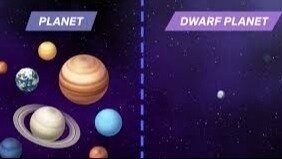
The debate over whether Pluto should be a planet centers on the 2006 decision by the International Astronomical Union (IAU). Pluto was reclassified as a "dwarf planet" because it failed to "clear its neighborhood," meaning it shares its orbital space with other icy bodies in the Kuiper Belt.
The push to restore Pluto’s planetary status is primarily driven by planetary scientists who advocate for a geophysics-based definition rather than one based on orbital location. Several compelling arguments challenge the 2006 demotion.
The Science Case for Pluto
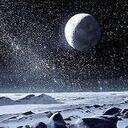
The data returned by NASA's New Horizons spacecraft revealed Pluto to be a remarkably active world. It features subsurface oceans, mountains of ice, flowing glaciers, and a multilayered atmosphere. Advocates argue that any object massive enough to be pulled into a round, spherical shape by its own gravity (known as hydrostatic equilibrium) should be classified as a planet. Under this standard, planet hood is based on what an object is, not where it lives.
The Counterargument
Traditional astronomers support the current classification because Pluto's orbit is heavily influenced by Neptune, and it shares space with thousands of similar objects. If Pluto were reinstated based solely on its round shape, scientists would also have to classify large asteroids (like Ceres) and many other Kuiper Belt objects (like Eris, Haumea, and Makemake) as planets, which would dramatically inflate the number of recognized planets in our solar system.
To be a planet, an object must:
- Orbit the Sun.
- Be large enough that gravity pulls it into a roughly spherical shape.
- "Clear its neighborhood" of other orbiting debris.
Pluto meets the first two criteria but fails the third because it shares its orbital neighborhood in the Kuiper Belt with many other icy bodies. Actually many other of the planets in the solar system don't fit the definition of the planet, such as Jupiter which shares its orbit with thousands of "Trojan" asteroids that travel right alongside it, Mercury is not even in hydrostatic equilibrium (perfectly round), yet the IAU explicitly made an exception to keep it on the planet list. If the rule were applied consistently, either all the "cleared" planets would lose their titles, or we would have to upgrade dozens of other round objects to planet status (like Ceres, Eris, Haumea, and Makemake).
The "Rules" Idea
The idea of "clearing its neighborhood" is a weak and flawed rule. Any planet placed in the outer Kuiper Belt would not be able to clear its neighborhood, either. The rule specifically requires orbiting our sun, a definition that ignores countless exoplanets and "rogue planets" wandering the galaxy simply because they do not orbit our star. Major planets like Jupiter and Earth still have thousands of asteroids crossing their paths, making the line between a "planet" and "dwarf planet" surprisingly blurry. If you remove Earth from the equation, our Moon is actually large enough and round enough to qualify as a planet on its own. Many planetary scientists, like those who led the New Horizons mission to Pluto, argue that an object's classification should be based on its geology, composition, and formation, not how crowded its neighborhood is. This is very true because at any moment, even right now, there could be a random object crossing a planet's path, but it doesn't mean they are going to reclassify it as a dwarf planet. Why, then, was Pluto reclassified?
4
The Issue
The debate over whether Pluto should be a planet centers on the 2006 decision by the International Astronomical Union (IAU). Pluto was reclassified as a "dwarf planet" because it failed to "clear its neighborhood," meaning it shares its orbital space with other icy bodies in the Kuiper Belt.
The push to restore Pluto’s planetary status is primarily driven by planetary scientists who advocate for a geophysics-based definition rather than one based on orbital location. Several compelling arguments challenge the 2006 demotion.
The Science Case for Pluto
The data returned by NASA's New Horizons spacecraft revealed Pluto to be a remarkably active world. It features subsurface oceans, mountains of ice, flowing glaciers, and a multilayered atmosphere. Advocates argue that any object massive enough to be pulled into a round, spherical shape by its own gravity (known as hydrostatic equilibrium) should be classified as a planet. Under this standard, planet hood is based on what an object is, not where it lives.
The Counterargument
Traditional astronomers support the current classification because Pluto's orbit is heavily influenced by Neptune, and it shares space with thousands of similar objects. If Pluto were reinstated based solely on its round shape, scientists would also have to classify large asteroids (like Ceres) and many other Kuiper Belt objects (like Eris, Haumea, and Makemake) as planets, which would dramatically inflate the number of recognized planets in our solar system.
To be a planet, an object must:
- Orbit the Sun.
- Be large enough that gravity pulls it into a roughly spherical shape.
- "Clear its neighborhood" of other orbiting debris.
Pluto meets the first two criteria but fails the third because it shares its orbital neighborhood in the Kuiper Belt with many other icy bodies. Actually many other of the planets in the solar system don't fit the definition of the planet, such as Jupiter which shares its orbit with thousands of "Trojan" asteroids that travel right alongside it, Mercury is not even in hydrostatic equilibrium (perfectly round), yet the IAU explicitly made an exception to keep it on the planet list. If the rule were applied consistently, either all the "cleared" planets would lose their titles, or we would have to upgrade dozens of other round objects to planet status (like Ceres, Eris, Haumea, and Makemake).
The "Rules" Idea
The idea of "clearing its neighborhood" is a weak and flawed rule. Any planet placed in the outer Kuiper Belt would not be able to clear its neighborhood, either. The rule specifically requires orbiting our sun, a definition that ignores countless exoplanets and "rogue planets" wandering the galaxy simply because they do not orbit our star. Major planets like Jupiter and Earth still have thousands of asteroids crossing their paths, making the line between a "planet" and "dwarf planet" surprisingly blurry. If you remove Earth from the equation, our Moon is actually large enough and round enough to qualify as a planet on its own. Many planetary scientists, like those who led the New Horizons mission to Pluto, argue that an object's classification should be based on its geology, composition, and formation, not how crowded its neighborhood is. This is very true because at any moment, even right now, there could be a random object crossing a planet's path, but it doesn't mean they are going to reclassify it as a dwarf planet. Why, then, was Pluto reclassified?


Petition Updates
Share this petition
Petition created on June 9, 2026