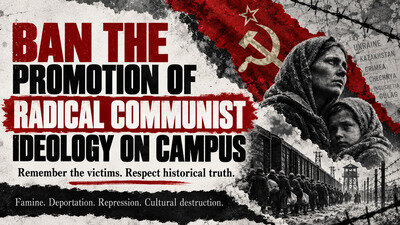

Petition to Ban the Promotion of Radical Communist Ideology on Sheffield University Campus
The Issue
Petition to Ban the Promotion and Glorification of Radical Communist Ideology on University Campuses
As Ukrainian, my family's life was overshadowed by the atrocities committed under the Soviet Union. For millions of families across Eastern Europe and Central Asia, radical totalitarian communism was not merely a political theory. It was a lived reality characterised by oppression, mass starvation, political persecution, forced deportations and the systematic destruction of national cultures.
Broader estimates of deaths attributable to Soviet repression and state policies range from 10 to 20 million people, depending on the historical methodology and which causes of death are included.
The promotion and glorification of radical totalitarian communist ideology on university campuses demonstrates a deeply concerning disregard for historical facts and the millions who suffered under Soviet rule.
The Historical Consequences of Radical Communist Rule
The Soviet Union's history contains overwhelming evidence of human suffering caused by its repressive political system and policies:
Mass famine and starvation: The Holodomor of 1932–1933 devastated Ukraine, killing millions through starvation amid forced collectivisation, grain confiscations and state repression. In Kazakhstan, Soviet collectivisation and the destruction of traditional livelihoods contributed to another catastrophic famine.
Food shortages and economic devastation: Forced agricultural collectivisation, grain requisitions and centralised economic planning contributed to severe shortages, the destruction of rural communities and widespread hardship.
Ethnic cleansing and mass deportations: Crimean Tatars, Chechens, Ingush and other ethnic groups suffered forced deportations from their ancestral homelands, with substantial loss of life during transportation and exile.
Destruction of national cultures: In the Baltic states and across Soviet-controlled territories, censorship, Russification, political persecution and attacks on independent cultural institutions undermined national identities and traditions.
Political executions and forced labour: Hundreds of thousands were executed for political reasons, while millions were imprisoned, deported or subjected to forced labour.
These atrocities demonstrate the dangers of totalitarian ideologies enforced through political violence, repression and unchecked state power.
Countries That Have Restricted Communist Totalitarian Ideology and Symbols:
The dangers associated with Soviet totalitarianism have been recognised in the legislation of several European countries, including nations that experienced Soviet occupation or communist dictatorship.
Former Soviet republics:
Ukraine: Formerly part of the USSR. In 2015, Ukraine introduced legislation prohibiting propaganda and public symbols of the communist totalitarian regime. The Communist Party of Ukraine was subsequently banned by a court in 2022.
Latvia: Formerly part of the USSR. Latvian law restricts the open promotion of communist ideology and the celebratory use of Soviet symbols at public events.
Lithuania: Formerly part of the USSR. Lithuania introduced restrictions on Soviet and communist symbols, including the hammer and sickle, at public gatherings.
Estonia: Formerly part of the USSR. Estonia restricts the display of symbols associated with support for aggression, including Soviet symbols when used in that context.
Georgia: Formerly part of the USSR. Georgia introduced its Freedom Charter in 2011, providing restrictions on communist totalitarian propaganda and the removal of Soviet totalitarian symbols from public spaces.
Former communist states outside the USSR:
Poland: Poland was not part of the USSR but was governed by a Soviet-aligned communist regime. Polish law prohibits certain forms of communist totalitarian propaganda. In December 2025, its Constitutional Tribunal ruled that the aims and activities of the Communist Party of Poland were unconstitutional.
Czech Republic: Previously part of communist Czechoslovakia, but never part of the USSR. Czech criminal legislation now expressly addresses communist movements that seek to suppress human rights and freedoms or promote group hatred.
These countries have adopted different legal approaches, ranging from restrictions on symbols and propaganda to prohibitions targeting particular political organisations. Their laws do not necessarily prohibit every communist belief, academic discussion or historical reference.
Nevertheless, these examples show that concerns about the glorification of totalitarian communism are not merely theoretical. Countries that experienced Soviet repression have taken legislative steps to address its legacy.
Why Universities Must Take Action
University campuses should be environments that promote education, historical understanding, respect for human rights and critical thinking.
The celebration of radical communist ideology associated with Soviet totalitarian rule, without acknowledging the atrocities committed under that system, risks trivialising the suffering of its victims.
Communist symbols such as the hammer and sickle carry particularly painful historical associations for families affected by Soviet repression. When used to glorify the Soviet dictatorship, they can represent political terror, forced deportation, starvation and cultural destruction.
The historical failures and abuses of the Soviet system must not be ignored or romanticised.
We therefore call upon universities and student unions to prohibit the organised glorification and promotion of radical communist ideologies that advocate or justify totalitarian rule, political violence, ethnic persecution or the suppression of fundamental human rights.
This should include appropriate restrictions on celebratory displays of symbols associated with Soviet totalitarian repression, while preserving their legitimate use in historical education, research and critical discussion.
We further demand educational initiatives addressing the crimes committed under Soviet rule, including mass starvation, ethnic persecution, political executions and cultural suppression.
The suffering of millions must never be dismissed as an unfortunate footnote to an ideological experiment.
Universities should recognise the experiences of those who survived communist dictatorships and the families who continue to carry the consequences of that history.
We urge university administrators, student unions and policymakers to recognise these historical realities, protect the dignity of victims and take meaningful action against the glorification of radical totalitarian ideologies on university campuses.
Sign this petition to demand historical accountability, respect for victims and an end to the glorification of radical totalitarian communist ideology on university campuses.
Never forget the victims. Never glorify their oppressors. Never allow history to repeat itself.

105
The Issue
Petition to Ban the Promotion and Glorification of Radical Communist Ideology on University Campuses
As Ukrainian, my family's life was overshadowed by the atrocities committed under the Soviet Union. For millions of families across Eastern Europe and Central Asia, radical totalitarian communism was not merely a political theory. It was a lived reality characterised by oppression, mass starvation, political persecution, forced deportations and the systematic destruction of national cultures.
Broader estimates of deaths attributable to Soviet repression and state policies range from 10 to 20 million people, depending on the historical methodology and which causes of death are included.
The promotion and glorification of radical totalitarian communist ideology on university campuses demonstrates a deeply concerning disregard for historical facts and the millions who suffered under Soviet rule.
The Historical Consequences of Radical Communist Rule
The Soviet Union's history contains overwhelming evidence of human suffering caused by its repressive political system and policies:
Mass famine and starvation: The Holodomor of 1932–1933 devastated Ukraine, killing millions through starvation amid forced collectivisation, grain confiscations and state repression. In Kazakhstan, Soviet collectivisation and the destruction of traditional livelihoods contributed to another catastrophic famine.
Food shortages and economic devastation: Forced agricultural collectivisation, grain requisitions and centralised economic planning contributed to severe shortages, the destruction of rural communities and widespread hardship.
Ethnic cleansing and mass deportations: Crimean Tatars, Chechens, Ingush and other ethnic groups suffered forced deportations from their ancestral homelands, with substantial loss of life during transportation and exile.
Destruction of national cultures: In the Baltic states and across Soviet-controlled territories, censorship, Russification, political persecution and attacks on independent cultural institutions undermined national identities and traditions.
Political executions and forced labour: Hundreds of thousands were executed for political reasons, while millions were imprisoned, deported or subjected to forced labour.
These atrocities demonstrate the dangers of totalitarian ideologies enforced through political violence, repression and unchecked state power.
Countries That Have Restricted Communist Totalitarian Ideology and Symbols:
The dangers associated with Soviet totalitarianism have been recognised in the legislation of several European countries, including nations that experienced Soviet occupation or communist dictatorship.
Former Soviet republics:
Ukraine: Formerly part of the USSR. In 2015, Ukraine introduced legislation prohibiting propaganda and public symbols of the communist totalitarian regime. The Communist Party of Ukraine was subsequently banned by a court in 2022.
Latvia: Formerly part of the USSR. Latvian law restricts the open promotion of communist ideology and the celebratory use of Soviet symbols at public events.
Lithuania: Formerly part of the USSR. Lithuania introduced restrictions on Soviet and communist symbols, including the hammer and sickle, at public gatherings.
Estonia: Formerly part of the USSR. Estonia restricts the display of symbols associated with support for aggression, including Soviet symbols when used in that context.
Georgia: Formerly part of the USSR. Georgia introduced its Freedom Charter in 2011, providing restrictions on communist totalitarian propaganda and the removal of Soviet totalitarian symbols from public spaces.
Former communist states outside the USSR:
Poland: Poland was not part of the USSR but was governed by a Soviet-aligned communist regime. Polish law prohibits certain forms of communist totalitarian propaganda. In December 2025, its Constitutional Tribunal ruled that the aims and activities of the Communist Party of Poland were unconstitutional.
Czech Republic: Previously part of communist Czechoslovakia, but never part of the USSR. Czech criminal legislation now expressly addresses communist movements that seek to suppress human rights and freedoms or promote group hatred.
These countries have adopted different legal approaches, ranging from restrictions on symbols and propaganda to prohibitions targeting particular political organisations. Their laws do not necessarily prohibit every communist belief, academic discussion or historical reference.
Nevertheless, these examples show that concerns about the glorification of totalitarian communism are not merely theoretical. Countries that experienced Soviet repression have taken legislative steps to address its legacy.
Why Universities Must Take Action
University campuses should be environments that promote education, historical understanding, respect for human rights and critical thinking.
The celebration of radical communist ideology associated with Soviet totalitarian rule, without acknowledging the atrocities committed under that system, risks trivialising the suffering of its victims.
Communist symbols such as the hammer and sickle carry particularly painful historical associations for families affected by Soviet repression. When used to glorify the Soviet dictatorship, they can represent political terror, forced deportation, starvation and cultural destruction.
The historical failures and abuses of the Soviet system must not be ignored or romanticised.
We therefore call upon universities and student unions to prohibit the organised glorification and promotion of radical communist ideologies that advocate or justify totalitarian rule, political violence, ethnic persecution or the suppression of fundamental human rights.
This should include appropriate restrictions on celebratory displays of symbols associated with Soviet totalitarian repression, while preserving their legitimate use in historical education, research and critical discussion.
We further demand educational initiatives addressing the crimes committed under Soviet rule, including mass starvation, ethnic persecution, political executions and cultural suppression.
The suffering of millions must never be dismissed as an unfortunate footnote to an ideological experiment.
Universities should recognise the experiences of those who survived communist dictatorships and the families who continue to carry the consequences of that history.
We urge university administrators, student unions and policymakers to recognise these historical realities, protect the dignity of victims and take meaningful action against the glorification of radical totalitarian ideologies on university campuses.
Sign this petition to demand historical accountability, respect for victims and an end to the glorification of radical totalitarian communist ideology on university campuses.
Never forget the victims. Never glorify their oppressors. Never allow history to repeat itself.
The Decision Makers
Supporter Voices
Petition Updates
Share this petition
Petition created on 19 October 2026