
Petition to Ban Flock Cameras in Sevier County (and all other AI-driven ALPR's)
The Issue
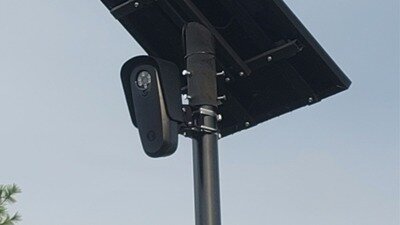
Recently the Flock Safety company has been making headlines due to the controversial nature of its data collection. But Flock is not the only company making this type of device. Other manufacturers include, Axon, Motorola, Neology, Rekor, SignalTrace, and others. Even though these cameras are often called automated license plate readers (ALPR’s), they do more than just take simple pictures of a license plate. All of these cameras use artificial intelligence (AI) to identify vehicles based on identifying characteristics like make, model, color, dents, modifications, and bumper stickers, and that data is networked with the other cameras in a given area to produce a picture of where the vehicle travels throughout the day. The newer models of these cameras use facial recognition to identify and track people on foot or on bicycles, and some of them can even detect and identify electronics that come near the camera, so even if your face is obstructed or you are out of frame of the camera, they will still be able to track you based on phones, smart watches, and other like devices. For the purposes of this petition, I will be referring to the entire family (all brands) of AI-supported license plate readers as AI ALPR’s.
The goal of this petition is to ban the use of all AI ALPR’s in Sevier County, on the grounds that they are a blatant violation of our privacy, our personal security, and our financial security. AI ALPR’s are not only a constitutional violation of our fourth amendment rights but, under the legal definition of stalking in the state of Tennessee, these cameras can also be considered to be stalking us. There is no data to support that they prevent or solve crimes, abuse by corporations and individuals is rampant, they have data security issues that allow them to be accessed by pretty much anyone, the cameras result in false-arrests, and they are being used for surveillance pricing, which will continue to drive up pricing for Americans that are already barely scraping by. If it is illegal for an individual to impose this level of surveillance on another individual, then how is it legal for our government and corporations to surveil us in this way?
The fourth amendment explicitly stipulates that it is unconstitutional for a search to be carried out without a warrant. In Chatrie v. United States, the Supreme Court ruled 6-3 that use of third-party cell phone tower data qualifies as a fourth amendment search. How is AI ALPR data any different? If anything, these cameras are collecting even more data than cell phone tower data can provide. If criminals can challenge the use of this data for the use of conviction, then why are the American people allowing honest, hard-working people (the vast majority of the population) to be searched this way every single day of their lives?
It is also the opinion of this author that this level of surveillance qualifies as stalking, which is a class A misdemeanor in the state of Tennessee. According to Tennessee Code Annotated § 39-17-315:
“(1) “Course of conduct”:(A) Means a pattern of conduct composed of a series of two (2) or more separate, noncontinuous acts evidencing a continuity of purpose, including, but not limited to, acts in which the defendant directly, indirectly, or through third parties, by any action, method, device, or means, follows, monitors, observes, surveils, threatens, or communicates to a person, or interferes with a person's property;
…
(4) “Stalking” means a willful course of conduct involving repeated or continuing harassment of another individual that would cause a reasonable person to feel terrorized, frightened, intimidated, threatened, harassed, or molested, and that actually causes the victim to feel terrorized, frightened, intimidated, threatened, harassed, or molested”
These cameras clearly meet the criteria for “Course of Conduct” in this code. ALPR’s show “a pattern of conduct composed of a series of two or more separate, noncontinuous acts evidencing a continuity of purpose,” because they are repeatedly and intermittently surveilling us as we go about our day and keeping records of our movements. Then, they directly monitor, observe, and surveil every single one of us. As for the definition of stalking (4), I think that many reasonable people do feel frightened, intimidated, and threatened by these cameras. This is evidenced in the fact that 271 of these cameras have been vandalized or stolen in 30 states, according to FlockStats.org, as of the writing of this paper. The same site lists 196 communities that have rejected Flock, altogether. This clearly shows that the American people are deeply concerned about these cameras, and we should be. If it is illegal (and unethical) for an individual to stalk us around town, then why are we allowing the government and corporations to do the same thing?
None of us were asked if we wanted these, we weren’t given a vote, and yet we are paying for each and every one of these AI ALPR’s with our own hard-earned taxpayer’s dollars. We are slowly being forced into a digital cage by people who stand to make large profits on our imprisonment. This issue is becoming worse day by day, and if we don’t say “no” now, then we may face a future where we simply cannot stop it. By signing below, you are showing your support for a Sevier County that is free of abusive surveillance.
This is the end of the official petition, but if you are still on the fence, or if you would like to know more about how this data is being used, please feel free to read on (~10 min read).
So, why are AI ALPR’s are being installed in the first place? These cameras are heavily promoted by law enforcement agencies nationwide that praise them as a miracle for solving crimes, finding missing persons, and even preventing crimes before they can happen. However, no data exists to support this stance. There are a few sources that report successes, but the successes are always very limited and specific, and these sources are always extremely supportive of surveillance. Many of these stories come directly from Flock Safety, themselves. Unbiased, factual, peer-reviewed data is nowhere to be found. If these AI ALPR’s are such a resounding success with solving crimes, then why isn’t there any data available to support this “success”?
Aside from their very questionable success at solving or preventing crimes, AI ALPR’s have a well-documented history of being used to commit crimes. As of July 2026, there were 24 cases of warrantless surveillance, as reported by TheAutoWire.com, and it seems like there are new cases in the news nearly every day. Some sources report over 100 cases of abuse. Some of these cases result in simple termination from their position but, in many of these cases, the officers were charged with felonies, and sometimes multiple felonies. In our very own state of Tennessee, a Shelby County deputy named Thadius Gordon was fired after using the ALPR database to locate his ex-wife over 100 times. This is only one example of many, and there are undoubtedly many more cases that have never been discovered or reported. The truth is that We the People don’t actually know to what extent these cameras are being abused, and we likely never will.
Perhaps more alarmingly, in July it was discovered that Flock’s own employees in Dunwoody, Georgia accessed cameras multiple times at the Marcus Jewish Community Center as part of a sales demonstration. The camera that they accessed views an area in which children practice gymnastics. Why is there even a camera there in the first place? Most reasonable adults would find it creepy and alarming to know that random strangers were watching their children in a gymnastics class. Many of these cameras point into children’s spaces like playgrounds and pools, which raises obvious concerns about how they can be used to track and exploit children.
Flock, specifically, has many data security issues that could easily be exploited by hackers with limited experience in a very short period of time. In fact, Benn Jordan, a musician, YouTube creator, and white-hat hacker from Illinois, has exposed several data vulnerabilities in Flock’s technology. In some cases, he reported that he was able to access cameras in mere seconds because they weren’t even password protected. He has reached out to Flock on several occasions about these security issues, and Flock seems unconcerned and has not addressed any of them. His response was to film himself, using a Flock camera in a park, talking about his grievances. During his speech, a family with young children came into the background, and the Flock camera shifted to view the kids instead of Benn.
All of this raises serious concerns about how this technology could be used by thieves, kidnappers, and sexual predators to commit crimes. Now they don’t need to risk being seen by their future-victims. They can simply track them from the comfort of their own home and then strike when they feel the timing is right. Also, if hackers can access these cameras, then it stands to reason that they will find a way to turn them off, altogether, to prevent the cameras from even recording a crime as they are committing it.
Lindsey Brooke Isaacs is a 23-year-old woman who was wrongfully arrested and detained for 13 days based on Flock data claiming that she was involved in a fatal hit-an-run-accident in Florida, even though her vehicle was clearly undamaged and parked in the driveway, and she had an alibi for the time that the accident happened. Hugo Parra is a San Diego man that was wrongfully arrested and spent almost a month in jail for an armed carjacking, even though another Flock camera clearly recorded him over five miles away from the scene of the crime. These are only two cases of many where innocent people have spent significant time in jail, or faced legal charges, due to incorrect Flock data. In both of these cases, the cops were blindly following what Flock told them instead of doing actual police work. If they had investigated these cases in the old-fashioned way, then they would have quickly seen that they had the wrong person. Instead, they went in completely certain that Flock’s data was accurate and caused immeasurable hardship to individuals who had obvious proof that they were, in fact, innocent.
Ownership of AI ALPR’s is also becoming increasingly alarming. According to Deflock.org, a site that maps the location of these cameras, there are approximately 73 AI ALPR’s in Sevier County, although that number is undoubtedly higher, as some cameras do not appear on their site as of the writing of this document. As I will show below, this number is sure to keep growing at an unprecedented rate. Of these roughly 73 cameras, only 53 are operated by Sevier County’s law enforcement agencies. This leaves 20 cameras in Sevier County alone that are owned and operated by entities that have absolutely nothing to do with law enforcement. One very prominent example are the four Flock cameras installed by Lowes in their parking lot on Winfield Dunn Parkway. Are we comfortable with mega-corporations having the right to track us and use that data however they want? This author certainly is not.
The increased use of AI ALPR’s by corporations raise serious concerns about how these companies are using this data. Surveillance pricing is already quite prevalent in our modern world. The data brokerage industry is estimated to be around $300 billion in the US, with an estimated growth rate of between 7.5-8.5%, depending on the source. What is even more alarming about this trend is that data brokers aren’t always required to register as such, so it is quite likely that the data-brokerage industry is far more valuable than these numbers suggest. Kroger reports that they make roughly $1 billion annually by selling customer data. That number goes up to $1.5 billion if you include Albertsons, which Kroger acquired in 2025. Other merchants like Walmart use digital price tags that change multiple times per day, and several studies have been done regarding one customer getting a low price on an item, while another customer pays twice the amount, or more, for the exact same product based on the customer's relative need for that specific item. AI ALPR’s are just another way that these mega-corporations can collect data on us to decide our willingness to pay. This type of data collection will undoubtedly drive consumer prices higher, and this is an issue that we should all be concerned about. It might surprise some readers to know that Congress had a session discussing this exact topic in May of 2024, but many individuals are still completely unaware that this type of thing is happening.
To compound this issue, we also must remember that most industries are controlled by only a couple or a few companies (called oligopolies). One example of this is in the home improvement retail industry. In Sevier County, we have a few small hardware shops, but they are disappearing, and they often times have a very limited selection. The two major corporations in that niche are Lowes and Home Depot. As I mentioned above, Lowes has already implemented AI ALPR’s in their parking lot. As a customer who wants to avoid that type of surveillance, that might make someone want to shop at Home Depot, instead, to show their disapproval of the AI ALPR’s. However, Home Depot has now announced that they will be rolling out AI ALPR’s nationwide. So, if a tree hits your porch and you need to fix the damage (something that must be fixed) then it will soon be that you have no choice but to surrender your personal data to get the hardware that you need. This is a complete removal of our choice to be surveilled, and that should be alarming. Then, if you avoid hardware stores because you don’t want to be surveilled, when you are inevitably forced to go into one for a home repair emergency, that company will automatically and instantly know that you are in a situation where you have no choice, and they will be able to exploit that need in the form of higher pricing for you. This is a blatant overreach of corporate power, and we need to stand up to this.
The more concerning oligopoly is that of the grocery stores. As of the writing of this document, Deflock.org shows no AI ALPR’s in any grocery store parking lot in Sevier County, with the sole exception of the Lowes cameras on Winfield Dunn Pkwy., that also track traffic going in and out of the Kroger (amongst several other businesses). However, Kroger, Target, Food City, and Walmart all use AI ALPR’s at some of their locations, and it stands to reason that they will be rolling out these devices in our area at some point in time. When this time comes, no one will be able to avoid surveillance, because nobody can live without food.
Our government has also been less-than-trustworthy with our data, historically. According to InvestigateTV.com, the DMV’s from across the country made over $282 million in revenue from sales of driver data. In the Investigate TV investigation, they compiled data from 35 states that provided data upon request. Tennessee was not one of the states that responded. So, once again, We the People do not know, and likely will never know, how much of our data our own government is selling to data brokers. If government agencies are already selling our drivers license information, why would they not sell their AI ALPR data, as well?
In summary, the goal of this petition is to ban all AI ALPR’s in Sevier County. This ban needs to occur to secure our safety, our freedom, and our future. I sincerely appreciate you taking the time to read this information, and I sincerely hope that you feel inspired to share this information with others. You are more than welcome to print this out, if you want. Make copies of it, share it with friends, and help spread the word. Let’s keep up the fight for our freedoms Sevier County!

198
The Issue
Recently the Flock Safety company has been making headlines due to the controversial nature of its data collection. But Flock is not the only company making this type of device. Other manufacturers include, Axon, Motorola, Neology, Rekor, SignalTrace, and others. Even though these cameras are often called automated license plate readers (ALPR’s), they do more than just take simple pictures of a license plate. All of these cameras use artificial intelligence (AI) to identify vehicles based on identifying characteristics like make, model, color, dents, modifications, and bumper stickers, and that data is networked with the other cameras in a given area to produce a picture of where the vehicle travels throughout the day. The newer models of these cameras use facial recognition to identify and track people on foot or on bicycles, and some of them can even detect and identify electronics that come near the camera, so even if your face is obstructed or you are out of frame of the camera, they will still be able to track you based on phones, smart watches, and other like devices. For the purposes of this petition, I will be referring to the entire family (all brands) of AI-supported license plate readers as AI ALPR’s.
The goal of this petition is to ban the use of all AI ALPR’s in Sevier County, on the grounds that they are a blatant violation of our privacy, our personal security, and our financial security. AI ALPR’s are not only a constitutional violation of our fourth amendment rights but, under the legal definition of stalking in the state of Tennessee, these cameras can also be considered to be stalking us. There is no data to support that they prevent or solve crimes, abuse by corporations and individuals is rampant, they have data security issues that allow them to be accessed by pretty much anyone, the cameras result in false-arrests, and they are being used for surveillance pricing, which will continue to drive up pricing for Americans that are already barely scraping by. If it is illegal for an individual to impose this level of surveillance on another individual, then how is it legal for our government and corporations to surveil us in this way?
The fourth amendment explicitly stipulates that it is unconstitutional for a search to be carried out without a warrant. In Chatrie v. United States, the Supreme Court ruled 6-3 that use of third-party cell phone tower data qualifies as a fourth amendment search. How is AI ALPR data any different? If anything, these cameras are collecting even more data than cell phone tower data can provide. If criminals can challenge the use of this data for the use of conviction, then why are the American people allowing honest, hard-working people (the vast majority of the population) to be searched this way every single day of their lives?
It is also the opinion of this author that this level of surveillance qualifies as stalking, which is a class A misdemeanor in the state of Tennessee. According to Tennessee Code Annotated § 39-17-315:
“(1) “Course of conduct”:(A) Means a pattern of conduct composed of a series of two (2) or more separate, noncontinuous acts evidencing a continuity of purpose, including, but not limited to, acts in which the defendant directly, indirectly, or through third parties, by any action, method, device, or means, follows, monitors, observes, surveils, threatens, or communicates to a person, or interferes with a person's property;
…
(4) “Stalking” means a willful course of conduct involving repeated or continuing harassment of another individual that would cause a reasonable person to feel terrorized, frightened, intimidated, threatened, harassed, or molested, and that actually causes the victim to feel terrorized, frightened, intimidated, threatened, harassed, or molested”
These cameras clearly meet the criteria for “Course of Conduct” in this code. ALPR’s show “a pattern of conduct composed of a series of two or more separate, noncontinuous acts evidencing a continuity of purpose,” because they are repeatedly and intermittently surveilling us as we go about our day and keeping records of our movements. Then, they directly monitor, observe, and surveil every single one of us. As for the definition of stalking (4), I think that many reasonable people do feel frightened, intimidated, and threatened by these cameras. This is evidenced in the fact that 271 of these cameras have been vandalized or stolen in 30 states, according to FlockStats.org, as of the writing of this paper. The same site lists 196 communities that have rejected Flock, altogether. This clearly shows that the American people are deeply concerned about these cameras, and we should be. If it is illegal (and unethical) for an individual to stalk us around town, then why are we allowing the government and corporations to do the same thing?
None of us were asked if we wanted these, we weren’t given a vote, and yet we are paying for each and every one of these AI ALPR’s with our own hard-earned taxpayer’s dollars. We are slowly being forced into a digital cage by people who stand to make large profits on our imprisonment. This issue is becoming worse day by day, and if we don’t say “no” now, then we may face a future where we simply cannot stop it. By signing below, you are showing your support for a Sevier County that is free of abusive surveillance.
This is the end of the official petition, but if you are still on the fence, or if you would like to know more about how this data is being used, please feel free to read on (~10 min read).
So, why are AI ALPR’s are being installed in the first place? These cameras are heavily promoted by law enforcement agencies nationwide that praise them as a miracle for solving crimes, finding missing persons, and even preventing crimes before they can happen. However, no data exists to support this stance. There are a few sources that report successes, but the successes are always very limited and specific, and these sources are always extremely supportive of surveillance. Many of these stories come directly from Flock Safety, themselves. Unbiased, factual, peer-reviewed data is nowhere to be found. If these AI ALPR’s are such a resounding success with solving crimes, then why isn’t there any data available to support this “success”?
Aside from their very questionable success at solving or preventing crimes, AI ALPR’s have a well-documented history of being used to commit crimes. As of July 2026, there were 24 cases of warrantless surveillance, as reported by TheAutoWire.com, and it seems like there are new cases in the news nearly every day. Some sources report over 100 cases of abuse. Some of these cases result in simple termination from their position but, in many of these cases, the officers were charged with felonies, and sometimes multiple felonies. In our very own state of Tennessee, a Shelby County deputy named Thadius Gordon was fired after using the ALPR database to locate his ex-wife over 100 times. This is only one example of many, and there are undoubtedly many more cases that have never been discovered or reported. The truth is that We the People don’t actually know to what extent these cameras are being abused, and we likely never will.
Perhaps more alarmingly, in July it was discovered that Flock’s own employees in Dunwoody, Georgia accessed cameras multiple times at the Marcus Jewish Community Center as part of a sales demonstration. The camera that they accessed views an area in which children practice gymnastics. Why is there even a camera there in the first place? Most reasonable adults would find it creepy and alarming to know that random strangers were watching their children in a gymnastics class. Many of these cameras point into children’s spaces like playgrounds and pools, which raises obvious concerns about how they can be used to track and exploit children.
Flock, specifically, has many data security issues that could easily be exploited by hackers with limited experience in a very short period of time. In fact, Benn Jordan, a musician, YouTube creator, and white-hat hacker from Illinois, has exposed several data vulnerabilities in Flock’s technology. In some cases, he reported that he was able to access cameras in mere seconds because they weren’t even password protected. He has reached out to Flock on several occasions about these security issues, and Flock seems unconcerned and has not addressed any of them. His response was to film himself, using a Flock camera in a park, talking about his grievances. During his speech, a family with young children came into the background, and the Flock camera shifted to view the kids instead of Benn.
All of this raises serious concerns about how this technology could be used by thieves, kidnappers, and sexual predators to commit crimes. Now they don’t need to risk being seen by their future-victims. They can simply track them from the comfort of their own home and then strike when they feel the timing is right. Also, if hackers can access these cameras, then it stands to reason that they will find a way to turn them off, altogether, to prevent the cameras from even recording a crime as they are committing it.
Lindsey Brooke Isaacs is a 23-year-old woman who was wrongfully arrested and detained for 13 days based on Flock data claiming that she was involved in a fatal hit-an-run-accident in Florida, even though her vehicle was clearly undamaged and parked in the driveway, and she had an alibi for the time that the accident happened. Hugo Parra is a San Diego man that was wrongfully arrested and spent almost a month in jail for an armed carjacking, even though another Flock camera clearly recorded him over five miles away from the scene of the crime. These are only two cases of many where innocent people have spent significant time in jail, or faced legal charges, due to incorrect Flock data. In both of these cases, the cops were blindly following what Flock told them instead of doing actual police work. If they had investigated these cases in the old-fashioned way, then they would have quickly seen that they had the wrong person. Instead, they went in completely certain that Flock’s data was accurate and caused immeasurable hardship to individuals who had obvious proof that they were, in fact, innocent.
Ownership of AI ALPR’s is also becoming increasingly alarming. According to Deflock.org, a site that maps the location of these cameras, there are approximately 73 AI ALPR’s in Sevier County, although that number is undoubtedly higher, as some cameras do not appear on their site as of the writing of this document. As I will show below, this number is sure to keep growing at an unprecedented rate. Of these roughly 73 cameras, only 53 are operated by Sevier County’s law enforcement agencies. This leaves 20 cameras in Sevier County alone that are owned and operated by entities that have absolutely nothing to do with law enforcement. One very prominent example are the four Flock cameras installed by Lowes in their parking lot on Winfield Dunn Parkway. Are we comfortable with mega-corporations having the right to track us and use that data however they want? This author certainly is not.
The increased use of AI ALPR’s by corporations raise serious concerns about how these companies are using this data. Surveillance pricing is already quite prevalent in our modern world. The data brokerage industry is estimated to be around $300 billion in the US, with an estimated growth rate of between 7.5-8.5%, depending on the source. What is even more alarming about this trend is that data brokers aren’t always required to register as such, so it is quite likely that the data-brokerage industry is far more valuable than these numbers suggest. Kroger reports that they make roughly $1 billion annually by selling customer data. That number goes up to $1.5 billion if you include Albertsons, which Kroger acquired in 2025. Other merchants like Walmart use digital price tags that change multiple times per day, and several studies have been done regarding one customer getting a low price on an item, while another customer pays twice the amount, or more, for the exact same product based on the customer's relative need for that specific item. AI ALPR’s are just another way that these mega-corporations can collect data on us to decide our willingness to pay. This type of data collection will undoubtedly drive consumer prices higher, and this is an issue that we should all be concerned about. It might surprise some readers to know that Congress had a session discussing this exact topic in May of 2024, but many individuals are still completely unaware that this type of thing is happening.
To compound this issue, we also must remember that most industries are controlled by only a couple or a few companies (called oligopolies). One example of this is in the home improvement retail industry. In Sevier County, we have a few small hardware shops, but they are disappearing, and they often times have a very limited selection. The two major corporations in that niche are Lowes and Home Depot. As I mentioned above, Lowes has already implemented AI ALPR’s in their parking lot. As a customer who wants to avoid that type of surveillance, that might make someone want to shop at Home Depot, instead, to show their disapproval of the AI ALPR’s. However, Home Depot has now announced that they will be rolling out AI ALPR’s nationwide. So, if a tree hits your porch and you need to fix the damage (something that must be fixed) then it will soon be that you have no choice but to surrender your personal data to get the hardware that you need. This is a complete removal of our choice to be surveilled, and that should be alarming. Then, if you avoid hardware stores because you don’t want to be surveilled, when you are inevitably forced to go into one for a home repair emergency, that company will automatically and instantly know that you are in a situation where you have no choice, and they will be able to exploit that need in the form of higher pricing for you. This is a blatant overreach of corporate power, and we need to stand up to this.
The more concerning oligopoly is that of the grocery stores. As of the writing of this document, Deflock.org shows no AI ALPR’s in any grocery store parking lot in Sevier County, with the sole exception of the Lowes cameras on Winfield Dunn Pkwy., that also track traffic going in and out of the Kroger (amongst several other businesses). However, Kroger, Target, Food City, and Walmart all use AI ALPR’s at some of their locations, and it stands to reason that they will be rolling out these devices in our area at some point in time. When this time comes, no one will be able to avoid surveillance, because nobody can live without food.
Our government has also been less-than-trustworthy with our data, historically. According to InvestigateTV.com, the DMV’s from across the country made over $282 million in revenue from sales of driver data. In the Investigate TV investigation, they compiled data from 35 states that provided data upon request. Tennessee was not one of the states that responded. So, once again, We the People do not know, and likely will never know, how much of our data our own government is selling to data brokers. If government agencies are already selling our drivers license information, why would they not sell their AI ALPR data, as well?
In summary, the goal of this petition is to ban all AI ALPR’s in Sevier County. This ban needs to occur to secure our safety, our freedom, and our future. I sincerely appreciate you taking the time to read this information, and I sincerely hope that you feel inspired to share this information with others. You are more than welcome to print this out, if you want. Make copies of it, share it with friends, and help spread the word. Let’s keep up the fight for our freedoms Sevier County!
The Decision Makers


Supporter Voices
Petition Updates
Share this petition
Petition created on September 11, 2026