
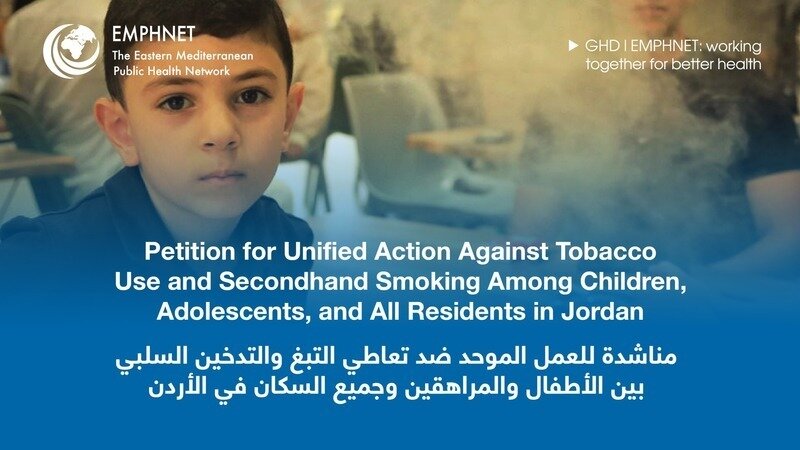
Petition for Unified Action Against Tobacco Use and Secondhand Smoking in Jordan.
Petition for Unified Action Against Tobacco Use and Secondhand Smoking in Jordan.
The Issue
Petition for Unified Action Against Tobacco Use and Secondhand Smoking in Jordan
To all Partners in the Global Fight Against Tobacco: A call for action!
We, the undersigned, urgently call upon all stakeholders to unite to address the pressing issue of tobacco use and secondhand smoke exposure of our children and families in Jordan. As dedicated advocates for public health and the well-being of future generations, we recognize the impact of joint action. We implore your collective resources, expertise, and influence to combat this concerning challenge.
Jordan, a State Party to the WHO Framework Convention on Tobacco Control (FCTC) since 2004, stands resolute in the global effort to combat the scourge of tobacco use. In 2008, Jordan introduced pivotal tobacco control provisions through Public Health Law 47, which underwent significant amendments in 2017, reflecting the nation's steadfast commitment to tobacco control. It is time for all of us to urge the Jordanian government to implement and enforce these commitments.
The data from Jordan shows that timely action on tobacco control is essential. The 2019 STEPs Survey in Jordan unveiled that 41% (around 1.9 million) of adults are smokers (65.3% of men and 16.4% of women). The survey revealed that 78.8% of adults are exposed to second-hand smoke, with 1 in 5 adults exposed at the workplace and 6 in 10 adults (63%, 2.8 million) exposed at home. Additionally, 60.0% of students are exposed to tobacco smoke at home, and 62.4% of students are exposed to it within enclosed public spaces. Furthermore, a recent study funded by the Japan International Cooperation Agency (JICA) and conducted by the Eastern Mediterranean Public Health Network (EMPHNET) in collaboration with the Ministry of Health and the Ministry of Education, shed light on the concerning prevalence of tobacco use and secondhand smoking among children and adolescents in Jordan. The study, conducted among 8,000 students across 120 schools, reveals alarming statistics, especially among adolescents aged 12-18 years:
· 12.2% of males and 8% of females smoke conventional cigarettes.
· 21.5% of males and 17.3% of females smoke waterpipe.
· Electronic cigarette use is also prevalent, with 18.5% of males and 12.5% of females using these devices on an occasional or regular basis.
· A significant percentage of youth are exposed to secondhand smoke, exacerbating the health risks associated with tobacco use.
· Smoking cigarettes or waterpipes is associated with multiple mental, psychosocial, emotional, and behavioral morbidities among children and adolescents.
These findings underscore the urgency of our united efforts to combat tobacco use and protect children and adolescents from the hazards of secondhand smoke, especially among the most vulnerable segments of society—our youth. It is key to assure a healthier future for our nation to prosper and a collective response will lead to everyone’s right to breathe clean air.
We extend our heartfelt appreciation for the recent press release from Jordan, dated August 28, 2023, in which His Majesty King Abdullah II of Jordan underscored the urgency of combating tobacco use, particularly among school students. This clarion call echoes as a beacon of leadership and collaboration, showcasing the tangible impact of collective determination.
In view of His Majesty's plea and the compelling data on tobacco use, we stand united in our call for a consolidated platform that harnesses the power of our shared commitment and drives transformative change. To this end, we urge the following imperative actions be implemented by the Government and relevant authorities, with collaborations across various sectors in Jordan:
- Stringent Implementation and Enforcement of Regulations: We demand the resolute implementation and enforcement of existing regulations and the Public Health Law in Jordan, accompanied by more rigorous penalties for violations and illicit trade, fostering a culture of adherence. This should focus on curtailing exposure to secondhand smoke among minors in healthcare and educational institutions, all indoor public spaces, including workplaces and restaurants, as well as where people gather outside, such as restaurant terraces, queues, and parks.
- Stricter Tobacco Advertising and Promotion Regulations: We press for the implementation of stricter tobacco advertising and promotion regulations, particularly sponsorship activities, to prevent the tobacco industry from targeting the vulnerable, notably children and youth.
- Incorporation of Evidence-Based Comprehensive Tobacco Education: We call for the seamless integration of engaging, evidence-based comprehensive tobacco education programs within schools and communities. Empower Jordanian children, adolescents, and all residents, with the knowledge, resilience, and life skills necessary to reject the allure of tobacco, protect themselves from secondhand smoke, and make health-conscious decisions that reverberate throughout their lives.
- Promotion of Smoking Cessation Initiatives: We advocate for the endorsement and amplification of affordable medically approved smoking cessation initiatives across all clinics and institutions, both public and private, underscoring that the treatment of smoking addiction is a joint responsibility. By pooling the collective effort and experience, we endeavor to enhance the efficacy of these programs, with a specific emphasis on aiding young individuals and residents in Jordan on their journey toward liberation from tobacco addiction.
- Mandating WHO FCTC Article 11 Guidelines for Graphic Warnings: We insist on government adherence to the WHO FCTC Article 11 Guidelines for graphic warnings on tobacco product packages. Ensuring warnings encompass at least 50% of principal display areas (PDAs), with larger warnings proving more effective. Place warnings in the upper portion of individual packs' PDAs. Affix vivid warnings to all tobacco products, including emerging alternatives.
- Control Measures for Emerging Tobacco Products: We advocate for stringent regulations governing the marketing, sale, and use of emerging tobacco products, including e-cigarettes and heated tobacco items, counteracting allure to young individuals.
- International Collaboration for Best Practices: We implore international collaboration to foster the exchange of best practices, research, and strategies within tobacco control, amplifying the global movement against tobacco use.
- Increased Funding for Collaborative Research: We urge increased funding and support for collaborative research on tobacco consumption and secondhand smoke exposure among Jordanian youth and all residents. Endeavors should explore the repercussions and devise innovative approaches for prevention and cessation, refining strategies based on empirical evidence.
- Collection of Data and Monitoring of Trends: We call for data collection on emerging trends and strategy refinement, culminating in policies grounded in empirical evidence.
- Regulate Flavored Tobacco Products: We urge the regulation of flavored tobacco products, particularly enticing youth, to diminish initiation and curb addiction.
- Culturally Sensitive Campaigns: We advocate for the creation of culturally sensitive and contextually relevant messages to enlighten Jordanian adolescents and all residents about tobacco’s multifaceted dangers. By deploying campaigns through schools, youth organizations, and digital platforms, we ensure widespread reach and engage young minds for healthier choices.
- Private Sector Engagement: We encourage the active participation of the private sector in this collaborative effort, with a steadfast exclusion of the tobacco industry and its influence. Private sector entities, driven by a commitment to societal well-being, can contribute resources, expertise, and support to amplify positive change and advance the cause. This engagement should remain independent of any interference from industries that profit from tobacco products, ensuring the integrity of our collective efforts to combat tobacco use and secondhand smoke.
As we join forces, we reaffirm our commitment to the Framework Convention on Tobacco Control (FCTC) agreement, a testament to international collaboration since Jordan's participation in 2004. This commitment stands as a beacon of our shared determination.
We implore you, our esteemed partners, and stakeholders, to heed His Majesty's call for action and endorse this clarion call for collective action by all of us and in collaboration with the Jordanian Government. We emphasize the importance of a multisectoral approach, involving ministries beyond health, governmental organizations, civil societies, community leaders, and other stakeholders, recognizing that addressing tobacco use and secondhand smoke is a joint responsibility requiring unified action. Let us forge an unwavering coalition for collective/unified actions on behalf of all people residing in Jordan. Together, we can embark on a transformative alliance against the scourge of tobacco, safeguarding the well-being of Jordanian children, adolescents, and all residents in Jordan.
To lend your support to this pivotal initiative, kindly endorse this petition by appending your signature below. Let us mark this juncture as the inception of an indomitable force against tobacco's detrimental influence on our youth in Jordan.
Yours in dedicated partnership,
The Eastern Mediterranean Public Health Network (EMPHNET)
مناشدة للعمل الموحد ضد تعاطي التبغ والتدخين السلبي بين الأطفال والمراهقين وجميع السكان في الأردن
لجميع شركاءنا الكرام في المواجهة التي يخوضها العالم ضد التبغ: نداء للعمل!
نحن الموقعون أدناه، نبادر بدعوة جميع أصحاب المصلحة لتوحيد الجهود لمعالجة القضية الملحّة المتمثلة باستخدام التبغ وتعرض أطفالنا وعائلتنا في الأردن للتدخين السلبي. فبصفتنا دعاة ملتزمين بالصحة العامة ورفاهية الأجيال القادمة، ندرك ضرورة العمل المنسق واستخدام مواردكم المجتمعة، وخبراتكم، وتأثيركم لمواجهة هذا التحدي المقلق.
الأردن، وبصفته أحد الدول الأطراف في اتفاقية منظمة الصحة العالمية الإطارية لمكافحة التبغ منذ عام ٢٠٠٤، يقف ثابتاً في دعمه للجهود العالمية لمكافحة آفة استخدام التبغ. كما أضاف الأردن فصلاً في قانون الصحة العامة رقم ٤٧ لسنة ٢٠٠٨ لوقاية صحة العامة من أضرار التدخين. وقد شهد هذا القانون تعديلات كبيرة في عام ٢٠١٧، مما يعكس التزام الأردن الراسخ لمكافحة التبغ. وقد حان الوقت لنحُث الحكومة الأردنية على تنفيذ وفرض هذه التزامات.
تُظهر البيانات من الأردن أنّ اتّخاذ إجراءات مؤكّدة في مجال مكافحة التبغ مهم للغاية. حيث كشف مسح ستبس لعام ٢٠١٩ في الأردن أنّ ٤١٪ (حوالي ١.٩مليون) من البالغين هم مدخنون ( ٦٥.٣٪من الرجال و١٦.٤٪ من النساء). كما وأظهر المسح أنّ ٧٨.٨٪ من البالغين معرّضون للتدخين السلبي، حيث يتعرض واحد من كل خمس بالغين للتدخين السلبي في أماكن العمل وستة من كل عشر بالغين (٦٣٪، ٢.٨ مليون) يتعرضون له في المنزل. بالإضافة إلى ذلك، يتعرض ٦٠٪ من الطلاب للتدخين في المنزل، و٦٢.٤٪ من الطلاب يتعرضون له في أماكن العمل المغلقة. علاوة على ذلك، ألقت دراسة أجريت مؤخراً بتمويل من وكالة التعاون الدولي اليابانية وبالتعاون مع الشبكة الشرق أوسطية للصحة المجتمعية (امفنت) و وزارة الصحة ووزارة التربية الوطنية، الضوء على انتشار مقلق لاستخدام التبغ والتدخين السلبي بين الأطفال والمراهقين في الأردن. وشملت الدراسة ٨٠٠٠ طالباً في ١٢٠ مدرسة، وكشفت عن إحصائيات مقلقة، خصوصاً بين المراهقين الذين تتراوح أعمارهم بين ١٢ و١٨ عاماً:
• ١٢.٢٪ من الذكور و٨٪ من الإناث يدخنون السجائر التقليدية
• ٢١.٥٪ من الذكور و١٧.٣٪ من الإناث يدخنون النرجيلة
• استخدام السجائر الإلكترونية شائع أيضاً، حيث يستخدم ١٨.٥٪ من الذكور و١٢.٥٪ من الإناث هذه الأجهزة بشكل منتظم أو بين الحين والآخر
• نسبة كبيرة من الشباب معرضة للتدخين السلبي، ما يزيد من المخاطر الصحية المرتبطة باستخدام التبغ
• تدخين السجائر أو النرجيلة مرتبط بعدة أمراض نفسية وعاطفية وسلوكية بين الأطفال والمراهقين.
وتؤكد هذه الأرقام على ضرورة توحيد جهودنا لمكافحة استخدام التبغ وحماية الأطفال والمراهقين من أخطار التدخين السلبي، خصوصاً بين أكثر الفئات ضعفاً في المجتمع، أي فئة الشباب. إنها مفتاح لضمان مستقبل صحي لأمتنا واستمرارية الاستجابة المشتركة التي ستؤدي إلى حق الجميع في تنفس هواء نقي.
إننا نثمن بشدّة التوجيهات الملكية التي شدد فيه جلالة الملك عبد الله الثاني بن الحسين على ضرورة مكافحة استخدام التبغ، خاصةً بين طلبة المدارس. ويتردد هذا النداء الصارخ كإشارة لقيادة الجهود والعمل المشترك تحقيقاً للنتائج المرجوة.
بناءً على الدعوة الملكية والبيانات حول استخدام التبغ، نجتمع في دعوتنا لإنشاء منصة موحدة تسخّر قوة التزامنا المشترك وتدفع نحو التغيير الجوهري. وفي هذا الصدد، نحث الحكومة والجهات المختصة، بالاشتراك مع مختلف القطاعات في الأردن على تنفيذ الإجراءات التالية:
1. تفعيل الأنظمة والقوانين: نطالب بتنفيذ وفرض قانون الصحة العامة لمكافحة التدخين في الأردن بحزم، إلى جانب تشديد العقوبات على الانتهاكات والتجارة غير الشرعية، لتعزيز ثقافة الالتزام. ويجب أن يتم التركيز على الحد من التعرض للتدخين السلبي بين القاصرين في المؤسسات الصحية والتعليمية، وفي جميع الأماكن العامة المغلقة، بما في ذلك أماكن العمل والمطاعم. وكذلك المناطق الخارجية التي يجتمع فيها الناس، مثل تراسات المطاعم والصفوف والحدائق.
2. تشديد الرقابة على الإعلانات والترويج للتبغ: ندعو إلى تنفيذ أنظمة أشد للإعلان والترويج للتبغ، خصوصاً أنشطة الرعاية، لمنع صناعة التبغ من استهداف الفئات الضعيفة، وخصوصاً الأطفال والشباب.
3. دمج برامج التثقيف الشاملة القائمة على الأدلة: ندعو إلى الدمج السلس لبرامج التثقيف المشوّقة والقائمة على الأدلّة داخل المدارس والمجتمعات. نطالب بتمكين الأطفال والمراهقين الأردنيين وجميع السكان بالمعرفة والمرونة والمهارات الحياتية اللازمة لتجنب جاذبية التبغ، وحماية أنفسهم من التدخين السلبي، واتخاذ قرارات صحية والتي من شأنها أن تترك أثرها عليهم على مدار حياتهم.
4. تعزيز مبادرات الإقلاع عن التدخين: ندعو إلى دعم وتعزيز مبادرات الإقلاع عن التدخين المعتمدة طبياً والمتاحة بأسعار معقولة في جميع العيادات والمؤسسات، سواءً كانت حكومية أم خاصة، مؤكدين أنّ علاج إدمان التدخين هو مسؤولية مشتركة. من خلال تجميع الجهد والخبرة المشتركة، نسعى إلى تعزيز فعالية هذه البرامج، مع التركيز بشكل خاص على مساعدة الشبان والسكان في الأردن في رحلتهم نحو التحرر من الإدمان على التبغ.
5. الالتزام بتوجيهات المادة ١١ من اتفاقية منظمة الصحة العالمية الإطارية بخصوص التحذيرات البصرية: نُصر على التزام الحكومة بتوجيهات المادة ١١ من اتفاقية منظمة الصحة العالمية الإطارية بخصوص وضع تحذيرات بصرية على عبوات منتجات التبغ. مع ضمان أن تشمل التحذيرات البصرية ما لا يقل عن ٥٠٪ أو أكثر من مساحة العرض الرئيسية، حيث تكون التحذيرات الأكبر فعالة بشكل أكبر. يجب وضع التحذيرات في الجزء العلوي من مساحات العرض لعلب السجائر ويجب تثبيت هذه التحذيرات البصرية بشكل بارز على جميع منتجات التبغ، بما في ذلك منتجات التبغ الجديدة.
6. إجراءات مراقبة لمنتجات التبغ الجديدة: ندعو إلى وضع أنظمة صارمة تنظّم التسويق والبيع واستخدام منتجات التبغ الجديدة، بما في ذلك السجائر الإلكترونية ومنتجات تسخين التبغ لمواجهة جاذبيتها المحتملة للشبان.
7. التعاون الدولي لأفضل الممارسات: نطمح إلى التعاون الدولي لتعزيز تبادل أفضل الممارسات والبحث والاستراتيجيات في مجال مكافحة التبغ، مما يعزز من الحركة العالمية ضد استخدام التبغ.
8. زيادة تمويل البحوث المشتركة: ندعو إلى زيادة التمويل والدعم لمبادرات البحث المشترك التي تعمّق في جوانب استهلاك التبغ وتعرّض الشبان الأردنيين وجميع السكان للتدخين السلبي. يجب أن تستكشف هذه المساعي الآثار وأن تصمم نهجاً جديداً لمكافحة التدخين والإقلاع عنه، مما يؤدي إلى سياسات مرتكزة على الأدلة العلمية.
9. جمع البيانات ومراقبة الاتجاهات الجديدة: ندعو إلى جمع البيانات حول الاتجاهات الناشئة وتنقيح الاستراتيجيات، مما ينتهي بوضع سياسات مستندة إلى الأدلة العلمية.
10. تنظيم منتجات التبغ ذات النكهات: نحث على تنظيم منتجات التبغ ذات النكهات، خصوصاً تلك التي تهدف إلى إغراء الشباب، بهدف التقليل من إمكانية البدء بالتدخين واحتواء الإدمان.
11. حملات مراعية للثقافة: ندعو إلى إعداد رسائل مراعية للثقافة المحلية ومتناسبة مع السياق لتوعية الشباب الأردنيين والمقيمين بالأضرار المتعددة الجوانب للتبغ. من خلال نشر هذه الحملات في المدارس ومنظمات الشباب والمنصات الرقمية، لنضمن انتشارها الواسع، وإشراك الشباب، وتسهيل اتخاذ قرارات مستنيرة لحياة صحية.
12. مشاركة القطاع الخاص: نشجع على مشاركة القطاع الخاص في هذا الجهد التعاوني، مع استبعاد ثابت لصناعة التبغ وتأثيرها. يمكن لكيانات القطاع الخاص، الملتزمة بضمان رفاهية المجتمع، أن تسهم بالموارد والخبرة والدعم لتعزيز التغيير الإيجابي وتقدم القضية. يجب أن تبقى هذه المشاركة مستقلة عن أي تدخل من قِبَل الصناعات التي تحقق ربحاً من منتجات التبغ، لضمان سلامة جهودنا الجماعية لمكافحة استخدام التبغ والتدخين السلبي.
بينما نجتمع لنوحد جهودنا، نؤكد التزامنا باتفاقية منظمة الصحة العالمية الإطارية بشأن مكافحة التبغ، وهي شهادة على التعاون الدولي منذ مشاركة الأردن في عام ٢٠٠٤. ويعد هذا الالتزام بياناً لتصميمنا المشترك.
نرجوكم، شركائنا الكرام وأصحاب المصلحة الأعزاء، أن تستجيبوا لنداء جلالته للعمل وتؤيّدوا هذا النداء للعمل المشترك من قِبَلنا جميعاً وبالتعاون مع حكومة الأردن. نؤكد على أهمية النهج متعدد القطاعات، والذي يشمل الوزارات خارج مجال الصحة، والمؤسسات الحكومية، والمجتمعات المدنية، وقادة المجتمع، وأصحاب المصلحة الآخرين، مدركين أنّ مكافحة استخدام التبغ والتدخين السلبي هو مسؤولية مشتركة تتطلب عملاً موحداً. دعونا نشكّل تحالفاً ثابتاً من أجل العمل المشترك نيابة عن جميع الأشخاص المقيمين في الأردن. معاً، يمكننا أن ننطلق في تحالف محوري ضد وباء التبغ، حفظاً على رفاهية الأطفال الأردنيين والمراهقين وجميع السكان في الأردن.
لدعم هذه المبادرة الحيوية، يُرجى تأييد هذا العريضة عن طريق التوقيع أدناه. دعونا نجعل هذه اللحظة بدايةً لقوة لا تقهر ضد تأثير التبغ الضار على شبابنا في الأردن.
الشبكة الشرق أوسطية للصحة المجتمعية (امفنت)

470
The Issue
Petition for Unified Action Against Tobacco Use and Secondhand Smoking in Jordan
To all Partners in the Global Fight Against Tobacco: A call for action!
We, the undersigned, urgently call upon all stakeholders to unite to address the pressing issue of tobacco use and secondhand smoke exposure of our children and families in Jordan. As dedicated advocates for public health and the well-being of future generations, we recognize the impact of joint action. We implore your collective resources, expertise, and influence to combat this concerning challenge.
Jordan, a State Party to the WHO Framework Convention on Tobacco Control (FCTC) since 2004, stands resolute in the global effort to combat the scourge of tobacco use. In 2008, Jordan introduced pivotal tobacco control provisions through Public Health Law 47, which underwent significant amendments in 2017, reflecting the nation's steadfast commitment to tobacco control. It is time for all of us to urge the Jordanian government to implement and enforce these commitments.
The data from Jordan shows that timely action on tobacco control is essential. The 2019 STEPs Survey in Jordan unveiled that 41% (around 1.9 million) of adults are smokers (65.3% of men and 16.4% of women). The survey revealed that 78.8% of adults are exposed to second-hand smoke, with 1 in 5 adults exposed at the workplace and 6 in 10 adults (63%, 2.8 million) exposed at home. Additionally, 60.0% of students are exposed to tobacco smoke at home, and 62.4% of students are exposed to it within enclosed public spaces. Furthermore, a recent study funded by the Japan International Cooperation Agency (JICA) and conducted by the Eastern Mediterranean Public Health Network (EMPHNET) in collaboration with the Ministry of Health and the Ministry of Education, shed light on the concerning prevalence of tobacco use and secondhand smoking among children and adolescents in Jordan. The study, conducted among 8,000 students across 120 schools, reveals alarming statistics, especially among adolescents aged 12-18 years:
· 12.2% of males and 8% of females smoke conventional cigarettes.
· 21.5% of males and 17.3% of females smoke waterpipe.
· Electronic cigarette use is also prevalent, with 18.5% of males and 12.5% of females using these devices on an occasional or regular basis.
· A significant percentage of youth are exposed to secondhand smoke, exacerbating the health risks associated with tobacco use.
· Smoking cigarettes or waterpipes is associated with multiple mental, psychosocial, emotional, and behavioral morbidities among children and adolescents.
These findings underscore the urgency of our united efforts to combat tobacco use and protect children and adolescents from the hazards of secondhand smoke, especially among the most vulnerable segments of society—our youth. It is key to assure a healthier future for our nation to prosper and a collective response will lead to everyone’s right to breathe clean air.
We extend our heartfelt appreciation for the recent press release from Jordan, dated August 28, 2023, in which His Majesty King Abdullah II of Jordan underscored the urgency of combating tobacco use, particularly among school students. This clarion call echoes as a beacon of leadership and collaboration, showcasing the tangible impact of collective determination.
In view of His Majesty's plea and the compelling data on tobacco use, we stand united in our call for a consolidated platform that harnesses the power of our shared commitment and drives transformative change. To this end, we urge the following imperative actions be implemented by the Government and relevant authorities, with collaborations across various sectors in Jordan:
- Stringent Implementation and Enforcement of Regulations: We demand the resolute implementation and enforcement of existing regulations and the Public Health Law in Jordan, accompanied by more rigorous penalties for violations and illicit trade, fostering a culture of adherence. This should focus on curtailing exposure to secondhand smoke among minors in healthcare and educational institutions, all indoor public spaces, including workplaces and restaurants, as well as where people gather outside, such as restaurant terraces, queues, and parks.
- Stricter Tobacco Advertising and Promotion Regulations: We press for the implementation of stricter tobacco advertising and promotion regulations, particularly sponsorship activities, to prevent the tobacco industry from targeting the vulnerable, notably children and youth.
- Incorporation of Evidence-Based Comprehensive Tobacco Education: We call for the seamless integration of engaging, evidence-based comprehensive tobacco education programs within schools and communities. Empower Jordanian children, adolescents, and all residents, with the knowledge, resilience, and life skills necessary to reject the allure of tobacco, protect themselves from secondhand smoke, and make health-conscious decisions that reverberate throughout their lives.
- Promotion of Smoking Cessation Initiatives: We advocate for the endorsement and amplification of affordable medically approved smoking cessation initiatives across all clinics and institutions, both public and private, underscoring that the treatment of smoking addiction is a joint responsibility. By pooling the collective effort and experience, we endeavor to enhance the efficacy of these programs, with a specific emphasis on aiding young individuals and residents in Jordan on their journey toward liberation from tobacco addiction.
- Mandating WHO FCTC Article 11 Guidelines for Graphic Warnings: We insist on government adherence to the WHO FCTC Article 11 Guidelines for graphic warnings on tobacco product packages. Ensuring warnings encompass at least 50% of principal display areas (PDAs), with larger warnings proving more effective. Place warnings in the upper portion of individual packs' PDAs. Affix vivid warnings to all tobacco products, including emerging alternatives.
- Control Measures for Emerging Tobacco Products: We advocate for stringent regulations governing the marketing, sale, and use of emerging tobacco products, including e-cigarettes and heated tobacco items, counteracting allure to young individuals.
- International Collaboration for Best Practices: We implore international collaboration to foster the exchange of best practices, research, and strategies within tobacco control, amplifying the global movement against tobacco use.
- Increased Funding for Collaborative Research: We urge increased funding and support for collaborative research on tobacco consumption and secondhand smoke exposure among Jordanian youth and all residents. Endeavors should explore the repercussions and devise innovative approaches for prevention and cessation, refining strategies based on empirical evidence.
- Collection of Data and Monitoring of Trends: We call for data collection on emerging trends and strategy refinement, culminating in policies grounded in empirical evidence.
- Regulate Flavored Tobacco Products: We urge the regulation of flavored tobacco products, particularly enticing youth, to diminish initiation and curb addiction.
- Culturally Sensitive Campaigns: We advocate for the creation of culturally sensitive and contextually relevant messages to enlighten Jordanian adolescents and all residents about tobacco’s multifaceted dangers. By deploying campaigns through schools, youth organizations, and digital platforms, we ensure widespread reach and engage young minds for healthier choices.
- Private Sector Engagement: We encourage the active participation of the private sector in this collaborative effort, with a steadfast exclusion of the tobacco industry and its influence. Private sector entities, driven by a commitment to societal well-being, can contribute resources, expertise, and support to amplify positive change and advance the cause. This engagement should remain independent of any interference from industries that profit from tobacco products, ensuring the integrity of our collective efforts to combat tobacco use and secondhand smoke.
As we join forces, we reaffirm our commitment to the Framework Convention on Tobacco Control (FCTC) agreement, a testament to international collaboration since Jordan's participation in 2004. This commitment stands as a beacon of our shared determination.
We implore you, our esteemed partners, and stakeholders, to heed His Majesty's call for action and endorse this clarion call for collective action by all of us and in collaboration with the Jordanian Government. We emphasize the importance of a multisectoral approach, involving ministries beyond health, governmental organizations, civil societies, community leaders, and other stakeholders, recognizing that addressing tobacco use and secondhand smoke is a joint responsibility requiring unified action. Let us forge an unwavering coalition for collective/unified actions on behalf of all people residing in Jordan. Together, we can embark on a transformative alliance against the scourge of tobacco, safeguarding the well-being of Jordanian children, adolescents, and all residents in Jordan.
To lend your support to this pivotal initiative, kindly endorse this petition by appending your signature below. Let us mark this juncture as the inception of an indomitable force against tobacco's detrimental influence on our youth in Jordan.
Yours in dedicated partnership,
The Eastern Mediterranean Public Health Network (EMPHNET)
مناشدة للعمل الموحد ضد تعاطي التبغ والتدخين السلبي بين الأطفال والمراهقين وجميع السكان في الأردن
لجميع شركاءنا الكرام في المواجهة التي يخوضها العالم ضد التبغ: نداء للعمل!
نحن الموقعون أدناه، نبادر بدعوة جميع أصحاب المصلحة لتوحيد الجهود لمعالجة القضية الملحّة المتمثلة باستخدام التبغ وتعرض أطفالنا وعائلتنا في الأردن للتدخين السلبي. فبصفتنا دعاة ملتزمين بالصحة العامة ورفاهية الأجيال القادمة، ندرك ضرورة العمل المنسق واستخدام مواردكم المجتمعة، وخبراتكم، وتأثيركم لمواجهة هذا التحدي المقلق.
الأردن، وبصفته أحد الدول الأطراف في اتفاقية منظمة الصحة العالمية الإطارية لمكافحة التبغ منذ عام ٢٠٠٤، يقف ثابتاً في دعمه للجهود العالمية لمكافحة آفة استخدام التبغ. كما أضاف الأردن فصلاً في قانون الصحة العامة رقم ٤٧ لسنة ٢٠٠٨ لوقاية صحة العامة من أضرار التدخين. وقد شهد هذا القانون تعديلات كبيرة في عام ٢٠١٧، مما يعكس التزام الأردن الراسخ لمكافحة التبغ. وقد حان الوقت لنحُث الحكومة الأردنية على تنفيذ وفرض هذه التزامات.
تُظهر البيانات من الأردن أنّ اتّخاذ إجراءات مؤكّدة في مجال مكافحة التبغ مهم للغاية. حيث كشف مسح ستبس لعام ٢٠١٩ في الأردن أنّ ٤١٪ (حوالي ١.٩مليون) من البالغين هم مدخنون ( ٦٥.٣٪من الرجال و١٦.٤٪ من النساء). كما وأظهر المسح أنّ ٧٨.٨٪ من البالغين معرّضون للتدخين السلبي، حيث يتعرض واحد من كل خمس بالغين للتدخين السلبي في أماكن العمل وستة من كل عشر بالغين (٦٣٪، ٢.٨ مليون) يتعرضون له في المنزل. بالإضافة إلى ذلك، يتعرض ٦٠٪ من الطلاب للتدخين في المنزل، و٦٢.٤٪ من الطلاب يتعرضون له في أماكن العمل المغلقة. علاوة على ذلك، ألقت دراسة أجريت مؤخراً بتمويل من وكالة التعاون الدولي اليابانية وبالتعاون مع الشبكة الشرق أوسطية للصحة المجتمعية (امفنت) و وزارة الصحة ووزارة التربية الوطنية، الضوء على انتشار مقلق لاستخدام التبغ والتدخين السلبي بين الأطفال والمراهقين في الأردن. وشملت الدراسة ٨٠٠٠ طالباً في ١٢٠ مدرسة، وكشفت عن إحصائيات مقلقة، خصوصاً بين المراهقين الذين تتراوح أعمارهم بين ١٢ و١٨ عاماً:
• ١٢.٢٪ من الذكور و٨٪ من الإناث يدخنون السجائر التقليدية
• ٢١.٥٪ من الذكور و١٧.٣٪ من الإناث يدخنون النرجيلة
• استخدام السجائر الإلكترونية شائع أيضاً، حيث يستخدم ١٨.٥٪ من الذكور و١٢.٥٪ من الإناث هذه الأجهزة بشكل منتظم أو بين الحين والآخر
• نسبة كبيرة من الشباب معرضة للتدخين السلبي، ما يزيد من المخاطر الصحية المرتبطة باستخدام التبغ
• تدخين السجائر أو النرجيلة مرتبط بعدة أمراض نفسية وعاطفية وسلوكية بين الأطفال والمراهقين.
وتؤكد هذه الأرقام على ضرورة توحيد جهودنا لمكافحة استخدام التبغ وحماية الأطفال والمراهقين من أخطار التدخين السلبي، خصوصاً بين أكثر الفئات ضعفاً في المجتمع، أي فئة الشباب. إنها مفتاح لضمان مستقبل صحي لأمتنا واستمرارية الاستجابة المشتركة التي ستؤدي إلى حق الجميع في تنفس هواء نقي.
إننا نثمن بشدّة التوجيهات الملكية التي شدد فيه جلالة الملك عبد الله الثاني بن الحسين على ضرورة مكافحة استخدام التبغ، خاصةً بين طلبة المدارس. ويتردد هذا النداء الصارخ كإشارة لقيادة الجهود والعمل المشترك تحقيقاً للنتائج المرجوة.
بناءً على الدعوة الملكية والبيانات حول استخدام التبغ، نجتمع في دعوتنا لإنشاء منصة موحدة تسخّر قوة التزامنا المشترك وتدفع نحو التغيير الجوهري. وفي هذا الصدد، نحث الحكومة والجهات المختصة، بالاشتراك مع مختلف القطاعات في الأردن على تنفيذ الإجراءات التالية:
1. تفعيل الأنظمة والقوانين: نطالب بتنفيذ وفرض قانون الصحة العامة لمكافحة التدخين في الأردن بحزم، إلى جانب تشديد العقوبات على الانتهاكات والتجارة غير الشرعية، لتعزيز ثقافة الالتزام. ويجب أن يتم التركيز على الحد من التعرض للتدخين السلبي بين القاصرين في المؤسسات الصحية والتعليمية، وفي جميع الأماكن العامة المغلقة، بما في ذلك أماكن العمل والمطاعم. وكذلك المناطق الخارجية التي يجتمع فيها الناس، مثل تراسات المطاعم والصفوف والحدائق.
2. تشديد الرقابة على الإعلانات والترويج للتبغ: ندعو إلى تنفيذ أنظمة أشد للإعلان والترويج للتبغ، خصوصاً أنشطة الرعاية، لمنع صناعة التبغ من استهداف الفئات الضعيفة، وخصوصاً الأطفال والشباب.
3. دمج برامج التثقيف الشاملة القائمة على الأدلة: ندعو إلى الدمج السلس لبرامج التثقيف المشوّقة والقائمة على الأدلّة داخل المدارس والمجتمعات. نطالب بتمكين الأطفال والمراهقين الأردنيين وجميع السكان بالمعرفة والمرونة والمهارات الحياتية اللازمة لتجنب جاذبية التبغ، وحماية أنفسهم من التدخين السلبي، واتخاذ قرارات صحية والتي من شأنها أن تترك أثرها عليهم على مدار حياتهم.
4. تعزيز مبادرات الإقلاع عن التدخين: ندعو إلى دعم وتعزيز مبادرات الإقلاع عن التدخين المعتمدة طبياً والمتاحة بأسعار معقولة في جميع العيادات والمؤسسات، سواءً كانت حكومية أم خاصة، مؤكدين أنّ علاج إدمان التدخين هو مسؤولية مشتركة. من خلال تجميع الجهد والخبرة المشتركة، نسعى إلى تعزيز فعالية هذه البرامج، مع التركيز بشكل خاص على مساعدة الشبان والسكان في الأردن في رحلتهم نحو التحرر من الإدمان على التبغ.
5. الالتزام بتوجيهات المادة ١١ من اتفاقية منظمة الصحة العالمية الإطارية بخصوص التحذيرات البصرية: نُصر على التزام الحكومة بتوجيهات المادة ١١ من اتفاقية منظمة الصحة العالمية الإطارية بخصوص وضع تحذيرات بصرية على عبوات منتجات التبغ. مع ضمان أن تشمل التحذيرات البصرية ما لا يقل عن ٥٠٪ أو أكثر من مساحة العرض الرئيسية، حيث تكون التحذيرات الأكبر فعالة بشكل أكبر. يجب وضع التحذيرات في الجزء العلوي من مساحات العرض لعلب السجائر ويجب تثبيت هذه التحذيرات البصرية بشكل بارز على جميع منتجات التبغ، بما في ذلك منتجات التبغ الجديدة.
6. إجراءات مراقبة لمنتجات التبغ الجديدة: ندعو إلى وضع أنظمة صارمة تنظّم التسويق والبيع واستخدام منتجات التبغ الجديدة، بما في ذلك السجائر الإلكترونية ومنتجات تسخين التبغ لمواجهة جاذبيتها المحتملة للشبان.
7. التعاون الدولي لأفضل الممارسات: نطمح إلى التعاون الدولي لتعزيز تبادل أفضل الممارسات والبحث والاستراتيجيات في مجال مكافحة التبغ، مما يعزز من الحركة العالمية ضد استخدام التبغ.
8. زيادة تمويل البحوث المشتركة: ندعو إلى زيادة التمويل والدعم لمبادرات البحث المشترك التي تعمّق في جوانب استهلاك التبغ وتعرّض الشبان الأردنيين وجميع السكان للتدخين السلبي. يجب أن تستكشف هذه المساعي الآثار وأن تصمم نهجاً جديداً لمكافحة التدخين والإقلاع عنه، مما يؤدي إلى سياسات مرتكزة على الأدلة العلمية.
9. جمع البيانات ومراقبة الاتجاهات الجديدة: ندعو إلى جمع البيانات حول الاتجاهات الناشئة وتنقيح الاستراتيجيات، مما ينتهي بوضع سياسات مستندة إلى الأدلة العلمية.
10. تنظيم منتجات التبغ ذات النكهات: نحث على تنظيم منتجات التبغ ذات النكهات، خصوصاً تلك التي تهدف إلى إغراء الشباب، بهدف التقليل من إمكانية البدء بالتدخين واحتواء الإدمان.
11. حملات مراعية للثقافة: ندعو إلى إعداد رسائل مراعية للثقافة المحلية ومتناسبة مع السياق لتوعية الشباب الأردنيين والمقيمين بالأضرار المتعددة الجوانب للتبغ. من خلال نشر هذه الحملات في المدارس ومنظمات الشباب والمنصات الرقمية، لنضمن انتشارها الواسع، وإشراك الشباب، وتسهيل اتخاذ قرارات مستنيرة لحياة صحية.
12. مشاركة القطاع الخاص: نشجع على مشاركة القطاع الخاص في هذا الجهد التعاوني، مع استبعاد ثابت لصناعة التبغ وتأثيرها. يمكن لكيانات القطاع الخاص، الملتزمة بضمان رفاهية المجتمع، أن تسهم بالموارد والخبرة والدعم لتعزيز التغيير الإيجابي وتقدم القضية. يجب أن تبقى هذه المشاركة مستقلة عن أي تدخل من قِبَل الصناعات التي تحقق ربحاً من منتجات التبغ، لضمان سلامة جهودنا الجماعية لمكافحة استخدام التبغ والتدخين السلبي.
بينما نجتمع لنوحد جهودنا، نؤكد التزامنا باتفاقية منظمة الصحة العالمية الإطارية بشأن مكافحة التبغ، وهي شهادة على التعاون الدولي منذ مشاركة الأردن في عام ٢٠٠٤. ويعد هذا الالتزام بياناً لتصميمنا المشترك.
نرجوكم، شركائنا الكرام وأصحاب المصلحة الأعزاء، أن تستجيبوا لنداء جلالته للعمل وتؤيّدوا هذا النداء للعمل المشترك من قِبَلنا جميعاً وبالتعاون مع حكومة الأردن. نؤكد على أهمية النهج متعدد القطاعات، والذي يشمل الوزارات خارج مجال الصحة، والمؤسسات الحكومية، والمجتمعات المدنية، وقادة المجتمع، وأصحاب المصلحة الآخرين، مدركين أنّ مكافحة استخدام التبغ والتدخين السلبي هو مسؤولية مشتركة تتطلب عملاً موحداً. دعونا نشكّل تحالفاً ثابتاً من أجل العمل المشترك نيابة عن جميع الأشخاص المقيمين في الأردن. معاً، يمكننا أن ننطلق في تحالف محوري ضد وباء التبغ، حفظاً على رفاهية الأطفال الأردنيين والمراهقين وجميع السكان في الأردن.
لدعم هذه المبادرة الحيوية، يُرجى تأييد هذا العريضة عن طريق التوقيع أدناه. دعونا نجعل هذه اللحظة بدايةً لقوة لا تقهر ضد تأثير التبغ الضار على شبابنا في الأردن.
الشبكة الشرق أوسطية للصحة المجتمعية (امفنت)
470
Petition Updates
Share this petition
Petition created on September 11, 2023