

Petition Against the Installation of Bidirectional Bike Lanes on Marlee Avenue
The Issue
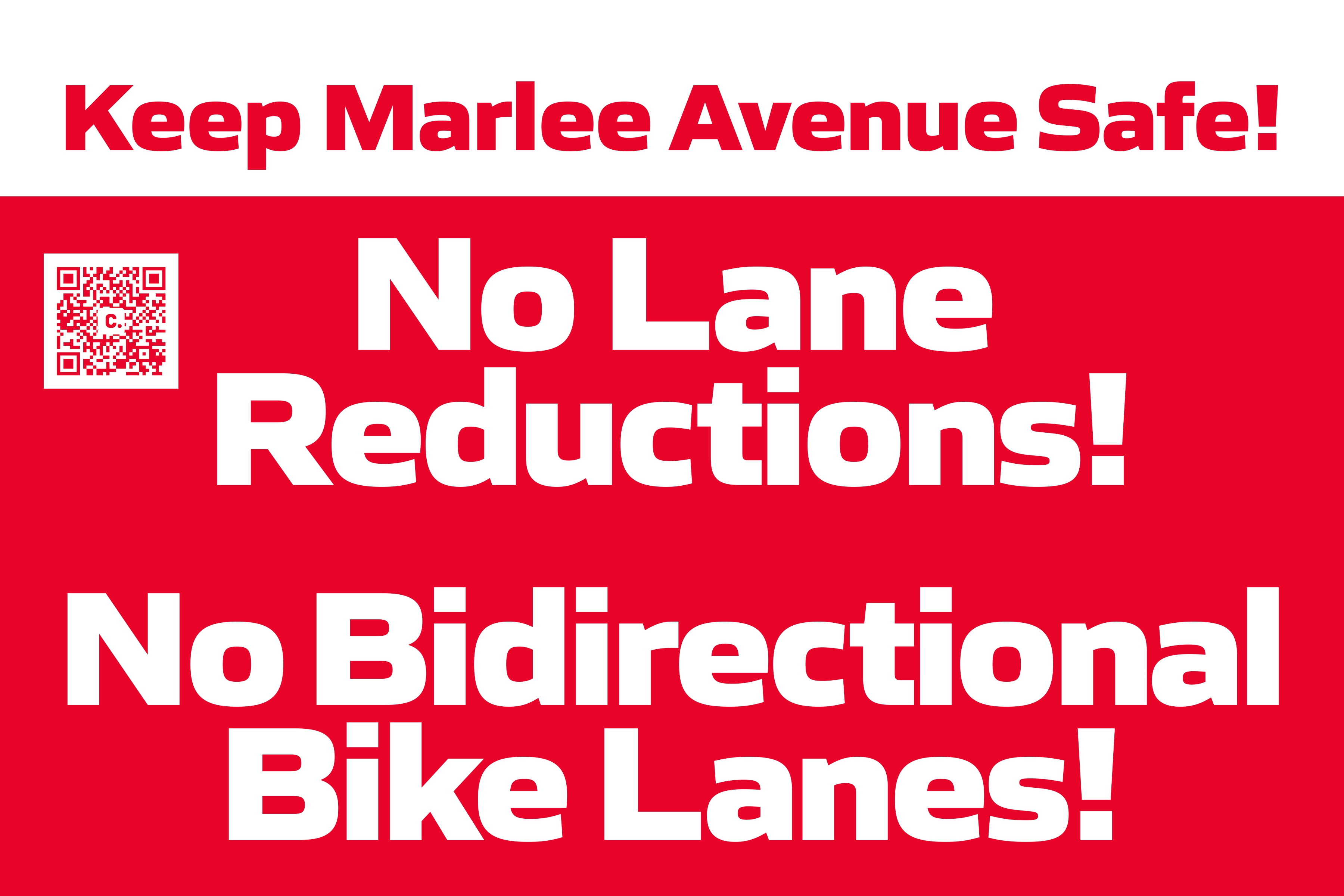
We, the residents and stakeholders of the Marlee Avenue community, write to express our opposition to the proposed installation of bi-directional raised bike lanes on Marlee Avenue between Roselawn and Eglinton Avenue West. These cycle tracks consist of two side-by-side lanes—one heading north and the other heading south—both located on the west side of the street. This design introduces confusion and complexity that cannot be safely mitigated. Additionally, there are 14 access points that both cyclists and drivers would need to use to enter and exit the street, further increasing the risk of accidents. We strongly believe this proposal raises several critical concerns that must be addressed.
Safety Concerns:
1. Increased Risk of Accidents:
The introduction of bidirectional bike lanes on a busy street like Marlee Avenue could significantly increase the risk of major collisions with pedestrians, cyclists and motor vehicles, because of the existing driveways and laneways.
For instance, a resident backing out from a driveway or laneway would first need to check for pedestrians. Next, they would need to look for cyclists coming from both directions due to the bidirectional bike lane. Finally, they would need to back up onto the busy Marlee Avenue traffic, which presents a complex and potentially fatal situation.
Additionally, the recent introduction of scooters to the Toronto landscape, along with their operating speeds, will create even more complex and hazardous scenarios.
2. Slowdown of Bus Services:
During our observations, we noticed that buses barely have enough room to turn safely without encroaching on the sidewalk, even with the existence of a buffer zone. In fact, some buses were observed riding onto the sidewalk.
With the removal of the buffer zone and the left-turn lane, buses will have no margin for error to turn safely south onto Eglinton Avenue or north onto Marlee Avenue.
This lack of space will not only compromise the safety of bus operations but also lead to significant slowdowns in bus services, further worsening the traffic congestion.
Impact on Traffic Flow:
1. Reduced Lane Width:
The installation of bidirectional bike lanes will reduce the width of existing traffic lanes, leading to congestion and slower traffic flow.
For example, the buses and cars that currently have a dedicated left-turn lane onto Eglinton Avenue will lose this lane to accommodate the bidirectional bike lanes. As a result, cars turning right onto Eglinton Avenue will have to use the same lane as buses and cars turning left, causing significant congestion issues.
This congestion will lead to delays for all vehicles, including emergency vehicles such as ambulances, fire trucks, and police cars, which could have critical consequences.
Significant Impact on Residents and Business Owners:
1. Flooding Issues/Snow Removal:
Flooding due to rain:
With climate change, 100-year storms are occurring more frequently. The permeable surfaces and trees in existing properties' side yards help mitigate flooding during these increasingly common storms.
Flooding due to snow:
Currently, there is enough room to store snow cleared from the sidewalk on the property owner's side yard at a safe distance from the property, preventing flooding when the snow melts. However, with the introduction of bidirectional bike lanes and a widened sidewalk, there will be no space to safely store snow close to the property without risking basement flooding.
Additionally, residents can currently shovel snow and transfer it to their side yards. If the proposed City of Toronto bidirectional bike lane plan is implemented, there will be no space to remove snow safely without creating obstacles for pedestrians, cyclists, or motor vehicles.
2. Environmental Impact:
The City of Toronto consistently advocates for increased canopy cover to benefit the environment.
However, the proposed plan involves cutting down mature vegetation that are part of the existing canopy cover, which will have several negative consequences. Removing these trees will reduce shaded areas, negatively impacting the quality of life for residents on Marlee Avenue.
This loss of shade will likely result in increased usage of air conditioners, a reduction in canopy cover, and a diminished enjoyment aesthetic of the residential area.
Direct Impact on Property Owners on the West Side of Marlee Avenue:
1. Loss of the Property Value:
The proposed bike lanes will encroach on at least 10 feet of side yard space for each property owner. This loss of usable land is likely to lead to a decrease in property values, affecting the financial well-being of homeowners in the area.
2. Mental Health Impact:
As a result, property owners on the west side of Marlee Avenue, between Roselawn Avenue and Eglinton Avenue West, will face significant mental health stress, due to adverse accessibility to and from their properties. Going in and out of driveways and alleyways onto the congested Marlee Avenue, navigating sidewalks and bi-directional bike lanes traffic, will cause daily problems and harm residents' mental well-being.
Property owners will find themselves sandwiched between their properties, the sidewalk, bi-directional bike lanes and the busy Marlee Avenue, ultimately creating an environment that undermines safety—the primary justification for the bike lanes. This situation disproportionately benefits no one at the expense of many, failing to provide any overall net benefit including to the cyclists.
3. Decrease of Quiet Enjoyment
The reduction of side yard space will result in fewer safe areas for children to play, limiting their outdoor recreational opportunities. Additionally, this decrease will hinder the potential for planting trees and maintaining gardens, while also reducing the space available for pets to enjoy. Overall, these changes could negatively impact the quality of life for residents in the area.

224
The Issue
We, the residents and stakeholders of the Marlee Avenue community, write to express our opposition to the proposed installation of bi-directional raised bike lanes on Marlee Avenue between Roselawn and Eglinton Avenue West. These cycle tracks consist of two side-by-side lanes—one heading north and the other heading south—both located on the west side of the street. This design introduces confusion and complexity that cannot be safely mitigated. Additionally, there are 14 access points that both cyclists and drivers would need to use to enter and exit the street, further increasing the risk of accidents. We strongly believe this proposal raises several critical concerns that must be addressed.
Safety Concerns:
1. Increased Risk of Accidents:
The introduction of bidirectional bike lanes on a busy street like Marlee Avenue could significantly increase the risk of major collisions with pedestrians, cyclists and motor vehicles, because of the existing driveways and laneways.
For instance, a resident backing out from a driveway or laneway would first need to check for pedestrians. Next, they would need to look for cyclists coming from both directions due to the bidirectional bike lane. Finally, they would need to back up onto the busy Marlee Avenue traffic, which presents a complex and potentially fatal situation.
Additionally, the recent introduction of scooters to the Toronto landscape, along with their operating speeds, will create even more complex and hazardous scenarios.
2. Slowdown of Bus Services:
During our observations, we noticed that buses barely have enough room to turn safely without encroaching on the sidewalk, even with the existence of a buffer zone. In fact, some buses were observed riding onto the sidewalk.
With the removal of the buffer zone and the left-turn lane, buses will have no margin for error to turn safely south onto Eglinton Avenue or north onto Marlee Avenue.
This lack of space will not only compromise the safety of bus operations but also lead to significant slowdowns in bus services, further worsening the traffic congestion.
Impact on Traffic Flow:
1. Reduced Lane Width:
The installation of bidirectional bike lanes will reduce the width of existing traffic lanes, leading to congestion and slower traffic flow.
For example, the buses and cars that currently have a dedicated left-turn lane onto Eglinton Avenue will lose this lane to accommodate the bidirectional bike lanes. As a result, cars turning right onto Eglinton Avenue will have to use the same lane as buses and cars turning left, causing significant congestion issues.
This congestion will lead to delays for all vehicles, including emergency vehicles such as ambulances, fire trucks, and police cars, which could have critical consequences.
Significant Impact on Residents and Business Owners:
1. Flooding Issues/Snow Removal:
Flooding due to rain:
With climate change, 100-year storms are occurring more frequently. The permeable surfaces and trees in existing properties' side yards help mitigate flooding during these increasingly common storms.
Flooding due to snow:
Currently, there is enough room to store snow cleared from the sidewalk on the property owner's side yard at a safe distance from the property, preventing flooding when the snow melts. However, with the introduction of bidirectional bike lanes and a widened sidewalk, there will be no space to safely store snow close to the property without risking basement flooding.
Additionally, residents can currently shovel snow and transfer it to their side yards. If the proposed City of Toronto bidirectional bike lane plan is implemented, there will be no space to remove snow safely without creating obstacles for pedestrians, cyclists, or motor vehicles.
2. Environmental Impact:
The City of Toronto consistently advocates for increased canopy cover to benefit the environment.
However, the proposed plan involves cutting down mature vegetation that are part of the existing canopy cover, which will have several negative consequences. Removing these trees will reduce shaded areas, negatively impacting the quality of life for residents on Marlee Avenue.
This loss of shade will likely result in increased usage of air conditioners, a reduction in canopy cover, and a diminished enjoyment aesthetic of the residential area.
Direct Impact on Property Owners on the West Side of Marlee Avenue:
1. Loss of the Property Value:
The proposed bike lanes will encroach on at least 10 feet of side yard space for each property owner. This loss of usable land is likely to lead to a decrease in property values, affecting the financial well-being of homeowners in the area.
2. Mental Health Impact:
As a result, property owners on the west side of Marlee Avenue, between Roselawn Avenue and Eglinton Avenue West, will face significant mental health stress, due to adverse accessibility to and from their properties. Going in and out of driveways and alleyways onto the congested Marlee Avenue, navigating sidewalks and bi-directional bike lanes traffic, will cause daily problems and harm residents' mental well-being.
Property owners will find themselves sandwiched between their properties, the sidewalk, bi-directional bike lanes and the busy Marlee Avenue, ultimately creating an environment that undermines safety—the primary justification for the bike lanes. This situation disproportionately benefits no one at the expense of many, failing to provide any overall net benefit including to the cyclists.
3. Decrease of Quiet Enjoyment
The reduction of side yard space will result in fewer safe areas for children to play, limiting their outdoor recreational opportunities. Additionally, this decrease will hinder the potential for planting trees and maintaining gardens, while also reducing the space available for pets to enjoy. Overall, these changes could negatively impact the quality of life for residents in the area.
The Decision Makers
Petition Updates
Share this petition
Petition created on October 21, 2024