Tell Online Shoppers Who Made Your Clothes
Tell Online Shoppers Who Made Your Clothes
The Issue
Two years ago, the Rana Plaza garment factory in Bangladesh collapsed, killing 1,133 people and injuring over 2,500 more. When confronted with images of the destruction and loss of life, consumers wanted to know what they could do to shop more responsibly and stop contributing to the exploitation and even death of marginalized workers in developing countries.
One small step consumers can take is to flip over the tags on the clothes they buy to see where they are made. This is easy to do in the store, where every piece of clothing is required to have "Made in" information in the tag, which is required by the U.S. Customs Border Protection to be present at point of purchase. "The evident purpose is to mark the goods so at the time of purchase the ultimate purchaser may, by knowing where the goods were produced, be able to buy or refuse to buy them, if such marking should influence his will." Friedlaender & Co., 27 C.C.P.A. 297, 302 (1940)
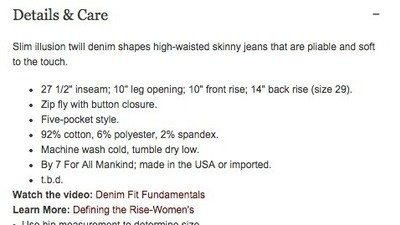
But what about online shopping, a $45 billion market? Online retailers will list the exact composition of the clothing they sell ("62% Silk, 48% polyester"), but make the choice to fail to say where clothing and accessories are made, listing them only as "imported," if they say anything at all. Unfortunately, this falls under the regulated realm of "online advertising," and it's not false advertising, per se, to say these clothes are imported. But consumers are making the purchasing decision from behind a computer now, and they should be able to know where goods are produced.
Nordstrom had $9 billion in sales in 2013. It's a company that prides itself on excellent customer service and quality goods, ranking among the ten most trusted brands according to a 2012 survey by Entrepreneur. It's clear that they care about conducting their business ethically and serving the customer's needs. But when they partnered with Piece & Co. to sell artisan-made items, even then, they listed them as "Imported." What?
With their Yooxygen section and their partnership with Master & Muse, it's clear that Yoox cares about giving space to sustainable and ethical fashion. Yet they don't list anywhere in the clothing information where it was made. Net a Porter, which is merging with Yoox, doesn't list the Country of Origin either.
As a consumer that is trying to be more conscious about buying clothes that are made fairly, this is incredibly frustrating and disappointing. You may think that consumers "don't care" about this stuff, but you're not even giving us the chance to care by keeping it a secret!
Take the next step toward transparency. Don't enable human rights abuses and secrecy, Nordstrom and Yoox. Tell us who made your clothes!

The Issue
Two years ago, the Rana Plaza garment factory in Bangladesh collapsed, killing 1,133 people and injuring over 2,500 more. When confronted with images of the destruction and loss of life, consumers wanted to know what they could do to shop more responsibly and stop contributing to the exploitation and even death of marginalized workers in developing countries.
One small step consumers can take is to flip over the tags on the clothes they buy to see where they are made. This is easy to do in the store, where every piece of clothing is required to have "Made in" information in the tag, which is required by the U.S. Customs Border Protection to be present at point of purchase. "The evident purpose is to mark the goods so at the time of purchase the ultimate purchaser may, by knowing where the goods were produced, be able to buy or refuse to buy them, if such marking should influence his will." Friedlaender & Co., 27 C.C.P.A. 297, 302 (1940)
But what about online shopping, a $45 billion market? Online retailers will list the exact composition of the clothing they sell ("62% Silk, 48% polyester"), but make the choice to fail to say where clothing and accessories are made, listing them only as "imported," if they say anything at all. Unfortunately, this falls under the regulated realm of "online advertising," and it's not false advertising, per se, to say these clothes are imported. But consumers are making the purchasing decision from behind a computer now, and they should be able to know where goods are produced.
Nordstrom had $9 billion in sales in 2013. It's a company that prides itself on excellent customer service and quality goods, ranking among the ten most trusted brands according to a 2012 survey by Entrepreneur. It's clear that they care about conducting their business ethically and serving the customer's needs. But when they partnered with Piece & Co. to sell artisan-made items, even then, they listed them as "Imported." What?
With their Yooxygen section and their partnership with Master & Muse, it's clear that Yoox cares about giving space to sustainable and ethical fashion. Yet they don't list anywhere in the clothing information where it was made. Net a Porter, which is merging with Yoox, doesn't list the Country of Origin either.
As a consumer that is trying to be more conscious about buying clothes that are made fairly, this is incredibly frustrating and disappointing. You may think that consumers "don't care" about this stuff, but you're not even giving us the chance to care by keeping it a secret!
Take the next step toward transparency. Don't enable human rights abuses and secrecy, Nordstrom and Yoox. Tell us who made your clothes!
Petition Closed
Share this petition
The Decision Makers


Petition created on April 20, 2015