

Non à l’abattage massif des frênes dans le Boisé du Domaine Saint-Paul de l’Île-des-Sœurs
Le problème
Photo ci-haut : Frênes abattus par le service des grands parcs de Montréal dans le parc nature du Bois-de-Liesse, février 2024
English version to follow
À l’attention des élus municipaux,
Nous, soussignés, nous opposons à la coupe des 1000 frênes identifiés à abattre par le service des grands parcs, du Mont-Royal et des sports, dans le Boisé du Domaine Saint-Paul de l'Île-des-Sœurs, planifiée pour l’hiver 2024-2025. Cette coupe est non seulement injustifiée mais également contraire à la préservation du caractère unique et fragile de cet espace naturel.
Le caractère unique du Boisé
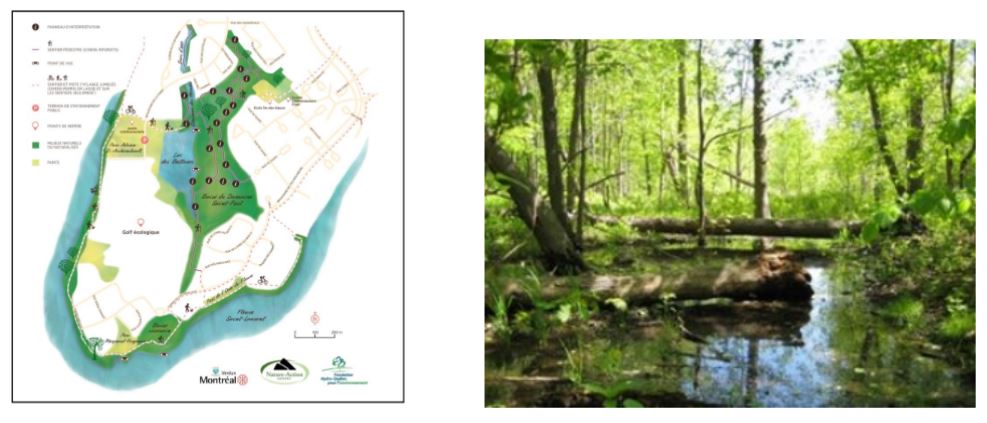
Le Boisé du Domaine Saint-Paul diffère des autres boisés municipaux, étant protégé par deux documents légaux essentiels : le Décret 1175-90 du 15 août 1990 et la Servitude de conservation perpétuelle du 14 février 2007. Ces documents stipulent clairement que le Boisé doit conserver son « caractère sauvage » et sa biodiversité. Le Boisé est classé comme aire protégée, habitat d'espèces menacées et milieu humide. Sa valeur écologique est exceptionnelle et son intégrité doit être respectée.
Inefficacité de l’abattage dans la lutte contre l’agrile du frêne
L'agrile du frêne est un coléoptère qui peut voler sur plusieurs kilomètres annuellement et son principal mode de propagation est le déplacement de produits infestés par l'homme. De plus, des frênes infestés resteront dans le Boisé, perpétuant ainsi la propagation. L’abattage de 1000 arbres n’aura qu’un impact négligeable sur la propagation de l'agrile mais entraînera des dommages considérables à l’écosystème du Boisé.
Non-conformité avec les règlements et normes en vigueur
Contrairement à la Servitude de conservation qui stipule que seuls les frênes posant un « risque évident » sont susceptibles d’être abattus, c’est la majorité sinon la totalité des frênes ayant un diamètre de plus de 15 cm dans le corridor de 25 m des sentiers et des infrastructures qui serait visée.
Le Boisé étant un milieu humide, l’abattage des arbres doit être soumis à une autorisation ministérielle spécifique. À notre connaissance, aucune autorisation de la sorte n’a encore été émise.
L’acquisition du Boisé par l’arrondissement de Verdun était conditionnelle à la création d’un comité de gestion pour assurer le respect des conditions de protection. Ce comité n’a jamais été mis en place, mettant ainsi en péril la conformité avec les exigences légales de protection du Boisé.
Conséquences sur la régénération
Une biologiste réputée consultée par Les Amis du Domaine Saint-Paul recommande que l’abattage des frênes dans le Boisé soit échelonné sur une période minimale de 10 à 15 ans pour permettre une régénération naturelle. Les tentatives précédentes de régénération ont échoué, et une coupe massive ne fera qu’aggraver cette situation. Les coupes antérieures ont déjà conduit à une prolifération d’espèces envahissantes et à un manque de régénération naturelle.
Nous exigeons :
- L’annulation des travaux d’abattage prévus cet hiver dans le Boisé.
- Une évaluation complète des impacts environnementaux avant toute décision d’abattage.
- Le respect des normes légales et la mise en place d’un comité de gestion conforme aux exigences du Décret.
- Une approche de gestion des frênes qui privilégie la régénération naturelle et le maintien de la biodiversité.
Nous invitons donc tous les citoyens soucieux de la protection de notre environnement à signer cette pétition pour manifester leur opposition à l’abattage massif des frênes, qui dans certains secteurs du boisé pourrait s’apparenter à une coupe à blanc. Ensemble, nous pouvons faire entendre notre voix et protéger le Boisé du Domaine Saint-Paul, sa faune et sa flore, pour les générations futures.
Signez cette pétition et aidez-nous à préserver le Boisé du Domaine Saint-Paul !
To the attention of municipal elected officials,
We, the undersigned, oppose the cutting of the 1000 ash trees identified to be felled by le service des grands parcs, du Mont-Royal et des sports, in the Boisé du Domaine Saint-Paul on Nuns’ Island (Île-des-Sœurs), planned for the winter of 2024-2025. This cut is not justified and stands contrary to the preservation of the unique and fragile character of this natural woodland space.
The unique character of the Boisé
The Boisé du Domaine Saint-Paul differs from other municipal woodlands, in that it is protected by two essential legal documents: Decree 1175-90 of August 15, 1990 and the Perpetual Conservation Servitude of February 14, 2007. These documents clearly stipulate that the Boisé must conserve its “wild character” and its biodiversity. The Boisé is classified as a protected area, a habitat for threatened species and a wetland. Its ecological value is deemed exceptional and its integrity must be respected.
Ineffectiveness of felling in the fight against the emerald ash borer
The emerald ash borer is a beetle that can fly several kilometers annually and its main mode of propagation is the transport, by humans, of infested products. Additionally, infested ash trees will remain in the woodland, thus perpetuating the spread. The felling of 1000 trees will have only a negligible impact on the spread of the borer but will cause considerable damage to the Boisé’s ecosystem.
Non-compliance with regulations in effect
Contrary to the Perpetual Conservation Servitude which stipulates that only ash trees posing an “obvious risk” (“risque évident” ) are to be felled, in fact most if not all of the ash trees with a diameter exceeding 15 cm and within the 25 m corridor from walking paths and infrastructure are targeted.
Since the Boisé is a wetland, the felling of trees is subject to specific ministerial authorization. To our knowledge, no such authorization has yet been issued.
The acquisition of the Boisé by the borough of Verdun was conditional on the creation of a management committee, to ensure compliance with the protection conditions. This committee was never set up, thus jeopardizing compliance with the legal requirements for the protection of the Boisé.
Consequences on regeneration
A renowned biologist consulted by Les Amis du Domaine Saint-Paul recommends that the felling of ash trees in the Boisé be staggered over a minimum period of 10 to 15 years, to allow for natural regeneration. Previous attempts at regeneration have failed, and massive logging will only make this situation worse. Previous cuts have already led to a proliferation of invasive species and a lack of natural regeneration.
We demand:
• The cancellation of the massive felling work planned for this winter in the Boisé.
• A complete assessment of environmental impacts before any felling decision.
• Compliance with legal standards and the establishment of a management committee in accordance with the requirements of the Decree.
• An approach to managing ash trees that favors natural regeneration and the maintenance of biodiversity.
We therefore invite all citizens concerned about the protection of our environment to sign this petition and demonstrate their opposition to the massive felling of ash trees, which in certain areas of the Boisé would amount to clear-cutting. Together, we can make our voices heard and protect the Boisé du Domaine Saint-Paul, its fauna and flora, for future generations.
Sign this petition and help us preserve the Boisé du Domaine Saint-Paul !

4 420
Le problème
Photo ci-haut : Frênes abattus par le service des grands parcs de Montréal dans le parc nature du Bois-de-Liesse, février 2024
English version to follow
À l’attention des élus municipaux,
Nous, soussignés, nous opposons à la coupe des 1000 frênes identifiés à abattre par le service des grands parcs, du Mont-Royal et des sports, dans le Boisé du Domaine Saint-Paul de l'Île-des-Sœurs, planifiée pour l’hiver 2024-2025. Cette coupe est non seulement injustifiée mais également contraire à la préservation du caractère unique et fragile de cet espace naturel.
Le caractère unique du Boisé
Le Boisé du Domaine Saint-Paul diffère des autres boisés municipaux, étant protégé par deux documents légaux essentiels : le Décret 1175-90 du 15 août 1990 et la Servitude de conservation perpétuelle du 14 février 2007. Ces documents stipulent clairement que le Boisé doit conserver son « caractère sauvage » et sa biodiversité. Le Boisé est classé comme aire protégée, habitat d'espèces menacées et milieu humide. Sa valeur écologique est exceptionnelle et son intégrité doit être respectée.
Inefficacité de l’abattage dans la lutte contre l’agrile du frêne
L'agrile du frêne est un coléoptère qui peut voler sur plusieurs kilomètres annuellement et son principal mode de propagation est le déplacement de produits infestés par l'homme. De plus, des frênes infestés resteront dans le Boisé, perpétuant ainsi la propagation. L’abattage de 1000 arbres n’aura qu’un impact négligeable sur la propagation de l'agrile mais entraînera des dommages considérables à l’écosystème du Boisé.
Non-conformité avec les règlements et normes en vigueur
Contrairement à la Servitude de conservation qui stipule que seuls les frênes posant un « risque évident » sont susceptibles d’être abattus, c’est la majorité sinon la totalité des frênes ayant un diamètre de plus de 15 cm dans le corridor de 25 m des sentiers et des infrastructures qui serait visée.
Le Boisé étant un milieu humide, l’abattage des arbres doit être soumis à une autorisation ministérielle spécifique. À notre connaissance, aucune autorisation de la sorte n’a encore été émise.
L’acquisition du Boisé par l’arrondissement de Verdun était conditionnelle à la création d’un comité de gestion pour assurer le respect des conditions de protection. Ce comité n’a jamais été mis en place, mettant ainsi en péril la conformité avec les exigences légales de protection du Boisé.
Conséquences sur la régénération
Une biologiste réputée consultée par Les Amis du Domaine Saint-Paul recommande que l’abattage des frênes dans le Boisé soit échelonné sur une période minimale de 10 à 15 ans pour permettre une régénération naturelle. Les tentatives précédentes de régénération ont échoué, et une coupe massive ne fera qu’aggraver cette situation. Les coupes antérieures ont déjà conduit à une prolifération d’espèces envahissantes et à un manque de régénération naturelle.
Nous exigeons :
- L’annulation des travaux d’abattage prévus cet hiver dans le Boisé.
- Une évaluation complète des impacts environnementaux avant toute décision d’abattage.
- Le respect des normes légales et la mise en place d’un comité de gestion conforme aux exigences du Décret.
- Une approche de gestion des frênes qui privilégie la régénération naturelle et le maintien de la biodiversité.
Nous invitons donc tous les citoyens soucieux de la protection de notre environnement à signer cette pétition pour manifester leur opposition à l’abattage massif des frênes, qui dans certains secteurs du boisé pourrait s’apparenter à une coupe à blanc. Ensemble, nous pouvons faire entendre notre voix et protéger le Boisé du Domaine Saint-Paul, sa faune et sa flore, pour les générations futures.
Signez cette pétition et aidez-nous à préserver le Boisé du Domaine Saint-Paul !
To the attention of municipal elected officials,
We, the undersigned, oppose the cutting of the 1000 ash trees identified to be felled by le service des grands parcs, du Mont-Royal et des sports, in the Boisé du Domaine Saint-Paul on Nuns’ Island (Île-des-Sœurs), planned for the winter of 2024-2025. This cut is not justified and stands contrary to the preservation of the unique and fragile character of this natural woodland space.
The unique character of the Boisé
The Boisé du Domaine Saint-Paul differs from other municipal woodlands, in that it is protected by two essential legal documents: Decree 1175-90 of August 15, 1990 and the Perpetual Conservation Servitude of February 14, 2007. These documents clearly stipulate that the Boisé must conserve its “wild character” and its biodiversity. The Boisé is classified as a protected area, a habitat for threatened species and a wetland. Its ecological value is deemed exceptional and its integrity must be respected.
Ineffectiveness of felling in the fight against the emerald ash borer
The emerald ash borer is a beetle that can fly several kilometers annually and its main mode of propagation is the transport, by humans, of infested products. Additionally, infested ash trees will remain in the woodland, thus perpetuating the spread. The felling of 1000 trees will have only a negligible impact on the spread of the borer but will cause considerable damage to the Boisé’s ecosystem.
Non-compliance with regulations in effect
Contrary to the Perpetual Conservation Servitude which stipulates that only ash trees posing an “obvious risk” (“risque évident” ) are to be felled, in fact most if not all of the ash trees with a diameter exceeding 15 cm and within the 25 m corridor from walking paths and infrastructure are targeted.
Since the Boisé is a wetland, the felling of trees is subject to specific ministerial authorization. To our knowledge, no such authorization has yet been issued.
The acquisition of the Boisé by the borough of Verdun was conditional on the creation of a management committee, to ensure compliance with the protection conditions. This committee was never set up, thus jeopardizing compliance with the legal requirements for the protection of the Boisé.
Consequences on regeneration
A renowned biologist consulted by Les Amis du Domaine Saint-Paul recommends that the felling of ash trees in the Boisé be staggered over a minimum period of 10 to 15 years, to allow for natural regeneration. Previous attempts at regeneration have failed, and massive logging will only make this situation worse. Previous cuts have already led to a proliferation of invasive species and a lack of natural regeneration.
We demand:
• The cancellation of the massive felling work planned for this winter in the Boisé.
• A complete assessment of environmental impacts before any felling decision.
• Compliance with legal standards and the establishment of a management committee in accordance with the requirements of the Decree.
• An approach to managing ash trees that favors natural regeneration and the maintenance of biodiversity.
We therefore invite all citizens concerned about the protection of our environment to sign this petition and demonstrate their opposition to the massive felling of ash trees, which in certain areas of the Boisé would amount to clear-cutting. Together, we can make our voices heard and protect the Boisé du Domaine Saint-Paul, its fauna and flora, for future generations.
Sign this petition and help us preserve the Boisé du Domaine Saint-Paul !
Message aux signataires
Partager la pétition
Pétition lancée le 17 août 2024