

Nominate Wee Willi Winkels, Innovator, to Skateboarding and Snowboarding Halls of Fame
The Issue
Listen for your enjoyment and go ride! Willi Music link and please sign the petition to nominate Willi to the Skateboarding and the Snowboarding Halls of Fame. Craigleith Museum link Text provide by Michael Brooke of Concretewaves
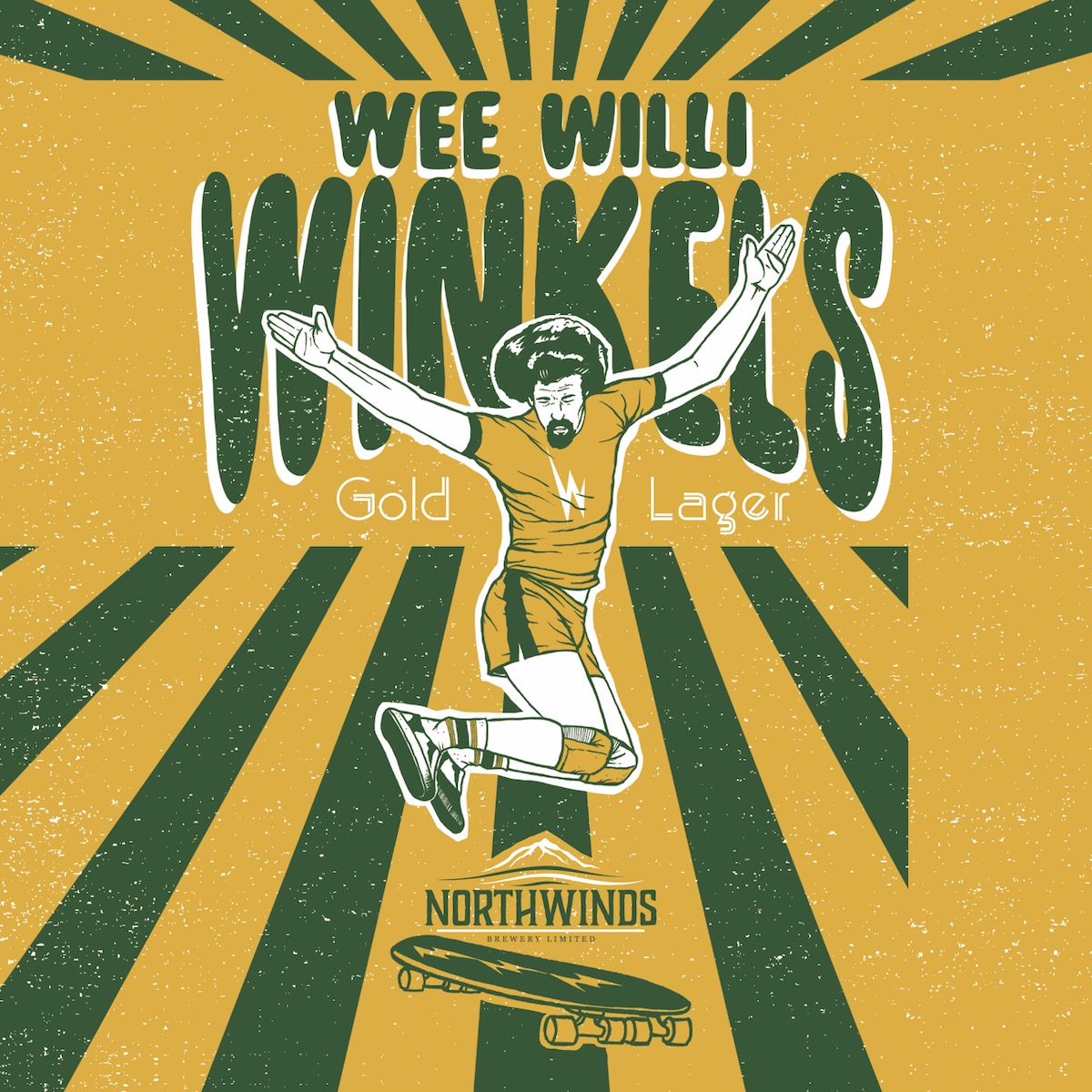
Willli Winkels has innovations and inventions that have had a remarkable impact on skateboarding, snowboarding and a number of industries.
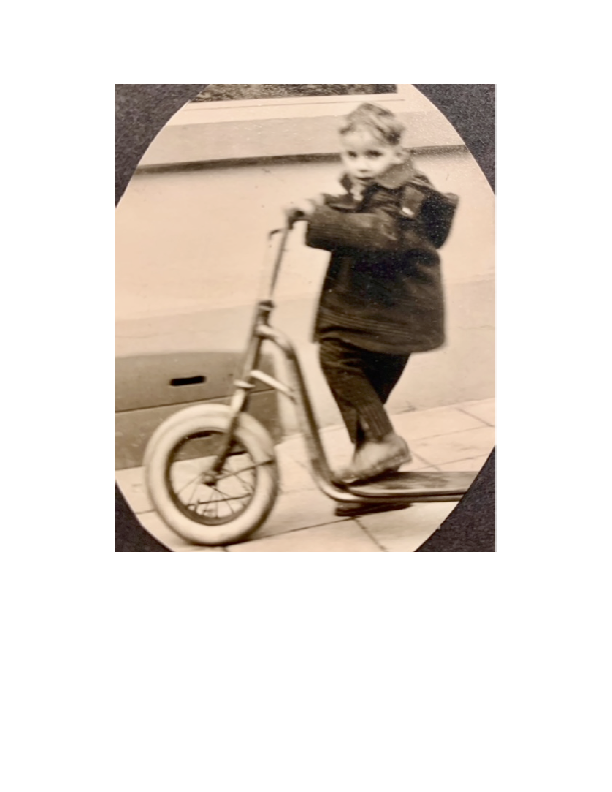
Willi was born in 1956 and moved to Canada with his family from Germany before he even celebrated his birthday.
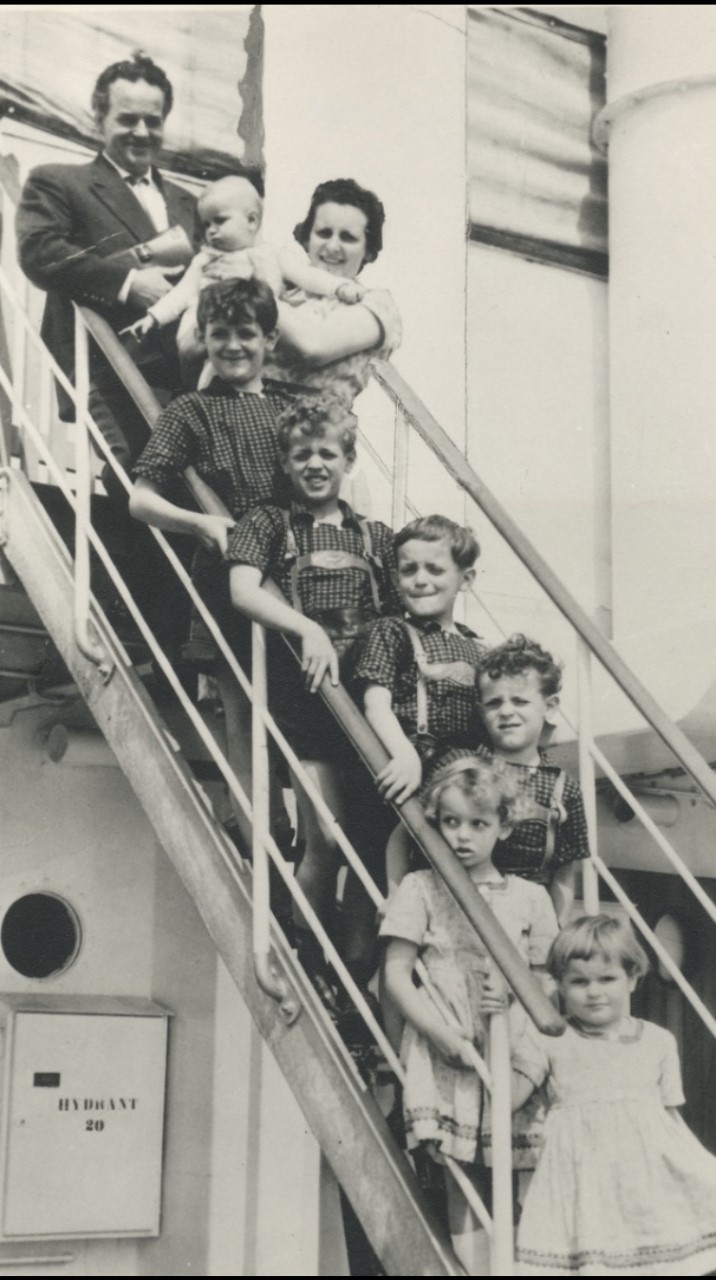
Like many people, Willi Winkels - yes, that is his real name - began skateboarding in the 1960s on clay composite wheels. Willi was also an enthusiastic skier who would later gain legendary status in the sport.
He enjoyed skateboarding, but it was only when he experienced urethane wheels in the 1970s that he got really interested. Willi tried these new wheels when he visited Whistler, British Columbia.
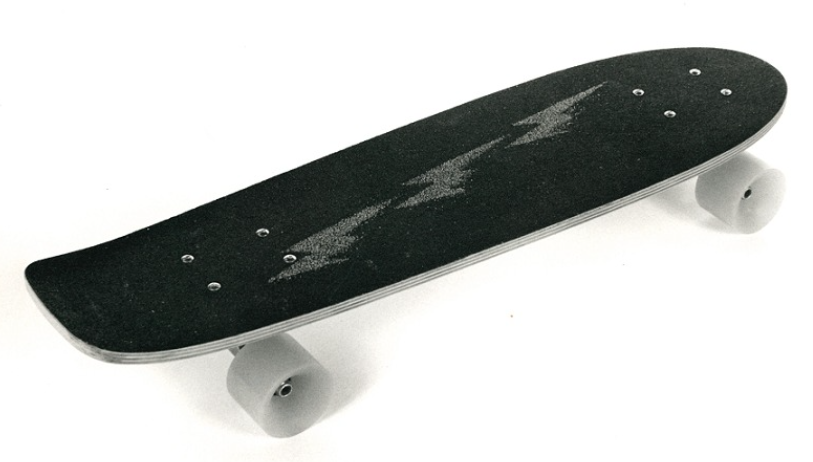
He was so impressed with the ride that he asked a friend who was vacationing in Florida to pick up a complete skateboard for him. However, the boards were so expensive that his friend only brought back a set of wheels and trucks. At that moment, Willi decided to make his own board.
His father owned and operated a door manufacturing company and had the necessary equipment and supplies to create a deck. As the 1970s skateboard boom progressed,
Willi got more involved in skateboarding. He started entering contests and winning in freestyle and slalom competitions.
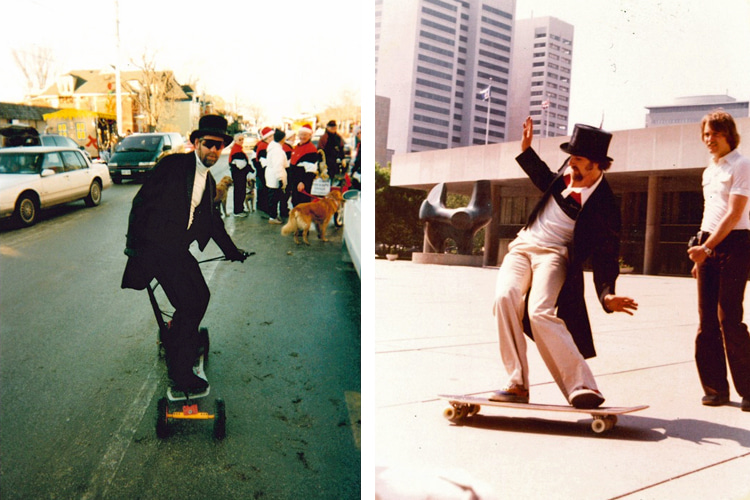
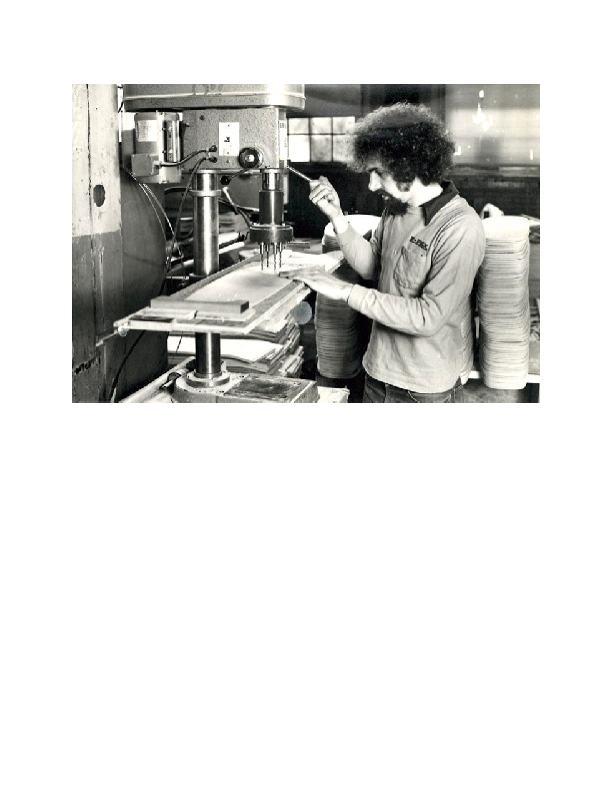
Willi also got more involved with manufacturing skateboards and started to devote less time to making doors. His first boards were like every other manufacturer's - solid wood.
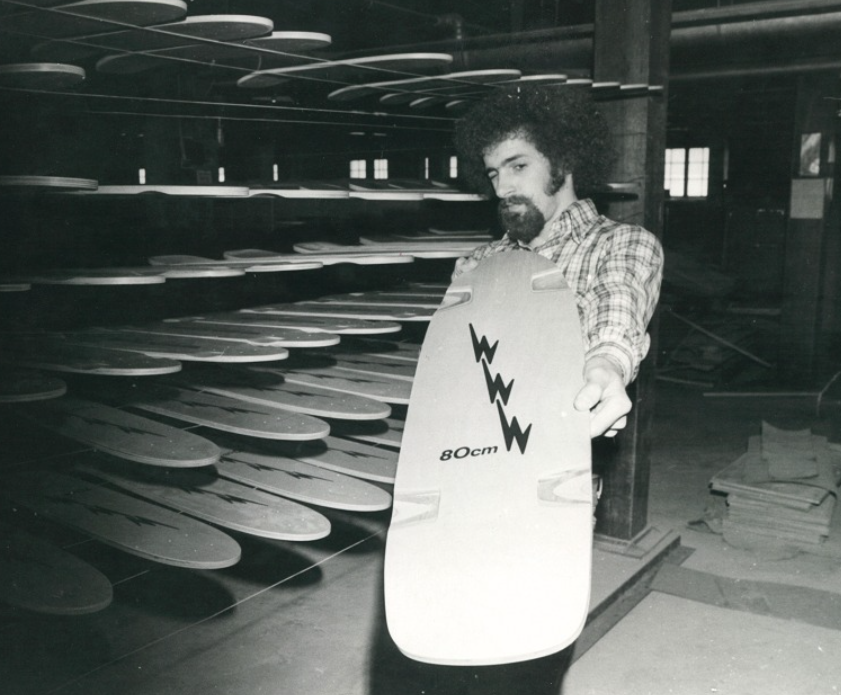
But unlike other solid wood boards, which had a wedge of wood glued on for a kicktail, Willi utilized a unique process. He cut out both the nose and tail and joined pieces of wood together to create what was called a "wedge tail." The board had a more professional look than other skateboards. But this process was time-consuming, so he asked his father for advice on how to save time. He suggested Willi use a wood laminate.
The year was 1976, and no other manufacturer was using maple laminates to make skateboards. A buzz about Wee Willi Winkels skateboards was starting to build, and Collegiate Sports in Toronto took an order for 200 boards.
Willi's father went on a business trip and, before he left, he wondered if he would be able to sell all 200 boards. In two days, all the boards were gone.
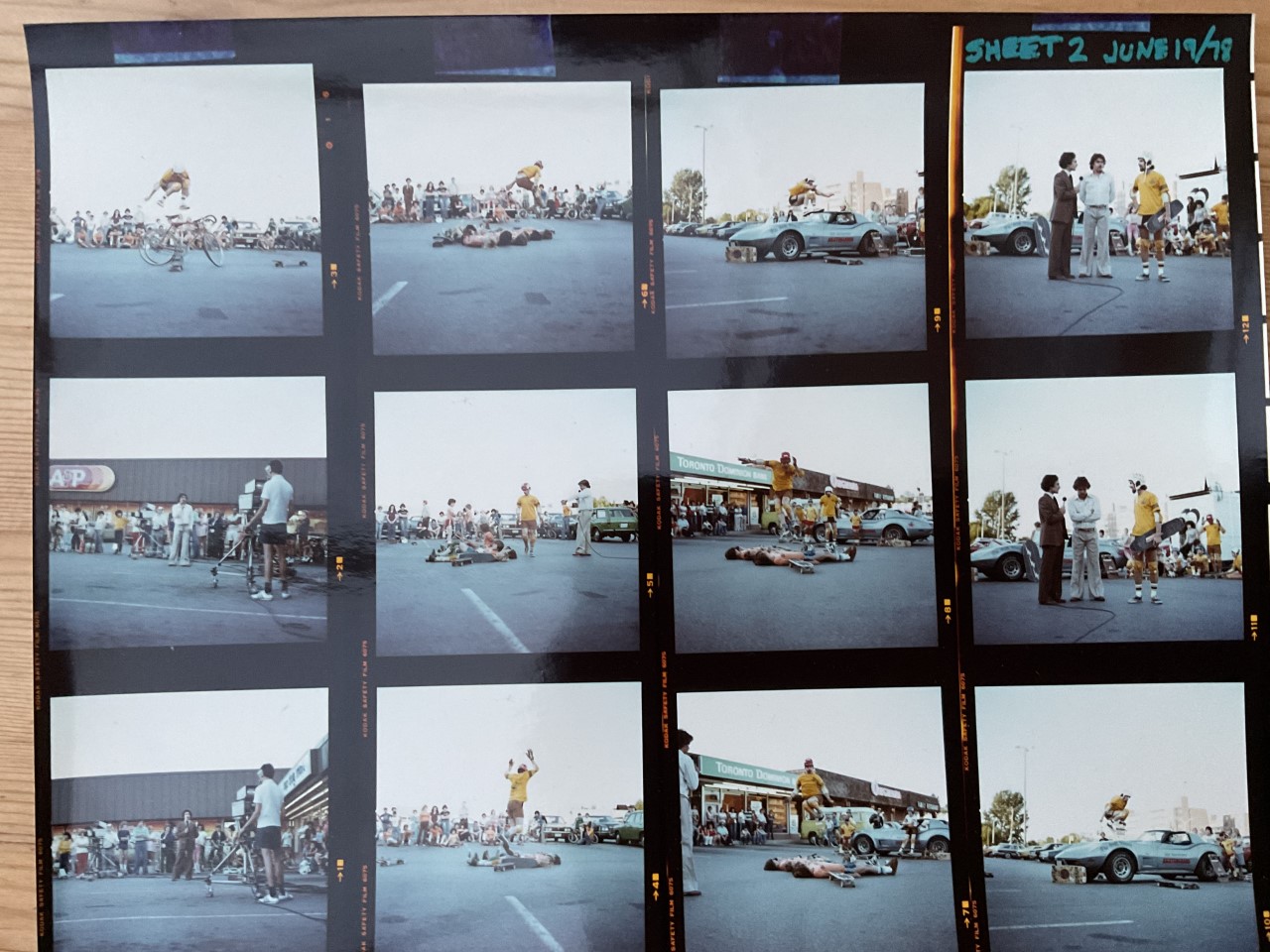
Most skateboards in the mid-1970s were simply shaped from a wooden plank or used a wood and fibreglass laminated combination. In order to promote his boards, the Wee Willi Winkels Skateboard Team was formed. They would do demos at special events.
Besides freestyle and high jumping, Willi would demo his motorized skateboard. Willi had one model with a chain drive that hit over 60 miles per hour at an airport runway.
In 1976, Lonnie Toft, a pro skater for the Sims Team, visited Toronto to perform at the Sportsmen's Show.
Willi showed Lonnie his laminated plywood boards, and Lonnie showed Willi a template he had designed for a new, wider skateboard shape.Willi immediately cut out the design in his shop. Lonnie took this Wee Willi Winkels/Toft Design skateboard back to the Sims manufacturing shop and silk-screened a Sims logo on it.
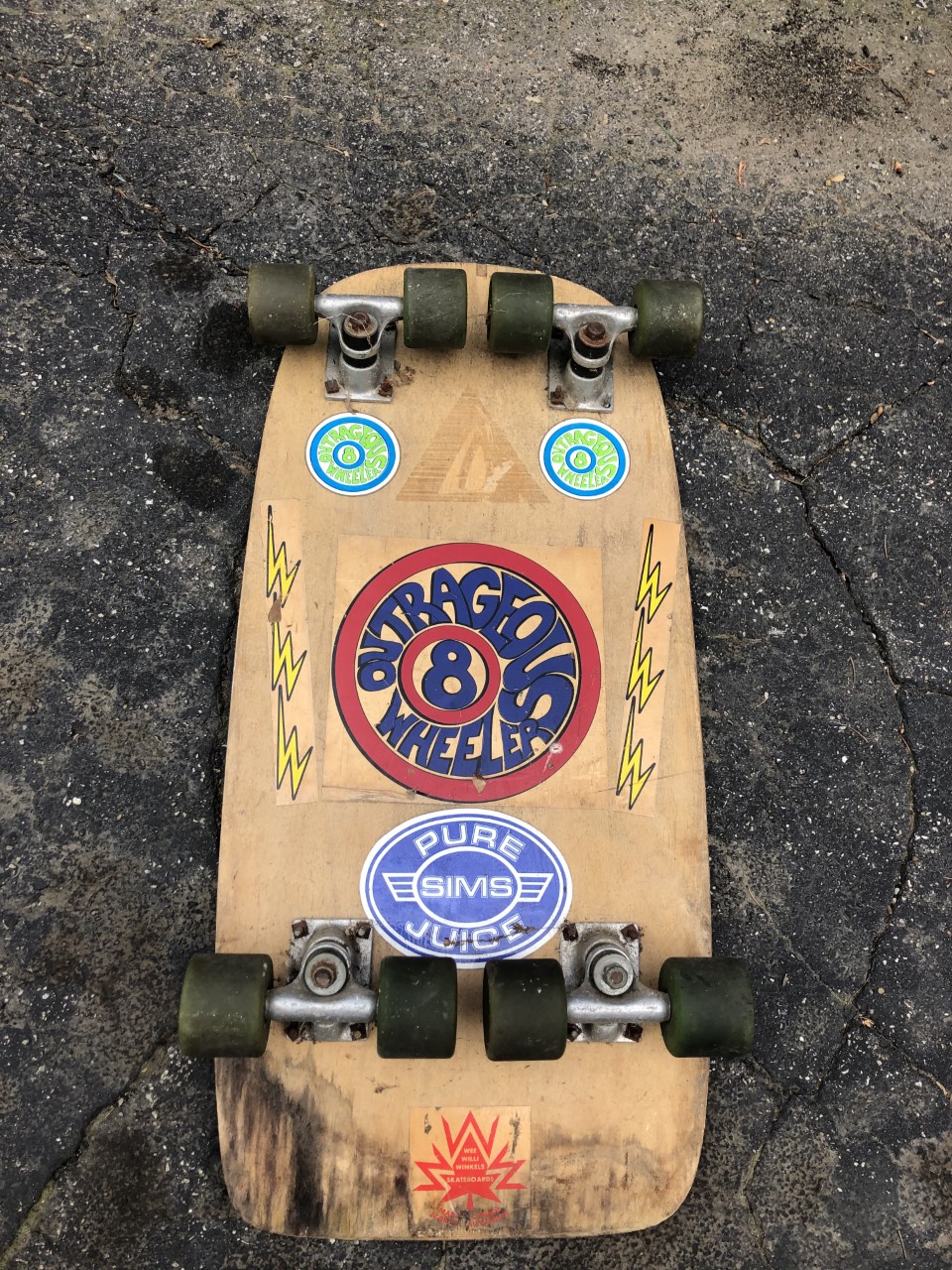
A week later, he entered a contest and won first place. Everyone noticed this "new" Sims deck and wondered where it had come from.
The wider, fuller shape was radically different from most of the needle-nose, skinnier boards of the time.
The next day, the Sims company was overwhelmed with phone calls - people were trying to find out about Lonnie's new deck.
Tom Sims quickly found out what Lonnie had done, then went to the phone and called Willi.
"Tom Sims phoned during dinner time. He asked me if I could make thousands of the boards I had just made for Lonnie. I told him that it was my dinner time and I would get back to him."
"Not less than five minutes later, Tom called back: 'Screw your dinner,' he said. 'I'm taking a plane up there to see you tomorrow.'" Willi began making boards for Sims, and soon other manufacturers began placing orders with him.
He began experimenting with carbon graphite boards (super light) and producing Lonnie's original idea - the eight-wheeled skateboard.
Although Willi was involved with skateboard promotion and production, he also worked on developing skateboard ramps - including pioneering work on the half-pipe.
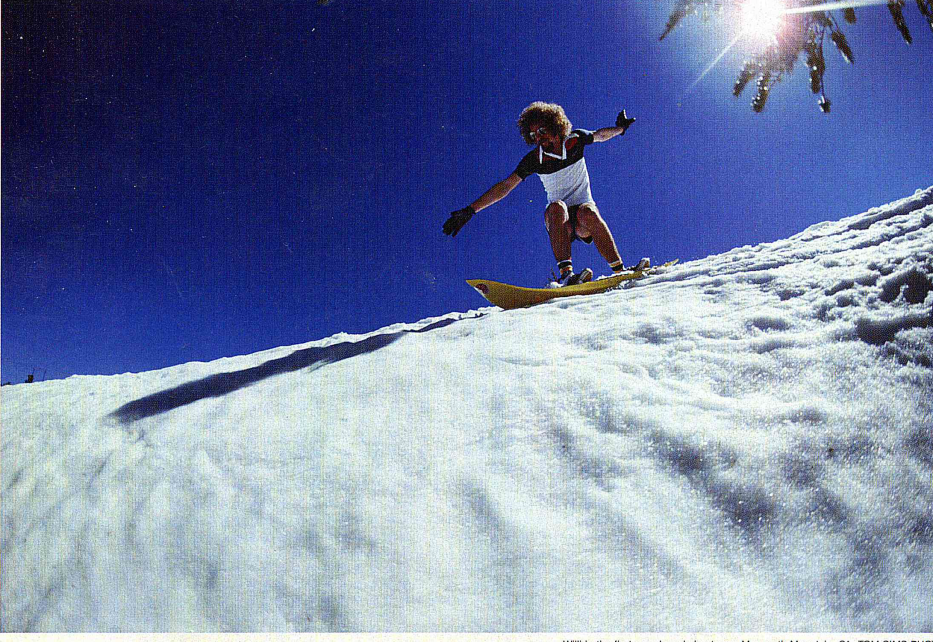
Willi's association with Lonnie Toft didn't stop with the skateboard - the two were also pioneers in the sport of snowboarding.
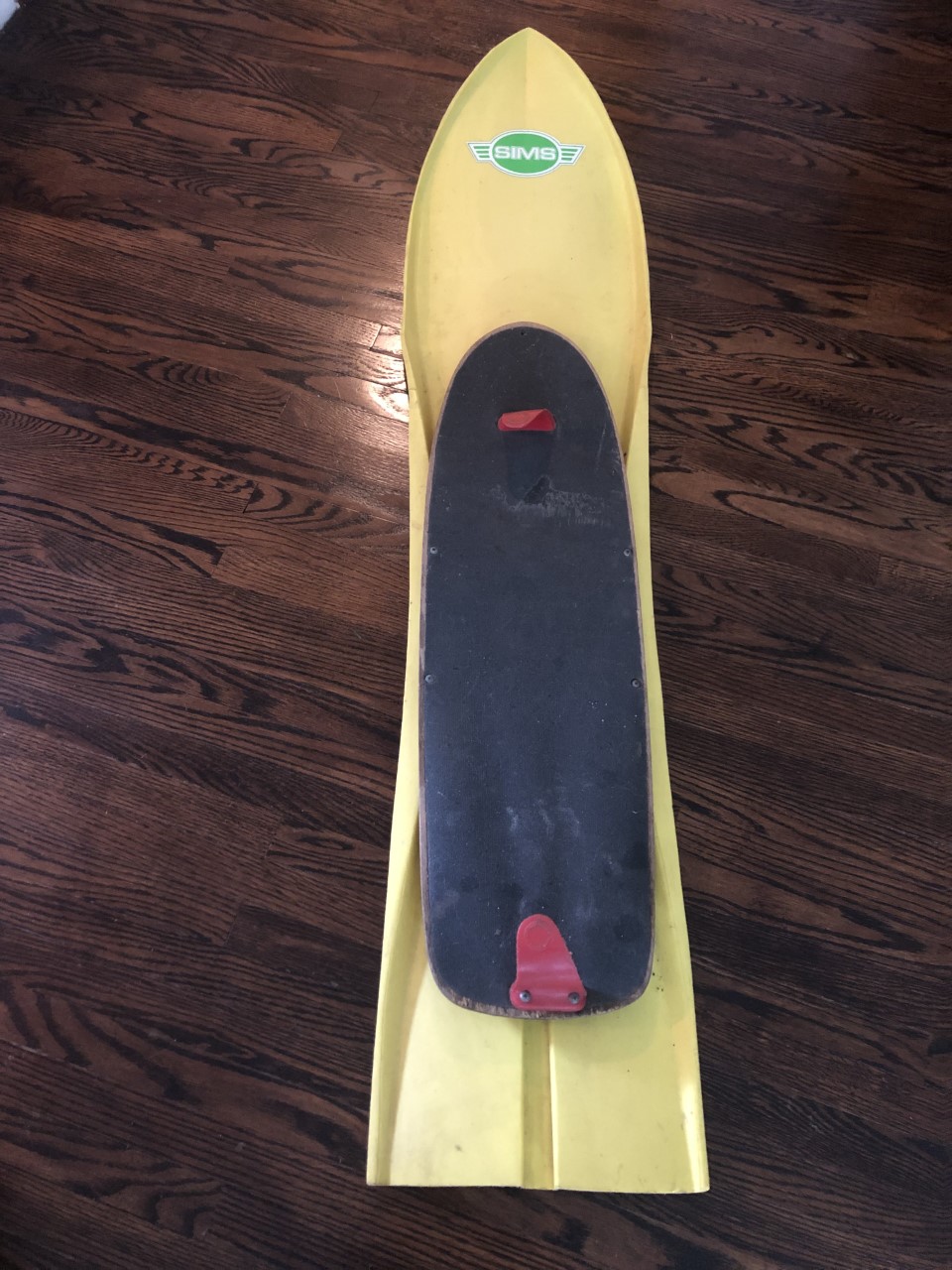
Willi modified a product called the "Flying Yellow Banana," which at the time was a plastic, shaped board that could glide on snow. The idea was to strap your complete skateboard down to the board and go. But unfortunately, the design didn't work well. Willi came up with a better idea. He attached only the deck to the "Flying Yellow Banana" and added plastic hooks for the riders' feet. In 1978, he took the product, dubbed the "skiboard," to Blue Mountain ski hill in Collingwood, Ontario.
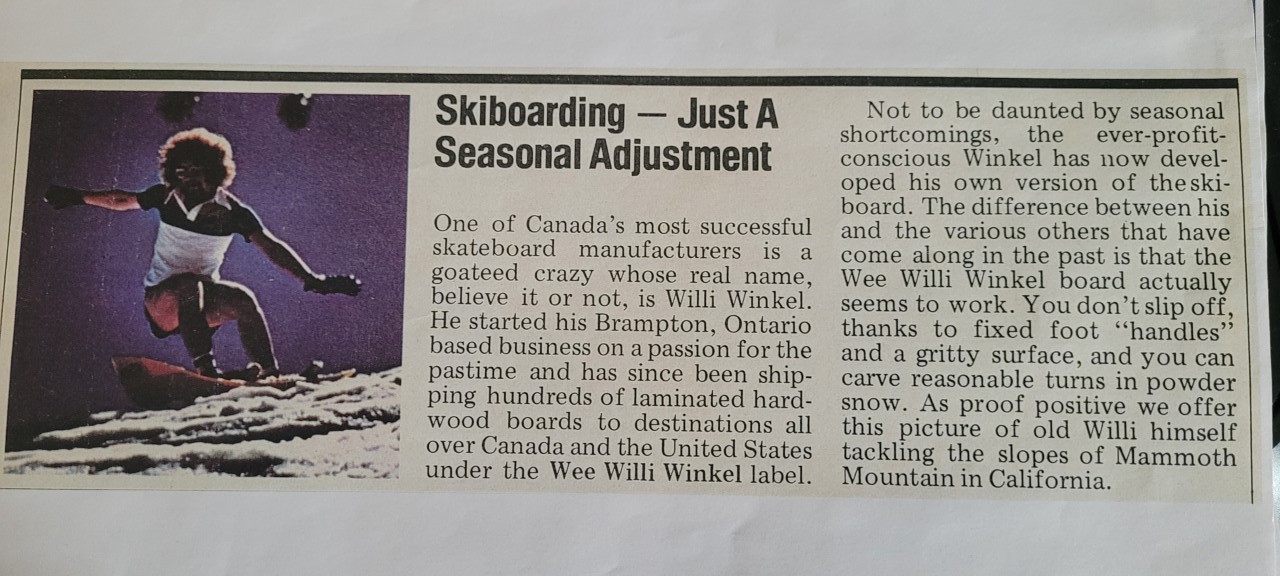
The sight of Willi bombing down hills facing sideways blew many people away.
Soon after his expedition to Blue Mountain, Lonnie Toft and Tom Sims hooked up with Willi at Mammoth Mountain in California. It was the start of Sims/Winkels' involvement with what was known later as "snowboarding."
After all that Willi has contributed to the sport of skateboarding, it is ironic that in 1997, Blue Mountain ski/snowboard resort named a run after him.
Willi passed away on March 18, 2014, after fighting a long battle against cancer.
The Town of Blue Mountains proclaimed the first Saturday of March as the annual Wee Willi Winkels' Day.
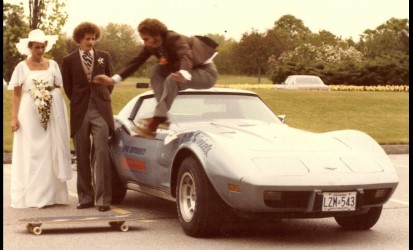
WILLI THE PIONEER & INNOVATOR
First to build a travelling demonstration skateboard half-pipe in Canada
One of the first members of the Ontario Freestyle skiingteam
One of the first to design a motorized skateboard
First to design the modern snowboard bindings.
First to laminate the snowboard and use special epoxiesand change the shape of the snowboard
First to use the word "snowboard'.
First to change the name of 'Skiboard' to “Snowboard" due to legal constraints
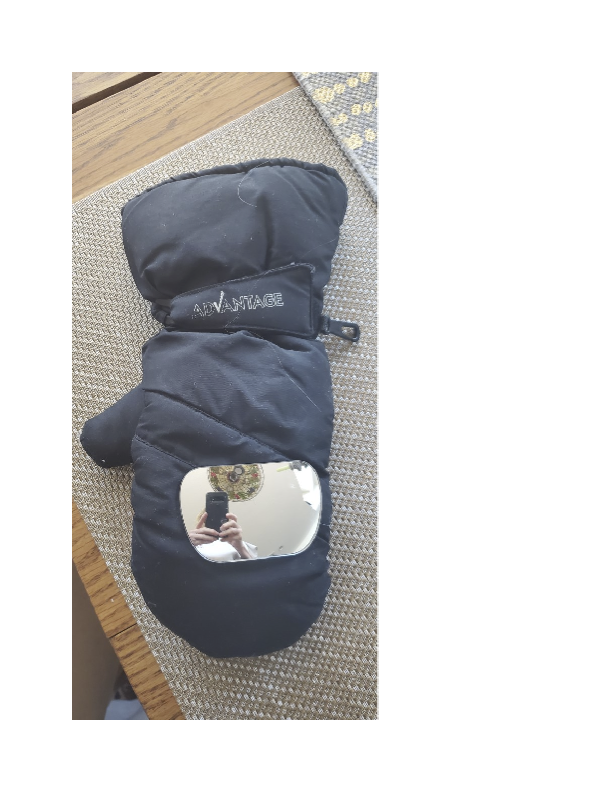
First to design snowboard safety glove with mirror
First to snowboard at Blue Mountains Ski Resort
And many more firsts!
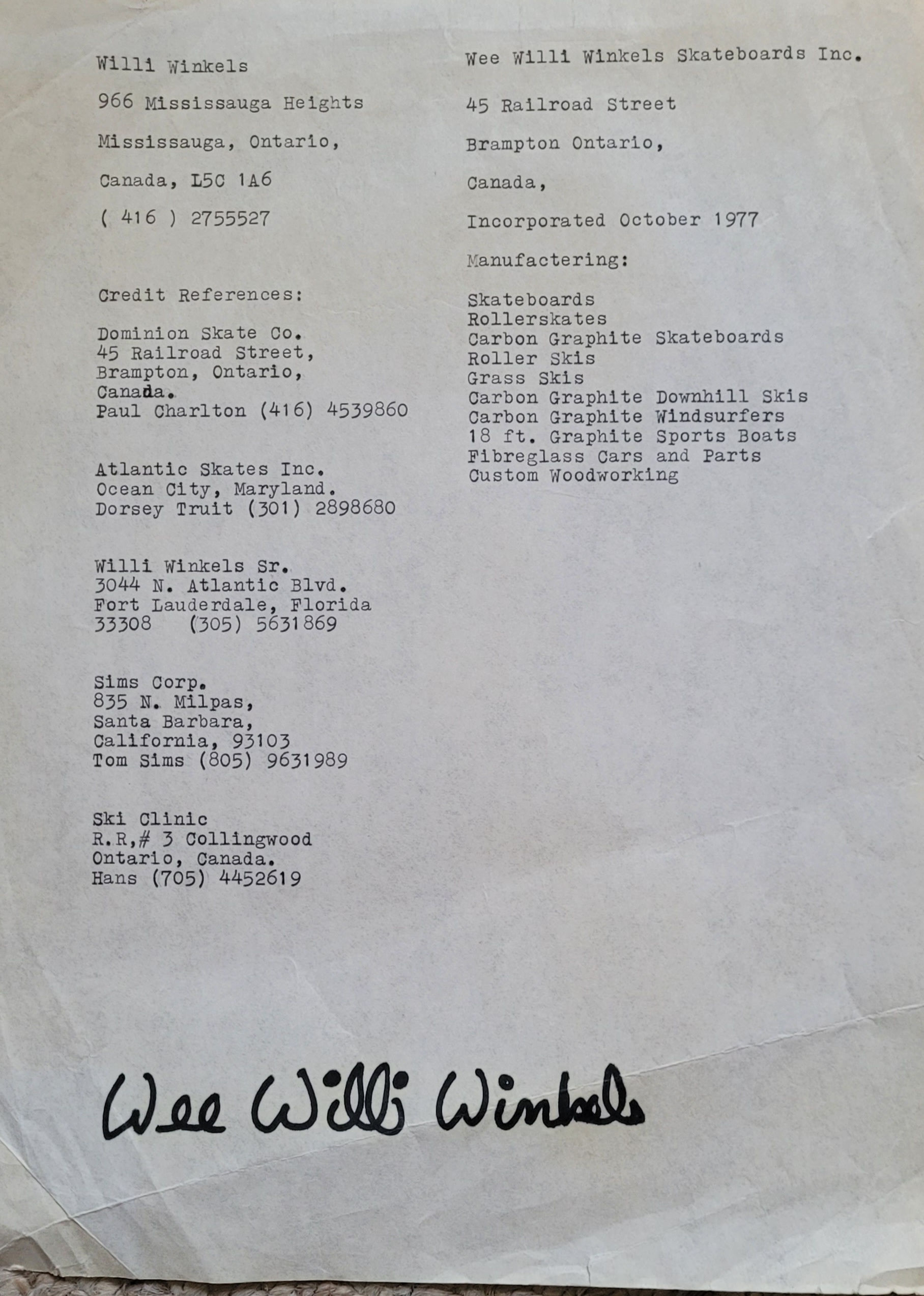
Willi Resume with Tom Sims, and Willi Snowboarding Safety Glove

282
The Issue
Listen for your enjoyment and go ride! Willi Music link and please sign the petition to nominate Willi to the Skateboarding and the Snowboarding Halls of Fame. Craigleith Museum link Text provide by Michael Brooke of Concretewaves
Willli Winkels has innovations and inventions that have had a remarkable impact on skateboarding, snowboarding and a number of industries.
Willi was born in 1956 and moved to Canada with his family from Germany before he even celebrated his birthday.
Like many people, Willi Winkels - yes, that is his real name - began skateboarding in the 1960s on clay composite wheels. Willi was also an enthusiastic skier who would later gain legendary status in the sport.
He enjoyed skateboarding, but it was only when he experienced urethane wheels in the 1970s that he got really interested. Willi tried these new wheels when he visited Whistler, British Columbia.
He was so impressed with the ride that he asked a friend who was vacationing in Florida to pick up a complete skateboard for him. However, the boards were so expensive that his friend only brought back a set of wheels and trucks. At that moment, Willi decided to make his own board.
His father owned and operated a door manufacturing company and had the necessary equipment and supplies to create a deck. As the 1970s skateboard boom progressed,
Willi got more involved in skateboarding. He started entering contests and winning in freestyle and slalom competitions.
Willi also got more involved with manufacturing skateboards and started to devote less time to making doors. His first boards were like every other manufacturer's - solid wood.
But unlike other solid wood boards, which had a wedge of wood glued on for a kicktail, Willi utilized a unique process. He cut out both the nose and tail and joined pieces of wood together to create what was called a "wedge tail." The board had a more professional look than other skateboards. But this process was time-consuming, so he asked his father for advice on how to save time. He suggested Willi use a wood laminate.
The year was 1976, and no other manufacturer was using maple laminates to make skateboards. A buzz about Wee Willi Winkels skateboards was starting to build, and Collegiate Sports in Toronto took an order for 200 boards.
Willi's father went on a business trip and, before he left, he wondered if he would be able to sell all 200 boards. In two days, all the boards were gone.
Most skateboards in the mid-1970s were simply shaped from a wooden plank or used a wood and fibreglass laminated combination. In order to promote his boards, the Wee Willi Winkels Skateboard Team was formed. They would do demos at special events.
Besides freestyle and high jumping, Willi would demo his motorized skateboard. Willi had one model with a chain drive that hit over 60 miles per hour at an airport runway.
In 1976, Lonnie Toft, a pro skater for the Sims Team, visited Toronto to perform at the Sportsmen's Show.
Willi showed Lonnie his laminated plywood boards, and Lonnie showed Willi a template he had designed for a new, wider skateboard shape.Willi immediately cut out the design in his shop. Lonnie took this Wee Willi Winkels/Toft Design skateboard back to the Sims manufacturing shop and silk-screened a Sims logo on it.
A week later, he entered a contest and won first place. Everyone noticed this "new" Sims deck and wondered where it had come from.
The wider, fuller shape was radically different from most of the needle-nose, skinnier boards of the time.
The next day, the Sims company was overwhelmed with phone calls - people were trying to find out about Lonnie's new deck.
Tom Sims quickly found out what Lonnie had done, then went to the phone and called Willi.
"Tom Sims phoned during dinner time. He asked me if I could make thousands of the boards I had just made for Lonnie. I told him that it was my dinner time and I would get back to him."
"Not less than five minutes later, Tom called back: 'Screw your dinner,' he said. 'I'm taking a plane up there to see you tomorrow.'" Willi began making boards for Sims, and soon other manufacturers began placing orders with him.
He began experimenting with carbon graphite boards (super light) and producing Lonnie's original idea - the eight-wheeled skateboard.
Although Willi was involved with skateboard promotion and production, he also worked on developing skateboard ramps - including pioneering work on the half-pipe.
Willi's association with Lonnie Toft didn't stop with the skateboard - the two were also pioneers in the sport of snowboarding.
Willi modified a product called the "Flying Yellow Banana," which at the time was a plastic, shaped board that could glide on snow. The idea was to strap your complete skateboard down to the board and go. But unfortunately, the design didn't work well. Willi came up with a better idea. He attached only the deck to the "Flying Yellow Banana" and added plastic hooks for the riders' feet. In 1978, he took the product, dubbed the "skiboard," to Blue Mountain ski hill in Collingwood, Ontario.
The sight of Willi bombing down hills facing sideways blew many people away.
Soon after his expedition to Blue Mountain, Lonnie Toft and Tom Sims hooked up with Willi at Mammoth Mountain in California. It was the start of Sims/Winkels' involvement with what was known later as "snowboarding."
After all that Willi has contributed to the sport of skateboarding, it is ironic that in 1997, Blue Mountain ski/snowboard resort named a run after him.
Willi passed away on March 18, 2014, after fighting a long battle against cancer.
The Town of Blue Mountains proclaimed the first Saturday of March as the annual Wee Willi Winkels' Day.
WILLI THE PIONEER & INNOVATOR
First to build a travelling demonstration skateboard half-pipe in Canada
One of the first members of the Ontario Freestyle skiingteam
One of the first to design a motorized skateboard
First to design the modern snowboard bindings.
First to laminate the snowboard and use special epoxiesand change the shape of the snowboard
First to use the word "snowboard'.
First to change the name of 'Skiboard' to “Snowboard" due to legal constraints
First to design snowboard safety glove with mirror
First to snowboard at Blue Mountains Ski Resort
And many more firsts!
Willi Resume with Tom Sims, and Willi Snowboarding Safety Glove
Petition Updates
Share this petition
Petition created on January 29, 2023