National Class Action Endometriosis Reform Investigation Petition

National Class Action Endometriosis Reform Investigation Petition
The Issue
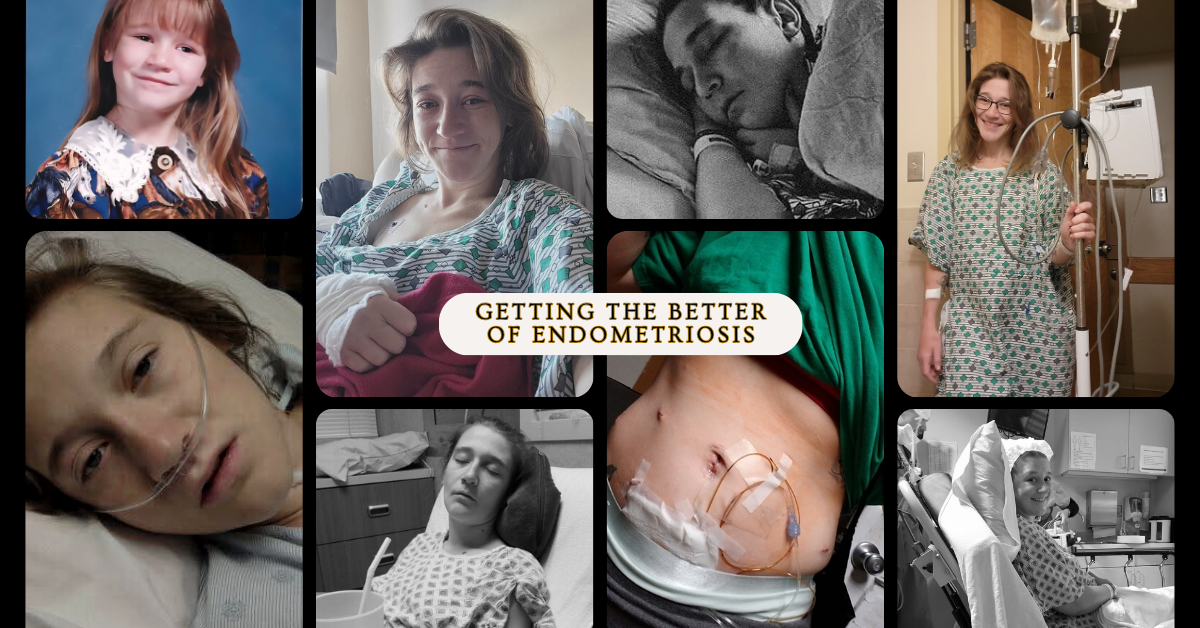
To the attention of the U.S. Department of Justice, U.S. Department of Health and Human Services
Over 15 million Americans live with a disease that can destroy organs, steal fertility, and end lives. Yet our healthcare system still treats it as an afterthought. Patients are being systematically denied lifesaving & preventative medical treatments due to current discriminatory actions and policies.
Endometriosis is a public health emergency and a civil rights issue. The neglect is killing people. We've collected a wealth of evidence, including research, studies, analyses, and patient cases.
🚨 BREAKING: Federal Recognition Has Begun🚨
In Feb. 2026, we secured a historic win with the American End of Endo Project.
For the first time ever, the FY26 Appropriations Report includes official language classifying endometriosis as a chronic, systemic inflammatory disease, not just a reproductive condition.
This language will influence:
NIH funding priorities
Medical training and education
Future policy and research direction
This wasn't done by lobbyists. It was done by patients. Advocates who showed up while navigating their own chronic illness, surgeries, and daily battles with a broken system.
Federal recognition is no longer a demand. It's a precedent we helped set.
Now we're pushing for full enforcement, state-level adoption, and the systemic changes patients have been waiting decades to see.
If we do not see the absolutely crucial changes, judicial angles can surely be followed.
Legal Precedent Has Been Set
In 2025, a federal magistrate judge in North Carolina ruled that endometriosis symptoms could qualify as a disability under the Americans with Disabilities Act (ADA). Christian Worley, a state employee and law student, was denied basic accommodations for menstrual pain and endometriosis. The court allowed her case to proceed, recognizing that being bedridden with endometriosis impedes major life activities and could fall under ADA protections.
Other countries are ahead of us. In 2020, Frances Bell of the UK received £500,000 in compensation after her endometriosis went undiagnosed for 17 years. The Nottingham University Hospitals NHS Trust admitted there had been a delay in examining her. In 2024, Elisabeth Raasholm Larby sued the state of Norway for delayed and inadequate diagnosis and treatment of severe endometriosis. She won on all counts, and the state was ordered to pay compensation and cover all legal costs. These same legal avenues could be pursued in the United States. We already have the patient testimony and evidence to support it.
The U.S. Is Falling Behind
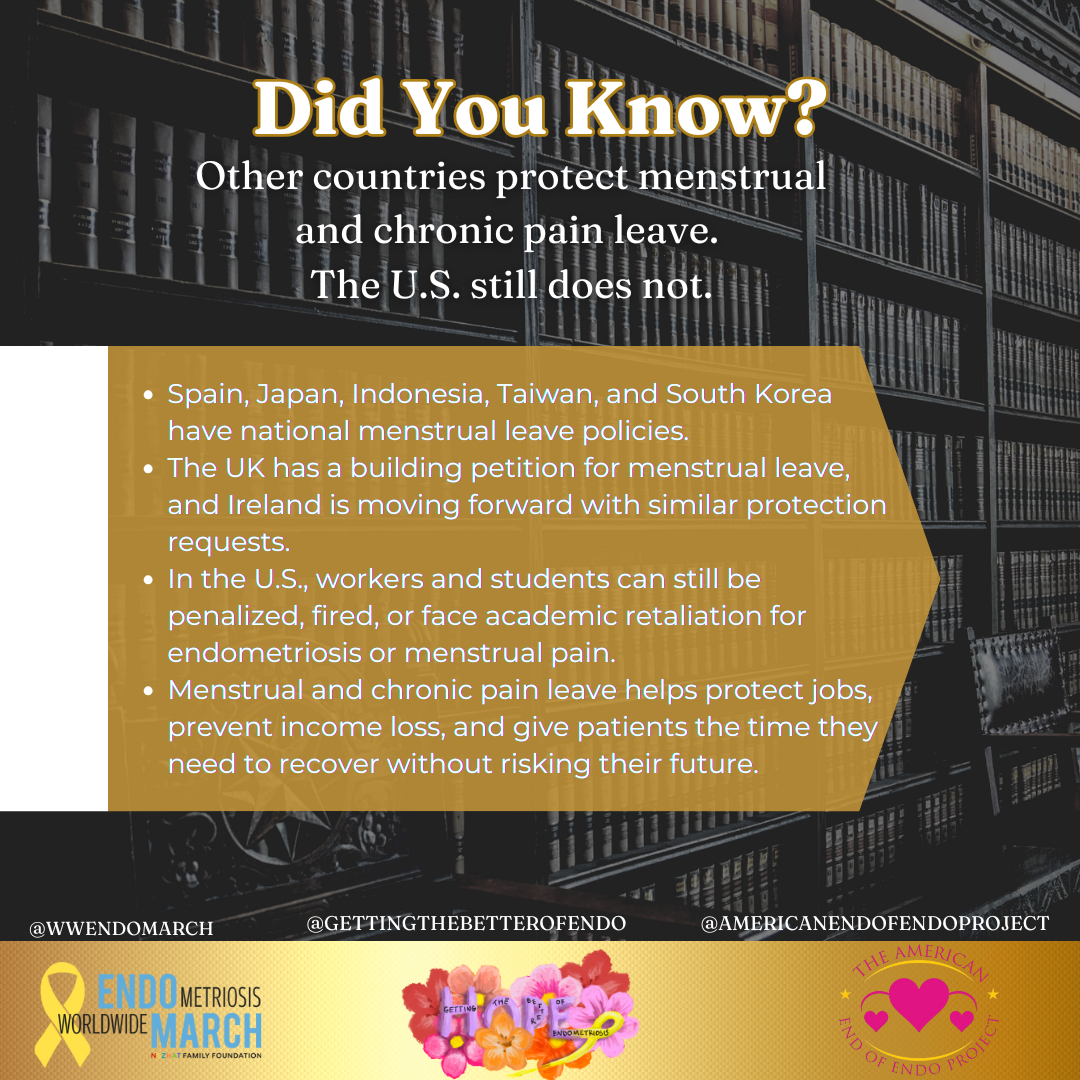
In the UK, a menstrual leave petition reached 50,000 signatures in under two weeks. Ireland is moving toward formal protections. Japan and Spain already have menstrual leave policies. Here in the U.S., workers and students still face attendance penalties, job loss, and academic retaliation for a medically recognized condition.
The 2026 federal language shift is proof that change is possible, but recognition without action isn't enough.
The Law Already Says We Should Be Protected
Endometriosis-related discrimination violates:
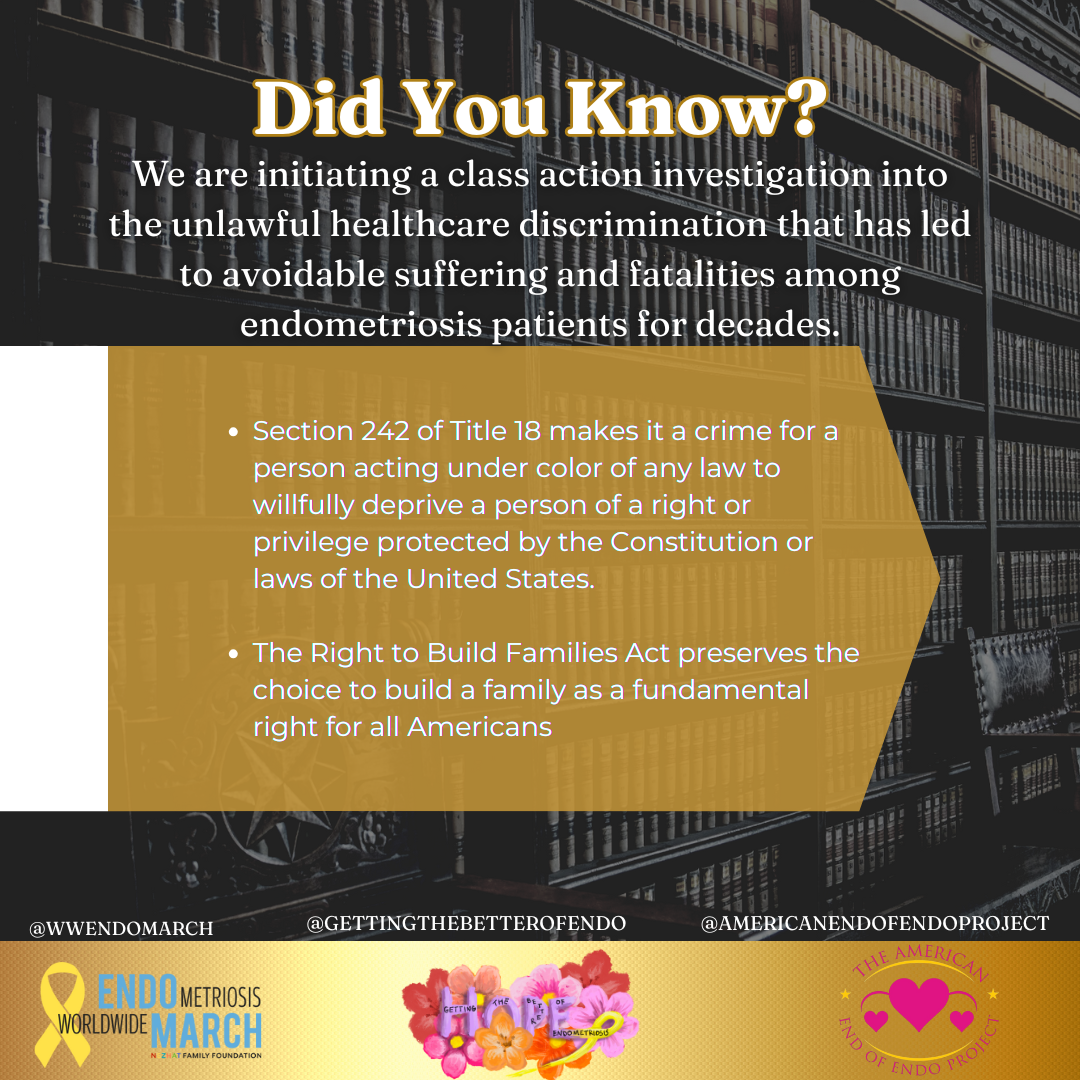
- U.S. Code 18 § 242 – Willfully depriving a person of rights protected by the Constitution or U.S. laws
- ADA – Prohibits discrimination based on disability
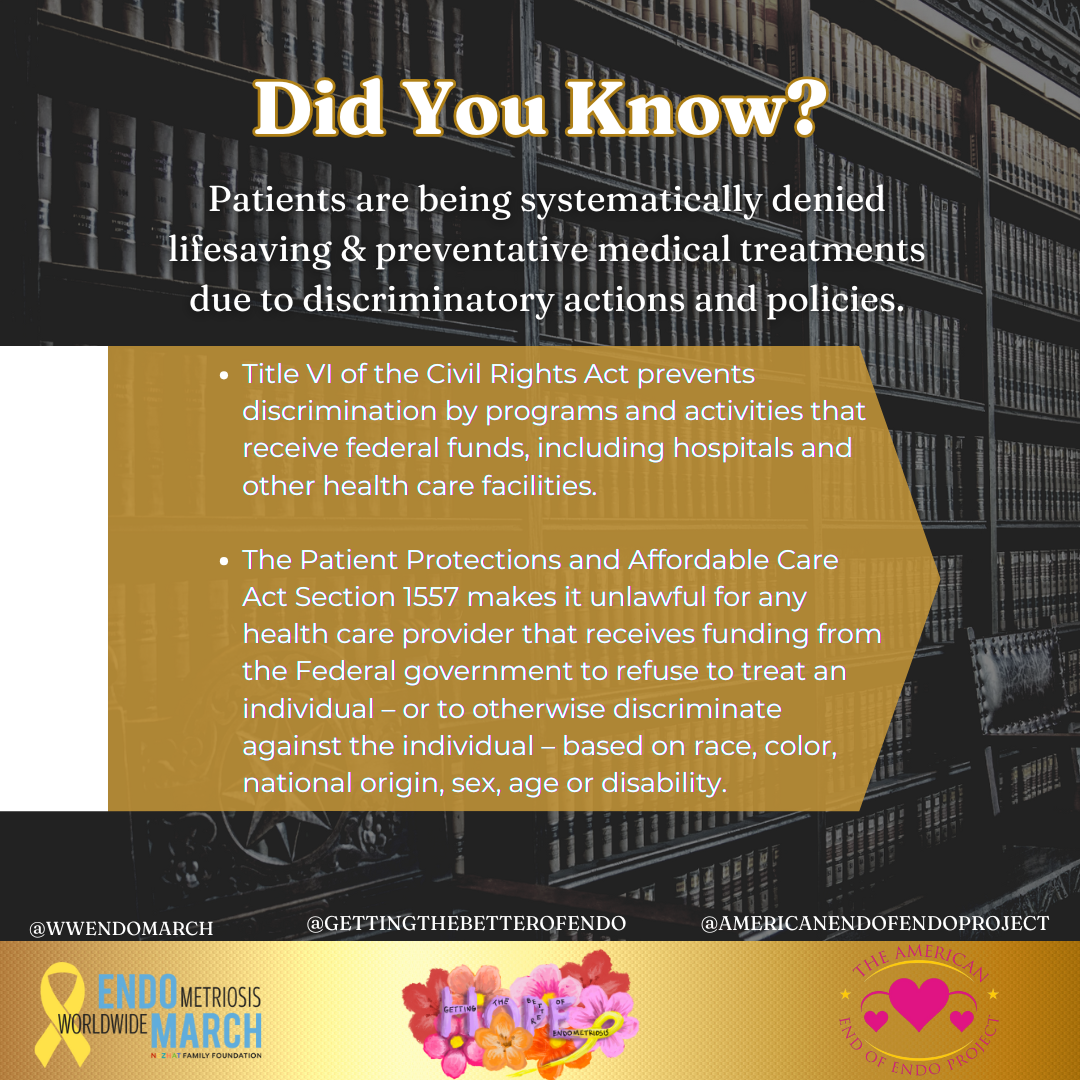
- Section 1557 of the ACA – Prohibits discrimination in health programs receiving federal funds, including on the basis of sex and disability
- Right to Build Families Act – Protects access to fertility care, which endometriosis patients are often denied
- 14th Amendment – Guarantees equal protection under the law and prohibits states from depriving any person of life, liberty, or property without due process. The ongoing denial of care to endometriosis patients is a direct violation of this principle.

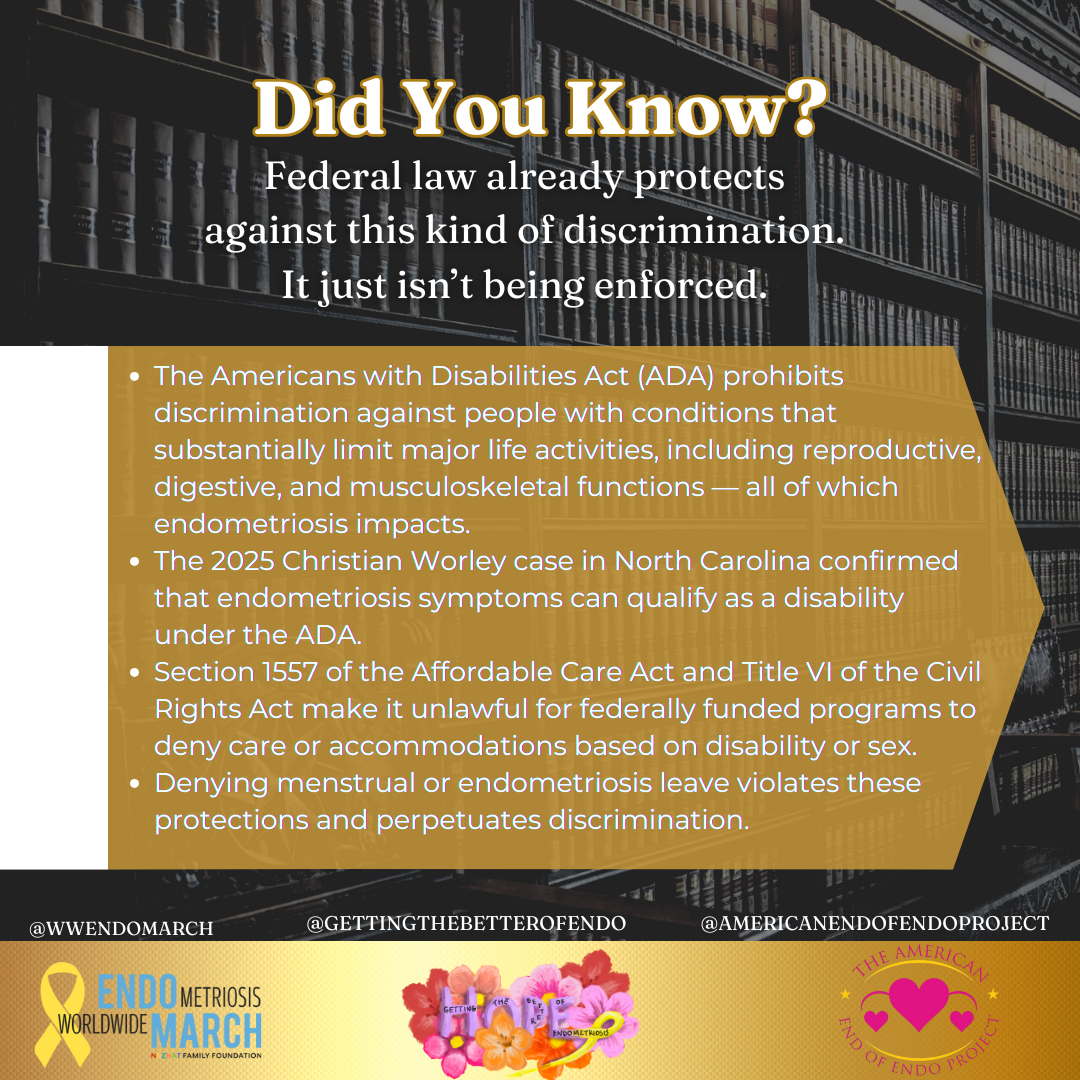
The Americans with Disabilities Act (ADA) defines a disability as:
- A physical or mental impairment that substantially limits one or more major life activities, such as working, walking, lifting, concentrating, eating, sleeping, communicating, or the proper functioning of major bodily systems like the immune system, digestive system, bladder, bowel, and reproductive system.
- A record of such an impairment, including documented medical history or diagnosis.
- Being regarded as having such an impairment, even if not formally diagnosed but treated as if the impairment exists.
The ADA covers both visible and invisible disabilities. Chronic illnesses that cause unpredictable limitations qualify. The 2008 ADA Amendments Act clarified that “substantially limits” should be interpreted broadly. An impairment does not need to be constant to qualify.
Endometriosis meets these criteria:
- It causes substantial and recurring limitations on major life activities, including mobility, digestion, reproductive health, bladder and bowel function, and the ability to work or attend school.
- It often requires repeated hospitalizations, surgeries, and ongoing medical interventions.
- Its severity can fluctuate, with acute flare-ups that are debilitating for hours, days, or even weeks.
- The ADA explicitly covers conditions that limit major bodily functions, and endometriosis directly impacts several of these functions.
By any reasonable interpretation of the ADA’s standards, endometriosis qualifies as a disability. The 2025 North Carolina ruling in Christian Worley’s case confirms that courts are beginning to recognize this reality. The 2026 federal language classifying endometriosis as a chronic, systemic inflammatory disease further validates what patients have known for decades. Yet millions of patients still face discrimination without legal protection or enforcement.
Despite existing federal agencies with substantial budgets, including $18 million annually aimed at improving health outcomes, endometriosis patients continue to suffer decades of neglect. Agencies like the FDA, CDC, and HHS, along with a federal task force on healthcare discrimination, have failed to allocate funds to address endometriosis. Advocates’ voices are often overshadowed under the broader “women’s health” category. As endometriosis affects men, trans, non-binary individuals, children, and even animals, it must be reclassified as a non-reproductive disease. Block grants to address health inequities and public health emergencies have existed for decades, yet none have been used to support endometriosis patients.
The Human Cost
- Average diagnostic delay - 7 to 10 years, sometimes decades
- Misdiagnosis rate - 75.2 percent of patients, often by OB/GYNs and general practitioners
- Increased risks - 31 percent higher early death rate, 40 percent higher ischemic heart disease, 19 percent higher cerebrovascular disease
- Loss of fertility, multiple organ failure, and preventable deaths, including suicide.
Endometriosis is a leading cause of school absences among teens and pre-teens. Adults lose an average of 10 hours of productivity per week, making it difficult to keep a job. Everyday tasks become a struggle. Relationships, parenting, and community participation all suffer.
Despite its prevalence, endometriosis receives only $3.22 per patient in annual NIH research funding. Recently, Aspira Women’s Health was awarded $10 million from the federal ARPA-H initiative to develop a non-invasive blood test to help guide treatment decisions. While research into new diagnostic tools is valuable, it is important to note that such tests have shown inconclusive results in other applications and cannot currently replace surgical diagnosis and treatment. Aligning federal funding priorities more closely with the most urgent patient needs could improve both outcomes and resource use.
The Science That Has Been Ignored
Endometriosis is not “uterine lining in the wrong place.” The tissue is endometriotic tissue, not normal endometrium, and it can produce its own estrogen. It contains numerous genetic mutations and abnormalities, especially in hormone receptors. These flaws mean hormone-based treatments, used for thousands of years, rarely stop the disease from progressing.
The 2026 federal language finally acknowledges what researchers have known for years: endometriosis is a chronic, systemic inflammatory disease, not just a reproductive condition.
Scientific studies have found hundreds of abnormalities in endometriotic cells compared to healthy endometrium, including:
- Broken hormone receptors that make standard hormone therapy ineffective
- The ability to create new nerve and blood vessel growth, causing widespread pain and organ damage
- The potential to arise in places far beyond the reproductive system, including the lungs, liver, and diaphragm
Outdated theories, like “retrograde menstruation,” continue to be taught in medical schools. This has led to decades of harmful policies and treatments, including:
- Immediate use of reproductive hormone drugs with no evidence they halt disease growth
- Surgical ablation and laser burning that increases the risk of recurrence and organ damage
- An estimated 600,000 hysterectomies per year in the U.S., often performed as a supposed “cure” for endometriosis despite evidence it is not curative
Some top endometriosis surgeons advise against pre-surgical hormone suppression, as it can reduce inflammation and make lesions harder to detect during surgery. Yet these medications continue to be marketed and rebranded without addressing their limitations.
Who Endometriosis Affects
Endometriosis is not a “women’s issue.” It affects people of all genders and ages, and even animals. Documented cases exist in cisgender men, often linked to hormonal or surgical factors. Lesions have been found in children before puberty, in postmenopausal people, and even in developing fetuses. The disease has been documented in animals, including primates and domestic pets.
Transgender and non-binary individuals face especially high risks and often encounter medical gaslighting, misgendering, and outright discrimination. Many are excluded from studies and policy discussions entirely.
Framing endometriosis solely as a reproductive or “women’s” condition erases thousands of patients and delays urgently needed reforms.
The 2026 federal reclassification of endometriosis as a chronic, systemic inflammatory disease is a critical step toward recognizing that this is not just a reproductive condition. It's a whole-body disease that affects everyone.
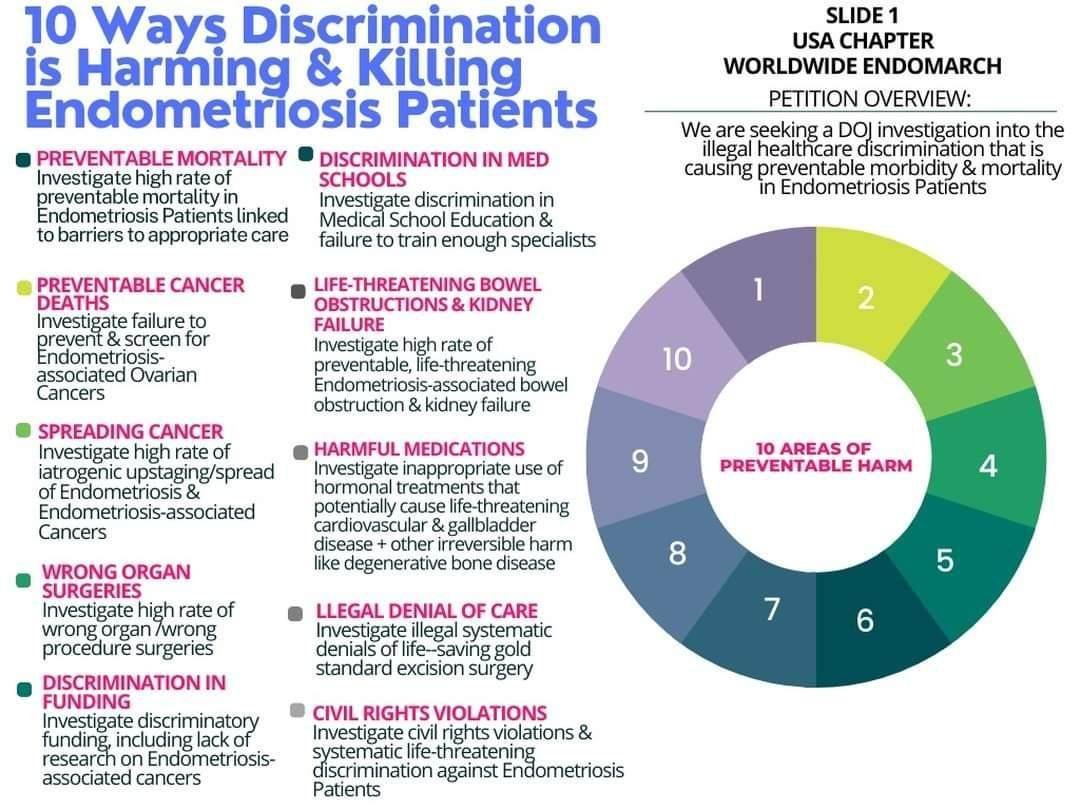
10 Ways Discrimination Is Harming and Killing Endometriosis Patients
This is not abstract. This is daily reality:
- Preventable mortality from delayed diagnosis and denied care
- Preventable cancer deaths linked to untreated endometriosis and related conditions
- Spreading cancer after incomplete or harmful surgeries
- Wrong organ surgeries from misdiagnosis
- Discrimination in research funding with billions for less prevalent diseases and pennies for endometriosis
- Discrimination in medical education with outdated theories still taught as fact
- Life-threatening bowel obstructions and kidney failure from ignored symptoms
- Harmful medications pushed as treatment without halting disease
- Illegal denial of care through insurance refusals and policy loopholes
- Civil rights violations in the form of workplace and school retaliation and lack of ADA enforcement
What We Demand
- A national DOJ investigation into healthcare discrimination against endometriosis patients
- ADA recognition of endometriosis as a disability with enforcement and penalties for violations
- Federally mandated menstrual and endometriosis leave in workplaces and schools
- Evidence-based federal guidelines for endometriosis care
- Significant research funding increases tied to patient-prioritized outcomes
- Development of non-invasive diagnostic tools without replacing surgical accuracy
- A national public health emergency declaration for endometriosis
- Mandatory medical education reform to replace outdated theories with current science
- Full enforcement of the 2026 federal language classifying endometriosis as a chronic, systemic inflammatory disease — at both federal and state levels
Why Now
We have legal precedent. We have global momentum. We now have federal recognition that endometriosis is a chronic, systemic inflammatory disease. We have decades of patient testimony, research, and documented harm. What we do not have is time. Every delay means more organs lost, more futures stolen, and more lives cut short.
Employers, schools, and medical establishments must be held accountable for discrimination, denial of care, and failure to provide accommodations. These are the three levels where systemic harm is happening every single day. Real change and complete reform will only come when all of them are addressed together.
The U.S. Department of Justice must investigate systemic healthcare discrimination against endometriosis patients and enforce the Americans with Disabilities Act in every case where rights are being denied.
Congress must pass legislation that secures ADA recognition for endometriosis, mandates menstrual and endometriosis leave in schools and workplaces, and ensures that research funding and public health resources match the scale of the crisis.
The U.S. Department of Health and Human Services must update all federal medical guidelines to reflect the current scientific understanding of endometriosis, remove outdated and harmful treatment standards, and ensure that every federally funded healthcare provider is trained to recognize and treat the disease appropriately.
Every institution that touches a patient’s life - from hospitals and insurance companies to employers, schools, and medical licensing boards - must be required to change how they recognize, document, and treat endometriosis. Anything less is a continuation of decades of preventable suffering, discrimination, and loss of life.
Sign and share this petition. Be part of the movement to end one of the longest running medical discrimination crises in history. This is not a problem that can wait another decade. Without immediate action, the next generation will face the same discrimination, medical neglect, and preventable deaths we see today.
We already helped change federal policy. Now we're pushing for full enforcement and accountability.
Very Respectfully,
Concerned Citizens, Endometriosis Activists, Patients & EndoMarch Members Worldwide EndoMarch | World Endometriosis Day www.endomarch.org | info@endomarch.org | linktr.ee/betterofendo

4,008
The Issue
To the attention of the U.S. Department of Justice, U.S. Department of Health and Human Services
Over 15 million Americans live with a disease that can destroy organs, steal fertility, and end lives. Yet our healthcare system still treats it as an afterthought. Patients are being systematically denied lifesaving & preventative medical treatments due to current discriminatory actions and policies.
Endometriosis is a public health emergency and a civil rights issue. The neglect is killing people. We've collected a wealth of evidence, including research, studies, analyses, and patient cases.
🚨 BREAKING: Federal Recognition Has Begun🚨
In Feb. 2026, we secured a historic win with the American End of Endo Project.
For the first time ever, the FY26 Appropriations Report includes official language classifying endometriosis as a chronic, systemic inflammatory disease, not just a reproductive condition.
This language will influence:
NIH funding priorities
Medical training and education
Future policy and research direction
This wasn't done by lobbyists. It was done by patients. Advocates who showed up while navigating their own chronic illness, surgeries, and daily battles with a broken system.
Federal recognition is no longer a demand. It's a precedent we helped set.
Now we're pushing for full enforcement, state-level adoption, and the systemic changes patients have been waiting decades to see.
If we do not see the absolutely crucial changes, judicial angles can surely be followed.
Legal Precedent Has Been Set
In 2025, a federal magistrate judge in North Carolina ruled that endometriosis symptoms could qualify as a disability under the Americans with Disabilities Act (ADA). Christian Worley, a state employee and law student, was denied basic accommodations for menstrual pain and endometriosis. The court allowed her case to proceed, recognizing that being bedridden with endometriosis impedes major life activities and could fall under ADA protections.
Other countries are ahead of us. In 2020, Frances Bell of the UK received £500,000 in compensation after her endometriosis went undiagnosed for 17 years. The Nottingham University Hospitals NHS Trust admitted there had been a delay in examining her. In 2024, Elisabeth Raasholm Larby sued the state of Norway for delayed and inadequate diagnosis and treatment of severe endometriosis. She won on all counts, and the state was ordered to pay compensation and cover all legal costs. These same legal avenues could be pursued in the United States. We already have the patient testimony and evidence to support it.
The U.S. Is Falling Behind
In the UK, a menstrual leave petition reached 50,000 signatures in under two weeks. Ireland is moving toward formal protections. Japan and Spain already have menstrual leave policies. Here in the U.S., workers and students still face attendance penalties, job loss, and academic retaliation for a medically recognized condition.
The 2026 federal language shift is proof that change is possible, but recognition without action isn't enough.
The Law Already Says We Should Be Protected
Endometriosis-related discrimination violates:
- U.S. Code 18 § 242 – Willfully depriving a person of rights protected by the Constitution or U.S. laws
- ADA – Prohibits discrimination based on disability
- Section 1557 of the ACA – Prohibits discrimination in health programs receiving federal funds, including on the basis of sex and disability
- Right to Build Families Act – Protects access to fertility care, which endometriosis patients are often denied
- 14th Amendment – Guarantees equal protection under the law and prohibits states from depriving any person of life, liberty, or property without due process. The ongoing denial of care to endometriosis patients is a direct violation of this principle.
The Americans with Disabilities Act (ADA) defines a disability as:
- A physical or mental impairment that substantially limits one or more major life activities, such as working, walking, lifting, concentrating, eating, sleeping, communicating, or the proper functioning of major bodily systems like the immune system, digestive system, bladder, bowel, and reproductive system.
- A record of such an impairment, including documented medical history or diagnosis.
- Being regarded as having such an impairment, even if not formally diagnosed but treated as if the impairment exists.
The ADA covers both visible and invisible disabilities. Chronic illnesses that cause unpredictable limitations qualify. The 2008 ADA Amendments Act clarified that “substantially limits” should be interpreted broadly. An impairment does not need to be constant to qualify.
Endometriosis meets these criteria:
- It causes substantial and recurring limitations on major life activities, including mobility, digestion, reproductive health, bladder and bowel function, and the ability to work or attend school.
- It often requires repeated hospitalizations, surgeries, and ongoing medical interventions.
- Its severity can fluctuate, with acute flare-ups that are debilitating for hours, days, or even weeks.
- The ADA explicitly covers conditions that limit major bodily functions, and endometriosis directly impacts several of these functions.
By any reasonable interpretation of the ADA’s standards, endometriosis qualifies as a disability. The 2025 North Carolina ruling in Christian Worley’s case confirms that courts are beginning to recognize this reality. The 2026 federal language classifying endometriosis as a chronic, systemic inflammatory disease further validates what patients have known for decades. Yet millions of patients still face discrimination without legal protection or enforcement.
Despite existing federal agencies with substantial budgets, including $18 million annually aimed at improving health outcomes, endometriosis patients continue to suffer decades of neglect. Agencies like the FDA, CDC, and HHS, along with a federal task force on healthcare discrimination, have failed to allocate funds to address endometriosis. Advocates’ voices are often overshadowed under the broader “women’s health” category. As endometriosis affects men, trans, non-binary individuals, children, and even animals, it must be reclassified as a non-reproductive disease. Block grants to address health inequities and public health emergencies have existed for decades, yet none have been used to support endometriosis patients.
The Human Cost
- Average diagnostic delay - 7 to 10 years, sometimes decades
- Misdiagnosis rate - 75.2 percent of patients, often by OB/GYNs and general practitioners
- Increased risks - 31 percent higher early death rate, 40 percent higher ischemic heart disease, 19 percent higher cerebrovascular disease
- Loss of fertility, multiple organ failure, and preventable deaths, including suicide.
Endometriosis is a leading cause of school absences among teens and pre-teens. Adults lose an average of 10 hours of productivity per week, making it difficult to keep a job. Everyday tasks become a struggle. Relationships, parenting, and community participation all suffer.
Despite its prevalence, endometriosis receives only $3.22 per patient in annual NIH research funding. Recently, Aspira Women’s Health was awarded $10 million from the federal ARPA-H initiative to develop a non-invasive blood test to help guide treatment decisions. While research into new diagnostic tools is valuable, it is important to note that such tests have shown inconclusive results in other applications and cannot currently replace surgical diagnosis and treatment. Aligning federal funding priorities more closely with the most urgent patient needs could improve both outcomes and resource use.
The Science That Has Been Ignored
Endometriosis is not “uterine lining in the wrong place.” The tissue is endometriotic tissue, not normal endometrium, and it can produce its own estrogen. It contains numerous genetic mutations and abnormalities, especially in hormone receptors. These flaws mean hormone-based treatments, used for thousands of years, rarely stop the disease from progressing.
The 2026 federal language finally acknowledges what researchers have known for years: endometriosis is a chronic, systemic inflammatory disease, not just a reproductive condition.
Scientific studies have found hundreds of abnormalities in endometriotic cells compared to healthy endometrium, including:
- Broken hormone receptors that make standard hormone therapy ineffective
- The ability to create new nerve and blood vessel growth, causing widespread pain and organ damage
- The potential to arise in places far beyond the reproductive system, including the lungs, liver, and diaphragm
Outdated theories, like “retrograde menstruation,” continue to be taught in medical schools. This has led to decades of harmful policies and treatments, including:
- Immediate use of reproductive hormone drugs with no evidence they halt disease growth
- Surgical ablation and laser burning that increases the risk of recurrence and organ damage
- An estimated 600,000 hysterectomies per year in the U.S., often performed as a supposed “cure” for endometriosis despite evidence it is not curative
Some top endometriosis surgeons advise against pre-surgical hormone suppression, as it can reduce inflammation and make lesions harder to detect during surgery. Yet these medications continue to be marketed and rebranded without addressing their limitations.
Who Endometriosis Affects
Endometriosis is not a “women’s issue.” It affects people of all genders and ages, and even animals. Documented cases exist in cisgender men, often linked to hormonal or surgical factors. Lesions have been found in children before puberty, in postmenopausal people, and even in developing fetuses. The disease has been documented in animals, including primates and domestic pets.
Transgender and non-binary individuals face especially high risks and often encounter medical gaslighting, misgendering, and outright discrimination. Many are excluded from studies and policy discussions entirely.
Framing endometriosis solely as a reproductive or “women’s” condition erases thousands of patients and delays urgently needed reforms.
The 2026 federal reclassification of endometriosis as a chronic, systemic inflammatory disease is a critical step toward recognizing that this is not just a reproductive condition. It's a whole-body disease that affects everyone.
10 Ways Discrimination Is Harming and Killing Endometriosis Patients
This is not abstract. This is daily reality:
- Preventable mortality from delayed diagnosis and denied care
- Preventable cancer deaths linked to untreated endometriosis and related conditions
- Spreading cancer after incomplete or harmful surgeries
- Wrong organ surgeries from misdiagnosis
- Discrimination in research funding with billions for less prevalent diseases and pennies for endometriosis
- Discrimination in medical education with outdated theories still taught as fact
- Life-threatening bowel obstructions and kidney failure from ignored symptoms
- Harmful medications pushed as treatment without halting disease
- Illegal denial of care through insurance refusals and policy loopholes
- Civil rights violations in the form of workplace and school retaliation and lack of ADA enforcement
What We Demand
- A national DOJ investigation into healthcare discrimination against endometriosis patients
- ADA recognition of endometriosis as a disability with enforcement and penalties for violations
- Federally mandated menstrual and endometriosis leave in workplaces and schools
- Evidence-based federal guidelines for endometriosis care
- Significant research funding increases tied to patient-prioritized outcomes
- Development of non-invasive diagnostic tools without replacing surgical accuracy
- A national public health emergency declaration for endometriosis
- Mandatory medical education reform to replace outdated theories with current science
- Full enforcement of the 2026 federal language classifying endometriosis as a chronic, systemic inflammatory disease — at both federal and state levels
Why Now
We have legal precedent. We have global momentum. We now have federal recognition that endometriosis is a chronic, systemic inflammatory disease. We have decades of patient testimony, research, and documented harm. What we do not have is time. Every delay means more organs lost, more futures stolen, and more lives cut short.
Employers, schools, and medical establishments must be held accountable for discrimination, denial of care, and failure to provide accommodations. These are the three levels where systemic harm is happening every single day. Real change and complete reform will only come when all of them are addressed together.
The U.S. Department of Justice must investigate systemic healthcare discrimination against endometriosis patients and enforce the Americans with Disabilities Act in every case where rights are being denied.
Congress must pass legislation that secures ADA recognition for endometriosis, mandates menstrual and endometriosis leave in schools and workplaces, and ensures that research funding and public health resources match the scale of the crisis.
The U.S. Department of Health and Human Services must update all federal medical guidelines to reflect the current scientific understanding of endometriosis, remove outdated and harmful treatment standards, and ensure that every federally funded healthcare provider is trained to recognize and treat the disease appropriately.
Every institution that touches a patient’s life - from hospitals and insurance companies to employers, schools, and medical licensing boards - must be required to change how they recognize, document, and treat endometriosis. Anything less is a continuation of decades of preventable suffering, discrimination, and loss of life.
Sign and share this petition. Be part of the movement to end one of the longest running medical discrimination crises in history. This is not a problem that can wait another decade. Without immediate action, the next generation will face the same discrimination, medical neglect, and preventable deaths we see today.
We already helped change federal policy. Now we're pushing for full enforcement and accountability.
Very Respectfully,
Concerned Citizens, Endometriosis Activists, Patients & EndoMarch Members Worldwide EndoMarch | World Endometriosis Day www.endomarch.org | info@endomarch.org | linktr.ee/betterofendo
4,008


Supporter Voices
Share this petition
Petition created on December 14, 2022