

More trees and less palms in Morocco
El problema
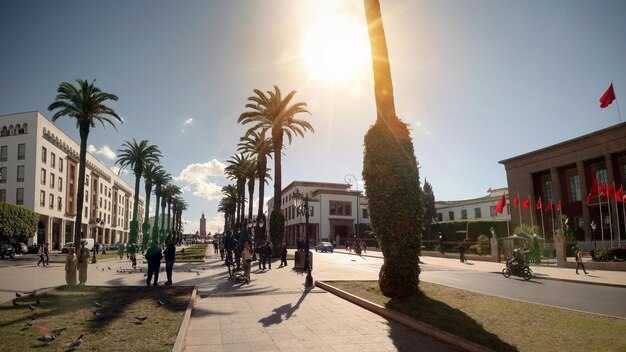
Morocco faces urban and climatic challenges that require a reevaluation of its urban vegetation. Although palm trees are part of the national landscape, their environmental function is limited: they provide little shade, do not absorb significant moisture, and have a reduced impact on biodiversity. In contrast, large-scale planting of native, leafy trees adapted to the local environment would bring about a transformative change.
Planting more trees has a direct effect on urban temperature: various studies show that tree-lined streets can lower ambient temperatures from 43 to 35 degrees Celsius, which makes a substantial difference in daily life. This affects water consumption: although trees consume more water than palms, by reducing intense heat, people need less water to cool off, and their homes require less energy for air conditioning.
Aesthetically, trees are much more beautiful and varied, enhancing streets and public spaces for both residents and tourists. Their shade makes going outside more comfortable and safer, encouraging social interaction and city use. This comfort stimulates commerce, tourism, and real estate investment, as tree-lined neighborhoods are more desirable for living and leisure, generating a positive effect on the local economy.
From a public health perspective, more trees mean better protection from the sun, lower incidence of burns and skin diseases, and a demonstrated reduction in skin cancer cases. Additionally, during the hottest months, there will be far fewer deaths from heatstroke, especially among outdoor workers.
Tree-filled cities are also cleaner, as trees filter the air and trap dust, improving environmental quality and reducing allergies and respiratory problems. Furthermore, shade protects buildings from solar damage, extending the lifespan of facades and reducing maintenance costs.
Socially, increasing trees in Morocco would represent significant progress: more green spaces facilitate interaction between neighbors, promote a healthy social fabric, and make the city a more welcoming and safe place. This type of urban planning not only protects the environment but also boosts the well-being and prosperity of the entire country.

118
El problema
Morocco faces urban and climatic challenges that require a reevaluation of its urban vegetation. Although palm trees are part of the national landscape, their environmental function is limited: they provide little shade, do not absorb significant moisture, and have a reduced impact on biodiversity. In contrast, large-scale planting of native, leafy trees adapted to the local environment would bring about a transformative change.
Planting more trees has a direct effect on urban temperature: various studies show that tree-lined streets can lower ambient temperatures from 43 to 35 degrees Celsius, which makes a substantial difference in daily life. This affects water consumption: although trees consume more water than palms, by reducing intense heat, people need less water to cool off, and their homes require less energy for air conditioning.
Aesthetically, trees are much more beautiful and varied, enhancing streets and public spaces for both residents and tourists. Their shade makes going outside more comfortable and safer, encouraging social interaction and city use. This comfort stimulates commerce, tourism, and real estate investment, as tree-lined neighborhoods are more desirable for living and leisure, generating a positive effect on the local economy.
From a public health perspective, more trees mean better protection from the sun, lower incidence of burns and skin diseases, and a demonstrated reduction in skin cancer cases. Additionally, during the hottest months, there will be far fewer deaths from heatstroke, especially among outdoor workers.
Tree-filled cities are also cleaner, as trees filter the air and trap dust, improving environmental quality and reducing allergies and respiratory problems. Furthermore, shade protects buildings from solar damage, extending the lifespan of facades and reducing maintenance costs.
Socially, increasing trees in Morocco would represent significant progress: more green spaces facilitate interaction between neighbors, promote a healthy social fabric, and make the city a more welcoming and safe place. This type of urban planning not only protects the environment but also boosts the well-being and prosperity of the entire country.
Opiniones de firmantes
Actualizaciones de la petición
Compartir esta petición
Petición creada en 16 de julio de 2025