

Modernize RT-5 zoning to allow multi-generational infill housing on non-character homes
The Issue
Vancouver families increasingly want to live together across generations, but RT-5 zoning makes this difficult on non-character homes, including many Vancouver Specials.
In RT-5, the most predictable infill and ownership options are tied to the retention of a character home. Families living in non-character homes face limited choices unless they demolish and fully redevelop their property.
While laneway houses are permitted, they are legally classified as accessory dwellings and cannot be independently owned. This creates a structural barrier to fair, long-term ownership arrangements within families.
Why this matters
RT-5 currently creates outcomes that conflict with the City’s stated housing goals:
- Multi-generational housing is restricted by title rules, not neighbourhood scale
- Serviceable homes are discouraged from being retained and adapted
- Ownership flexibility depends on architectural style, not impact or density
- Families are pushed toward full demolition to achieve basic housing needs
Many non-character homes are structurally sound, energy-upgradeable, and well suited to incremental change, yet RT-5 prevents them from being used that way.
What we are asking
We call on the City of Vancouver to update RT-5 zoning to better support multi-generational housing by allowing clear, predictable pathways on non-character lots, such as:
- Permitting infill or multiple principal dwellings regardless of character status, where scale and form remain consistent with RT-5 guidelines
- Decoupling infill permissions from character-house retention, while maintaining neighbourhood height and massing controls
This is not a request for site-specific exceptions. It is a request to modernize RT-5 so it aligns with Vancouver’s broader housing direction.
The outcome
Updating RT-5 would:
- Support families aging in place
- Enable adult children to live independently on the same property
- Reduce pressure for unnecessary demolition
- Allow fair and stable ownership structures for long-term family housing
Vancouver’s housing policies should help families stay together, not force them to tear down livable homes to do so.
Call to action
We urge City Council and Planning staff to review and modernize RT-5 zoning to support multi-generational housing on non-character lots.
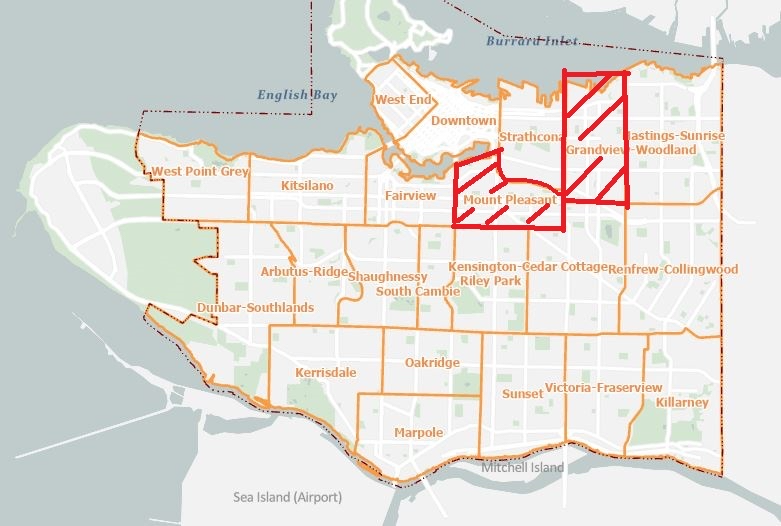
RT-5 zoning map

2
The Issue
Vancouver families increasingly want to live together across generations, but RT-5 zoning makes this difficult on non-character homes, including many Vancouver Specials.
In RT-5, the most predictable infill and ownership options are tied to the retention of a character home. Families living in non-character homes face limited choices unless they demolish and fully redevelop their property.
While laneway houses are permitted, they are legally classified as accessory dwellings and cannot be independently owned. This creates a structural barrier to fair, long-term ownership arrangements within families.
Why this matters
RT-5 currently creates outcomes that conflict with the City’s stated housing goals:
- Multi-generational housing is restricted by title rules, not neighbourhood scale
- Serviceable homes are discouraged from being retained and adapted
- Ownership flexibility depends on architectural style, not impact or density
- Families are pushed toward full demolition to achieve basic housing needs
Many non-character homes are structurally sound, energy-upgradeable, and well suited to incremental change, yet RT-5 prevents them from being used that way.
What we are asking
We call on the City of Vancouver to update RT-5 zoning to better support multi-generational housing by allowing clear, predictable pathways on non-character lots, such as:
- Permitting infill or multiple principal dwellings regardless of character status, where scale and form remain consistent with RT-5 guidelines
- Decoupling infill permissions from character-house retention, while maintaining neighbourhood height and massing controls
This is not a request for site-specific exceptions. It is a request to modernize RT-5 so it aligns with Vancouver’s broader housing direction.
The outcome
Updating RT-5 would:
- Support families aging in place
- Enable adult children to live independently on the same property
- Reduce pressure for unnecessary demolition
- Allow fair and stable ownership structures for long-term family housing
Vancouver’s housing policies should help families stay together, not force them to tear down livable homes to do so.
Call to action
We urge City Council and Planning staff to review and modernize RT-5 zoning to support multi-generational housing on non-character lots.
RT-5 zoning map
Petition Updates
Share this petition
Petition created on January 10, 2026