Repeal the draconian sedition law
The Issue
Recent sedition complaints against actress Ramya and Amnesty International India have once again centre-staged the urgent need to repeal the draconian sedition law.
Section 124A of the Indian Penal Code, commonly referred to as the sedition law, was brought in by the British and was extensively used to crackdown on dissent by the colonial rulers. It criminalises any speech, written words or signs which bring into hatred or contempt or excite “disaffection” towards the government.
Leaders of the freedom struggle like Bal Gangadhar Tilak and Mahatma Gandhi were charged and punished under this law in pre-independent India. Gandhi referred to the sedition law as being ‘prince among the political sections of the Indian Penal Code designed to suppress the liberty of the citizen’. The drafters of our Constitution also expressed their fears about the sedition law being easily misused to stymie the fundamental right to free speech in post independent India - yet the colonial era law continues to be in our statute books.
Despite the judgement of a Constitutional Bench of the Supreme Court in 1962 which clarified that Section 124A aims at penalizing, “only such activities as would be intended, or have a tendency, to create disorder or disturbance of public peace by resort to violence”, the Central and state governments in India have repeatedly attempted to use the law against people who criticised the government or its policies, even where such acts did not incite violence.
The sedition law has been used most frequently against human rights activists, writers and journalists who criticise the state or express views contrary to the government’s stand on issues ranging from nationhood to particular policies.
The severity of punishment imposable under this section, including life imprisonment, makes it a potent weapon in the hands of the state to quell dissent and criticism. This has a chilling effect on free speech.
Freedom of speech and expression serves to highlight areas where the state is failing in its duty towards its citizens. People expressing their anger and pain, unhindered by sedition laws, provide the state a valuable opportunity of understanding what is troubling them and engaging with them in a meaningful way to address their problems. Without a vigorous culture of free speech, the state becomes a stranger to the views of the people. In a democracy, dissenting or alternative views, even unpopular or unreasonable ones, cannot be criminalised just because they are not liked by the government of the day.
Countries like the United Kingdom, New Zealand and Ghana have repealed their sedition laws recognising that such a legislation has no place in a democratic republic. In several other democracies like the US and Canada, the law has been allowed to fall into disuse.
A country which proclaims its commitment to democratic values and principles, cannot allow the practice of using regressive colonial era laws to restrict free speech and expression. There is an urgent and clear need in India to repeal the archaic and draconian sedition law. There is no argument for retaining Section 124A to prosecute incitement to violence and disturbance of public order, as current Indian law already has adequate provisions to address these concerns.
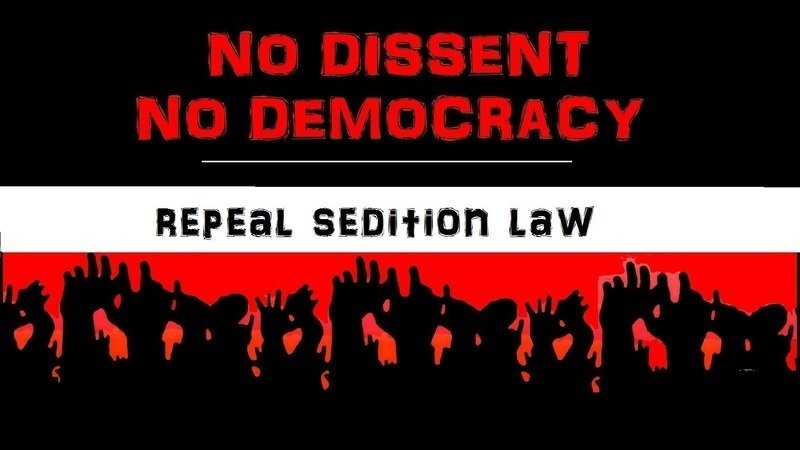
We, therefore, demand that Section 124A of the IPC (sedition law) be immediately repealed.
Anjali Bhardwaj, Shekhar Singh, Aruna Roy, Prashant Bhushan, Indira Jaising, Mrinal Pande, Harsh Mander, Ayesha Kidwai, Amrita Johri, Nikhil Dey, Paul Diwakar, Pamela Philipose, Kamla Bhasin, Achin Vanaik

The Issue
Recent sedition complaints against actress Ramya and Amnesty International India have once again centre-staged the urgent need to repeal the draconian sedition law.
Section 124A of the Indian Penal Code, commonly referred to as the sedition law, was brought in by the British and was extensively used to crackdown on dissent by the colonial rulers. It criminalises any speech, written words or signs which bring into hatred or contempt or excite “disaffection” towards the government.
Leaders of the freedom struggle like Bal Gangadhar Tilak and Mahatma Gandhi were charged and punished under this law in pre-independent India. Gandhi referred to the sedition law as being ‘prince among the political sections of the Indian Penal Code designed to suppress the liberty of the citizen’. The drafters of our Constitution also expressed their fears about the sedition law being easily misused to stymie the fundamental right to free speech in post independent India - yet the colonial era law continues to be in our statute books.
Despite the judgement of a Constitutional Bench of the Supreme Court in 1962 which clarified that Section 124A aims at penalizing, “only such activities as would be intended, or have a tendency, to create disorder or disturbance of public peace by resort to violence”, the Central and state governments in India have repeatedly attempted to use the law against people who criticised the government or its policies, even where such acts did not incite violence.
The sedition law has been used most frequently against human rights activists, writers and journalists who criticise the state or express views contrary to the government’s stand on issues ranging from nationhood to particular policies.
The severity of punishment imposable under this section, including life imprisonment, makes it a potent weapon in the hands of the state to quell dissent and criticism. This has a chilling effect on free speech.
Freedom of speech and expression serves to highlight areas where the state is failing in its duty towards its citizens. People expressing their anger and pain, unhindered by sedition laws, provide the state a valuable opportunity of understanding what is troubling them and engaging with them in a meaningful way to address their problems. Without a vigorous culture of free speech, the state becomes a stranger to the views of the people. In a democracy, dissenting or alternative views, even unpopular or unreasonable ones, cannot be criminalised just because they are not liked by the government of the day.
Countries like the United Kingdom, New Zealand and Ghana have repealed their sedition laws recognising that such a legislation has no place in a democratic republic. In several other democracies like the US and Canada, the law has been allowed to fall into disuse.
A country which proclaims its commitment to democratic values and principles, cannot allow the practice of using regressive colonial era laws to restrict free speech and expression. There is an urgent and clear need in India to repeal the archaic and draconian sedition law. There is no argument for retaining Section 124A to prosecute incitement to violence and disturbance of public order, as current Indian law already has adequate provisions to address these concerns.
We, therefore, demand that Section 124A of the IPC (sedition law) be immediately repealed.
Anjali Bhardwaj, Shekhar Singh, Aruna Roy, Prashant Bhushan, Indira Jaising, Mrinal Pande, Harsh Mander, Ayesha Kidwai, Amrita Johri, Nikhil Dey, Paul Diwakar, Pamela Philipose, Kamla Bhasin, Achin Vanaik
The Decision Makers

Petition Updates
Share this petition
Petition created on 18 February 2016