
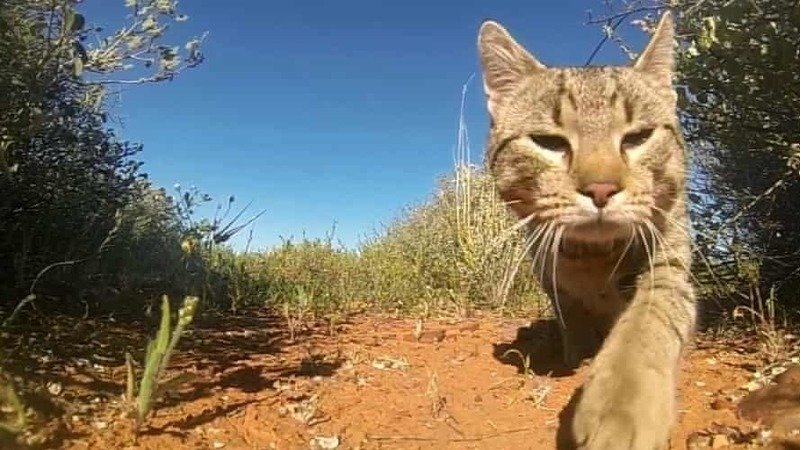
Stop killing off feral cats to save wildlife - find another solution
The Issue
Feral cats are a major threat to native Australian wildlife, as they are an invasive, carnivorous species. There are around 14 million feral cats living in Australia, each catching up to 4 native animals per. day, speeding up extinction rates of rare species such as sugar gliders and bilbies. That’s up to 56 million animals eaten per. day by feral cats in Australia alone.
However, we need to take responsibility for this, as we are the ones who brought these cats here. It would be unfair on the cats to simply kill them off, and in doing so, we could potentially harm the wildlife we are attempting to protect. The popular trap-neuter-return method doesn’t solve the problem either, as the cats are still living in the wild and require nourishment. And adopting many of these cats is simply out of the question. Besides, it’s impossible to round them all up and either euthanise, neuter, or adopt all of them out – many of them are illusive, ferocious and wily.
To present a solution, I must first present another problem. A quote from a co-owner of a Melbourne butcher illustrates this: “A body of beef is about 600 kilograms live weight, of which is 300 kilograms killed and dressed.” So, we have roughly 100 kilograms of meat – minus the bones and dog-meat at roughly 200 kilograms – per. carcass that goes uneaten by humans for one reason or another. We kill up to 170,000 cows each week. That’s potentially 17,000,000 kilograms of scrap meat per. week.
If a feral cat eats four small mammals per. night, each weighing around 100g, that is 400g per. cat. If there are 14 million feral cats in Australia, they need 5,600,000 kilograms of meat per. night. That is far less than the scraps that the butchery industry produces. So why don’t we redirect this meat instead to feeding feral cats?
They live largely across Victoria, New South Wales, Tasmania and eastern South Australia – especially the latter. Volunteers could put out meat offcuts from the factories in designated places – every 1.6-3.2km, the average territory of a cat – in these areas each night. You could potentially get abattoir or carcass processing factory workers to drop packages along their way home, or there could be a regular shift of cat welfare volunteers who collect the portions of meat, and leave deliver it to properties in – or properties near – the cat’s territory.
This would improve the cats’ quality of life, giving them a reliable, nutritious food source, and would direct their attention from catching small, endangered mammals to collecting the meat laid out daily. It wouldn’t solve the problem entirely, as some cats would still eat native animals, but it would allow less to be eaten, giving the endangered species time to reproduce and re-populate.

487
The Issue
Feral cats are a major threat to native Australian wildlife, as they are an invasive, carnivorous species. There are around 14 million feral cats living in Australia, each catching up to 4 native animals per. day, speeding up extinction rates of rare species such as sugar gliders and bilbies. That’s up to 56 million animals eaten per. day by feral cats in Australia alone.
However, we need to take responsibility for this, as we are the ones who brought these cats here. It would be unfair on the cats to simply kill them off, and in doing so, we could potentially harm the wildlife we are attempting to protect. The popular trap-neuter-return method doesn’t solve the problem either, as the cats are still living in the wild and require nourishment. And adopting many of these cats is simply out of the question. Besides, it’s impossible to round them all up and either euthanise, neuter, or adopt all of them out – many of them are illusive, ferocious and wily.
To present a solution, I must first present another problem. A quote from a co-owner of a Melbourne butcher illustrates this: “A body of beef is about 600 kilograms live weight, of which is 300 kilograms killed and dressed.” So, we have roughly 100 kilograms of meat – minus the bones and dog-meat at roughly 200 kilograms – per. carcass that goes uneaten by humans for one reason or another. We kill up to 170,000 cows each week. That’s potentially 17,000,000 kilograms of scrap meat per. week.
If a feral cat eats four small mammals per. night, each weighing around 100g, that is 400g per. cat. If there are 14 million feral cats in Australia, they need 5,600,000 kilograms of meat per. night. That is far less than the scraps that the butchery industry produces. So why don’t we redirect this meat instead to feeding feral cats?
They live largely across Victoria, New South Wales, Tasmania and eastern South Australia – especially the latter. Volunteers could put out meat offcuts from the factories in designated places – every 1.6-3.2km, the average territory of a cat – in these areas each night. You could potentially get abattoir or carcass processing factory workers to drop packages along their way home, or there could be a regular shift of cat welfare volunteers who collect the portions of meat, and leave deliver it to properties in – or properties near – the cat’s territory.
This would improve the cats’ quality of life, giving them a reliable, nutritious food source, and would direct their attention from catching small, endangered mammals to collecting the meat laid out daily. It wouldn’t solve the problem entirely, as some cats would still eat native animals, but it would allow less to be eaten, giving the endangered species time to reproduce and re-populate.
The Decision Makers
Petition Updates
Share this petition
Petition created on 12 May 2021