

Lifting California’s Homeowner’s Association Aggressive Breed Restriction
The Issue
Being a renter while wanting/owning a dog comes with a set of rules under the Homeowners’ Association (HOA), including what kind of dog you’re allowed to have in your home. Under the HOA pet rules, there’s a list of dog breeds that fall under the “aggressive” breed category and are restricted. The aggressive dog breed restriction allows landlords and property managers to reject applicants and can force current residents to rehome dog, put them into shelters, or even evict tenants. This petition calls for the restriction to be lifted and allow renters to bring any kind of dog in pet-friendly homes.
By formal definition, Homeowner’s Association is defined as an organization in a subdivision, planned community, or condominium building that makes and enforces rules for the properties and residents. The type of rules HOA creates and enforce include home maintenance standards, trash and recycling rules, noise complaints policies and rules regarding pets. California Civil Code 4715 establishes the right for all members to keep at least one pet, but the association still has the right to adopt restrictions. The restricted dog breeds that the HOA has on list include Pit bulls, Dobermans, Huskies, German Shepherds, and Great Danes. These dog breeds all share one thing in common and it’s regarding their size. These breeds are notorious for how large they can grow from their puppy stage. Even though their temperament can be vouched for being sweet and loving breeds, they’re listed under many dog breed bans because of the force their bite can have. They’re labeled a dangerous breed because the statistics regarding dog attacks and how that there are more dangerous, fatal, dog attacks when the dog is from said list.
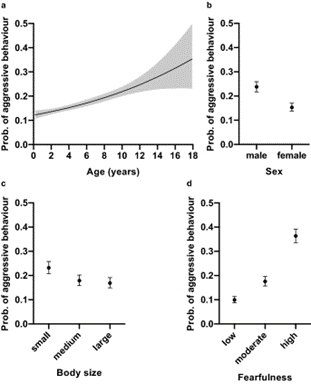
There have been many studies regarding the behaviors of breeds and the correlation to aggression, but the true determining factor lies from the owner themselves. It’s a well-known fact that the dog is only as good as its owner, but under scientific research the three main things that separates a small dog and a big dog is sociability, energy level and emotional reactivity. In a book called “Why Does My Dog Act That Way”, the data collected from the book and interpreted by Stanley Coren, finds that small dog breeds are more likely to be less sociable, have higher energy levels and high emotional reactivity compared to large dog breeds. When looking at the situation through a wider perspective, it’s shown that smaller dog breeds receive less stable training and more punishment that adds to their reactivity, yet their behavior is simply dismissed because it is viewed as a stereotype within the breed and widely accepted as a factor that cannot be changed. When looking at the differences in sizes, large dog breeds are put on the list because of the damage that can be done from the force of their bite, but what about the small dog breeds that have a high reactivity rate and are more likely to bite?
The truth is, there isn’t really a difference between dogs. Their behaviors are all shared and on different scales. From a NYT article, James Gorman states that “on average, breed accounts for only about 9 percent of the variations in any given dog’s behavior. And no behaviors were restricted to one breed” (Gorman 2022). The restriction of large dog breeds creates an unhealthy perspective of the breeds and allows negative stereotypes to control their livelihood. A statistic by Petfinder discovered that large and extra dogs are less likely to be adopted compared to their smaller cousins, and among those large dogs, Pit bulls, German Shepherds and American Staffordshire Terriers are the least likely breed to get adopted. The idea of fear with large dog breeds can create hostile environments for them, which will lead to direct attacks towards the dog simply because of their breed. With a steady stream of dogs being euthanized because of shelters reaching max capacity, what would happen if all dogs were allowed to live with their owners regardless of breed? The possibilities of wide range socialization with all dog breeds and with humans and large dog breeds. Taking away the “aggressive” title from breeds allows people to gain and show empathy to all breeds with the spread of education regarding breed. California has a strict leash law that prohibits dogs to roam without being connected to a leash in public spaces and spaces that goes through a lot of traffic. California also has a one-bite rule, so why can’t people adopt the dogs they want if they’re following all the rules set on them?
https://www.nytimes.com/2022/04/28/science/dogs-breed-behavior-genes.html

29
The Issue
Being a renter while wanting/owning a dog comes with a set of rules under the Homeowners’ Association (HOA), including what kind of dog you’re allowed to have in your home. Under the HOA pet rules, there’s a list of dog breeds that fall under the “aggressive” breed category and are restricted. The aggressive dog breed restriction allows landlords and property managers to reject applicants and can force current residents to rehome dog, put them into shelters, or even evict tenants. This petition calls for the restriction to be lifted and allow renters to bring any kind of dog in pet-friendly homes.
By formal definition, Homeowner’s Association is defined as an organization in a subdivision, planned community, or condominium building that makes and enforces rules for the properties and residents. The type of rules HOA creates and enforce include home maintenance standards, trash and recycling rules, noise complaints policies and rules regarding pets. California Civil Code 4715 establishes the right for all members to keep at least one pet, but the association still has the right to adopt restrictions. The restricted dog breeds that the HOA has on list include Pit bulls, Dobermans, Huskies, German Shepherds, and Great Danes. These dog breeds all share one thing in common and it’s regarding their size. These breeds are notorious for how large they can grow from their puppy stage. Even though their temperament can be vouched for being sweet and loving breeds, they’re listed under many dog breed bans because of the force their bite can have. They’re labeled a dangerous breed because the statistics regarding dog attacks and how that there are more dangerous, fatal, dog attacks when the dog is from said list.
There have been many studies regarding the behaviors of breeds and the correlation to aggression, but the true determining factor lies from the owner themselves. It’s a well-known fact that the dog is only as good as its owner, but under scientific research the three main things that separates a small dog and a big dog is sociability, energy level and emotional reactivity. In a book called “Why Does My Dog Act That Way”, the data collected from the book and interpreted by Stanley Coren, finds that small dog breeds are more likely to be less sociable, have higher energy levels and high emotional reactivity compared to large dog breeds. When looking at the situation through a wider perspective, it’s shown that smaller dog breeds receive less stable training and more punishment that adds to their reactivity, yet their behavior is simply dismissed because it is viewed as a stereotype within the breed and widely accepted as a factor that cannot be changed. When looking at the differences in sizes, large dog breeds are put on the list because of the damage that can be done from the force of their bite, but what about the small dog breeds that have a high reactivity rate and are more likely to bite?
The truth is, there isn’t really a difference between dogs. Their behaviors are all shared and on different scales. From a NYT article, James Gorman states that “on average, breed accounts for only about 9 percent of the variations in any given dog’s behavior. And no behaviors were restricted to one breed” (Gorman 2022). The restriction of large dog breeds creates an unhealthy perspective of the breeds and allows negative stereotypes to control their livelihood. A statistic by Petfinder discovered that large and extra dogs are less likely to be adopted compared to their smaller cousins, and among those large dogs, Pit bulls, German Shepherds and American Staffordshire Terriers are the least likely breed to get adopted. The idea of fear with large dog breeds can create hostile environments for them, which will lead to direct attacks towards the dog simply because of their breed. With a steady stream of dogs being euthanized because of shelters reaching max capacity, what would happen if all dogs were allowed to live with their owners regardless of breed? The possibilities of wide range socialization with all dog breeds and with humans and large dog breeds. Taking away the “aggressive” title from breeds allows people to gain and show empathy to all breeds with the spread of education regarding breed. California has a strict leash law that prohibits dogs to roam without being connected to a leash in public spaces and spaces that goes through a lot of traffic. California also has a one-bite rule, so why can’t people adopt the dogs they want if they’re following all the rules set on them?
https://www.nytimes.com/2022/04/28/science/dogs-breed-behavior-genes.html
Supporter Voices
Petition Updates
Share this petition
Petition created on January 19, 2023