Letter of Support for the Arctic Core Atmosphere Project
The Issue
One of the longest-running atmospheric pollution monitoring programs in the Arctic is set to cease operations due to lack of funding. Since 1990, measurements of long-range transported pollution from mid-latitudes to the Arctic have been made. This critical work will be discontinued by the end of June as funding has been reduced by more than 43% for the current year.
Long-term atmospheric monitoring has been repeatedly identified as crucial for understanding the relationship between pollutant emissions, observed atmospheric levels and their chemical, physical and biological impacts on the environment, as highlighted in the Nature Opinion (Kulmala, 2022).
This is particularly relevant in the High Arctic and even more in Greenland. These measurements are crucial for understanding the high levels of mercury and persistent organic pollutants that are introduced and accumulate in the food chain to the detriment of the population of Greenland.
We are about to gain an understanding of how environmentally harmful substances are introduced and accumulated in the food chain in Greenland.
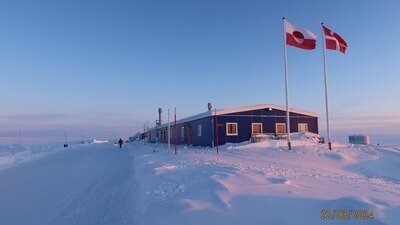
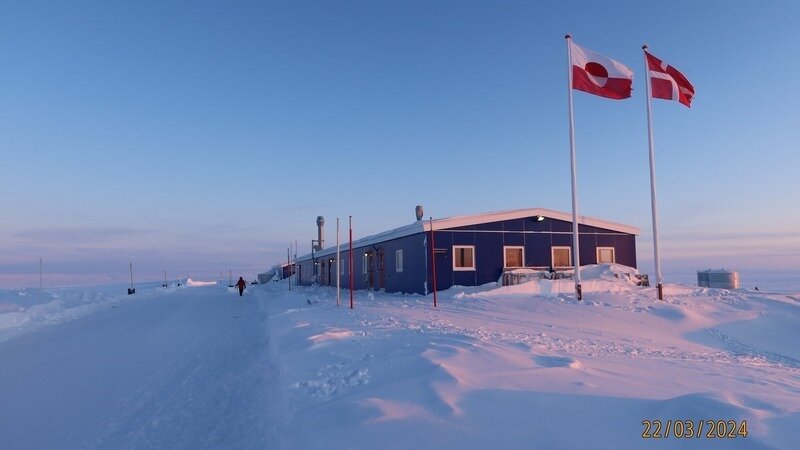
Atmospheric pollution measurements have been carried out at Station Nord since 1990. In 2015, this effort was expanded with the establishment of Villum Research Station. This construction has been remarkable, establishing it as one of the leading Arctic research sites in a few years. The long-term monitoring programs, particularly AMAP CORE Atmosphere, have contributed to several high-profile, peer-reviewed publications (including in the Nature series and, more recently, PNAS). Furthermore, these monitoring data play a crucial role in the Arctic Monitoring and Assessment Program (AMAP) of the Arctic Council but it is not only monitoring capacity that has been improved. VRS has also provided the basis for visiting scientists. The long-term monitoring program is complemented by intensive research campaigns that allow for in-depth studies and additional data collection by external research groups.
It is therefore particularly worrying that Denmark is de-prioritizing Arctic environmental monitoring at the station, which with its unique location can collect and deliver the necessary data. The discontinuation of these crucial measurements, driven by a drastic funding reduction, is particularly concerning given the current geopolitical landscape.
Victory
The Issue
One of the longest-running atmospheric pollution monitoring programs in the Arctic is set to cease operations due to lack of funding. Since 1990, measurements of long-range transported pollution from mid-latitudes to the Arctic have been made. This critical work will be discontinued by the end of June as funding has been reduced by more than 43% for the current year.
Long-term atmospheric monitoring has been repeatedly identified as crucial for understanding the relationship between pollutant emissions, observed atmospheric levels and their chemical, physical and biological impacts on the environment, as highlighted in the Nature Opinion (Kulmala, 2022).
This is particularly relevant in the High Arctic and even more in Greenland. These measurements are crucial for understanding the high levels of mercury and persistent organic pollutants that are introduced and accumulate in the food chain to the detriment of the population of Greenland.
We are about to gain an understanding of how environmentally harmful substances are introduced and accumulated in the food chain in Greenland.
Atmospheric pollution measurements have been carried out at Station Nord since 1990. In 2015, this effort was expanded with the establishment of Villum Research Station. This construction has been remarkable, establishing it as one of the leading Arctic research sites in a few years. The long-term monitoring programs, particularly AMAP CORE Atmosphere, have contributed to several high-profile, peer-reviewed publications (including in the Nature series and, more recently, PNAS). Furthermore, these monitoring data play a crucial role in the Arctic Monitoring and Assessment Program (AMAP) of the Arctic Council but it is not only monitoring capacity that has been improved. VRS has also provided the basis for visiting scientists. The long-term monitoring program is complemented by intensive research campaigns that allow for in-depth studies and additional data collection by external research groups.
It is therefore particularly worrying that Denmark is de-prioritizing Arctic environmental monitoring at the station, which with its unique location can collect and deliver the necessary data. The discontinuation of these crucial measurements, driven by a drastic funding reduction, is particularly concerning given the current geopolitical landscape.
Petition Updates
Share this petition
Petition created on March 17, 2025