

Legalize Backyard Chickens in Bedford, Ohio
The Issue
Residents and supporters of Bedford, Ohio, respectfully petition for the city to revise its ordinances to allow the keeping of chickens in residential areas with reasonable restrictions.
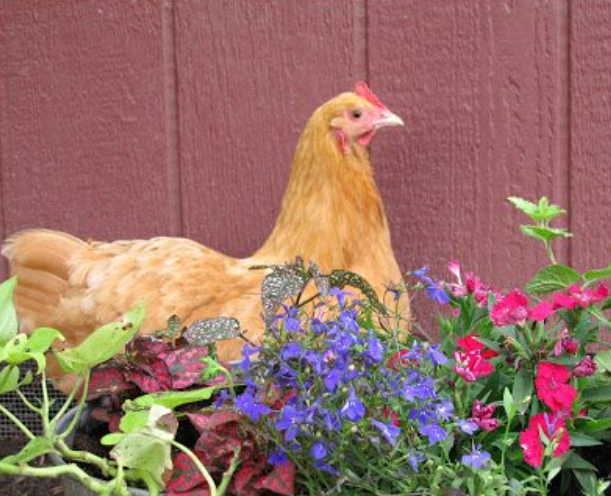
1) Sustainable Food Production: Keeping chickens provides a local source of fresh, nutrient-rich eggs while reducing reliance on inhumane commercial egg production and lowering our community’s environmental footprint. Chickens help minimize food waste by eating scraps, and their manure serves as a natural fertilizer for gardens and lawns. Backyard eggs are typically fresher than store-bought options, which can be weeks old by the time they reach shelves. They also tend to have a higher nutrient density and fewer harmful chemicals. Many store-bought eggs come from hens fed diets containing pesticides, antibiotics, or additives, whereas backyard hens are often raised on natural feed. Studies show that eggs from backyard chickens tend to have:
✅ Higher levels of omega-3 fatty acids
✅ Higher levels of Vitamin D
✅ Higher levels of vitamin A
✅ Higher levels of vitamin E
✅ Less cholesterol
✅ Less saturated fat
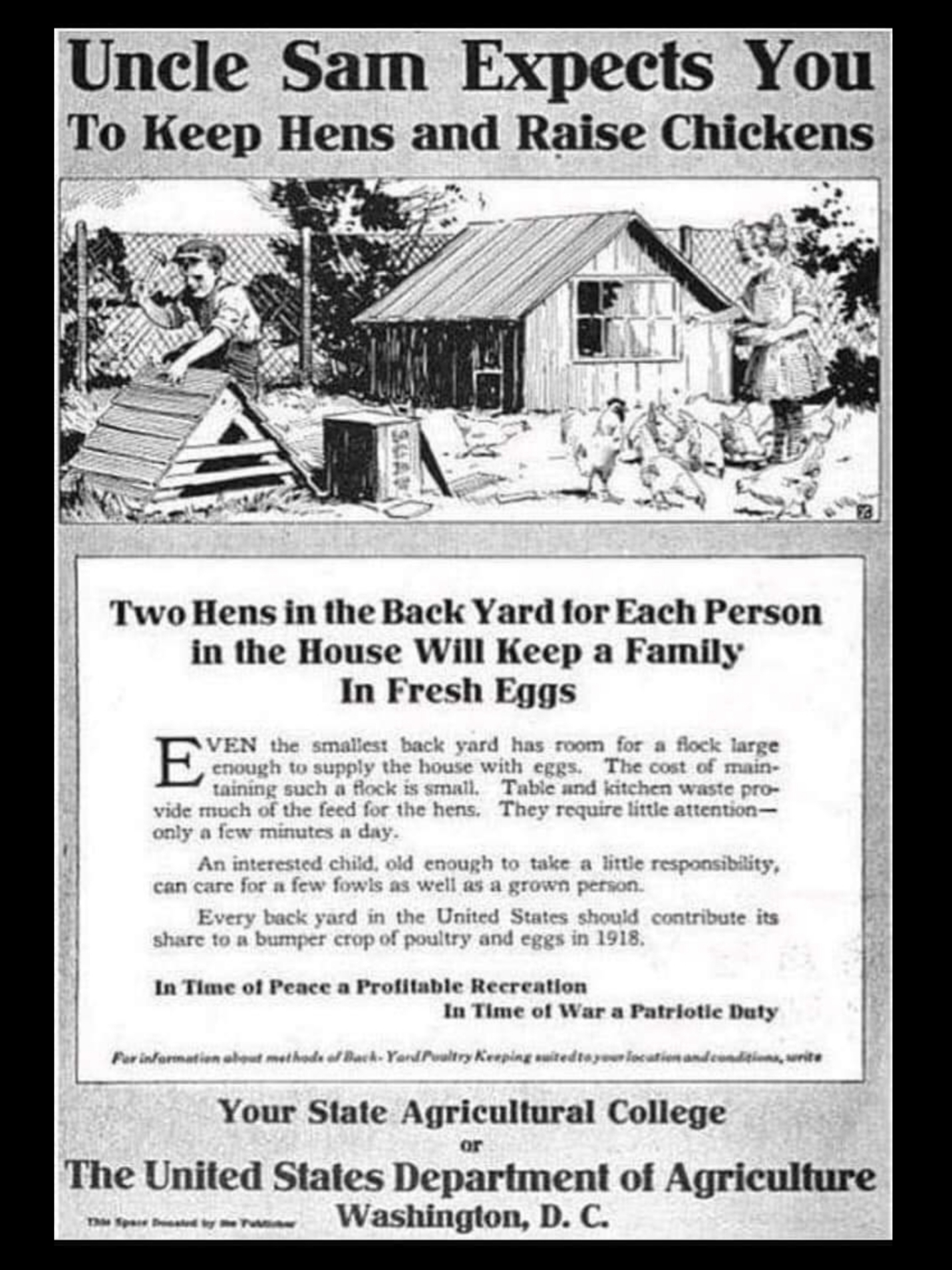
2) Historical Precedent & Patriotism: During both World War I and II, the U.S. government actively encouraged backyard chicken-keeping to promote food security, reduce waste, and support self-sufficiency. If raising chickens was once seen as profitable recreation and patriotic duty, why is it restricted in our community today? As recently as March of 2025, the President of the United States encouraged American citizens to raise chickens. Legalizing chickens isn’t just about personal choice; it’s about restoring a time-tested, sustainable practice that has benefited families and communities throughout all of human existence.
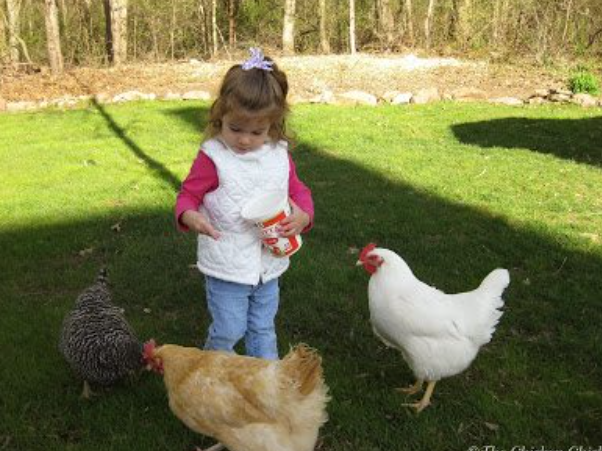
3) Educational Opportunities: Raising chickens can serve as an educational tool for children and adults alike. It teaches responsibility, agriculture, and sustainability in a hands-on way. It gives our children the opportunity to connect with the food they eat, seeing and understanding where our food comes from and contributing to its responsible production.
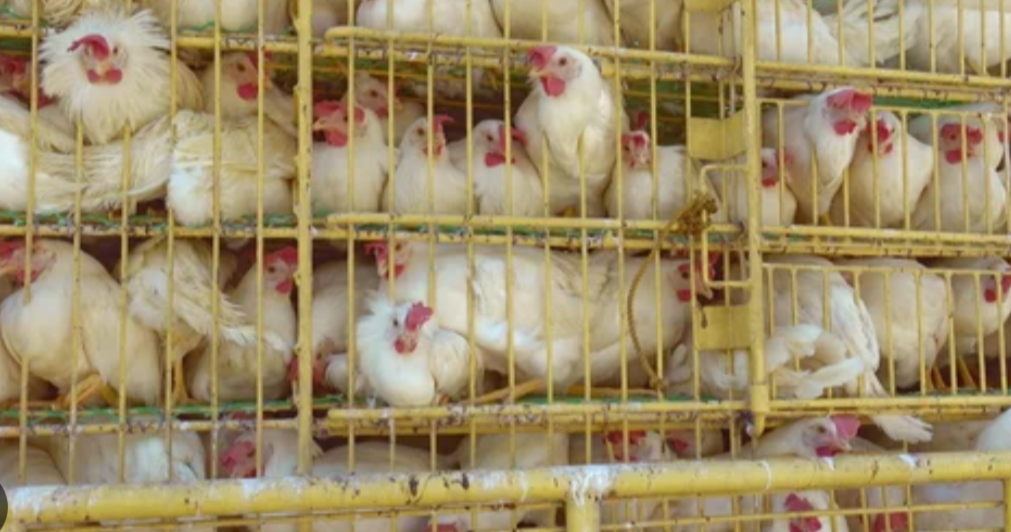
4) A Humane Alternative to Commercial Egg Production: Raising chickens in a backyard setting offers a far more humane and natural environment for the animals compared to commercial egg production. In large-scale industrial farms, hens are often kept in cramped, overcrowded conditions where they have little room to move or engage in natural behaviors. In contrast, backyard chickens can roam freely in a safe space, forage for insects, and enjoy access to fresh air and sunlight. By choosing to raise chickens at home, families can ensure that the animals are treated with kindness and respect, living healthier and more natural lives compared to their commercial counterparts.
5) The Future of Food: Raising chickens aligns with the growing movement toward self-sufficiency and food security, a shift that is becoming more prominent in society. As of 2011, approximately 93% of the 100 largest U.S. cities allowed urban hens. A 2013 USDA study focusing on Denver, Los Angeles, Miami, and New York City found that about 1 in 25 residents (approximately 4%) owned egg-laying hens. As food prices continue to rise and supply chain issues become more common, cities and communities are increasingly turning to self-sufficient models to meet their nutritional needs. This societal shift underscores a collective recognition that local, sustainable food production is crucial for ensuring equitable access to healthy, affordable food.
6) Equity: Residents in wealthier nearby cities are allowed to raise backyard chickens, providing their families with affordable, nutrient-rich eggs while lowering grocery costs. Yet here in Bedford, where many families are already struggling with rising food prices and limited access to quality food options, keeping chickens is prohibited. For those facing transportation challenges or tight budgets, backyard chickens offer a simple, sustainable solution—turning food scraps into fresh eggs, reducing waste, and increasing self-sufficiency while lowering grocery bills. Our community deserves the same opportunities as our wealthier neighbors. Access to fresh food should not be a privilege—it should be a right.
7) Revenue Generation for the City: The city can create a reasonable permit system for residents wishing to keep chickens. The revenue generated from permit fees can be used to fund community programs or improve public spaces. The permit system would also help ensure compliance with regulations, keeping the practice safe and controlled.

CHICKEN MYTHS VS. FACTS:
Myth: Chickens are dirty and smelly
Fact: Chickens spend hours each day dust bathing and meticulously preening themselves to maintain good hygiene. Chickens do not smell- Animal waste smells. All animal waste smells. When managed properly, no odors emanate from a chicken yard. In contrast to dogs, chickens produce valuable waste that can be used as a garden amendment. Five hens produce approximately 5 ounces of valuable garden fertilizer everyday, compared to the average dog that produces approximately 12 ounces of pathogenic, unusable feces every day.
Myth: Chickens are noisy
Fact: Hens are not ordinarily noisy. For comparison, a barking dog at 1 meter = 70 to 100 decibels. A lawnmower = 90 to 100 decibels. A hens clucking = 60 to 70 decibels; the same decibels as a human's normal speaking voice. I don't know about you, but a neighbor has never complained about the sound of a normal conversation in my backyard. Any concerns about noises from chickens should be addressed in the same manner other noise complaints are addressed, including barking dogs.
Myth: Raising backyard chickens increases the risk of bird flu
Fact: Human transmission of bird flu from backyard chickens is extremely rare. There have only been two confirmed cases in the United States of a human being infected with avian influenza. Both showed mild symptoms and fully recovered. According to the U.S. Centers for Disease Control and Prevention, sustained transmission of avian influenza from human to human has not occurred. While bird flu can affect chickens, the risk in backyard flocks is minimal when proper measures are followed, including keeping chickens in enclosed coops, limiting their contact with wild birds, and practicing regular cleaning. By following common-sense guidelines, residents can safely raise chickens while minimizing any potential risks to their flock.
Myth: Chickens hurt property values
Fact: There has never been evidence that keeping chickens hurts property values. In fact, the opposite has proven true. A Forbes list of the top 10 housing markets appreciating in value showed that all ten permit chicken-keeping. Even locally, in areas such as Chagrin Falls and Solon with drastically higher home values, backyard chickens are permitted with reasonable restrictions.
Proposed Reasonable Restrictions:
- Permit System: A small annual fee for a chicken-keeping permit to generate revenue for the city. Permits would require a brief application, including the number of chickens and their housing situation.
- Number of Chickens: Residents may keep up to 5 hens per household. Roosters would not be permitted to reduce noise complaints.
- Proper Housing: Chickens must be housed in secure, well-maintained coops and chicken runs to protect them from predators and ensure a clean, sanitary environment. The coops must comply with basic standards for size, ventilation, and waste management.
- Noise and Odor Control: Chickens must be kept in a manner that minimizes noise and odor. Coops should be located at least 10 feet from property lines to limit disturbance to neighbors. Regular maintenance and waste removal should be required to prevent odor.
- Chicken coops and runs must be kept in good repair, maintained in a clean and in a sanitary condition, and free of vermin, obnoxious smells and substances. The facility shall not create a nuisance or disturb neighboring residents due to noise, odor, damage or threats to public health.
- The chicken coop and run shall be designed to ensure that the health and well-being of the animal is not endangered by the manner of keeping or confinement.
- Chicken manure shall not be stored on the premises.
- Chickens shall be kept in coops from dusk to dawn.
- Slaughtering of chickens on the premises is prohibited.
- Animal Welfare: Chickens must be provided with proper food, water, and medical care. Owners must ensure that their chickens are not a nuisance to neighbors or the community.
First violation: Warning with education on proper care.
Second violation: Citation with a deadline for corrections.
Severe or repeated violations: Fines or removal of the chickens
Conclusion:
By allowing chickens with reasonable restrictions, Bedford can create a thriving, sustainable, and engaged community while generating revenue for the city. We ask for your support in making Bedford a more sustainable, connected, and forward-thinking city and we urge the Bedford City Council to consider this petition and take steps to create a permitting system that will benefit our residents, the environment, and the city's economy.

280
The Issue
Residents and supporters of Bedford, Ohio, respectfully petition for the city to revise its ordinances to allow the keeping of chickens in residential areas with reasonable restrictions.
1) Sustainable Food Production: Keeping chickens provides a local source of fresh, nutrient-rich eggs while reducing reliance on inhumane commercial egg production and lowering our community’s environmental footprint. Chickens help minimize food waste by eating scraps, and their manure serves as a natural fertilizer for gardens and lawns. Backyard eggs are typically fresher than store-bought options, which can be weeks old by the time they reach shelves. They also tend to have a higher nutrient density and fewer harmful chemicals. Many store-bought eggs come from hens fed diets containing pesticides, antibiotics, or additives, whereas backyard hens are often raised on natural feed. Studies show that eggs from backyard chickens tend to have:
✅ Higher levels of omega-3 fatty acids
✅ Higher levels of Vitamin D
✅ Higher levels of vitamin A
✅ Higher levels of vitamin E
✅ Less cholesterol
✅ Less saturated fat
2) Historical Precedent & Patriotism: During both World War I and II, the U.S. government actively encouraged backyard chicken-keeping to promote food security, reduce waste, and support self-sufficiency. If raising chickens was once seen as profitable recreation and patriotic duty, why is it restricted in our community today? As recently as March of 2025, the President of the United States encouraged American citizens to raise chickens. Legalizing chickens isn’t just about personal choice; it’s about restoring a time-tested, sustainable practice that has benefited families and communities throughout all of human existence.
3) Educational Opportunities: Raising chickens can serve as an educational tool for children and adults alike. It teaches responsibility, agriculture, and sustainability in a hands-on way. It gives our children the opportunity to connect with the food they eat, seeing and understanding where our food comes from and contributing to its responsible production.
4) A Humane Alternative to Commercial Egg Production: Raising chickens in a backyard setting offers a far more humane and natural environment for the animals compared to commercial egg production. In large-scale industrial farms, hens are often kept in cramped, overcrowded conditions where they have little room to move or engage in natural behaviors. In contrast, backyard chickens can roam freely in a safe space, forage for insects, and enjoy access to fresh air and sunlight. By choosing to raise chickens at home, families can ensure that the animals are treated with kindness and respect, living healthier and more natural lives compared to their commercial counterparts.
5) The Future of Food: Raising chickens aligns with the growing movement toward self-sufficiency and food security, a shift that is becoming more prominent in society. As of 2011, approximately 93% of the 100 largest U.S. cities allowed urban hens. A 2013 USDA study focusing on Denver, Los Angeles, Miami, and New York City found that about 1 in 25 residents (approximately 4%) owned egg-laying hens. As food prices continue to rise and supply chain issues become more common, cities and communities are increasingly turning to self-sufficient models to meet their nutritional needs. This societal shift underscores a collective recognition that local, sustainable food production is crucial for ensuring equitable access to healthy, affordable food.
6) Equity: Residents in wealthier nearby cities are allowed to raise backyard chickens, providing their families with affordable, nutrient-rich eggs while lowering grocery costs. Yet here in Bedford, where many families are already struggling with rising food prices and limited access to quality food options, keeping chickens is prohibited. For those facing transportation challenges or tight budgets, backyard chickens offer a simple, sustainable solution—turning food scraps into fresh eggs, reducing waste, and increasing self-sufficiency while lowering grocery bills. Our community deserves the same opportunities as our wealthier neighbors. Access to fresh food should not be a privilege—it should be a right.
7) Revenue Generation for the City: The city can create a reasonable permit system for residents wishing to keep chickens. The revenue generated from permit fees can be used to fund community programs or improve public spaces. The permit system would also help ensure compliance with regulations, keeping the practice safe and controlled.
CHICKEN MYTHS VS. FACTS:
Myth: Chickens are dirty and smelly
Fact: Chickens spend hours each day dust bathing and meticulously preening themselves to maintain good hygiene. Chickens do not smell- Animal waste smells. All animal waste smells. When managed properly, no odors emanate from a chicken yard. In contrast to dogs, chickens produce valuable waste that can be used as a garden amendment. Five hens produce approximately 5 ounces of valuable garden fertilizer everyday, compared to the average dog that produces approximately 12 ounces of pathogenic, unusable feces every day.
Myth: Chickens are noisy
Fact: Hens are not ordinarily noisy. For comparison, a barking dog at 1 meter = 70 to 100 decibels. A lawnmower = 90 to 100 decibels. A hens clucking = 60 to 70 decibels; the same decibels as a human's normal speaking voice. I don't know about you, but a neighbor has never complained about the sound of a normal conversation in my backyard. Any concerns about noises from chickens should be addressed in the same manner other noise complaints are addressed, including barking dogs.
Myth: Raising backyard chickens increases the risk of bird flu
Fact: Human transmission of bird flu from backyard chickens is extremely rare. There have only been two confirmed cases in the United States of a human being infected with avian influenza. Both showed mild symptoms and fully recovered. According to the U.S. Centers for Disease Control and Prevention, sustained transmission of avian influenza from human to human has not occurred. While bird flu can affect chickens, the risk in backyard flocks is minimal when proper measures are followed, including keeping chickens in enclosed coops, limiting their contact with wild birds, and practicing regular cleaning. By following common-sense guidelines, residents can safely raise chickens while minimizing any potential risks to their flock.
Myth: Chickens hurt property values
Fact: There has never been evidence that keeping chickens hurts property values. In fact, the opposite has proven true. A Forbes list of the top 10 housing markets appreciating in value showed that all ten permit chicken-keeping. Even locally, in areas such as Chagrin Falls and Solon with drastically higher home values, backyard chickens are permitted with reasonable restrictions.
Proposed Reasonable Restrictions:
- Permit System: A small annual fee for a chicken-keeping permit to generate revenue for the city. Permits would require a brief application, including the number of chickens and their housing situation.
- Number of Chickens: Residents may keep up to 5 hens per household. Roosters would not be permitted to reduce noise complaints.
- Proper Housing: Chickens must be housed in secure, well-maintained coops and chicken runs to protect them from predators and ensure a clean, sanitary environment. The coops must comply with basic standards for size, ventilation, and waste management.
- Noise and Odor Control: Chickens must be kept in a manner that minimizes noise and odor. Coops should be located at least 10 feet from property lines to limit disturbance to neighbors. Regular maintenance and waste removal should be required to prevent odor.
- Chicken coops and runs must be kept in good repair, maintained in a clean and in a sanitary condition, and free of vermin, obnoxious smells and substances. The facility shall not create a nuisance or disturb neighboring residents due to noise, odor, damage or threats to public health.
- The chicken coop and run shall be designed to ensure that the health and well-being of the animal is not endangered by the manner of keeping or confinement.
- Chicken manure shall not be stored on the premises.
- Chickens shall be kept in coops from dusk to dawn.
- Slaughtering of chickens on the premises is prohibited.
- Animal Welfare: Chickens must be provided with proper food, water, and medical care. Owners must ensure that their chickens are not a nuisance to neighbors or the community.
First violation: Warning with education on proper care.
Second violation: Citation with a deadline for corrections.
Severe or repeated violations: Fines or removal of the chickens
Conclusion:
By allowing chickens with reasonable restrictions, Bedford can create a thriving, sustainable, and engaged community while generating revenue for the city. We ask for your support in making Bedford a more sustainable, connected, and forward-thinking city and we urge the Bedford City Council to consider this petition and take steps to create a permitting system that will benefit our residents, the environment, and the city's economy.
The Decision Makers

Supporter Voices
Petition Updates
Share this petition
Petition created on March 26, 2025