

Kentucky Flag Redesign (it's more than just horse racing)
The Issue
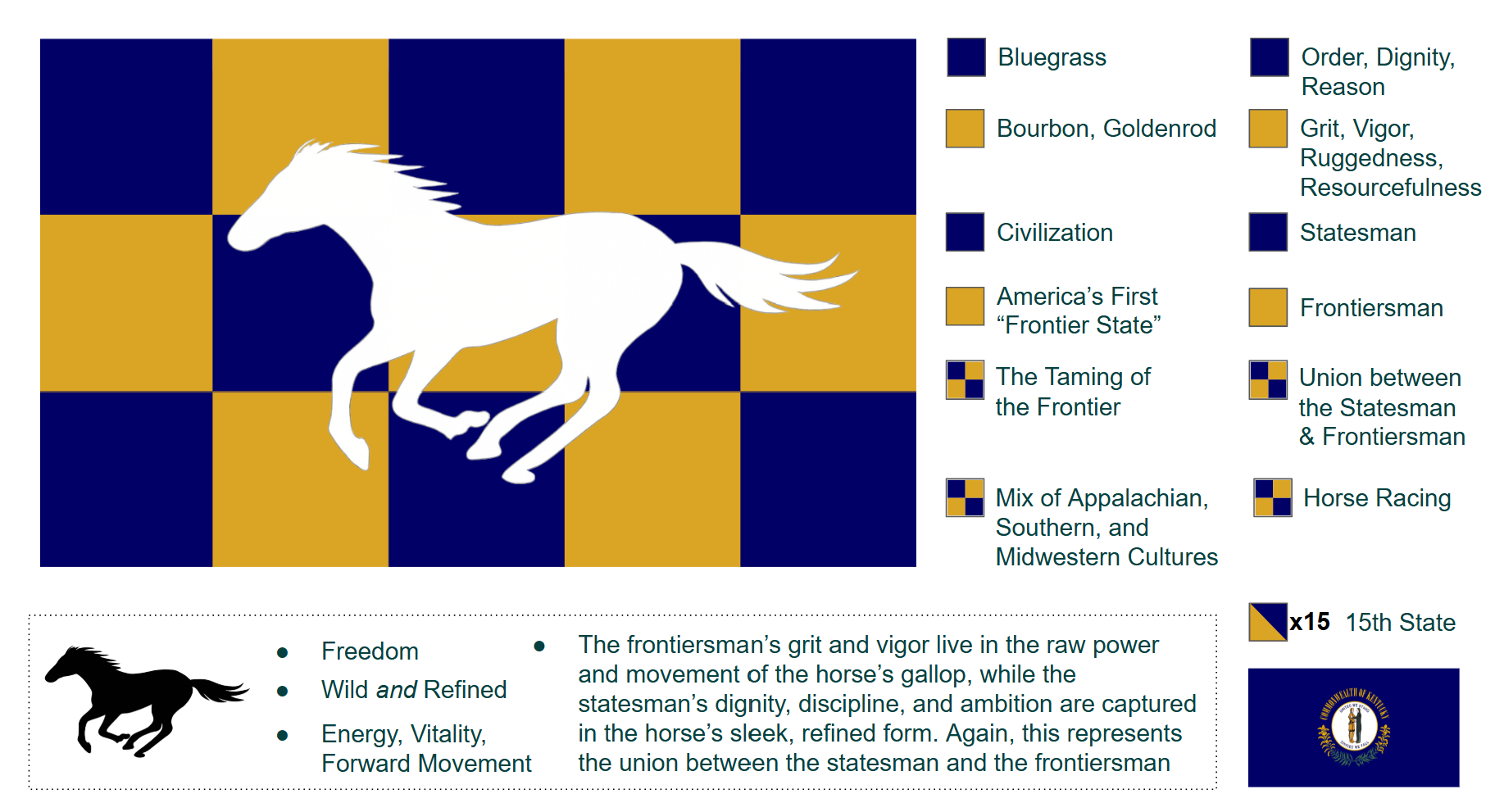
Flag of the Commonwealth of Kentucky (Proposed Redesign)
A bold reinterpretation of Kentucky's identity: rooted in tradition, charging into the future.
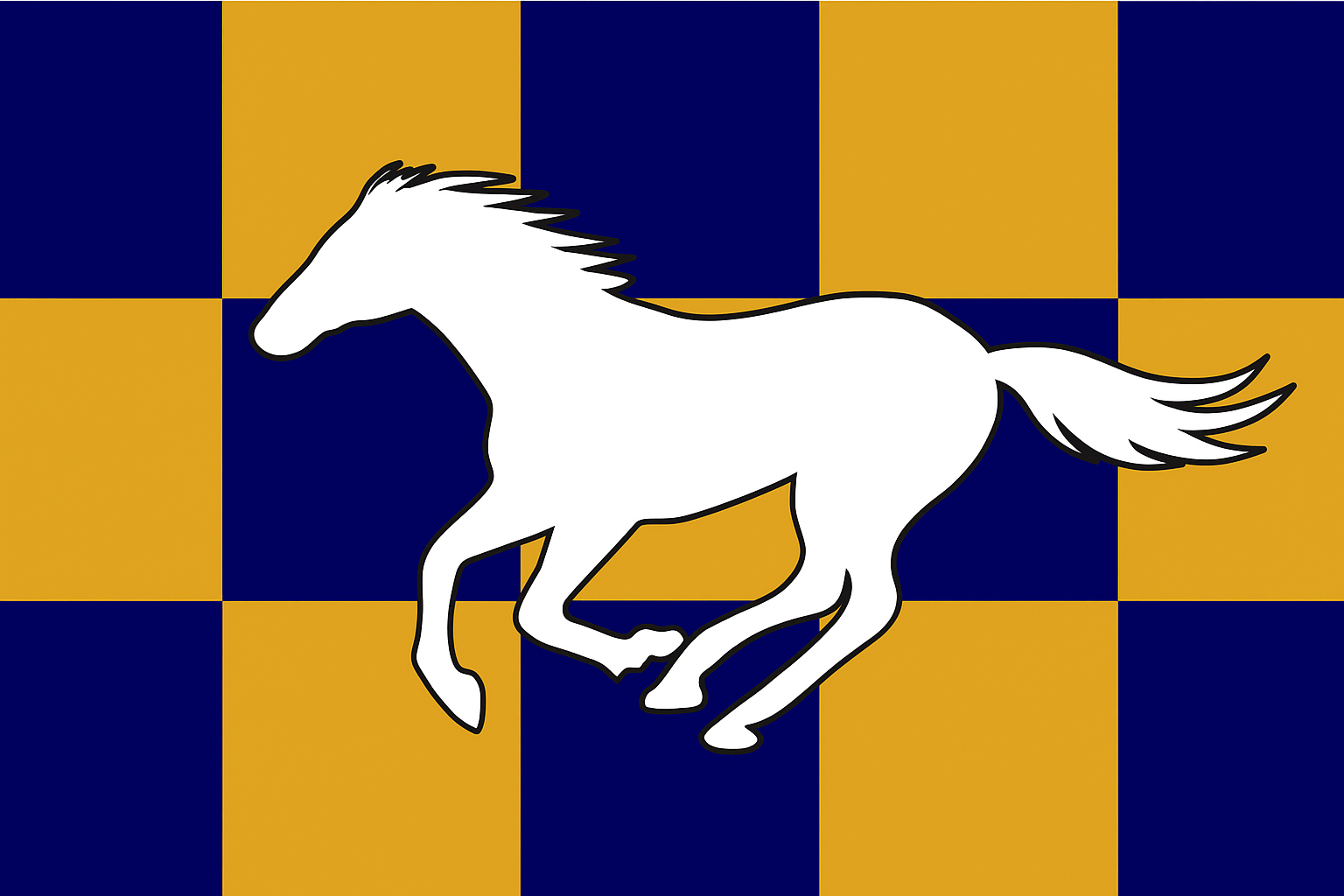
The background field upon which the horse gallops is a checkerboard of alternating squares, rendered in Bourbon Yellow and Bluegrass Blue, with an alternate version substituting the blue with Bluegrass Green. At first glance this may look at a gimmicky flag that just showcases Kentucky's horse racing reputation (which it does), but the symbolism cuts deeper.
The color palette primarily consists of Bourbon Yellow and Bluegrass Blue (or Bluegrass Green). Bourbon Yellow connotes richness, warmth, and enduring value—reflecting Kentucky’s cultural depth and natural resources. It also symbolizes Kentucky bourbon and goldenrod, the state flower. Bluegrass Blue (or Green) stands for bluegrass and Bluegrass music and culture.
More importantly, the colors also represent the two historical archetypes from the Kentucky state seal on the current flag: gold for the frontiersman, embodying grit, boldness, and natural vigor; and blue for the statesman, connoting order, dignity, and reason. The checkerboard unites these forces into a single, rhythmic pattern—a commonwealth built from contrast and cohesion alike. In fact, this abstraction (i.e. the absence of literal human forms) actually allows every Kentuckian to project themselves onto the image—rural or urban, traditional or progressive—giving this design a kind of democratic universality the old seal lacks.
The checkerboard also reflects the duality at the heart of Kentucky’s founding—a tension between untamed wilderness and cultivated order. As the first territory beyond the original colonies to become a state, Kentucky stood as the nation’s first frontier state. It was, in many ways, the edge of the known world, a space where raw nature and bold independence reigned. Yet from that frontier emerged not just hunters and homesteaders, but statesmen, institutions, and law. Kentucky did not remain wilderness—it became a commonwealth, grounded in shared governance and collective purpose. This duality persists to shape Kentucky's identity to this very day.
This checkerboard serves serves even more roles. First, it evokes the visual language of racing flags, linking again to Kentucky’s world-famous horse racing tradition. But more subtly, it references the agricultural patchwork of Kentucky’s landscape—its rolling fields, family farms, cultivated rows, and small towns, each square a fragment of the state’s agrarian backbone. The pattern further nods to Appalachian quilting traditions and the distinctive visual forms of black tobacco barns, underscoring the manual craftsmanship and rural culture that have defined Kentucky’s regional identities. It also is visually similar to the Appalachia flag. With 15 squares in total, the checkerboard also quietly marks Kentucky’s historical place as the 15th state to enter the Union, embedding a historical milestone into the very structure of the design.
At the heart of the flag is a striking white silhouette of a galloping Kentucky thoroughbred, a powerful emblem of the Commonwealth’s vitality, independence, and cultural depth. Rendered in clean, bold lines, the horse is depicted mid-gallop—its posture a declaration of energy, liberty, and forward movement. The use of white underscores clarity of purpose and purity of spirit, while providing strong contrast against the richly colored checkerboard field. This image captures Kentucky not merely as a place, but as a force in motion: a state forever forging ahead.
The thoroughbred horse, however, does more than evoke Kentucky’s equine prestige and its claim as the horse capital of the world. It serves as a deeply symbolic successor to the two central figures in Kentucky’s original state seal: the frontiersman and the statesman. In that seal, these figures shake hands in a moment of unity—representing the fusion of rugged individualism and civic order, of untamed wilderness and cultivated governance. In this redesigned flag, that unity is reinterpreted through a single, dynamic symbol: the horse itself. Positioned at the center of the checkered field—where blue (or green) represents the statesman and yellow the frontiersman—the horse becomes the literal and symbolic intersection of Kentucky’s founding ideals. It fuses the wild and the refined into one forward-moving body, embodying the Commonwealth’s enduring balance of freedom and structure.
Further on this point, as an animal that is both wild and trained, both muscular and elegant, the horse visually fuses the virtues of both archetypes. The frontiersman’s grit and freedom live in the raw power and movement of the gallop, while the statesman’s dignity, discipline, and ambition are captured in the horse’s sleek, refined form. In this way, the horse becomes the living synthesis of these two historic forces—one body containing both the frontier spirit and the rule of law, the rugged and the refined.
Importantly, this design responds directly to the failures of the current Kentucky flag—an intricate seal on a blue field that lacks visual impact, especially from a distance. By contrast, the redesigned flag meets all five principles of good flag design as recommended by the North American Vexillological Association: it is simple, meaningful, easily recognizable, uses only a few strong colors, and contains no lettering or seals. The visual hierarchy is strong. The horse immediately commands attention. The field creates rhythm and cohesion. The symbolism is accessible yet layered, offering deeper resonance the more one reflects.
This is not merely a flag to represent Kentucky—it is a flag that expresses Kentucky: its history as the first Western frontier, its duality of strength and grace, its values of unity amid diversity, and its vision of progress rooted in tradition. In a single emblem, the flag unites frontier and forum, wilderness and wisdom, grit and grandeur—a true standard for the Commonwealth, and a timeless banner for its future.



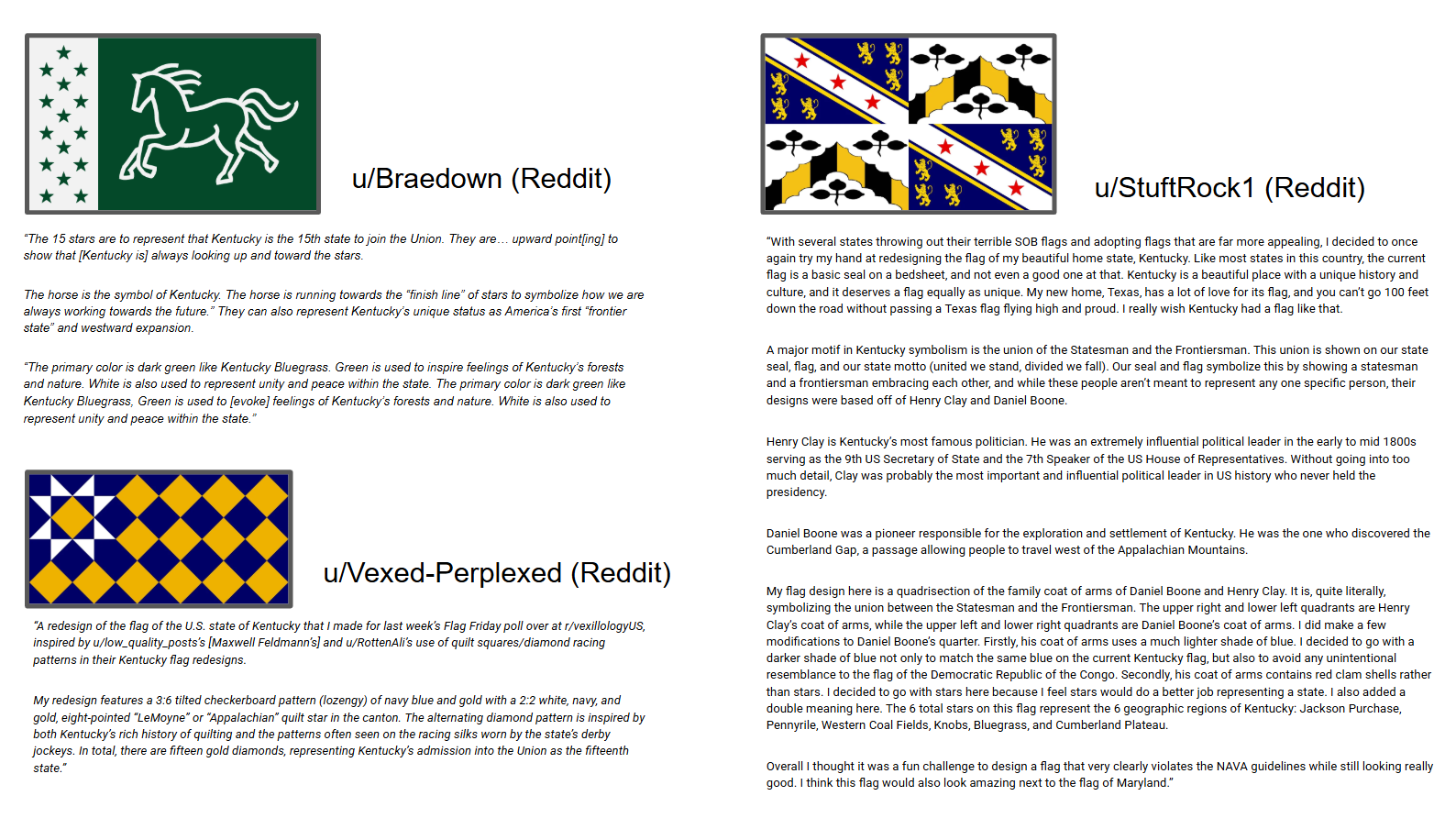
Great Kentucky Flag (Re)Designs by Other Designers

13
The Issue
Flag of the Commonwealth of Kentucky (Proposed Redesign)
A bold reinterpretation of Kentucky's identity: rooted in tradition, charging into the future.
The background field upon which the horse gallops is a checkerboard of alternating squares, rendered in Bourbon Yellow and Bluegrass Blue, with an alternate version substituting the blue with Bluegrass Green. At first glance this may look at a gimmicky flag that just showcases Kentucky's horse racing reputation (which it does), but the symbolism cuts deeper.
The color palette primarily consists of Bourbon Yellow and Bluegrass Blue (or Bluegrass Green). Bourbon Yellow connotes richness, warmth, and enduring value—reflecting Kentucky’s cultural depth and natural resources. It also symbolizes Kentucky bourbon and goldenrod, the state flower. Bluegrass Blue (or Green) stands for bluegrass and Bluegrass music and culture.
More importantly, the colors also represent the two historical archetypes from the Kentucky state seal on the current flag: gold for the frontiersman, embodying grit, boldness, and natural vigor; and blue for the statesman, connoting order, dignity, and reason. The checkerboard unites these forces into a single, rhythmic pattern—a commonwealth built from contrast and cohesion alike. In fact, this abstraction (i.e. the absence of literal human forms) actually allows every Kentuckian to project themselves onto the image—rural or urban, traditional or progressive—giving this design a kind of democratic universality the old seal lacks.
The checkerboard also reflects the duality at the heart of Kentucky’s founding—a tension between untamed wilderness and cultivated order. As the first territory beyond the original colonies to become a state, Kentucky stood as the nation’s first frontier state. It was, in many ways, the edge of the known world, a space where raw nature and bold independence reigned. Yet from that frontier emerged not just hunters and homesteaders, but statesmen, institutions, and law. Kentucky did not remain wilderness—it became a commonwealth, grounded in shared governance and collective purpose. This duality persists to shape Kentucky's identity to this very day.
This checkerboard serves serves even more roles. First, it evokes the visual language of racing flags, linking again to Kentucky’s world-famous horse racing tradition. But more subtly, it references the agricultural patchwork of Kentucky’s landscape—its rolling fields, family farms, cultivated rows, and small towns, each square a fragment of the state’s agrarian backbone. The pattern further nods to Appalachian quilting traditions and the distinctive visual forms of black tobacco barns, underscoring the manual craftsmanship and rural culture that have defined Kentucky’s regional identities. It also is visually similar to the Appalachia flag. With 15 squares in total, the checkerboard also quietly marks Kentucky’s historical place as the 15th state to enter the Union, embedding a historical milestone into the very structure of the design.
At the heart of the flag is a striking white silhouette of a galloping Kentucky thoroughbred, a powerful emblem of the Commonwealth’s vitality, independence, and cultural depth. Rendered in clean, bold lines, the horse is depicted mid-gallop—its posture a declaration of energy, liberty, and forward movement. The use of white underscores clarity of purpose and purity of spirit, while providing strong contrast against the richly colored checkerboard field. This image captures Kentucky not merely as a place, but as a force in motion: a state forever forging ahead.
The thoroughbred horse, however, does more than evoke Kentucky’s equine prestige and its claim as the horse capital of the world. It serves as a deeply symbolic successor to the two central figures in Kentucky’s original state seal: the frontiersman and the statesman. In that seal, these figures shake hands in a moment of unity—representing the fusion of rugged individualism and civic order, of untamed wilderness and cultivated governance. In this redesigned flag, that unity is reinterpreted through a single, dynamic symbol: the horse itself. Positioned at the center of the checkered field—where blue (or green) represents the statesman and yellow the frontiersman—the horse becomes the literal and symbolic intersection of Kentucky’s founding ideals. It fuses the wild and the refined into one forward-moving body, embodying the Commonwealth’s enduring balance of freedom and structure.
Further on this point, as an animal that is both wild and trained, both muscular and elegant, the horse visually fuses the virtues of both archetypes. The frontiersman’s grit and freedom live in the raw power and movement of the gallop, while the statesman’s dignity, discipline, and ambition are captured in the horse’s sleek, refined form. In this way, the horse becomes the living synthesis of these two historic forces—one body containing both the frontier spirit and the rule of law, the rugged and the refined.
Importantly, this design responds directly to the failures of the current Kentucky flag—an intricate seal on a blue field that lacks visual impact, especially from a distance. By contrast, the redesigned flag meets all five principles of good flag design as recommended by the North American Vexillological Association: it is simple, meaningful, easily recognizable, uses only a few strong colors, and contains no lettering or seals. The visual hierarchy is strong. The horse immediately commands attention. The field creates rhythm and cohesion. The symbolism is accessible yet layered, offering deeper resonance the more one reflects.
This is not merely a flag to represent Kentucky—it is a flag that expresses Kentucky: its history as the first Western frontier, its duality of strength and grace, its values of unity amid diversity, and its vision of progress rooted in tradition. In a single emblem, the flag unites frontier and forum, wilderness and wisdom, grit and grandeur—a true standard for the Commonwealth, and a timeless banner for its future.
Great Kentucky Flag (Re)Designs by Other Designers


Petition Updates
Share this petition
Petition created on May 21, 2025