Intrusive as Lidl expands it’s business/ trying to isolate a historic pub
The Issue
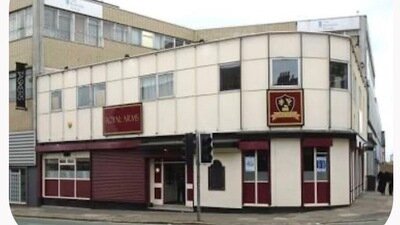
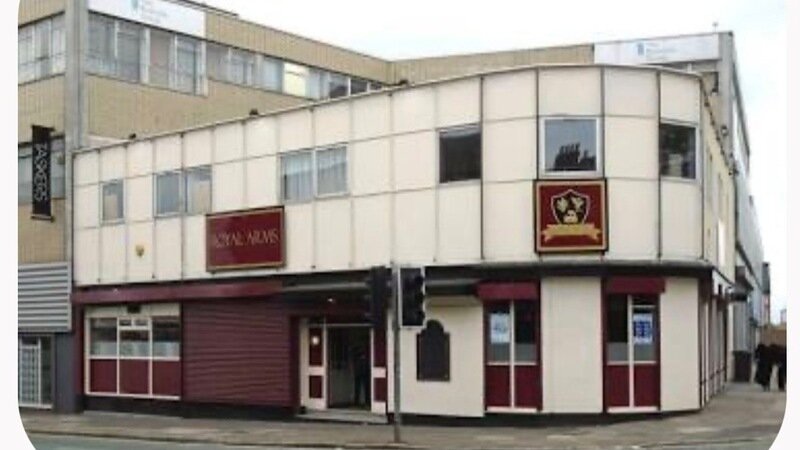
Lidl intrusive of a community pub & hub Facts that say how important The pub at 38 Wavertree Road / corner of Overbury Street (formerly Overton Street) in Edge Hill (L7) is historical The Royal Arms (often locally referred to simply as The Royal or The Royal Hotel).1. 19th Century Origins & ConstructionThe Victorian Growth of Edge Hill: During the mid-to-late 19th century, Wavertree Road was a major thoroughfare connecting inner Liverpool to Edge Hill, Wavertree, and beyond. As local housing expanded rapidly to accommodate dockworkers, railway workers from nearby Edge Hill Station, and light industry, Wavertree Road became famous for having dozens of public houses along its stretch. Building Design: The building was constructed in the Victorian era as a corner pub, featuring a distinctive rounded front facade designed to command the junction between Wavertree Road and Overton/Overbury Street. 2. Serving the Edge Hill CommunityLocal "Corner House": For generations, The Royal Arms served as a traditional community local, featuring a spacious public bar and a comfortable lounge. The Street Name Change: Overbury Street was originally known in earlier 19th-century maps as Overton Street before municipal renaming and road realignments altered the area.The Wavertree Road Pub Crawl: Wavertree Road historically boasted one of the highest concentrations of pubs in Liverpool (including The Royal Arms, The Leigh Arms, The Belle Vue, The Earl Marshall, and The Mount Vernon). The Royal Arms was a key stop along this famous local route for workers and residents alike. Fact: Real characters like my dad and many others shaped the pub and the road back then and a remembered fondly even now. 3. Mid-20th Century to Modern EraPost-War & 1960s Refurbishment: Like many Liverpool pubs in the 1960s, The Royal Arms underwent internal modernisations to cater to the changing post-war community.Urban Redevelopment: During the 1970s and 1980s, extensive urban clearance and housing redevelopment reshaped Edge Hill. While many surrounding Victorian terrace streets were cleared or rebuilt, the building housing The Royal Arms survived on the corner.4. Recent History & StatusTopsy-Turvy Decades: Entering the 2000s and 2010s, The Royal Arms experienced periods of closure and re-opening, reflecting the wider decline of traditional street-corner drinking establishments across Liverpool's inner suburbs. Intermittent Closure: In the mid-2010s, it operated sporadically and was listed as temporarily closed, then re-opened briefly before going quiet again in recent years. Current Standing: The distinctive red-brick building with its curved corner still stands at 38 Wavertree Road. While no longer trading in its original capacity as a full-time Victorian drinking vault, it remains an iconic visual marker of Edge Hill’s social and architectural heritage along Wavertree Road.

353
The Issue
Lidl intrusive of a community pub & hub Facts that say how important The pub at 38 Wavertree Road / corner of Overbury Street (formerly Overton Street) in Edge Hill (L7) is historical The Royal Arms (often locally referred to simply as The Royal or The Royal Hotel).1. 19th Century Origins & ConstructionThe Victorian Growth of Edge Hill: During the mid-to-late 19th century, Wavertree Road was a major thoroughfare connecting inner Liverpool to Edge Hill, Wavertree, and beyond. As local housing expanded rapidly to accommodate dockworkers, railway workers from nearby Edge Hill Station, and light industry, Wavertree Road became famous for having dozens of public houses along its stretch. Building Design: The building was constructed in the Victorian era as a corner pub, featuring a distinctive rounded front facade designed to command the junction between Wavertree Road and Overton/Overbury Street. 2. Serving the Edge Hill CommunityLocal "Corner House": For generations, The Royal Arms served as a traditional community local, featuring a spacious public bar and a comfortable lounge. The Street Name Change: Overbury Street was originally known in earlier 19th-century maps as Overton Street before municipal renaming and road realignments altered the area.The Wavertree Road Pub Crawl: Wavertree Road historically boasted one of the highest concentrations of pubs in Liverpool (including The Royal Arms, The Leigh Arms, The Belle Vue, The Earl Marshall, and The Mount Vernon). The Royal Arms was a key stop along this famous local route for workers and residents alike. Fact: Real characters like my dad and many others shaped the pub and the road back then and a remembered fondly even now. 3. Mid-20th Century to Modern EraPost-War & 1960s Refurbishment: Like many Liverpool pubs in the 1960s, The Royal Arms underwent internal modernisations to cater to the changing post-war community.Urban Redevelopment: During the 1970s and 1980s, extensive urban clearance and housing redevelopment reshaped Edge Hill. While many surrounding Victorian terrace streets were cleared or rebuilt, the building housing The Royal Arms survived on the corner.4. Recent History & StatusTopsy-Turvy Decades: Entering the 2000s and 2010s, The Royal Arms experienced periods of closure and re-opening, reflecting the wider decline of traditional street-corner drinking establishments across Liverpool's inner suburbs. Intermittent Closure: In the mid-2010s, it operated sporadically and was listed as temporarily closed, then re-opened briefly before going quiet again in recent years. Current Standing: The distinctive red-brick building with its curved corner still stands at 38 Wavertree Road. While no longer trading in its original capacity as a full-time Victorian drinking vault, it remains an iconic visual marker of Edge Hill’s social and architectural heritage along Wavertree Road.
Supporter Voices
Petition Updates
Share this petition
Petition created on 30 September 2026